Learning top down sweater knitting is simple and fun. Start at the neckline and watch your sweater grow. This guide is for American knitters who want fast, easy projects.
Get clear advice on top-down sweaters. Learn about quick knit sweaters and how to measure right. You’ll find pattern picks, tool tips, and fit guidance to make your sweater perfect.
This guide is friendly and full of real experience. You’ll get step-by-step instructions and ideas to make your sweater unique. Ready to start? Let’s make knitting fast and fun.
Key Takeaways
- Top down sweater knitting starts at the neckline and works downward for easy fitting.
- Top-down sweaters often need minimal seaming, so finishing is faster.
- Bulky yarn and larger needles speed projects and deliver quick knit sweaters.
- Beginner sweater knitting succeeds when you measure well and try on as you go.
- This guide gives patterns, tool tips, and practical fixes from real projects.
Why You’ll Love Top Down Sweater Knitting
Top down sweater knitting is quick, smart, and easy to fix. You see progress right away, can make changes easily, and finish fast. It’s perfect for those who want to see results quickly.
Instant gratification with quick gauges and bulky yarn
Using bulky yarn and big needles makes your project grow fast. A simple body and ribbed neck mean you see progress quickly. You can make a sweater in weeks if you work on it fast.
Don’t skip the gauge swatch. It’s important for a good fit, even when you’re in a hurry.
Try-on-as-you-go for a custom fit
Top-down knitting is great for trying it on as you go. You can adjust the neckline, body length, and sleeve length easily. This way, you get a perfect fit without having to rip it apart.
Many patterns and tutorials highlight this benefit. You can change the sleeves or body length as you go, making it easier to get it right.
Minimal seaming and polished finishes
Top-down patterns often have little to no seams. This means a cleaner look and faster completion. You can focus on making something cozy without the hassle of lots of seams.
Notes from projects like the Stay Up til Dawn Sweater show it works well. It’s a fast way to make a cozy, finished sweater without too much effort.
top down sweater knitting
Start at the neckline to control shoulder shaping and fit. In top down sweater knitting, you cast on at the neck or use a provisional cast-on. Then, you work outward and down. This method lets you shape the yoke early and try on your sweater as you go.
If you want to adjust the length mid-project, this method makes it easy.
What the method actually means: starting at the neckline
You start with the collar or neckband. Set your stitch markers and establish increases or pattern repeats. This early shaping defines the shoulder slope and upper chest fit.
When you ask what is top down knitting, remember the main point. Neckline-first lets you test fit before committing to body length.
Common constructions: raglan, yoke, and seamless bodies
The raglan sweater knit is popular among knitters. Increases at four raglan lines create neat diagonal seams from neck to underarm. These lines make it easy to change sleeve width or overall ease without ripping back.
A yoke sweater often uses a circular yoke worked in the round. This leaves room for colorwork or textured stitches. Choose stranded patterns or simple cables depending on your mood. Many patterns use seamless sweater construction, so there are no side seams to sew up when you finish.
You can read a clear lesson on raglan shaping and dividing for sleeves at Garnstudio for practical, step-by-step guidance that mirrors these principles: garnstudio lesson.
How sleeves are added and why that matters for fit
Sleeves usually start life on stitch holders or waste yarn when you separate body and sleeves. Later, you pick them up and knit in the round, or use the magic loop for seamless sleeves. The chosen method affects underarm joins and how easily you can alter sleeve length or taper.
For a practical primer on starting at the neckline and handling sleeves as you go, check a top-down overview that walks through both seamless and set-in choices: top-down overview.
| Feature | What it means | Why you care |
|---|---|---|
| Neckline-first | Cast on at neck, work downward | Try on early, adjust shoulder and yoke fit |
| Raglan sweater knit | Increases at four diagonal lines | Easy to size sleeves and body on the fly |
| Yoke sweater | Circular yoke with pattern or colorwork | Visual interest at upper chest, seamless look |
| Seamless sweater construction | Knitted in the round with no side seams | Less finishing, smoother silhouette |
| Sleeve attachment | Holders, waste yarn, magic loop, or DPNs | Determines underarm join and ease for movement |
Best beginner-friendly patterns and free resources
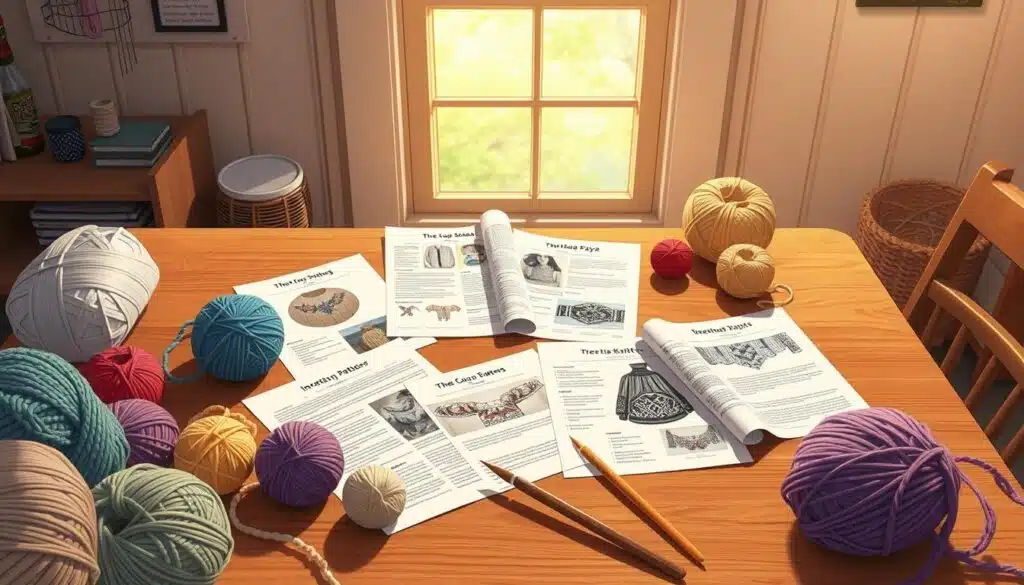
Ready to start a top-down sweater? Begin by researching and then picking out yarn. Use free patterns to learn about shaping, fit, and finishing. Choose an easy pattern to keep things fun.
Curated list of easy, free top-down sweater patterns
Find roundups with many patterns to compare easily. Look for lists with 16 or more free patterns. They should include basic styles in various sizes.
For a quick start, check out this page for easy patterns and tutorials.
Pattern features to look for as a new knitter
Choose patterns that list yarn weight and needle size upfront. Using thicker yarn and bigger needles makes progress faster and mistakes easier to fix.
Look for patterns with simple stitches and clear diagrams. Those with multiple sizes and easy customization notes will save you time.
Where to find video tutorials, pattern libraries, and community help
Pair written patterns with video tutorials for a better learning experience. Channels like HandyLittleMe offer step-by-step guides, from start to finish.
Check out Ravelry, Pinterest, and blogs for pattern ideas. Join Facebook groups and Instagram for feedback and support.
Keep handy guides, needle charts, and stitch videos. They help clarify pattern instructions when you’re knitting.
Choosing yarn, needles, and tools for faster, fun projects
Choose yarn that makes you happy and speeds up your work. Bulky yarn knitting is quick and shows off stitches well. It’s great for simple patterns. If your favorite yarn is out of stock, look on Etsy or swap it for something similar.
Buy an extra skein if you’re unsure about the size. This way, you won’t run out of yarn in the middle of your project.
Why bulky yarn and larger needles speed up projects
Chunky yarn works fast. Each stitch is big, so you finish rounds quickly. This makes bulky yarn knitting perfect for quick sweaters or last-minute gifts.
Stockinette in bulky yarn looks neat without complicated patterns. You spend less time counting and more time enjoying the fit as you shape it.
Needles to consider: circular lengths for neck and body, DPNs vs. magic loop
Needle choices affect comfort and speed. Sweaters in bulky yarn usually use 6 mm (US 10) to 8 mm (US 11) needles. Short circulars of 40–60 cm (16–24″) are good for the neck and yoke. Longer ones, 80–100 cm (32–40″), are better for the body and sleeves.
Try using one long 80–100 cm cable for magic loop or DPNs. Magic loop is easier for sleeves. DPNs are better for tight ribbing or small circumferences. Short interchangeable sets are a good middle ground.
Essential extras: stitch markers, tapestry needles, stitch holders, measuring tape
Keep a small kit handy. Use stitch markers for increases and repeats, and stitch holders or waste yarn for sleeve stitches. Tapestry needles are for weaving ends and grafting. A measuring tape checks gauge and lengths as you work.
For more on must-have gear, see this concise checklist at essential knitting tools.
| Item | Why it helps | Suggested specs |
|---|---|---|
| Bulky yarn | Faster fabric, bold stitches, fewer rounds | Worsted to bulky weight; match gauge on pattern; buy extra skein |
| Circular needles for top down | Clean neck shaping and seamless body work | 40–60 cm for neck; 80–100 cm for body; 6–8 mm depending on gauge |
| Magic loop vs DPNs | Choice between one long needle or multiple short needles | Magic loop: 80–100 cm cable; DPNs: set of 6 in matching size |
| Stitch markers | Tracks increases and pattern repeats without fuss | Locking markers and split rings in bright colors |
| Stitch holders / waste yarn | Holds sleeve stitches while you finish the body | Spare yarn or metal/plastic holders |
| Tapestry needle | Weaving ends and grafting with neat results | Blunt tip, medium-large eye |
| Measuring tape | Check gauge and real-time fit | Flexible, metric and imperial markings |
Making fit decisions: measurements, gauge, and ease
You want a sweater that flatters, not one that looks like a feeding tent or a second skin. Start with clear sweater measurements: chest, sleeve length, and desired body length. Measure chest around the fullest part, take sleeve length from the shoulder or underarm as your pattern directs, and measure from the base of your neck to where you want the hem to sit. These simple numbers are the backbone of how to measure sweater fit.
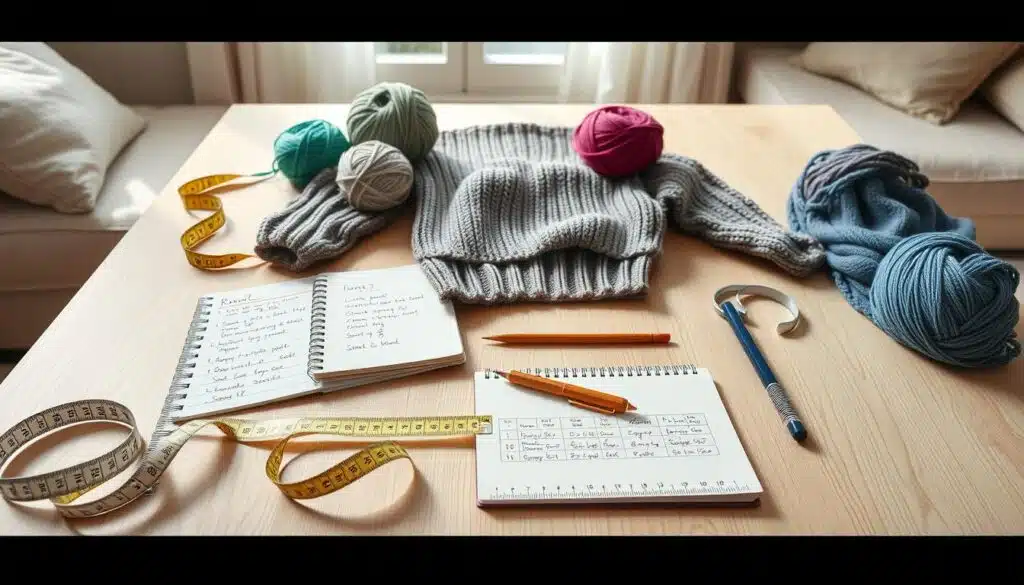
How to measure chest, sleeve length, and desired sweater length
Wrap a soft tape measure around the fullest part of your chest, breathe normally and record that number. For sleeves, check whether the pattern wants shoulder-to-wrist or underarm-to-wrist; match your method to avoid surprises. For length, stand straight and measure from the neck base to the hem point you prefer—cropped, classic, or tunic.
Why doing a gauge swatch is non-negotiable
Knitting without a gauge swatch is like driving without a speedometer. A proper gauge swatch tells you stitches and rows per inch so you can match pattern math. If a pattern targets 5 stitches per inch and your swatch shows 4.5, your finished chest will balloon. Use a gauge swatch, adjust needle size until your stitches match, and re-swatch in the stitch pattern you’ll use.
Choosing ease for oversized vs. fitted styles
Sweater ease decides the mood. Positive ease gives roomy, relaxed silhouettes; designers often add 2–6 inches for a casual look. Zero or slight negative ease yields fitted garments that hug curves. A 45-inch chest paired with a 50-inch finished circumference yields about 5 inches of positive ease—great for a cozy, slightly oversized fit.
If you prefer visual guidance, consult size and ease breakdowns from trusted pattern notes. For an in-depth primer on ease definitions and choosing a size, this helpful guide explains typical ranges and finished vs. actual chest choices: understanding ease and selecting your size.
| Measure | Where to take it | Why it matters |
|---|---|---|
| Chest | Around fullest part of bust or chest | Primary number for choosing finished circumference and sweater measurements |
| Sleeve length | Shoulder to wrist or underarm to wrist per pattern | Determines arm comfort and where cuff sits |
| Sweater length | Base of neck to hem | Sets overall silhouette and layering ease |
| Gauge swatch | 4″x4″ sample in main stitch pattern | Converts stitch counts into inches so gauge influences final fit |
| Sweater ease | Difference between finished circumference and wearer chest | Chooses between fitted, classic, or oversized silhouettes |
Practical tips: try on-as-you-go, buy extra yarn so you can opt for the larger size if needed, and tweak raglan increases to widen or slim sleeves. Remember that gauge swatch plus chosen sweater ease together determine your true fit, so measure carefully and swatch early to avoid reknits.
Common construction choices and simple customizations
Top-down knitting gives you the power to make changes as you go. You can adjust the fit, shape, and finish without starting over. Small tweaks, like when to stop increasing or the type of rib, can greatly change your sweater’s look and feel.
Adjusting raglan increases
To make sleeves narrower, stop increasing a few rounds early. This reduces the number of stitches at the sleeve cap, making the arm look sleeker. To widen sleeves, keep increasing longer, adding more stitches before separating the sleeves.
Think of adjusting raglan increases as a quick way to tweak the fit. Try it on as you go and note the round where you stopped or continued. This helps match sleeves later.
Cropping or lengthening the body
Crop sweater knitting is easy with top-down construction. Stop body rounds early for a cropped look above the waist. Add rounds to make the sweater longer, falling past hips if desired.
Order extra yarn if you plan to extend the length. This gives you freedom to test lengths on your body, avoiding guesses from a pattern sketch.
Ribbing options for cuffs, neck, and hem
Ribbing styles set the final look. Choose 1×1 rib for high elasticity that hugs cuffs and necks. Opt for 2×2 rib for a classic, structured edge.
Use smaller needles for tighter ribs and the same yarn on larger needles for a looser look. This needle swap adds subtle contrast while keeping everything neat and tidy.
Seamless finishing notes
Many top-down patterns are seam-free. Underarm stitches can be grafted, joined with a neat seam, or left as a decorative panel. Your choice affects the sweater’s drape and comfort under layers.
Practical checklist
- Record rounds when you change raglan increase adjustment so sleeves match.
- Try on for length before binding off for crop sweater knitting or longer styles.
- Test ribbing on scrap to compare elasticity and appearance.
Troubleshooting and tips from real projects
When your project goes wrong, you need smart fixes to save time and keep you happy. Here are tips from real sweaters. They help with problems like running out of yarn, finding discontinued shades, or fixing fit issues during try-on.
Dealing with discontinued yarn and color matching
If your favorite yarn, like Drops Wish, is no longer available, look for extra skeins on Etsy and Ravelry. If you can’t find it, match its weight and fiber with brands like Malabrigo, Cascade, or Berroco. This keeps your sweater looking good.
Plan joins to make color changes look on purpose. Use stripes, contrast cuffs, or slipped-stitch panels to hide any color mismatches. Buying extra yarn at the start helps avoid last-minute stress.
What to do when you run out of yarn mid-sleeve
Don’t rip it yet. Check online and local yarn shops for the same dye lot. If you can’t find it, use a similar yarn and make the join a design feature.
Shorten the sleeves, use contrasting ribbing, or double a thinner yarn for the cuff. These solutions turn a yarn shortage into a stylish choice.
Fixing fit issues without ripping back the whole sweater
Try on your sweater as you go to catch problems early. For wide sleeves, stop raglan increases sooner and do fewer rounds before setting sleeve stitches aside. This makes the sleeves narrower without redoing the body.
Small body changes can be made by adding or subtracting ease in remaining rounds or by adding subtle shaping at the hem. Underarm puckering often fixes by adjusting grafting or joining stitches, not by re-knitting big sections.
Real-project wisdom: one knitter ran out of a discontinued yarn with just four inches left on a sleeve. After searching for matches, she added a contrasting cuff. The patch looks like a design choice, not a mistake. This shows the essence of fixing problems in your sweater—making practical choices that keep your work and mood intact.
Styling and finishing touches to make your sweater shine
Before you take your last photo, give your sweater some extra care. A few finishing steps can turn a homemade sweater into a family heirloom. These steps are like the final polish that makes your work shine.
Blocking and trimming for a polished look
Block your sweater to even out the stitches and achieve the measurements you wanted. Wet or steam blocking is great for bulky yarn and smooth fabric. For detailed guidance, check out this classic cardigan finishing guide for tips on pins, wires, and drying.
Weave in ends with a tapestry needle and trim stray fibers carefully. Avoid over-cutting. Woven-in ends and a good blocking session ensure hems are flat and ribbing relaxes. These finishing touches make your sweater look professional.
Styling ideas: cropped lengths, layering, and accessories
A cropped sweater looks great with high-waist jeans or a white skirt and colorful sneakers. You can tuck it into a skirt to show off your waist or wear it over a dress for contrast. Layering is key: try a slim shirt under the yoke or a lightweight coat over the shoulders.
Be mindful of oversized arms when layering under a coat. Big sleeves are cozy but can bulk up under tailored coats. Use slimmer layers under roomy bodies and add a scarf or necklace to draw attention.
Gift-ready finishing: labels, packaging, and care notes
If your sweater is a gift, add care notes with fiber content and washing instructions. Sew in a small label or attach a care card. Include yarn and pattern notes so the recipient knows what fiber was used and how it was made.
Wrap the sweater in tissue or reusable fabric, tuck in the care note, and add a short tag about fit or styling. A neat package and thoughtful finishing touches show you cared beyond the last stitch.
| Finishing Step | When to Do It | Quick Tip |
|---|---|---|
| Blocking | After weaving in ends, before sewing buttons | Use blocking wires for straight edges and let dry flat to preserve shape |
| Weaving in ends | Before final trim and seaming | Hide tails in ribbing or follow stitch path for secure finish |
| Button band and buttonholes | After blocking if needed, or before final try-on | Place locking stitch markers to plan buttonhole spacing |
| Pocket finishing | Post-blocking, after topstitching sides | Pick up stitches for afterthought pockets and rib the top edge |
| Neckline and cuffs | Try on after blocking to adjust fit | Pick up fewer stitches for a snugger neckline or more for a relaxed look |
| Gift packaging | Once all finishing touches are complete | Include a care note and a small yarn sample; present in tissue or reusable wrap |
Conclusion
Top down sweater knitting is fast, fits well, and has little sewing. It’s perfect for those who want a simple sweater that looks good. Using thick yarn and big needles means you see your work grow quickly.
Before starting, make a gauge swatch and buy extra yarn if needed. Keep tools like circulars, DPNs, stitch markers, and a tape measure ready. If you run out of yarn, you can fix it without starting over.
Look for tutorials and pattern roundups to learn and find good patterns. For a detailed guide, check out this top-down sweater construction guide from Sister Mountain. With patience and these tips, you can make a sweater that fits you perfectly and enjoy the process.
FAQ
What is top down sweater knitting and how does it start?
Top down sweater knitting starts at the neckline and goes down. You cast on for the neckband or use a special cast-on. Then, you shape the yoke and shoulders first.
After that, you divide the work for the body and sleeves. This method lets you shape the shoulders early and try the sweater as you knit.
Why should you choose top down over bottom-up construction?
Top down is quick and easy. You get to shape right away. Plus, you can try it on as you go to adjust the fit.
Many patterns are seamless or need little finishing. This means fewer seams and a quicker finish than bottom-up projects.
How does bulky yarn speed up a top down sweater project?
Bulky yarn makes every row cover more inches. This means you see progress fast. Projects with bulky yarn can be finished in weeks.
Using 8 mm or 6 mm needles helps. Stockinette bodies with simple edges make the progress even more visible.
Do you need to swatch if you’re using bulky yarn?
Yes, you must swatch. Swatching is key to ensure the right fit. It helps confirm your needle choice and pattern measurements.
How do raglan and circular yoke constructions differ?
Raglan increases are along four lines from the neckline. This makes it easy to adjust sleeve width. Circular yoke spreads shaping across a decorative or plain round.
Both methods are common in top-down knitting. They can be seamless, making the sweater look professional.
What’s the easiest way to add sleeves on a top down sweater?
You can place sleeve stitches on waste yarn or stitch holders. Then, pick them up later and knit them in the round. Or, you can knit sleeves seamlessly as you go.
The method you choose affects how easy it is to try on during knitting. It also impacts the underarm joins.
Which needle lengths should you have on hand for top down knitting?
Short circulars (40–60 cm / 16–24″) are good for the neck and yoke. Longer circulars (80–100 cm / 32–40″) work for the body and sleeves.
Keep a small set of DPNs or a second shorter circular handy for sleeve ribbing. This way, you can avoid using the magic loop.
Should you use DPNs or the magic loop for sleeves?
Both DPNs and the magic loop work well. DPNs are fast for small circumferences and ribbing. Magic loop is great for those who prefer one needle.
Choose what you find more comfortable. Many knitters use both depending on the project.
What beginner-friendly pattern features should you look for?
Look for patterns labeled beginner or easy. Choose stockinette bodies with simple ribbing. Clear schematics with multiple sizes are also important.
Recommendations for bulky yarn and larger needles are key. Patterns that support try-on-as-you-go and have straightforward shaping are ideal.
Where can you find free top-down sweater patterns and tutorials?
You can find free patterns on Ravelry and curated blog roundups. YouTube channels like HandyLittleMe and social platforms like Instagram, Pinterest, and Facebook groups also offer help.
Community groups are great for quick troubleshooting. They provide patterns and step-by-step help.
What essential tools should you buy before starting?
You’ll need stitch markers for raglan increases and repeats. Use stitch holders or waste yarn for sleeve stitches. A tapestry needle is needed for weaving and grafting.
Interchangeable circulars are handy. Buy extra yarn if you’re between sizes or using a discontinued color.
How do you choose chest circumference, ease, and final size?
Measure the fullest part of your chest/bust for the primary number. Decide on ease: positive ease for oversized comfort, zero or negative ease for a closer fit.
If you’re between sizes, pick the larger one. Keep extra yarn on hand to adjust as you knit.
How do you adjust sleeve width if the arms feel too bulky?
Narrow sleeves by stopping raglan increases earlier. This reduces the stitch count for the sleeves. You can also alter shaping by adding short-row decreases near the underarm.
Switching to smaller needles for sleeve knitting tightens the fabric. This depends on the pattern.
What can you do if your yarn is discontinued mid-project?
Look for extra skeins on Etsy or destash marketplaces. If you can’t find a match, substitute a yarn with the same weight and similar fiber and dye-lot.
Make a visible join with contrast ribbing, a wrapped stripe, or holding a different yarn doubled. Buying extra at the start avoids this problem.
How should you handle running out of yarn during a sleeve?
Find matching skeins online, substitute a similar yarn, or shorten the sleeve or cuff. Adding a contrasting cuff or stripe is also an option.
Try creative joins or hold an alternate yarn doubled to finish if you’re short.
Can you fix fit problems without ripping back the whole sweater?
Often yes. Try-on-as-you-go helps catch issues early. Narrow sleeves by stopping increases earlier.
Tweak body ease by adding or removing rounds before the hem. Alter underarm stitches instead of re-knitting large sections. Small adjustments usually solve fit complaints.
When and how should you block a bulky top down sweater?
Block after finishing to even stitches and set dimensions. This is important for stockinette bodies in bulky yarn.
Wet or steam block gently according to fiber content. Lay flat to dry on a towel, then weave in ends and trim stray fibers. Blocking creates a polished, wearable finish.
What ribbing choices work best for necks, cuffs, and hems?
1×1 and 2×2 rib are common. 1×1 gives a tighter, springy edge while 2×2 looks chunkier. Use smaller needles for ribbing if you want firmer edges.
Experiment with twisted rib or slipped-stitch hems for texture. But simple ribs are fastest and most forgiving for beginners.
How should you style and wear a cropped bulky sweater?
Cropped bulky sweaters pair well with high-waist jeans, skirts, or layered over dresses. Choose streamlined bottoms or add a long coat for contrast.
Keep in mind oversized arms can feel bulky under fitted outerwear. Plan layering carefully.
How do you make a top down sweater gift-ready?
Include care notes with fiber content and washing instructions. Add a sewn label or care tag. Tuck pattern notes and yarn info into the package.
Wrap in tissue or reusable gift wrap. The small extras make a handmade sweater feel polished and thoughtful.