
You want clothes that flatter, not sweaters that double as tents. A knitting gauge swatch is the simple test that tells you whether your knitting fit will match the pattern’s plan. Gauge is the number of stitches and rows per inch and it acts as the blueprint for your project; many patterns state gauge as stitches and rows in a 4″ x 4″ square.
Think of a gauge swatch as a mini version of your finished fabric. Knit it with the yarn and needles you plan to use, then wash and block it before you measure. This step shows how fibers behave and prevents surprises when you reach the sleeve or hem.
Gauge is personal — it comes from your yarn, your needles, and your tension. If your stitches per inch don’t match the pattern, the garment will be too big or too small. Save time and frustration: swatching is the single biggest move toward perfect fit knitting, and a reliable gauge swatch (at least 4×4 inches, preferably larger) makes all the difference.
For a practical walkthrough and conversion tips, check a concise guide like this knitting gauge swatch guide that explains swatch math and tools to help you visualize adjustments.
Key Takeaways
- Gauge measures stitches and rows per inch and guides knitting fit.
- Always knit and block a swatch in the pattern stitch before starting.
- Use the pattern’s yarn and needles as a starting point, then adjust as needed.
- Swatch at least 4×4 inches; larger swatches give more accurate results.
- Swatching saves time and prevents ill-fitting garments.
Why gauge matters for knitters and garment fit
Getting gauge right is like following a recipe. If you skip or misread one measure, the result is unexpected. Stitch gauge and row gauge tell you how many stitches and rows fit in a 4″ x 4″ area. This blueprint affects the width, length, and how shaping fits on your body.
Definition of gauge: stitches and rows per inch
Stitch gauge is the horizontal count, and row gauge is the vertical count. A swatch with “15 stitches & 9 rows in 4″ x 4″” means you have 15 stitches across and 9 rows down. Your tension can change these numbers, so measure stitches and rows over 4 inches for accurate conversions.
How gauge affects final dimensions and silhouette
Small changes in stitch gauge can alter the garment’s width. Row gauge affects vertical shaping, like armholes and necklines. If your rows are denser than the pattern’s, sleeves and torso will shorten before decreases, changing the silhouette.
Common consequences of skipping a swatch: too big, too small, distorted shaping
Ignoring swatching can lead to big problems. Without it, pattern math fails, and you might end up with a sweater that doesn’t fit. Fewer stitches per inch make garments too large, while more stitches make them too tight.
Distorted shaping happens when stitch gauge and row gauge don’t match the pattern. Necklines can be off, and cables may pucker. A careful swatch and blocking routine can save yarn and time.
If you’re looking for advice, check out Do You Really Need to Knit Your Gauge. It discusses common mistakes and solutions.
What is a knitting gauge swatch and when to make one
A gauge swatch is a small sample you knit to measure how many stitches and rows fit a given area. It acts as a blueprint for your project. By treating the swatch like the finished piece, you can avoid surprises later.
Swatch as a project blueprint
Remember, a swatch shows stitch density, row height, and fabric drape. Knit the same stitch pattern you plan to use. Block the swatch the same way as the garment. Measure in the center for the most reliable numbers.
Projects that demand strict gauge
Wearable, fitted items need strict gauge. Before starting a sweater, check the swatch for sweaters to match the pattern gauge. Hats can fit snug or loose, so a swatch for hats matters when shaping the crown and band. For a polished fit, swatch first and use the same yarn and needles the pattern recommends.
When you can be relaxed about swatching
Some projects tolerate variance. Blankets, loose scarves, and non-fitted accessories rarely require exact gauge. You can skip or keep a casual swatch for these pieces, as size and fit do not affect function. But, if you swap yarns or stitch patterns, a quick test will confirm fabric feel.
For a quick how-to on sweater planning, see knitting a sweater for practical tips that tie gauge into shaping and sizing.
| Project Type | Need Exact Gauge? | Why It Matters |
|---|---|---|
| Sweaters | Yes | Fit and armhole shaping rely on correct stitch and row counts |
| Fitted garments | Yes | Waist, bust, and sleeve shaping must match pattern math |
| Hats | Yes | Crown decreases and brim fit depend on precise gauge |
| Blankets | No | Size is flexible and minor gauge shifts are tolerable |
| Loose scarves | No | Drape and length can be adjusted without complex math |
Choosing yarn and needles for an accurate swatch
You want a swatch that tells the truth about your finished piece. Start with the pattern’s recommended yarn when you can. This gives you the best chance to match the designer’s stitch density and hand.
Using the pattern’s recommended yarn vs. substitutes
Swapping yarns is tempting, but be aware of the risks. Yarn substitution can change drape, stitch definition, and gauge. If you must substitute, match yardage per 100 g and fiber content, and check the brand page or Ravelry for real-world comparisons.
Try the link to learn about fiber behavior and yarn types: yarn types unraveled. This resource can help you choose a suitable substitute without surprises.
Understanding yarn weight, ply, and fiber behavior
Pay attention to yarn weight and gauge on the label. Terms like fingering, DK, and worsted tell you expected thickness. Ply and twist affect how the yarn sits in stitches. Combed cotton feels different from carded wool, and those differences matter when you measure your swatch.
If gauge is hard to get, the yarn itself may be the issue. Look for similar ply, twist, and fiber blends before committing.
Needle material and size effects on tension
Needle material tension is a real thing. Metal needles slide, producing looser fabric for some knitters. Wooden or bamboo needles grip and often tighten your stitches. Start swatching with the pattern’s suggested needle size.
If your swatch is off, change needle sizes to adjust gauge. If size changes don’t help, switch yarns instead of forcing tension tricks that alter drape or hand.
| Factor | Effect on Swatch | What to Try |
|---|---|---|
| Recommended yarn | Most predictable gauge and drape | Use pattern’s yarn if available |
| Yarn substitution | May change texture and stitch count | Match yardage, fiber, and twist; swatch first |
| Yarn weight and gauge | Directly impacts stitch and row counts | Compare label weight and sample photos |
| Needle material tension | Alters friction and stitch density | Try wood, metal, or acrylic to test tension |
| Needle size | Primary tool to hit pattern gauge | Move up or down in 0.25–1.00 mm steps |
By combining a suitable recommended yarn or careful yarn substitution with mindful choices about needle material tension and size, your swatch will give you accurate data. This makes the rest of the pattern math far less painful and the finished garment far more likely to fit.
How to knit a reliable swatch: size, edges, and stitch pattern
Before starting, think of your swatch as a small test garment. You want a clear gauge for a perfect fit. Making small choices early saves time later.
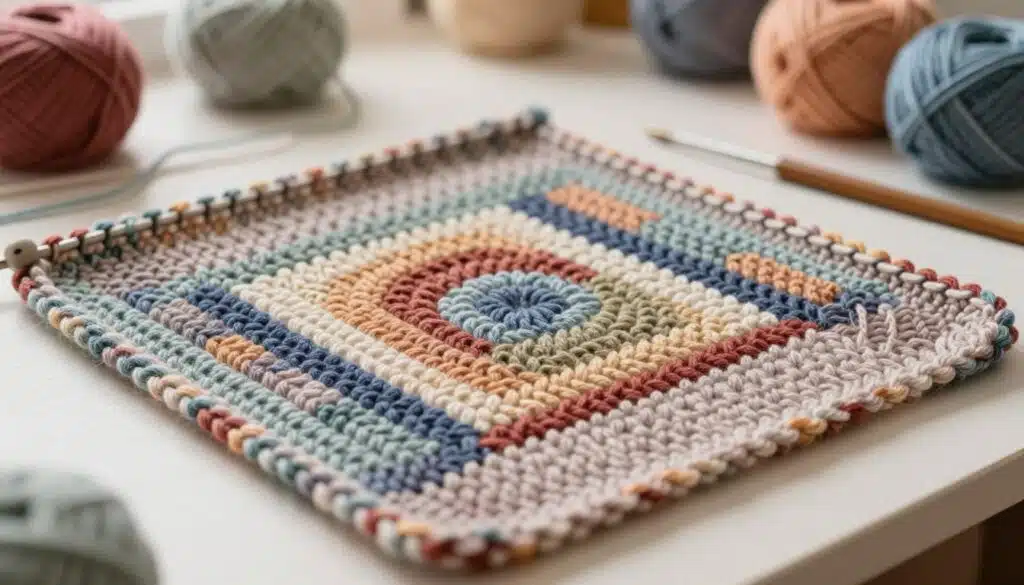
Choose a swatch size that’s big enough for accurate measuring. A 4×4 inch swatch is the minimum. But, a 6×6 swatch is better for more precise measurements.
Recommended swatch dimensions and why larger is better
Cast on more stitches than the pattern suggests. Aim for a 6-inch wide swatch. This size gives a stable center and fewer surprises when shaping garments.
Adding edge stitches to avoid distortion when measuring
Always add edge stitches to protect your measurements. Use at least five on each side. These stitches prevent pulling and slipping that can skew your count.
Matching the swatch stitch pattern to the project
Your swatch stitch pattern should match the garment. Use stockinette for stockinette patterns. For lace or cables, include full repeats and edge stitches. This ensures accurate tension.
| Swatch Goal | Recommended swatch size | Edge stitches | Why it matters |
|---|---|---|---|
| Quick check | 4×4 inch | 3–5 per side | Fast reassurance of basic gauge before large commitment |
| Reliable garment gauge | 6×6 swatch | 5+ per side | Stable center measurement; reduces distortion from edges |
| Textured patterns | 6×6 or larger, full repeats | 5+ per side | Captures true pattern tension for cables and lace |
| Row gauge testing | Longer than 6 inches | Extra rows top/bottom | Makes row counting reliable after blocking |
Swatching in the round and hybrid techniques
When knitting a tube, your swatch should act like the final fabric. A swatch in the round captures stretch, stitch memory, and how yarn moves on circular needles. This is key for fit and shaping.
Use the same method as your final project to get accurate gauge. For small circumferences, try magic loop swatches or double-pointed needles. This replicates tension and needle joins.
Hybrid swatch methods test different techniques without wasting yarn. Knit right-side rounds, then work wrong-side rows flat. This shows how stranded colorwork or slipped strands affect your fabric.
Be gentle with floats. Keep them loose to match the finished garment. If they distort your sample, clip them after blocking to check appearance.
Try small tubes with different needles to compare sizes. A magic loop swatch and a DPN sample in the same yarn show gauge differences. This helps pick the right needle for your stitch count and hand preference.
Match your swatch’s stitch pattern and construction to the final project. Flat and circular knitting have different densities. A hybrid swatch reveals these differences and lets you adjust needles or tension for a perfect fit.
Blocking your swatch: the step most knitters skip
Before you measure, give your swatch a spa treatment. Treat it like the sweater or hat it hopes to be. A proper block swatch shows how fibers relax and stitches bloom.
Follow the care label when soaking your swatch. Use lukewarm water and mild wool wash for hand wash. For machine-washable yarns, use a gentle cycle in a mesh bag.
How to match care instructions
Pin or lay flat as the pattern suggests. If it calls for steam, use an iron without wetting the fabric. For dry-clean-only fibers, avoid soaking too much.
Soaking, shaping, and drying techniques that affect gauge
Gently squeeze out water, roll in a towel, and shape to exact measurements. Use blocking wires or pins for precise edges. These techniques can open stitch patterns and change counts.
Allowing time for rebound before measuring
Don’t rush drying time. Leave pinned pieces for a full day or two. This lets fibers settle and rebound. Measure only after they fully relax; early readings can be misleading.
Measuring stitches and rows accurately
Let the swatch rest after blocking to relax the fibers. Lay it flat on a smooth surface. Use a rigid ruler or a gauge tool to avoid stretching the fabric while you work.
Tools to use
You’ll need a rigid ruler, a dedicated gauge tool, and good light. A gauge tool helps you isolate a clean 4″ area to measure stitch and row density. If you prefer a digital approach, some knitters use phone photos with a ruler for a second check.
Where to measure
Always take a center swatch measurement. Count inside the middle of the swatch, away from curled or distorted edges, to capture the true fabric behavior. Measure several spots and average them for a reliable result.
How to count stitches
To measure stitch gauge, place the ruler across a 4″ section and count the V shapes along a horizontal row. If you see partial Vs at the edges, count halves and quarters to improve precision. Use the all-about-gauge guide for visual examples and tips.
How to count rows
Turn the ruler vertically and count ridge lines or row V’s in the same 4″ area. For garter stitch, count bumps and remember that each ridge equals two rows. If you need to count rows in a textured stitch, be consistent in what you count. When you count rows, small fractions matter for length accuracy.
Using your results
Once you measure stitch gauge and count rows, compare numbers to the pattern. If your stitch count is off, switch needle size and re-swatch. If stitch gauge matches but row gauge doesn’t, plan to add or subtract rows when you knit the piece.
Adjusting your gauge: needle size, yarn choice, and tension tricks
If your swatch and pattern don’t match, don’t panic. You have three practical levers: change needle size for gauge, test a yarn substitution gauge, and adjust knitting tension through simple habit tweaks. Each option affects drape, stitch definition, and final measurements in different ways.
When to move a needle size
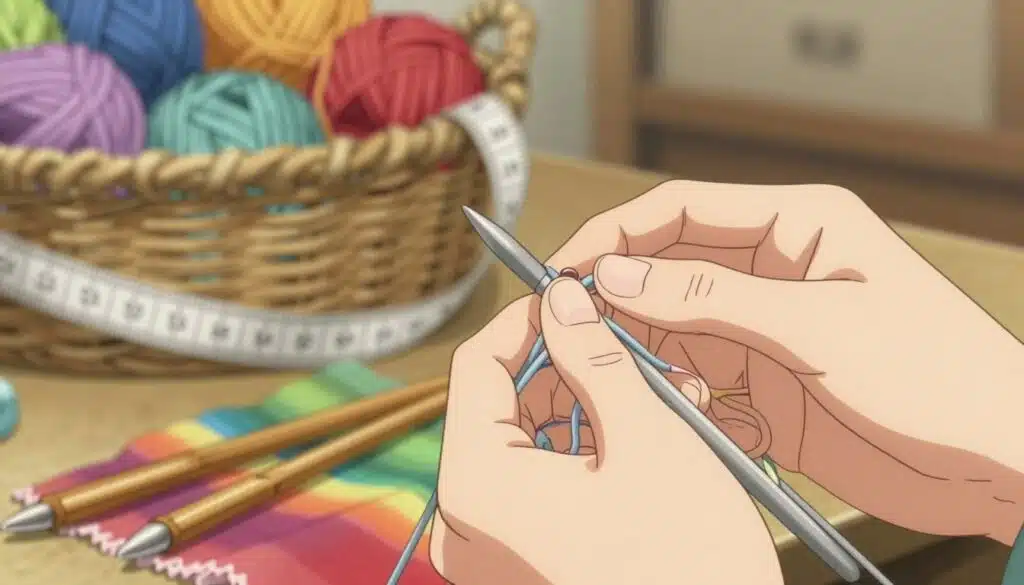
If your swatch shows more stitches than the pattern calls for — say 22 instead of 20 — you are knitting too tight. Try to change needle size for gauge by going up one size and knit another swatch. If you have fewer stitches, such as 18 versus 20, you are too loose. Go down a needle size and test again.
When yarn is the real culprit
Sometimes needle swaps won’t rescue the fabric. If you can’t reach the target after two needle changes, consider yarn substitution gauge issues. Fiber composition, ply structure, and the yarn’s intended tension often alter how the fabric behaves. Choose a substitute with similar weight and fiber to the pattern yarn or be ready to recalc the project for your yarn.
Small tension adjustments that work
You can often adjust knitting habits to nudge your gauge without changing tools. Hold the yarn a touch looser or tighter, switch to a bamboo or metal needle for a different feel, or change how you wrap the yarn. These tweaks help adjust knitting tension while preserving the look you prefer.
If subtle changes don’t work, accept your natural gauge and recalculate the pattern. This keeps the fabric and drape you like while ensuring the fit is right.
| Problem | Quick Fix | When to Reconsider Yarn |
|---|---|---|
| Too many stitches per inch (tight) | Change needle size for gauge: go up one size; adjust knitting tension by loosening grip | If tight after two sizes, check yarn substitution gauge and fiber twist |
| Too few stitches per inch (loose) | Change needle size for gauge: go down one size; tighten yarn hold slightly | If loose after two sizes, substitute yarn with closer specs or recalc pattern |
| Stitch pattern distorts or drape wrong | Adjust knitting tension; switch needle material to affect glide and control | Consider yarn substitution gauge: different fiber content can change drape dramatically |
Applying swatch results to pattern math and adjustments
You’ve made a swatch, blocked it, and measured it well. Now, you need to use that swatch math for your project. This guide will show you how to recalculate cast-on counts, handle row differences, and when to rethink shaping.
Convert stitch gauge to cast-on
First, find your stitches per inch (or cm). Use your swatch to get a clear stitch gauge number. Then, use the formula: (Pattern Total Stitches / Pattern Stitch Gauge) * Your Stitch Gauge = Your New Cast-On Number. Round it sensibly to keep pattern repeats intact. Adjust the cast-on so it’s divisible by repeat numbers for motifs or ribbing.
Account for row gauge differences
Row gauge adjustment is common. If your row gauge differs from the pattern, follow length instructions instead of raw row counts. For precise shaping like necklines and armholes, convert pattern rows into inches. Then, use your row gauge to recalculate the required number of rows. This keeps shaping proportions correct when you recalculate cast-on or alter garment length.
Handling shaping and complex patterns
Simple scale-ups work for basic pieces. But complex shaping with multiple decreases, increases, or textured panels may need detailed conversion. Translate each shaping point into inches, convert those inches back into your stitches or rows. Adjust the sequence so shaping lands in the right spots.
Tools that save time
Use a knitting gauge converter or a spreadsheet to track conversions for stitches and rows. These tools automate the math and help you test alternate cast-on numbers quickly. Just plug in your stitch gauge, row gauge, and desired finished measurements to see instant suggestions.
Quick checklist before you start
- Confirm stitch gauge from the blocked swatch.
- Recalculate cast-on using the conversion formula and preserve repeats.
- Decide if row gauge adjustment requires converting rows to inches.
- Use a knitting gauge converter or spreadsheet for multi-point shaping.
Common swatching pitfalls and troubleshooting tips
If your sweater doesn’t look right, the problem might be in the swatch. You could spend a lot of time and yarn on mistakes that are easy to avoid. Here are some quick tips to spot and fix common issues before starting your full project.
Edge distortion can make your measurements seem wrong. Make sure to knit at least five garter or selvedge stitches on each side. This helps keep the center fabric flat and prevents edge distortion.
Swatches that are too small can give you wrong data. Try to make a 6×6″ sample if you can. Small swatches can make any small tension issues seem bigger, making it hard to get a reliable textured gauge.
Measuring unblocked fabric is a big mistake. Always block your swatch like you will care for the finished sweater. Wet or steam blocking can change the pattern and affect both stitch and row gauge.
When working with textured patterns, don’t swatch in stockinette. Lace or cable charts change how fabric feels. Make sure your swatch includes full repeats so the textured gauge you record matches what the pattern needs.
Misreading charts can lead to more errors. Count pattern repeats, not just stitches across a row. If a pattern changes over multiple rows, measure after the repeat finishes to avoid skewed math.
Practical checks you can do now:
- Use larger swatches and add clear edge stitches to avoid swatch mistakes.
- Block and dry the swatch before measuring the center area.
- Repeat swatching after changing needles, yarn brands, or stitch patterns.
- If gauge is hard to get right, try a yarn substitution or recalculate the pattern math before using expensive yarn.
Follow these steps and you’ll cut down on costly reknits. Treat the swatch like the project’s blueprint and you’ll avoid swatch errors that ruin fit and finish.
Conclusion
Think of a knitting gauge swatch as your project’s safety net. Spend a few minutes making a generous swatch. Use the same yarn, needles, stitch pattern, and blocking method as your project.
This small step saves hours and yarn later. When the garment fits, you’ll be glad you did.
Measure in the center after your swatch dries. Then, adjust needle sizes or recalculate cast-on numbers if needed. This is key: blocked, centered measurements show the truth about your stitches and rows.
They guide the math for shaping. This makes your project come together smoothly.
Swatching is your secret weapon. Follow these tips: knit a proper swatch, do the math, and test again. This turns “could-have-been” projects into favorites.
It’s quick, precise, and makes all the difference. You’ll have a sweater you love, not just one that’s okay.
FAQ
What is knitting gauge and why does it matter?
Gauge is how many stitches and rows you get per inch. It’s like a blueprint for your project. It helps predict the size of your finished item.
Things like your tension, the yarn, and needles can change the gauge. So, checking it helps avoid garments that are too big or too small.
What is a gauge swatch and when should you make one?
A gauge swatch is a small piece of fabric you knit before starting a project. Use the yarn and needles you plan to use. Make one for any item you want to fit well, like sweaters or hats.
But, you can skip it for things like blankets or loose scarves. They don’t need to fit perfectly.
How large should my swatch be?
Your swatch should be at least 4″ x 4″ (10 x 10 cm). But, a 6″ x 6″ swatch is even better. Make it wider and longer than the measurement zone.
This way, you can measure in the center without edge distortion.
How many edge stitches should I add and why?
Add at least five edge stitches on each side. This creates a buffer. It helps the center of the swatch show the real stitch and row density.
Which stitch pattern should I swatch in?
Swatch in the same stitch pattern as your project. If it’s stockinette, knit stockinette. For cables or lace, include full repeats.
Textured patterns change density. Using the wrong stitch can mislead you.
Should I swatch flat or in the round?
Match your project’s construction. Swatch in the round for hats or seamless bodies. Circular knitting often has a different gauge than flat knitting.
What about hybrid swatches when floats are involved?
You can knit right-side rows flat and carry yarn loosely across wrong-side rows. This mimics floats. Or, you can handle floats carefully to avoid pulling the fabric.
The goal is to make the swatch behave like the finished piece.
Do I need to block my swatch?
Yes—always block the swatch like you’ll treat the finished garment. Soak, dry, steam, or machine wash as directed. Blocking can change stitch and row counts a lot.
Measure only after the swatch is fully dried and settled.
How long should I wait after blocking before measuring?
Wait until the swatch has fully dried and rebounded. This can take a day or two if pinned. Measuring too soon can catch temporary tension or uneven drying.
How do I measure stitches and rows accurately?
Lay the swatch flat and measure in the center with a rigid ruler or gauge tool. Count the “V” shapes across for stitches and the horizontal rows for rows.
Don’t stretch the fabric while counting. Include partial stitches if needed for precision.
What do I do if my stitch gauge is different from the pattern?
If you have more stitches than the pattern, you’re too tight—go up a needle size. If you have fewer stitches, you’re too loose—go down a needle size. Re-swatch after every needle-size change.
What if changing needle sizes won’t get me the pattern gauge?
The yarn may be unsuitable. Check weight, ply, and fiber—substitutes often behave differently. If you can’t reach the gauge without losing the fabric you love, recalculate the pattern to your gauge or choose a different yarn.
How do row-gauge differences affect shaping?
Row gauge changes vertical measurements like armholes and necklines. You can follow length instructions instead of row counts when appropriate. But for precise shaping, you’ll need to recalculate row counts.
Tools like a spreadsheet or a knitting gauge converter help.
How do I apply my swatch results to pattern math?
Convert using your stitches per inch. Example method: (Pattern’s total stitches / pattern stitch gauge) * your stitch gauge = your new cast-on or adjusted count. Apply similar logic to shaping, though complex textures require careful calculation.
What common swatching mistakes should you avoid?
Don’t skip swatching, don’t make swatches too small, and don’t measure unblocked fabric. Avoid measuring at the edges, using the wrong stitch pattern, or ignoring construction differences between flat and circular knitting.
Any practical tips to make swatching less painful?
Knit a larger swatch (6″ x 6″ when possible), add edge stitches, block it exactly like the garment, measure the center, and re-swatch after any needle or yarn change. If gauge is hard to get, consider a different yarn or recalculating the pattern before spending expensive yarn.
Why is swatching worth the time?
A proper swatch is the single biggest step toward garments that fit. Investing a little time and yarn up front saves hours, money, and heartbreak later. Think of it as your project’s motion plan—do the small work now and you’ll actually wear the sweater later.