
You’ve found a great pattern, but it’s not the right size. Maybe you need it for a blanket or a sweater. A few simple steps and a swatch can save you hours of redoing your work.
First, measure what you want to make. This could be a blanket for your bed or a sweater. For bedspreads, measure your mattress’s width, length, and depth. This helps you figure out the total size you need.
For granny-square blankets, you can choose to work in continuous rounds or change the square count. If you need help, there’s a guide on resizing crochet blankets with charts and tips.
Always make a swatch first. It shows you how many stitches and rows you get in 10 cm. Start with the hook size recommended on the yarn ball band. Then, swatch bigger and wash it.
If you want your finished piece to be bigger, use heavier yarn and a larger hook. For a smaller piece, use lighter yarn and a smaller hook. These changes help you adjust the size without losing the design.
Key Takeaways
- Measure the finished item you want before you chain or cast on.
- Make a large, washed swatch to determine stitches and rows per 10 cm.
- Change yarn weight or hook size to scale quickly, then re-swatch.
- For bedspreads, use mattress width, length, and depth for accurate drape.
- For granny squares, add rounds or more squares and lay them out often.
- Use pattern resizing tutorials and charts to avoid guesswork.
Why resizing crochet patterns matters for fit and function
Looking at a pattern can make you feel nervous about fit issues. Patterns are made for a standard size, but our bodies and spaces are not. That’s why it’s important to resize patterns to fit you perfectly.
Common fit problems that lead you to resize
Issues like tight sleeves and shallow armholes are common. Many crocheters overlook the importance of body measurements. If you’re taller or shorter than the pattern model, you’ll need to adjust the pattern to fit right.
When size affects drape, wearability, and yarn usage
Changing the yarn or gauge can change how a garment looks and feels. Swatching helps predict how a yarn change will affect the fabric. This way, you can avoid running out of yarn or having to redo your work.
Project types where resizing is most useful: blankets, garments, accessories
Blankets often don’t fit on your bed or couch. Garments need to fit right under the arms and sleeves. Accessories like scarves and cowls need to be resized for the right drape. Use measurements and schematics to guide your resizing.
For tips on fitting garments, check out how to crochet clothes that fit. Start with a swatch to avoid problems later.
| Problem | Quick fix | What to check |
|---|---|---|
| Tight sleeves | Increase stitch count or choose a lighter yarn | Bicep measurement, sleeve ease, gauge swatch |
| Short body length | Add rows in body section; account for hems | Desired length, rows per 10 cm, blocking effect |
| Blanket too small | Chain more foundation or add squares/rounds | Target mattress size, drape, yarn usage estimate |
| Boxy fit | Pick pattern with positive/negative ease suited to you | Schematic ease, construction style, try-on points |
| Unexpected drape | Change hook size or swap yarn weight and swatch | Fiber content, recommended hook, blocked swatch |
Understanding gauge and tension before you resize
Before you change a pattern, get cozy with a gauge swatch. A simple square tells you how your stitches behave, how tension shifts, and what to expect after washing. Treat that swatch like a map; it guides conversions for width and length so your finished piece fits the way you planned.
What a swatch reveals: stitches and rows per 10 cm
Make a swatch at least 10 cm (4 inches) square. Count the stitches across and the rows up in the central area to find your stitches per 10 cm and rows per 10 cm. Use the yarn label’s recommended hook as a starting point, then adjust until the swatch matches the feel and look you want.
How tension changes during a project and after blocking
Your tension will relax as you stitch more rows. Early rows often look tighter than the rest of the garment. Blocking further alters dimensions; blocking effects can open up lace, flatten texture, or add drape. Measure your swatch both before and after blocking to capture those shifts.
Practical swatch tips: size, washing, and measuring for reliable calculations
Work a larger swatch for easier counting, and use bulky yarn. Wash and block the swatch exactly as you will the finished item. Measure the central area, not the edges, to avoid distortion from selvedge stitches.
| Step | What to do | Why it matters |
|---|---|---|
| Make swatch | Knit or crochet a 15 cm / 6 in square using pattern stitch | Eases counting; mirrors real fabric behavior |
| Use recommended hook | Start with the yarn band suggestion, test one size up or down | Gets you close to pattern tension and desired drape |
| Measure | Count stitches per 10 cm and rows per 10 cm in center | Provides the conversion numbers for resizing math |
| Wash and block | Treat swatch the same way you will the final piece | Captures blocking effects and final measurements |
| Record | Write down both pre- and post-blocking numbers | Prevents guesswork when calculating stitches and rows |
How to calculate stitches and rows to reach exact dimensions
Ready to turn your swatch into a plan? Use a simple rows formula and stitches formula to convert swatch data into exact counts. These crochet calculations let you plan length and width so your garment or blanket fits like it was made for you.
Using your swatch: formula for rows needed for a target length
Measure rows in 10 cm on your blocked swatch. Apply this rows formula:
- Rows needed = (rows in 10 cm × desired length in cm) ÷ 10.
Example: 19 rows per 10 cm × 50 cm ÷ 10 = 95 rows. That tells you how many rows to work before shaping. These crochet calculations make resize math predictable.
Using your swatch: formula for stitches needed for a target width
Count stitches across 10 cm on the same swatch. Use this stitches formula:
- Stitches needed = (stitches in 10 cm × desired width in cm) ÷ 10.
Example: 16 stitches per 10 cm × 50 cm ÷ 10 = 80 stitches. That gives a starting chain or stitch count when you convert swatch data into usable numbers.
Examples converting swatch data into stitch/row counts for garments and blankets
Garment: you need 20 cm of body length and your swatch shows 18 rows per 10 cm. Rows formula gives 36 rows. If you want more ease, add rows before armhole shaping.
Blanket: measure mattress width of 150 cm with 20 cm mattress depth for tuck. Add those numbers and use the stitches formula to set foundation chain or square count. For continuous granny, add rounds until your swatch-based math matches the target dimensions.
Stitch choice and yarn weight change the math. Double crochet often needs fewer rows to reach length versus single crochet. A heavier yarn increases stitch size, so you must recalculate before you resize math across a pattern.
If you prefer a quick tool to convert swatch data, try the gauge calculator for crocheters and knitters. It accepts your stitch and row counts plus measurements and returns per-inch and per-10 cm values to speed up your crochet calculations.
resize crochet patterns
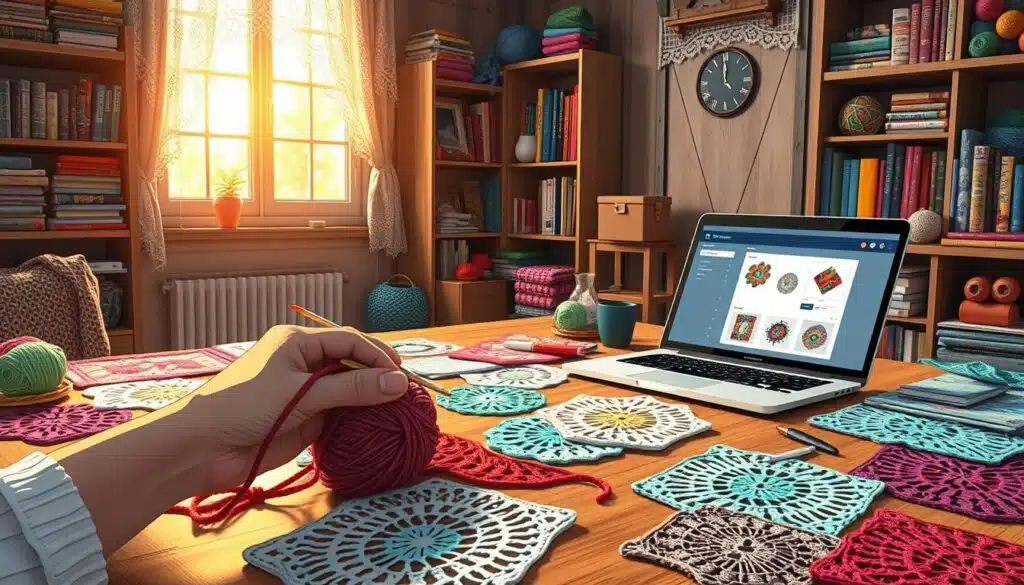
You can adapt published patterns by taking it slow and methodical. First, study the schematic, stitch legends, and construction notes. This helps you understand which parts control shape and which create texture.
Decide where to change stitch counts and where to change rows. To widen a piece, adjust the foundation chain or cast-on based on your swatch math. For more length, add rows based on your rows-per-10-cm measurement. These steps let you adjust size without changing the design’s essence.
Patterns with repeats need extra care. Keep stitch multiples the same to keep motifs aligned and neat. Find a target stitch count that matches a full number of repeats plus any extras. If your desired width is not a legal multiple, try a different hook or yarn before forcing uneven repeats.
Do the math using your swatch to plan shaping points. For garments, distribute increases and decreases to keep shoulders, necklines, and armholes balanced. For blankets, count whole repeats across the foundation chain and adjust the number of squares or rounds instead of distorting the motif.
Make a short test panel when you tweak a repeat or change a stitch multiple. This small sample shows if your adaptation works and if the texture is right. If the motif looks wrong, rethink the stitch count or try different yarn.
If you need quick help fixing stitch or repeat issues, check this guide: fixing crochet mistakes. It can save you time when resizing patterns and keeping stitch multiples right.
When a pattern is side-to-side, changing stitch counts affects length. When it’s top-down, changing rows usually alters length without changing width. Remember this when adapting patterns to only adjust what you intend to.
If you face a stubborn mismatch between size and repeats, accept small compromises. Slightly alter finished measurements, swap to a hook a half size larger or smaller, or rebalance shaping. These tweaks help you resize patterns while keeping repeats and stitch multiples intact.
Resizing blankets: quick hacks for width and length
Want a blanket that fits your bed or couch without guesswork? Start with clear measurements. Knowing mattress measurements for width, length, and depth is the fastest way to get blanket sizing right. Take a tape measure, note the numbers, then plan extra fabric for drape and pillow tuck.
As you chain the foundation, lay that chain across the mattress or an existing blanket to check progress. This hands-on trick beats eyeballing and keeps your chain aligned with your target width. If your pattern needs a multiple, count multiples as you go so you don’t frog five feet later.
For bedspreads aim for extra drape. Add mattress depth twice to width and at least once to length to allow for side fall and tuck. For example, a queen mattress that is 60″ × 80″ with 10″ depth becomes 80″ wide by about 90″ long. Add pillow tuck if you want a tailored look and adjust your drape calculations.
Continuous motifs save time: add rounds until you hit your target. For regular square blankets change the number of squares or the size of each square. Lay out finished squares frequently to check color flow and final dimensions. These granny-square adjustments keep the layout balanced without ripping.
Swatch math is key when changing yarn weight. Measure stitches-per-10-cm and rows-per-10-cm, then convert those numbers into foundation chain counts and rounds needed. Use simple division and multiplication to translate gauge into blanket sizing so your final piece matches your intent.
Quick practical hacks:
- Chain then check: test width on mattress as you work to avoid redoing foundation.
- Respect stitch multiples: add or remove repeats in small batches so pattern motifs stay consistent.
- Favor rounds over layout changes: for continuous granny motifs, grow outward.
- Include pillow tuck when you need it: add about 16″ to final length for most queen bed tucks.
| Item | Example (Queen) | How to use it |
|---|---|---|
| Mattress measurements | 60″ × 80″ × 10″ | Record width, length, depth before chaining; use depth for drape math |
| Target blanket sizing | 80″ × 90″ (without tuck) | Add depth twice to width and once to length for bedspread drape calculations |
| With pillow tuck | 80″ × 106″ | Add ~16″ for pillow tuck when you want an overhang at the head |
| Granny-square adjustments | More rounds or more squares | Work rounds on continuous motifs; change square count or size for regular layouts |
| Gauge conversion | Stitches/rows per 10 cm from swatch | Convert to foundation chain and rounds using simple formulas |
Resizing garments: fit-focused adjustments you can make
Want a sweater that fits like it was made for you? Look at your favorite clothes in the closet. Note the shapes and seams that flatter you. Search Ravelry or Pinterest for similar constructions and check pattern notes, tutorials, and size ranges before you commit.
Make a large swatch and measure rows and stitches per inch. Use those numbers to plan garment fit adjustments. If you need to change bust size, pick a pattern size closest to your chest and add or subtract stitches in multiples that preserve stitch repeats. For side-to-side constructions, tweak stitch counts; for top-down or bottom-up builds, add or remove rows in the body.
Choosing patterns and shapes that flatter your body before you start
Look for patterns with the construction you prefer: raglan, set-in sleeve, yoke, panels, top-down, or side-to-side. Patterns with clear schematics make garment fit adjustments simpler. If a design has motifs or repeats, keep multiples intact when you resize so the look stays balanced. For more inclusive options, check resources like inclusive pattern roundups to find ready-made sizes and tutorials.
Changing body length, bust/chest, and sleeve dimensions using rows and stitch counts
Body length is usually changed by adding or removing rows in the torso section. Remember hems and borders add length, so factor those into your row math. To change bust size, you can choose a different pattern size or alter stitch counts across the bust with evenly spaced increases or decreases.
Sleeves respond well to simple math. To change sleeve length, add or subtract rows before the cuff or after the cap, depending on construction. To change sleeve width, work more increases or skip some to slim the tube. You can make sleeves in a different size than the body for a custom fit.
Understanding ease, schematics, and where to try on as you go
Ease matters. Compare your measurements to the pattern’s schematics to see if the numbers are finished garment measurements or body-to-fit dimensions. Positive ease gives room to layer. Negative ease gives a fitted silhouette.
Use your swatch to convert desired inches into rows and stitches. Mark fittings: pin pieces, baste seams, and try on early. That lets you correct shaping before you commit. Keep gauge in view and be ready to adjust as you go; iterative fitting prevents large ripbacks and delivers a better final result.
Swap yarn weight and hook size to scale patterns faster
Changing yarn weight or hook size lets you control a project’s size quickly. Use thicker yarn and a bigger hook for a larger blanket or sweater. Or, choose lighter yarn and a smaller hook to shrink a project.
Remember, these swaps are experiments. The stitch count, drape, and yardage will change.
How heavier or lighter yarn affects finished size and drape
Heavier yarn with a larger hook makes stitches wider. This results in garments that relax and drape differently. On the other hand, lighter yarn with a tighter hook creates denser, firmer fabric.
Gauge per 10 cm also changes with these choices. So, you’ll need to update your pattern’s stitch and row math.
Referencing the yarn label and recommended hook—plus when to swatch again
Look at the yarn label for fiber content, yardage, and the recommended hook. Use this as a starting point. Make a fresh swatch whenever you change yarn weight or hook size.
Wash and block the swatch like you plan to treat the final piece. Then, measure it.
When substituting yarn is a good idea and when it’s risky (froggability, halo yarns)
Yarn substitution can save a project if your original yarn is hard to find or too expensive. Choose yarns with similar fiber and yardage for consistent drape and gauge.
Avoid mohair blends and fuzzy halo yarns for testable garments. These yarns can cause poor stitch definition and are hard to frog.
For projects that might need ripping back, pick yarns that tolerate reworking. Acrylic and smooth wool blends are good for clean unpicks. If you must use a halo yarn, freeze a small cut length in a sealed bag to loosen fibers before frogging.
After substituting yarn, redo your math. Measure stitches and rows per 10 cm on the blocked swatch. Recalculate yardage needs and sample pattern motifs to confirm readability. This extra step saves time and yarn when scaling a pattern.
Working with stitch multiples and construction methods
Before you change a pattern, take a breath and count. Finding stitch multiples in the foundation chain keeps repeats neat and saves frogging later. Say a repeat reads multiple of 6+3; count aloud while you chain. This simple habit helps you hit the right multiple without a calculator and keeps textured motifs aligned.
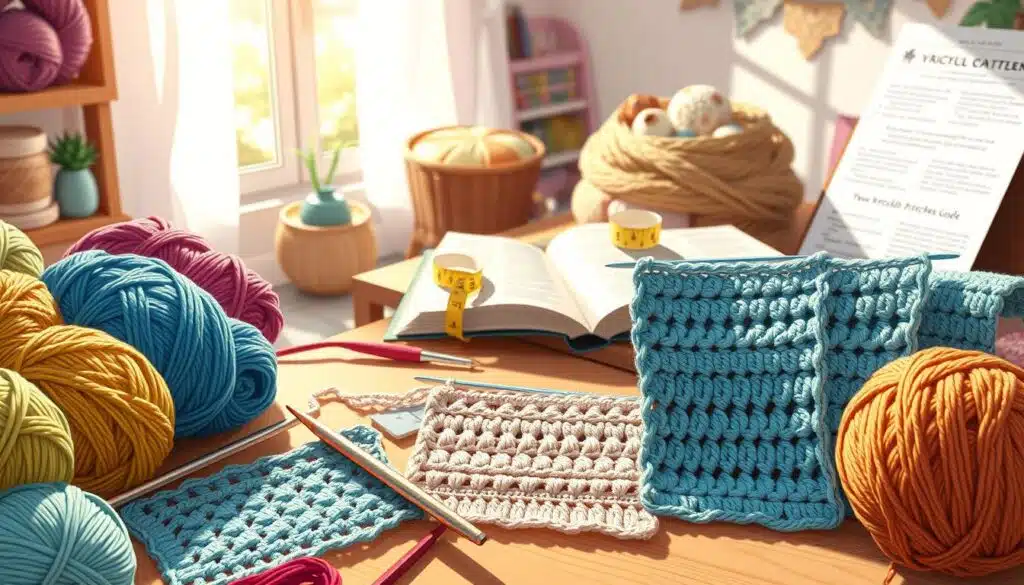
Recognizing repeats in chains and rows
Look for clues in the pattern: phrases like “multiple of” or a repeating cluster signal where you must preserve stitch multiples. Use a small swatch to map how many stitches each motif consumes. This swatch math tells you how many repeats will fit your target width and where to add or remove repeats for balance.
How construction style affects resizing
Different construction styles change where you make edits. With bottom-up and top-down garments, you can add or subtract rows to alter length without touching stitch counts. Side-to-side constructions need stitch-count changes to change length. Yoke pieces force you to reallocate stitches when you split for sleeves; panels let you change panel size or count for easier adjustments.
You can test construction changes on small swatches and check pattern sections on models from brands like Lion Brand and Berroco for real-world examples. This helps you see how top-down resizing or panel tweaks alter fit before committing to an entire garment.
Adjusting armholes and sleeve allocations
To adjust armholes, first decide whether your style is drop-shoulder, set-in, or panel. Drop-shoulder or panel styles let you change side-seam length to alter armhole depth. Set-in sleeves need shaping changes; you should plan increases and decreases so sleeve caps match the altered armhole.
For yoke designs, reallocate stitches to sleeves or body. Increase underarm chains or add a few stitches to sleeve allocations to avoid tight underarm woes. Use your swatch gauge to calculate how many stitches equal the inch or centimeter you need to add.
Neckline adjustments without wrecking fit
Small changes at the neckline can shift the whole fit. Change shoulder seam length or tweak decrease rows for a narrower or wider opening. If you reduce neckline depth, expect slight changes to armhole shape and sleeve fit; map those downstream effects before you alter stitch counts.
Try minor collar or trim depth tweaks first. Adding or subtracting just a few rows of ribbing or single crochet often yields the desired neckline adjustments without reworking the entire yoke or front shaping.
Practical checklist and quick math
- Make a swatch and measure stitches per inch to convert desired inches into stitches.
- Map how a bust change affects sleeve and shoulder sizing; reallocate stitches accordingl
- Keep stitch multiples intact where pattern repeats require them; shift whole repeats rath
- Count foundation chains aloud to hit multiples like 6+3 when chaining for motifs.
- When in doubt, try the piece on as you go and use pinning to preview armhole and neckline changes.
| Construction Style | Where to Change | Best For | Notes |
|---|---|---|---|
| Top-down | Add/remove rows for length; reallocate stitches at yoke | Seamless garments, easy to try on | Top-down resizing lets you test fit as you go; ideal for top-down resizing tactics |
| Bottom-up | Rows for length; change waist shaping | Fitted waists, long bodies | Good for garments needing precise length control |
| Side-to-side | Adjust stitch counts for length | Shawls, some pullovers | Changing stitch counts alters both width and pattern repeats |
| Yoke | Reallocate stitches between body and sleeves | Set-in or raglan style tops | Careful math needed to keep sleeve caps and armholes balanced |
| Panels | Change panel size or count | Modular garments, colorwork | Most forgiving for resizing; keep stitch multiples per panel |
For textured repeats and stitch ideas, check a guide like textured crochet stitches to match motifs to your stitch multiples. This resource helps you choose patterns that tolerate adjustments and keeps your repeats looking intentional.
On-the-fly adjustments and measuring as you go
When your project starts to drift from the schematic, quick fixes keep you sane. Keep a tape measure within reach and set a rhythm: measure after every few pattern repeats, then compare to your target. This habit helps you monitor gauge mid-project and catch shifts before shaping becomes impossible.
Monitor gauge mid-project by counting stitches across a fixed length and checking row height. Record stitch and row counts for a 10 cm section so you can use swatch math to calculate needed adjustments. If rows are taller than expected, plan fewer rows to hit length; if stitch density loosens, add rows or change hook size for the remaining work.
How to modify rows and stitches without panic
Use your swatch-derived formulas to convert discrepancies into exact counts. For example, if your swatch shows 18 sts per 10 cm and the bust needs 50 cm, multiply to find the final stitch count. Adjust increases or decreases across panels to keep shaping balanced.
Pinning pieces and trying on as you go
Lay pieces flat, pin seams, or slip them over your shoulders to check fit before committing to final seams. Try-on as you go works best with garments and allows iterative fit checks that account for post-blocking change. If you’re working a blanket, measure against a mattress or an existing throw to avoid late surprises.
Deciding when to frog and when to adapt
Rip back when gauge mismatch breaks stitch multiples, ruins a motif, or forces impossible shaping. Choose to modify remaining work when the problem is small, reversible, or fixable by altering row counts, edge treatments, or seam placement. Use practical judgment over perfectionism.
For a deeper dive on planning and measuring before you resize, check the sizing guide linked in this helpful article: making it fit. Practicing on small adjustments builds your confidence with on-the-fly crochet adjustments and trains you to switch between ripping and revising like a pro.
Conclusion
You can resize crochet patterns with confidence by using a few simple tools. These include swatches, a tape measure, and careful math. Measure stitches and rows per 10 cm, test yarn and hook swaps, and keep stitch multiples intact.
This ensures your pattern repeats line up. These basics are key to any reliable resize crochet pattern.
For garments, preparation is key. Choose patterns with clear schematics and ease. Swatch and block, and try pieces on as you go.
Monitor gauge and adjust rows or stitch counts early. This avoids ripping out later. It keeps waste low and wearability high.
Blankets get quick wins from practical hacks. Chain to mattress size, add squares or rounds, and use drape math for bedspreads and throws. Remember the final practical reminders.
Swatch first, measure often, preserve multiples, and choose forgiving yarns while you practice. These tips will help you resize with less stress and more fun.