
You’re about to enter a world of joy, small enough to fit in your pocket. Amigurumi tutorials make it simple to learn, whether you’re into quick crochet toys or detailed doll patterns. MJ from Hello Yellow Yarn is a mum and crocheter who shares patterns inspired by her kids. Her approach shows that amigurumi can be fun, easy, and full of personality.
You’ll find both free and paid guides from places like Green Frog Crochet and Wool Toys Marina. By signing up for newsletters and joining crochet-alongs, you get step-by-step help and pattern updates. These events make it easier to follow along and finish your projects with support.
Looking for the right yarn? Many makers suggest Berroco Vintage for soft, durable dolls. From tiny worry dolls to detailed Mia doll-style patterns, clear instructions and friendly tutorials will help you stitch quickly. You’ll find resources that let you learn at your own pace, all while having fun making your first cuddly toy.
Key Takeaways
- Amigurumi tutorials are great for beginners and offer both free and paid options.
- Designers like MJ from Hello Yellow Yarn bring a warm, family-inspired voice to patterns.
- Join crochet-alongs and newsletters for step-by-step support and pattern drops.
- Shops such as Green Frog Crochet and Wool Toys Marina offer high-quality amigurumi patterns.
- Berroco Vintage is a recommended yarn for soft, lasting crochet dolls.
Why You’ll Love Amigurumi: Joys of Crochet Toys and Dolls
Amigurumi is a fun way to relax. It lets you create tiny toys with yarn. You’ll feel a sense of pride and creativity.
Emotional and creative benefits of making amigurumi
Creating a doll can be very emotional. It’s like bringing a memory to life. Every stitch calms your mind and lifts your mood.
MJ from Hello Yellow Yarn designs dolls based on kids’ personalities. This makes your toys special. You learn new skills and create something truly yours.
Perfect handmade gifts for Valentine’s Day, birthdays, and keepsakes
A crochet bear is a great gift for Valentine’s Day. It shows you care. This turns a simple toy into a treasured keepsake.
Use free or paid patterns to match your skill. A handmade gift, like a mini animal or detailed doll, is always a hit. It’s a memory that lasts longer than any store-bought gift.
How amigurumi connects you to a crafting community (newsletters, crochet-alongs)
You’re not alone in crochet. The community offers newsletters, guides, and crochet-alongs. These keep you motivated and teach new skills.
Share your work on Pinterest and Instagram. Swap tips in groups and sign up for newsletters. This way, you grow your skills and celebrate with others.
Amigurumi tutorials
Finding the right amigurumi tutorial can be like searching for treasure. You need clear steps, helpful photos, and patterns that fit your skill level. Look for sources that explain materials, list hook sizes, and show stitch counts to avoid mistakes.
What counts as an amigurumi tutorial
A good tutorial takes you from start to finish. It includes written patterns, video walk-throughs, and live crochet-alongs. MJ from Hello Yellow Yarn is a great example, blending personal stories with easy-to-follow steps.
Where to find quality tutorials
Search for blogs, Etsy shops, and pattern libraries with good reviews. Green Frog Crochet tutorials are known for their clarity and photos. Etsy sellers like Little By Little LB and Wool Toys Marina offer detailed PDFs. Amigurumi Today also has free patterns for practice.
Free vs paid tutorials
Free patterns are great for quick practice or small projects. They let you try techniques without a big commitment. Paid patterns are more detailed, with clear photos and designer support. Look for consistent stitch counts, clear photos, and positive reviews.
For reliable results, sign up for designer newsletters or join crochet-alongs. These often include timed lessons and pattern updates, making learning smoother and more fun.
Essential tools and materials for adorable amigurumi
You want cute, durable toys that survive hugs and washings. Choosing the right supplies makes that possible. Start by matching materials to your pattern and the age of the recipient.
Best yarn choices for toys
Look for yarn that is soft, smooth, and holds shape. Many makers call Berroco Vintage amigurumi a top pick because it blends softness with stitch definition. It comes in many shades, which helps when you match skin and clothing tones.
If you prefer alternatives, choose acrylic or wool blends labeled for toys. These stay plush after washing and resist pilling. Pick a yarn weight that fits your hook and pattern to keep stuffing from showing through.
Hook sizes, stuffing options, and safety eyes
Select a hook size that creates firm fabric. Patterns often list a recommended hook. Using one size smaller than the yarn label suggests gives a tighter fabric and neater shaping.
Stuffing choices change the toy’s feel. Polyester fill is light, washable, and easy to shape. Natural fibers suit Waldorf-style dolls for a denser, warmer finish. Consider your project’s intended use when deciding on stuffing options.
Safety eyes add instant personality. Choose sizes and styles that meet child-safety standards if the toy is for a young child. For heirloom dolls, stitched or embroidered eyes give a fully safe result.
Helpful extras: stitch markers, tapestry needles, and dress forms for display
Small tools speed up work and improve the finish. Stitch markers keep count during rounds, tapestry needles make invisible seaming simpler, and blocking pins help curves settle. These amigurumi tools are indispensable once you move beyond basics.
Dress forms and display stands are handy if you photograph or sell your dolls. Green Frog Crochet shares ideas for using doll dress forms to showcase outfits. A neat display highlights tiny details and helps buyers imagine scale.
| Item | Why it matters | Quick tip |
|---|---|---|
| Berroco Vintage amigurumi yarn | Soft wool blend, wide color range, great stitch definition | Use for skin, hair, and clothing to match popular palettes |
| Hook set | Controls fabric density and shaping accuracy | Carry smaller sizes to tighten stitches when needed |
| Stuffing options (polyester, wool) | Determines firmness, weight, and washability | Choose polyester for machine-washable toys; wool for Waldorf feel |
| Safety eyes | Adds expression while meeting safety rules for toys | Pick the right diameter for age group; back them with felt |
| Stitch markers & tapestry needles | Essential for accuracy and neat assembly | Use locking markers for complex color changes |
| Dress forms & display stands | Helps present finished dolls professionally | Use adjustable stands to show different poses |
Basic stitches and techniques every amigurumi maker should master
You want toys that hold shape and personality. Start by getting comfortable with core amigurumi stitches. Single crochet is the backbone of most patterns. Practice tight, even tension so your stuffing stays put.
Work a magic ring tutorial until you can start rounds without gaps. That first loop sets the stage for smooth tops on heads and bodies. If you prefer a guided demo, check out the clear walkthroughs at lilleliis tips and tutorials for practical examples.
Learn invisible decrease amigurumi to remove stitches cleanly. This technique keeps curves neat and hides reduction points. Pair it with accurate increases to shape limbs and snouts without awkward bumps.
Shaping amigurumi depends on stuffing placement as much as stitch choice. Add small amounts of fiberfill, then smooth and redistribute to avoid lumps. Keep stitch count management strict; one missed stitch can throw off a silhouette.
Seamless joins matter when you attach arms, legs, and tails. Use matched yarn and a tapestry needle to ladder-stitch pieces with minimal visible seam. That tiny extra time gives a professional finish.
Practice these techniques in short experiments: make a small ball, a tiny ear, or a mini limb. Repeat until tension, decreases, and joins feel natural. Your patterns will reward you with predictable shaping and charming results.
Choosing patterns that suit your skill level
Choosing the right pattern is key to enjoying your craft. Look at the skill level, stitch techniques, and materials needed. Hello Yellow Yarn offers patterns inspired by family life. They help you build confidence and learn basic skills.
For quick wins, try a worry doll pattern or a mini toy. Little By Little LB’s small makes are fast and satisfying. They’re great for when you need a gift quickly. Amigurumi Today’s free Amy and Rosalie doll patterns are easy for beginners. They teach you magic ring, single crochet, and simple sewing.
Intermediate projects
When you’re steady with stitch counts, try dolls with hair and clothes. Green Frog Crochet’s Mia doll is a good choice. It teaches you how to attach hair and make clothes.
Advanced projects
Save advanced amigurumi for when you enjoy detailed work. Wool Toys Marina’s Waldorf-style dolls use natural fibers and mixed techniques. Tommy the Fisher style patterns have lots of accessories and detailed shaping. These projects require patience and teach advanced skills.
Choose patterns based on technique lists and complexity. If you don’t know a stitch, find a tutorial first. Join crochet-alongs or follow designers on Instagram to see finished projects. This way, you pick patterns that match your skills and keep you hooked.
Design inspiration from popular amigurumi creators and shops
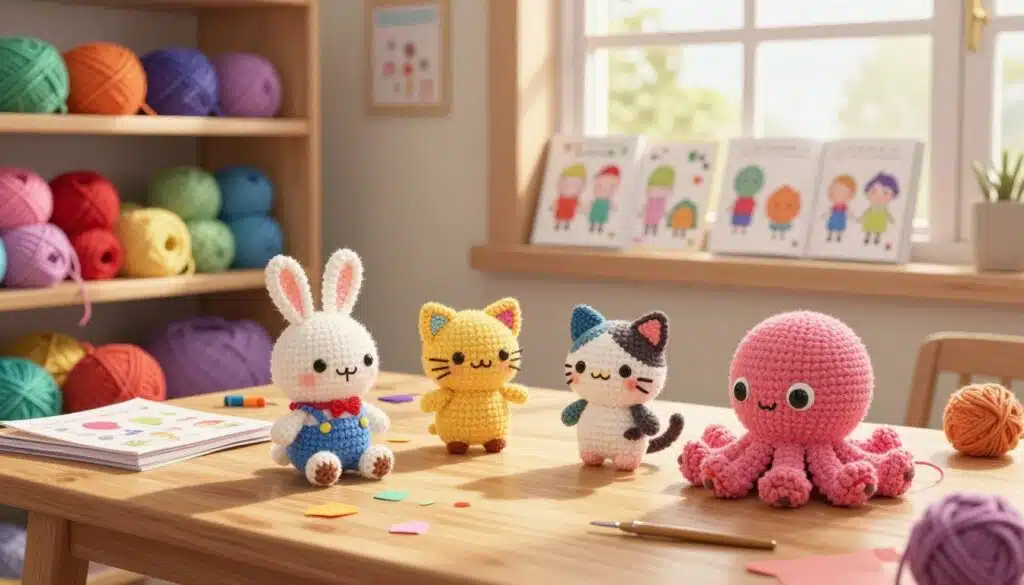
Looking for new ideas for your next toy? Start by following makers who are always pushing the limits of style and technique. Green Frog Crochet is known for its charming doll designs and detailed wardrobes. This helps you practice shaping and tailoring.
Wool Toys Marina combines knitted garments with soft, Waldorf-friendly bodies. Little By Little LB is great at creating tiny worry dolls and sweet, compact designs.
For personalization tips, check out MJ at Hello Yellow Yarn. MJ shows how to adapt colors, accessories, and facial expressions to match a child’s personality. You can do the same by swapping colors and props to match the mood or season.
Instagram and Etsy are full of designers sharing previews, pattern releases, and freebies. Use these platforms to spot trending palettes and construction tricks. Signing up for newsletters and crochet-alongs can give you early access to patterns and community support.
Want a quick list of makers to explore? The article mentions ten notable designers. It’s a great starting point for more discovery. Check out a curated roundup for deeper reading and links to shops and styles.
Try mixing influences. Pair a Little By Little LB mini body with a Wool Toys Marina knitted sweater. Then, add Green Frog Crochet–style dress details. This mix gives you fresh amigurumi inspiration while respecting the original designers.
If you prefer reference books, combine online finds with print guides. A short, targeted reading list can sharpen skills you see on Instagram or Etsy. It helps you tackle complex garments and faces with confidence.
10 awesome amigurumi designers
Color, yarn selection, and finishing touches for personality-packed toys
Choosing colors and yarn is more than just picking a shade. It’s about creating a character. You can make a toy look friendly, cozy, or playful. Use color palettes to tell the toy’s story.
Choosing skin, hair, and clothing colors
First, decide on the mood you want. Soft colors are calm, bright ones are lively, and muted ones are vintage. The Mia doll shows how a few colors can make a big difference.
Test yarn in natural light. Berroco Vintage colors look great under different lights. They hold their shape well on small items.
Creating expressive faces and tiny details that add charm
Eyes, brows, and mouth shape the face. Small changes can make a big difference. Try embroidered eyes and blushed cheeks for a unique look.
Add small props like a fox ear headband or a tiny teddy. These add personality and make gifts special.
Blocking, trimming, and final assembly tips for a polished look
Finish with careful assembly. Make sure everything is even and neat. Trim yarn hair and shape locks as needed.
Blocking small pieces helps even out stitches. Follow amigurumi finishing steps for a final touch. This includes tidying ends and fluffing to set the personality.
Amigurumi doll hair, clothing, and accessories
You want your doll’s hair to look good, clothes to fit right, and accessories to delight. Start with simple hair techniques like looped strands or sewn wefts. These methods create different looks, from messy play-hair to sleek styles.
Techniques for attaching hair and making realistic or stylized locks
For realistic hair, use yarn bundles and a latch-hook. This method creates knots that look like real hair. For a stylized look, attach braids or use short stitches for a bob.
Pay close attention to where you place the hair. A high hairline changes the doll’s face shape. Staggered rows add volume.
Always check gauge and placement in trusted patterns like Hello Yellow Yarn and Green Frog Crochet. Small changes in yarn or hook size affect how the hair falls. Test a swatch before starting.
Patterns and tips for tiny dresses, hats, and headbands
Tiny clothes need clear stitch counts and short repeats. Use basic templates for the body, then add shapes for armholes and necklines. Separate patterns make it easy to mix outfits without redoing the doll.
Designers like Wool Toys Marina publish patterns that layer clothes well. For face details, see a guide on amigurumi face embroidery to add life to your doll’s face.
Using dress forms and displays to showcase your finished dolls
A well-made doll dress form makes every outfit look like a miniature wardrobe. Use it to check fit, adjust hems, and take photos. Dang’s free doll dress form pattern on Instagram is a great starting point.
Finish with small accessories like tiny buttons, scarves, or felt shoes. These extras tell a story and increase the doll’s value when you sell or give it away.
Child-safe and Waldorf-style amigurumi considerations
You want toys that spark play and stay intact during rough toddler imagination. Choose yarns and stuffing that meet toy safety crochet standards. Cotton and cotton blends are good for washing, while polyester fill keeps shapes without choking risks.
For guidance on toddler-safe construction, see a practical primer like surefire tips for toddler-safe amigurumi.
Keep parts large and permanent. Avoid beads, buttons, and detachable trims that can come off during chewing. Use smaller hooks to close gaps, secure seams with multiple passes of whip stitch, and crochet layers on.
These steps make child-safe amigurumi more durable and reliable for everyday play.
Waldorf amigurumi favors natural fiber dolls and restrained features that invite creative storytelling. Select cotton, linen, or undyed wool for bodies, and consider natural stuffing for a traditional feel. Maintain simple, stitched faces so expressions remain soft and open-ended, encouraging imagination.
Mixing crochet and knit elements gives texture without compromising safety. Knit sweaters, crocheted bodies, and embroidered faces combine well when you seam pieces securely and avoid glued or loosely sewn accents. For eyes, choose embroidery or felt methods firmly stitched in place.
Practical toy safety crochet tips: pick machine-washable yarn when possible, avoid hand-dyed skeins that might bleed, and test firmness. Check toys regularly and retighten stitches if you spot wear. These habits keep your creations safe and long-lived.
If you aim for a Waldorf-inspired shelf, keep limbs flexible and clothing simple. This way, children can dress and move dolls without small fasteners. When you follow these approaches, your amigurumi will pair the warmth of natural fiber dolls with the resilience of child-safe design.
Sharing, selling, and promoting your amigurumi creations
You’ve made a charming doll or critter and you want people to notice. Start with clear images and a friendly voice that tells the story behind the toy. Good visuals and simple copy help you sell amigurumi without sounding pushy.
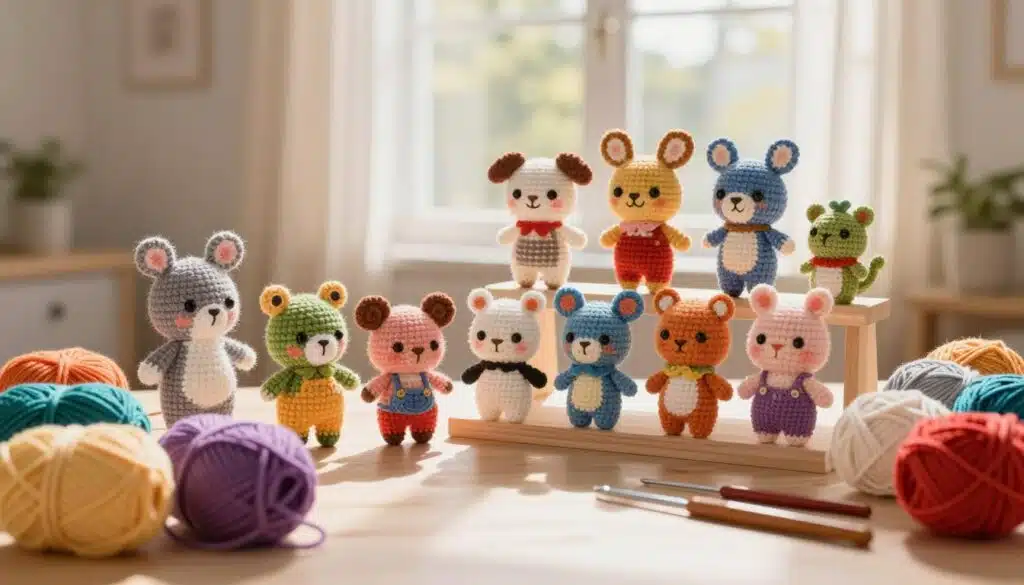
For crochet photography, use natural light and plain backgrounds. Show the doll from at least three angles: a close-up of the face, a full-body shot, and a detail of materials. Mention yarn brands, hook size, finished dimensions, and safety notes. These details boost trust and click-throughs.
When you set up Etsy amigurumi listings, write a clear title and a concise description. List the materials, skill level, care instructions, and whether the item is machine washable. Good tag choices and honest shipping timelines reduce returns.
To sell amigurumi as patterns, include a pattern preview, a materials list, and a simple skill checklist. Offer photo-heavy PDF pages and an optional video link for tricky steps. Clear formatting lowers confusion and increases positive reviews.
Run a crochet-along to build momentum. Announce weekly goals, post progress photos, and pin instruction highlights for Pinterest traffic. Use crochet-along promotion in your newsletter and social posts to convert viewers into subscribers.
Newsletters can feature a free mini pattern, a behind-the-scenes photo, and a subscriber-only discount for new Etsy amigurumi listings. Ask readers to reply with photos of their makes to create community and social proof.
Track what works by noting which pins and photos get the most saves. Repeat successful crochet photography styles and reuse descriptive phrases that led to clicks. Small tweaks over time bring steady growth.
| Promotion Tactic | Quick Action | Why it Works |
|---|---|---|
| High-quality product photos | Shoot 3-5 angles in daylight | Builds buyer confidence and boosts shares on Pinterest |
| Etsy amigurumi listings | Include yarn brand, hook size, and finished size | Reduces questions and improves search visibility |
| Newsletter offers | Send a free guide or mini pattern | Converts casual visitors into repeat customers |
| Crochet-along promotion | Post weekly deadlines and share hashtags | Encourages engagement and generates user content |
| Social proof | Feature customer photos and testimonials | Strengthens trust and prompts purchases |
Troubleshooting common amigurumi problems
After hours of work, your amigurumi might look a bit off. First, check the hook size and tension. A too-large hook can cause loose stitches and visible stuffing. Try a smaller hook than the yarn suggests if you crochet loosely.
Test with a swatch and hold it to light. This ensures the fabric is tight enough.
If the shape is uneven, try redistributing the stuffing. Stuff high-stress areas like noses and joints before closing. For wobbly parts, add more stuffing at the seam. Then, sew through each stitch on the loose piece for a strong join.
For long arms or legs, double-stitch the attachment points for extra durability.
Loose ends can appear later if not woven properly. Weave ends through four stitches, back and forth over three rows. This keeps stray ends hidden. If you see pills or stuffing leakage, rework the affected rounds and tighten the tension to fix the shape.
Fixing uneven shaping, loose stitches, and stuffing visibility
To fix visible lumps, open a few rounds, reposition the stuffing, and close with even decreases. If stitches look too big, switch to a smaller hook and re-stitch the rounds. For stuffing leakage, check the stitch density and consider an extra round of single crochet to close gaps.
How to read crochet patterns and correct stitch count errors
Take your time to learn how to read crochet patterns. Note the abbreviations and the stitch count for each round. Use stitch markers to mark each round and recount at the end to catch mistakes early.
If counts are off, add or subtract evenly across the round. This helps regain the pattern’s rhythm.
For specific tips, follow designer notes from blogs like Hello Yellow Yarn or Green Frog Crochet. When reading patterns, keep a pen and tally to avoid mistakes.
When to rip back, modify a pattern, or seek help from the community
If a mistake affects the overall shape beyond one round, rip back to the last good round and rework. If the pattern consistently produces the wrong shape, adjust the increase and decrease placement to achieve your desired look.
Community resources are invaluable. Join crochet-alongs, comment on designer pages, or post in social groups to show photos and ask questions. Other makers often share step-by-step fixes that save time and frustration.
| Problem | Quick Fix | When to Rip or Reinforce |
|---|---|---|
| Loose, open stitches | Switch to a smaller hook; tighten tension; add a round of single crochet | Rip back if multiple rounds are affected |
| Stuffing visible or leaking | Reposition stuffing; add fullness at joints; weave ends securely | Re-stitch gap rounds; reinforce seam stitching |
| Uneven shaping | Adjust stuffing distribution; even out increases/decreases | Rip to last correct round if shape is off |
| Incorrect stitch counts | Mark rounds, recount, correct by adding/subtracting evenly | Rip back to the round before error for major count drift |
| Weak attachments | Sew through whole stitches; double-stitch long limbs | Reattach and reinforce multiple times for durability |
Follow these steps for practical amigurumi troubleshooting. For a step-by-step guide, join crochet-alongs and designer comment sections. They offer real-time help and pattern clarifications when you need them most.
Conclusion
Amigurumi is a fun hobby that lets you create cute toys. Designer blogs like MJ’s offer great inspiration. They show you how to make shapes based on real things.
Start with a simple pattern, like a worry doll or a small toy. This will teach you the basics of single crochet, magic ring, and shaping. It’s a great way to begin.
Choose a clear pattern and pick the right yarn and hook. You’ll also need some stuffing. This will help you make your first amigurumi.
Join a crochet-along or sign up for newsletters to learn faster. Free and paid tutorials can help you find what works best for you. This will boost your confidence quickly.
Follow creators like Green Frog Crochet and Wool Toys Marina for inspiration. Etsy and Instagram are also great for new ideas and tips. They can help you with your crochet toy.
For a quick boost, check out Amigurumi Adventures. It has real projects and resources. With a small kit and a simple pattern, you can start making amigurumi today.
It’s a great way to make gifts and start conversations. Treat this as your crochet toy wrap-up. It’s the start of many more fun projects.
FAQ
What counts as an amigurumi tutorial and where should you look first?
An amigurumi tutorial can be a written pattern, a photo guide, a video, or a crochet-along. Start with designer blogs like Hello Yellow Yarn for friendly patterns. Check free pattern hosts like Amigurumi Today and Etsy for paid patterns. Join newsletters and crochet-alongs for support and freebies.
Should you choose free or paid patterns as a beginner?
Use free patterns for practice. Try worry dolls, mini toys, and Amigurumi Today freebies. Paid patterns on Etsy offer extra photos and designer support. Choose patterns with skill level, yarn and hook specs, and photos.
Which yarn should you use for dolls and why is Berroco Vintage recommended?
Pick a soft, durable yarn as the pattern suggests. Berroco Vintage is great for dolls because it’s soft and has lots of colors. It’s perfect for skin tones and clothes.
What basic tools and extras do you need to make an amigurumi doll?
You’ll need the right crochet hooks, stuffing, safety eyes, stitch markers, and tapestry needles. Extras like dress forms and small scissors make finishing easier.
What stitches and techniques must you master first?
Learn single crochet, magic ring, increase, and invisible decrease. Practice even stuffing, managing stitch counts, and seamless joins. Crochet-alongs are great for practice.
How do you pick a pattern that matches your skill level?
Look at the designer’s skill level and sample photos. Start with simple projects like worry dolls. For dolls with hair and clothes, try Green Frog Crochet’s Mia patterns. Advanced projects include Waldorf dolls and mixed-media pieces.
How can you personalize a pattern to reflect a child’s personality?
Swap colors, add tiny accessories, and change facial expressions or hair styles. MJ from Hello Yellow Yarn designs patterns inspired by children’s personalities. Keep gauge and stitch counts consistent.
What are the best practices for doll hair attachment and styling?
Follow the pattern’s hair instructions carefully. Use secure attachments, trim evenly, and style with light blocking. For toddler-safe toys, avoid loose strands or secure hair.
How do you ensure amigurumi is child-safe, specially for babies and toddlers?
Avoid small detachable parts for young children. Use embroidered or securely attached safety eyes. Choose washable materials and secure all seams and attachments. Waldorf-style toys use natural stuffing and simple faces.
Which finishing techniques make your toy look polished and durable?
Even stuffing, tidy joins, secure sewing, and careful trimming of yarn hair sharpen your result. Follow stitch counts and use a tapestry needle for neat seams. Dress forms and good photography present your work well.
What should you include in an Etsy listing or pattern post to attract buyers?
Include clear photos, yarn brand and color names, hook size, finished dimensions, and skill level. Describe whether the pattern is written, charted, or includes photo steps. Mention any included add-ons like dress or accessory patterns.
How do you fix common amigurumi problems like uneven shaping or loose stitches?
Check stitch counts each round. Tighten tension or switch hook sizes for loose stitches. Reposition stuffing to remove lumps. Rip back if the mistake affects silhouette significantly, and ask for help if stuck.
How can joining a crochet-along or newsletter improve your skills?
Crochet-alongs offer step-by-step pacing, moral support, and troubleshooting. Newsletters deliver free guides, early access to patterns, and tutorial links. Both connect you to community feedback and keep you motivated.
Which designers and shops should you follow for quality amigurumi inspiration?
Follow Green Frog Crochet (Dang) for clear doll patterns like Mia. Wool Toys Marina offers Waldorf-inspired designs and mixed techniques. Little By Little LB has tiny worry dolls. Hello Yellow Yarn (MJ) has family-inspired patterns. Instagram and Pinterest are great for discovering free patterns and new releases.
What small accessories and add-ons often come with doll patterns?
Expect tiny dresses, hats, headbands, fox ear headbands, miniature toys, and dress-form display patterns. Many designers write accessory add-ons separately. Follow gauge and stitch notes to keep proportions correct.
How do you choose stuffing and materials for a Waldorf-style doll versus a play doll?
Waldorf-style dolls use natural fibers like wool or cotton stuffing and simple embroidered faces. Play dolls for children may use polyester stuffing for washability and securely attached safety components. Always follow age-appropriate safety guidance and the pattern’s material recommendations.
What role do photography and social sharing play in promoting your amigurumi?
Strong photos drive Pinterest shares and Instagram saves. Use natural light, simple backgrounds, and close-ups of details. Tag designers and yarn brands and use pattern or project hashtags. Good visuals help sell patterns and build an audience.