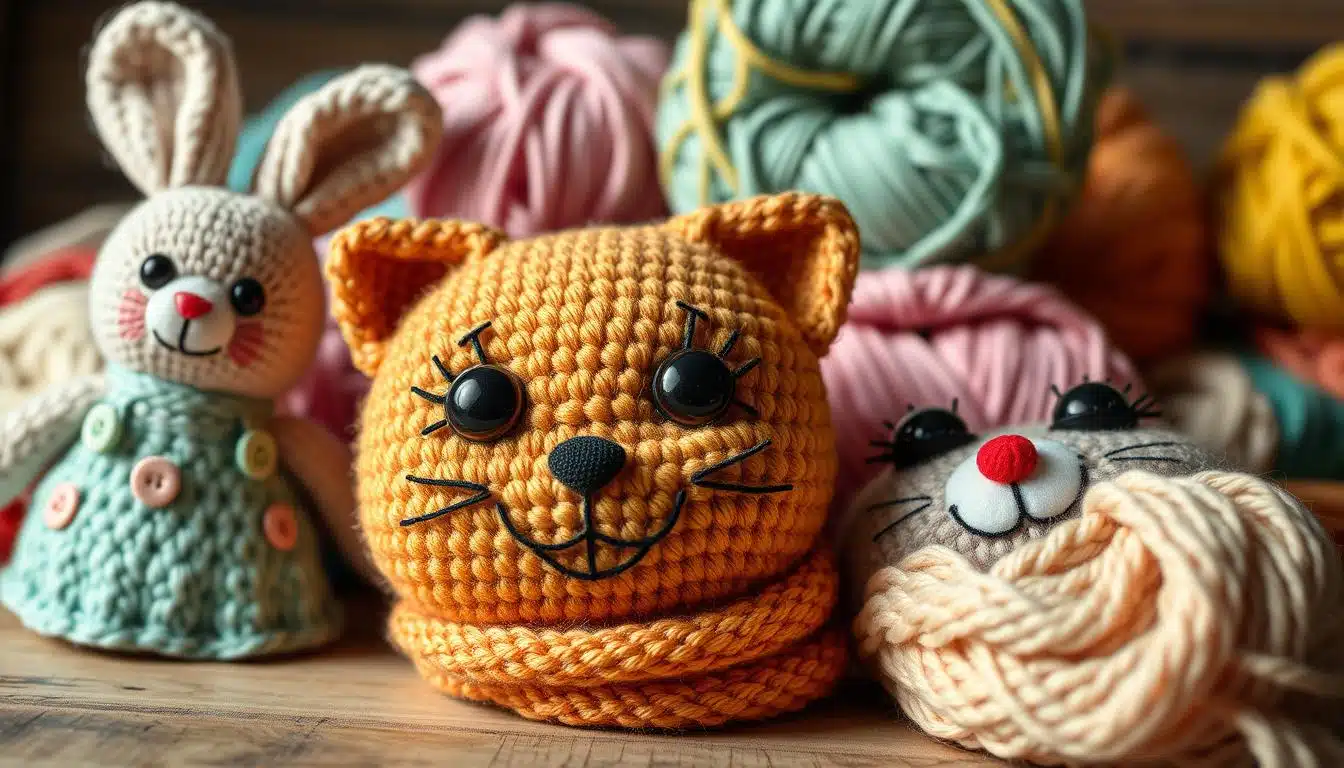
You make amigurumi because you love turning yarn into personality. Adding amigurumi facial features like thoughtful eyes or a tiny stitched mouth can transform a simple doll into a character that asks to be hugged.
This guide offers practical tips for crochet face embroidery and embroidered amigurumi. You’ll learn about eye choice, shaping, and placement. You’ll also see how stuffing and texture affect amigurumi expressions.
Embroidered details often outshine plastic parts for softness and customization. Safety eyes are also important. For step-by-step practice, check a reliable tutorial at Crochet Craze amigurumi tutorial to pair technique with examples.
Key Takeaways
- Facial details are the quickest way to add personality to your amigurumi.
- Embroidered amigurumi lets you customize mood with size, color, and stitch choice.
- Placement, stuffing, and head shape work together with amigurumi facial features.
- Use safety eyes when durability is key; choose embroidery for softness and safety.
- Practice basic crochet face embroidery stitches to get consistent, play-safe results.
Why Facial Details Matter in Amigurumi
Adding facial details to a plush is more than just decoration. It’s about making a first impression. Small changes in stitches can change a toy’s look from calm to playful quickly. This visual language tells us how the character feels.
How expressions transform a simple plush into a character
By adjusting eye height, mouth shape, and snout width, you can tell a story with your plush. Bigger eyes make a toy look younger. A slightly upturned mouth suggests friendliness. Changing these details can create unique personalities for your plush.
The psychology of eyes, mouth, and brows in toy appeal
Facial features send emotional signals that people understand right away. The size and spacing of eyes can show innocence. The angle of the brows can show surprise or seriousness. The shape of the mouth can show warmth or reserve. Knowing how to use these features can make your plush more appealing without making it too complex.
Choosing facial styles for different ages and audiences
Choose the right style for your audience. Babies and toddlers like soft features and pastel colors for safety. Older kids and collectors might prefer more detailed designs or safety eyes that look like human eyes. Think about the head shape and how much it’s stuffed to match the audience’s plush design.
For practical tips on finishing your amigurumi, like where to place eyes and what stitches to use, check out amigurumi finishing touches. It has tips on embroidery, eye placement, and stuffing to keep your plush looking good and lasting long.
amigurumi face embroidery
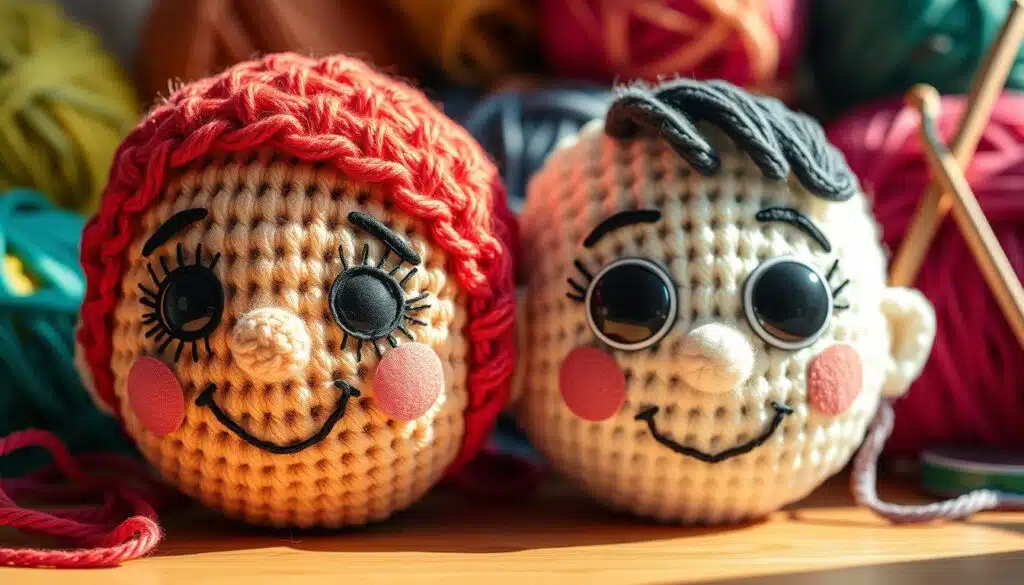
Choosing stitched details over hard plastics makes your amigurumi softer and safer. This change affects both its look and safety for toddlers. Stitched eyes and mouths reduce choking risks and allow for easy expression changes with thread.
Benefits of stitched details over plastic parts
Stitching faces lets you control size, shape, and placement for better expressions. Embroidered features vs safety eyes add a handmade charm that plastic parts can’t match. These faces are also durable for handling and washing thanks to play-safe finishes and hidden tails.
Customization possibilities: size, shape, color, and mood
You can customize amigurumi faces by changing pupil size, adding sparkle, or altering brow angles. Use different colors to set the mood; soft pastels are gentle, while saturated hues are bold. You can scale embroidery for any size toy without losing its character.
Materials and tools for embroidery on amigurumi (needles, floss, yarn)
Choosing the right materials for embroidery is important. Use six-strand embroidery floss for clear lines, worsted or sport yarn for chunkier features, and hand-sewing thread for small details. Match or contrast yarn and floss for the desired effect.
Needles are key: use embroidery/tapestry needles for floss, yarn-weight needles for thick yarn, and sharp hand-sewing needles for fine work. Keep sharp scissors handy and choose a strong floss brand like DMC for consistent colors.
PlanetJune-style secure stitching techniques work on closed and stuffed rounds. You can hide thread ends and lock stitches for secure buttons or beads. For more tips, see this guide at embroider crochet amigurumi.
| Feature | When to choose | Materials | Play-safe notes |
|---|---|---|---|
| Small, expressive eyes | When you need subtle emotion | Embroidery floss, tapestry needle | Hide tails; secure-knot finish |
| Bold, cartoon eyes | Large toys or bold characters | Worsted yarn, yarn-weight needle | Reinforce with backstitch; tuck ends |
| Blush and soft shading | Gentle, baby-friendly looks | Pink yarn or floss, soft needle | Light tension to avoid stuffing peek-through |
| Added embellishments | Decorative adult pieces | Buttons, beads, felt with thread | Use secure-stitching for play-use |
Choosing the Right Eyes: Safety Eyes Versus Embroidered Eyes
You have a fun decision to make: glossy plastic or stitched charm eyes. Your choice affects the toy’s personality, safety, and how much you’ll fiddle with it. Here are quick tips on safety eyes vs embroidered eyes, placement, and size to make your amigurumi look intentional.
Go for safety eyes for a bright, shiny look and strong hold. They come in various sizes, like 10mm and 12mm, perfect for small to medium toys. Install them before stuffing or remove stuffing briefly to fit the washer. Safety eyes are great for toys that will be handled a lot.
For a detailed guide on choosing eyes for amigurumi, check out this practical guide.
When embroidered eyes win: softness and personalization
Embroidered eyes are best for child-safe toys and adding a personal touch. You can create whites, pupils, lids, and tiny highlights. Adjusting stitch direction, color, or eyelid shape can change the expression. It might take some trial and error to get the look right.
Eye size and placement tips to convey youthfulness or maturity
Eye size greatly affects the toy’s age appearance. Larger, spaced-out eyes look youthful and cute. Smaller, closer-set eyes suggest maturity or sophistication. Use a guideline of about nine stitches apart for a standard smile area, leaving room for a mouth.
Always stuff before adding features, as crocheted shapes expand after stuffing.
Quick comparison to guide your choice
| Feature | Safety Eyes | Embroidered Eyes |
|---|---|---|
| Appearance | Glossy, doll-like eyes; consistent finish | Soft, handmade look; highly variable |
| Durability | High; washer secures firmly | Durable if stitched well; safer for young children |
| Customization | Limited to size and color choices | Unlimited: shape, highlights, eyelids, mood |
| Work required | Quick install, best before final stuffing | Time-intensive; involves trial and error for exact look |
| Best use | Chibi or toy with glossy, manufactured vibe | Heirloom toys, baby-safe items, expressive faces |
Keep eye placement consistent to develop your style. Whether you choose safety eyes or embroidered ones, small changes can make a big difference. Follow guidelines, stuff first, and then adjust until your creation looks alive.
Essential Stitches and Techniques for Expressive Faces
You want amigurumi faces that show playfulness, shyness, or mischief. Start with the right stitches and a steady hand. Simple choices can make a big difference.
Use the split stitch and chain stitch for clear outlines and mouths. For details like noses or eyelids, satin stitch works well. Drop French knots for sparkle, freckles, or eye highlights. These stitches are key for facial expressions.
When finishing a piece, use secure stitching methods. Insert your needle through a gap, then bring it up with a short tail. Stitch to the end, then back to the start gap. Tie a square knot, thread both ends into the needle, and bury the knot. Pull to hide it and trim. This keeps features safe and looks neat.
Basic tools and thread choices
Fine detail shines with embroidery floss and a small needle. For bold features, use worsted-weight yarn and a large needle. Use sewing or nylon thread for high-wear spots. Match needle size to thread for smooth stitching.
Techniques for closed and open pieces
If a piece is open, hide ends in stuffing. For sealed toys, follow PlanetJune’s secure stitching steps. This keeps tails hidden and makes toys safe for play.
Quick reference: stitch uses and tool pairings
| Stitch | Best for | Thread/Yarn | Needle |
|---|---|---|---|
| Split stitch | Outlines, mouths, delicate curves | Embroidery floss or fine yarn | Size 7–9 embroidery needle |
| Chain stitch | Flowing smiles and decorative lines | Embroidery floss or sport yarn | Sharp or crewel needle |
| Satin stitch | Filled shapes: noses, eyelids | Embroidery floss or doubled thread | Crewel needle, size 3–5 |
| French knots | Eye highlights, freckles, texture | Embroidery floss | Short sharp needle, size 7–9 |
| Secure finishing | Hide starts/ends on closed pieces | Sewing/nylon thread for reinforcement | Large blunt yarn needle for burying |
For tutorials and pattern ideas, check out Crochet Craze amigurumi characters. Practice the split stitch and French knots until your spacing looks right. A few stitches can give a lot of personality.
Crafting Eyebrows and Mouths That Show Emotion
Your amigurumi gets personality in small strokes. Start by testing eyebrow position and mouth curve on the finished head. Pin features or mark with removable chalk so you can tweak without commitment.
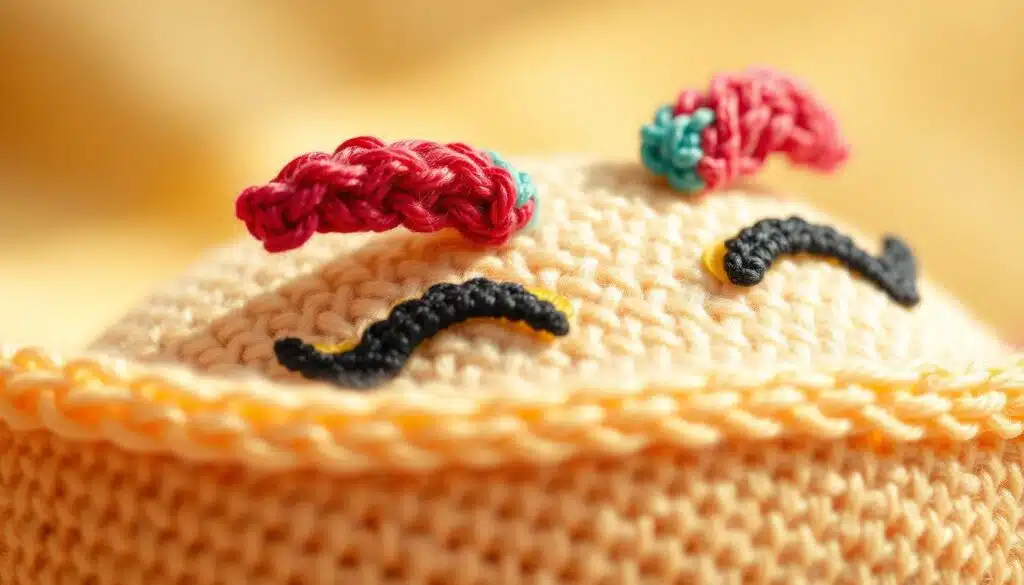
Angled brows read as determination or mischief. Try a short split stitch with slightly raised placement to push expression toward cheeky. Rounded brows suggest innocence or joy and pair well with softer thread colors when practicing amigurumi eyebrows.
Furrowed brows show worry or focus. Place them closer together and use a denser stitch for more weight. You can combine a slight furrow with a neutral mouth to imply thoughtfulness.
Eyebrow shapes and suggested stitches
Split stitch works for crisp, narrow brows. Chain stitch gives a lighter line for surprised or gentle looks. Slight asymmetry can add charm, but avoid droop that looks unintended; small adjustments change mood fast.
Mouth shapes and stitch choices
A simple chain stitch or backstitch makes quick smiles. An inverted U in backstitch reads as a frown. Use satin stitch for fuller lips or a puckered kiss. For bold shapes, add a small felt piece or a tiny satin-filled curve.
Placement guides to avoid awkward faces
Mouths set too high often look silly. Too low creates an unintentionally sad character. Aim for balance by measuring eye-to-mouth spacing, then pin and view from a short distance before stitching.
| Feature | Stitch | Effect |
|---|---|---|
| Angled eyebrows | Split stitch | Cheeky, determined |
| Rounded eyebrows | Chain stitch | Innocent, joyful |
| Furrowed brows | Dense backstitch | Worried, focused |
| Small smile | Backstitch or chain | Subtle, friendly |
| Full mouth | Satin stitch | Expressive, bold |
| Frown | Inverted U backstitch | Sad, serious |
Combine tilt and curve to refine mood. A small smile with tilted, angled brows can read as mischievous. Mix embroidered mouth techniques with eyebrow tweaks until the face matches the character in your head.
If you want a tutorial that explores playful combinations, check this quick guide for patterns and inspirations that highlight emotional expression crochet and facial placement amigurumi tips.
Shaping and Stuffing Tips to Enhance Facial Expression
Before you even start stitching, you decide your character’s mood. Small changes in shaping and stuffing can make a big difference. They can change how the eyes and mouth look.
How head shape affects perceived personality
A round head looks cute and innocent. For a chubby look, keep the increases even and stuff the cheeks a bit fuller. An elongated head suggests maturity or a stylized look. Stretch the crown and reduce cheek stuffing for a more refined look.
Stuffing advice: why you should stuff before placing features
Stuff your amigurumi before embroidering. Crocheted pieces change shape when filled, affecting stitch spacing. This can mess up the placement of eyes and mouths.
Stuff evenly to avoid lumps. Aim for firmness, not hardness. This helps stitches hold embroidery well and supports shape changes.
Body posture and tilt to match facial expressions
Your doll’s stance should match its face. A slight head tilt shows curiosity or affection. A straight posture shows confidence. Adjust the neck and body to align posture and expression, then tweak stuffing for a perfect pose.
| Focus | Technique | Effect on Expression |
|---|---|---|
| Cheek fullness | Add soft stuffing to sides of head before crown | Softer, younger look that reads as approachable |
| Crown length | Extend rounds without widening; stuff lightly | Elongated, mature profile that suits stylized faces |
| Neck angle | Sew torso on a slant or add felt shim | Suggests tilt for curiosity or coyness with posture and expression crochet |
| Eye placement | Mark on stuffed head with pins; stitch after final fill | Prevents misalignment caused by stuffing shifts; keeps expression consistent |
| Stuffing density | Firm center, softer edges; use polyester fill and taming tool | Stable embroidery surface while preserving soft look |
Keep practicing these tips until you get the hang of it. Small, careful changes will make your amigurumi’s face show its personality.
Adding Noses, Ears, and Textural Details for Personality
Choosing noses, ears, and textures makes your amigurumi unique. Small changes can change a toy’s mood a lot. These choices help shape a toy’s personality, from sweet to bold.
Stitched, felt, or button noses
Stitched noses are great for a subtle look. They add a soft shape without bulk. Felt noses give a crisp look and bright contrast.
Buttons and beads add a nostalgic touch. But, use them for display pieces or older kids.
Ear cues that define character
Ears tell a lot about a character. Pointy ears mean cleverness. Rounded ears make a toy look cuddly.
Floppy ears add a gentle or comedic feel. Make sure ears are attached well to keep them in place.
Texture and color to amplify mood
Texture is key to a character’s feel. Soft yarns make a toy seem sweeter. Bold colors add energy.
Use different yarns for highlights and details. This makes your toy’s look pop without extra stitches.
| Feature | Effect | Best Materials |
|---|---|---|
| Stitched noses | Subtle, soft profile that blends with embroidery | Embroidery floss, yarn in satin or straight stitch |
| Felt nose amigurumi | Clear, bold shape and color contrast | Wool or acrylic felt, fabric glue or hidden whip stitch |
| Beads / buttons | Vintage or playful look; high visual impact | Glass beads, vintage buttons; secure backing for safety |
| Pointy ears | Mischievous, alert, fox-like traits | Wool or cotton with light stuffing and firm stitches |
| Rounded ears | Cuddly, infantile, approachable | Felt, soft acrylic yarn, minimal shaping |
| Floppy ears | Gentle, humorous, relaxed | Bulky or fuzzy yarn, looser attachment for movement |
| Texture mixes | Create focal points and tactile interest | Sparkle yarn, eyelash yarn, smooth cotton contrasts |
Practical Tips, Safety, and Where to Learn More
You want your amigurumi to survive hugs, tosses, and the occasional toddler inspection. Focus on techniques that lock everything in place while keeping the finish neat. Use tested methods for amigurumi safety stitching so attachments stay secure without bulky knots on the surface.
Fastening is about smart knots and sneaky paths. Tie a firm square knot, pull it into a nearby stitch gap, then run the thread back through stuffing to hide tails. Use the secure stitching closed pieces method when finishing seams or attaching faces after stuffing. Reinforce beads, buttons, and safety eyes with extra passes or consider embroidered eyes for toys meant for young children.
PlanetJune offers clear step-by-step advice for hiding tails and reinforcing attachments. Her PlanetJune amifaces resources show how to attach non-safety eyes after stuffing and how to reroute thread so knots retract inside. Try her right- and left-handed approaches to find the motion that fits your hands.
Video demos speed up learning. Watch a focused amigurumi video tutorial to see hand positions and thread tension in real time. You can pause, rewind, and replay tricky moments to copy them exactly. Practice the secure stitching closed pieces method from video and text lessons across yarn weights to build confidence.
Mix threads and tools to suit each job. Use embroidery floss for fine facial lines, worsted yarn for bold features, and nylon or sewing thread for reinforced joins. Test each combo on a scrap head before committing to a finished toy.
Below is a compact reference to compare common fastening choices and when to use them.
| Fastening Method | Best For | Durability | Play-Safe Notes |
|---|---|---|---|
| Hidden square knot + tail reroute | Finishing closed seams, embroidered features | High | Excellent when knot is pulled into fabric gap and tails hidden inside |
| Multiple pass reinforcement | Attaching beads, buttons, safety eyes | Very high | Use extra passes and seal with a small dab of fabric glue for non-washable items |
| Embroidered features (floss or yarn) | Young children, soft look, customization | High with proper stitching | Recommended over plastic for toys for small children |
| Backstitch with anchor loops | Detail lines: mouths, brows | Moderate to high | Hide start and end by weaving inside; trim close to fabric |
Conclusion
Small choices can make a big difference in personality. Focus on details like eyes, eyebrows, mouth, nose, ears, color, and texture. These help bring your amigurumi to life.
Use the right materials, like safety eyes for durability and embroidery for softness. This ensures your toys are safe and look good.
Master the basic stitches: split stitch, chain stitch, satin stitch, and French knots. Use PlanetJune’s secure-stitching techniques to keep your work safe and neat.
Play with placement and posture to find your unique style. Try different eye sizes and eyebrow angles. Add layers of texture and adjust stuffing for mood.
Keep learning from patterns and videos. Soon, you’ll create amigurumi that are charming, safe, and uniquely yours.
FAQ
What makes facial details so important in amigurumi?
Facial details show a character’s personality. Eyes, mouth, and brows tell us how they feel. Small changes can make a big difference.
You can use eye choice, shape, and embroidery to show emotions. This makes your amigurumi come to life.
Should I use safety eyes or embroider the eyes?
It depends on who you’re making it for. Safety eyes are glossy and durable, perfect for collectors or older kids.
Embroidered eyes are soft and customizable. They’re safer for infants and toddlers.
How does eye size and placement change the perceived age or mood?
Big, wide eyes look young and cute. Smaller, closer eyes seem more mature.
High eyes on a round face look innocent. Low or narrow eyes can look serious or sly. Always check placement after stuffing.
What stitches should I learn first for expressive faces?
Start with split stitch and chain stitch for outlines and mouths. Use satin stitch for filled shapes like noses or eyelids.
French knots are great for highlights or freckles. They help you create a wide range of expressions.
How do I securely embroider onto a closed, stuffed head?
Use a secure-stitching technique to hide thread tails. Bring your needle up away from the embellishment, leave a tail, stitch, and return to the start gap.
Tie a square knot, thread the ends back through the piece, and pull the knot inside. This keeps your features safe and durable.
Can I add highlights or whites to embroidered eyes?
Yes. Use a small stitch or French knot in white embroidery floss for highlights. This adds depth and liveliness.
You can change pupil shapes and colors to change the expression. Oval pupils are curious, round are innocent, and slitted or narrow are sly.
What needles and threads work best for different effects?
Use embroidery floss and a tapestry/embroidery needle for fine details. For bold features, use the same worsted-weight yarn as the amigurumi with a large yarn needle.
Sewing or nylon thread is good for discreet reinforcement. Match needle size to the thread: too large makes holes; too small makes threading hard.
How should I plan mouth and eyebrow placement to get the right emotion?
Combine eyebrow tilt with mouth curve. Angled brows give mischief or determination; rounded brows read innocence or joy; furrowed brows show worry.
A small upturned mouth with angled brows reads cheeky; the same mouth with flat brows reads simply happy. Pin or mark placement and check with stuffing before committing.
When should I stuff my piece when planning facial features?
Stuff before placing and securing features. Crocheted shapes change after stuffing—stitches widen—so placing features on an unstuffed piece often leads to misplacement.
If you must attach safety eye backs after stuffing, you may need to remove stuffing to fit the backs, then re-stuff.
What nose styles work best for different characters?
Stitched noses (satin or straight stitches) give subtlety for soft, cuddly looks. Felt noses make bold, stylized shapes.
Beads or buttons add a distinct manufactured look but aren’t recommended for toys for young children unless they’re secured with reinforcement or replaced by embroidery.
How do ears change character and how should I attach them?
Pointy ears suggest slyness or fox-like traits; rounded ears read cuddly; floppy ears feel gentle or comic. Attach ears with a secure-stitching method to hide tails and reinforce the join so they withstand play.
Placement relative to the eyes and head shape is key to the intended personality.
How does yarn texture and color influence expression?
Texture and color set mood. Soft pastels read as sweet and kid-friendly; bold, saturated colors read energetic or mature.
Fuzzy yarn bodies with smooth embroidered faces create tactile contrast, drawing attention to the expression. Adding sparkle or metallic threads for highlights can increase charm for collector pieces.
Can I mix materials like buttons or beads with embroidery safely?
Yes, but for toys intended for young children, prefer embroidered alternatives. If you add beads or buttons, use reinforced stitching and hide tails using secure-stitching techniques.
Consider regulations and always secure attachments so they won’t detach during handling.
What are easy mouth stitches for beginners?
Chain stitch or backstitch for simple smiles, and an inverted U for a frown. Small upturned stitches give a subtle grin.
Use satin stitch for fuller lips. Keep the mouth small on small faces and test placement—too high or too low changes the whole expression.
How much stuffing is right for facial embroidery?
Aim for even, firm but not rock-hard stuffing. Too soft and stitches sink or distort; too firm and the fabric stretches, changing placement.
Even stuffing helps hold embroidered features and keeps the face consistent under handling.
Where can I find step-by-step tutorials and videos for these techniques?
PlanetJune offers excellent resources, including amifaces and stitching tutorials with text and left/right-handed video demos at www.planetjune.com/amifaces and www.planetjune.com/stitching. These show secure stitching, hiding thread tails, and how to attach non-safety eyes after stuffing.
How can I practice and develop my own expressive style?
Practice basic stitches (split, chain, satin, French knots) and experiment with small changes in placement, size, and shape. Make quick practice faces on scrap swatches, vary eye spacing and eyebrow angles, and combine different mouths.
Repeat across yarn weights and thread types to find what reads best for your audience.
Any quick safety reminders for making play-safe faces?
For toys meant for babies and toddlers, choose embroidered features, hide thread tails using secure-stitching, and avoid small detachable embellishments. Reinforce any attached items and use appropriate materials and knots so things don’t pull free during play.