
You love the rhythm of needles and the quiet satisfaction of a finished row. But sometimes, your hands scream back. Ergonomic knitting is a simple, smart shift that helps you keep crafting without the nagging ache.
By choosing the right ergonomic needles, adjusting your grip, and matching yarn to tool, you can stitch longer and feel better doing it.
This is a practical rethink, informed by the knitting community on Instagram. It’s also influenced by product trends from makers like Addi, Clover, Prym, and Knitter’s Pride. You’ll learn how shape, weight, and material—bamboo, resin, or hollow metal—change tension and fatigue.
Small swaps, like cushioned grips or flexible cables, make a big difference in knitting comfort and support pain-free knitting.
We’ll also cover technique tweaks: looser tension, short sessions with breaks, and gentle hand stretches. If you want hands that keep up with your creativity, the right mix of tools, posture, and yarn choices will reshape your relationship with knitting ergonomics.
Key Takeaways
- Ergonomic knitting centers on tool shape, grip, and weight to reduce hand and wrist strain.
- Choose ergonomic needles with cushioned or triangular grips for better knitting comfort.
- Match yarn fiber to needle material to avoid added tension or fatigue.
- Short, frequent breaks and simple hand stretches support pain-free knitting sessions.
- Community feedback and product reviews, including resources like knit and style, guide smart purchases.
Why ergonomic knitting matters for long sessions and pain prevention
You enjoy the calm of knitting for hours. But, long sessions can lead to pain. Social media shows knitters talking about fatigue and soreness after long crafting times.
Common knitting-related pains and who’s at risk
Finger and thumb stiffness is common. Wrist pain might be a sign of carpal tunnel. Neck and shoulder pain comes from bad posture and holding things wrong.
Older adults, busy knitters, and those with arthritis are at higher risk. They often face more injuries and discomfort.
How ergonomic tools reduce strain on hands, wrists, and shoulders
Ergonomic needles help your hands less. They have cushioned grips and a triangular shape. This lets the needle fit your fingers better.
Light materials like bamboo or hollowed metal make needles easier to handle. Balanced circular needles spread out the weight of yarn. This makes less effort for your muscles and reduces pain.
Real-world benefits: knitting longer, faster, and more comfortably
Choosing the right tools and techniques lets you knit longer without pain. Better needles help you knit smoothly and quickly. This means you can finish projects faster and enjoy crafting more.
Many find that ergonomic tools help with arthritis. They can keep making things without as much pain.
Choosing the best ergonomic knitting needles for pain-free crafting
Choosing needles might seem small, but it’s big for your hands. You want tools that let you knit for hours without pain. Start with one pair to test. Look for lightweight materials and a comfortable shape and grip that fit how you hold your needles.
Material breakdown: bamboo, resin, hollow metal, and when to pick each
Bamboo needles are great for those with arthritis. They’re warm and have a slight grip. Bamboo and wood are gentle on your hands and slow down slippery yarns just right.
Plastic and resin needles come in triangular or rounded shapes with cushioned handles. They’re light, affordable, and good for long sessions. Resin is good if you like a bit of give without losing control of your stitches.
Hollow metal needles are light but keep the speed and smoothness of metal. Choose them for fast stitching and less wrist strain than solid metal. It’s important to find a balance so they don’t pull unevenly in your hands.
Shape and grip features: triangular shafts, cushioned handles, and warm-touch woods
Needle shape and grip affect how well you can knit and how comfortable it is. Triangular shafts guide your fingers into a natural hold, easing tension for many knitters. Rounded shafts are better for those who prefer classic motion.
Cushioned handles reduce pressure points during long rows. If you have joint pain, look for a soft grip. Bamboo needles are great for those who feel numbness after knitting for a long time.
Warm-touch woods are inviting during winter crafting. They help keep even tension with slippery yarns. For stickier yarns, smooth metal or resin is better for clean stitch formation.
Weight balance and needle length considerations for your projects
Weight balance is key to prevent your work from sagging and your hands from fighting gravity. A well-balanced set spreads the load across your fingers and wrist, lowering fatigue. Try different lengths to find the best fit for your lap or needles.
Needle length is important for the type of project. Short straights are good for small flat pieces. Longer circulars and cables are better for sweaters and wraps by keeping the work off your hands. Interchangeable or shorter options let you adapt without buying many sets.
Want a quick comparison before you buy? Read a practical wood-versus-metal overview at wood vs metal needles to match materials to yarn behavior and project needs.
| Needle Type | Comfort Traits | Best Uses | Tip |
|---|---|---|---|
| Bamboo / Wood | Warm to touch, slight grip, lightweight | Beginners, slippery yarns, arthritis-friendly | Test a pair for bamboo needles for arthritis comfort |
| Resin / Plastic | Light, flexible, can include cushioned handles | Everyday projects, those who prefer softer grips | Choose triangular shafts for easier finger positioning |
| Hollow Metal | Smooth, fast, reduced weight versus solid metal | Speedy knitting, large garments needing smooth stitches | Hollow metal knitting needles reduce strain but check balance |
| Solid Metal | Very smooth, durable, heavier | Dense yarns, tight gauge projects | May cause hand fatigue if used for long sessions |
Ergnomic knitting needle types and which projects they suit
The right needle makes a big difference. It changes how a project feels in your hands. Choose one that fits your yarn, pattern, and goals for a fun and pain-free knitting experience.
Straight options for flat pieces
For scarves, placemats, or dishcloths, straight ergonomic needles are perfect. They have thick grips and light shafts. This combo reduces wrist strain when working on narrow panels.
Using straights means fewer hand shifts and more consistent tension. They’re great for quick gifts and swatches where neat edges are important.
Round-and-flexible choices for big garments
For sweaters, blankets, or large shawls, circular ergonomic needles are the way to go. They let the weight rest on the cable, not your wrists. This reduces shoulder fatigue and keeps stitches tight.
Look for smooth joins and flexible cables. This ensures yarn flows smoothly without snagging. For more on cable choices and care, check this circular needle guide.
Modular and small-circumference solutions
Interchangeable knitting needles are versatile. They let you switch tips and cables for different projects. This saves space and keeps your kit ready for anything.
Double-pointed ergonomic needles are perfect for socks, mitts, and hat crowns. Their slim, light design makes tight circumferences and small needles easy to manage without twisting your hands.
| Needle Type | Best Projects | Ergonomic Benefit |
|---|---|---|
| Straight ergonomic needles | Scarves, dishcloths, narrow panels | Simple grip, minimal wrist rotation, ideal for flat knitting |
| Circular ergonomic needles | Sweaters, blankets, large shawls | Weight distributed to cable, less shoulder strain, works flat or in the round |
| Interchangeable knitting needles | Multi-gauge projects, sample knitting, travel projects | Customizable lengths and sizes, cost-effective, less tool clutter |
| Double-pointed ergonomic needles | Socks, mittens, hat crowns, small circumference work | Lightweight tips, easier maneuvering in tight rounds, portable |
Special features that make needles truly ergonomic
When searching for tools that ease hand strain, focus on small but significant details. Look for features that lower pressure, guide your hand, and maintain even tension. This ensures your stitches stay smooth. Instagram demos and hands-on tests from brands like Addi, Clover, and Prym highlight how design impacts your knitting experience.
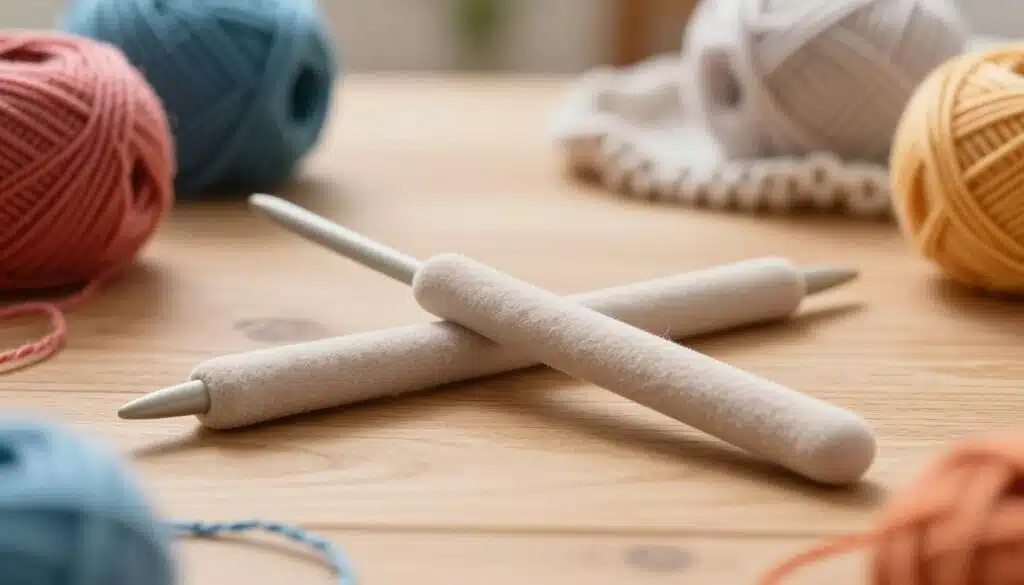
Cushioned grips: how they reduce pressure points
Cushioned knitting needles ease pressure on your fingertips and palm creases. Their soft, well-finished handles distribute force evenly. This allows you to hold the needle with less pressure, making stitches slide smoothly.
Choose grips that retain their shape over time. A consistent cushion keeps tension steady, reducing fatigue during long sessions.
Triangular shafts and natural grip mechanics
Triangular knitting needles promote a natural hand position. Their three-sided shape encourages a relaxed grip, reducing twisting and cramping. This is key for long rows.
Look for true triangular needles with rounded edges for smooth yarn flow. The right balance between shape and smoothness enhances knitting speed and reduces snags.
Flex cables and balanced joins for circular knitting
Flexible cable circular needles adjust to your project’s shape, easing hand strain. They distribute weight, allowing your lap to support it. This natural drape prevents tension issues.
Ensure the join is smooth and secure. A well-made connection between the needle tips and cable prevents snags and uneven tension. Top circulars offer flexible cables with polished joins to maintain your knitting flow.
- What to check: cushioned knitting needles with dense foam that retains shape.
- What to check: triangular knitting needles with gentle corners and good yarn glide.
- What to check: flexible cable circular needles with sturdy, snag-free joins and a soft memory cable.
These ergonomic features work together. Cushioned grips ease pressure, triangular shafts align your hand, and flexible cables reduce wrist strain. Choose needles that combine these features for a more comfortable knitting experience.
How ergonomic knitting helps with arthritis and carpal tunnel
If your hands hurt after knitting, ergonomic changes can help. Switching to ergonomic needles for arthritis can ease your pain. They have softer grips and are lighter, making stitches easier to manage.
Soft grips and reduced joint strain
Opt for bamboo or cushioned resin for less strain on joints. These materials are warm and gentle. A thicker handle spreads pressure, easing finger grip.
Try one pair before buying more. Brands like Addi, Clover, and Knitter’s Pride offer ergonomic options. Check out ergonomic knitting needle buyers’ guides for more info.
Lowering repetitive stress for carpal tunnel relief
For carpal tunnel relief, focus on balance over speed. Choose needles with balanced weight and cushioned handles. Flexible cables on circulars also help.
If you feel numbness, use hollow metal or lightweight resin. Balanced tools and shorter sessions can reduce stress.
User tips to combine tools and technique for maximum relief
Warm your hands before starting. Practice tension control and relaxed grips. Alternate between straight and circular projects.
Use these tips: take breaks, stretch wrists, and swap heavy tools for bamboo. For more tips, check out craft health articles.
- Tip: Try triangular shafts if your fingers cramp; they encourage a natural hold and can reduce knitting strain.
- Tip: Match needle material to yarn—smooth metal for slippery yarns, bamboo for grippy fibers—to keep tension steady and hands relaxed.
- Tip: Combine ergonomic needles with posture fixes and hand exercises to amplify relief for both knitting and arthritis or knitting carpal tunnel relief.
Matching yarn and tools: why fiber content matters for comfort
Choosing yarn is more than just color and price. Your hands feel every stitch. The right yarn and needles combo can reduce friction and tension, making your fingers happy during long sessions.
Yarn slipperiness or grabbiness affects how fast your stitches move. On Instagram, knitters share swatches that show how different yarns work with different needles. These visual tests help you judge compatibility before buying a whole skein.
Yarn slipperiness vs needle material: avoiding tension issues
If your yarn is silky, choose bamboo or resin needles for better control. If it’s sticky, lightweight metal needles help stitches slide smoothly and speed up knitting.
Fiber choices—wool, cotton, acrylic—and how they affect hand fatigue
Animal fibers like wool offer natural elasticity, easing stitch recovery. This reduces constant re-tensioning and lowers hand strain. Plant fibers, like cotton, lack stretch and can tire your hands faster.
Synthetic fibers, such as acrylic, vary widely. Some mimic silk and slip, while others cling like wool. Test a small swatch to see how each type affects your comfort.
Project-driven yarn selection for drape, elasticity, and ease of knitting
Consider drape and bounce when planning a garment. Shawls need soft drape; choose fibers and weights that flow easily. Fitted sweaters require elasticity for stitch memory; wool blends are best for this.
| Project | Recommended Fibers | Best Needle Pairing | Comfort Tip |
|---|---|---|---|
| Delicate shawl | Silk blends, alpaca-silk | Bamboo or resin | Use a larger size than gauge calls for to reduce tight tension |
| Everyday sweater | Merino wool, wool blends | Lightweight metal circulars | Choose elastic yarn to lower finger adjustments |
| Dishcloth or summer top | Cotton, linen | Wood or resin needles | Take frequent breaks; cotton needs more hand effort |
| Budget or practice piece | Acrylic blends, recycled yarn | Match feel—metal for sticky, bamboo for slick | Swatch to verify stitch behavior and fatigue level |
When you match fiber content and needle feel, you improve comfort and ergonomics. Try small swatches and share notes with fellow knitters to refine your choices.
Ergonomic knitting posture and technique tweaks for less fatigue
Good knitting posture starts with simple habits. Sit with your feet flat and your low back supported. Use a small cushion if the chair feels too deep.
Keep your project in your lap or on a soft lap pad. This helps avoid hunching and arm lift.
Task lighting is important. Use a bright lamp over your work to avoid leaning forward. Set your chair and table so your forearms sit roughly parallel to the floor.
This alignment helps your shoulders and neck relax. It’s part of an ergonomic knitting technique.
Try different stitch-holding methods to find less painful options. If English style feels tense, try continental or combined styles. Switching styles or alternating hands reduces repetitive stress and can help reduce knitting fatigue.
Small hand tweaks can change long-session comfort. Hold needles so your wrists stay neutral, not bent. Keep stitches close to your body to avoid reaching.
Lighten your grip; firm tension on needles causes cramping and sore fingers.
Make warm-ups part of your routine. Do wrist circles, finger spreads, and gentle thumb stretches for a minute before you start. Repeat knitting stretches every 20–30 minutes to keep circulation flowing and tendons loose.
Schedule brief breaks and follow a simple pattern: twenty to thirty minutes of knitting, then a two- to five-minute pause to move and breathe. Use that time to shake out your hands, roll your shoulders, or stand and walk a few steps. Those pauses significantly reduce knitting fatigue.
Combine tools and technique for the best results. Ergonomic needles or cushioned grips help, but they work best when paired with proper seating and consistent posture. The pairing strong ergonomic knitting technique with regular knitting stretches creates a durable, comfortable habit for longer, enjoyable sessions.
| What to Do | How It Helps | When to Do It |
|---|---|---|
| Sit with feet flat and low back supported | Reduces lower back and shoulder strain | Before you begin and when resetting posture |
| Keep project in lap or on lap pad | Minimizes arm lift and shoulder fatigue | Throughout knitting sessions |
| Use focused task lighting | Prevents leaning forward and neck strain | Always while knitting |
| Alternate knitting styles or hands | Reduces repetitive motion and hand cramps | When you sense tension building |
| Perform wrist circles and finger stretches | Improves circulation and flexibility | Warm-up and every 20–30 minutes |
| Schedule short breaks (2–5 minutes) | Allows tendon recovery and prevents fatigue | Every 20–30 minutes of knitting |
| Lighten needle grip and keep wrists neutral | Prevents cramping and nerve stress | Continuously during knitting |
Tools and accessories that complement ergonomic knitting
To knit with less strain, start by adjusting your workspace. Small changes in chair height and table alignment can make a big difference. An ergonomic chair with lumbar support keeps your shoulders relaxed.
Pair that with an adjustable table or a lap desk to position your work at elbow height. This avoids hunching.
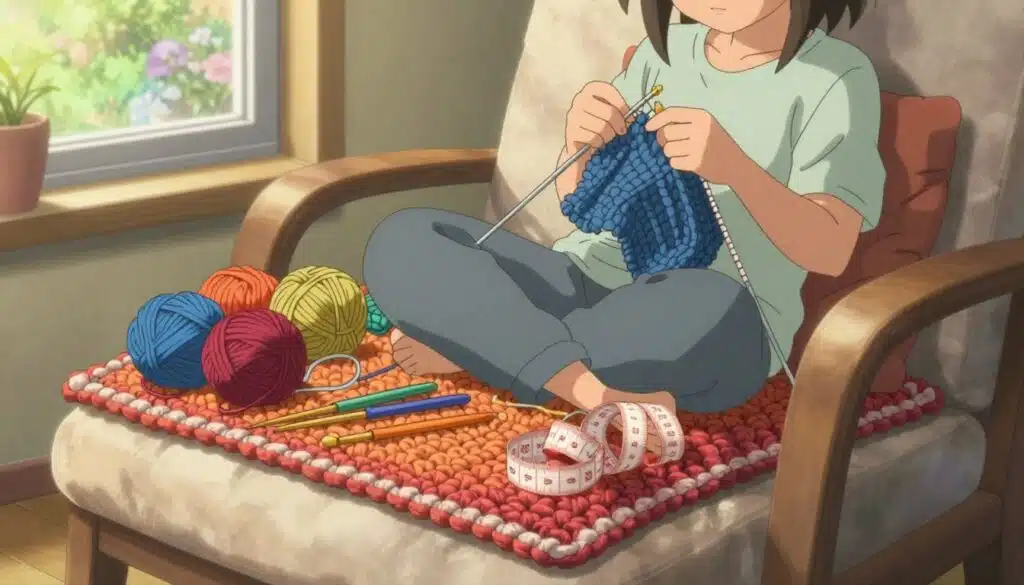
Think about how weight sits on your body. A knitting lap pad and weighted project bag move bulk off your hands. This cuts shoulder and wrist stress when working on blankets or heavy sweaters.
Many makers on Instagram show simple DIY tweaks. These turn an ordinary bag into a supportive tool.
Reduce repetitive motion with smart handheld tools. Rubberized needle grips and cushioned thumb rests soften pressure on fingers. Stitch markers and ergonomic tapestry needles speed routine motions.
A yarn bowl ergonomic design stops yarn from pulling and twisting. This keeps your wrist neutral while the yarn feeds smoothly.
You can combine accessories for the best effect. Use a lap desk with a non-slip surface. Place a knitting lap pad where your forearms rest.
Route yarn through a yarn bowl ergonomic piece or a smooth ceramic cup. Add a flexible cable with balanced joins on circulars to prevent snagging during long rounds.
If you want deeper guidance on hand pain and tool choices, check expert tips at crochet hand pain resources. Those guides pair technique tweaks with accessory suggestions that protect your joints and keep you knitting longer.
| Accessory | Primary Benefit | Best For |
|---|---|---|
| Ergonomic chair (lumbar support) | Reduces shoulder and neck strain | Long sessions, pattern reading, complex shaping |
| Adjustable lap desk | Keeps work at elbow height to prevent hunching | Circular knitting, flat panels, tutorials |
| Knitting lap pad | Distributes weight away from hands | Heavy projects, blanket and sweater knitting |
| Weighted project bag | Rests larger garments on lap to reduce arm load | Cardigans, afghans, bulky yarns |
| Rubberized needle grips | Cushions fingers and reduces pressure points | Arthritis, long cast-ons, tensioned stitches |
| Stitch markers & ergonomic needles | Speeds repetitive tasks and improves hand positioning | Complex patterns, lace, repeat-heavy rounds |
| Yarn bowl ergonomic | Prevents yarn drag and wrist twisting | Single-skein work, center-pull balls, smooth feeding |
| Flexible cables with balanced joins | Minimizes snagging and evens tension across needles | Circular projects, large garments, seamless joins |
Top brands and recommended ergonomic knitting products
You want gear that keeps your hands happy during marathon knitting. Look for brands that solve real problems. This includes smooth joins, forgiving grips, and reliable cables. Try one item at a time to feel the difference before buying a full set.
Addi is great for large projects. Their smooth circulars and flexible cables make knitting easy. If you struggle with cable twist or heavy joins, Addi ergonomic needles are a good choice.
Clover bamboo needles are warm and gentle. They’re perfect for slippery yarns and sensitive joints. Many knitters with arthritis love them for their natural feel and light weight. Pair them with slow, textured fibers for better control.
Prym triangular needles change how you hold the needle. The flat faces guide your fingers into a relaxed grip. If you cramp when knitting for long stretches, Prym triangular needles can help.
Knitter’s Pride cushioned needles offer speed and comfort. They have a slick metal point and a soft grip near the shaft. If you want lightweight metal with less hand strain, try Knitter’s Pride cushioned needles.
Real-world feedback from unboxing and reviews can guide you. For a well-rounded guide to ergonomic helpers, visit best ergonomic knitting tools. Read user notes before committing.
| Brand | Best for | Key ergonomic trait | Try if you… |
|---|---|---|---|
| Addi | Large garments, long sessions | Flexible cables, smooth joins | need minimal cable twist and fast knitting |
| Clover | Slippery yarns, arthritis-friendly projects | Warm, lightweight bamboo | prefer a gentle grip and reduced hand fatigue |
| Prym | Hand repositioning, grip retraining | Triangular shafts for natural finger placement | cramp or want a guided grip |
| Knitter’s Pride | Speed with comfort, mixed-fiber projects | Cushioned grips on lightweight metal needles | want metal points without the hard handle |
Common mistakes knitters make that worsen discomfort
You want cozy evenings with yarn, not sore hands by midnight. Many knitters learn the hard way that small kit choices cause big discomfort. Quick fixes can make your sessions longer and less painful when you know what to avoid.
Choosing heavy needles or the wrong material for your yarn
Picking heavy metal straights because they feel “professional” can strain your wrists during long projects. Match needle material to your yarn: slippery fibers glide on aluminum, while wool benefits from bamboo or resin to steady tension. Try one pair before committing to a whole set to help avoid knitting pain.
Ignoring cable and join quality on circulars
Stiff or snaggy cables force you to adjust stitches and rework rows. Poor cable join quality creates bumps that disrupt gauge and increase repetitive motion. Inspect joins, test stitches across the join, and replace cables that cause snagging to protect your hands.
Buying cheap knockoffs that lack genuine ergonomic design
Cheap needles risks go beyond a bad finish. Blunt tips, uneven taps, and rough joins can cause more corrections and more gripping. Brands like Addi, Clover, and Knitter’s Pride earn praise because their finishes reduce friction. Investing in a trusted pair cuts down on mistakes that compound fatigue.
Quick checklist
- Test needle weight and feel before long projects to avoid knitting pain.
- Check cable join quality on circulars; run a few stitches to feel for snags.
- Skip cheap needles risks by buying one reliable pair to trial with your favorite yarn.
Conclusion
Small changes can make a big difference in knitting. Start by testing one pair of ergonomic needles. Also, match the needle material to your yarn. And don’t forget to use proper posture.
Instagram communities and peer reviews show the importance of practical demos and real-life feedback. Knitters value ergonomic needles like Addi, Clover, Prym, or Knitter’s Pride.
This summary shows a clear path to comfort in knitting. Choose bamboo, resin, or hollow metal needles with cushioned grips. Use tools with triangular shafts or flexible cables to reduce joint strain.
Combine your tool choice with tension practice, warm-up stretches, and mindful breaks. This helps ease arthritis or carpal tunnel symptoms. You can knit longer without pain.
Plan your projects around the fiber’s behavior. Wool, cotton, and acrylic feel different under your hands. Revisit basics like cast-on and bind-off to enhance comfort.
Think of ergonomic knitting as an investment in both craft and well-being. Choose ergonomic needles wisely and use smart accessories. Your wrists—and your projects—will thank you.
FAQ
Why does ergonomic knitting matter for long sessions and pain prevention?
Ergonomic knitting is key for long sessions because it reduces fatigue and pain. Needles with cushioned grips and balanced weight help your hands rest naturally. This, along with good posture and breaks, lets you knit longer and with less pain.
What common knitting pains should I watch for and who’s most at risk?
Watch for joint stiffness, thumb and finger cramping, and wrist pain. Older adults and those with arthritis are at high risk. Social media shows many people experience these pains after long knitting sessions.
How exactly do ergonomic tools reduce strain on hands, wrists, and shoulders?
Ergonomic needles distribute force better. Cushioned handles and triangular shafts reduce pressure and promote a relaxed grip. Lightweight materials and hollow metal balance the weight, reducing strain.
What real-world benefits can I expect from switching to ergonomic needles?
You’ll enjoy longer, more comfortable knitting sessions. You’ll need fewer breaks and knit faster. Many with arthritis or carpal tunnel find significant relief.
How should I choose needle material—bamboo, resin, or hollow metal?
Choose bamboo or wood for lightweight, grippy needles. Resin or plastic offers cushioned, affordable options. Hollow metal is best for speed and smoothness, but test first.
What role do shape and grip features play—triangular shafts, cushioned handles, warm woods?
Shape and grip help your hand hold the needle naturally. Triangular shafts and cushioned handles reduce cramping and pressure. Warm woods are gentle on arthritic hands and prevent slippage.
How important are weight balance and needle length for my projects?
Weight balance and length are very important. A balanced needle prevents tight grips and fatigue. Choose the right length for your project to avoid strain.
Which needle types suit which projects—straights, circulars, interchangeables, DPNs?
Use straights for narrow items and circulars for larger projects. Interchangeables offer flexibility, and DPNs are best for small circumferences.
What special features make a needle truly ergonomic?
Look for cushioned grips, triangular shafts, and warm-touch woods. Flexible cables and balanced joins are also key. Brands like Addi and Knitter’s Pride offer these features.
Can ergonomic needles help with arthritis and carpal tunnel?
Yes, ergonomic needles can help. They reduce joint strain and repetitive stress. Combine them with stretches and breaks for the best relief.
How do I match yarn and needle material to avoid tension issues?
Match needle surface to yarn slip. Use bamboo or resin for slippery yarns and metal for quick-moving wool. Test a swatch to ensure comfort.
What posture and technique tweaks reduce shoulder and neck strain?
Sit with feet flat and use lumbar support. Keep the project in your lap and use task lighting. Alternate knitting styles and relax your wrists for comfort.
Which warm-up stretches and break routines help sustain longer sessions?
Do wrist circles, finger spreads, and thumb stretches every 20–30 minutes. Stand and shake your hands out during breaks. A simple routine can prevent stiffness.
What tools and accessories complement ergonomic knitting?
Invest in a supportive chair and adjustable table. Use lap pads or weighted project bags to keep hands free. A stable yarn bowl and small rubberized needle grips are also helpful.
Which brands are best for ergonomic knitting products?
Addi is known for smooth circulars. Clover offers excellent bamboo options. Prym and Knitter’s Pride also provide quality ergonomic needles.
What common mistakes make discomfort worse?
Avoid heavy full-metal straights and mismatched needle and yarn materials. Poor cable and join quality can also cause discomfort. Test a single pair and prioritize quality.
How should I test ergonomic needles before committing to a full set?
Try one pair for a few sessions and a swatch in your yarn. Notice fatigue, tension, and stitch glide. Instagram can help you choose which model to try first.
Will ergonomic needles change my gauge or stitch tension?
Yes, they can. Different materials and shapes affect yarn slide and tension. Always make a gauge swatch when switching.
Any quick tips to combine tools, technique, and self-care for maximal relief?
Match needle material to yarn, test a single pair, and adopt relaxed posture and lighting. Use lap supports and do short breaks. These steps offer the biggest comfort and productivity gains.