
Circular Knitting Needles: 7 Powerful Reasons To Love in 2025
Why Circular Knitting Needles Will Transform Your Projects
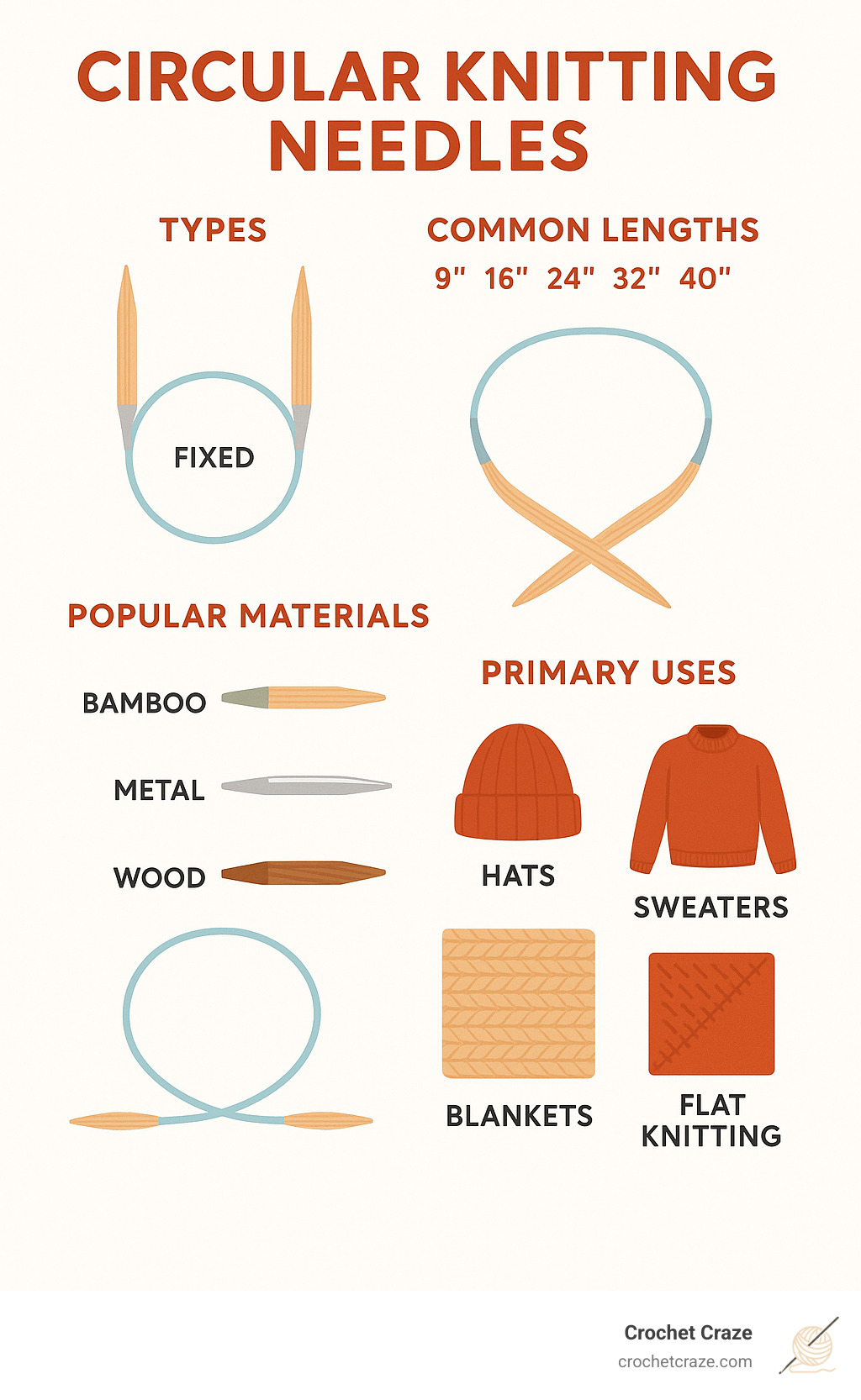
Circular knitting needles are two pointed tips connected by a flexible cable that allow knitters to create seamless tubes and flat projects with ease. If you’re looking to understand these versatile tools, here’s what you need to know:
- What they are: Two needle tips connected by a flexible cable
- Common lengths: 9″, 16″, 24″, 32″, 40″, and 48″ (measured tip-to-tip)
- Best uses: Hats (16″), sweaters (24-32″), blankets (40″+), and flat projects of any size
- Key benefits: Distribute weight evenly, prevent lost needles, hold more stitches than straight needles
Unlike straight needles, circulars can be used for both knitting in the round (creating seamless tubes) and knitting flat pieces with improved weight distribution and comfort.
Materials matter: Circular needles come in bamboo (grips slippery yarn), metal (fastest knitting), and wood (warm feel with moderate grip).
For beginners, a 24″ or 32″ circular needle in size US 7 or 8 is a versatile starting point that works for most projects.
I’m Sonji Huerta, and while I’m relatively new to the fiber arts world, I’ve quickly found how circular knitting needles have revolutionized my knitting experience by eliminating the shoulder strain I experienced with straight needles. I’m excited to share what I’ve learned with fellow crafters who are just beginning their journey.
Circular knitting needles terms to know:
– circular knitting needle
– circular knitting needle kits
What Are Circular Knitting Needles & Why They Beat Straights
Circular knitting needles are truly magical tools that have transformed the knitting world. At their core, they’re simply two pointed tips connected by a flexible cable – but this brilliant design opens up a world of possibilities that straight needles just can’t match. Dating back to the early 20th century (with the first U.S. patent issued in 1918), these clever tools have been making knitters’ lives easier for generations.
What makes these needles so special? They distribute the weight of your project evenly across the cable instead of concentrating it all on your wrists. This ergonomic advantage is a game-changer – you can knit for hours without the hand fatigue that often comes with straight needles.
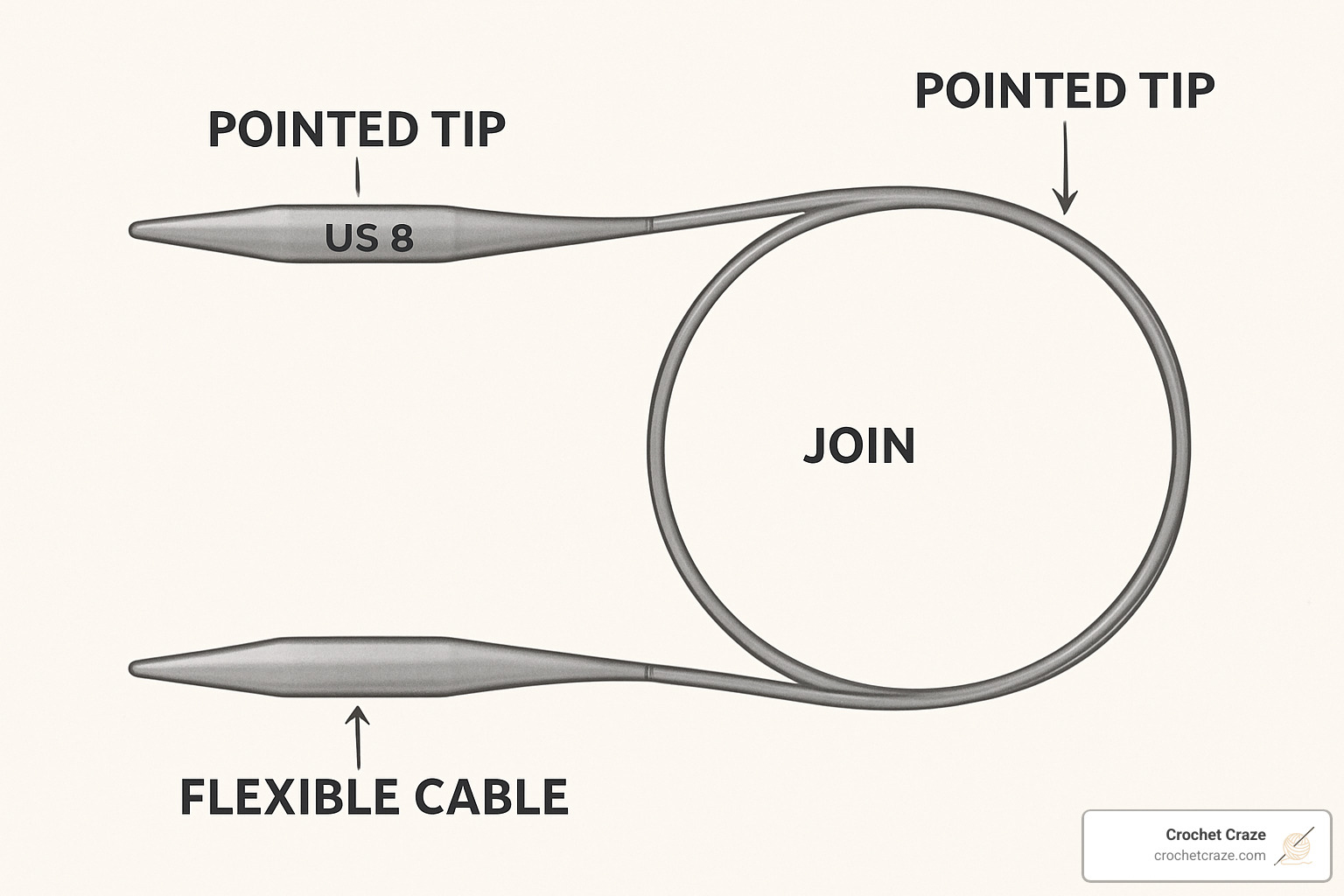
The versatility of circular knitting needles is truly remarkable. While straight needles can only create flat pieces, circulars handle both flat knitting and knitting in the round (creating seamless tubes). One tool, multiple techniques – that’s practical magic for your craft bag!
Norwegian knitters acceptd circular needles so enthusiastically that traditional straight needles nearly vanished from their shops! These innovative crafters developed techniques like “steeking” – knitting a sweater as a tube and then cutting openings for armholes and necklines – which completely transformed garment construction.
As one of our longtime customers puts it, “I’m always on a circular needle now, whether knitting in the round or flat.” Once you experience the comfort and convenience of circular knitting needles, I bet you’ll feel the same way!
Circular Knitting Needles vs Straight & DPNs: Quick Breakdown
When choosing the right tools for your knitting journey, understanding how circular knitting needles compare to other options makes all the difference. Here’s a practical comparison:
| Feature | Circular Knitting Needles | Straight Needles | Double-Pointed Needles (DPNs) |
|---|---|---|---|
| Project Weight Distribution | Evenly distributed across cable | Concentrated on wrists | Divided across multiple needles |
| Maximum Stitch Capacity | Hundreds (limited by cable length) | 50-100 (limited by needle length) | 20-30 per needle |
| Seamless Knitting | Yes | No | Yes, but with more joins |
| Portability | Excellent (compact, stitches secure) | Poor (long, stitches can slip off) | Good (but multiple pieces to manage) |
| Ergonomics | Superior for large projects | Can cause wrist strain | Can be fiddly for beginners |
| Versatility | Both flat and round knitting | Flat knitting only | Small-circumference round knitting |
One practical advantage of circular knitting needles is what we call the “couch-losing myth” – you simply can’t lose one needle in the couch cushions because they’re connected! This small but mighty benefit has saved countless knitting sessions.
The ergonomic benefits are truly life-changing for many knitters. When working on a heavy blanket or sweater with straight needles, your wrists bear all that weight. Switch to circular knitting needles, and suddenly the cable does the heavy lifting.
For beautiful, seamless garments like hats, sweaters, and socks, circular knitting needles let you knit continuously in the round without the telltale seam that comes from joining pieces knit on straight needles. Not only does this create a cleaner finish, but it also means no more sewing pieces together!
Main Types of Circular Needles Every Knitter Should Know
The world of circular knitting needles offers wonderful options for every project and knitting style. Understanding these different types will help you build a collection that supports all your creative projects.
Fixed Circular Needles
These trusty one-piece tools have tips and cables that are permanently attached to each other. Fixed circulars are perfect when you know exactly what projects you love making and want dedicated tools for each one. Many knitters collect these in their most-used sizes over time.
Interchangeable Circular Needle Sets
These clever systems feature separate tips and cables that you can mix and match, creating different needle sizes and lengths whenever you need them. While they require more investment upfront, they quickly pay for themselves by replacing dozens of fixed circulars.
Short Circulars (9″)
These specialty needles have short tips connected by a small cable, specifically designed for small-circumference projects. The 9″ length is just right for adult hats, socks, and sleeves without having to use multiple needles.
Jumbo Circulars
When you’re working with gorgeous super bulky yarns or creating oversized statement pieces, jumbo circulars are your best friends. With large-diameter tips (sometimes up to US size 50!) and sturdy cables, they handle the weight and bulk of chunky projects with ease.
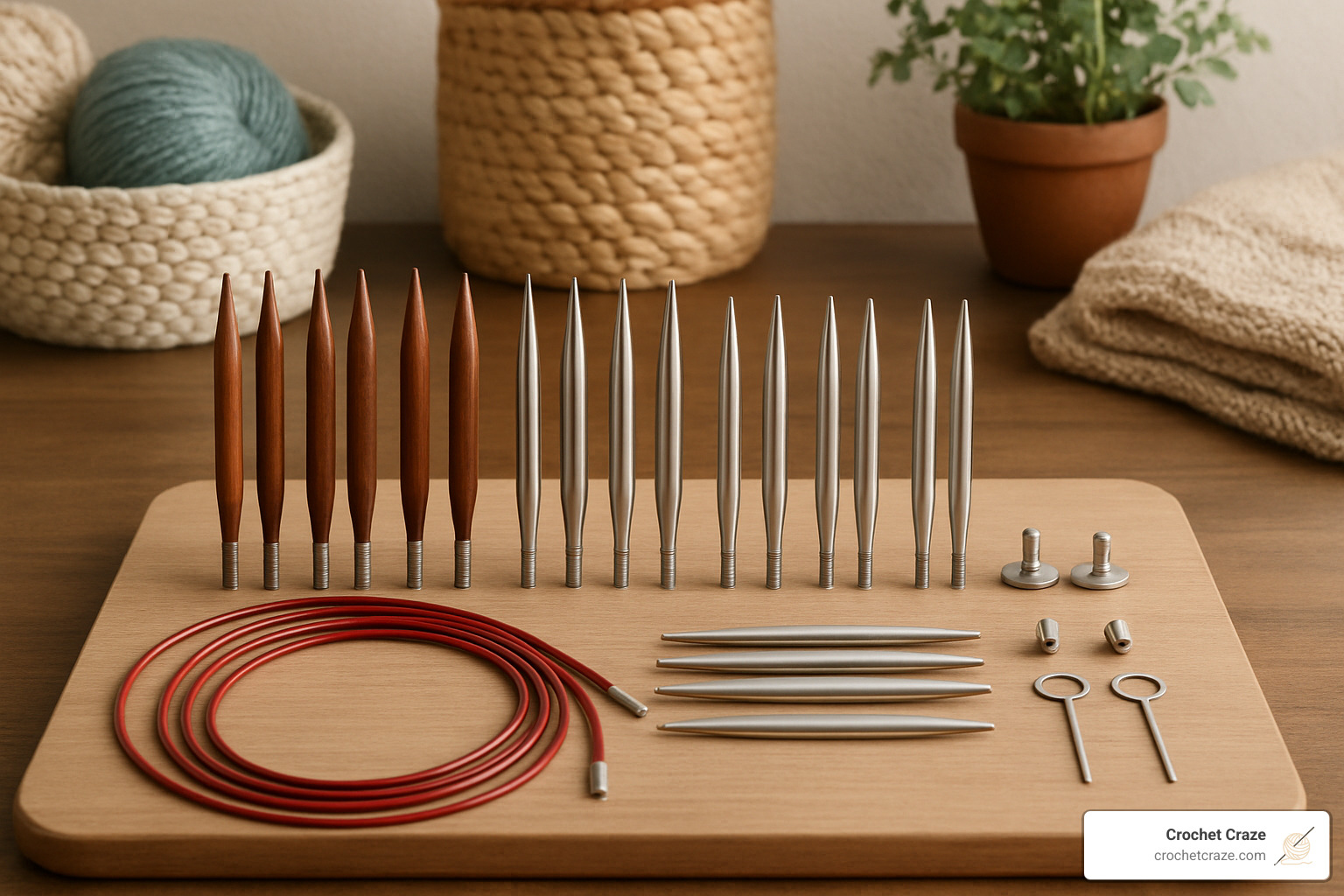
Material Matters: The material of your circular knitting needles dramatically affects how they feel in your hands and how they interact with your yarn:
Wood needles feel warm and natural in your hands. They’re lightweight with just enough grip to keep stitches secure. The Lykke Driftwood needles have earned a devoted following for their smooth finish and beautiful muted colors.
Metal needles offer a slick surface that lets your stitches glide effortlessly. If you’re looking for speed, brands like Addi Turbos and ChiaoGoo Red Lace needles will help your projects fly off the needles.
Bamboo needles provide excellent grip that’s perfect for slippery yarns or beginners worried about dropping stitches. They’re wonderfully lightweight, making them easy on your hands during long knitting sessions.
Carbon fiber needles combine the cozy warmth of wood with the durability of metal. These premium tools are lightweight yet incredibly strong.
The cable connecting the tips is just as important as the tips themselves. Quality circular knitting needles feature flexible cables that move with your work rather than fighting against it.
Interchangeable Circular Needle Sets: Endless Combos
Interchangeable circular knitting needle sets might be the most brilliant innovation in modern knitting tools. These versatile kits are like having a complete needle collection that fits in your purse!
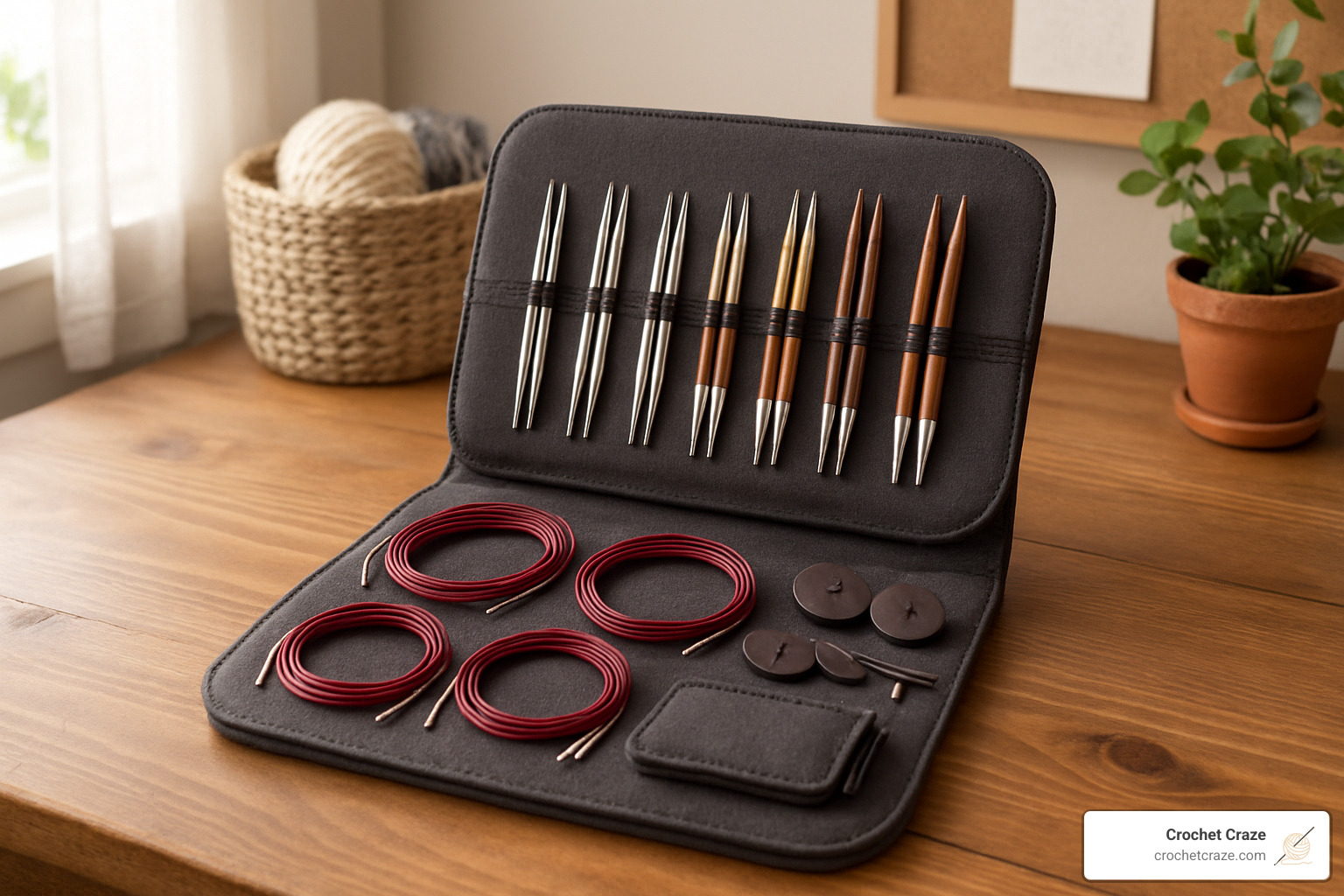
A typical interchangeable set with 8 pairs of tips and 4 different cable lengths can create 32 different needle combinations! That versatility means you’re prepared for virtually any pattern that catches your eye.
Most interchangeable sets include:
* Several pairs of needle tips in different sizes (typically ranging from US 4-11)
* Cables in various lengths (commonly 16″, 24″, 32″, and 40″)
* End caps that secure your stitches when you need to set a project aside
* Cable connectors that join cables together for extra-long projects like blankets
* A tightening key or grip to ensure secure connections while you work
The economic advantage is clear: buying a quality interchangeable set costs significantly less than purchasing all those fixed circular knitting needles individually.
Advanced knitters might also enjoy techniques like knitting with two circular needles, which can be easier than double-pointed needles for small-circumference projects. Here’s a tutorial from Berroco about that method that many knitters find helpful.
Fixed-Length Circular Knitting Needles for Grab-and-Go Projects
While interchangeable sets offer amazing versatility, fixed-length circular knitting needles have their own special charm. They’re typically more budget-friendly as individual purchases, making them perfect for beginners or occasional knitters.
Fixed circulars offer delightful “grab-and-go” convenience. There’s no assembly required – just pick up your needle and start creating! This makes them ideal companions for travel projects or when inspiration strikes.
Some clear favorites among knitters:
Clover Takumi Bamboo Circulars feature warm, lightweight bamboo tips that provide excellent grip for slippery yarns. The smooth joins and flexible cables make them comfortable companions for extended knitting sessions.
ChiaoGoo Red Lace Fixed Circulars with their surgical-grade stainless steel tips and memory-free red cables have earned a devoted following among lace knitters. The precisely tapered tips make intricate stitches a joy rather than a challenge.
Addi Turbo Fixed Circulars are German-engineered with slick nickel-plated brass tips that many speed knitters swear by. The smooth joins and flexible cables make these premium needles worth their reputation.
When building your collection of fixed circular knitting needles, I recommend starting with versatile lengths like 24″ or 32″ in medium sizes (US 7-9). These will handle most average projects beautifully.
Choosing the Perfect Length & Size for Your Project
Finding your ideal circular knitting needles feels a bit like Goldilocks – you want everything to be just right! The perfect match between your project and needles can make knitting feel effortless.
Let’s talk needle size first. This is all about the diameter of your needle tips, which directly affects your fabric’s tightness. Your yarn weight is your best guide here:
For delicate lace weight yarns, reach for those skinny US 0-3 (2.0-3.25mm) needles. Sock and fingering weights love US 1-3 (2.25-3.25mm). When you’re working with sport or DK weight, US 3-6 (3.25-4.0mm) is your sweet spot. Worsted weight – probably the most common yarn you’ll encounter – pairs beautifully with US 7-9 (4.5-5.5mm). For chunky, bulky yarns, you’ll want US 10-11 (6.0-8.0mm), and super bulky calls for US 13+ (9.0mm+) needles.
Always trust your pattern’s recommendation, but don’t skip that gauge swatch! A quick swatch could save you weeks of work.
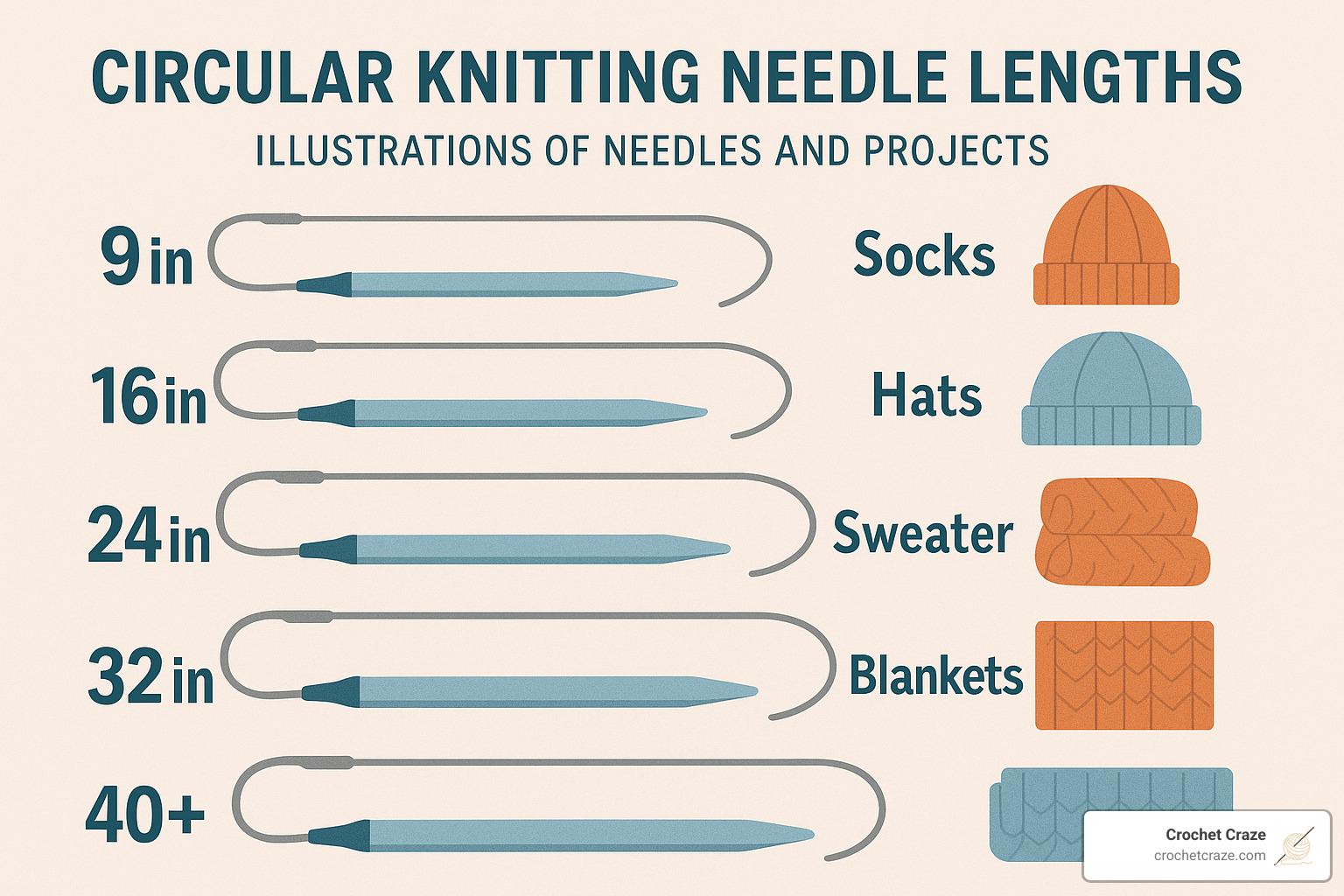
Now for cable length – this is measured tip-to-tip and should match your project’s circumference. Think of it like this: 9″ circulars are sock specialists (with their tiny tips). The popular 16″ needles are hat heroes, perfect for cowls and sleeves in the 16-20″ range. Moving up, 24″ needles handle small sweaters and large hats (20-28″ circumference), while 32″ needles are adult sweater champions (28-36″ range). For blankets, large sweaters, or when you want to try magic loop, reach for 40″ or longer cables.
A handy rule: choose a cable a few inches shorter than your project’s circumference. This creates just enough tension to distribute stitches evenly without stretching or bunching.
For flat knitting (back-and-forth), any length works as long as it comfortably holds your stitches, though 24″ or longer prevents stitches from bunching up in the middle.
Comfort matters too! Those cute 16″ circulars have shorter tips that can cause hand cramping for some knitters. If you find yourself with achy hands, try magic loop with a longer cable instead.
Primary Keyword Guide: Circular Knitting Needles Length Cheat-Sheet
Let me walk you through my personal circular knitting needles length guide:
Those specialty 9″ circulars are sock saviors and perfect for baby hats, but their tiny tips can make your hands cramp. I keep a pair for travel projects but often use magic loop for everyday sock knitting.
The 16″ length is the hat knitter’s best friend. They’re ideal for adult hats, cowls, and sleeves in the 18-22″ range. Just note that their shorter tips might feel awkward at first, and they’re often not included in interchangeable sets because of their specialized tip length.
I consider 24″ circulars the “desert island” length – if you could only have one, this versatile size works for children’s sweaters (24-28″ circumference), large hats, and small shawls. They’re comfortable for flat knitting too!
The 32″ length is my go-to for adult sweaters in the 32-40″ range. They handle medium shawls beautifully and provide comfortable leverage for flat knitting larger pieces.
For blankets, wide shawls, or oversized sweaters, the 40″+ circulars are essential. The bonus? They can handle any smaller project using magic loop technique.
Dealing with kinky cables? Here’s a quick fix: dip them in hot (not boiling) water for about 10-20 seconds. They’ll relax like they’ve just had a spa day! For prevention, store your circular knitting needles hanging or uncoiled.
For tiny circumference projects like sock cuffs, you have two fantastic options beyond double-pointed needles: try magic loop with a 32″+ circular, or use two identical circulars to hold half the stitches each. I prefer the two-circular method for teaching beginners since it’s more visual and harder to drop stitches.
Product Roundup: Best Circular Knitting Needles & Sets of 2024
After hands-on testing, we narrowed the field to a handful of needles that hit the sweet spot of smooth joins, kink-free cables, and comfortable surface finishes. Use this streamlined guide to pick the right tool for your budget and project.
Premium Stand-Outs
- ChiaoGoo Red Lace – Surgical-grade stainless tips and a memory-free red cable make these a lace knitter’s dream. Offered as fixed needles (9–60″) or in the Twist interchangeable set.
- Addi Turbo Rockets – Extra-long, nickel-plated tips for speed lovers. Fixed lengths from 16–60″ plus a 9″ sock version.
- Lykke Driftwood Interchangeables – Warm dyed birchwood tips packaged in a stylish denim case (US 4-11, 24–48″ cables).
Mid-Range Winners
- Knit Picks Options – Interchangeable system in wood, metal, or acrylic; excellent value and versatility.
- KnitPro Symfonie – Rainbow-laminated birch strikes a perfect glide-vs-grip balance.
Budget Heroes
- Clover Takumi Bamboo – Affordable, widely available, and perfectly grippy for beginners.
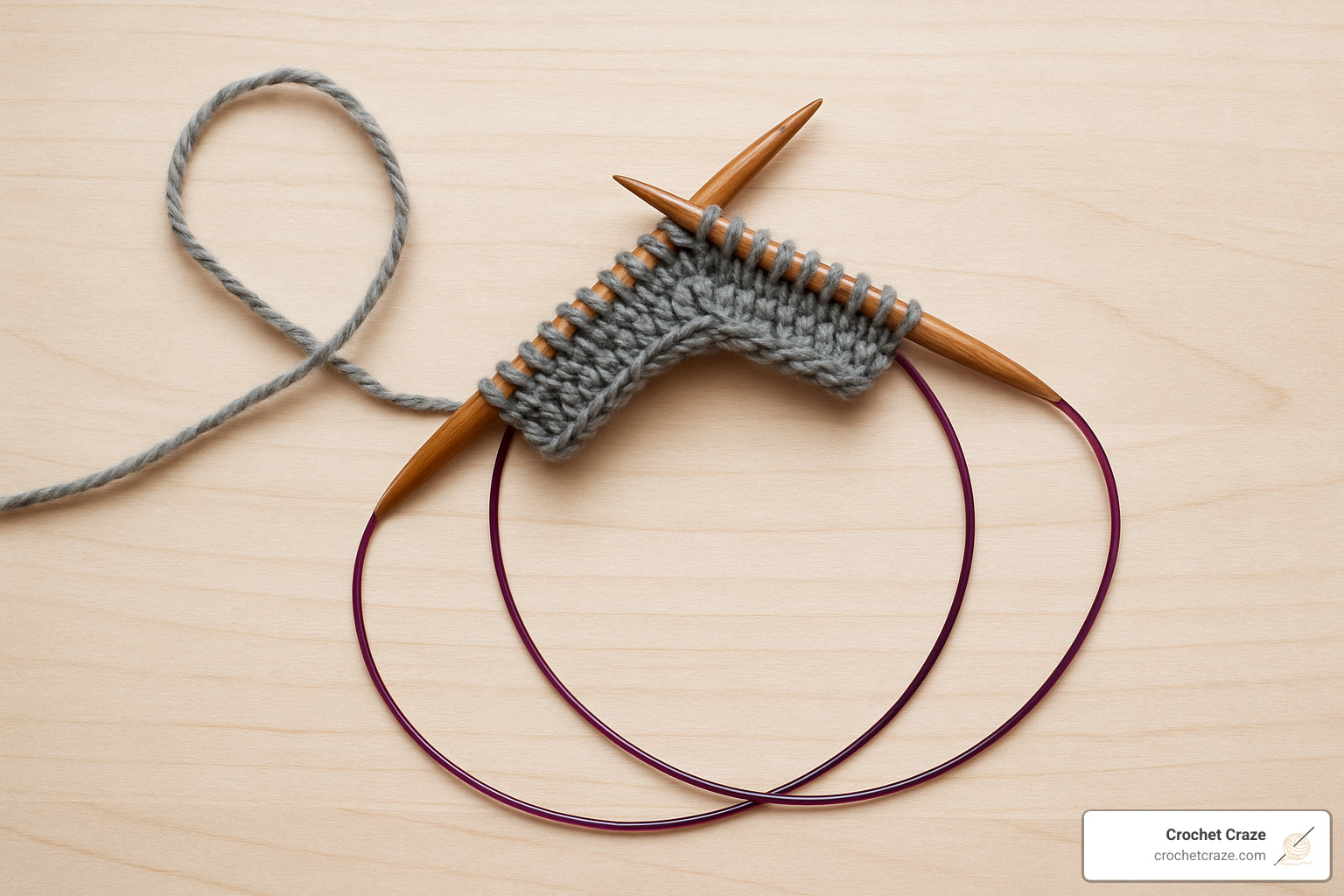
Great circular needles share four traits: a silky smooth tip-to-cable join, a cable that resists kinks, points matched to your yarn, and a flawless surface finish. Prioritizing those details will spare you countless headaches.
Quick Picks by Project
- Socks & sleeves – ChiaoGoo 9″ Red Lace (or Clover 9″ bamboo for a budget option)
- Hats – Addi Turbo 16″
- Sweaters – ChiaoGoo Twist set with 24″ and 32″ cables
- Blankets & shawls – Lykke Driftwood with 40–60″ cables
Curious about how needle design evolved from bone to carbon fiber? The history section of the knitting needle article on Wikipedia offers a concise timeline of the craft’s most important tool.
Beginner Tips, Troubleshooting & Comfort Hacks
When I first started using circular knitting needles, I made every mistake in the book! But don’t worry—I’m here to share what I’ve learned so you can avoid those same frustrating moments.
Joining in the Round Without Twisting
The dreaded twist! Nothing is more disappointing than knitting several rounds only to find your work has a Möbius strip twist that can’t be fixed without starting over. Here’s my foolproof method:
After casting on, spread your stitches along the cable and lay them flat on a table. Make sure all the stitches are facing the same direction with the cast-on edge pointing toward the center of the circle. Then—and this is crucial—triple-check before joining. Place a brightly colored stitch marker at the join point and work the first few rounds slowly, periodically checking that everything looks right.
Those extra moments of checking will save you hours of frustration!
Preventing Ladders
Those annoying vertical gaps that can form between needles (especially at the beginning of rounds) used to plague my knitting until I learned a simple trick. I now give an extra little tug on the working yarn after completing the first stitch of each round. This tightens up that transition point beautifully.
Another technique I love is what knitters call the “traveling loop”—I periodically move my starting point by a stitch or two every few rounds. This distributes any tension issues so they don’t create a visible line in your work.
Cable Maintenance
When my cables get kinky (and they will!), I dip them in hot (not boiling) water for about 20 seconds, then straighten them out and let them cool. Works like magic!
For storage, I avoid tightly coiling my needles. I either hang them from hooks or store them loosely coiled to prevent the cables from developing memory. For my wooden and bamboo needles, I occasionally wipe them with a cloth dampened with mineral oil to keep them smooth.
If you’re using interchangeable needles, make it a habit to check and tighten your connections before each knitting session. Nothing disrupts your flow like a needle tip unscrewing mid-project!
Magic Loop Mastery
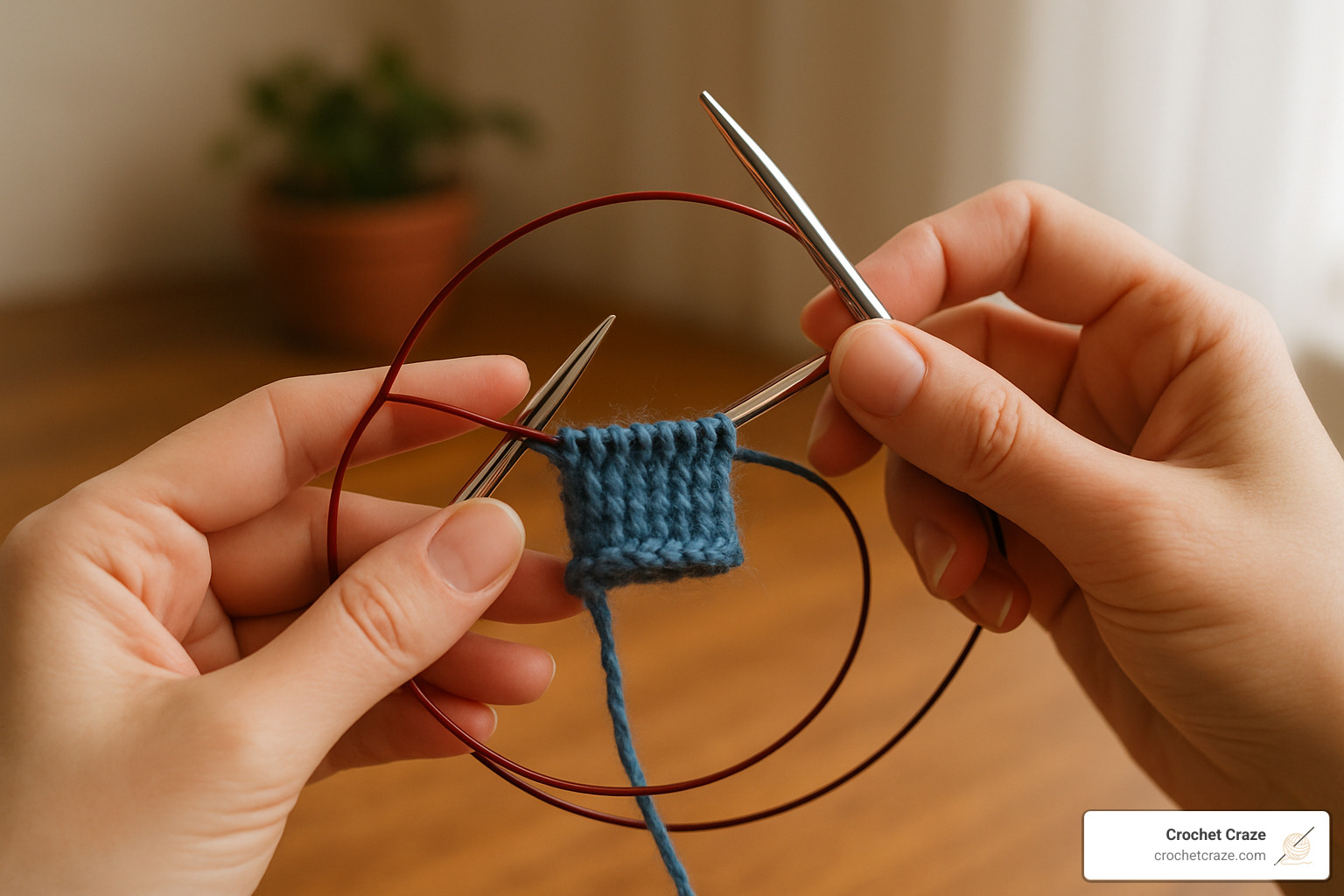
The magic loop technique revolutionized my knitting! It allows you to use a longer circular knitting needle (32″ or longer) to knit small-circumference projects like socks, sleeves, and baby hats.
Here’s how I do it: After casting on, I divide my stitches roughly in half. Then I pull out a loop of cable between these halves, positioning my stitches so the working yarn is at the right needle tip. After knitting across the first half of stitches, I pull the right needle through to create a new loop on the opposite side, reposition, and knit the second half.
This technique is a game-changer because it means one longer circular needle can replace multiple double-pointed needles or shorter circulars. I’ve knit everything from tiny baby socks to adult sweaters using magic loop!
For a more detailed guide with step-by-step photos, check out our comprehensive guide on Circular Needle Knitting.
Fixing Common Circular Knitting Needle Issues
Even as an experienced knitter, I still encounter challenges with my circular knitting needles. Here are my tried-and-true solutions:
When I notice yarn catching at the join between the needle tip and cable (split cable joins), I gently smooth any rough spots with a fine nail file. For severe cases, replacement is usually best.
For those loose stitches at join points that can create visible ladders in your work, I give an extra tug on the second stitch of each round and occasionally move my stitch marker to distribute any tension issues.
If my gauge doesn’t match the pattern despite using the recommended needle size, I remember that circular knitting sometimes produces a different tension than flat knitting. I adjust my needle size accordingly.
With interchangeable sets, I’ve learned the hard way about accidentally using different size tips on the same cable! Now I mark my needle tips with colored nail polish dots and always double-check the size markings before starting a project.
For comfort issues, I’ve added silicone grips to my metal needles for winter knitting and switched to wooden tips for projects requiring hours of work. These small adjustments have made a huge difference in how my hands feel after a knitting session.
Frequently Asked Questions about Circular Knitting Needles
What cable length do I need for an adult hat?
For an adult hat with a typical circumference of 18-22 inches, a 16″ circular knitting needle is your best friend. This length creates that “Goldilocks zone” where your stitches fit comfortably around the needle without stretching or bunching up.
Don’t worry if you don’t have a 16″ circular in your collection yet. You’ve got several alternatives that work beautifully:
You can use the magic loop technique with a 32″ or longer circular, which many knitters actually prefer once they master it. Some knitters find using two circular needles of the same size gives them more control. Or you can always go old-school with double-pointed needles if that’s what you’re comfortable with.
As your hat progresses toward the crown, you’ll be decreasing stitches until the circumference becomes too small even for a 16″ needle. At this point, you’ll need to transition to double-pointed needles or the magic loop method to finish those final rounds.
Can I knit flat with circular knitting needles?
Absolutely yes! This is one of the best-kept secrets that experienced knitters love to share with beginners. Circular knitting needles work beautifully for flat knitting—simply cast on as you would with straight needles, then knit back and forth, turning your work at the end of each row just like normal.
The benefits of using circulars for flat projects are game-changing. The cable holds most of your project’s weight, saving your wrists from strain during marathon knitting sessions. There’s virtually no length limitation, so you can fit hundreds of stitches for wide blankets or shawls. Plus, you’ll never again experience that heart-stopping moment when a needle slips out and drops stitches—they’re connected by the cable!
For knitters who travel with their projects, circular knitting needles are remarkably portable. The compact design fits easily in project bags, and your stitches stay securely on the cable even when jostled around.
Many knitters eventually switch to using circular knitting needles for almost everything. The only exception might be very small flat items like dishcloths where short straight needles feel more manageable.
How do interchangeable cables and tips stay secure?
The magic of interchangeable circular knitting needles lies in their connection systems, which have become increasingly reliable with modern engineering. Here’s how the main systems work:
Most popular brands use a screw-in system where tips have threaded ends that twist into threaded cable ends. These typically come with a small “key” or gripper tool that helps you tighten the connection properly. Brands like ChiaoGoo, Knit Picks, and Lykke use variations of this approach. While it takes a moment longer to change tips, this system provides excellent security when properly tightened.
The click-in system, popularized by Addi with their Click needles, features tips that snap into place with a clever locking mechanism. Usually, there’s a key or button that releases the connection when you want to change tips. This system offers lightning-fast changes between projects.
Some innovative brands have developed combination systems that incorporate elements of both screw and click mechanisms, aiming to provide both security and convenience in one package.
To keep your connections secure, follow these simple habits: always use the tightening key or gripper that came with your set; check connections every few rows when starting a new project; store assembled needles flat rather than hanging by one tip; and try to avoid pulling or tugging directly at the join area.
Most quality interchangeable sets include replacement parts and warranties, so it’s worth keeping your packaging and receipt tucked away just in case. With proper care, a good interchangeable set can last decades—making them one of the smartest investments in your knitting journey.
For more detailed information about interchangeable needle systems, check out this helpful guide from Knitting.com.
Conclusion
Have you ever picked up a tool that just felt right in your hands? That’s what circular knitting needles become for most knitters who give them a chance. They’ve transformed knitting from a sometimes awkward, wrist-straining activity into a comfortable craft you can enjoy for hours without discomfort.
Throughout this guide, we’ve seen how these versatile tools adapt to nearly any project you can imagine. Whether you’re creating a seamless sweater, a cozy hat, or a massive blanket, circular knitting needles offer benefits that straight needles simply can’t match—from better weight distribution to the ability to hold hundreds of stitches at once.
Finding your perfect needle match is a personal journey. You might fall in love with the sleek speed of Addi Turbos, the warm grip of Lykke Driftwood, or the budget-friendly reliability of Clover Takumi bamboo needles.
If you’re just beginning your knitting journey, we recommend starting with a 24″ or 32″ fixed circular in a medium size (US 7-8) made from bamboo. The slightly grippy surface will help keep your stitches in place while you build confidence. As your skills grow, an interchangeable set becomes a wonderful investment that will serve your creativity for years.
Practice makes progress. Your first attempt at joining in the round or trying the magic loop technique might feel awkward! But with a little persistence, these skills will soon feel as natural as breathing. That’s the beauty of knitting—each stitch builds not just your project, but your confidence too.
At Crochet Craze, we believe that quality tools improve your crafting experience. The right circular knitting needles aren’t just implements—they’re extensions of your creativity, partners in bringing your fiber visions to life. We’re here to support your crafting journey every step of the way.
We’d love to hear about your experiences with circular knitting needles! Which brands do you love? What projects have you completed? Share your stories, questions, and findings with our community. For more knitting inspiration, patterns, and tutorials, explore our collection of knitting articles and resources.
Happy knitting, friends! May your joins never twist and your cables never kink.