Hook and yarn bring you joy, but long hours can hurt your hands, wrists, and more. Many crafters face pain after long projects or busy times. This pain can make you stop crocheting for days or weeks, taking away the fun.
This article offers real ways to ease crochet pain and enjoy crocheting again. You’ll learn about good posture, simple stretches, and tools to help. We’ll also share tips on pacing, home remedies, and when to see a doctor. Our advice comes from experts and medical studies, helping you crochet better without strain.
You’ll find names of products that help crocheters, like Furls and Bernat Handicrafter. These tips can help you crochet comfortably without losing your speed or style. Remember, if your pain doesn’t go away, see a doctor.
Key Takeaways
- Crochet hand pain is common; long sessions can affect multiple body areas beyond the hands.
- Simple posture and ergonomic crochet tips can reduce strain and help prevent injury.
- Regular stretches and pacing strategies support pain-free crocheting during long projects.
- Ergonomic tools like Furls and Clover Amour, plus compression gloves, can ease grip fatigue.
- If pain persists, seek professional evaluation from a physician or therapist.
Why Your Hands Hurt: Causes of Crochet Hand Pain
You love to crochet, but your hands are sending you a firm RSVP: pain. Small, repeated motions add up fast. This buildup explains many causes of crochet pain and makes your favorite hobby feel like a workout gone wrong.
Repetitive motion and overuse injuries
Crochet is a high-repetition craft. Each stitch asks your fingers, thumb, and wrist to move the same way hundreds or thousands of times. This steady load causes repetitive strain and shortens muscles and tendons until they feel tight and sore.
When you work without enough micro-breaks, small aches become stubborn pain. Makers who do multi-hour sessions report stiffness, loss of grip, and tired hands after long blocks of time.
Common conditions: tendonitis, trigger finger, and carpal tunnel
Tendons get irritated from too much motion. Tendonitis crochet often starts as a dull ache at the base of your thumb or along the forearm.
Trigger finger crochet shows up when a finger clicks or locks while you stitch. You might feel a tender bump at the palm where a tendon sheath is inflamed.
Carpal tunnel crocheting brings numbness or tingling in the thumb, index, and middle fingers. Wrist bending and compression during long sessions can increase pressure on the median nerve.
Posture, shoulder and neck tension contributing to hand pain
Poor posture talks to your hands through the spine. Slouching, rounded shoulders, and a strained neck shift load down the arm. That change makes hands work harder to hold yarn and hook.
Neck and shoulder tightness often precede hand pain. Fixing posture early eases upstream tension and reduces the chance of referred pain in your wrists and fingers.
How yarn choice and prolonged marathons increase strain
Not all yarns are equal. Rough 100% cotton and heavy yarns force your hands to grip harder and pull longer. Projects like thick cotton blankets multiply stitches and amplify stress.
Marathon crochet sessions without scheduled rest dramatically raise the risk of overuse problems. Makers who rotate projects or switch to softer fibers report less wear on their hands.
| Factor | How it adds strain | Signs to watch for |
|---|---|---|
| Repetitive motions | Hundreds of identical finger and wrist movements tire muscles and tendons | General soreness, reduced endurance, morning stiffness |
| Yarn type | Abrasive or heavy yarns force stronger grip and longer pulls | Palm soreness, blisters, localized finger pain |
| Posture | Slouching transfers load to arms and hands via neck and shoulders | Shoulder tightness, referred forearm pain, worsening hand symptoms |
| Project length | Marathon projects increase cumulative microtrauma | Progressive pain over days or weeks, side-specific discomfort |
| Wrist position | Extended or flexed wrists raise pressure in the carpal tunnel | Numbness, tingling, weakness, dropping tools |
Set Up for Success: Posture and Ergonomics to Prevent Pain
Good setup beats grit for long crochet sessions. Think of your space as a tiny studio where crochet ergonomics rules. Small changes to your chair, arm position, and lighting cut down strain. This helps you stitch longer without sore hands.
Chair and seat tips for spine and shoulder support
Sit in a sturdy chair with feet flat on the floor and knees at hip level. Use a lumbar pillow or a rolled towel to support the lower back. This keeps your spine neutral.
If you love crocheting on the couch, add firm cushions behind your lower back and under your thighs. This prevents you from curling up and losing support.
Arm positioning and using cushions to reduce load
Keep shoulders relaxed and forearms supported to stop them from tiring. Rest elbows on armrests, pillows, or a lap tray. This prevents lifting your shoulders for long stretches.
An arm support crochet aid or a simple cushion under each forearm reduces the load. This sends less tension down to your hands.
Lighting and workstation layout to avoid hunching
Place bright task lighting over your project so you do not lean forward to see stitches. Keep yarn, scissors, and tools within easy reach to avoid twisting or reaching across your lap. Thoughtful layout helps you avoid hunching crochet.
This protects your neck and shoulders from strain. Such strain can radiate into your hands.
Stretch It Out: Hand, Wrist, Neck, and Shoulder Stretches
Your hands do the heavy lifting when you crochet. A quick warm-up routine can help. It lengthens muscles, boosts circulation, and lowers strain chances. Spend a few minutes on gentle moves before you pick up a hook.
Hand and finger routines that help
Start with fingertip touch: make an O between your thumb and each finger, holding 30–60 seconds per finger. Move into the claw: bend fingers toward the palm and hold 15–30 seconds. Finish with fist-to-fan—slowly curl into a loose fist, hold, then spread fingers wide. These hand stretches for crocheters restore mobility in small muscles and tendons.
Wrist moves to ease forearm tension
Try the wrist extensor stretch: elbow bent, fingers pointing away, use your other hand to bend the wrist down. For wrist flexor stretch, gently pull the fingers back toward the forearm. Add a prayer stretch—palms together, lower toward a table or waist. Do calm wrist rolls clockwise and counterclockwise. These wrist stretches crochet veterans use to fight forearm tightness.
Neck and shoulder mobility to cut referred pain
Keep your shoulders loose with shoulder rolls and cross-body arm stretches. Reach an arm overhead for a gentle side bend. For the neck do ear-to-shoulder holds, chin-to-chest stretches, and slow rotations. Neck stretches crocheting pros recommend ease tension that can travel down into your hands.
How often and what a warm-up should look like
Perform these moves before and after sessions, and use micro-breaks—shake it out and do a few wrist rolls every hour. Hold each stretch for a comfortable duration and avoid forcing range of motion. If you crochet daily, aim for a short routine each day to keep tissues resilient.
For a compact eight-step sequence you can follow, see this helpful guide with clear demos: 8 stretches that help avoid pain while.
Hook and Yarn Choices That Save Your Hands
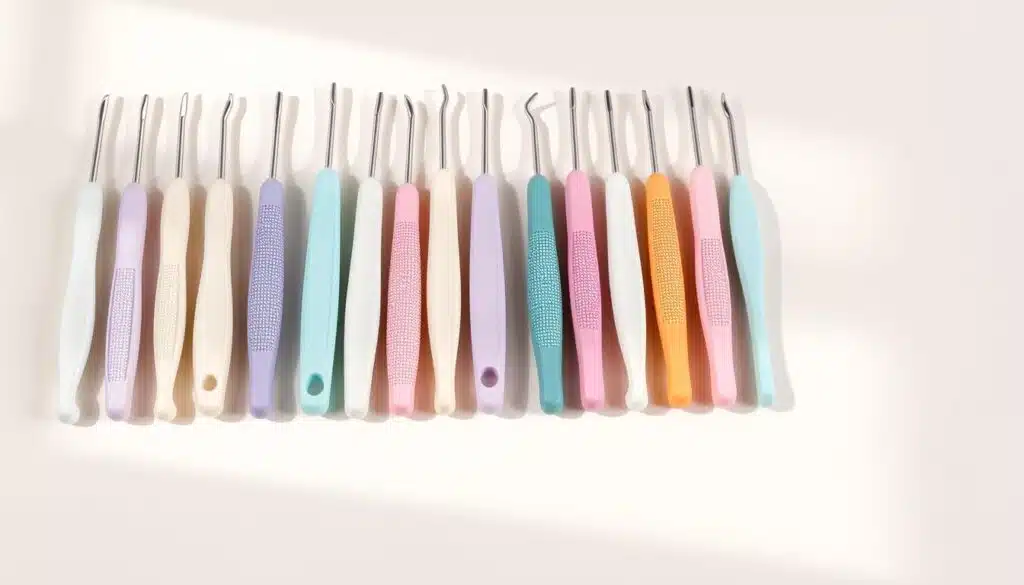
Choose tools that let you crochet longer without pain. Switching to ergonomic crochet hooks changes how your hand works. Wider, contoured grips help your palm handle more, easing the grip on your project.
Ergonomic hooks: what to look for and popular brands
Look for a hook with a soft, shaped handle that fits your whole hand. The Furls Streamline and Clover Amour lines are favorites for less strain. Susan Bates and Etimo also offer cushioned designs that reduce pinch pressure. Try them out before buying.
Why larger-handled hooks reduce grip fatigue
Large-handled hooks spread force across a broader surface, letting your fingers relax. These hooks absorb the shock of repeated stitches. This means you use less muscle, reducing hand and wrist fatigue during long sessions.
Yarn weight and fiber: softer yarns vs rough cotton that causes friction
Firmer cotton like Bernat Handicrafter can rub and demand tighter tension, tiring your hands faster. Softer, smoother fibers glide through your fingers and lower friction. Bulky yarns reduce stitch count but add weight, so consider texture and hand comfort for your project.
Switching hook styles and yarn mid-project to change muscle use
Rotate tools to shift which muscles you use. Use ergonomic crochet hooks for heavy work, then switch to a smaller hook for detail rows. Some makers change yarn type between sections to vary tension and feel. These small swaps can prevent overload without changing your pattern.
Grip and Tension Techniques to Reduce Strain
Changing how you hold the hook and guide the yarn can ease hand pain. Small adjustments in grip and tension make long sessions easier on your fingers. Experiment with different methods to find what works best for you.
Relaxed grips vs pinching
Avoid tight pinches that trap the hook between your thumb and forefinger. Instead, use a relaxed grip, letting the hook rest in your palm like a paintbrush. This approach uses larger muscles in your hand and forearm, reducing fatigue.
Try ergonomic hooks like Clover Amour or Furls for a cradle hold. This uses your middle and ring fingers. Switching to a wider-handled hook can also help you avoid pinching and feel more comfortable.
Manage yarn tension without overworking one finger
Many crocheters use their pinky to control yarn, but this can lead to pain. To avoid pinky strain, spread tension across two or three fingers and loosen your overall pull.
Practice simple yarn tension tips in short drills. For example, make five chains using a looser wrap, then relax your pinky between sets. For more guidance, try this yarn tension resource and adapt it to fit your hands.
Hand positions and cradle techniques to share the load
Cradle crochet places the hook lightly in your palm while your fingers guide it. This reduces constant high-force pinches. Alternate which fingers hold the yarn and which guide the hook every few rows to spread effort.
Check your grip often. Pause at row ends, shake out your hands, and deliberately relax your thumb and pinky. Over time, your body will learn a gentler rhythm, and your shoulders and wrists will thank you.
- Practice a relaxed crochet grip for 10 minutes daily.
- Alternate which fingers control tension every 20–30 minutes.
- Try hooks with wider grips to support cradle crochet and reduce pinch force.
Smart Habits: Breaks, Pacing, and Project Management
Want to crochet without aching hands? Start by building smart habits. These habits protect your joints and keep your projects fun. Small changes in timing, variety, and rest make a big difference.
Work-rest ratios are your best friend. Try micro-breaks crochet: stop for 3–5 minutes every 20–30 minutes. Shake your hands, roll your wrists, and do quick stretches during these breaks. A simple pattern like 20 minutes work, 5 minutes rest fits into most routines and helps you maintain steady pacing crochet.
Your body needs recovery. Avoid marathon crochet sessions when you can. Long, nonstop hours raise cumulative strain and invite tendon problems. Many makers cut soreness by limiting daily crochet to short blocks — one to two hours — and taking full days off so tissues can recover.
Rotate projects to vary motion. Switch between different stitch types, hook sizes, and yarn weights to change hand mechanics. If you spend an afternoon on tight, dense stitches, follow with looser stitches or a different technique the next time you sit down. This lets muscles rest while you keep making progress.
Plan like a pro. Production-focused crocheters schedule rest days, add cross-training like light strength or yoga, and alternate tasks such as pattern drafting or blocking. These steps help you avoid marathon crochet habits and preserve long-term hand health.
For tips on increasing speed without sacrificing your hands, check out this guide at how to crochet faster. Use pacing crochet and rotate crochet projects to extend your creative life without constant pain.
Alternative Techniques That Can Be Gentler on Joints
If your hands are protesting, try a different way to craft. Small changes can move the motion from tiny tendons to bigger muscles. Below, you’ll find quick options, smart pattern tweaks, and a simple swatch plan to test before committing.
Tunisian-style options
Tunisian crochet gentle methods use a longer hook and hold many stitches. This setup reduces the strain on thumbs and wrists. You keep loops on the hook, work rows like a mix of knitting and crochet, and often use larger hooks for chunkier yarns.
Try a small Tunisian swatch to judge comfort. If traditional crochet hurts, this technique might be easier on your joints, letting you stitch longer.
Finger-led and low-hook approaches
Finger crochet replaces a hook with your fingers. The motion is slower, and your thumb won’t be pinched. This method is great for short projects like bracelets or simple chains.
Other low-hook techniques, like arm crocheting for bulky yarns, move the work to shoulders and upper arms. This can be a relief when wrist pain flares. Test a tiny piece before starting a full project.
How to adapt patterns for hands
You can adapt patterns for hands without ruining the design. Use larger hooks and chunkier yarn to reach gauge with fewer stitches per inch. Swap dense textures for simpler stitches that demand less thumb tension.
When a pattern calls for long runs of moss or popcorn stitches, swap in half-double crochets or Tunisian simple stitch repeats. These swaps cut down on fine repetitive actions and keep your project looking good.
Before diving in, make a short swatch. Compare time spent and how your hand feels after ten minutes. This quick test tells you whether to adopt low-stress crochet techniques or return to your usual method.
| Technique | Main Benefit | Best Uses | Try-on Swatch |
|---|---|---|---|
| Tunisian crochet gentle | Fewer repeated insertions, holds multiple stitches | Blankets, scarves, flat panels | 10-minute Tunisian sample |
| Finger crochet | No hook, less thumb strain | Bracelets, chunky chains, quick decor | Small chain for wrist comfort |
| Arm crocheting / low-hook | Shifts work to shoulders and upper arms | Rugs, chunky blankets, statement scarves | Mini arm-knit square |
| Pattern adaptation | Reduces dense, repetitive stitches | Any project where pain recurs | Modified stitch repeat swatch |
For more tips on reducing crochet pain, check this resource from Crochet & Twists: say goodbye to crochet pain. Try a few methods, note how your hands feel, and keep what works. Your next favorite technique might be the one that lets you stitch without pain.
At-Home Remedies and Quick Relief for Sore Hands
You don’t need a clinic visit for every ache. A few home remedies can ease soreness fast. Listen to your hands and choose the right quick fix.
Ice or heat: pick what the hand needs
If your hand is swollen, tender, or hot, use ice or a cold compress. Cold numbs pain and reduces swelling. For stiffness and tight muscles, warm water loosens tissue and boosts motion.
Learn the ice vs heat rule: cold for inflammation, heat for stiffness. Switch based on how your hand feels.
Soaks, topical balms, and essential oils
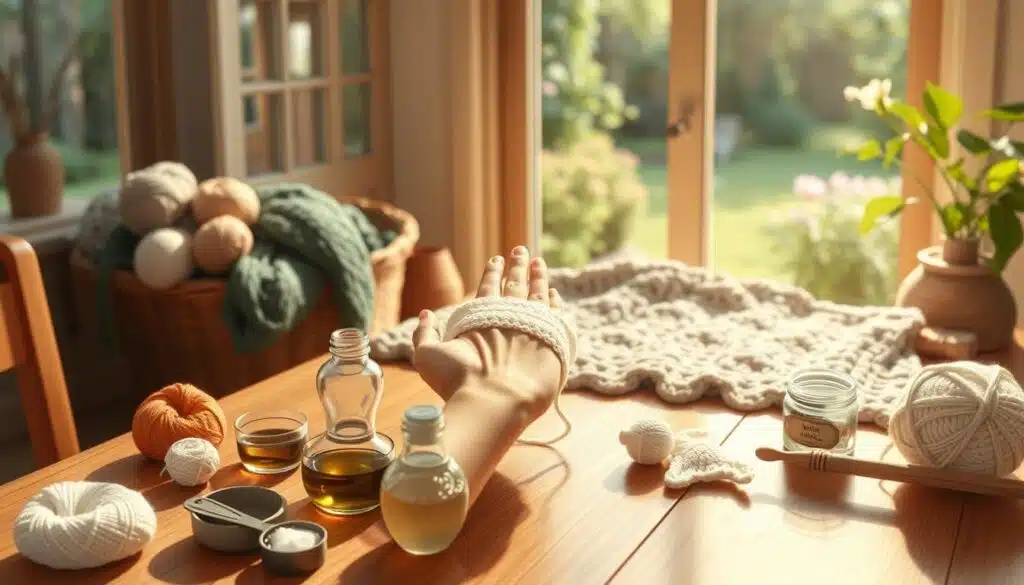
A short soak in warm water with Epsom salts can relax tight forearms before crocheting. Mix one to two tablespoons per pint and soak for five to ten minutes.
Topical rubs like Deep Blue give quick relief. Apply gently and test on a small patch first. For scents, dilute lavender, peppermint, or eucalyptus in a carrier oil for a calming massage.
Compression and lightweight support options
Light compression gloves offer steady support without bulk. They improve circulation, lower swelling, and make long sessions feel less tiring. Choose breathable, thin gloves for craft use, not heavy medical braces.
Simple routine you can try tonight
- Five minutes of gentle palm and finger massage with a non-greasy lotion like Aveeno.
- Warm Epsom salts for hands soak for seven minutes every other night.
- If swelling appears after a long session, apply a cold pack for 10–15 minutes.
- Wear lightweight compression gloves during long sits or when you feel fatigued.
| Remedy | Best for | How to use |
|---|---|---|
| Cold compress | Acute pain, swelling, inflammation | Apply 10–15 minutes with a cloth barrier; repeat hourly as needed |
| Warm soak with Epsom salts | Stiffness, tight muscles, pre-session warm-up | Soak 5–10 minutes in warm water with Epsom salts for hands |
| Topical rubs Deep Blue | Targeted, temporary muscle relief | Rub a small amount on sore spots; wash hands before handling yarn |
| Compression gloves | Swelling, circulation, mild support during work | Wear thin, breathable gloves while crocheting or resting |
| Gentle massage with lotion | Dry hands, mild tension, fingertip mobility | Massage palms and fingers 2–5 minutes daily with light lotion |
If pain lasts more than a few weeks or you notice numbness, see a doctor. Short-term NSAIDs can help some makers, but check with your physician for ongoing use. These home approaches give quick relief and keep you stitching comfortably more often.
Professional Help: When to See a Doctor, PT, or Occupational Therapist
Your hands tell a story. If pain stops you from finishing a row, or if numbness creeps into your fingertips, it’s time to pay attention. Knowing when to see doctor crochet pain can save you weeks of recovery and keep your projects on track.
Red flags to watch for include persistent or worsening pain, sudden weakness, loss of function, or numbness and tingling that don’t get better with rest. Swelling or visible inflammation that won’t calm down after home care means you should seek evaluation right away. If any of these pop up, arrange a visit so a clinician can assess nerve or tendon involvement.
What physical therapy crochet sessions can offer is more than exercises. A licensed physical therapist will test range of motion, identify sources of strain, and build a graded plan that eases you back into making. They teach pacing, body mechanics, and provide manual techniques that reduce pain and speed recovery.
Occupational therapy hand pain specialists focus on your daily craft routines. An OT will suggest activity modifications, teach joint-protection strategies, and prescribe adaptive tools so you can keep crocheting with less stress on tissues. They often work with micromovements that matter most to makers.
Splints and braces are common prescriptions. Splints for crocheters can protect inflamed tendons, rest compressed nerves at night, or support weak joints during a long session. A therapist will fit and adjust a splint so it helps without limiting your ability to work when needed.
Hands-on therapies are a helpful complement. Massage therapy can ease tight forearm muscles and improve circulation. Chiropractic care may restore joint mobility in the neck and upper back, which can reduce referred pain into the hands. Many makers report quick relief after targeted sessions when these treatments are part of a broader plan.
For long-term makers, regular check-ins with a therapist or massage professional can maintain function and prevent relapses. If you craft for hours each day, scheduling periodic visits can be as important as swapping hooks or yarn to preserve your hands for years of comfortable stitching.
Tools and Products That Crocheters Swear By
When your hands protest mid-row, the right gear can rescue your session. Think of this as your short toolkit. It includes a few smart hooks, a comfy support, and reliable relief items. These items cut down grip strain and keep you stitching longer without pain.
Ergonomic hook picks
Try a mix of styles so you can rotate grips. Many makers praise Clover Amour hooks for their smooth head and cushioned grip. For wider handles and a lightweight feel, read a solid Furls Streamline review before you buy; that model often lessens pinch and wrist tension. Brands like Tulip Etimo and Susan Bates add shaped handles that expand the grip area and reduce finger cramping.
Work supports that take the load
Use lap trays and small pillows to prop your project and keep your elbows lower. A proper crochet arm support moves the weight off your hands and into your forearms and shoulders, cutting grip force. Adjustable lap trays combined with a shoulder-friendly chair make long sessions gentler on joints.
Rotating supplies and quick-care items
Keep several hook sizes and handle types in your bag so you can swap during long projects. Epsom salt, a heating pad, and an ice pack belong on the shelf for fast relief. Aveeno Daily Moisturizing or a non-greasy lotion helps when you give yourself a self-massage between rows.
Gadgets and aids for recovery
Hand massagers and small electric rollers boost circulation and relax tight muscles after a marathon. Compression gloves for crocheters provide light support during work and calm swelling later. Pair those gloves with gentle stretching and short breaks to get the best results.
Practical buying tips
- Test grip thickness and hook head shape before committing.
- Rotate between Clover Amour hooks and Furls Streamline models to vary muscle use.
- Match a crochet arm support with cushions that fit your lap width.
- Keep compression gloves for crocheters and a light hand massager in your toolkit.
With a few targeted tools and small habit changes, you can cut clutching, ease tension, and enjoy more comfortable crafting sessions. Pick what feels right, then mix and match to protect your hands for years of stitching.
Conclusion
You don’t have to live with sore hands while crocheting. Start by improving your posture and loosening your grip. Choose the right hook and yarn for comfort.
Simple changes can make a big difference. Try using Furls or Clover Amour hooks and softer yarns. Elevating your project also helps reduce strain.
Make stretching a part of your crochet routine. Use warm-ups, wrist stretches, and take breaks. Compression gloves and topical relief can also help.
Rotate projects or stitch types to avoid overusing your hands. These tips will keep your hands happy and your projects flowing.
If sore hands persist, see a professional. A physical or occupational therapist can help. For more tips, check out carpal tunnel remedies for crocheters.
With the right setup and tools, you can crochet without pain. Regular stretching and pacing are key. Enjoy your hobby for years to come.
FAQ
Why do my hands, wrists, and forearms hurt after long crochet sessions?
Crochet involves repetitive finger and wrist movements. These actions can lead to muscle and tendon fatigue. This increases the risk of injuries like tendonitis and trigger finger. Wrist strain can also cause symptoms similar to carpal tunnel.
Poor posture and tension in the neck and shoulders can make hand pain worse. Using heavy yarns or working on long projects adds to the strain.
Can posture really cause hand pain while crocheting?
Yes, slouching and rounded shoulders can lead to hand pain. This is because the work shifts to smaller muscles in your arms and hands. Sitting up straight and keeping your shoulders relaxed can help prevent this.
Which stitches or projects are most likely to make my hands sore?
Dense patterns and long projects can cause hand fatigue. Using rough cotton yarns requires tighter stitches, which adds to the strain. Long blankets are a common culprit.
What immediate self-care should I use for crochet-related hand pain?
For swelling, use ice or a cold compress. For stiffness, try heat or a warm Epsom salt soak. Topical rubs like Deep Blue can help with soreness.
Gentle massage with lotion improves circulation. Wearing compression gloves can offer support during crochet sessions.
How often should I stretch, and which stretches help the most?
Stretch before and after crocheting, and take micro-breaks every 20–30 minutes. Finger and hand stretches improve tendon flexibility. Wrist stretches ease forearm tension.
Neck and shoulder stretches prevent pain from spreading. Hold stretches for 30–60 seconds when comfortable.
Will switching to an ergonomic hook actually help?
Many makers find relief with ergonomic hooks. Wider grips reduce pinch force and let you cradle the hook. This makes stitching easier and less straining.
What grip or tension changes should I try if my pinky or thumb hurts?
Try a relaxed cradle hold instead of a tight pinch. Distribute tension across more fingers. Loosen yarn tension and alternate grips to reduce overload on the thumb and pinky.
Should I change yarn or hook size for big projects to save my hands?
Yes, softer yarns reduce friction and the need for tight stitches. Switching to a chunkier yarn with a larger hook can also help. Test different yarns and hooks on a swatch before starting a big project.
How should I structure my crochet time to avoid flare-ups?
Use micro-breaks every 20–30 minutes. Shake out your hands and do quick stretches. Limit marathon sessions to 1–2 hours and take rest days.
Rotate projects and stitch types to vary muscle use. Professionals treat rest and cross-training as part of their schedule.
Are there alternative techniques that might be gentler on my hands?
Yes, Tunisian crochet and finger or arm crocheting may be gentler. Try these on a swatch before committing to a full project.
When should I see a doctor, PT, or occupational therapist?
Seek medical help for persistent or severe pain, numbness, tingling, weakness, or loss of function. Physical and occupational therapists can diagnose and treat repetitive strain injuries.
Which products and tools are worth trying right away?
Start with an ergonomic hook and a supportive chair or lumbar cushion. Use lap trays or pillows to prop your forearms. Try lightweight compression gloves and Epsom salt with a heating pad and ice pack for home care.
Can massage or chiropractic care help crochet-related pain?
Many makers find relief from massage and chiropractic care. These therapies can ease muscle tension and improve mobility. They work best when combined with ergonomic changes and pacing strategies.
What are easy micro-break moves I can do without leaving my chair?
Shake out your hands, do wrist rolls, and fan your fingers wide. These quick actions every 20–30 minutes can help break the repetition and boost circulation.
Are over-the-counter meds okay for crochet pain?
Short-term NSAIDs like ibuprofen can help with pain and inflammation. But talk to your doctor before using them regularly. Combining medication with ergonomic fixes and stretches is best for lasting relief.
What red flags mean this isn’t just “crochet soreness”?
Seek immediate medical help for numbness, tingling, weakness, loss of hand function, severe swelling, or pain that doesn’t improve. These signs can indicate nerve compression or tendon injury.
How can I test changes without committing to a full project?
Work a small swatch with a new hook, yarn, or stitch. Crochet for a short time and see which setup feels better. This low-risk test helps you find ergonomic combinations before starting a big project.
Any quick posture tips for crocheting on the couch?
Avoid curling up for hours. Sit upright with lumbar support, feet flat, and a pillow under your forearms. Use a lap tray or firm cushion to bring your project up to elbow height.
Will switching hooks mid-project actually help reduce pain?
Yes, alternating hook shapes, sizes, or handle styles can help. Many makers rotate hooks during long sessions to prevent overuse and soreness.