
Choosing between wood vs metal needles is like picking your favorite coffee. Both have their fans and reasons why they’re great. This showdown will help you decide which needles to keep in your bag.
You’ll learn about the materials and how they work with different yarns. This affects speed, grip, and how your project turns out. We’ll compare performance, care, ergonomics, and sustainability. Plus, we’ll share tips for common projects.
By the end, you’ll know when to use wood or metal needles. This guide is your quick and funny way to navigate knitting tools.
Key Takeaways
- Wood vs metal needles trade warmth and grip for smoothness and speed.
- Different knitting needle materials suit different yarn types and projects.
- Ergonomics and care matter as much as stitch performance.
- Sustainability and maintenance tips can extend needle life.
- You’ll get practical brand and product cues later in the article for fast decisions.
Introduction: Why Needle Material Matters for Your Craft
You choose yarn for its look and feel. You should pick needles the same way. The right needle material affects your stitch quality, how yarn moves, your speed, and the feel of your work.
Needle material has a big impact on small things. Metal needles are smooth and fast, perfect for detailed patterns and lace. Wood and bamboo needles catch the yarn a bit, giving a better grip and warmth. This helps with slippery fibers and helps beginners get the hang of knitting.
Choosing the right needle changes how your stitches look and how often you need to fix mistakes. A smooth needle can make you knit faster but might make thin yarns slide off. A grippy needle slows down your knitting, making your stitches neater and easier to manage.
The right needle material depends on the yarn weight of your project. For lace, metal needles are best for precision. For thick yarns, wood needles are warmer and better for beginners.
Needle shape and tip design also play a role. A sharp metal tip and smooth shaft work differently than a round wooden tip. This article will explore these differences in detail.
But there’s more to consider than just how your stitches look. Think about comfort, durability, upkeep, and the environment. These factors affect how happy you’ll be with your needles in the long run. You’ll get tips on choosing the right brand and where to buy.
| Factor | Metal Needles | Wood/Bamboo Needles |
|---|---|---|
| Speed | High; slick surface accelerates knitting | Moderate; grip slows stitch movement for control |
| Stitch consistency | Precise tension for fine work | Even tension for bulky and textured yarns |
| Yarn glide | Excellent for smooth fibers like silk | Controlled glide for slippery or fuzzy yarns |
| Tactile feel | Cool, lightweight, often noisier | Warm, slightly cushioned, quieter |
| Best use cases | Lace, fine gauges, precision shaping | Beginners, super-bulky, textured patterns |
| Maintenance | Low; resists wear, occasional polishing | Moderate; avoid moisture, occasional oiling |
| Environmental note | Aluminum and stainless steel recyclable | Bamboo is renewable; check for sustainable sourcing |
Wood Needles: Characteristics, Benefits, and Best Uses
Wood and bamboo needles feel warm in your hands. This warmth, along with a grippier surface, helps control stitches. The finish of the needles can vary, with some being sanded smooth and others having a thin lacquer for easier gliding.
Material and feel
Birch and bamboo are common materials for wooden needles. Bamboo needles are lighter and often less expensive. Many brands offer FSC-certified options for those who care about sustainable sourcing.
The grip of wood needles helps prevent stitches from slipping. This is great for beginners and those working with slippery yarns.
Performance with yarn types
Wood needles work well with textured fibers like wool, alpaca, chenille, and boucle. They provide extra friction to keep stitches in place. For silk and very slick fibers, metal needles might be better for faster lace work.
Wood needles are gentler on delicate fibers, protecting them from sharp tips. For bulky and super-bulky projects, wood needles offer control and a cozy feel. Be careful not to force them through dense fabrics like denim. Make sure to match needle size to yarn weight to avoid tension issues.
Durability and care
Wooden needles are durable but can be damaged by moisture and heavy strain. Avoid forcing them through dense fabrics. Store them flat in a padded case to prevent warping and occasional dents.
To maintain the finish, rub them with jojoba oil or a beeswax-based conditioner if they feel dry. Replace them when tips show splinters, cracks, or rough patches that catch yarn.
Wood needles are biodegradable and many makers focus on ethical sourcing. Choosing wooden tools can be a greener option. For a detailed comparison of wood versus metal needles, see this write-up at wood or metal knitting needles.
| Feature | Wood Needles | Metal Needles |
|---|---|---|
| Weight | Light; bamboo needles are very light | Heavier; adds momentum for fast knitting |
| Needle grip | Higher grip, slows slipping | Low grip, smooth glide |
| Needle feel | Warm to touch; varied finishes | Cool and slick under hand |
| Best yarns | Wool, alpaca, boucle, chenille, bulky | Silk, fine lace, slippery synthetics |
| Durability | Can dent or warp if wet; repairable with oil | Strong; resists bending but can bend under stress |
| Tip shape | Blunt to moderate; safe for delicate fibers | Pointy; excels at precision and lace |
| Best uses | Beginner projects, DPNs, knit-in-the-round to prevent ladders | Speedy flat knitting, lace, precision work |
Metal Needles: Speed, Precision, and When They Win
Metal needles feel slick and fast from the start. Their smooth surface reduces drag, making yarn glide smoothly. This is great for speeding up or keeping tension steady on detailed patterns.
Material advantages
Aluminum and stainless steel needles have low friction. This supports fast knitting and precise work. Sharp tips help with lace stitches and complex techniques.
Nickel-plated brass and other blends are durable yet keep a fine tip. They ensure quick stitch transfer and consistent gauge for detailed projects.
Best projects and yarns
Use metal for lace shawls, silk garments, or fine-gauge pieces. Smooth fibers slide without snagging, keeping tension steady and rows quick.
But, metal can cause stitches to slip on mohair or fuzzy yarns. For bulky projects, ensure needle sizes match the yarn.
Durability and portability
Metal needles resist warping and cracking, lasting decades. This makes them a wise choice for frequent knitters.
They’re easy to pack for travel, stay straight, and require little care. Some metals may feel cold or click on hard surfaces, affecting comfort.
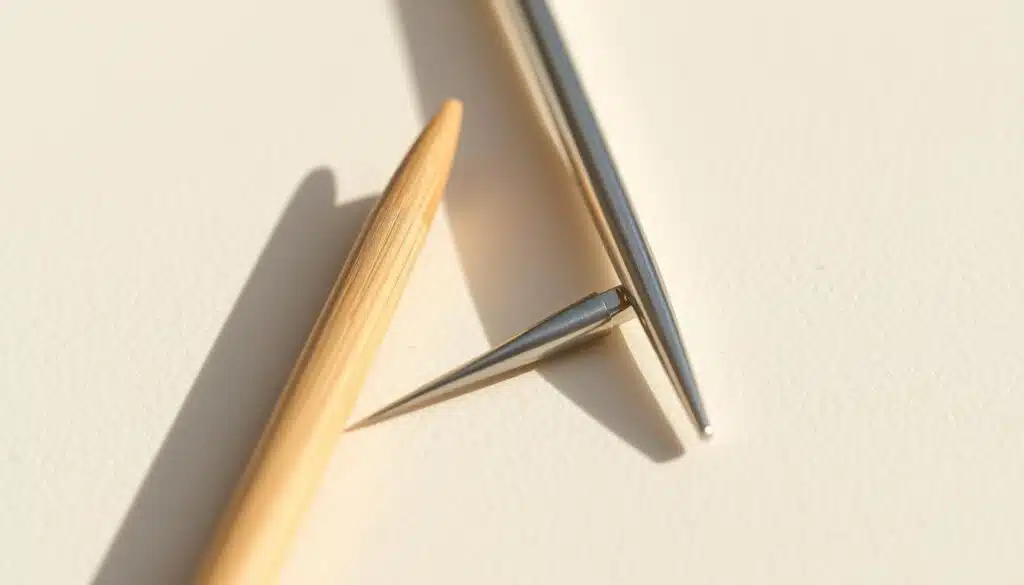
wood vs metal needles
Choosing between wood and metal needles is a big debate. You want to know which is best for your project. Here’s a quick guide to help you pick the right one.
Direct performance comparison
Metal needles move fast, making your rows quick. They give you sharp stitches with fine yarns. Wood needles hold your stitches better, but they’re slower.
Metal tips are great for detailed work like lace. Wood tips are softer, which is good for delicate yarns. Metal needles last long and don’t bend. Wood needles are strong but can change shape with moisture and pressure.
Project-based recommendation matrix
| Project Type | Why It Fits | Recommended Material |
|---|---|---|
| Lace, silk, fine-gauge shawls | Requires sharp tips and fast, even stitches for detailed patterns | Metal needles |
| Chunky blankets, bulky sweaters, textured knits | Control and warmth in the hands help manage large loops and stitches | Wood or bamboo |
| Kids’ projects, classroom kits | Blunter tips reduce pokes; wood offers an eco-friendly edge | Wood (or plastic for very young children) |
| Tapestry weaving, finishing ends | Use blunt, large-eyed tools designed for finishing | Dedicated blunt tapestry needles |
| Punch needle and rug work | Requires tools built for loops and pile height, not standard knitting needles | Specialized punch or rug needles |
Personal preference and learning curve
Wood needles are good for beginners because they help keep stitches in place. Experienced knitters like metal for its speed once they get the hang of it.
What you like to feel can influence your choice. Metal needles are cool and light. Wood needles are warm and a bit heavier. If metal clicking bothers you, try both to see what works for you.
Needle Size, Shape, and Tip: How Material Interacts with Design
Choosing needles is more than picking metal or wood. The shape and size of the tip interact with the material. This affects how fast you work, the look of your stitches, and how the yarn feels.
Tip shape differences
Pointed tips are common on metal needles. They’re great for lace or fine stitch work. They slip through tight stitches easily and help pull delicate yarn without catching.
Blunt tips, found on bamboo and some plastic tapestry needles, are better for avoiding snagging. They work well with bulky yarns. They’re also good for beginners who need a little extra help when inserting the needle.
For finishing tasks, blunt-tipped tapestry needles are best. They prevent splitting fibers when weaving in ends. Plastic and nickel-plated tapestry needles have large eyes for thick yarn and make sewing smoother.
Size ranges and availability
Needle sizes range from tiny to very large. Lace work often uses 1.5–2.5mm needles. Worsted projects usually need 3–6mm needles. For chunky and super-bulky yarns, you might need 8mm or higher.
Metal sets offer the smallest sizes with consistent gauge. Wood and bamboo sets focus on mid to large sizes. But, premium brands now offer a wide range for all types of projects.
Tapestry needles vary by length and eye size. They’re great for sewing in ends, making finishing faster and neater. For more on tapestry options, read this guide on tapestry needles essential guide to tapestry needles.
Interchangeables and circulars
Interchangeable needles let you swap tips and cables for any pattern. Metal tips are fast. Wood tips offer more drag and control. Cables come in memory-free types that lie flat and reduce twist.
Circular needles spread out the weight and ease wrist strain on big projects. Slick metal tips with smooth cables help you work faster. Wooden tips with flexible cables give grip and comfort for longer sessions.
Double-pointed needles and small fixed circulars favor metal for tiny circumferences. Wood DPNs help tame slippery yarn and offer better control for fiddly stitches.
| Feature | Metal Needles | Wood/Bamboo Needles | Tapestry/Plastic Needles |
|---|---|---|---|
| Typical needle tip shape | Pointed — excellent for lace and fine work | Blunt to semi-pointed — good for control and bulky yarns | Blunt — prevents splitting when weaving ends |
| Common needle sizes | 1.5–15mm, strong availability at small sizes | 3–12mm, strong mid and large size selection | Large eyes, sizes geared to finishing tasks |
| Best when used with | Lace, sock yarns, high-speed projects | Worsted, bulky yarns, comfortable long sessions | Weaving ends, seaming, tapestry work |
| Interchangeables and circular needles | Wide tip options; great for tiny interchangeable needles | Available from premium brands; warm feel on cables | Often fixed; useful as finishing tools with large eyes |
| Durability and care | Durable, smooth, may be slippery; resist bending | Eco-friendly, gentle on hands; can warp if wet | Lightweight, safe for beginners; less durable over time |
Matching needle tip shape with yarn and project makes your stitches better. Consider needle sizes and whether interchangeable needles or circular needles are better. For more reviews and buying tips on needle systems, see this roundup of top knitting needles best knitting needles.
Ergonomics, Hand Health, and Long Sessions
Long knitting sessions need gear that keeps your hands happy. You want tools that reduce strain and let you focus on your stitch. Needle weight and shape are key to a comfortable experience over hours.
Comfort and weight
Wood and bamboo needles feel warm and light. They reduce fatigue during long knitting sessions. Metal needles, though cooler, can tire your wrists faster due to their weight.
Circulars and interchangeables spread out the weight of big projects. This makes them easier to handle. Remember, diameter and length affect how your hands hold the work.
Arthritis and grip-friendly options
Thicker shafts or needles with cushioned handles help with joint pain. Brands like Denise2Go FLEX offer ergonomic sets for easier stitching.
Lightweight resin, plastic, or wooden tips with large eyes are great for less fiddling. Choose larger diameters for less pinching. Flexible cables with smooth tips reduce hand movement.
Noise, vibration, and sensory factors
Metal needles can click and vibrate, affecting your hands. Wood and some resins are quieter and gentler. This helps you keep a relaxed grip.
Tip shape is also important. Rounded tips are softer when catching stitches. If sound or slickness bother you, try quieter, less slippery options.
| Feature | Wood/Bamboo | Metal | Ergonomic Sets (e.g., Denise2Go FLEX) |
|---|---|---|---|
| Needle weight | Light; reduces hand fatigue | Moderate to heavy; adds momentum | Light to moderate; balanced for comfort |
| Warmth to touch | Warm; pleasant for long use | Cool; can feel harsh over time | Neutral; cushioned grips reduce chill |
| Noise and vibration | Quiet; dampens vibration | Clicky; transmits vibration | Quiet; designed to minimize buzz |
| Best for arthritis | Good; lightweight and grippy | Less ideal unless larger and cushioned | Excellent; built for reduced pinch force |
| Ideal project length | Long sessions and cozy projects | Speedy projects and precise stitches | Extended sessions with joint concerns |
Finishing Work: Weaving, Seaming, and Accessory Compatibility
Finishing your knitting means making it look professional. You need the right tools for the job. Choose needles that fit your yarn and fabric.
For thin fabrics, use blunt needles to avoid damage. For thick yarns, a large-eye needle makes threading easy. Metal needles are best for tough materials like plastic canvas.
Embroidery and mixed-media considerations
Needles for embroidery and beads are special. Use sharp needles for detailed work on knits. For punch needle or rug hooking, use tools from brands like Oxford or Lavor.
Tool pairings
Match your knitting needles with blunt tapestry needles for finishing. Keep a threader for thick yarns. For plastic canvas, rigid chenille needles are essential. A small kit should have a sharp seaming needle, a blunt needle, and rigid chenille needles. For more tools, check out essential knitting tools.
| Finish Task | Recommended Needle | Why it works |
|---|---|---|
| Weaving in ends on lace | Tapestry needle (blunt) | Prevents splitting; hides tail within plies |
| Seaming stockinette | Sharp seaming needle | Slides between tight stitches for neat joins |
| Bulky sweater tails | Plastic yarn needle (large-eye) | Easy threading; blunt tip handles thick yarn |
| Plastic canvas work | Rigid chenille needle | Pierces canvas cleanly without bending |
Care, Longevity, and Sustainability
You want your needles to be reliable, not like fragile antiques. Taking good care of your needles ensures they stay in top shape. This means smooth tips, snug joins, and smooth projects.
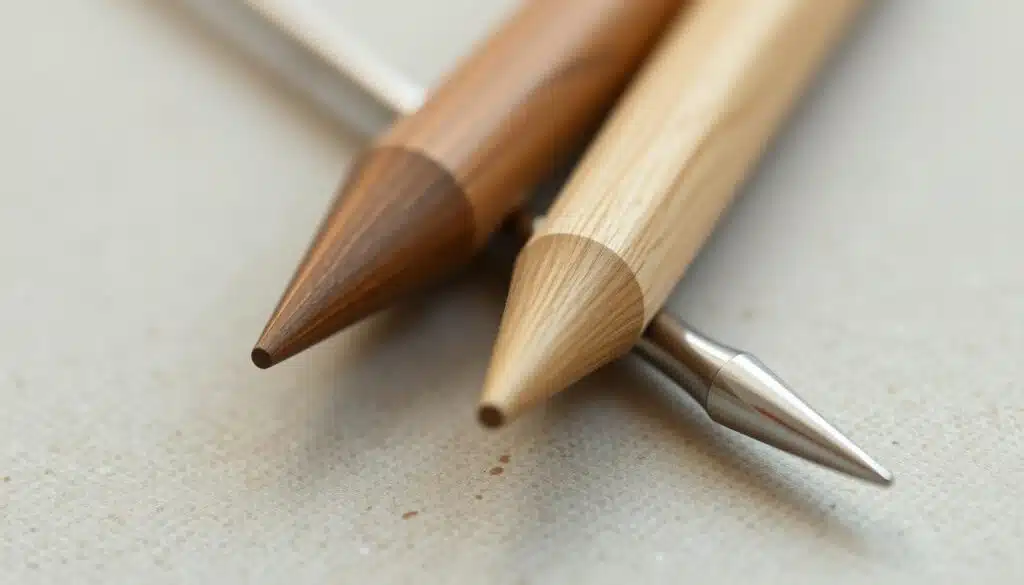
Store wooden needles flat in padded cases to avoid warping. Keep them dry to protect the finish. After use, wipe them with a soft cloth. Occasionally, rub with beeswax or jojoba oil to keep them smooth.
Replace needles when they splinter or the finish gets rough. This keeps your yarn safe and your needles lasting longer.
Maintenance tips for metal
Metal needles are easy to care for. Clean them of sweat and oils after each use. Store them in protective tubes or fabric rolls to prevent damage.
For nickel-plated or brass needles, use a soft cloth to remove tarnish. Avoid harsh cleaners. Check that interchangeables and cables fit well to keep joints tight and needles lasting longer.
Environmental impact and alternatives
Wood and bamboo needles are often better for the environment than plastic. Look for FSC-certified wood and responsibly sourced bamboo. Metal needles have a higher energy cost at production but can last a long time and be recycled.
Plastic needles are good for kids and travel but contribute to landfill waste. Repurpose broken plastic needles as stitch markers or craft findings. Choosing durable metal or biodegradable wooden alternatives helps the environment and extends your tools’ life.
| Needle Type | Key Care Steps | Expected Lifespan | Sustainability Notes |
|---|---|---|---|
| Wood (birch, bamboo) | Store flat in padded case; keep dry; oil lightly with beeswax or jojoba | 5–15 years with proper care | Low landfill impact; prefer FSC-certified or sustainably sourced options |
| Metal (aluminum, stainless, brass) | Wipe after use; avoid bending; protect tips; check cables/joints | 10–30+ years if not bent or damaged | Higher production energy; recyclable and very durable |
| Plastic | Wipe clean; store flat; inspect for cracks | 2–8 years depending on stress and temp | Convenient but contributes to landfill; repurpose broken pieces |
Buying Guide: Brands, Value Picks, and What to Try First
When looking to buy knitting needles, it’s smart to try a few types. Wooden tips offer a good grip, while metal needles are fast. Try a mix of both to see what works best for you.
Make sure to test how smooth the tips are and how tight the joins are. This will help you choose the right needles for your knitting.
Brand highlights and what they’re known for
Addi is great for those who want quick, precise needles. Many praise their consistent tips and long warranties.
Boye is a good choice for beginners or casual knitters. They offer affordable aluminum and plastic needles.
Susan Bates is known for handling bulky yarns well. Their needles provide a bit more drag, which helps with tension control.
Starter sets and gift ideas
A good starter set includes straight needles in US 6–8 (4–5mm), 16″ and 32″ circulars, and a tapestry needle. Mixing wooden and metal needles lets you choose your favorite.
Value packs from Susan Bates or Boye come with extras like stitch markers and yarn needles. For a gift, consider an interchangeable kit or an ergonomic set like Denise2Go FLEX for those with joint pain.
Where to buy and what to inspect
Visit your local yarn shop to feel the needles and test them with yarn. Online, read reviews and check return policies. Look for FSC certification on wood, warranties, and included accessories.
When shopping online, check the tip sharpness, cable stiffness, and if cables have memory. Try sliding yarn across the needle in-store to check for any issues before buying.
| What to look for | Why it matters | Brands to check |
|---|---|---|
| Tip smoothness | Affects stitch speed and snag risk | Addi, Susan Bates |
| Weight and balance | Comfort on long sessions | Denise2Go FLEX, Boye |
| Join tightness (interchangeables) | Prevents loosened cables and dropped stitches | Addi, Oxford |
| Value packs & accessories | Good for beginners and large projects | Boye, Susan Bates |
For more on tools that pair well with needles, check out lists and guides like the one at best crochet hooks for beginners. It’s full of cross-craft ideas and gift inspiration.
By following this guide, you’ll find the best knitting needle brands and starter sets that fit your style. Take your time to test, and you’ll know when to buy with confidence.
Conclusion
Choosing between wood and metal needles is like picking a tool for your knitting style. Wood or bamboo needles are perfect for those who want a good grip, warmth, and gentle control. They’re great for slippery yarns, textured stitches, and beginners.
On the other hand, metal needles are ideal for those who need speed, crisp stitch definition, and durability. They’re best for fine yarns and quick patterns.
To pick the right needle for your project, consider the yarn, your goals, and your hands. Look at the tip shape and size to ensure they fit well. Try both materials with the same yarn to see how they feel.
Remember to take care of your needles. Store wood needles horizontally and oil or clean them gently. Metal needles can be wiped down and will last for years. Think about sustainability too—wood sourced responsibly versus metal’s long life.
If you’re not sure, start with a small set of each. Test them out and see which one you prefer. Your next great stitch might be with wood or metal. Either way, you’re one step closer to knitting success.
FAQ
How do wood and metal needles differ in feel and stitch control?
Wood and bamboo needles feel warm and textured. This gives you better grip and control, perfect for beginners or those working with slippery yarns. On the other hand, metal needles are slick and cool. They let stitches move faster, ideal for speed and fine-gauge work.
The tip finish and shape also play a role. Lacquered wood can glide smoothly, while sharp metal tips offer precision for lace.
Which needle material is better for beginners?
Wood or bamboo needles are usually better for beginners. They provide extra friction to keep stitches in place while you learn. Blunter wooden tips also reduce snagging and are safer in class.
But, a mix of both materials in a starter kit can be a good idea. It lets you try out what works best for you.
When should I choose metal needles over wood?
Choose metal needles for lace, silk, and smooth fibers. They offer even tension and speed. Metal is also great for high-stitch-count projects and fine-gauge garments.
They are perfect when you need sharp tips for precise stitch picking. Plus, they resist warping and last for decades.
Are wooden needles suitable for bulky or textured yarns?
Yes, wooden needles are great for bulky or textured yarns. They grip well, preventing dropped stitches. They also feel comfortable with bulky yarns.
Just make sure to match the needle eye and tip size to avoid snagging thick strands.
How do tip shapes affect performance for different projects?
Pointed tips, usually found on metal needles, are best for lace and detailed work. They allow for precise entry. Blunter tips, common on wood, are better for bulky yarns and beginners.
For finishing and seaming, use blunt tapestry or yarn needles. This prevents splitting fibers when weaving in ends.
What about durability and maintenance for wood versus metal?
Metal needles are durable and can last decades with minimal care. Just wipe them clean and store them safely. Nickel-plated needles might tarnish slightly.
Wood needles are also durable but can dent or warp if exposed to moisture or pressure. Keep them dry and store them horizontally in padded cases. Rub them with jojoba oil or beeswax conditioner to restore smoothness.
Are there ergonomic or arthritis-friendly options among these materials?
Yes, wood and bamboo needles are lighter and warmer. They reduce hand fatigue. Ergonomic systems like Denise2Go FLEX and other cushioned needles are also good for joint pain.
Look for larger-diameter needles or grips, flexible cables, and materials that minimize pinch force. Resin alternatives and ergonomically designed metal sets can also help.
How does material choice affect noise and sensory experience?
Metal needles can click and produce higher vibration. This can be distracting for some knitters. Wood needles are quieter and dampen sound.
If you’re sensitive to noise or tactile feedback, wooden needles or resin options are usually gentler.
Which needles are best for finishing — weaving ends, seaming, and mixed-media work?
Use blunt tapestry or yarn needles with large eyes for weaving ends and seaming. Plastic yarn needles work well for bulky yarns. Rigid metal chenille needles are better for plastic canvas and dense fabrics.
For embroidery or mixed-media accents, match needle stiffness and eye size to the material. Sturdier, sharp needles are good for dense or layered work. Blunt ones are better to avoid splitting delicate threads.
How should I match needle material to yarn weight and project type?
Match metal needles to lace, silk, and fine-gauge projects. They offer speed and precision. Wood or bamboo needles are better for chunky, textured, or sticky yarns.
They provide control and warmth. For children’s classes or safety-focused settings, wood or plastic offer blunter tips. Try both materials in a swatch to compare.
What environmental factors should influence my choice?
Wood and bamboo needles are biodegradable and often sold by eco-friendly brands. Metal requires more energy to produce but lasts longer and is recyclable. Plastic is convenient but less sustainable.
Consider durability and reuse when weighing environmental costs.
Which brands are known for wood or metal needle quality?
Addi is famous for high-quality metal circulars. Boye and Susan Bates offer reliable, value-friendly options. Premium wooden and bamboo needles come from brands focusing on FSC sourcing and artisanal finishes.
Denise2Go FLEX and similar brands cater to knitters with hand issues.
What should I look for when buying interchangeables and circulars?
Check tip smoothness, join tightness, cable memory, and flexibility. Decide between metal or wooden tips and whether the brand’s cable system is secure and wobble-free.
Try to test in a local yarn shop if possible. Check for certifications, warranties, and included accessories like end stoppers and cases.
Any quick maintenance tips to extend needle life?
For wood: store horizontally in padded cases, keep dry, clean with a soft cloth, and apply a small amount of natural oil or beeswax-based conditioner when the finish dulls. For metal: wipe clean after use, avoid abrasive cleaners, and store tips so they don’t rub together or bend. Replace needles when tips splinter, crack, or lose smoothness.
How can I decide between wood and metal for my next project?
Match material to yarn and project goals: metal for speed and precision, wood for control and warmth. Consider ergonomics, noise, and environmental impact. If unsure, buy a sampler or starter set with both materials.
Knit identical swatches to compare tension, stitch consistency, comfort, and sound. Your next perfect stitch may feel like a wooden hug or a metallic sprint — experiment and let the project decide.