
Getting ready to upgrade your knitting tools? The search for the best knitting needles is exciting. You might prefer the speed of metal tips or the warmth of bamboo. This review will guide you in choosing the right needles for your projects and hands.
Start by thinking about the materials. Metal needles from brands like Addi and ChiaoGoo are great for lace. On the other hand, birch and bamboo needles are warm and perfect for beginners. You’ll learn how different needles affect your knitting, including how joins and locks prevent snags.
This article ranks the best knitting needles based on real use. You’ll find tips on choosing needles that are fast, comfortable, and worth the investment. Whether you’re looking for the best knitting needles in 2025, you’ll get advice to help you make the right choice.
Key Takeaways
- Interchangeable sets offer the most flexibility and save money versus many fixed needles.
- Metal needles are fast and slick; wood and bamboo give warmth and grip for beginners.
- Smooth joins and secure locking mechanisms prevent snags and dropped stitches.
- Try-It sets from reputable brands help you test materials before investing.
- Keep an eye on small-size availability—very tiny needles are often only in fixed sets or DPNs.
For a deeper look at popular kits and what makes them stand out, check a curated guide here: interchangeable knitting needle sets.
Why Choosing the Right Needles Matters for Your Knitting
You might think needles are just sticks that hold loops. But the wrong ones can ruin your sweater, hurt your hands, or mess up your lace. Choosing the right needles makes your projects go smoothly, keeps your stitches even, and saves you from hours of redoing your work.
How needle material affects stitch speed and grip
Needle materials affect how yarn moves and how fast you knit. Metal needles from brands like Addi or ChiaoGoo are slick and quick, perfect for lace and fast knitters. Bamboo and wood needles offer a soft grip, great for beginners and slippery yarns.
Plastic and carbon fiber needles fall in between. Plastic is light and cheap but can warp. Carbon fiber is warm and steady but costs more. Also, the join on circular needles affects how you knit, so pick ones with smooth joins for better flow.
Why needle length and diameter change fabric drape
Needle diameter controls how tight or loose your stitches are. Bigger diameters make looser stitches and a more airy fabric. Smaller diameters make tighter stitches and a more structured fabric.
Needle length is important for comfort. Short needles or cables are good for small items like socks. Long cables and tips are better for big projects like blankets and shawls. Choose a length that fits the number of stitches you’ll be working with.
Ergonomics, hand pain, and needle shape considerations
Think about needle ergonomics for your hand comfort. Needles with square or hexagonal shafts are steadier. Ergonomic needles with angled tips or cushioned grips are easier on hands with tendonitis or arthritis.
Needle weight is also key. Heavy metal tips are fast but can tire your wrists. Lighter wood or carbon fiber needles are better for long sessions. Try different types to find what works best for your knitting style.
Materials Compared: Metal, Wood, Bamboo, Plastic, and Carbon Fiber
Choosing the right needles is key to matching your yarn and pace. The material affects how your stitches move, how warm your needles feel, and how fast your project grows. Here are some clear points to help you pick between speed, grip, cost, and feel.
Metal options are great for those who want to knit fast. Aluminum, stainless steel, brass, and nickel-plated needles glide through yarn easily. Brands like Addi and ChiaoGoo are top choices for quick knitting and smooth magic-loop work. But, they can be cold to hold, make noise, and sometimes scratch.
Wood and bamboo needles are warm and gentle. Knit Picks’ laminated birch and Lykke’s handmade birch are soft and steady. Bamboo needles, like Clover Takumi, are good for beginners and slippery yarns. They offer control and comfort, which is important for tension.
Plastic and casein needles are affordable and fun. Plastic needles are light and bend a bit, making them great for kids and travel. Some plastic needles even light up or come in bright colors. Casein needles, made from milk protein, look like tortoiseshell or pearl and feel warm. They are rare and expensive but glide smoothly.
Carbon fiber and glass needles are for special uses. Carbon fiber needles, like Knitter’s Pride Karbonz, are stiff and fast. Glass and Pyrex needles are elegant and smooth for fine yarns. But, they are fragile and expensive, best for delicate lace.
| Material | Feel | Best For | Drawbacks |
|---|---|---|---|
| Metal (aluminum, stainless, brass, nickel-plated) | Slick, cool, fast | Speedy knitting, lace, magic loop, fingering yarn | Cold to touch, noisy, can scratch |
| Wood (laminated birch) & Bamboo | Warm, slightly grippy | Beginners, slippery yarns, comfortable long sessions | Slower pace, occasional uneven finish |
| Plastic | Light, flexible | Budget projects, kids, travel, novelty | Can warp, less durable |
| Casein (milk protein) | Warm, smooth, pearly appearance | Collectors, vintage-style tools, smooth glide | Expensive, rare, sensitive to moisture |
| Carbon fiber & Glass | Light, precise, smooth | Fine lace, long projects needing low weight | Costly, glass can break |
Types of Needles: Straight, Circular, Double-Pointed, and Interchangeable
You’ve got yarn, a pattern, and a project waiting for you. Choosing the right needle type is key to your success. Here’s a quick guide to help you pick the best knitting needles for your project.
Straight needles for flat knitting
Straight needles are great for flat pieces like scarves and panels. They’re easy to use and usually 10–16 inches long. They’re perfect for beginners who like simple, predictable knitting.
Fixed circulars and magic loop technique for in-the-round
Fixed circular needles are versatile for many projects. Short ones replace straight needles for flat work. Long ones are for bigger items and the magic loop for small ones.
The magic loop method works best with 32–40 inch circular needles. It helps avoid seams on hats and sleeves.
Double-pointed needles for socks and small circumferences
Double-pointed needles, or DPNs, are ideal for small items like socks and mittens. They come in sets of four or five. Be careful with thin wooden DPNs, as they can break easily. Metal ones are faster but might feel slippery.
Interchangeable sets: flexibility, pros, and minor cons
Interchangeables let you change needle tips and lengths easily. They save space and replace many fixed pairs. They offer smooth joins and strong locks for stable knitting.
But, they require extra assembly and might loosen with heavy use.
| Needle Type | Best For | Typical Lengths | Pros | Cons |
|---|---|---|---|---|
| Straight knitting needles | Scarves, panels, beginners | 10″–16″ | Simple, stable, easy to learn | Not suitable for large in-the-round work |
| Fixed circular needles | Hats, cowls, seamless garments | 12″–60″ | Versatile, no joins to assemble | Requires multiple lengths for full range |
| Double-pointed needles | Socks, sleeves, small circumferences | 5″–8″ typical | Excellent for tiny tubes, inexpensive | Can be fiddly; some materials risk snapping |
| Interchangeables | All-around projects, space-savvy knitters | Mix of tips and 16″–60″ cords | Highly flexible, cost-effective over time | Initial investment; occasional imperfect joins |
Practical tip: keep a short fixed circular for tiny sizes. Use interchangeables for most other projects. This way, you can switch between needles without a hitch.
How Needle Size and Length Affect Gauge and Project Fit
Ready to learn how small changes in needle sizes and length can change your sweater? The size of your needles affects your knitting gauge. Knowing how to convert mm to US sizes and choosing the right needles is key for a good fit.
Understanding millimeter sizing and international conversions
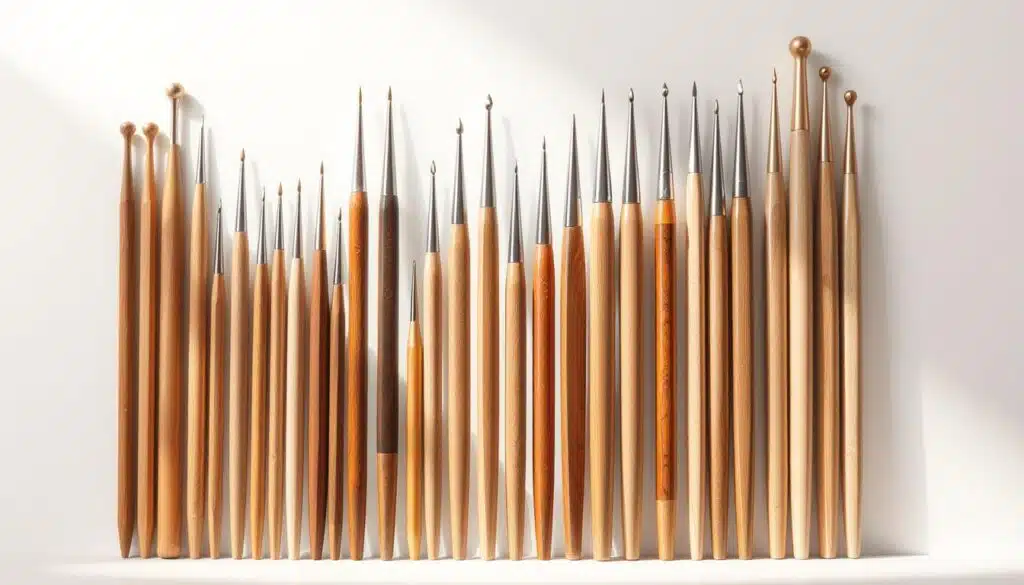
Needle diameter is measured in millimeters. A 0.5 mm change can make a big difference in stitch size. Patterns often list sizes in mm, US, and UK. Use a conversion chart or a site like circular needle guide to match sizes. Keep a physical needle gauge handy when markings wear off.
Choosing length and cord size for blankets, hats, and socks
The length of your needles affects how comfortable a project is. Short needles are best for socks and small projects. Longer needles, from 32″ to 60″, are better for blankets and shawls. Interchangeable sets let you change tips and cords as needed.
Swatching: the simple test to avoid sizing disasters
Swatching is your safety net. Knit a 4″ square, wash it, and measure the gauge. If it’s off, change needle sizes and test again. Good swatching saves you from frogging and mid-project panic.
| Project Type | Typical Needle Sizes (mm) | Recommended Needle Length/Cord |
|---|---|---|
| Socks | 2.0–3.5 mm | 16″ circular or DPNs |
| Hats | 3.5–5.5 mm | 16″–24″ circular for magic loop |
| Sweaters | 3.75–6.5 mm | 24″–40″ circular depending on stitch count |
| Blankets | 4.5–12.0 mm | 40″–60″ long cords or fixed long circulars |
Keep a small stash of needle sizes near your usual range. Understanding mm to US conversions, choosing the right needle length, and swatching regularly will ensure your projects fit perfectly.
Top Interchangeable Needle Sets to Consider
You want to be versatile without clutter. Interchangeable sets save space and let you switch sizes quickly. Many knitters look for the best sets with smooth joins and secure connectors.
Why these sets save you money and space
One good interchangeable kit replaces many fixed circulars. This makes them cost-effective for those with many projects. A compact case keeps everything organized.
What matters in joins, cables, and locks
Look for joins that feel seamless. Cables with a stainless-steel core resist kinks. Locking mechanisms that click or screw tight reduce dropped stitches.
Tool-free tip changes are a bonus. Clear size markings, end caps, and a sturdy case make a set worth more than its price.
Recommended sets based on real-user feedback
Reviews highlight a few top picks. Knit Picks Options are praised for value and material choices. Try-It sets are great for sampling without spending a lot. See more at best interchangeable knitting needles.
ChiaoGoo Twist and Red Lace models are known for smooth joins and cables. They’re favorites for durability and precision.
Lykke needles are loved for their warm wooden tips and charming finishes. They’re handmade with practical connectors and storage. Some prefer metal tips for speed.
| Set | Strength | Consider |
|---|---|---|
| Knit Picks Options | Great value, multiple materials, Try-It option | Excellent for budgets and mixed experience levels |
| ChiaoGoo Twist | Smooth joins, kink-resistant cables, fine points | Ideal for lace and precision work |
| Lykke needles | Warm wooden feel, attractive finish, handmade | Best for relaxed knitters who like wood over metal |
When reading reviews, look for common themes. These include join smoothness, cable memory, and accessory quality. This tells you more than a single comment.
For a detailed comparison of extra kits, check this article: interchangeable needle reviews.
best knitting needles: Our Ranked Picks Across Categories
Looking for needles that make knitting faster and more enjoyable? Choose needles with smooth metal tips for quick work and precise stitches. Or, go for bamboo for a more relaxed knitting experience. Here are some clear recommendations to help you pick the best knitting needles for your projects.
Best for speed and lace: Addi and ChiaoGoo metal circulars
Addi Turbos are the top choice for speed. Their nickel-plated brass tips glide smoothly through yarn, making lace work a breeze. ChiaoGoo’s Twist Reds are great for lace and socks, thanks to their stainless steel tips and nylon-coated cable.
For lace, seamless joins are key. ChiaoGoo is known for smooth joins and consistent tension. Addi, on the other hand, is the fastest for tiny patterns.
Best for beginners: Bamboo and wooden options (Clover Takumi, Knit Picks wood)
New to knitting? You’ll want the best knitting needles for beginners. Bamboo and laminated birch offer a gentle grip to prevent stitches from slipping. Clover Takumi bamboo straights are warm and help you relax your pace.
Knit Picks wooden needles are affordable and forgiving. They’re perfect for learning basic stitches or teaching a friend to knit. They’re not as fast as metal, but they’re great for beginners.
Best value interchangeable sets: Knit Picks Options and budget alternatives
Looking for a versatile set that grows with your projects? Knit Picks Options offer a wide range of sizes at a good price. They’re perfect for building a collection that covers all your needs.
When comparing sets, look at tip length, thread type, cable connection, and lifeline holes. For more details, check out interchangeable needle comparisons.
| Brand | Made in | Tip Type | Tip Length | Cable | Lifeline Holes |
|---|---|---|---|---|---|
| Addi | Germany | Aluminum (nickel-plated brass) | 5 1/8″ | Gold, hard plastic | No |
| Lykke | China | Surgical-grade stainless steel | 5″ | Nylon-coated, multi-stranded steel | Yes |
| HiyaHiya | China | Stainless steel | 4″ | Hard, pliable plastic | Yes |
| ChiaoGoo | China | Nickel plated | 4 3/4″ | Black pliable plastic | Yes |
| Clover | Japan | Bamboo | 3 7/8″ | Clear pliable plastic | No |
| Knit Picks | India | Polished wood / Symfonie | 4 1/2″ | Pliable plastic | Yes |
Keep a few sets handy: small fixed circulars for socks, a reliable interchangeable set for most projects, and a premium metal circular for speed or lace. This mix offers flexibility and lets you find your favorite materials.
Brand Breakdown: What Makes Addi, ChiaoGoo, Knit Picks, Hiya Hiya & More Stand Out
Your needle choice shows what matters most to you. Do you value speed, warmth, eco-friendliness, or affordability? Let’s explore the top brands that often make it to wish lists. We’ll dive into what each brand offers for the stitches you love.
Addi: the reputation for slick metal and speed
If you’re all about speed, Addi is your go-to. Their knitting needles, like the Turbos, are super smooth. This makes yarn move easily, perfect for lace and quick projects.
ChiaoGoo: smooth joins, durable cables, and Twist Reds
ChiaoGoo Twist needles are loved for their tight joins and strong cables. The Twist line combines stainless steel tips with Red Lace cables. This combo ensures precision and confidence when switching sizes.
Knit Picks: affordability, laminated birch, and options sets
Knit Picks is all about value and variety. Their Options sets let you mix and match without spending a lot. Plus, their laminated birch options are warm and gentle, great for beginners.
Hiya Hiya, Lykke, and Knitter’s Pride: niche strengths and specialty materials
Hiya Hiya circulars are famous for their sharp tips and flexible cables. They’re perfect for socks and lace. Lykke needles offer a wooden luxury from Nepal, loved for their smooth joins and light feel. Knitter’s Pride has unique options like carbon fiber and color-coded birch, catering to specific needs.
| Brand | Standout traits | Best for |
|---|---|---|
| Addi | Slick metal tips, fast stitches, polished finish | Speed projects, lace, experienced knitters |
| ChiaoGoo | Smooth joins, durable Red Lace cables, precise tips | Interchangeables, in-the-round, tight gauge |
| Knit Picks | Affordable sets, laminated birch, Options interchangeables | Beginners, budget-friendly collections, warm wood feel |
| Hiya Hiya | Sharp stainless tips, flexible circulars | Socks, lace, compact travel projects |
| Lykke | Handmade birch, luxurious wood finish, lightweight | Long sessions, wooden needle fans, gifts |
| Knitter’s Pride | Karbonz carbon fiber, colorful Dreamz birch | Specialty materials, mixed-collection shoppers |
Use this guide to find the perfect match for your projects and hands. Stitch smarter, not harder, with the right brand.
Buying Guide: How to Pick Needles That Fit Your Style and Budget
You want needles that make knitting easy, not a struggle. This guide will help you choose needles based on materials, cost, and value. This way, you’ll spend wisely and enjoy knitting.
Match needle material to yarn and speed
Metal needles like Addi or ChiaoGoo are fast on smooth yarns. Wood and bamboo from Clover are great for sticky yarns and beginners. Choose needles that match your yarn and speed to avoid mistakes.
Decide between fixed circulars and interchangeables
Fixed circulars are simple and often cheaper for one project. Interchangeable sets offer many sizes and lengths for future projects. Buy interchangeables if you plan to knit many projects or need varied sizes.
When to splurge versus when a budget set is fine
For daily knitting or delicate lace, invest in high-end sets like Addi or ChiaoGoo. They ensure smooth joins and reliable performance. For learning or on a tight budget, Knit Picks or RUIDI offer good value without breaking the bank.
Essential needle accessories to pair with your needles
Good accessories make knitting smoother. Carry cable keys, end caps, and a needle gauge for quick fixes. Add point protectors, stitch markers, extra cables, and a tidy organizer to keep tips and cables safe.
| Needle Type | Best For | Typical Brands | Key Accessories |
|---|---|---|---|
| Straight | Flat pieces, scarves, beginners | Clover, Knit Picks | Point protectors, storage roll |
| Fixed Circular | Hats, cowls, seamless projects | Addi, ChiaoGoo | Extra cords, needle gauge |
| Interchangeable Set | Many projects, space-saving | Knit Picks Options, ChiaoGoo Twist | Cable keys, end caps, extra tips |
| Double-Pointed | Socks, sleeves, small circumferences | Hiya Hiya, Addi | Stitch markers, small case |
Care, Storage, and Maintenance Tips for Longer-Lasting Needles
Keep your knitting needles in top shape with a few easy steps. Check joins, clean tips, and store needles to avoid bends and lost markings. This simple care prevents headaches and keeps your projects flowing smoothly.
Cleaning and gentle repair for wooden and metal needles
Wipe wooden needles with a soft cloth after each use. If they’re dry, apply a bit of mineral oil or wood conditioner. For metal needles, clean them with a microfiber cloth and mild soap. Use a light metal cleaner for stubborn spots.
Regularly check tips and size markings. If joins are loose, tighten them with the tool from brands like ChiaoGoo or Knit Picks. Avoiding tool use helps prevent thread wear and cross-threading.
Preventing cable kinks and maintaining smooth joins
Keep cables flat or coil them loosely to avoid kinks. Store circulars with the cable extended to prevent memory formation. Clean join threads and wipe contacts after heavy use for smooth locking.
Replace short or damaged cables to avoid forcing them into tight spots. Use a cable key to tighten joins when cables are too long. For too short cables, get a longer one to protect your stitches.
Storage solutions: cases, rolls, and organizers to protect tips
Use original cases, a leather roll, or a zipped organizer to protect tips from rubbing. Point protectors or end caps keep projects safe and prevent pokes. Organize interchangeable tips by size to keep markings clear and avoid mix-ups.
Store sets upright in a drawer or flat in a box to prevent bending. A divided organizer or a Knit Picks style case offers quick access and protection during travel.
Regular maintenance and smart storage extend the life of your needles. Brands like Addi, Hiya Hiya, ChiaoGoo, and Knit Picks will thank you. Your tools will reward you with smoother rows and fewer tangles.
Specialty Needs: Needles for Lace, Socks, Giant Projects, and Ergonomic Concerns
When you’re knitting, the right needles make all the difference. They affect how fast, big, or comfortable your project is. For detailed work, sharp tips and smooth joins are key. For small projects, short, thin needles are best.
Oversized needles speed up big, chunky blankets. Ergonomic needles help avoid hand pain, making knitting more enjoyable.
Lace knitting: why sharp, slick tips help
Lace knitting needs needles that can easily split tiny stitches. Metal needles with long tapers are perfect for this. They help with complex patterns without struggling with the yarn.
Wood and bamboo needles offer a different feel. They’re good for slippery yarns, reducing dropped stitches. For more on choosing the right needles for lace, check out this guide.
Sock knitting: tiny sizes, magic loop, and DPN strategies
Sock needles come in very small sizes. Fixed circulars are great for socks, with sizes from US 0–3. ChiaoGoo and Red Lace are top picks for magic loop.
Double-pointed needles are essential for heels and toes. Knitter’s Pride Karbonz DPNs offer flexibility and sharp tips. Keep short circulars and DPNs ready for quick changes.
Giant needles for chunky yarn and rapid projects
Giant needles are perfect for quick, dramatic fabric. Sizes 50 and up work well with super-bulky yarns. Plastic and large wooden straights handle heavy yarn without bending.
Choose long cables for big projects. They prevent bunching and let stitches move freely. For wide pieces, a sturdy circular keeps tension even and stitches snag-free.
Ergonomic and arthritis-friendly needles: what to look for
Ergonomic needles are a game-changer for hand pain. Brands like Bryspun and Prym offer square or cushioned shafts. Look for lightweight materials and soft grips to reduce wrist strain.
Ergonomic needles often have thicker shafts for comfort. They work well with circular techniques, letting you rest your hands while the cable supports the stitches.
| Needle Type | Best For | Material/Tips | Typical Sizes or Lengths |
|---|---|---|---|
| Sharp metal tips | Intricate lace patterns | Addi Lace Sharps, stainless steel; long taper | US 0–8; straight or circular |
| Wood/bamboo tips | Slippery yarns, beginners | Cedar, bamboo; grabby surface | US 2–11; various lengths |
| Short circulars & DPNs | Sock knitting and small circumference | ChiaoGoo fixed circulars; Karbonz DPNs | 16″ circulars; sets of 4–5 DPNs; US 0–3 |
| Giant needles | Chunky blankets, rapid projects | Plastic or large wooden straights/circulars | Size 50+; long cables for large circumference |
| Ergonomic options | Arthritis, carpal tunnel, long sessions | Bryspun, Prym; square/soft grips | Various sizes; prefer circulars for support |
Stitch markers, lifelines, and smooth joins are key for specialty tasks. Lifelines help with complex lace. Choose stitch markers that match needle diameter to avoid stitches slipping.
Cable lengths like 24″, 32″, and 40″ are versatile for different projects. They keep your tools ready for socks, lace, giant projects, or ergonomic knitting.
Real-World Reviews: What Users Say About Durability and Ease of Use
Before you buy, you want to know the truth. Knitting needle reviews often talk about three key points. These are how smooth the joins are, if cables stay straight, and if tips last through tough use.
Brands like Addi, ChiaoGoo, and Knit Picks get a lot of praise. People love how fast they work, how smooth the joins are, and how comfy the grips feel.
Common praise
Knitters love how easy it is to join needles without snagging. This makes their work go faster and helps avoid mistakes. They also like clear size markings and grips that feel good in their hands.
Common complaints
Some users say cables can kink or even break, often in cheaper sets. Small wooden DPNs and some aluminum sets get mentioned too. People get upset when joins start to come undone during big projects.
Short cables can be a problem for big projects. And sometimes, colored or laminated needles make it hard to see the size.
How to interpret reviews and test before buying
Look for patterns in what people say, not just one-off complaints. A single broken needle might not be a big deal, but many reports of durability are. Check if people mention issues with cable memory, snagging, and how well they last over time.
Try before you buy is a good idea. Get a single Addi or ChiaoGoo to feel the quality. Or try a Knit Picks Try-It set to see if it’s right for you. Borrow from friends or test in stores to see if it feels right in your hands.
When reading reviews, pay attention to how easy it is to switch tips and if they’re tool-free. Good locking mechanisms and quality cables make a big difference. Look for patterns in what people say about durability, not just one-off comments.
Conclusion
You’ve read the full knitting needle roundup. The bottom line is simple. The best knitting needles depend on what you like to make and how you feel while knitting. If you want speed and smooth lace, try metal circulars from Addi or ChiaoGoo.
For beginners, bamboo or laminated birch from Clover Takumi and Knit Picks are gentle on your hands and help with tension.
Interchangeable sets are great for value and versatility. Knit Picks Options and similar kits let you change tips and cords for many projects. But make sure the joins and locks work well.
Don’t forget to have a few fixed small circulars for socks (US 0–3). Avoid cheap needles with stiff cables that disrupt your rhythm.
Build your collection slowly and swatch to match gauge. Invest in a few premium pieces to test the feel. Keep extras like cable keys, end caps, and spare cables to keep your tools useful longer.
When choosing knitting needles, pick what makes your stitches consistent and your hands happy. That’s true success.