Standing in front of a yarn wall at Michaels or browsing KnitPicks, you wonder which fiber is best. This guide helps you choose between cotton and acrylic. We’ll look at feel, care, durability, and sustainability to find the perfect yarn for your project.
Mercerized cotton is great for beginners. It has crisp stitches and doesn’t split easily. This makes it perfect for tight toys and detailed work. On the other hand, acrylic yarn is soft, affordable, and easy to wash. But it can pill and lose shape near heat.
Durability is key. Cotton can stretch, which is a problem for bag handles. But cotton-acrylic blends and industrial yarns keep their shape better. Adding reinforced cords, spiral rope handles, or fusing leather straps can also help.
Keep reading for tips on choosing the right yarn for amigurumi, wearables, bags, and more. We’ll also share how to care for and buy yarn without regret. This guide will help your next project succeed.
Key Takeaways
- Mercerized cotton offers excellent stitch definition and is a top pick for amigurumi.
- Acrylic is budget-friendly and machine washable but can pill and is heat-sensitive.
- Cotton stretches under load; blends or reinforced handles improve longevity for bags.
- Choose fiber based on project needs: drape and warmth for garments, structure for bags, detail for toys.
- Smart buying—sample small skeins and check labels—saves time and money.
Why Choosing the Right Yarn Matters for Your Project
Choosing the wrong yarn can ruin your project. It might become limp, stiff, or too heavy. Yarn choice is key from the start. It affects how the fabric looks, feels, and lasts.
How fiber affects drape, warmth, and durability
Fiber type impacts yarn’s drape, warmth, and durability. Cotton and linen are cooler and firmer. They have less drape. Wool and some acrylic blends are softer and more fluid. They flatter garments and layered pieces.
Synthetics like acrylic and polyester keep things warm and don’t shrink much. Blends of cotton and acrylic hold shape well, even with heavy use.
Project examples where yarn choice makes or breaks the result
For amigurumi, 100% mercerized cotton is best. It gives crisp stitches and a firm finish. Use a tight 2.0–2.5 mm hook for stuffed toys.
Bags and handles need to keep their shape. Pure cotton stretches a lot, so blends or acrylic options are better for market totes and straps.
Garments, scarves, and blankets show yarn’s drape, warmth, and durability differently. Acrylic is warm and cheap for blankets but may pill. Cotton is breathable for summer tops but can be heavier and less shape-retentive under weight.
Beginner-friendly considerations: cost, availability, and ease of use
Beginners should focus on cost, availability, and easy behavior. Acrylic is cheap and easy to find. Mercerized cotton from brands like Lily Sugar’n Cream or Paintbox is great for learning.
Start with a basic kit: yarn, matching hook, and scissors. Choose easy-care yarn for practice pieces. This makes learning faster and less stressful.
| Project | Recommended Yarn | Why it Works |
|---|---|---|
| Amigurumi | 100% mercerized cotton | Firm stitches, no splitting, great stitch definition for detailing |
| Bags & Handles | Cotton-acrylic blend or reinforced acrylic | Better shape retention, less stretch under load, durable surface |
| Garments & Layered Wear | Wool blends or drapey acrylic blends | Soft drape, comfortable warmth, good movement |
| Blankets & Scarves | Soft acrylic or bulky wool blends | Warmth and affordability; choose anti-pilling options for longevity |
| Beginner Practice | Medium-weight acrylic or mercerized cotton | Cheap, easy to find, and shows stitches for learning |
Understanding Cotton Yarn: Properties and Best Uses
Cotton is great for keeping you cool. It’s perfect for summer clothes, dishcloths, and anything you wear for a long time. It’s good at wicking away moisture and feels cool against your skin.
Natural fiber profile: breathability, absorbency, and cooling feel
Cotton comes from plants and is very breathable. It absorbs sweat well, keeping you dry and comfortable. It’s ideal for summer clothes, baby items, and towels.
Strengths: stitch definition, color retention (mercerized cotton), and minimal stretch
Cotton is great for detailed patterns like cables or small amigurumi. It has excellent stitch definition, making patterns stand out. Mercerized cotton has a smooth look, is stronger, and keeps colors vibrant longer.
Limitations: weight, tendency to stretch under load, and wash-care notes
Cotton can be heavy and stretchy, which is a drawback. It’s heavier than acrylic and can stretch a lot. Always wash it carefully to avoid shrinkage.
For items that need to stay firm, like market totes, add reinforcements. Use mercerized yarn for strong colors and clean stitches. Choose plain cotton for items that get washed a lot.
Understanding Acrylic Yarn: Properties and Best Uses
Acrylic yarn is popular at Michaels and Joann because it’s soft and affordable. It’s also easy to care for, making it perfect for cold-weather items and everyday use. Its lightweight warmth and quick-drying nature make it a favorite for many.
Lightweight warmth and easy care
Acrylic yarn is warm but not heavy, making it great for hats and scarves. It dries quickly, resists moth damage, and keeps colors bright. It’s a great choice for beginners who want easy-to-care-for yarn.
Softness, color range, and affordability
Acrylic yarn is soft and often feels like wool without the itch. Brands like Lion Brand and Bernat offer large color palettes at affordable prices. This makes it ideal for blankets, baby items, and practice projects.
Known limitations to expect
Acrylic yarn can pill over time, which is more noticeable in areas with a lot of friction. It may not drape as well as natural fibers, leading to boxy shapes. Also, high heat can damage the fibers, which is important to consider for blocking or heat shaping.
Practical takeaways and trade-offs
Acrylic yarn is a budget-friendly option that’s easy to wash. It’s perfect for afghans, play blankets, and beginner projects. While it offers softness and ease of care, it can pill and has environmental concerns.
| Use | Strength | Watch For |
|---|---|---|
| Blankets & throws | Warm, affordable, machine washable | Pilling over time in high-friction spots |
| Baby items | Soft, hypoallergenic options, easy care | Some blends may lack natural breathability |
| Hats & scarves | Lightweight warmth, great color choices | Can pill and lose crisp stitch definition |
| Garments | Budget-friendly and colorfast | Heat sensitivity and limited drape vs cotton or wool |
cotton vs acrylic yarn
Ready for a hands-on comparison? This cotton vs acrylic yarn comparison walks you through how each fiber feels, how stitches look, and what to pick for common projects. You’ll get practical notes on stitch definition, elasticity, and U.S. pricing so your next buy makes sense.
Direct tactile and stitch comparison
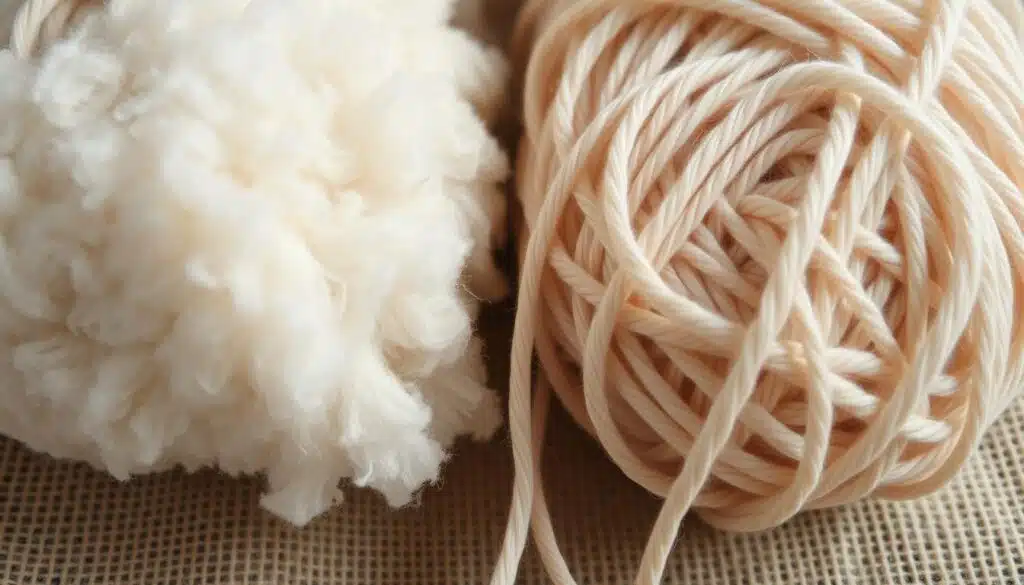
Your yarn tactile comparison starts with touch. Cotton, like Lily Sugar’n Cream and Paintbox, feels cool and firm. Stitch edges look crisp and defined, which helps when you need clean shaping.
Acrylic from Red Heart, Lion Brand, or Caron feels softer and warmer to the touch. It can hide tiny stitch details and may pill over time. If you prize fluffy, cozy hand-feel, acrylic wins. If you want sharp stitch clarity, cotton is the pick.
Elasticity and performance under load
Cotton has low natural elasticity. That makes fabrics stable, but handles and straps can stretch under weight and not spring back fully. Tests show cotton can extend noticeably when loaded.
Acrylic and polyester exhibit initial stability and some give, yet long-term stretch can occur. Blends, such as 60% cotton / 40% acrylic, often balance resilience and snap-back. For reinforced durability, consider blends or add internal cord for handles.
How fibers behave in common projects
Amigurumi needs firm, tight stitches. For that reason the best yarn for amigurumi tends to be mercerized cotton. You get clean stitches and a dense fabric that holds stuffing well.
Garments and layered wearables call for drape and warmth. Acrylic or wool blends offer lightweight loft and cozy insulation. Cotton works for warm-weather tops and breathable pieces, though it can feel heavy when layered.
Blankets made in acrylic are light and easy to care for. Cotton blankets breathe and stay cool, but they can be heavier and slow to dry. For bags, pure cotton may sag with use. Blends or industrial synthetic yarns hold shape better when you expect heavy wear.
Cost and accessibility for U.S. shoppers
When you compare yarn cost USA, acrylic generally costs less per skein and is sold widely by major retailers and brands. Acrylic kits are a solid budget route for beginners.
Mercerized cotton costs more per yard but pays off for projects needing stitch precision. If you want to read a concise fiber breakdown, check this helpful resource from Mary Maxim that contrasts acrylic and cotton properties and care: acrylic vs cotton yarn overview.
| Feature | Cotton (mercerized) | Acrylic | Best use |
|---|---|---|---|
| Tactile feel | Cool, firm, crisp | Soft, warm, fluffy | Amigurumi (cotton), cozy throws (acrylic) |
| Stitch definition | High, sharp | Moderate, can blur | Detail work and textured stitches |
| Elasticity | Low, can stretch under load | Moderate, may elongate over time | Handles: blends or reinforcement advised |
| Care | Absorbent; may shrink; breathable | Machine washable; heat sensitive; quick care | Everyday items and easy-care gifts |
| Durability & pilling | Strong but can wear and crease | Durable; may pill | High-wear projects prefer blends or synthetics |
| Color & dye | Good, mercerized shines | Holds dye exceptionally; wide palette | Bold colorwork and matched palettes |
| yarn cost USA | Higher per yard for quality mercerized cotton | Lower cost; widely available brands | Budget kits vs precision purchases |
| best yarn for amigurumi | Usually mercerized cotton | Used when softness is prioritized | Firm toys: cotton; soft toys: acrylic blends |
Performance in High-Wear Items: Bags, Handles, and Straps
Choosing the right material for a market tote or shoulder bag is key to its longevity. Cotton handles tend to stretch under weight. Studies show they can stretch by 28–45%.
Acrylic might seem sturdy at first but can stretch up to 60% in certain conditions. This makes the choice between cotton and acrylic bags more than just a style preference. It affects how well the bag performs daily.
Blends and industrial yarns offer a middle ground. A mix of 60% cotton and 40% acrylic holds its shape better than pure cotton. Industrial yarns stretch about 28% under heavy load but are heavier, providing stability.
Metal hooks help straps keep their shape by creating firmer, more consistent tension. This is important for preventing stretching.
To stop handles from stretching, use smart construction and reinforcement. Spiral rope handles mimic rope strength and feel comfortable. You can also add thin cord, fishing line, or macramé cording inside handles to keep them in shape.
Leather fusion adds a polished, durable finish. Use whip-stitch leather strips or attach leather with rivets and a scrap of plastic canvas at stress points. Double-reinforcement with square-and-X stitching spreads load and reduces pull-out risk at attachments.
For high-wear projects, choose cotton-acrylic blends or industrial yarn. Use metal hooks for tighter stitches. Make straps slightly shorter than your final target to allow for natural stretch. These techniques help your bags stay useful and stylish through daily use.
| Feature | 100% Cotton | Acrylic | 60/40 Cotton-Acrylic Blend | Industrial Yarn |
|---|---|---|---|---|
| Typical Stretch Under Max Load | 28–45% | Up to 60% | ~30–35% | ~28% |
| Weight | Light to moderate | Light | Moderate | Heavier |
| Shape Retention | Poor under heavy load | Variable | Good | Best |
| Best Uses | Light totes, decorative bags | Casual bags, quick projects | Market bags, everyday totes | Commercial bags, heavy-duty straps |
| Reinforcement Compatibility | High — needs internal cord or leather | Medium — benefits from internal support | High — works well with spiral handles | Excellent — often sufficient alone |
For a practical guide on fibers, check out yarn fiber guide. Test a prototype strap with your chosen yarn and reinforcement method. This small test tells you more than theory about preventing handle stretching.
Care, Maintenance, and Longevity
You want your projects to look great for years. Good yarn care habits keep color and shape. Smart washing routines cut down on surprises. Here are quick steps to keep your projects looking good.
Washing and drying are key. For cotton, avoid hot cycles and high dryer heat to limit shrinkage. Use cool water, gentle detergent, and lay flat to dry when possible.
Acrylic dries fast and resists shrinking, but is heat-sensitive. Protect it from high dryer settings and direct ironing to prevent melting or warping.
Pilling and colorfastness show up where fabric rubs a lot. Acrylic and polyester hold bright dye well, so colors stay vivid. But, they tend to pill on friction zones.
Mercerized cotton keeps dye strong without as much fuzzing, so it looks cleaner over time. To prevent pilling, turn garments inside out for washing, use a gentle cycle, and remove lint with a fabric shaver or fine scissors.
Longevity often depends on structure. Cotton can stretch under load, which matters for bag handles and heavy garments. Blends and industrial yarns bounce back better and keep shape.
You can improve stability by tightening tension, using metal hooks, or adding reinforcement like plastic canvas or a cord core in straps.
Repairability matters when a stitch gives out. Cotton is friendly to darning and sewing; leather fusion and plastic canvas inserts make strong patch repairs. Acrylic repairs are possible, though pilling may require trimming or swapping a worn panel.
Use the double-reinforcement square-and-X method, whip stitching, or rivets for handles to avoid repeat failures.
Keep a small kit with tapestry needles, spare yarn, a fabric shaver, and clear instructions for yarn repair tips. Quick fixes save projects. When you plan for care early, you minimize tough fixes later and extend the usable life of your work.
| Care Aspect | Cotton | Acrylic |
|---|---|---|
| Best wash | Cool water, gentle cycle | Cool or warm water, gentle cycle |
| Drying | Lay flat or low-heat tumble | Low heat or air-dry to avoid distortion |
| Shrinkage risk | High with hot wash/dry | Low, but heat-sensitive |
| Pilling tendency | Low to moderate | Moderate to high; use methods to prevent pilling |
| Colorfastness | Excellent when mercerized | Very good; colors stay vivid |
| Repair ease | Very easy to darn and reinforce | Repairable; may need section replacement |
| Best reinforcement | Plastic canvas, cord core, leather fusion | Plastic canvas, rivets, internal cord |
| Practical yarn repair tips | Whip stitch edges, reinforce stress points | Trim pills, replace worn panels, use strong stitching |
Best Picks by Project Type
Choosing the right yarn makes your project a breeze. Below, find top picks for toys, clothes, and bags. This way, you can craft more and worry less about mistakes.
Amigurumi: beginner-friendly choices
For cute stuffed toys, go for 100% mercerized cotton in fingering weight. It’s perfect because it doesn’t split, has clear stitches, and keeps stuffing in.
Use a 2.0–2.5 mm hook and make sure your stitches are tight. Look for mercerized cotton from trusted brands. They offer a neat finish and colors that stay bright.
Wearables and layered garments
When picking yarn for clothes, think about drape and warmth. For sweaters and shawls, choose fibers that match the season. Acrylic or wool blends are good for warmth, while cotton or linen blends are perfect for summer.
For clothes that drape well, choose softer blends. Pay close attention to how your stitches look. For more on cotton and acrylic care, check out this guide.
Bags and market totes
Yarn for bags needs to be strong and sturdy. Avoid using pure cotton straps unless you plan to add extra support. Cotton-acrylic blends or industrial cotton work well for the body, and add reinforcement to handles.
Use double-reinforcement stitching for handles and secure them with metal rivets and leather. For big market totes, look at heavy-weight yarns like those in this roundup.
| Project | Recommended Fiber | Weight / Hook | Key Tip |
|---|---|---|---|
| Amigurumi | 100% mercerized cotton | Fingering / 2.0–2.5 mm | Work tight; use high-twist cotton for stitch clarity |
| Summer tops | Cotton or linen blend | Sport to DK / 3.5–4.5 mm | Prioritize breathability and drape |
| Sweaters & shawls | Acrylic-wool blends | DK to worsted / 4.0–5.5 mm | Choose soft blends for drape and warmth |
| Market totes | Cotton-acrylic blends or industrial cotton | Bulky / 6.0 mm+ | Reinforce handles with cord, leather, or rivets |
Sustainability and Environmental Impact
You think about what goes into your projects and what happens to them later. Choosing sustainable yarn helps reduce water use, chemical exposure, landfill waste, and microplastic pollution. Making a few smart choices can lower your environmental impact without sacrificing your project’s look or function.
Cotton is a natural fiber that can be biodegradable if not treated. But, conventional cotton uses a lot of water and pesticides. Organic or GOTS-certified cotton is better. Acrylic and polyester, made from petroleum, don’t break down easily and shed microplastics when washed. Organic cotton and hemp are better for the environment.
Recycled synthetics
Recycled acrylic and polyester reduce landfill waste and lower oil demand. The debate is about their environmental benefits versus microplastic shedding. They often keep color and are easy to care for, but quality can vary.
Balancing durability and green claims
The most eco-friendly choice might be the longest-lasting one. Blends like cotton-acrylic or industrial-grade yarn can make items last longer. This means fewer replacements and less waste. Use strong handles, tight construction, and quality finishes to make your items last.
Practical tips for choosing
- Look for GOTS, OEKO-TEX, or reputable brand transparency when shopping sustainable yarn.
- Compare lifecycle info for recycled acrylic pros cons before committing to a bulk buy.
- Match fiber choice to use: choose biodegradable yarn for short-life items, pick durable blends for daily-use gear.
By considering production footprints, recyclability, and durability, you can choose eco-friendly yarn options. Small changes in material or technique can greatly reduce environmental harm. This way, you can keep your projects beautiful and useful.
Tools and Techniques That Pair Best With Each Fiber
Choosing the right tools makes your crochet look professional. Cotton and acrylic yarns need different tools. Hooks, grip, and reinforcement help achieve clean edges, strong handles, and neat amigurumi. Here are quick tips to improve your crochet right away.
Recommended hook materials and sizes for cotton and acrylic
For fine cotton, use 2.0–2.5 mm hooks. Aluminum hooks are smooth and affordable. Bamboo hooks offer more grip for tension control.
For thick acrylic, choose 4–6 mm hooks based on yarn weight. Metal hooks ensure tight stitches, perfect for sturdy pieces and garments.
Grip, tension, and stitch choices to reduce handle stretch and improve finish
Metal hooks create tight stitches, ideal for structured items. Bamboo hooks produce softer, more flexible fabric for drapey projects.
To prevent handle stretch, start straps with tight stitches. Use slip-stitch edging and spiral rope for continuous rounds. Keep your tension even, even when working in spirals.
Accessory recommendations: stitch markers, tapestry needles, reinforcement materials
Key crochet accessories include stitch markers, tapestry needles, sharp scissors, a row counter, and a tape measure. These tools save time and reduce errors.
For durable handles, add fishing line, plastic canvas, or macramé cord inside the strap. Leather straps with rivets add a polished look. For sewn joins, 2mm waxed braided cord works well with leather.
Keep a small kit with both cotton and acrylic hooks. This way, you can easily switch between fibers. The right tools and reinforcements make your project last longer.
Buying Guide: How to Pick the Right Yarn in the Store or Online
Finding the right yarn is like searching for treasure. You need the perfect fiber, weight, and care instructions for your project. A simple checklist can make shopping easy and fun.
Label decoding: fiber percentages, weight terms, and care symbols
Read the yarn label like a map. Look for fiber percentages like 100% cotton or 80/20 blends. Check the weight category to match your pattern gauge. Spot care symbols for washing, drying, and ironing to avoid shrinkage or heat damage.
Decoding yarn labels helps you avoid surprises. For sturdy items, choose a heavier weight or blend. For delicate amigurumi, pick mercerized cotton fingering and a small hook for tidy stitches.
Shopping smart: sampling, starter kits, and building a compact beginner toolkit
Always swatch. Buy small skeins to test gauge, drape, and colorfastness before committing. Starter packs are great for practicing without waste. A beginner yarn kit with basic tools lets you start quickly.
For amigurumi, a kit with 100% mercerized cotton fingering and a 2.0–2.5 mm hook is a smart choice. Try sample skeins from brands like Lion Brand or Paintbox to compare. Learn more about fiber choices at yarn types.
Budget tips for U.S. crafters: when to splurge and when acrylic is sensible
Set priorities. Spend more on mercerized cotton for precision work like amigurumi and accessories. Save on large items like blankets by using acrylic from brands like Red Heart or Caron.
Look for recycled acrylic or sale bins for practice pieces. Invest in quality metal hooks for tight, even stitches. Use yarn shopping tips USA by checking yardage, customer reviews, and pilling reports before buying online.
| Project | Recommended Fiber | Why |
|---|---|---|
| Amigurumi | 100% mercerized cotton (fingering) | Excellent stitch definition, minimal stretch, crisp details |
| Blanket | 100% acrylic or acrylic blends | Affordable, machine-washable, wide color range |
| Bags & Totes | Cotton blends or reinforced acrylic | Hold shape better, resist stretching when reinforced |
If you want a low-risk start, pick up a beginner yarn kit and a few sampler skeins. This approach helps you choose yarn while keeping your budget and goals in mind.
Conclusion
This summary helps you decide between cotton and acrylic yarn. Mercerized cotton is great for detailed work like amigurumi. It keeps colors bright and stitches clear. On the other hand, acrylic is cheaper, warm, and easy to care for. But it can pill and gets damaged by heat.
Think about what you’re making first. For sturdy items, blends or industrial yarns are best. Soft blankets and beginner projects often do well with acrylic.
For durable projects, add reinforcement like spiral handles or leather fusion. This helps your work last longer. If you’re unsure, check out crochet vs knitting debates for tips. Your guide should match the yarn’s performance with simple construction to avoid surprises.
Also, consider the environment by choosing durable and sustainable options. Organic cotton or recycled acrylic are good choices. Now, you can confidently choose the right yarn for your project and start creating.
FAQ
Why does choosing the right yarn matter so much for my project?
Yarn affects how your project looks and feels. The wrong yarn can make your sweater stiff or your amigurumi floppy. It’s key to pick the right fiber and weight for your project.
Which fiber is best for amigurumi if I’m a beginner?
Start with 100% mercerized cotton in fingering weight. Use a 2.0–2.5 mm hook. This cotton is crisp, doesn’t split, and holds color well, perfect for beginners.
Why does mercerized cotton get so much hype?
Mercerized cotton is strong, smooth, and vibrant. It’s great for detailed work like toys because it holds color and stitches well.
When should I pick acrylic over cotton?
Choose acrylic for easy-care projects like blankets. It’s soft, affordable, and machine-washable. Just watch out for pilling.
How do cotton and acrylic compare for wearables and drape?
Cotton is cool and firm, good for summer clothes. Acrylic is soft and drapes well, perfect for layered clothes.
Are there durability trade-offs between cotton and acrylic?
Yes. Cotton stretches, while acrylic and polyester don’t. But acrylic can pill and is heat-sensitive. Blends and industrial yarns are more durable.
I’m making a bag—should I use cotton or acrylic?
Avoid pure cotton for straps. Use blends or industrial yarns for the body. Reinforce handles with rope, cord, or leather.
What are practical techniques to stop bag straps from stretching?
Use spiral rope handles, insert cord inside straps, or add leather. Tighten stitches and use metal hooks for better stability.
How should I wash and dry cotton vs acrylic projects?
Wash cotton in cool water and air-dry. Acrylic dries fast and resists shrinking. Avoid high heat to prevent damage.
Will acrylic pill a lot, and can I prevent it?
Acrylic pills, but you can slow it down. Choose quality yarns, use tight stitches, and trim pills to prevent it.
How do cotton and acrylic compare for colorfastness?
Both hold color well, but mercerized cotton is best. Acrylic and polyester also retain color, but pilling can affect appearance.
What hook materials and sizes work best with cotton and acrylic?
For cotton, use 2.0–2.5 mm aluminum or bamboo hooks. For acrylic, 4–6 mm hooks are common. Metal hooks are best for structure.
What starter kit do I need as a beginner?
Start with yarn, a matching hook, scissors, and stitch markers. Add a tapestry needle and stuffing for amigurumi. For bags, include extra materials for reinforcement.
How can I decode yarn labels when shopping?
Look for fiber percentages, weight, yardage, and hook size. Care symbols tell you about heat sensitivity and shrinkage.
What are smart budget tips for U.S. crafters?
Spend on mercerized cotton for precision work. Use acrylic for large projects. Look for sales and buy small skeins to swatch.
Are recycled acrylics a good sustainability choice?
Recycled acrylic is eco-friendly but may shed microplastics. Choose durable blends for a greener option.
How does fiber choice affect repairability?
Cotton is easy to repair, while acrylic may pill. Reinforce attachments to make future repairs easier.
Which fiber should I pick for blankets and scarves?
Acrylic is warm and easy to care for. Cotton is breathable but heavier. Choose acrylic for warmth, cotton for summer items.
What blend ratios should I look for when I need both structure and softness?
Look for 60% cotton/40% acrylic blends. They offer resilience and softness, better than pure cotton.
Any quick brand recommendations for U.S. shoppers?
For acrylic, try Red Heart, Lion Brand, and Caron. For cotton, check Lily Sugar’n Cream, Paintbox, and Scheepjes. Look for eco-friendly brands.
How do I pick yarn for a wearable where drape matters?
Choose fibers with good drape, like blends. Test swatches to see how the fabric moves.
If my project will face heavy use, what’s the best sustainability strategy?
Use durable fibers and blends. Reinforce stress points and focus on construction for longevity. Durable items are often more sustainable.