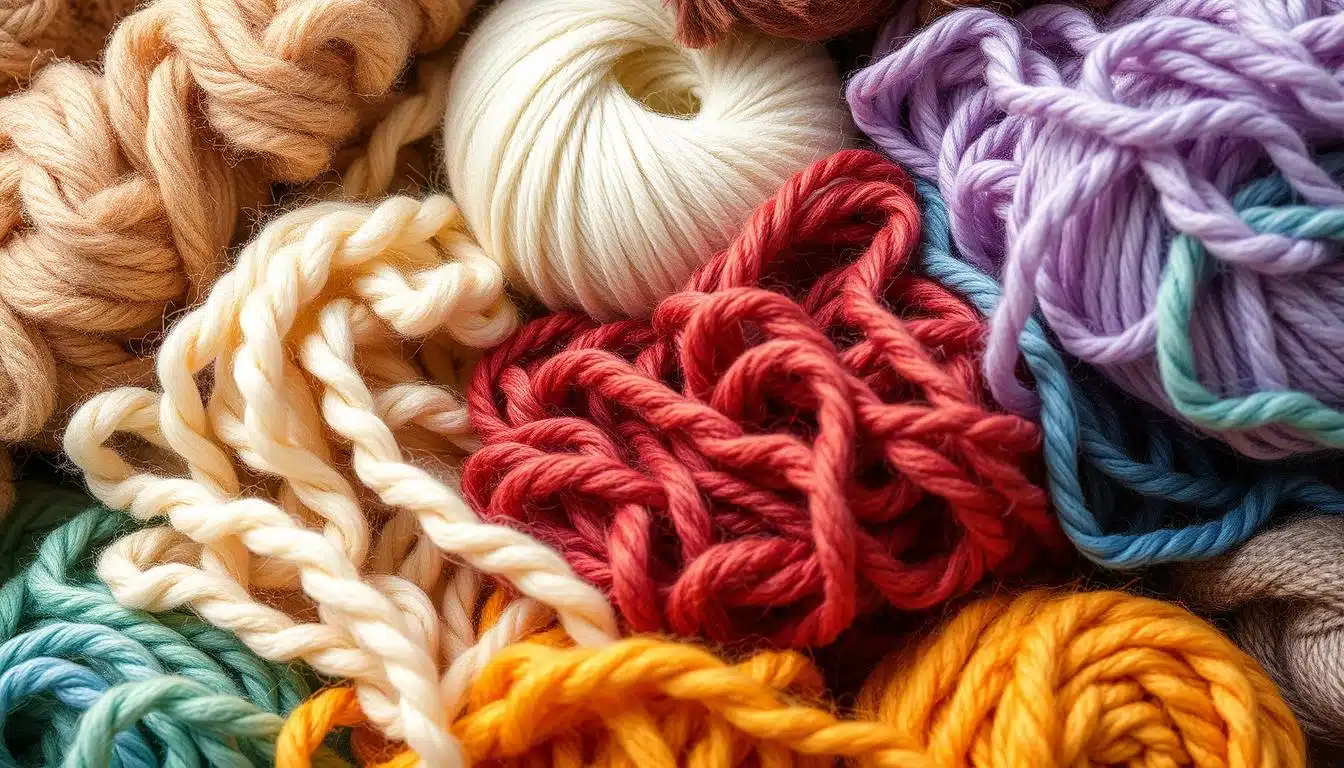
Starting a new project can feel overwhelming. But, this ultimate yarn guide is here to help. Yarn is the key to turning simple loops into beautiful items like hats and blankets. Knowing about yarn types can greatly impact your project’s look, feel, and durability.
This guide will explain fiber content, spinning, and weight categories in simple terms. These factors affect how warm, soft, and long-lasting your project will be. Whether you prefer the warmth of wool or the ease of acrylic, understanding these details helps you make the right choice for your project.
Learning to unravel is also a key skill. Frogging, or carefully ripping back rows, saves both yarn and your sanity when mistakes happen. It’s a way to fix errors without wasting yarn, getting you back on track quickly.
Key Takeaways
- Yarn transforms stitches into finished pieces; fiber matters for outcome.
- Fiber content, construction, and weight determine warmth, drape, and durability.
- Match yarn types to your project goals for best results.
- Unraveling (frogging) is a beginner-friendly skill that preserves yarn.
- This guide will walk you through choices so you pick yarn confidently.
Introduction to Yarn: Why a Yarn Fiber Guide Matters
Choosing yarn is more than picking fibers. This guide helps you pick the right yarn for your project. It makes shopping and planning fun and easy.
Get ready with your needles and hooks. You’ll learn about fiber origins, weight, texture, and care. This knowledge helps you choose the right yarn for your project.
What you’ll learn from this guide
You’ll discover different fibers like merino wool, cotton, and nylon. You’ll understand how weight categories affect your project. You’ll also learn about care and when to choose luxury fibers.
This guide is for both new and experienced crafters. It shows why knowing about yarn is important.
How understanding fiber changes your finished project
Knowing how a fiber behaves is key. A silk blend adds drape, while alpaca is warm without being heavy. Acrylic is great for kids’ items because it’s easy to clean.
Some fibers are forgiving, while others are not. If you make mistakes often, choose superwash wool. It’s easier to work with than delicate silk.
Quick glossary of yarn terms to know
Here’s a quick glossary to help you shop and plan. Learn these terms to understand labels easily.
| Term | Meaning | Why it matters |
|---|---|---|
| Yarn | Continuous strand of fibers used for knitting, crochet, weaving | Basic unit for any project; choose type based on use |
| Fiber content | Materials that make the yarn: wool, cotton, acrylic, silk | Determines warmth, care, and texture |
| Ply | Number of strands twisted together to form yarn | Affects strength and stitch definition |
| Gauge | Stitches per inch or per 4 inches on recommended needles | Predicts finished size; critical for sizing garments |
| Skein vs ball | Skein is a wound loop; ball is typically center-pull or wound | Winding method affects how yarn feeds while you work |
| Weight categories | Ranges from lace to jumbo defining thickness | Guides needle/hook choice and project suitability |
| Superwash | Wool treated to be machine-washable | Easy care for garments; may alter texture slightly |
| Blocking | Shaping and setting finished fabric with moisture and pins | Improves drape and evens stitch work |
| Frogging | Unraveling stitches to fix mistakes | Some fibers handle frogging better than others |
| Drape | How fabric hangs and flows | Key for garments and shawls where movement matters |
| Halo | Soft fuzzy aura around yarn from fibers like mohair | Adds warmth and softness; can blur stitch definition |
| Stitch definition | How clearly a stitch pattern reads in the finished fabric | Affects choice for textured patterns versus simple stockinette |
Natural Animal Fibers: Wool, Alpaca, Mohair, and More
Step into the world of animal fibers and discover how each choice affects your project. Remember, fiber is as important as pattern and color. Swapping fibers can change how your project looks, feels, and is cared for.
Wool varieties and properties
Wool is known for its durability and warmth. Merino wool is soft against the skin, perfect for close-to-body garments. Worsted weight wool is great for sweaters and hats.
Superwash treatments make some wools machine-washable. But, they may behave differently when unraveled or reworked.
Alpaca benefits: warmth, softness, and hypoallergenic notes
Alpaca yarn is softer and warmer than sheep’s wool, yet lightweight. Its fibers trap heat well, making scarves and baby items cozy. Alpaca is gentle on sensitive skin, thanks to its low lanolin content.
Mohair and angora: halo, sheen, and care considerations
Mohair yarn has a glossy halo and excellent insulation from Angora goats. Angora fibers add fluff and warmth but can tangle. Treat mohair and angora gently to preserve their sheen and loft.
Silk blends for drape and luxury
Silk blends combine strength and smoothness with other fibers for better drape and sheen. A wool-silk mix softens structure, making shawls and luxe garments flow beautifully. Use silk blends for polish without losing warmth.
For a detailed guide on fiber types, check out this fiber guide. It covers wool, alpaca, mohair, and silk blends in depth. For a maker’s perspective on texture and behavior, read this yarn journey through color and texture.
Plant-Based Fibers: Cotton, Linen, Bamboo, and Hemp
Plant-based yarns offer breathable, sturdy, and eco-friendly options for everyday projects. Each fiber has its own unique qualities. Some drape like silk, while others stand up like chambray. They often get better with washing.
Cotton’s strengths and best uses
Cotton yarn is perfect for summer projects. It’s soft, absorbs moisture well, and lasts long. It becomes even softer after washing a few times.
Linen for structure and aging well
Linen yarn, made from flax, starts stiff. This stiffness is great for summer tops and home decor. As it wears and washes, linen softens and develops a unique texture.
Bamboo’s sheen and practical notes
Bamboo yarn is silky and cool, with a sheen like rayon. It’s ideal for garments that touch your skin. Most bamboo blends can be machine washed on gentle. Always check the label for the best care.
Hemp for toughness and rustic charm
Hemp yarn is perfect for durable items. It’s great for bags, rugged hats, and sturdy home pieces. Hemp is stiff at first but softens with use and lasts long.
Practical tips when working with plant fibers
- Frogging plant-based yarns is usually easy, but linen and hemp can kink and feel stiff when pulled out.
- Most plant-based yarns can be machine washed, but gentle cycles help them last longer.
- Test a swatch of mixed-fiber projects to see how they behave after washing and blocking.
Synthetic Fibers: Acrylic, Nylon, Polyester and Blends
Looking for yarn that’s easy to care for and affordable? Synthetic yarns are your best bet. They offer vibrant colors, are simple to maintain, and last long. Here’s where each type excels and how to mix them safely.
Acrylic yarn is great for beginners and those on a budget. It stretches a bit, holds color well, and is easy to wash and dry. Perfect for beginners, kids’ items, and big afghans.
Nylon yarn is strong and has a nice snap. It’s a favorite for socks because it’s durable and stretchy. You’ll find it in blends that need to be tough but soft.
Polyester yarn is perfect for outdoor use and heavy-duty projects. It doesn’t shrink or stretch much, dries quickly, and stays the same after washing. Ideal for outdoor gear, pet beds, and anything that gets a lot of use.
Yarn blends combine the best of different fibers. They offer warmth, strength, and easy care. For example, wool-nylon and cotton-polyester blends. They can be cheaper but might need special care. Always check the label before washing.
Working with synthetic yarns has its own rules. Frogging is usually easy, and you can reuse the yarn. But, unraveling novelty textures like eyelash or chenille can be tricky because they can tangle or fuzz.
Here’s a quick guide to help you choose the right fiber:
- Go for acrylic yarn for affordable, easy-care projects.
- Choose nylon yarn for strength and stretch, like in socks.
- Pick polyester yarn for outdoor and high-wear items.
- Try yarn blends for a mix of cost, feel, and durability—test a swatch first.
Yarn Weight Demystified: From Lace to Jumbo
You want your projects to turn out right. To do this, you need to understand yarn weight. The Craft Yarn Council has made it easy with categories from 0 to 7. This helps you pick the right yarn for your project without guessing.
Here’s a quick guide to each category. It includes the needle sizes you’ll need and the types of projects you can make. This guide helps you choose yarn, compare it at the store, or swap it out without surprises.
Key takeaway: Lighter yarns are soft and drape well. Heavier yarns are warm and work up quickly. When you make mistakes, heavier yarns are easier to fix. But, be gentle with fine threads if you want to use them again.
Craft Yarn Council categories explained
| Category | Common Name | Recommended Needle Sizes | Typical Projects |
|---|---|---|---|
| 0 | Lace | 2.25–3.25 mm | Fine shawls, delicate trims, heirloom lace |
| 1 | Fingering | 2.25–3.5 mm | Socks, lightweight shawls, baby garments |
| 2 | Sport | 3.25–3.75 mm | Light sweaters, kids’ wear, fine accessories |
| 3 | DK | 3.75–4.5 mm | Versatile garments, hats, scarves |
| 4 | Worsted / Aran | 4.5–5.5 mm | Classic sweaters, afghans, durable accessories |
| 5 | Bulky | 5.5–8 mm | Chunky scarves, warm hats, quick blankets |
| 6 | Super Bulky | 8–12.75 mm | Thick cowls, heavy throws, statement pieces |
| 7 | Jumbo | 12.75 mm+ | Arm knitting projects, extreme statement blankets |
Recommended needle and hook sizes by weight
Choose needle sizes based on the project’s look and feel. Patterns often suggest a range. Start with the middle size and swatch. Then, adjust as needed to get the right gauge and feel.
Typical project matches for each weight
Each yarn weight is best for certain projects. Lace and fingering are great for light, airy items. Sport and DK offer a good balance of warmth and detail. Bulky and super bulky are quick to knit and add bulk. Jumbo is perfect for making big, bold pieces fast.
Why worsted is the go-to for many crafters
Worsted weight is a favorite for many. It has clear stitch definition, works well with common needles, and fits many patterns. This makes it perfect for both beginners and experienced crafters who want reliable results.
Texture, Construction, and Novelty Yarns
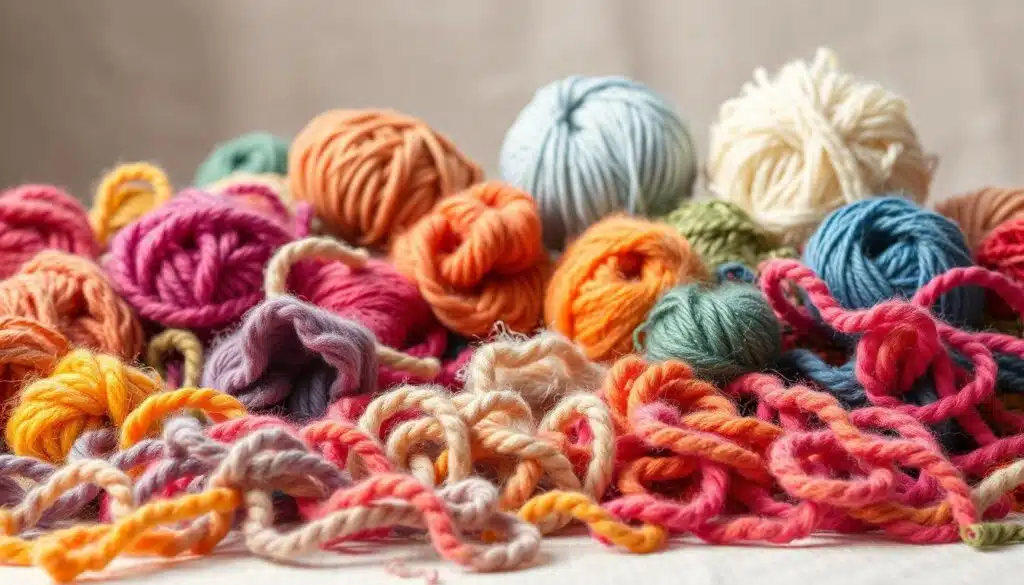
Play with texture to change how a garment looks and behaves. Specialty fibers bring surprises: some give sculpted silhouettes, others add plush softness. Know what each construction does before you commit to a sweater, scarf, or home accessory.
Plied versus single-ply
A plied yarn uses two or more strands twisted together. This twist boosts strength, stitch definition, and resistance to snagging. A single-ply option feels lofty and warm. It can pill faster and show irregularities as personality.
Choose plied yarn when you need durability and crisp stitch patterns.
When bouclé, chenille, and eyelash shine
Bouclé yields loops and bumps that hide minor mistakes and create a nubby surface. Chenille lends a velvety, pipe-cleaner softness that reads luxe in wraps and cushions. Eyelash or fur-style novelty yarns produce fuzzy halos that read like fur.
These textures can obscure lace or cables and make frogging tricky. Use them for simple shapes that rely on surface drama.
Color without colorwork
Self-striping yarn gives you multi-colored bands as you knit or crochet, no intarsia or stranded colorwork required. Gradient skeins shift hues gradually for ombré effects. These yarns solve the color puzzle for you, leaving you free to focus on shape and gauge.
Ribbon and tape silhouettes
Ribbon and tape yarns form flat, architectural fabrics with striking drape. They work well for summer tops and bold accessories. Expect less stretch and a different blocking approach. Frogging can create snags, so unpick carefully to preserve usable length.
- novelty yarns: best for surface interest and dramatic effect
- plied yarn: pick for strength and stitch clarity
- bouclé and chenille: choose for texture, avoid with lace
- self-striping yarn: use to add color without extra technique
Eco-Friendly and Specialty Options
Get ready to explore greener yarn choices that reduce waste and improve craft quality. Think beyond just color and weight. Consider the fiber’s origin, dye process, and environmental impact when picking yarn.
Recycled materials and post-consumer sources
Recycled yarn comes from old clothes or plastic bottles turned into polyester. It helps lower landfill waste and saves resources. These yarns can feel soft and wash well, which is great for items that need frequent cleaning.
Before starting a big project, check the yarn’s content and care instructions.
Organic production and low-impact dye choices
Organic yarn is grown without harmful chemicals. This reduces chemical runoff and supports healthy soil. Pair it with low-impact dye to further reduce your project’s environmental impact.
Low-impact dye uses less water and fades less, reducing waste. Look for certifications and ask suppliers about their dyeing processes.
Local sourcing and transport footprint
Buying yarn locally cuts down on shipping emissions. It supports local mills like Cascade Yarns and Wool and the Gang. Local producers often share where their yarn comes from.
Choosing local yarn reduces carbon miles and keeps quality high.
How to judge sustainability claims on labels
Not all green claims are the same. Look for third-party certifications and detailed origin information. Ask if the yarn includes recycled content, organic fibers, or low-impact dye.
If care labels suggest machine-washable blends, it’s practical for everyday wear. This makes sustainable yarn more accessible.
For more eco-friendly crochet ideas and tips, check this eco-friendly crochet resource. It shows how makers use these choices in their projects.
Care, Washing, and Longevity of Different Fibers
Understanding how to care for different fibers can make your projects last longer. A bit of effort in yarn care can keep your work soft, in shape, and looking new. Here are some easy tips on washing, blocking, preventing bobbles, and storing yarn to keep your handmade items looking great.
Machine-washable vs hand wash: fiber-specific rules
Always check the label first. Fibers like acrylic, superwash wool, and many cottons can usually be machine washed. Use cool water and a mild detergent to preserve color and texture.
For fibers like regular wool, alpaca, mohair, and angora, hand washing is best. Treat them gently, like fine silk, with a slow soak and no wringing. Some blends might need dry cleaning; always follow the manufacturer’s instructions.
How blocking and finishing differ by fiber
Blocking sets the shape of your work, but the method depends on the fiber. Wet blocking is ideal for wool and alpaca because it relaxes the fibers and holds the shape when dried flat.
For plant fibers like cotton and linen, a light steam or gentle wet finish can soften and flatten them without stretching too much.
Synthetic yarns can handle a bit more heat, but test a small piece first. Pin pieces gently and dry them flat to avoid distortion.
Stain removal and pilling prevention tips
Act fast on stains with cold water and a mild soap. Blot the stain gently to avoid felting on animal fibers.
Pilling occurs when loose fibers rub together. Use tightly plied yarns in high-wear areas like cuffs. For existing pills, use a fabric shaver or a gentle comb to remove them carefully.
Storage best practices to avoid damage and pests
Keep yarn in a dry, dark place to prevent fading and mildew. Clean garments before storing them to avoid attracting moths.
Use containers that breathe or sealed bins with cedar blocks or lavender sachets to deter pests. Avoid crushing skeins to keep their twist and loft for your next project.
Choosing Yarn for Your Project: Practical Decision Factors
Before buying yarn, think about how you’ll use it. A warm sweater needs wool or alpaca blends. For a summer top, choose cotton or linen for breathability.
Match fiber to function
Wool and alpaca are great for cold-weather clothes because they keep you warm. Cotton and bamboo are perfect for summer items like tanks and dishcloths. Nylon and blends are strong for socks and other items that get a lot of use.
Consider care requirements versus intended use
For everyday wear, pick yarn that can be machine washed. For special items, choose luxury fibers that need hand washing. Make sure your lifestyle fits the yarn’s care instructions.
Budgeting: when to splurge and when to save
Use acrylic or blends for practice or big projects. Save silk, cashmere, and fine merino for special items. A good yarn guide helps you spend wisely without regret.
Colorfastness, dye lots, and buying enough yarn
Always check dye lot numbers when buying multiple skeins. For big projects, get extra yarn to avoid color mismatches. Always test a swatch for colorfastness. Remember, yardage is more important than skeins; add 10–20% for safety.
For more tips on choosing yarn, check out this guide: choosing the right yarn.
If you plan to frog and reuse yarn, avoid novelty yarns. Choose smooth, plied yarns that don’t tangle or shed. This makes it easier to reuse yarn without hassle.
Substituting Yarn and Making Smart Swaps
You can change yarn and get great results if you plan ahead. First, check the label for yardage and needle size. Small choices, like cotton over wool, change drape, warmth, and stretch.
How to match weight and gauge when substituting
Start by matching the yarn weight category on the pattern. Then, match gauge. Gauge is about stitch count per inch, affecting fit and shape. If gauge doesn’t match, change needle sizes until it does.
Accounting for yardage and fiber behavior changes
Yardage differs by brand. A skein of Cascade 220 might have a different yard count than Lion Brand’s worsted. Always check yardage to avoid running out mid-project. Also, fiber behavior changes. Cotton is less springy than merino, and nylon makes socks stronger while silk adds drape.
When blending different fibers works and when it backfires
Blends can be great. A wool-nylon mix makes durable, elastic socks. A wool-silk mix creates soft, flowing shawls. But, avoid mixes that need different care, like superwash wool with delicate mohair, which can be tricky to wash and block.
Making a reliable swatch to predict the final outcome
Always make swatch samples. Work a 4″ square, wash, block, and measure it. This helps match gauge, judge drape, and test stitch definition. If swapping yarns, make swatches in different needle sizes and keep notes on brand names and yardage.
- Measure before you cast on: compare pattern gauge to your swatch.
- Record needle size, stitch count, and final dimensions for future projects.
- Test how the yarn behaves when pulled, unraveled, and re-placed on needles.
Practical Techniques: Unraveling, Frogging, and Fixing Mistakes
Your knitting will rarely travel a straight line. When a stitch misbehaves, you need clear, calm steps to recover yarn and keep your project tidy. This guide gives you hands-on ways to approach unraveling knitting, frogging techniques, and quick fixes to repair holes knitting without losing momentum.
How to safely undo rows and save usable yarn
Decide how many rows must go. Use a scrap of yarn as a marker so you know where to stop. Slide all stitches off the needle and gently pull the working tail so each stitch unravels one at a time. When you reach your stopping row, unwrap that final row stitch by stitch and place each live stitch back on the needle with the right leg facing front.
Placing live stitches back on the needle correctly
Work slowly. Keep the “right” leg of each stitch toward you as you reinsert the needle. A lifeline made from waste yarn saves time; thread it through a safe row before you start so you can rip back to that exact point if needed.
Tools and tricks to minimize frogging pain
Some yarns resist forgiveness. Smooth synthetics like Red Heart Super Saver rewind neatly, while fuzzy yarns such as Red Heart Boutique or Yarn Bee Aurora Borealis can tangle. Use a ball winder for neat rewinds, small snips to limit damage to surrounding work, and a tapestry needle for tidier ends.
Keep stitch markers, a blunt pick tool, and small scissors close. If frogging begins to tangle, stay calm. Untie knots slowly, working one loop at a time. These simple moves make most frogging techniques less painful and keep your yarn usable.
Repair approaches: darning, duplicate stitch, and invisible weaving
For small gaps, duplicate stitch masks a missed stitch and can be nearly invisible on smooth fibers. Larger holes call for darning: use a matching yarn and a tapestry needle to recreate the missing fabric grid. Invisible weave-in works well for ends in smooth yarns but can fail on chenille, eyelash, or mohair where fibers refuse to lie flat.
If you want a step-by-step refresher on frogging techniques and troubleshooting with tricky yarns, check this practical how-to for more tips and visuals: what is frogging and how to do.
- Work slowly to avoid tangles when unraveling knitting.
- Use lifelines and stitch markers to protect progress and make frogging techniques reversible.
- Choose repair method by hole size and yarn to best fix knitting mistakes and restore the garment.
Conclusion
You’ve learned how fiber, weight, and construction affect every stitch. This summary shows that choosing wisely saves time. Start with simple yarns like worsted or cotton blends.
Swatch to check the gauge and read labels for care instructions. This helps a lot.
Learn to frog, weave in ends, and do small repairs. These skills protect your work. When you pick the right yarn, your projects last longer and look better.
For a quick refresher, check out this yarn guide. It’s great for planning your next project.
Keep trying new fibers and techniques. Creativity grows with practice. Use this guide to try new yarns and trust your swatches.
Build your confidence with each project. Now, go make something amazing and enjoy the journey.
FAQ
What will you learn from “Unravel This: Your Ultimate Yarn Fiber Guide”?
You’ll learn how yarn changes knitting and crochet projects. You’ll explore fiber origins, yarn weights, texture, and care. The guide teaches you to choose yarns that match a project’s needs.
Why does understanding fiber content matter for your finished project?
Fiber content affects warmth, elasticity, drape, and durability. Wool and alpaca are warm and bouncy. Cotton and linen are breathable and crisp. Silk adds fluid drape. Synthetics like acrylic and nylon are easy to care for.
What are the key yarn terms you should know?
Know yarn, fiber content, ply, gauge, skein vs ball, weight categories, superwash, blocking, frogging, drape, halo, and stitch definition. These terms help you read labels and match patterns.
How do wool varieties differ and when should you pick merino or superwash?
Merino is soft and great for next-to-skin garments. Worsted-weight wool is versatile. Superwash wool is machine washable and perfect for everyday wearables. Untreated wool is better for elasticity but needs gentle hand washing.
What makes alpaca a good choice and how do you care for it?
Alpaca is soft, warm, and hypoallergenic. It’s lightweight with excellent insulation. Most alpaca yarns need hand washing and drying flat to keep their shape.
Why are mohair and angora prized, and what special care do they need?
Mohair and angora create a luminous halo and warmth. They can tangle and matt if handled roughly. Hand washing and gentle handling are essential. When frogging, handle them slowly to avoid ruining the skein.
When should you choose silk or silk blends?
Choose silk or silk blends for exceptional drape and sheen. They’re perfect for shawls and elegant garments. Silk often requires gentle hand washing and careful blocking.
What are the strengths of cotton, linen, bamboo, and hemp?
Cotton is breathable and absorbent, great for summer garments and baby items. Linen is strong and crisp but softens with use. Bamboo offers silkiness and antibacterial properties. Hemp is durable and suits bags and rugged home goods.
How do plant fibers behave when frogging or washing?
Plant fibers generally tolerate frogging and machine washing better than many animal fibers. Linen and hemp can be stiff and kink when unraveled. They usually hold up well to reuse.
What makes acrylic, nylon, and polyester useful in yarns?
Acrylic is budget-friendly, colorful, and easy care. It’s great for beginners and kids’ items. Nylon adds strength and elasticity, making it a staple in sock yarns. Polyester resists shrinking and quick-dries, perfect for outdoor and high-wear projects.
How do novelty and textured yarns impact your project and frogging?
Novelty yarns create unique textures but can obscure stitch patterns and make frogging difficult. They may tangle or break when unraveled. Avoid them if you expect to frog often or need precise stitch definition.
What are the Craft Yarn Council weight categories and which should you start with?
Yarn weights range from 0 (Lace) to 7 (Jumbo). Each category has typical needle/hook sizes and project matches. Worsted is a friendly, versatile starting point for beginners.
How do you pick needle and hook sizes by yarn weight?
Follow the yarn label and the Craft Yarn Council guidelines. Lace uses small needles (2.25–3.25mm), fingering around 2.25–3.5mm. Always swatch to confirm gauge for your pattern.
What should you consider when substituting one yarn for another?
Match weight and gauge first, then check yardage and fiber behavior. Swatch to see drape and elasticity differences. Check care instructions because blends can introduce mixed washing needs.
How do you safely unravel rows (frog) and preserve usable yarn?
Mark how many rows to undo, slide stitches off the needle, and gently pull yarn until you reach the row to keep. For the final row, unpick stitch by stitch and place each live stitch back on the needle, making sure the right leg of the stitch sits in front. Use lifelines to protect progress and avoid tugging on halo or novelty fibers.
What tools and tricks minimize frogging pain?
Use lifelines, stitch markers, a tapestry needle, small scissors, and blocking wires. Take narrow, calm pulls when unraveling novelty or hairy yarns. For tricky yarns, unpick row by row with a darning needle.
Which fibers tolerate frogging best and which require extra care?
Superwash wool and synthetics usually tolerate more aggressive frogging and machine agitation. Plant fibers also handle reuse well. Hairy animal fibers like mohair and angora and novelty textures can snag and matt, so tackle them carefully to keep the yarn usable.
How should you care for different fibers to maximize longevity?
Machine-washable fibers include acrylic, superwash wool, and many cottons. Delicate animal fibers often need hand washing and flat drying. Blocking is best for animal fibers to set shape; plant fibers may soften with washing. Store clean, dry skeins sealed from pests—use cedar or lavender to deter moths.
How do eco-friendly yarns fit into your choices?
Recycled, organic, and locally sourced yarns reduce impact and offer durable, often machine-washable options. Check certifications and fiber origin claims. Some recycled and blended yarns are easy-care; others may combine fibers that change how you frog or finish a project.
When should you splurge on luxury fibers and when should you save?
Splurge on silk, cashmere, or fine alpaca for pieces that benefit from drape and a superior hand—shawls, heirloom sweaters. Save with acrylics or blends for kids’ items, practice projects, or high-wear pieces. Balance budget against care needs and intended use.
What are best practices for storing yarn to avoid damage and pests?
Store yarn in a cool, dry place away from sunlight, ideally in sealed bins or bags. Keep it clean before storing, and add cedar blocks or lavender sachets to deter moths. Avoid crushing skeins to maintain loft and stitch definition.
How do you handle dye lots and colorfastness when buying yarn?
Always buy enough yarn from the same dye lot for a project. If that’s impossible, alternate skeins every few rows to blend color differences. Test a small swatch for colorfastness before washing or wet-blocking to avoid surprises.
What repair techniques save a project when small mistakes happen?
Use duplicate stitch for small holes, darning for larger worn spots, and invisible weave-in methods for ends when possible. For larger fixes, place live stitches back on the needle and rework rows; choose stronger plied yarns for durability and easier invisible repairs.
How do blends affect care and performance?
Blends balance warmth, strength, and care: wool-nylon for durable socks, silk-mohair for drape and halo, cotton-polyester for easier washing. But blends can create mixed care rules—read labels and test swatches to see how the yarn behaves when washed, blocked, or frogged.
Any final practical tips for beginners choosing yarn?
Start with worsted-weight, plied yarns in approachable fibers like superwash wool or acrylic. Swatch to check gauge, read labels for yardage and care, and avoid novelty yarns until you’re comfortable. Learn basic frogging and keep tools like lifelines handy—saving yarn and time is half the craft’s joy.