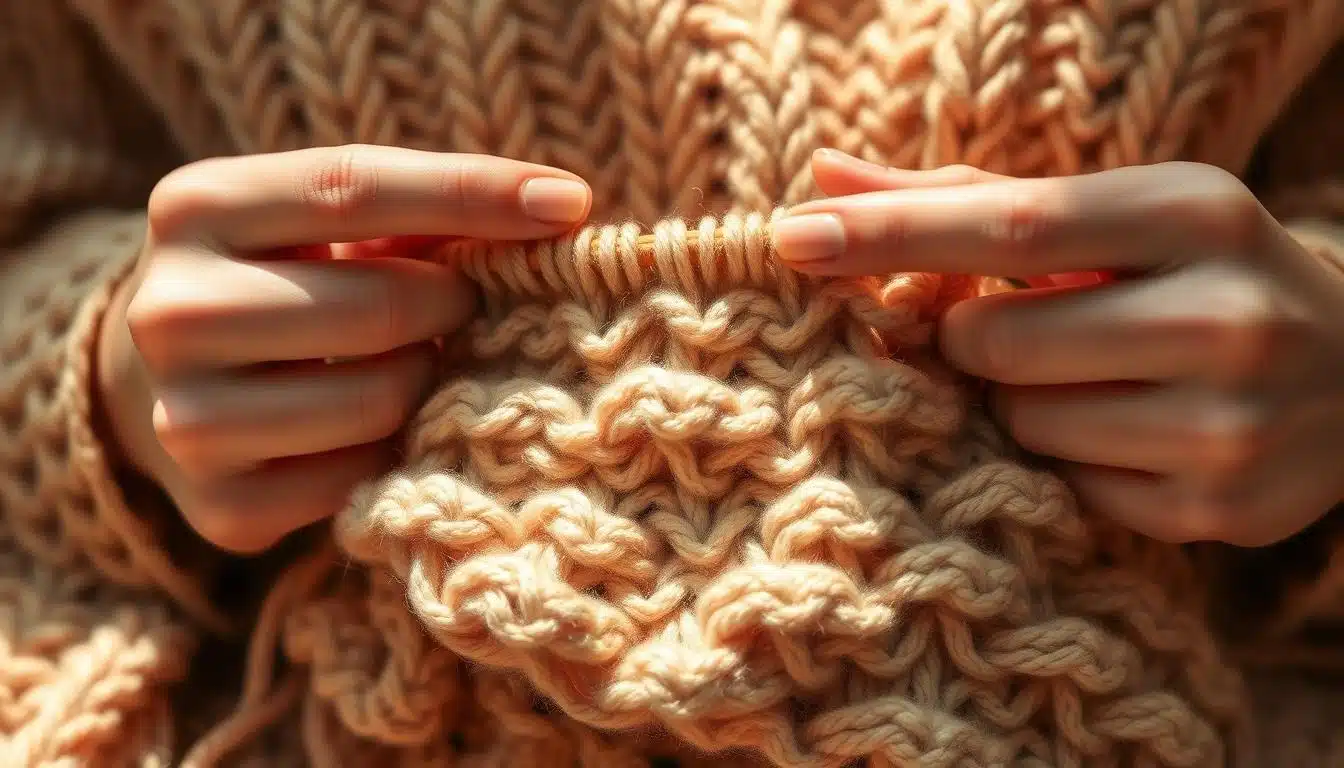
Ready to learn brioche stitch without the drama? This short, witty intro gets you set to master brioche knitting with clear steps and practical flair. You’ll discover why reversible knitting is prized for its lofty, double-sided fabric. You’ll also see how a brioche knitting tutorial can transform simple yarn into a plush, professional-looking piece.
This guide moves from the basics — materials and terminology — through warm-up swatches and common fixes, up to colorwork and pattern adaptation. Along the way, you’ll pick up brioche knitting tips. These tips help you keep rhythm, maintain even tension, and troubleshoot dropped yarn-overs.
Need patterns or a quick reference? Designers often post written instructions and free downloads on Ravelry. Video demos are great for seeing the sequence in motion. For a tidy, practical walkthrough that complements this article, check a clear reference here: brioche techniques and notes.
Key Takeaways
- Brioche stitch produces a lofty, reversible fabric ideal for scarves, hats, and sweater panels.
- A brioche knitting tutorial will often show rows worked twice for two-color effects and rhythm.
- Practice swatches help you learn to learn brioche stitch and find the right gauge.
- Keep a few brioche knitting tips handy: lifelines, stitch markers, and steady tension.
- Resources like designer notes and videos speed learning and boost confidence.
Why You’ll Love the Brioche Stitch: Benefits and Visual Appeal
Brioche turns simple yarn into a plush, sculpted fabric. It creates a soft, lofty knit that traps air and warmth. This makes brioche perfect for cozy hats or cowls on cold mornings.
The brioche stitch has a unique bump from paired knit/purl moves and yarn-overs. This results in deep texture and a reversible fabric. One-color brioche offers subtle depth, while two-color versions add bold contrast.
What makes brioche stitch special
Brioche is known for its springy hand and three-dimensional ribs. The paired stitches make a cushioned fabric that keeps its shape. Designers like Nancy Marchant have made brioche modern and accessible.
Reversible, lofty, and double-sided fabric advantages
Knitting brioche gives you a double-sided piece that looks great on both sides. This reversible fabric lets you wear a scarf with two looks. The lofty knit adds warmth without bulk, perfect for winter accessories and structured sweaters.
Why brioche adds sophistication to accessories and garments
Brioche’s visual appeal comes from its rhythm and symmetry. It turns simple shapes into luxe pieces with refined ribbing. Use rounded yarns like Americano DK from Yarn Cafe Creations or Blue Sky Woolstok for best results.
For drama, choose high-contrast palettes or speckled yarns from indie dyers. These highlight the pattern and show off brioche’s benefits. The result is detailed yet easy to knit.
Essential Materials and Tools for Brioche Knitting
Before starting, make sure you have everything you need. The right yarn is key for brioche. Choose a yarn that’s plump and round to make the stitch stand out.
Choosing yarn: weight, fiber, and color contrasts
The weight of your yarn affects brioche’s look. Fingering yarn with mohair adds a soft halo. DK yarn changes the fabric’s drape but is easier to care for.
For two-color brioche, pick yarns with strong color contrasts. This makes the pattern easy to see. Always test swatches to see how the yarns work together.
Needle selection and tension considerations for brioche
Choose needles that are smaller than usual for brioche. This keeps the fabric tight and prevents it from sagging. Swatch with different needles to find the right size.
Keeping the right tension is important in brioche. If stitches are loose, use smaller needles. If they’re too tight, try larger ones. Always check after the fabric relaxes.
Helpful tools: lifelines, stitch markers, and scrap yarn
Use a lifeline to save your work. Thread a contrasting thread through your rows. This helps with yarn-overs and slipped stitches. Keep scrap yarn for holding stitches or testing joins.
Markers and the right tools make fixing mistakes easier. A good set includes point protectors and a yarn needle. Follow the designer’s recommendations for tools and notions.
Make a small swatch first. Note how yarn and needle size work together. Add a lifeline before starting a big project. This keeps your work safe and fun.
Understanding Brioche Basics: Stitches and Terminology
To master brioche, start with the basics of vocabulary and stitch pairing. This primer gives you the essentials to read patterns with confidence. It also helps you understand why brioche fabric is different from plain ribbing.
Key stitch moves
brk and brp are key in brioche. brk is a knit paired with a slipped yarn-over from the previous row. brp does the same on the purl side. Once you grasp this, patterns will no longer seem like a secret code.
Yarnovers and slipped stitches
Yarnovers in brioche are not like those in lace. They are paired and preserved, creating a little bump next to a slipped stitch. Slipped stitches keep the partner yarn-over in place. This is why brioche fabric looks lofty and cushioned.
One-color versus two-color approaches
One-color brioche uses slipped-stitch methods with the same yarn for both parts. Two-color brioche alternates yarns, working each row twice with different colors. This creates a vivid flip on the reverse side and clearer ribs when knitting two-color brioche.
How brioche structure works
Brioche structure is built from paired stitch units. A full brioche ridge includes a knit or purl with the yarn-over from the prior row. This pairing creates thick, springy vertical ribs.
Practical effects on gauge and fit
Yarn-overs being kept and slipped make the fabric thicker and wider than standard ribbing. You’ll need to adjust needle size or stitch counts when adapting patterns.
Quick checklist
- Read brk brp explained lines carefully before you begin.
- Practice the paired yarn-over and slipped stitch to lock in rhythm.
- Swatch both one-color and two-color brioche to see how brioche structure alters stretch and drape.
Getting Started: Simple Warm-Up Exercises and Swatches
Start with a few short rows to get into the brioche rhythm. This quick routine relaxes your hands and helps you keep even tension. Keep these exercises brief to avoid getting tired before starting.
Choose a stretchy cast-on that matches your pattern’s selvedge. Many prefer tubular or long-tail cast-ons for paired brioche stitches. Test these on a scrap to ensure neat seams later.
How to cast on for neat edges
Opt for a cast-on that offers flexibility and a clean edge. A tubular cast on works well for a polished look, or use a long-tail with loose tension for seaming. Check the first rows for paired stitches and adjust your cast-on if needed.
Practice swatches to find your brioche gauge
Swatch with the yarn and needles you’ll use. Your swatch should be wide and tall to block properly. Measure after blocking and resting to get accurate gauge.
Keep a swatch archive to track your progress. For swatching tips, check Brooklyn Tweed’s swatch notes.
Tips for maintaining rhythm and even tension
Start with a short ritual: two warm-up rows and a hand shake. Some prefer Continental knitting, while others like knitting left-handed. Find what works best for you.
Focus on stitch height and yarn-overs when practicing brioche. Even tension comes from consistent hand placement and a repeatable sequence. If tension varies, return to your warm-up rows to regain rhythm.
| Practice Item | Goal | What to Check |
|---|---|---|
| Short warm-up rows | Set rhythm | Even brioche tension and stitch height |
| Selvedge test | Neat seams | Edge stitch stretch and appearance |
| Full blocked brioche swatch | Accurate measurements | Final brioche gauge across width and height |
Keep notes on needle size, yarn, and brioche gauge. This record helps with future projects and planning a handmade wardrobe.
Common Brioche Stitch Mistakes and How to Fix Them
Learning brioche comes with its own set of challenges. Mistakes like missed pairs or dropped yarn-overs can disrupt the pattern. But, the good news is that most brioche mistakes can be fixed with patience and a few tricks.
Identifying dropped yarn-overs and slipped stitches
Start by looking for gaps or uneven columns in your work. A dropped yarn-over appears as a single loop where a pair should be. Slipped stitches show up as ladders or misaligned ribs.
Spotting these issues early is key. If you catch them quickly, you can usually fix them by picking up the loop and pairing it with its mate.
Best practices when ripping back and recovering stitches
Ripping back brioche can seem daunting, but it’s doable. If you must rip, start from a row below the error. Work slowly to avoid tangling the yarn-overs.
When picking up stitches, count pairs and use a smaller needle. This helps you coax yarn-overs back into place. If it feels too complicated, consider getting help from a local yarn shop.
Using proactive lifelines to avoid pickup problems
Using lifelines in brioche is a game-changer. Thread scrap yarn through your stitches every few inches. This way, if you need to rip, every loop and yarn-over will be secure.
With lifelines, ripping back is much easier. You can simply rip to the line and put stitches back on your needles. Many experts recommend this for complex brioche projects.
- Quick tip: Mark the right-side rows so you know which pairs to re-form when you pick up.
- When DIY fails: Seek in-person help at a local yarn shop; trained staff can often salvage a brioche rip faster than solo attempts.
Techniques to Speed Up Your Brioche Knitting
To speed up brioche knitting, make small changes. These can add rhythm and reduce wasted motion. Adjusting hand position, needle choice, and method can make your knitting faster without sacrificing quality.
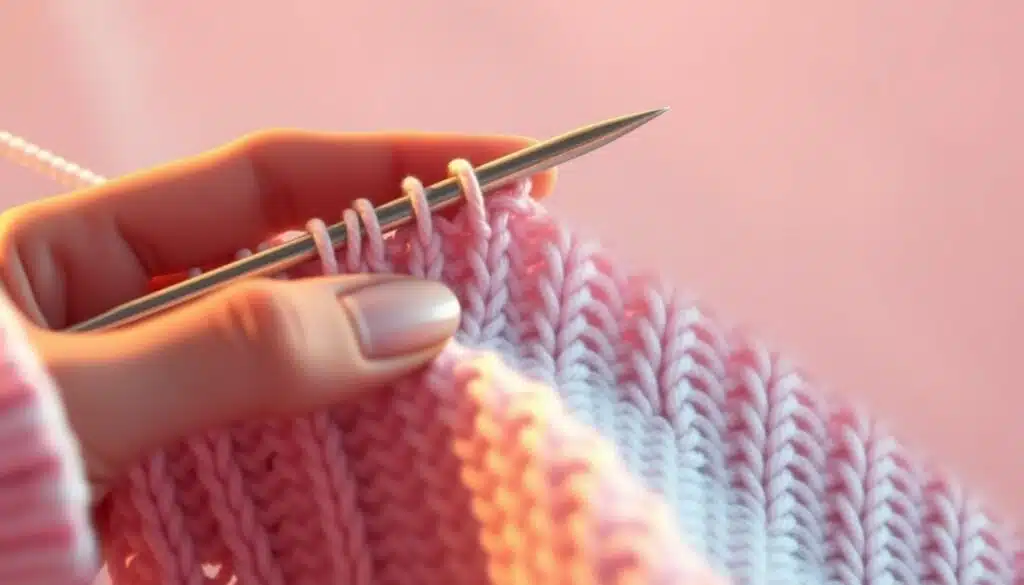
Continental vs. English options for rhythm
Choosing between continental and English knitting can make a big difference in brioche. Holding the yarn in your left hand can make movements shorter and smoother. This leads to a faster, more consistent pace.
English knitting might be better if you’re used to it and prefer a slower pace. Try both to see which one works best for you.
Single-pass alternatives and trade-offs
Single-pass brioche methods aim to reduce the two-pass rhythm of traditional brioche. This can make larger projects faster. But, it might change the fabric’s loft and elasticity slightly.
Before using single-pass brioche for a garment, test it on a swatch. For tips on increases and decreases, visit Whimsy North for examples you can adapt.
Stitch-handling tips to knit more comfortably and quickly
Keep your movements short and efficient. This reduces fatigue and increases your knitting speed. Keep the yarn close to the needles and avoid big arm movements.
Choose needles that match your yarn. Wood is good for slippery yarns, while metal is better for fast knitting. Ergonomic needles can also reduce wrist strain during long sessions.
| Focus | Action | Effect on Speed | Fabric Trade-off |
|---|---|---|---|
| Hand Style | Try continental and English | Medium to high gain, personal-dependent | None |
| Single-Pass Method | Use single-pass brioche variants | High gain on two-color work | Possible change in loft and elasticity |
| Needle Choice | Switch between wood, metal, or ergonomic | Small to medium gain | Alters tension feel |
| Motion Economy | Shorten hand movements, consistent tension | Consistent speed improvement | Improved stitch regularity |
Always swatch when you change your technique. This helps keep your finished work looking good while you speed up your knitting.
Colorwork and Two-Color Brioche: Planning and Execution
Choosing the right colors is key for a great design. For two-color brioche, pick colors that contrast well to make stitches stand out. Navy and cream make bold stripes, while tonal shades or speckled yarns add soft texture.
Plan where to join colors before starting. In two-color brioche, you work each color separately. Place joins at pattern repeats or edges to hide them. Short floats are okay, but long ones can twist and show on the other side.
When starting a new skein, hide the tail in the first few rows. Use mirrored tucking to keep the finish neat on both sides. For tricky spots, try Russian grafting between like-color rows to hide seams.
Weaving ends for a reversible fabric needs care. Use mirrored stitches so both sides look good. Weave tails along purl ridges, then check the reverse to ensure no loose strands show. Duplicate stitch can cover stray tails without changing the texture.
Manage floats and joins with the future face in mind. Decide which side you’ll show off and place motifs correctly. The wrong side will show the inverted palette, so swap colors in your chart when needed.
For more structure, add a contrast border or pick up stitches along an edge. Work a short rib in a single color to frame the brioche colorwork and reduce curl. Designers like Nancy Marchant offer stitch patterns and worksheets to help plan complex repeats.
Swatch with your chosen yarns before starting. A small color contrast brioche swatch shows how blends, speckles, and fiber types affect stitch clarity. Test your weaving method on the swatch so the final piece needs fewer fixes.
Adapting Patterns: Gauge, Needle Size, and Yarn Substitutions
Before you change yarn or needles, take a breath and swatch. Brioche fabric is different from stockinette. It sits taller, traps air, and stretches wide. Swatching smartly saves hours of ripping.
Why gauge is different
Brioche has paired stitches and yarnovers that build depth. To gauge brioche, measure both stitches and rows per inch after blocking. Make sure your swatch is flat and relaxed.
Yarn swaps that work
Yarn substitution brioche is possible for a lighter or chunkier fabric. For example, DK with mohair can mimic worsted-plus halo without the weight. DK instead of fingering means more drape and warmth. If you use a heavier yarn, reduce stitches or pick smaller needles.
Sizing tips
Consider horizontal stretch when calculating garment ease. Use blocked swatch measurements to recalculate stitch totals. If using DK instead of worsted, test both stitch gauge and blocked width for proper fit.
Needles and tension
To prevent droop brioche, use smaller needles than for stockinette. Smaller needles tighten the rib and keep columns neat. If it’s too tight, increase needle size and swatch again. Aim for a stable rib that meets your gauge without sagging.
Quick checklist
- Swatch in the actual brioche pattern, then block and measure.
- Apply brioche gauge tips: count ribs and stitch columns.
- When doing yarn substitution brioche, expect changes in drape, warmth, and dimensions.
- Adjust needle size brioche style: smaller to prevent droop brioche, larger if too tight.
- Recalculate stitch counts based on blocked measurements, not unblocked ones.
Popular Brioche Projects to Build Your Skills
Ready to turn practice into pieces you’ll love wearing? Choose projects that match your mood and skill level. Start small to learn shaping, then move on to items that show off brioche texture and colorwork.
Hats and bandanas: quick wins to practice shaping
Hats give fast gratification and teach you working-in-the-round techniques. A good brioche hat pattern will reinforce increases, decreases, and neat crown shaping.
Bandanas work flat or on the bias, so you practice selvedges and seaming. A simple brioche bandana is forgiving and perfect for mastering stitch count and edge control.
Cowls, scarves, and reversible accessories
Cowls and scarves let you settle into steady brioche rows without pressure. You focus on rhythm, tension, and color shifts while creating reversible brioche accessories that look great on both sides.
Choose seamed or circular formats to practice finishing. Working longer pieces also helps you learn to carry colors and weave ends invisibly.
Sweater panels and mixed-fabric garments for advanced knitters
Once you’re confident, try a brioche sweater panel combined with stockinette or lace. A single brioche sweater panel can become a focal point on a pullover or cardigan.
Mixed-fabric garments teach shaping, gauge matching, and joining techniques. Look for test-knit patterns and designer notes from experts to guide sizing and transitions.
- Tip: Start with a concise project list and add one challenge per item to improve steadily.
- Tip: Use patterns by proven designers for reliable instructions and useful tips.
Resources, Patterns, and Communities to Keep You Inspired
Looking to dive deeper into brioche? A few key resources can help you progress and keep you excited. Start with pattern hubs, active groups, and video guides that show the stitch rhythm. Choose what fits your learning style and next project.
Ravelry is a top spot for brioche patterns. It offers free and paid downloads, along with designer notes. Look for patterns by Nancy Marchant for expert technique and by Raina K. for stylish accessories like the BriocheSis Hat. You’ll find options for one-color and two-color projects to practice contrast and shaping.
Watching a brioche video tutorial can boost your speed and confidence. Look for step-by-step guides that cover brk/brp, yarn-over handling, and lifeline placement. Seeing the stitch sequence helps you feel the rhythm and reduces the need to unravel repeatedly.
The brioche community offers feedback, encouragement, and new ideas. Join Ravelry groups, Instagram hashtags, and Facebook circles to share photos and ask questions. Local yarn shops like Knit Locally host meetups and can help with regional yarns and in-person advice.
Want to test knit brioche projects? Sign up for test knits. They let you try new designs, give feedback, and refine your finishing skills. Being part of a test knit crew sharpens your pattern reading and builds friendships.
| Resource | What You Get | Best For |
|---|---|---|
| Ravelry pattern downloads | Designer notes, project photos, downloadable PDFs | Finding diverse brioche stitch patterns and gauge details |
| Video tutorials | Step-by-step demonstrations, close-up stitch views | Learning rhythm, brk/brp, yarn-over and lifeline techniques |
| Local yarn shops | In-person help, special yarns, community classes | Hands-on fixes and regional craft connections |
| Online brioche community | Peer support, photo shares, pattern recommendations | Troubleshooting, inspiration, and social motivation |
| Test knit brioche groups | Early pattern access, collaborative feedback | Improving accuracy and learning real-world finishing tips |
Troubleshooting and When to Ask for In-Person Help
When brioche goes wrong, stay calm and plan. Start small and track your steps. This way, you can easily fix mistakes without getting more tangled. Below, you’ll find quick checks, practical moves, and when to ask for help.
When lifelines save the day and how to place them
Put a lifeline every few inches on big projects or before tricky parts. Use scrap yarn or a smooth thread. Run it through each stitch on the needle. This keeps your work safe, so you can fix mistakes without stress.
How to approach reworking a section you can’t pick up
If you can’t pick up after ripping, go back to the last lifeline. Move stitches from the scrap yarn to your needles. If things are tangled or missing, trying to fix it online can waste time. Stop, think, and either redo from the lifeline or get help to avoid making things worse.
Why visiting your local yarn shop can be the fastest fix
Local yarn shop help is worth the trip when you’re stuck. Stores like Jimmy Beans Wool or Wool & Company have experts. They can show you how to fix mistakes in person. When you’re short on time, a visit to the LYS can solve your problem faster than online advice.
| Problem | Quick Fix | When to Seek Help |
|---|---|---|
| Dropped yarn-over | Thread a lifeline below the error, work back to it, pick up the loop carefully | Multiple dropped rounds or confusing twisted loops |
| Uneven paired stitches | Block and steam, then check tension and needle size | Persistent imbalance after re-tensioning |
| Failed pickup after ripping | Rip to last lifeline and transfer stitches from scrap yarn | Stitches missing or yarn-overs irretrievable |
| Lost brioche column alignment | Mark columns, isolate the section, rework with a lifeline in place | Large misaligned section spanning many inches |
| Stitch pattern confusion | Slow down and follow a row-by-row chart | Repeated mistakes despite practicing charts |
Conclusion
You now have a clear roadmap to master brioche stitch. Start by remembering why brioche sings: it’s reversible, lofty, and has an elegant texture. Choose your yarn and needles carefully, learn brk and brp, and get the hang of yarn-overs and slipped stitches.
Practice swatches, use lifelines, and try quick projects like hats, bandanas, and cowls to build confidence. When you tackle sweater panels or mixed fabrics, rely on Ravelry patterns, video tutorials, and your local yarn shop for help.
Remember, single-pass methods, yarn substitutions, and needle changes change how the fabric behaves. Always swatch. Use proactive lifelines and community test-kits to save time and avoid frustration as you plan your next brioche steps.
With steady practice and the right tools, brioche becomes meditative, not intimidating. Use this brioche knitting summary to guide your practice. Enjoy adding a refined, reversible texture to your knitting as you master brioche stitch.
FAQ
What is the brioche stitch and what makes it special?
Brioche is a special stitch that creates a thick, elastic fabric. It’s made by working paired stitches together with a yarn-over. This makes the fabric soft, stretchy, and looks good on both sides.
Are one-color and two-color brioche very different?
Yes, they are different. One-color brioche uses slipped stitches with the same yarn. Two-color brioche switches yarns in each row, creating a striking color effect on the other side.
What yarns work best for brioche?
Use plump, round yarns like DK or worsted for brioche. Wool blends are great for warmth. Yarns like Americano DK and Blue Sky Woolstok work well. High-contrast yarns make two-color brioche stand out.
How should I choose needle size for brioche?
Choose smaller needles than usual to avoid loose ribs. Brioche stitches sit taller and stretch more than stockinette. Swatch with the yarn and needles you plan to use to get the right size.
Do I really need to swatch for brioche?
Yes, you need to swatch. Brioche gauge is different from stockinette. Swatching helps you get the right stitch count and test seaming methods.
What are the key stitches and abbreviations I should know?
Learn brk (brioche knit), brp (brioche purl), and yarn-overs. These stitches are key to brioche. Understanding them helps keep your pattern right.
Why do brioche projects stretch so much horizontally?
Brioche stretches because of its unique construction. It’s made with paired yarn-overs and slipped stitches. This makes it warm and stretchy, but you need to measure after blocking.
How do I cast on for brioche so edges look neat and seam easily?
Use a stretchy cast-on like long-tail or tubular. Practice selvedges on swatches for seaming. A neat cast-on makes edges tidy and easy to join.
What’s the best way to avoid catastrophic ripping in brioche?
Use lifelines to prevent ripping. Thread scrap yarn through your stitches every few inches. This lets you fix mistakes without losing your work.
If I drop a yarn-over or mispair a slipped stitch, can I fix it?
Yes, you can fix small mistakes. If you drop a yarn-over, carefully fix it. If it’s too hard, ask for help at a yarn shop.
Is brioche slow because two-color brioche appears to require working each row twice?
Two-color brioche works in a two-pass rhythm. This can be meditative. There are also single-pass variants, but they change the fabric feel.
Should I knit continental or English for brioche?
Many prefer continental for brioche. It’s faster and easier on the hands. Try both to see what works best for you.
How do I manage color joins, floats, and weaving ends in two-color brioche?
Work joins on color-change rows. Plan ends so they’re neat on both sides. Use techniques like twisting or duplicate stitch to hide ends.
Can I substitute DK for fingering + mohair or other combinations?
Yes, you can substitute yarns. But it will change the fabric’s feel and size. Swatch first to get the right gauge.
Which projects are best for learning brioche?
Start with hats, bandanas, and cowls. They’re forgiving and teach shaping. Scarves and cowls are good for practice. Advanced knitters can try sweater panels.
Where can I find clear instructions and patterns for brioche?
Ravelry has many brioche patterns and tips. Look for Nancy Marchant’s techniques and Raina K.’s patterns. Video tutorials help with rhythm and hand position.
What tools and notions should I keep on hand for brioche?
Keep lifelines, stitch markers, and comfortable needles ready. You’ll also need blunt tapestry needles and extra yarn for holding stitches. Ravelry pattern pages often list needed notions.
How do I steam or block brioche fabric?
Block brioche gently to relax stitches. Avoid stretching too much. Pin lightly and let it dry. Blocking shows how much it will stretch and helps with measurements.
When should I ask for in-person help at a local yarn shop?
Ask for help if you can’t fix mistakes or if the fabric is tangled. Shops can fix problems faster and teach you techniques.
Any quick tips to keep brioche meditative and not maddening?
Keep your stitches small and consistent. Practice warm-up rows and use lifelines. Choose yarns you like, and pick a rhythm that relaxes you.