You’re about to turn yarn, needles, and patience into a cozy sweater. This guide will help you start knitting a sweater with confidence. You’ll learn about clear plans, gauge, and how to avoid sewing mistakes.
Begin with a simple pattern and the right needles. The Sweater 101 eBook is a great resource. It has a table of contents, interactive worksheets, and schematics for thirty sizes. Plus, a hands-on class will teach you how to swatch, construct, and finish your sweater.
Knitting a sweater is easier when you break it down. This guide will show you what tools and lessons to use. You’ll learn how to plan for fit and why a good gauge swatch saves time.
Key Takeaways
- Knitting a sweater becomes manageable with a clear guide and stepwise planning.
- Use resources like the Sweater 101 eBook for schematics, planning sheets, and size ranges.
- A beginner sweater project benefits from guided classes that teach gauge and finishing techniques.
- Always swatch first—gauge is the most important factor in how a sweater will fit.
- Start with simple patterns and the right needles to build confidence before tackling complex designs.
Why You Should Start Knitting a Sweater: Benefits and Confidence Boosts
When you pick up needles, you get more than a warm sweater. Knitting a sweater boosts your mood and pride. You learn to plan, measure, and tackle sleeves with confidence.
Why a sweater is the perfect project for your next skill jump
A sweater requires pattern reading, math, and finishing skills. These challenges make knitting a sweater a turning point for many. Beginner-friendly designs, like the Wave of Change pullover, help you adjust sizes to fit your style.
Practical perks: personalized fit, sustainable wardrobe additions, and cost savings
Handknits let you control fibers, color, and fit. This means you can tailor a sweater to your body, climate, or wardrobe needs. Custom fit is a big advantage: fewer returns, less waste, and something you’ll love wearing.
Knitting can save money over time. Choose durable fibers and care for them well. Small investments in yarn and tools lead to long-lasting sweaters, replacing fast-fashion pieces.
How sweater projects build transferable knitting skills
Each sweater teaches techniques you’ll use again. Skills like short rows, picking up stitches, and smooth joins are useful in many projects. This is how knitting skill building works: one ambitious project opens up many others.
Step-by-step tutorials and class projects make complex steps easier. You’ll practice increases, decreases, and blocking until they’re second nature. For more on knitting’s mood-boosting effects, see this study on knitting benefits.
| Advantage | What you learn | Practical outcome |
|---|---|---|
| Personalized fit | Measuring, ease planning, sleeve shaping | Garments that flatter and get worn often |
| Technical growth | Pattern reading, short rows, stitch pickups | Skills transfer to hats, mittens, and socks |
| Mood and focus | Repetitive rhythm, project completion | Improved well-being and confidence |
| Sustainability | Fiber choice, longevity care | Reduced fashion waste and cost savings |
Essential Tools and Yarn Choices for Sweater Success
You’re about to make a sweater that fits perfectly. First, get the right tools to avoid surprises. Choosing yarn, needles, and extras should feel confident, not uncertain.
Most pullovers need circular needles for the body. You’ll need a main size and a smaller one for ribbing. The Wave of Change pullover suggests 6mm for the body and 5.5mm for edges.
Double-pointed needles are great for tight cuffs. Magic loop is good for those who prefer one long cable. This way, you can work on small parts easily.
Yarn weights and fibers:
Yarn weight affects drape and warmth. Bulky yarn is quick and cozy. Sport and DK are lighter for layered looks.
Wool, alpaca, and cotton block differently. Choose fiber based on your design goals. Sweaters 101 helps with weight swaps while keeping gauge.
Notions and extras:
Good notions save time and trouble. You’ll need stitch markers, a blunt tapestry needle, and a measuring tape. Locking markers are great for tracking increases.
Keep a small bag with spare needles and contrast yarn for lifelines. This is for emergencies.
Blocking must-haves:
Blocking tools are key for a professional finish. Get a blocking mat, rust-proof pins, and mesh racks. Wet or steam blocking sets the drape based on fiber.
- Bring sweater knitting needles in two sizes when starting a new pattern.
- Match yarn weight for sweaters to the garment’s intended drape and warmth.
- Pack essential knitting notions and reliable blocking tools before you cast on.
Getting Started Right: Measuring, Sizing, and Reading Schematics
Before you start knitting, take a moment to measure yourself. Your measurements are key to a sweater that fits right and feels great. Use a soft tape to measure your chest, shoulders, arm length, and body length. Write these numbers down so you can compare them with the pattern later.
Choosing the right ease is important. For a relaxed fit, choose 2–4 inches of ease. This is what Wave of Change recommends. Write down your chosen ease so you know which size to pick and what adjustments to make.
How to take accurate body measurements and choose finished garment ease
Measure your bust or chest at its fullest point, wearing a thin layer. Add your desired ease to this number to find the finished bust measurement you need. For example, if your bust is 38 inches, choose a pattern size with a finished bust of 40–42 inches for 2–4 inches of ease.
Understanding schematics and size charts (including multi-size ranges)
Schematics are like blueprints for your sweater’s fit. They show width, circumference, and length with simple drawings. When a pattern shows multi-size ranges, like CO 45 (48, 51, 55), use these graphics to check your chosen ease before starting.
Quick tip: when reading schematics, check clear guides to avoid mistakes in armhole depth or sleeve cap height. A quick review of the pattern’s schematic can save you time and prevent issues later.
Planning sheets and project notes you’ll wish you used sooner
Plan your knitting project like a small construction job. Your planning sheet should include your body measurements, the ease you chose, the pattern’s measurements, yarn weight, needle size, and gauge. Keep notes on color, substitutions, and any changes. These simple records will make future projects easier and more reliable.
For a step-by-step guide on reading patterns, check out this guide on reading knitting schematics. It pairs well with your planning sheets when comparing pattern numbers to your measurements.
| What to Record | Why It Matters | Where to Check |
|---|---|---|
| Full bust/chest | Matches finished bust measurement for proper fit | Pattern schematic and finished measurements |
| Desired ease | Controls drape and movement | Multi-size knitting charts and pattern notes |
| Gauge and needle size | Ensures the sweater matches listed dimensions | Pattern gauge section and your swatch |
| Yarn and substitutions | Influences drape, warmth, and final measurements | Yarn label and pattern yarn recommendations |
| Tweaks and alterations | Prevents surprises during construction | Your planning sheet and schematic notes |
Following these steps makes it easier to match your body to the pattern. With accurate measurements, sensible ease, and confidence in reading schematics, your chances of a great fit increase. Use multi-size charts and planning sheets to start each sweater with purpose, not guesswork.
Mastering Gauge: The Non-Negotiable Step Before You Knit
Even with the best yarn and pattern, a sweater can be a challenge if your tension is off. Think of a knitting gauge swatch as a small experiment. It saves you from hours of ripping and fixing awkward seams. It’s like planning, not putting it off.
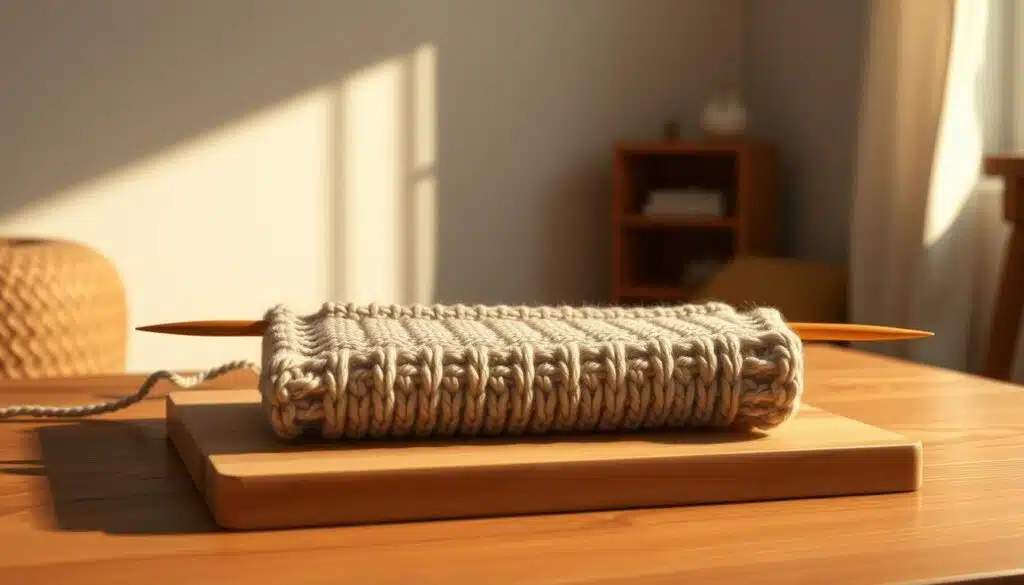
Why a small swatch matters
A proper swatch shows stitch and row counts after washing and blocking. It tells you if the pattern fits your hands. Classes like Wave of Change and Sweater 101 start here for a reason.
Skipping this step can lead to a sweater that’s too big or too small. Gauge saves you time, yarn, and pride.
How to make, measure, and tweak your swatch
Cast on at least 36–40 stitches for a reliable section. Use the needles the pattern suggests, then try one size up and one size down. Knit in the main stitch pattern for several inches. Wash and block the swatch like the finished sweater.
Measure stitches per inch in the swatch’s center. If your count is higher, use larger needles. If it’s lower, go down a size. This is a simple way to adjust your gauge without complex math.
Practical gauge tips when swatches misbehave
If your gauge is hard to get right, try different yarn weights or needle brands like Addi or ChiaoGoo. Some knitters tighten in ribbing. Try using a smaller needle for ribs and a larger one for stockinette, following the pattern’s contrast idea.
Keep a record of every swatch: needle size, yarn, stitch pattern, blocked measurements, and tension notes. A worksheet from Sweater 101 helps you keep these details for future projects.
| Problem | Quick Fix | When to Re-swatch |
|---|---|---|
| Too many stitches per inch | Move up one needle size; test again after blocking | If difference > 1 stitch/in or fabric feels stiff |
| Too few stitches per inch | Move down one needle size; consider lighter yarn | If sweater would be noticeably larger than pattern |
| Ribbing tighter than body | Use 0.5–1 mm smaller needles for ribs only | When cuff or hem pulls in too much after blocking |
| Blocked gauge changes more than expected | Block sample the same as garment, then adjust needle size | Always re-measure after washing and blocking |
| Mixed gauges across panels | Consistent needle brand and yarn ball center; re-knit swatches | When seams won’t match and shaping looks uneven |
Mastering how to swatch for a sweater builds your confidence and reduces surprises. Use these gauge tips to adjust your knitting gauge early, keep neat notes, and enjoy the actual knitting instead of endless fixing.
Core Techniques for Sweater Construction
You’re ready to move past scarves and into true garment territory. Start with a clear sense of shape before stitching a single row. Knowing the basics makes choices like a top-down sweater or a bottom-up sweater feel obvious instead of scary.
Pick a construction that matches your patience level and fit goals. A top-down sweater gives you instant shaping and easy try-ons. A bottom-up sweater can yield neater underarm joins and simple seaming. Both styles teach skills you’ll reuse on many projects.
Next, learn sleeve options so your armholes look intentional. A raglan sweater uses diagonal decreases that blend into the shoulder, great for casual fits. Set-in sleeves offer a tailored silhouette that flatters layered looks.
Try a short set-in sleeve tutorial when you want crisp joins. Practice sewing the cap and easing the fabric evenly. Small, targeted practice sessions will build your confidence faster than one long, frustrated afternoon.
Short rows picking up stitches are a quiet superpower for shaping. Use short rows to add back neck depth or to shape a circular yoke without bulky seams. Picking up stitches cleanly around edges gives you tidy neckbands and cuffs.
Work on finishing techniques after your pieces match gauge. Neat mattress stitch seams, tidy picked-up ribbing, and consistent blocking turn good knits into polished garments. Each finishing step raises the perceived quality of your work by miles.
Practice across patterns and classes to cement these moves. Studios like School of Knit or classes such as The Wave of Change pullover emphasize top-down sweater methods, short rows, picking up stitches, and finishing steps. That guided practice shortens your learning curve and helps you apply techniques in real projects.
Patterns, Classes, and Resources to Guide Your First Sweater
Are you ready to make your first sweater? Start with simple steps. Choose a pattern that teaches you as you knit. The right resources will help you feel confident.
Choosing patterns that teach as you knit
Look for beginner sweater patterns that list simple techniques and size ranges. The Wave of Change pullover by Denise Bayron is a great example. It keeps shaping basic and offers sizes that fit many bodies. This makes learning less scary and more satisfying.
You can try free, proven templates like the Flax Sweater pattern when you want an extra practice round. Tin Can Knits provides friendly tutorials that pair well with class work and solo projects. If you need a quick reference, take a peek at practical guides like the Sweater 101 eBook for planning sheets and schematics.
Why guided sweater knitting classes speed progress
Joining sweater knitting classes helps you avoid common pitfalls. Instructors show you tension fixes, how to knit in the round, and neat finishing. Some workshops, such as those built around the Wave of Change pullover, supply yarn and a copy of the pattern so you can focus on technique.
Pay attention to workshop policies on punctuality and cancellations. Clear expectations keep group lessons running smoothly. Small group lessons also let you ask questions and get hands-on correction, which beats guessing from a pattern photo.
Books, eBooks, and interactive tools that act like a workshop
Pick titles that include worksheets, schematics, and project planning. The Sweater 101 eBook functions like a personal sweater workshop with a clickable table of contents, Appendix B worksheets, and multi-size schematics. Paperback releases with compact pattern collections provide low-cost options that feel professional.
Combine a reliable book with local help. Many local yarn stores offer in-person and virtual classes and stock helpful knitting resources. Use both printed patterns and guided lessons for the fastest learning curve.
Quick comparison to help you decide
| Resource Type | Best For | What You Get |
|---|---|---|
| Beginner sweater patterns | First full-size project | Clear steps, size ranges, practice motifs |
| Sweater 101 eBook / paperback | Personal workshop at home | Worksheets, schematics, multiple patterns |
| Sweater knitting classes | Hands-on correction | Instructor feedback, supplied yarn, pattern copy |
If you want a smooth start, pair a short, clear pattern with a single class and a compact reference. For step-by-step direction, check this practical primer that walks through first-sweater logistics and choices: so you want to knit your first.
Troubleshooting and Common Mistakes to Avoid
You hit a snag. Maybe the sleeve is too tight, the neckline puckers, or a pattern row looks off. This guide helps you figure out what to do next. You can tweak, frog knit, or move forward with confidence.
First, check the fit. Lay your project flat and compare it to your planning sheet. Sweater 101 shows how to adjust the pattern before starting. This makes fixing issues easier and less stressful.
Fixing fit issues: altering ease, bust adjustments, and length tweaks
If the body feels boxy, try taking in side seams or switching to a denser stitch. For bust adjustments, use short-row shaping or strategic increases. To change length, measure from underarm or hem and adjust pattern repeats.
When you make changes, note them in your project notes. Good notes help you repeat a fix or reverse it if needed.
Handling common stitch and finishing problems
Uneven tension in ribbing often means you need to swap needles. Wave of Change classes teach this. For a snag, use a duplicate stitch or small patch of matching yarn to hide the repair.
Seams that gape can tighten with blocking and steam. If blocking doesn’t work, add mattress stitch or reinforcing stitches for a cleaner finish.
When to frog, when to tweak, and how to stay patient
Frog knitting is best for big errors that affect fit or pattern mistakes. If a small section is wrong, tweak it instead. Sweaters 101 and workshops teach when to rip back versus rework.
Being patient is key. Count rows, check gauge, and take photos before big changes. Classroom guidance from local studios and brands like Brooklyn Tweed helps avoid common mistakes.
| Problem | Quick Fix | When to Frog |
|---|---|---|
| Too much ease in body | Take in side seams; add waist shaping | If overall drape is wrong and altering ruins balance |
| Bust too tight | Short rows or added gusset; adjust stitch pattern | If shaping sits in wrong place after multiple attempts |
| Ribbing loose or uneven | Change to smaller needles for ribbing; block carefully | If tension mismatch persists across entire cuff or hem |
| Dropped or stretched stitches | Pick up with crochet hook; use duplicate stitch for security | If many rows are compromised or pattern repeats lost |
| Puckered neckline or seams | Steam block and ease with mattress stitch | If shaping is fundamentally off and affects wearability |
Care, Blocking, and Making Your Sweater Last
You’ve finished knitting and want your sweater to look great for years. Proper blocking, gentle washing, and simple repairs keep it looking new. Follow these easy tips for blocking and caring for your sweater.
Blocking basics to achieve professional-looking shaping and drape
Start by laying out a clean surface and pinning the sweater to the pattern measurements. Wet-block or steam lightly, depending on the yarn. Wool and alpaca do well with wet blocking, while superwash and acrylic might need careful steaming.
Keep a record of what works for each yarn on your planning sheet. This helps you avoid guessing next time and keeps the sweater’s fit and drape perfect.
Washing and storage tips based on fiber content
Always check the fiber labels before washing. For handknits, use cold water and a mild wool wash. Gently agitate by hand, rinse well, press out water without wringing, and reshape on a towel to dry.
Store wool garments in breathable containers with cedar or lavender sachets to keep moths away. Fold bulky knits and hang lightweight, stable ones to preserve their shape.
Repair basics to extend the life of your favorite handknit
Fix small holes or pulled stitches before they get worse. Use matching yarn and a tapestry needle for invisible mending. Learn duplicate stitch to reinforce thin spots on elbows and cuffs.
If a repair seems too hard, many local yarn shops like Knit Purl or WEBS offer repair services or workshops.
| Issue | Quick Fix | Best Practice |
|---|---|---|
| Misshapen hem | Re-block to pattern measurements | Wet-block on a flat surface, pin to shape |
| Greasy or stained area | Spot-clean with mild soap | Hand wash whole piece if stain spreads; air dry flat |
| Pulled stitch | Use a crochet hook to ease stitch back | Weave in ends and reinforce with matching yarn |
| Moth damage | Trim loose fibers and assess holes | Store wool in sealed, breathable bins with moth deterrents |
| Worn elbow or cuff | Duplicate stitch patch | Reinforce early; replace stretch-prone fibers with durable yarn |
Conclusion
You’ve learned how Sweater 101 and guided classes like the Wave of Change pullover make knitting a sweater easy. The book offers schematics for 30 sizes and step-by-step gauge guidance. It turns a complex task into a clear plan.
If you want to start knitting a sweater, these resources are your guide. They give you the confidence to begin.
Practical lessons like gauge swatching and short rows turn theory into a real sweater. Workshops and pattern collections offer support and choices. See each step as a goal to reach, like swatching or measuring.
Start with a plan, pick a pattern, and get the basics right. With clear guides and patient practice, you’ll create a sweater that fits well. Keep notes, use finishing tips, and remember each stitch builds your skill.
So, start knitting a sweater today and enjoy the journey.
FAQ
Why is a sweater the perfect project for your next skill jump?
Sweaters teach you key techniques like casting on and knitting in the round. They also cover shaping and finishing. Starting with simple designs lets you practice while making something you can wear.
You’ll see progress and feel more confident with each step. This is true for both sleeves and the yoke.
What practical perks come from knitting your own sweaters?
Handmade sweaters fit you perfectly and are good for the planet. You can choose the fiber and amount of yarn. This lets you control how warm and easy to care for your sweater is.
Planning sheets help you keep track of your yarn, needles, and measurements. This makes future projects easier and more consistent.
How do sweater projects build transferable knitting skills?
Techniques like short rows and picking up stitches are used in many projects. Sweaters, mittens, socks, and accessories all benefit from these skills. Practicing on simple sweaters trains your hands and eye.
This makes troubleshooting and finishing easier in other projects.
Which needles should you have on hand for a sweater?
You’ll need circular needles in different lengths and double-pointed needles (DPNs). A magic loop is also useful. For the Wave of Change class, use 6mm (US 10) for the body and 5.5mm (US 9) for ribbing.
Having both sizes lets you adjust your gauge and switch between rib and stockinette smoothly.
How do yarn weight and fiber affect my sweater?
Yarn weight affects how warm and drapey your sweater is. The fiber content changes the feel, loft, and care of the yarn. Worsted or aran weights make quick, structured sweaters.
Fingering and sport weights are lighter. Natural fibers like wool block well and keep you warm. Blends offer durability and easy care. Use planning sheets to match fiber to your desired garment properties.
What extra notions should I buy before starting?
You’ll need stitch markers, a tapestry needle, a measuring tape, and waste yarn. Also, bring stitch holders or scrap yarn and blocking tools. These help you measure, repair, and finish your sweater like a pro.
How do I take accurate body measurements and choose finished garment ease?
Measure your full bust, waist, high bust, arm length, and back length with relaxed posture. Sweater 101 provides schematics for thirty standard sizes and planning sheets to record your numbers. Choose positive ease—typically 2–4″ (5–10 cm) over full bust for the Wave of Change style—unless you want a closer or oversized fit.
How do I read schematics and multi-size charts?
Schematics show finished garment measurements and shaping points. Match your chosen size to the finished measurements (not body measurements), check sleeve and body lengths, and note where decreases or short rows occur. Multi-size charts list measurements across sizes—use the planning sheets to mark your selected numbers so you don’t misread pattern lines.
What are planning sheets and why should I use them?
Planning sheets are project worksheets that log gauge, needles, yarn quantity, measurements, and blocking notes. Sweater 101’s interactive Appendix B worksheets let you type, print, and keep records so you avoid repeat mistakes and make consistent, well-fitting garments every time.
Why is a gauge swatch absolutely necessary?
Gauge determines how many stitches per inch you get; mismatched gauge changes sizing and drape. A swatch lets you adjust needle size and predict yarn usage. Sweater 101 and most classes start with swatching—record stitch and row counts on your planning sheet and block the swatch to test final gauge.
How do I make, measure, and adjust a gauge swatch?
Knit a 4–6″ square in the main stitch pattern, wash or block it as you will the garment, then measure the number of stitches across a central 4″ span. If your stitch count is lower than the pattern, switch to a smaller needle; if higher, go up a size. Note adjustments on your worksheet so calculations for stitches and lengths remain accurate.
What if my gauge refuses to cooperate?
Try different needle materials (wood vs metal), adjust needle size in 0.5 mm increments, or change yarn fiber if the drape is wrong. You can also alter the pattern math using Sweater 101’s worksheets to adapt stitch counts to your gauge. If necessary, practice on simpler patterns to stabilize your tension before committing to the final sweater.
When should I choose top-down versus bottom-up construction?
Top-down is forgiving—you can try on as you go and adjust length, sleeve depth, and fit. Bottom-up gives different shaping options and can feel more familiar for set-in sleeve constructions. Choose top-down for easy customization and live try-ons; choose bottom-up if you prefer seaming and structured set-in sleeves.
How do set-in sleeves, raglan, and circular yokes differ?
Set-in sleeves are sewn or picked up into an armhole and give a tailored shoulder. Raglan sleeves extend from the neckline in diagonal lines for ease and classic shaping. Circular yokes knit in the round join body and sleeves seamlessly. Each method affects fit and finishing—Sweater 101 explains plain approaches to all three so you can pick what suits your shape and skill level.
What are short rows and how are they used?
Short rows add extra fabric in targeted areas—like bust darts or shoulder shaping—without adding stitches across the whole row. They fix contouring and prevent gaping. Learning just a few short-row techniques makes a dramatic difference in fit, and classes often cover practical short-row methods for sweaters.
How do I pick up stitches cleanly and finish smoothly?
Use a slightly smaller needle to pick up along the edge to avoid loose ladders, place markers frequently, and use mattress stitch for seaming. For necklines and button bands, pick up at regular intervals and use a ribbing needle size recommended for a firm edge. Sweater 101 and guided classes demo these steps so you can reproduce tidy results.
Which beginner-friendly patterns should I consider?
Patterns like the Wave of Change pullover by Denise Bayron are beginner-friendly, size-inclusive, and designed for classroom or solo learning. Sweater 101 also includes multiple simple patterns to practice core techniques. Choose a pattern that lists clear gauge, a recommended yarn weight, and realistic skills for your level.
How can guided classes help, and what should I expect from their policies?
Classes provide hands-on feedback, yarn and pattern support, and real-time troubleshooting. Expect detailed lesson plans—gauge in session one, construction and short rows in later sessions—and policies about punctuality, attendance, and cancellations to keep the group moving. Bring the recommended needles (for example 6mm and 5.5mm for the Wave of Change) to get the most from class time.
What books and eBooks act as a sweater workshop?
Resources like Sweater 101 function as a personal workshop-in-a-book. The PDF edition includes a clickable table of contents, interactive Appendix B planning worksheets, schematics for thirty sizes, and multiple practice patterns so you can plan and execute fitted garments confidently.
How do I fix fit issues like improper ease or bust problems?
Adjust ease by reselecting a size with more or less positive ease, or modify stitches across the bust with short rows, darts, or full-bust adjustments. Sweater 101’s planning and math sections guide you through recalculating stitch counts so fit tweaks are predictable.
What common stitch and finishing problems should I watch for?
Look for uneven tension at rib transitions, loose pick-up edges, and untidy joins at the underarm. Swatching, using correct needle sizes for ribbing vs body, and following finishing demos in classes or Sweater 101 reduce these issues. Keep notes on your planning sheet so you don’t repeat mistakes.
When should you frog and when should you tweak?
Frog if the mistake affects fit or structure—wrong gauge, severe count errors, or major shaping mistakes. Tweak when small tension issues or minor size differences can be corrected with short rows, blocking, or selective seaming. Patience is key: blocking and gentle fixes often save time over reknitting.
What are the blocking basics to achieve professional shaping?
Wash or steam the finished piece according to fiber, pin it to schematic measurements on a blocking mat, and let it dry fully. Blocking evens stitches, sets gauge, and shapes hems and necklines. Sweater 101 includes blocking notes per yarn type so you get consistent results.
How should I wash and store handknits by fiber content?
Follow fiber-specific care: hand-wash wool in cool water with gentle soap and lay flat to dry; superwash and blends may tolerate gentle machine cycles but always dry flat. Store folded in a dry, ventilated place; use cedar or lavender sachets for natural moth deterrence.
What basic repairs extend the life of a sweater?
Learn to reweave small holes, reinforce high-wear areas with duplicate stitch, and replace buttons with matching thread. Keep a repair kit with matching yarn and a tapestry needle. Simple repairs preserve fit and appearance and keep your handmade garments in rotation for years.