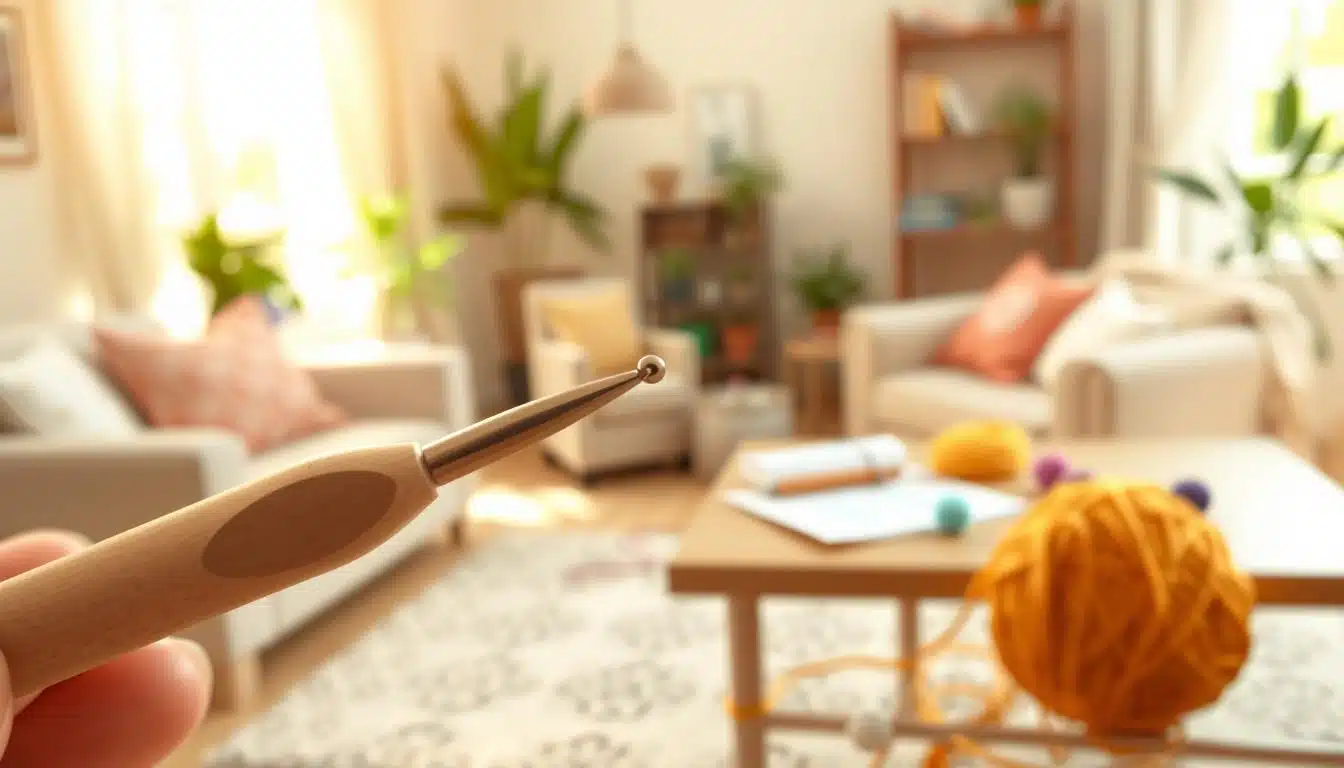
Starting to crochet? The first thing to do is pick a crochet hook carefully. A crochet hook is the tool that pulls yarn through loops. It has parts like the tip, throat, shaft, thumb rest, and handle. Each part affects your stitches and how your hand feels after crocheting.
This guide will help you choose the right crochet hook for beginners. You’ll learn about sizes for common yarns and how materials like wood, aluminum, and plastic feel. You’ll also see why the wrong hook can make simple projects hard.
This guide is like a map for your first crochet projects. It keeps them fun, not frustrating. The tips here come from experts, size charts, and trusted brands. They help you find the perfect hook, yarn, and grip for smooth progress.
Key Takeaways
- Choosing the right beginner crochet needle makes learning faster and less frustrating.
- Understand the five hook parts—tip, throat, shaft, thumb rest, and handle—for better comfort.
- Start with medium hook sizes and worsted-weight yarn for predictable results.
- Materials matter: wood grips, metal glides, and plastic is light and cheap.
- This beginner hook guide helps you match hook and yarn so your first projects succeed.
Why the Right Tool Matters for Your Crochet Journey
Choosing the right hook is key. It makes learning easier by letting stitches slide smoothly. Start with a medium hook and worsted yarn for clear loops.
A 4.0–6.0 mm hook (US G–J) is perfect for beginners. It offers comfort from the start, making your first stitches a breeze.
How a good hook makes learning enjoyable
A smooth hook head and right shaft diameter make stitches flow. This flow helps with counting rows and fixing mistakes. Try aluminum and plastic hooks to find your preference.
For tips on starting sizes and practice, check out picking-your-first-hook.
Common beginner frustrations solved by the right needle
Yarn splitting? A well-shaped head prevents this. Uneven tension? Use the right hook size and swatch to fix it.
Hand fatigue and slippage? Ergonomic handles and the right material help. These changes make crocheting more comfortable and longer-lasting.
Long-term benefits: comfort, speed, and project success
Choosing tools for comfort pays off over time. The right hook reduces strain and improves stitches. Metal hooks are fast, while wood grips well for sweaty hands.
Inline hooks ensure uniform stitches, and tapered hooks forgive small mistakes. As you practice, you’ll get faster and more confident. For size charts and more, visit crochet-hook-sizes.
Beginner crochet needle
You want a hook that makes learning simple and satisfying. A beginner crochet needle is about comfort, clear stitches, and a forgiving pairing with common yarns. This way, you spend time practicing, not wrestling your tool.
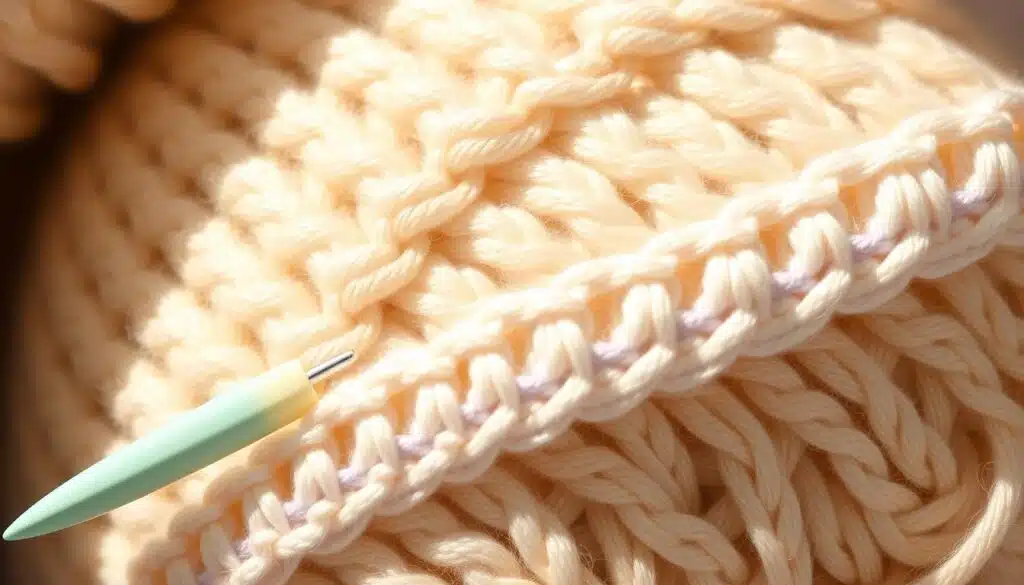
Pick a hook that feels good in your hand and shows each loop clearly. This lets you count, fix mistakes, and build rhythm. Courses and labels suggest a small set of sizes for starter projects.
What “beginner crochet needle” means in practice
In practice, a beginner crochet needle is easy to grip. It has a smooth throat that won’t split yarn and a head that forms consistent loops. You need a tool that helps you learn tension and stitch placement.
Comfort matters when you practice for an hour. Ergonomic handles from Clover or Boye can reduce strain while you master basic stitches.
Essential hook sizes to start with
Your first kit should include a few essential crochet hooks. Focus on these beginner hook sizes: E-4 (3.5 mm), G-6 (4.0 mm), H-8 (5.0 mm), I-9 (5.5 mm), and J-10 (6.0 mm).
Those five sizes let you try scarves, hats, amigurumi, and quick bulky projects without buying a drawer full of single hooks. They match common pattern recommendations and keep learning straightforward.
| Hook (US) | Metric (mm) | Best yarns | Why it helps a beginner |
|---|---|---|---|
| E-4 | 3.5 | Light worsted, DK | Good for smaller details and tighter gauge practice |
| G-6 | 4.0 | Worsted, medium | Great balance of control and visible stitches |
| H-8 | 5.0 | Worsted, aran | Comfortable for scarves and hats; forgiving for new hands |
| I-9 | 5.5 | Worsted, bulky | Speeds up projects while keeping stitch clarity |
| J-10 | 6.0 | Bulky, chunky | Fast projects and obvious stitches for learning spacing |
Why medium sizes and worsted yarn are perfect for learning
Medium hooks in the 4.0–6.0 mm range work well because they create visible stitches without feeling awkward. Pair them with a worsted yarn beginner-friendly choice like Lion Brand or Red Heart for steady results.
Worsted weight yarn is forgiving when your tension varies. It shows mistakes clearly so you can fix them and teaches you gauge and stitch spacing more quickly than very fine or extremely chunky yarns.
Use a simple swatch to check tension. If your stitches look even and the fabric feels comfortable, you’ve found the right combo of hook and yarn for more practice.
Hook materials explained: wood, aluminum, plastic, and steel
You want a hook that matches your hands, speed, and yarn. Choosing the right material affects your stitches and how long you crochet. Here’s a comparison to help you choose.
https://www.youtube.com/watch?v=GcOzdAzmtNM
Wood and bamboo: warmth, grip, and care
Wood and bamboo hooks feel warm and offer a natural grip. They help control slippery yarn, perfect for sweaty hands.
These hooks develop a nice patina over time. To keep them in good shape, oil them yearly with olive or coconut oil.
Aluminum and metal: smooth glide for faster stitching
Aluminum and metal hooks have a smooth surface for easy yarn movement. This makes your stitches faster and more defined.
Many aluminum hooks show both US and metric sizes. You can also find metal heads with cushioned handles for comfort.
Plastic: lightweight, colorful, and budget-friendly
Plastic crochet hooks are light and affordable. They come in many colors and shapes, making them great for beginners.
Hard plastics last longer, while softer plastics offer better grip. Plastic hooks are ideal for long sessions without heavy tools.
Steel: fine work for thread and lace
Steel hooks are perfect for working with fine thread and lace. They come in small diameters, with higher numbers indicating smaller hooks.
Use steel hooks for delicate projects where precision is key.
Material trade-offs for sweaty hands or temperature sensitivity
Metal can be cold or hot, which might bother sensitive skin. Wood is neutral but needs care. Plastic is affordable but may not glide as smoothly as aluminum.
Consider your hand temperature, sweat, and desired stitch speed when choosing between materials.
For a deeper look at sizes and materials, check this guide for a practical overview of how each material performs in real projects: material and size guide.
Hook shapes and styles: tapered vs inline and ergonomic handles
Choosing the right hook can change your crochet game. It affects your stitches and hand comfort. You need tools that fit your crochet style: smooth flow or precise stitches, light or cushioned grip.
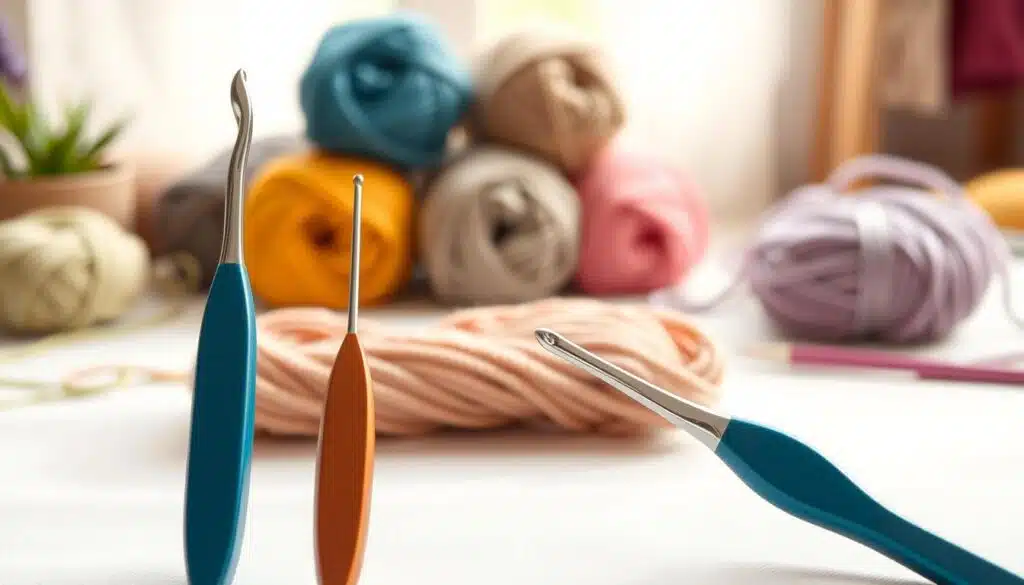
Tapered hooks for smooth, forgiving stitches
Tapered hooks have a round head and a narrowing throat. This design makes yarn slide smoothly. It’s great for beginners who want to learn without snagging.
These hooks help you create soft, flowing stitches. They also reduce thread splits, making your fabric look better.
Inline hooks for defined, uniform stitches
Inline hooks have a flat head and a clear stop in the throat. They help you make even loops and consistent stitches. This is perfect for following patterns from Lion Brand or Bernat.
When comparing tapered vs inline hooks, you’ll see how head shape impacts your stitches. Inline hooks are better for precise, uniform stitches.
Ergonomic handles, grips, and how your hand position matters
Ergonomic crochet hooks come in different shapes and sizes. They have thumb rests for better grip. These handles reduce hand strain during long crochet sessions.
Try different handle types to find what works for you. Knife grip users like longer, thicker handles. Pen grip users prefer lighter, balanced handles.
Before buying, test different hooks. Reviews can help you decide. For ergonomic hook reviews, check this guide from CrochetCraze: ergonomic crochet hooks.
Choosing the right size: reading labels, charts, and swatching
You want your scarf to fit you, not a giant teddy bear. First, learn to read yarn labels and size charts. This way, you can pick the right hook with confidence. Labels often list the recommended hook size in letters and millimeters, making it easier to understand US, metric, and UK sizes.
Understanding US, metric (mm), and UK sizing systems
The US system uses letters and numbers like G-6 or H/8. The UK system has numbers flipped, with smaller numbers for thicker hooks. Metric sizes show the exact diameter in millimeters, giving the most reliable measurement. Modern hooks often have mm markings, making it easy to compare sizes.
Matching hook size to yarn weight with a simple reference chart
Use a compact reference to guide your choice. The following chart shows common beginner sizes and a yarn weight guide. It helps you match yarn to hook quickly.
| Yarn Weight | Typical Hook (US) | Metric (mm) | Beginner Notes |
|---|---|---|---|
| Lace | — | 1.5–2.25 | Delicate projects; not ideal for first-time tension control |
| Fingering | — | 2.25–3.5 | Good for shawls; pick a slightly larger hook if you knit tightly |
| Light / DK | G/6 | 3.5–4.5 | Versatile; try 4.0 mm for balanced stitch definition |
| Medium / Worsted | H/8, I/9, J/10 | 4.5–6.5 | Best for learning; stitches show clearly while you practice |
| Bulky | — | 6.5–9 | Fast projects; watch gauge if pattern expects medium yarn |
| Super Bulky | — | 9–15 | Great for quick blankets; use hooks labeled in mm for precision |
| Common Beginner Hook Picks | E/4, G/6, H/8, I/9, J/10 | 3.5, 4.0, 5.0, 5.5, 6.0 | These give a flexible toolkit for most starter projects |
How to make a swatch and adjust for your personal tension
Swatching crochet is the fastest way to avoid surprises. Crochet a 4×4 inch square in the stitch the pattern asks for. Measure stitches and rows per inch and compare to the pattern gauge.
If your swatch is too tight and shows fewer stitches per inch, go up one hook size. If it’s too loose and has more stitches, go down a size. Repeat until your gauge matches the pattern.
Use the wrap test as a quick fallback. Wrap yarn around a pencil and count wraps per inch to estimate weight. If a hook has no label, use a hook gauge or measure the shaft diameter to learn its mm size.
For extra help, check a clear guide on reading yarn bands and labels at how to read yarn labels. If troubleshooting tension or stitch issues, a practical resource like the crochetcraze troubleshooting page can save time.
Grip, hand position, and ergonomics for comfort
Find the grip that makes stitching feel easy instead of awkward. Try a few crochet grip styles in short sessions. See which one reduces tension and keeps your hands happy.
Spoon/pen grip vs knife grip: which feels best for you
Try spoon grip crochet for fine control and delicate tension. Holding the hook like a pen gives precise movement. It pairs well with lightweight, balanced hooks.
Try knife grip crochet for using your whole palm to guide the hook. The overhand hold spreads pressure across the hand. It suits thicker, longer handles that protect your palm.
Handle length and shape recommendations by grip style
If you favor spoon grip crochet, pick shorter, evenly rounded handles. They won’t tip backward. A smooth shaft and modest thumb rest help keep your fingers relaxed.
For knife grip crochet, choose longer handles and firmer grips. The hook should sit comfortably across your palm. Wider thumb rests distribute pressure and stop the hook tip from poking your skin.
When to choose lighter hooks or cushioned handles to prevent fatigue
To prevent crochet fatigue, opt for lighter materials like aluminum or well-made plastic for long sessions. Cushioned ergonomic handles ease pressure points and slow fatigue buildup.
People with sweaty hands may prefer wood or silicone-coated plastic for grip. If you hate cold metal during winter, try bamboo or wooden hooks. They offer a warmer, neutral feel.
Test different grips early and compare results. Most beginners find relief and comfort by sampling a few handle shapes before buying full sets. For a quick reference on holding techniques, visit crochet hook hold guidance and adapt what feels natural to you.
| Grip | Handle Type | Best Materials | Key Benefit |
|---|---|---|---|
| Spoon/Pen | Short, rounded | Aluminum, lightweight plastic | Precise control, less wrist motion |
| Knife | Longer, thicker | Bamboo, wood, cushioned handles | Palm support, even pressure |
| Neutral/Hybrid | Medium length, balanced | Ergonomic mixed materials | Versatile comfort for varied stitches |
Starter sets, single hooks, and what to buy first
Starting to crochet can feel overwhelming with so many options. A starter set gives you the basics to try different yarns and hooks. Buying single hooks randomly can lead to more trips to the store.
Why a small core set beats random single buys for beginners
A starter set saves time and stress. It offers consistent sizes and lets you find the hook that feels right in your hand. You can try out different materials like aluminum and bamboo before spending more.
Which specific sizes to prioritize (practical kit recommendation)
Begin with a five-hook set that covers most patterns. The sizes E/4 (3.5 mm), G/6 (4.0 mm), H/8 (5.0 mm), I/9 (5.5 mm), and J/10 (6.0 mm) are a good start. They help you easily switch between sizes when a pattern calls for different ones.
| Hook Size | US/Metric | Best For | Why It’s Useful |
|---|---|---|---|
| E/4 | 3.5 mm | Light worsted, DK, small accessories | Good for learning tension with finer yarn without being fiddly |
| G/6 | 4.0 mm | Worsted, many patterns | Common first hook for beginners; versatile for swatching |
| H/8 | 5.0 mm | Worsted, blankets, scarves | Comfortable size to practice larger stitches and speed up progress |
| I/9 | 5.5 mm | Bulky-ish projects, cozy garments | Helps you see stitch definition and adjust tension |
| J/10 | 6.0 mm | Chunky yarn, quick throws | Great for relaxed tension and fast, satisfying projects |
When it’s worth investing in higher-quality or branded hooks
Try out different materials and shapes first. If you love a style, invest in a branded set from Clover Amour, Tulip, or Addi. These hooks are durable and have smooth finishes.
Look for a beginner set that matches your preferences after trying different materials. This saves money and ensures comfort. If you’re unsure, a mixed set lets you find your favorite before upgrading.
Care, maintenance, and making your hooks last
Think of your hooks as reliable tools, not something to throw away. Proper care ensures smooth stitches, saves money, and makes crafting more enjoyable. Simple habits can extend your hook’s life and prevent small issues from becoming big ones.
Cleaning metal and plastic hooks safely
After each use, clean metal and plastic hooks with a damp cloth and mild soap. This removes oils, lotions, and sweat. Make sure to dry them completely to prevent corrosion.
For buildup, a soft toothbrush can help. Regular cleaning keeps your yarn flowing smoothly and prevents yarn splitting.
Oiling and storing wood and bamboo hooks to prevent cracking
Wood and bamboo hooks need yearly care. Use food-safe oils like olive or coconut oil. Apply a small amount, let it soak, then buff off the excess to keep them looking good and feeling soft.
Keep wooden hooks away from direct sunlight and extreme humidity. Use a case or roll to protect them from damage. Store them carefully to avoid scratches and warping.
How proper care saves money and keeps your tools performing
Properly cared-for hooks have smooth heads and throats. This prevents yarn splitting and keeps handles comfortable. Brands like Clover and Boye can last many years with basic care.
Regular cleaning, oiling when needed, and proper storage extend your hook’s life. This means less time buying new tools and more time creating.
Conclusion
Choosing the right crochet needle is simple. You need to match size, material, and shape. Start with basic sizes like G-6, H-8, I-9, E-4, and J-10. This lets you test yarn and tension without trouble.
Wood needles offer warmth and grip, while aluminum is smooth and fast. Plastic is light and affordable. Decide if you prefer tapered or inline hooks based on your stitch preference.
Here are quick steps to make progress: Buy a small set in 3.5–6.0 mm sizes. Try both spoon and knife grips to find what feels natural. Swatch to check your gauge, and clean and oil your hooks yearly.
Remember, the key is to pick the right hook and practice well. Protect your tools too. With a bit of testing, you’ll stitch faster and learn more comfortably. These tips will save you time and make projects more enjoyable.
FAQ
How do I choose my very first crochet hook so I don’t get frustrated?
Start with a small core set in medium sizes: E/4 (3.5 mm), G/6 (4.0 mm), H/8 (5.0 mm), I/9 (5.5 mm), and J/10 (6.0 mm). These sizes work well with common worsted yarns. They make stitches easy to see.
Pick a material you think you’ll like. Wood or bamboo offer grip and warmth. Aluminum is for smooth glide, and plastic is light. Try spoon/pen and knife grips to see what feels natural.
Swatch to check gauge and adjust hook size if your tension runs tight or loose.
What exactly is a crochet hook and what parts should I notice?
A crochet hook is a pointed tool used to pull yarn through loops. Look at the tip/head, throat/neck, shaft, thumb rest/grip, and handle. These parts affect how yarn feeds, stitches form, and comfort during long sessions.
A smooth head avoids yarn splitting. A cushioned handle reduces hand fatigue.
Why do medium sizes (4.0–6.0 mm) work best for beginners?
Medium hooks produce visible, forgiving stitches without being clumsy. They pair nicely with worsted-weight yarn. This is the most common, easy-to-handle yarn.
With medium hooks, you can learn stitch spacing, counting, and gauge without trouble.
How do tapered and inline hooks change my stitch look and learning?
Tapered hooks have a rounder head and gradual throat. They make stitches forgiving and comfortable for speed and flow. Inline hooks have a flatter head and defined throat.
They help you get very uniform stitches and consistent gauge. Tapered is kinder for beginners. Inline is better when precision matters.
Which materials are best if my hands sweat or are temperature-sensitive?
If you sweat, wood or bamboo often feel grippier. They have a slightly open-pored surface. If your hands get cold or hot, wood and bamboo feel lukewarm.
Aluminum and metal glide fastest but can feel chilly. Plastic is lightweight and neutral. Try a couple of types to find what suits you.
Do ergonomic handles really help, and which grip needs what shape?
Yes. Ergonomic handles reduce strain. If you use the spoon/pen (pencil) grip, choose shorter, balanced, lightweight handles. They won’t tip backward.
For the knife grip, opt for slightly thicker, longer handles. They distribute pressure across the palm and keep the hook tip from poking. Cushioned thumb rests and wider grips help with long sessions.
How do I match hook size to yarn weight and read labels?
Check the yarn band for a recommended hook size as a starting point. Use a simple guide: lace (1.5–2.25 mm), fingering (2.25–3.5 mm), light/DK (3.5–4.5 mm), medium/worsted (4.5–6.5 mm), bulky (6.5–9 mm).
If in doubt, the wrap test (wrap yarn around a pencil and count wraps per inch) provides a quick weight clue.
What’s the swatch method to check my gauge?
Crochet a 4×4 inch swatch in the stitch pattern the pattern specifies. Measure stitches and rows per inch. If your swatch is too small (tight), go up a hook size.
If it’s too large (loose), go down. Swatching saves you from making a full project with the wrong tension.
Should I buy a starter set or single hooks?
Buy a small core set. A curated set with the five beginner sizes covers most patterns. It lets you test yarns and grips.
Random singles can leave gaps in useful sizes and force extra purchases later.
When is it worth investing in higher-quality branded hooks?
Once you’ve settled on the material and handle shape you prefer, upgrade. Brands like Clover Amour, Tulip, and Addi offer durable finishes, consistent sizing, and comfortable grips.
Higher-quality hooks last longer and often give a smoother stitch experience.
How do I clean and care for my hooks?
Wipe metal and plastic hooks with a damp cloth and mild soap, then dry thoroughly to prevent corrosion. Treat wooden or bamboo hooks about once a year with natural oils like olive or coconut to prevent drying and cracking.
Store hooks in a roll or case to protect tips.
How many times can I repeat a keyword without hurting readability?
Focus on natural phrasing. Use key terms like “hook,” “crochet,” and “yarn” as needed. Keep sentences short and varied for clarity and friendliness.
What common beginner problems will the right hook fix?
The right hook reduces yarn splitting (a well-shaped head helps), evens out tension (correct size and swatching), and prevents hand fatigue (ergonomic handles, lighter materials, or wood for grip).
It makes learning stitches and counting easier and keeps projects moving.
How should I store hooks to keep them performing well?
Store hooks in a zippered case, roll, or compartment organizer to prevent tips from bending or nicking. Keep wooden hooks away from direct sunlight and extreme humidity to avoid warping or drying.
How many sizes do I really need for scarves, hats, blankets, and amigurumi?
The five recommended beginner sizes—E/4 (3.5 mm), G/6 (4.0 mm), H/8 (5.0 mm), I/9 (5.5 mm), J/10 (6.0 mm)—cover scarves, hats, simple blankets, and most amigurumi. Add a few larger hooks for super-bulky yarns or smaller steel hooks for thread work if your projects require them.
Can I determine a mystery hook’s size at home?
Yes. Use a hook gauge or measure the shaft diameter with a ruler and compare to a metric chart. Most modern hooks also include both US letter and mm stamping for quick identification.
Any last quick steps I can take right now to get started with confidence?
Buy the core 3.5–6.0 mm set, pick one wood and one aluminum/plastic hook to test grip and glide, try both spoon and knife grips, swatch to check gauge, and care for your hooks—clean metal/plastic regularly and oil wood yearly. Small tests now save frustration later.