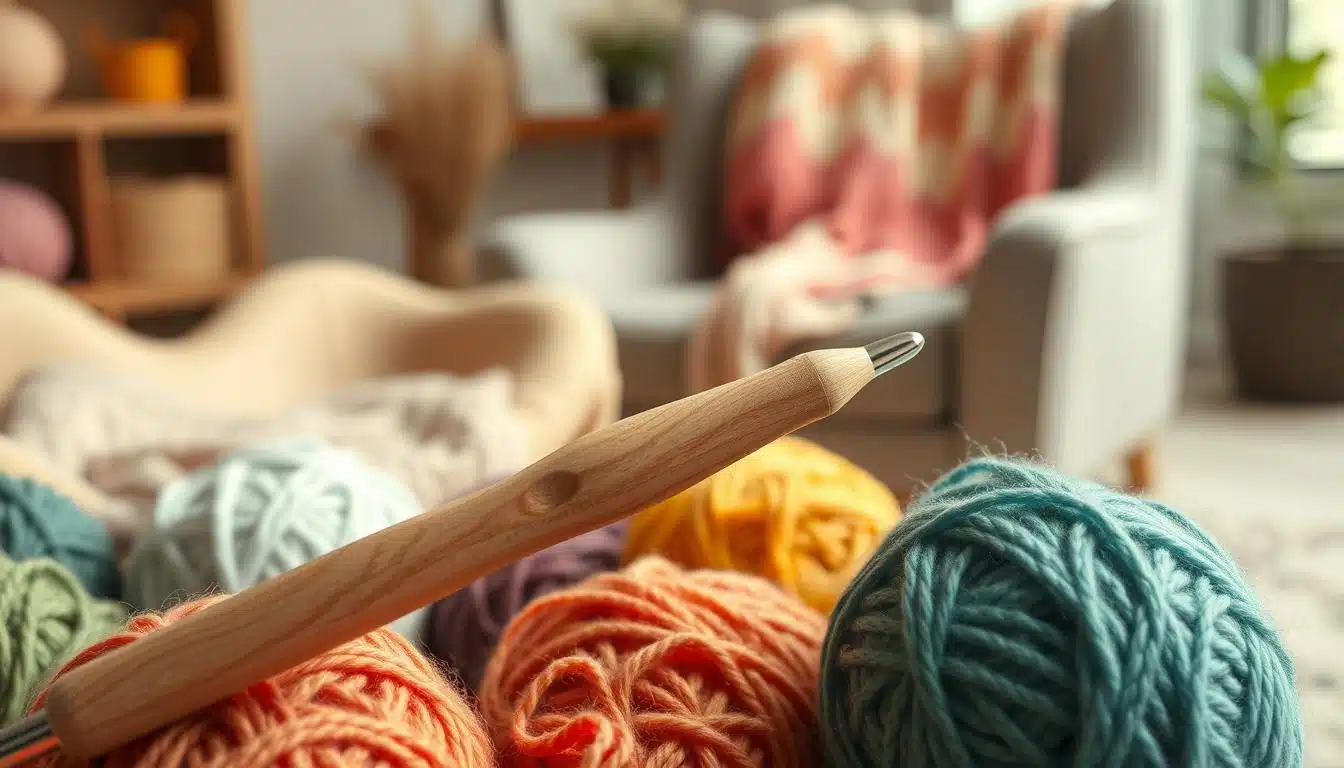
Starting to crochet can feel awkward at first. But, with the right hook, it becomes satisfying. The right hook can help you shape your stitches and keep your hands comfortable.
This guide will help you pick the right crochet hook. You’ll learn about sizes, materials, and shapes. We’ll also talk about ergonomics to protect your wrists.
Choosing the wrong hook can lead to uneven stitches or sore hands. But, picking the right one can make your stitches neat and your progress faster. Daiz Crochet suggests trying different hooks to find what works best for you.
We’ll also discuss starter sets, testing methods, and a shopping checklist. This way, you can confidently buy the best hook for beginners. You’ll also learn to build a set of tools that work for you.
Key Takeaways
- The right beginner crochet hook affects comfort, stitch appearance, and project success.
- Materials and head shape change how yarn glides and how consistent your stitches look.
- Ergonomics matter—saving your hands early prevents pain later.
- Try several hooks before committing; personal feel often beats reviews.
- This guide will cover sizes, materials, shapes, starter sets, testing, and a shopping checklist.
Why the Right Crochet Hook Changes Everything
Choosing the wrong hook can lead to frustration. But the right one makes your stitches flow smoothly. The type of hook, its shape, and finish all play a role in how yarn moves and your stitches look.
How a hook affects your crafting experience
The hook you pick can change how tight or loose your fabric is. Bigger hooks create airy textures, while smaller ones make stitches tighter. This affects the size of your loops and how fast you can crochet.
Brands like Clover and Boye show that the hook’s finish and shape matter. A smooth aluminum hook moves yarn quickly. Bamboo hooks, on the other hand, offer more grip. These differences can speed up your work and improve the look of your projects.
When ergonomics matters
Long hours of crocheting can strain your hands and wrists. Ergonomic hooks help by reducing this strain. They come with cushioned handles and supportive shapes that make crocheting more comfortable.
People with arthritis often prefer soft-grip handles from brands like Clover Amour or Tulip. Trying different hooks can help you find the one that feels right. It should reduce tension and improve your control over your stitches.
Understanding Hook Sizes and Gauge
Choosing the right crochet hook is like picking the perfect shoes. It’s all about comfort and fit. The wrong size can mess up the whole look. Hook sizes tell you the shaft’s thickness in millimeters or by a letter/number system like G/6.
The millimeter measurement is key. It directly impacts stitch size and gauge.
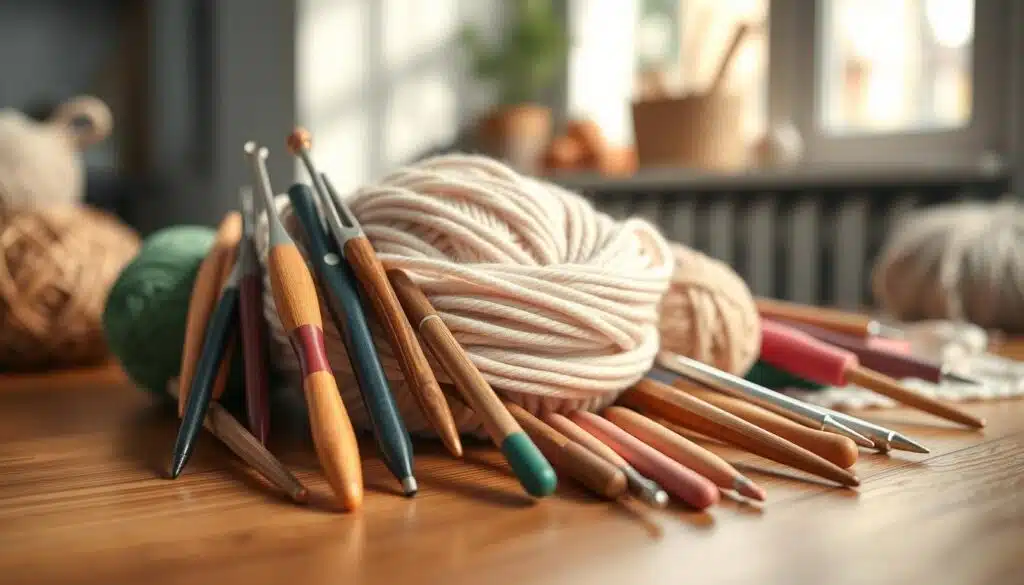
Reading yarn labels and suggested hook sizes
Yarn labels often suggest a hook size. Start with that number. The manufacturer aims for a specific drape and size. Following their recommendation helps your project match the pattern.
Gauge and hook size
Gauge and hook size are connected. Patterns specify stitches per 4 inches. Test with a swatch to adjust.
If stitches are too loose, drop a size. If too tight, go up. This changes the fabric’s feel and look.
Match projects to hook sizes
Choose the right hook for your project. Small hooks, 2.0–4.0 mm, are good for fine yarn. Medium hooks work for garments and accessories. Large hooks, 6 mm and up, are for chunky blankets and scarves.
Practical tips
Keep various hooks ready and swatch before big projects. Note your favorite fiber and millimeter sizes. This saves time and ensures your work looks great.
Materials Matter: Aluminum, Plastic, Wood, and More
Choosing the right crochet hook materials is key. It affects how your yarn looks and feels after a long crochet session. You need to match the hook’s surface and weight to your yarn and crochet rhythm. Here are some quick tips to help you pick the right tools for your projects and style.
Aluminum crochet hooks are light and smooth. They make yarn slide easily, helping you keep your stitches even. Beginners often choose aluminum hooks because they are affordable, consistent, and great for everyday projects.
Plastic crochet hooks are big and colorful. They are cheap and light, perfect for long blankets or chunky scarves. While plastic might not be as slick as metal on some yarns, it works well with bulky fibers, making big projects faster without tiring you.
Bamboo crochet hooks and other wood tools are warm and grippy. They slow down slippery yarn, giving you better control. Bamboo is eco-friendly and comfortable to hold, making it great for long sessions or working with delicate fibers.
When choosing between wood and aluminum, think about the project and your preference. Wood offers friction and comfort, while aluminum provides a smooth glide and speed. Your choice impacts your tension, stitch consistency, and work speed.
Steel hooks are best for tiny thread work and fine lace. Many makers, including Expression Fiber Arts, say the right material depends on your preference and yarn behavior. Testing different materials helps you understand how they interact with your yarn.
| Material | Best Uses | Feel | Notes |
|---|---|---|---|
| Aluminum | Everyday projects, medium yarns, beginners | Smooth, fast glide | Affordable, consistent tension, popular as aluminum crochet hooks |
| Plastic | Bulky yarns, large blankets, lightweight needs | Light, slightly matte | Low cost, many sizes and colors, ideal for fast large projects |
| Bamboo / Wood | Natural fibers, long sessions, slippery yarn control | Warm, grippy | Eco-friendly, pleasant hold; good when you want more control |
| Steel | Thread work, small hooks, detailed lace | Firm, precise | Used for tiny sizes; offers great control for fine stitches |
Try out different hooks to see how they work with your yarn. Slick yarns usually go well with aluminum hooks. Textured or slippery yarn might be better with wood or matte finishes. Your hands and projects will guide you to the best material for your style.
Hook Shapes and Head Types: Inline vs Tapered
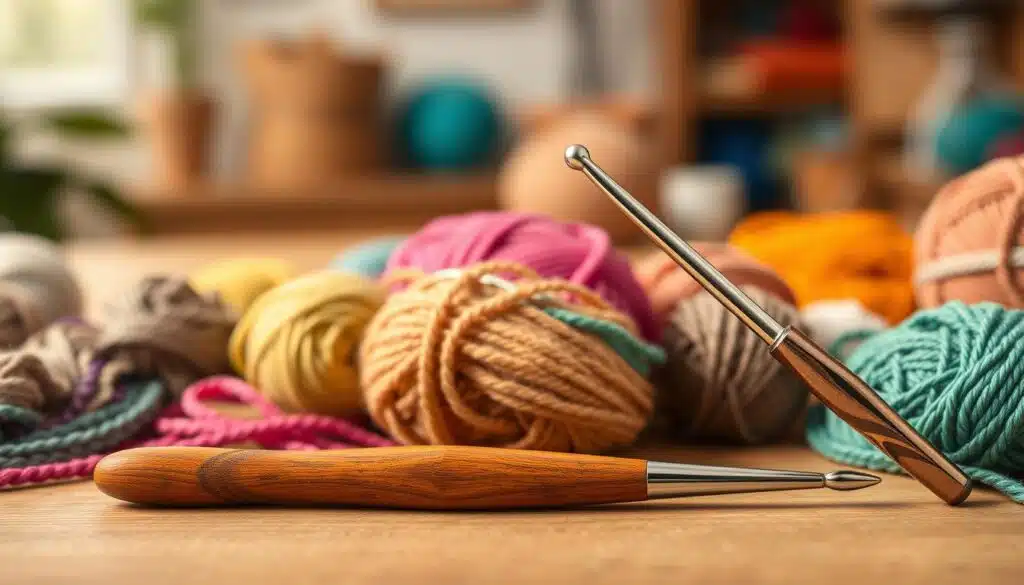
Choosing a hook shape affects your stitches and work speed. You’ll see differences right when yarn meets the hook. Understanding tapered vs inline hooks helps you pick the right tool for your project and mood.
Tapered hooks for smooth, fast stitching
Tapered heads are round at the top and narrow down gently. This design makes the hook slide into loops smoothly and release yarn easily. Many teachers suggest tapered hooks for beginners because they help you work faster and find a rhythm.
Tapered hooks are great for building speed. They work well with loose tension and soft yarns. If you prefer a flowing motion and want to finish projects quickly, start with a tapered hook.
Inline hooks for defined, consistent stitches
Inline heads have a flat top and a sharp throat. This shape holds loops tightly and helps you get uniform stitches. Your fabric will look cleaner and match pattern samples better.
For those who need exact gauge or follow European designs, inline hooks are key. They reward careful tension, leading to even stitches.
Test both hook types with a small swatch. Brands like Susan Bates and Clover offer both styles, so you can try them without worry.
What’s the best hook for beginners? Tapered hooks are often easier to start with. But, if you’re a perfectionist, inline hooks might be better once you want uniform results. It depends on your project and personal preference.
If a pattern or designer suggests a specific hook, use it to match gauge or texture. Try both shapes and choose what feels best for you.
Ergonomic vs Regular Hooks: Pick What Protects Your Hands
If your hands hurt after a short time, it’s time for a change. Regular hooks are okay for quick projects. But, for longer sessions, you need tools that protect your joints and ease strain.
Signs you need an ergonomic hook
Do you feel pain in your thumb, fingers, or experience wrist pain while crocheting? That’s a sign. If your grip hurts or you can’t crochet as long as you want, it’s a warning.
Those with arthritis or sensitive joints often find relief with ergonomic hooks. Daiz Crochet suggests these for long sessions and managing arthritis symptoms.
What to look for in an ergonomic handle
Look for handles that are cushioned and have a soft grip. A non-slip surface is also important. A contoured thumb rest or a soft bulge in the handle helps prevent clenching and spreads out the pressure.
Choose handles with balanced weight and a design that reduces rotation. This keeps your wrist straight and reduces fatigue. Lightweight materials like aluminum or bamboo reduce strain, and polished heads make yarn flow smoothly.
Before buying, compare materials. Silicone or rubber grips are good for joints and prevent slipping. Wood is warm and helps if cold metal hurts your stiff fingers. Polymer or molded handles let brands create custom shapes for better grip.
For more on arthritis-friendly designs, check a detailed buyer’s guide. It lists the best hooks for arthritis and explains handle choices: best hooks for arthritis.
- Grip shape: Bulbous handles suit knife grips; contoured handles support a pencil grip.
- Weight: Lighter hooks reduce wrist stress during long sessions.
- Head style: Polished inline or tapered heads cut friction and improve yarn glide.
If you crochet a lot or have joint pain, try different ergonomic hooks. Even small changes, like cushioned handles or a contoured shaft, can help you crochet longer with less pain.
Starter Sets and What to Buy First
Choose a kit that makes you start crocheting quickly and keeps you calm. A good starter set should have hooks of different sizes. This way, you can match them with various yarn weights. Look for a set with at least a 4.0 mm and a 5.0 mm hook.
Essential hooks to have in your starter kit
Begin with hooks for common projects. You’ll need a 3.5–4.0 mm for thin yarns, a 5.0 mm for medium yarn, and a 6.0 mm or bigger for thick yarn. Make sure to include a 4.0 mm and a 5.0 mm, as they’re often used in patterns.
Get one aluminum hook for smooth movement and one plastic hook for a different feel. A hook with a soft-grip handle will help prevent hand pain. These are the basic hooks every beginner needs.
Features to look for in a beginner set
Look for hooks with smooth surfaces to prevent yarn snagging. Clear size markings in millimeters make it easy to switch sizes when needed. An ergonomic handle reduces hand strain during long sessions.
A durable storage case is important. It keeps your hooks organized, so you won’t lose them. A set with different materials lets you find what works best for you before buying premium tools.
Wondering what to buy first? Start with a multi-size kit that’s affordable. This way, you can learn what you like before investing in high-end tools. For a detailed guide, check out this resource at best crochet hooks for beginners.
| Item | Why it helps | Recommended size/material |
|---|---|---|
| Small hook | Works with fingering and sport yarns for delicate stitches | 3.5–4.0 mm, aluminum |
| Medium hook | Most patterns and everyday projects use this size | 5.0 mm, soft-grip handle |
| Large hook | Good for bulky yarn and quick blankets | 6.0 mm and up, plastic or aluminum |
| Mix set | Lets you test materials and find your favorite | Multiple sizes, case included |
| Case or pouch | Keeps tools safe and organized | Durable zip case with size labels |
How to Try Hooks and Decide Your Favorite
Before buying a whole set, test crochet hooks like you use them. Make short swatches with yarn you own. Use a 4×4 inch swatch with simple stitches like single crochet or double crochet. Spend 10–20 minutes to judge how they feel and if they cause hand fatigue.
How to test a hook’s feel and glide
Try different heads to see how they shape your stitches. Use various yarns to see how the hook handles them. Note if it drags or slips and how it feels in your hands.
Set a timer for two ten-minute bursts. If your hand gets tired, switch to a different handle. This helps you find the best hook for your comfort and projects.
Keeping track of your experiments
Keep a record of each test in a notebook or spreadsheet. Note the hook brand, size, material, and head type. Also, log the yarn, stitch pattern, and your comfort level.
Use a quick code for your findings: G for glide, D for drag, C for comfortable, F for fatigue. Check your swatches after washing if you’re testing blocking or fibre behavior. For a detailed comparison, check out best crochet hooks.
| What to Test | How to Test | What to Record |
|---|---|---|
| Glide & friction | Make a 4×4 swatch in cotton, acrylic, wool | G/D rating, yarn type, stitch used |
| Handle comfort | Work for 10–20 minutes, note hand fatigue | Comfort code (C/F), handle length, cushion type |
| Head type | Compare tapered vs inline on same yarn | Head type, stitch consistency, loading behavior |
| Markings & durability | Check engraved vs printed numbers, handle fit | Marking type, likelihood to fade, joint stability |
| Practical repeat test | Build a small project section (like a Sophie’s Universe prototype) | Overall verdict, preferred hook for the pattern |
For a quick guide on sizes, check out crochet hook sizes. Use trial, notes, and these resources to decide what to buy next.
When testing crochet hooks, let practical results guide you. Try them with the yarn and your hands. This way, you’ll find the best hook for your comfort and stitch style.
beginner crochet hook
Choosing your first crochet hook is like picking a new favorite coffee mug. You want it to be comfortable, the right size, and fit your hand well. A beginner hook should have clear size markings in millimeters, a smooth shaft, and a handle that’s easy on your hand. Many experts recommend aluminum for its smooth glide and durability.
What makes a true beginner crochet hook
A good beginner hook has clear millimeter markings for easy yarn matching. The shaft should be polished to avoid snagging and ensure smooth stitches. It should be lightweight, like aluminum, for easy use.
The head shape should be easy to work with, usually tapered. Comfort is key, so look for soft-grip or ergonomic handles. Try different head shapes to find your favorite stitch.
Daiz Crochet is known for their beginner-friendly aluminum hooks that are smooth and last long.
Quick shopping checklist for beginners
Here’s a quick guide to help you shop for your first crochet hook. Start with an aluminum set that includes 4.0 mm and 5.0 mm sizes. Add smaller and larger hooks as you try different yarns.
- Clear millimeter markings for easy reference.
- Polished shaft for smooth stitch formation.
- Lightweight material; aluminum recommended as a best first crochet hook choice.
- Soft-grip or ergonomic options for longer sessions.
- Storage case to keep sizes organized.
- Try both inline and tapered heads to find your preferred stitch definition.
For a quick guide on hooks and yarn, check out this basic crochet stitches and hooks guide. For practice and technique, use Crochetcraze’s stitch guide to improve fast.
| Feature | Why it helps you | Tip |
|---|---|---|
| Readable mm markings | Matches yarn labels and patterns quickly | Look for etched or printed millimeters on the handle |
| Polished shaft | Creates even stitches with less snagging | Aluminum gives a smooth glide for most yarns |
| Comfort handle | Reduces fatigue during long sessions | Try soft-grip or ergonomic designs if your hands hurt |
| Head shape | Controls stitch appearance and speed | Test both tapered and inline to choose your favorite |
| Varied sizes in set | Prepares you for any project or yarn weight | Ensure 4.0 mm and 5.0 mm are included as core sizes |
Use this checklist to find the right hook. Start with a reliable set and then upgrade once you know what you like.
Conclusion
Choosing the right crochet hook is easier than you think. Start by matching the hook size to what the yarn label says. While you’re learning, go for smooth aluminum hooks.
Choose a hook shape that fits your crochet rhythm. Remember, the hook’s material and grip affect how fast and comfortable you are.
For beginners, buy a starter set that’s affordable and has different sizes. Swatch to check your gauge and note how the hook feels. Try both tapered and inline heads before spending on special hooks.
Listen to your hands and pick tools that make crocheting enjoyable. The right hook can make all your projects more satisfying. A little experimentation now can save you a lot of trouble later. Happy stitching!
FAQ
How do I choose my first crochet hook so I don’t hate the craft?
Start with comfort and practicality. Choose an aluminum hook, sizes 4.0 mm and 5.0 mm are good for beginners. Aluminum is lightweight and helps create even stitches.
Buy a starter set with different sizes. This way, you can test what works best for you. Always swatch before starting a project to check gauge and comfort.
Why does the hook matter so much to how my project turns out?
The hook affects tension, stitch appearance, speed, and comfort. The shaft diameter (mm) determines stitch size and gauge. Material and finish influence how yarn glides.
The head shape affects pulling through loops. The right hook ensures your amigurumi is even. The wrong one can cause uneven stitches and sore hands.
How do I read yarn labels for the right hook?
Yarn labels suggest a hook size (often in mm) for the right gauge. Use this as a starting point. Then, swatch and adjust as needed.
Switch one size down for tighter stitches or one up for looser fabric.
Which hook sizes match which projects?
Small hooks (about 2.0–4.0 mm) are for fine yarn and tight work like amigurumi. Medium hooks (4.0–5.5 mm) are versatile for garments and accessories.
Large hooks (6.0 mm+) handle bulky yarn for warm, textured blankets and quick projects. Keep multiple sizes and swatch to hit the right gauge.
Aluminum, plastic, or wood—which material should I start with?
Aluminum is the best beginner choice—lightweight, smooth, and reliable for consistent stitch formation. Plastic is fine for very large hooks and budget sets; it’s light but sometimes less smooth.
Wood and bamboo add warmth and slight grip, which helps with slippery yarns and long sessions. Try at least two materials to learn how your yarn behaves.
What are tapered and inline heads, and does it matter?
Tapered hooks have a rounded head and gradual throat—great for smooth, fast stitching and forgiving rhythm. Inline hooks have a flatter top and steeper throat, giving very defined, consistent stitches preferred by stitch-precision fans.
It matters for stitch look and feel; try both to see which gives you the appearance and speed you want.
When should I consider an ergonomic hook?
If you feel hand, thumb, or wrist pain during or after crocheting, or you want to crochet for long periods without fatigue, try ergonomic options. People with arthritis, tendon strain, or repetitive-motion soreness often see big improvements with cushioned, contoured handles.
What features make an ergonomic handle worth buying?
Look for a soft-grip or cushioned handle, contoured thumb rest, balanced weight distribution, reduced-rotation design, and a non-slip surface. These features reduce tension, improve grip, and let you crochet longer with less discomfort.
What should a good beginner starter set include?
A solid beginner set should include clear millimeter markings, a range of sizes (including 4.0 mm and 5.0 mm), polished shafts for smooth glide, at least one soft-grip handle, a mix of materials (aluminum plus plastic or bamboo), and a storage case. Affordable multi-size sets let you discover preferences before investing in premium hooks.
How do I test a hook before committing to it?
Make a quick 4×4 inch swatch in a stitch like single crochet using yarns you own. Crochet for 10–20 minutes and note how the hook glides, stitch consistency, and any hand fatigue. Test with both slick and textured yarns so you see how the surface affects tension and control.
How should I track experiments so I actually learn what works?
Keep a simple log: hook size (mm), material, head type (tapered or inline), yarn used, stitch pattern, and short notes on comfort and stitch outcome. Over a few swatches you’ll spot patterns—maybe bamboo beats slippery acrylic, or inline heads make your stitches neater.
What makes a hook truly beginner-friendly?
Clear mm markings, a smooth polished shaft, an approachable head shape (many beginners prefer tapered), lightweight construction, and an optional soft-grip handle. Aluminum hooks check most of these boxes and are widely recommended for new crocheters.
Can you give me a quick shopping checklist for a confident buy?
Yes—buy an aluminum set that includes 4.0 mm and 5.0 mm; add small (2.0–4.0 mm) and larger (6.0 mm+) hooks depending on your yarn plans; choose clear mm markings and a storage case; include a soft-grip/ergonomic option if you expect long sessions or have joint pain; try both tapered and inline heads; prefer polished surfaces for slick yarns and bamboo if you want more grip or eco-friendly feel.
Should I invest in a fancy hook right away?
No. Start with an affordable multi-size set so you can learn which sizes, materials, and head types you prefer. Once you know your go-to combination, invest in higher-end hooks from reputable makers for durability and refined ergonomics.
Any final practical tips before I buy?
Prioritize comfort—if your hands hurt, you won’t enjoy crocheting. Swatch to confirm gauge, keep multiple sizes handy, and try both ergonomic and standard handles. Record what you like, and let your hands lead the decision. The right hook makes crocheting faster, prettier, and more fun.