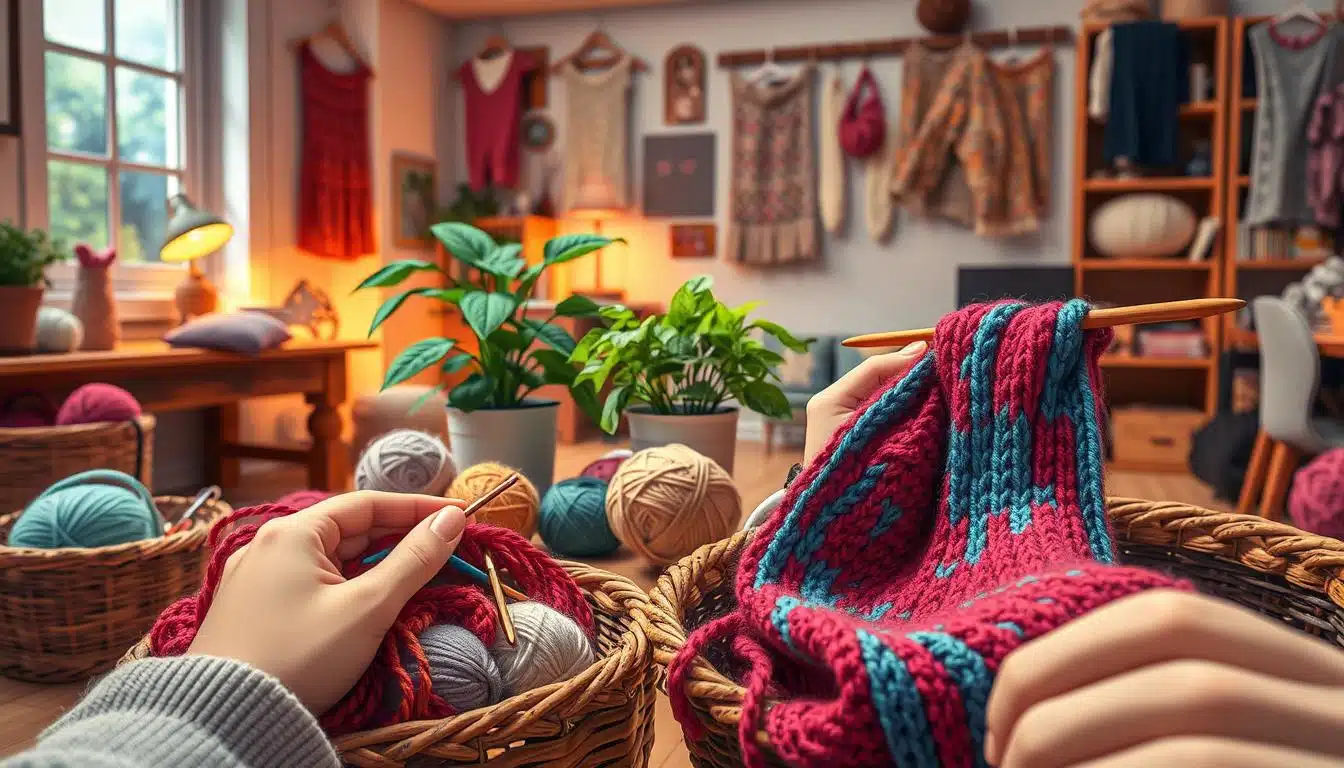
Have you seen amazing blankets on Instagram? Or read endless threads on Reddit about amigurumi and cozy throws? Yarn crafts are all over social media but feel intimate when you’re doing them. This mix is why so many people get hooked.
Starting with a single hook for crochet or needles for knitting is easy. Soon, you’ll go from struggling with stitches to finishing a beautiful gift. People on r/crochet and at Michael’s workshops all share this journey. They face frustration, find a helpful guide, and then celebrate small victories. These moments keep them coming back for more.
This article will guide you through the differences between knitting and crochet. You’ll find resources for learning and getting started. Plus, you’ll discover how a simple hobby can grow into a business or a regular creative outlet.
Key Takeaways
- Yarn crafts shine on visual platforms like Instagram and in community hubs such as Reddit.
- Deciding whether to start crocheting or start knitting often comes down to tools and the type of projects you want.
- Beginner yarn craft learning curves are short with the right tutorials and local groups.
- Quick projects lead to fast wins and steady motivation.
- You can scale this creative hobby into commissions or a small shop over time.
Why Yarn Crafts Are the Perfect Creative Escape
When you pick up a hook or needles, you’re not just making something. You’re getting a hobby that calms your mind and fills your time with purpose. Even short sessions can help you relax and focus.
Mental health and focus benefits
Knitting or crocheting gives you a steady rhythm to follow. This rhythm helps you concentrate and can calm your thoughts. Many people share how these crafts helped them through tough times, like sleepless nights or big life events.
The slow, repetitive motion helps you focus on the moment. It’s a form of mindfulness that doesn’t need a special routine. Studies and personal stories show that these crafts can lower stress and improve your mood. For more, check out crochet for mental health.
Portable hobby for busy lives
These crafts are easy to take with you. Yarn and small tools fit in a bag. So, you can work on your project during busy times.
Because you can work on small tasks, you see progress quickly. Seeing your work grow motivates you to keep going. This helps you stay focused and keep learning.
Community and social sharing — from Instagram to Reddit
Online platforms change how we learn and get inspired. Instagram is full of quick tips and tutorials. It’s easy to find new ideas and stitches to try.
Forums like r/crochet offer deeper conversations. People share their experiences, tips, and ideas. The community supports everyone, helping beginners and experts alike.
| Benefit | How it helps you | Where to explore |
|---|---|---|
| Stress relief | Repetitive motion lowers anxiety and promotes calm | r/crochet threads, Instagram crochet reels |
| Focus and patience | Short, repeatable tasks build attention and muscle memory | Local classes at Michaels, online tutorials |
| Portability | Projects fit in bags for practice during commutes | Compact kits and travel-friendly yarn |
| Social connection | Shared projects and feedback from a supportive community | yarn craft community groups, r/crochet, Instagram crochet |
| Low cost to start | Affordable supplies make it accessible to most budgets | Craft stores and online suppliers |
knitting or crochet: Which One Should You Try First?
Grab a loop and you enter a world of texture, speed, and patience. Your first choice often depends on what feels right in your hands. Instagram shows the difference: knitting needles make neat rows, while crochet hooks create knot-like stitches.
Key mechanical differences: needles vs. hook
Knitting uses two needles for live stitches. This setup allows for long fabrics and fine textures. Crochet, on the other hand, uses a single hook to create small knots.
Watching close-up reels from Lion Brand or Purl Soho can help. You’ll see how stitches sit on needles versus how crochet stitches close immediately. This makes the difference clear and helps you choose.
Learning curve and beginner friendliness
Many find beginner crochet easier to start with. It uses one tool, mistakes are easy to fix, and stitches lock in place. Reddit’s r/crochet often suggests starting with crochet for beginners.
Beginner knitting can be harder at first. You need to manage two needles and live stitches. Start with medium needles and smooth worsted yarn for better control.
Project types that suit each craft
Think about what you want to make. Crochet is great for amigurumi, chunky blankets, and freeform shapes. It’s fast and satisfying for toys and sculptural pieces.
Knitting is better for drapey garments, fine-gauge sweaters, and complex patterns. It’s perfect for fitted cardigans and soft shawls.
For guided practice, check a step-by-step beginner pattern collection like this beginner resource. It helps you test simple crochet projects and decide between knitting and crochet.
- Speed and fixes: Crochet is faster to fix and finish small pieces.
- Fabric quality: Knitting makes smoother, stretchier fabric for wearables.
- Skill transfer: Tension skills transfer between both, but learning two-needle coordination is a distinct step.
Your choice of the best starter craft depends on your projects, learning style, and natural motions. Try a quick scarf in knitting and a small coaster in crochet to feel the difference. This hands-on test will help you decide faster than reading about it.
Getting Started: Tools and Materials You Actually Need
Ready to start? Begin with a small, practical kit to avoid feeling overwhelmed. Choose comfortable tools, one reliable yarn, and a few small accessories. This approach makes learning enjoyable and swift.
Beginner-friendly needles, hooks, and yarn weights
For knitting, use medium-sized needles in US size 8–9. For crochet, a H/8 or I/9 (5.0–5.5 mm) hook is a good choice. Use worsted weight yarn for clear stitches and steady progress.
If you prefer a kit, look for ones with both needles and hooks. This lets you compare them. Many makers on Instagram share their tools, helping you find a reliable set.
How to choose yarn for texture and ease
Choose smooth, medium-weight yarns to avoid tangles. Steer clear of fuzzy or silky yarns until you get the hang of basic stitches. Lighter colors help you see stitches better when you’re starting out.
Wool blends and acrylics are great for beginners because they’re forgiving. Cotton is good for structure. Always check the yarn label for the right hook or needle size.
Where to buy supplies in the U.S. — craft stores and online
You can find what you need at local craft stores or online for more options. Big retailers like Michael’s have reliable brands and supplies for beginners.
Online stores and specialty yarn shops offer unique fibers and detailed advice for exploring beyond basics. Look for recommendations in community threads and r/crochet posts for trusted brands and kits.
Quick must-have checklist
- Comfortable beginner knitting needles or a beginner crochet hook
- Smooth worsted weight yarn for practice
- Tapestry needle, stitch markers, measuring tape, small scissors
- Optional: starter kit or local class to speed learning
For a detailed guide on supplies and extras, check this helpful guide crochet supplies. It helps you find what you need and builds confidence with the right tools.
Basic Stitches and Techniques to Master Quickly
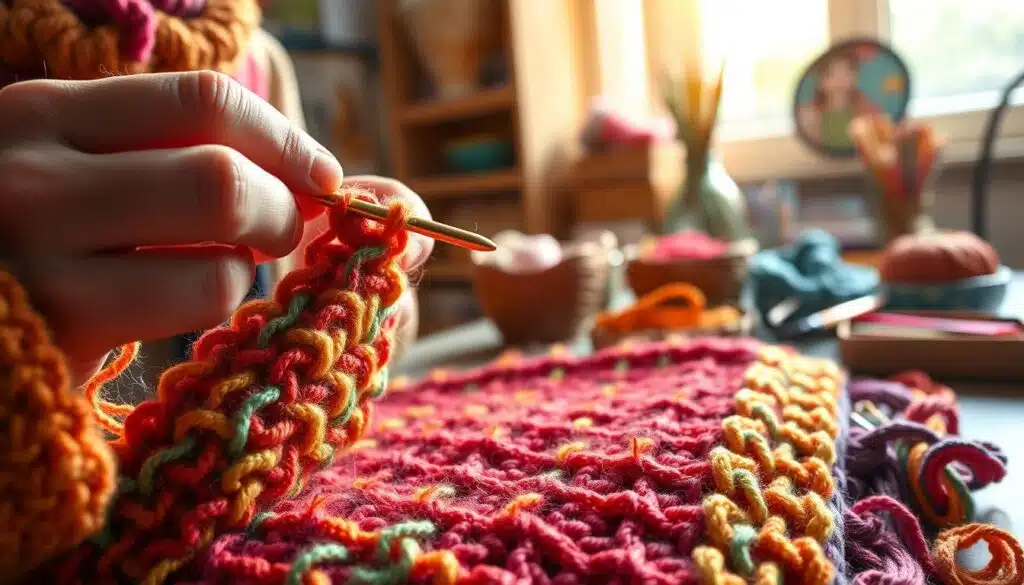
Start simple. Learning a few basic moves can open up hundreds of projects. Short videos on Instagram can teach you single crochet and double crochet quickly. Spend a few minutes each day, and your hands will learn before your brain does.
Foundational crochet stitches and why frogging helps
The single crochet is great for tight, sturdy fabric. The double crochet adds height and speed. If a row doesn’t look right, frogging crochet lets you try again without worry. Many crocheters on r/crochet share early projects that improved after frogging.
Core knitting stitches: knit and purl explained
The knit stitch makes smooth, V-shaped columns. The purl stitch creates a bumpier texture. Together, they form garter, stockinette, and rib patterns. Practice simple repeats to make the motions feel natural.
A short loop of practice on worsted-weight yarn helps your muscle memory form fast.
Tension, gauge, and why swatches save headaches
Tension affects size and drape. If your fabric is too tight or loose, patterns won’t fit. Make a small swatch or sample to check.
Use the gauge tutorial approach: measure stitches and rows per inch, then adjust hook or needle size until the numbers match the pattern.
Quick tips: choose medium-weight yarn in a light color, keep scissors, stitch markers, and a measuring tape on hand, and learn two grip styles for comfort. For a guided start in crochet, visit a short how-to page for step-by-step visuals via crochet basics.
| Technique | Why it matters | Practice tip |
|---|---|---|
| Single crochet | Creates dense, durable fabric for bags and amigurumi | Use worsted-weight yarn to see each stitch clearly |
| Double crochet | Builds height quickly for blankets and scarves | Count stitches at the end of each row to avoid extras |
| Knit stitch | Forms smooth fabric ideal for garments | Practice in short garter rows to build rhythm |
| Purl stitch | Pairs with knit to create ribbing and texture | Alternate with knit rows to learn reversals |
| Frogging crochet | Encourages trial and error without fear | Keep a larger hook to ease unpicking and rework |
| Knitting swatch | Prevents sizing and fit problems before you cut yarn | Follow a gauge tutorial and record measurements |
Fast Wins: Simple Projects That Build Confidence
You’re looking for quick wins to improve your rhythm and finish projects fast. Choose one or two projects that fit your focus and give you a sense of accomplishment in just an afternoon. A beginner scarf pattern or a quick knit project offers visible progress and boosts your confidence before moving on to bigger projects.
Scarves, cowls, and small blankets are great for beginners. They help you learn about stitch consistency and edge control. Share your finished projects on Instagram to join the community celebrating small victories.
Scarves, cowls, and beginner blankets
Start with a pattern that clearly states the stitch counts. A beginner scarf pattern in worsted weight yarn is quick to make and rewarding. Small blankets made from granny squares can be completed between errands and sewn up over a weekend.
Amigurumi and small crochet toys for instant gratification
If you want quick results, try making easy crochet toys. Simple shapes teach you about increases and decreases without a long time commitment. For beginners, a tiny strawberry keychain or a mini owl can be made in under an hour, teaching you about stuffing, shaping, and sewing.
Housewares and gifts: potholders, coasters, and pet sofas
Housewares are practical and useful right away. A potholder crochet pattern in cotton is safe for hot pans and uses leftover yarn. Coasters and soap saver bags make great gifts with minimal finishing.
Looking at examples from r/crochet and crafting blogs shows that small patterns are both fun and educational. Use a curated list for ideas when you’re stuck; check out small crochet projects for inspiration.
| Project Type | Skill Focus | Time to Finish | Best Yarn |
|---|---|---|---|
| Beginner scarf | Stitch consistency, edges | 2–4 hours | Worsted weight acrylic or wool |
| Easy crochet toys | Shaping, sewing, stuffing | 30–90 minutes | Sport or DK cotton blend |
| Amigurumi beginner project | Small rounds, tight tension | 45–120 minutes | Cotton or acrylic DK |
| Potholder crochet | Dense fabric, durability | 30–60 minutes | 100% cotton |
| Quick knit project (headband) | Knit/purl rhythm, seaming | 1–2 hours | Bulky or worsted |
From Pattern to Reality: Reading and Adapting Instructions
When you start a pattern, it might seem like a secret code. First, look for pattern abbreviations and knitting charts. These symbols and labels guide you through the pattern, showing you how to shape, count stitches, and change colors. Keep a cheat sheet nearby to avoid pausing every row to look up abbreviations.
Instagram is a great place to learn shortcuts. Designers often tag their patterns and share step-by-step photos. By studying these photos and captions, you can see how garments look in real life and compare them to the pattern’s charts.
Reddit is full of fearless freehand crocheters. They share their methods for counting stitches, matching gauge, and adjusting repeats. You can learn from their experiences by measuring photos, estimating stitch counts, and testing small swatches before starting.
To change the size of a pattern, adjust the needle or hook size and alter the stitch count. If a pattern repeats every 8 stitches, adjust the count in sets of eight. Make a swatch, check your gauge, and then scale the stitch count to fit your measurements.
When adapting a crochet pattern, choose substitutes that match the gauge and drape. Swap yarns with similar yardage and fiber content. Remember, switching from acrylic to wool will change the stretch and blocking behavior. Note these changes so you can replicate the success.
Tools can make your work easier. Use a stitch counter, row tracker, and online calculator to help. Keep a table of abbreviations next to your project. Test adjustments on a swatch and check finished-project photos for sizing tips.
Freehand crochet from a picture starts with proportions. Break the image into sections like head, body, and sleeves. Estimate stitch counts for each section, choose a hook that matches the yarn, and crochet a small section to check the shape. Make adjustments as you go and document each change.
When reading user-shared patterns, look for finished photos, comment threads, and notes on substitutions. Trusting community feedback helps you avoid surprises and learn fixes for common issues like uneven gauge or tight armholes.
Advanced Techniques to Level Up Your Craft
Ready to move beyond the basics? This section offers clear steps to explore new methods, complex colorwork, and better garment finishing. Small practices add up quickly with focused drills and project-based learning.
Tunisian and hybrid methods
Tunisian crochet is a mix between knitting and crochet, giving you dense fabric fast. Start with simple Tunisian stitch panels to see how a long hook works like needles. Once you get the hang of it, try mixing Tunisian with regular crochet edges for bags or blankets.
Instagram reels often show hybrid pieces that blend techniques from brands like Lion Brand and Knit Picks. Watch creators who switch mid-row to learn smooth joins and consistent gauge.
Colorwork techniques and mosaics
Start with one-color stripes then move to two-color motifs. Practice carrying floats for tapestry crochet and stranded work so your fabric stays flat and neat.
Try small swatches of crochet colorwork and knitting colorwork side by side to compare stretch and drape. Mosaics let you create complex-looking patterns with single-color rows, which lowers cognitive load while sharpening motif reading.
Garment shaping and finishing
Garment shaping knitting relies on increases, decreases, and short rows to follow body curves. Learn basic shaping on a simple sweater yoke before attempting full drafting.
Finishing lifts any project. Blocking, clean seams, and careful weaving in ends make tapestry crochet and other techniques look professional. Practice mattress stitch and well-placed mattress seams on small projects to gain confidence.
Below is a compact practice plan to guide your progression from color swaps to full garments.
| Skill | Starter Drill | Progress Goal | Suggested Project |
|---|---|---|---|
| Tunisian crochet | 10×10 cm tunisian plain swatch | Consistent tension, even selvedge | Tote bag with tunisian panel |
| Crochet colorwork | Two-color granny stripe | Neat floats, no puckering | Color-block cushion |
| Knitting colorwork | Fair Isle 8-stitch repeat | Even stranded floats, correct gauge | Fingerless mitts |
| Tapestry crochet | Small motif circle | Clear motif edges, dense fabric | Patterned coaster set |
| Garment shaping knitting | Short-row heel or bust dart | Contour that matches measurements | Top-down sweater |
| Finishing | Blocking swatches and mattress stitch | Invisible seams and flat edges | Seamed cardigan with picked-up collar |
Troubleshooting Common Roadblocks with a Witty Touch
You’ve hit a snag. Maybe your edge waves, a stitch slipped away, or your tension looks like it had a fight with a lawn mower. Relax. Fixing small mistakes teaches you more than flawless first attempts. Read these quick, practical notes and you’ll be back to creating with less drama and more delight.
Where to place the hook or needle when you’re stuck
When you can’t tell which loop to enter, stop and look closely at the fabric. For crochet, correct crochet hook placement often means inserting into the top two loops of the stitch unless a pattern says differently. For knitting, slide the needle into the loop’s front leg for a knit and the back leg for a purl.
If visual cues fail, short video clips on Instagram show exact hand and needle angles that clear up confusion fast. You can follow quick tutorials or search community tips to see the proper crochet hook placement in motion.
Fixing tension, dropped stitches, and uneven edges
Knitting tension problems start with your grip. Relax your shoulders and let the yarn flow. Try a larger or smaller needle to see which gives a more balanced gauge. Mark rows with stitch markers and count periodically to avoid surprise shaping.
To fix dropped stitches, ladder the column back up with a spare needle or a small crochet hook. This method works for knit or crochet and is less scary than unraveling whole sections. If you want step-by-step visuals, check a concise how-to guide that covers undoing stitches and laddering techniques.
When to frog a project or take a creative detour
Frog a project when an error breaks the pattern repeat or ruins fit. If repairs take longer than redoing a few rows, accept the reset. Undoing stitches is a useful skill. Treat frogging as a smart shortcut, not failure.
Choose a creative detour when imperfections add charm. Slanty edges can host a trim, color shift, or decorative stitch. Reworking mistakes into features builds confidence and teaches material behavior faster than perfect runs ever will.
If you want a compact checklist of solutions, this concise guide on undoing stitches and restarting projects is helpful: quick undo tips. For focused fixes on ladders and tension, this resource explains practical repairs and when to frog a project: repair and tension fixes.
Inspiration and Patterns: Where Makers Share Their Best Ideas
The internet is like a bustling craft fair when you need crochet inspiration. Start by scrolling through visual feeds and community posts. Instagram crochet patterns offer step-by-step reels, yarn details, and creator comments for easy replication.
Reddit is a treasure trove for hands-on tips. The r/crochet community, active for over a decade, shares finished projects, pattern tests, and real-life notes. You’ll find everything from tiny amigurumi to charity blankets and cosplay projects, plus threads on mistakes and fixes.
Lemon8 creators and personal blogs offer unique perspectives. They share process photos and candid notes on learning. Makers often post on multiple platforms, so checking different sources can reveal new motifs.
Free crochet patterns are tempting, but be cautious. Look for detailed notes, multiple photos, and active comments. Patterns with tester feedback or a gallery of finished objects are more reliable than those with no context.
Try small experiments before making a full garment. Make a swatch or a toy version to check gauge, stitch feel, and shaping. For a curated read or narrative on trends and community projects, click this feature for deeper context and links to creators.
| Source | Best for | Trust signs |
|---|---|---|
| Quick tutorials, visual step-throughs, Instagram crochet patterns | Tagged supplies, multiple photos, saved reels | |
| r/crochet community | Real-world feedback, project inspiration, charity and cosplay threads | Tester reports, finished-object photos, active comments |
| Lemon8 creators | Personal process posts, beginner experiences, cross-posted ideas | Before/after images, tutorial captions, community replies |
| Personal blogs and free pattern hubs | Detailed breakdowns, printable instructions, free crochet patterns | Pattern notes, revision history, user galleries |
Turning Hobby into Hustle: Selling, Commissions, and Patterns
Want to make money from your yarn stash? Start by tracking your costs and time. Include materials, your hourly rate, shipping, and fees from platforms. This way, you won’t lose track of your work’s value.
Use Instagram to show off your work and announce new items. Seeing your creations can make people more interested in buying. Online communities also show that sharing your work can lead to more orders.
Pricing checklist:
- Material cost per item
- Labor hours × hourly rate
- Packaging and shipping
- Platform fees (Etsy, payment processors)
- Margin for profit and reorders
When you release a pattern, make it clear and detailed. Include different sizes, step-by-step photos, and feedback from testers. This helps you sell more patterns and get repeat customers.
Before taking on commissions, set clear rules. Ask for a deposit, state how long it will take, and have simple rules for changes or cancellations. This way, you can handle commissions without getting overwhelmed.
Grow your portfolio slowly. Offer sales, bundle items, and ask for reviews. Use feedback to improve your pricing and pattern instructions. This approach helps you avoid burnout while you grow.
Lastly, protect your creativity. Take days off, limit orders, and let others help with packing or photos. Smart systems help you sell your work, price items fairly, and manage orders with less stress.
Community, Challenges, and Long-Term Motivation
Joining a yarn community can make solo stitching a social activity. You get deadlines, support, and a schedule to finish projects. Local meetups and shops like Joann or Michael’s offer classes and group sessions.
Joining local groups, KALs, and CALs for accountability
Sign up for a KAL or CAL to keep a schedule and reach milestones. Use Instagram hashtags and Ravelry threads to share progress and get tips. Being part of a knitting group means you have a team to help and celebrate with you.
Seasonal projects, challenges, and calendar planning
Plan a mix of short and long projects throughout the year. Try a quick scarf in fall, a long blanket in winter, and a timely gift in spring. Monthly challenges help you build skills and finish projects.
Using social feedback to build confidence and skill
Share your progress on Instagram or Reddit and get feedback. Likes and comments boost your mood, while critiques help improve your work. Community KALs and CALs offer tutorials and help with problems.
Balance is key. Mix quick projects with longer ones to keep momentum. Swap patterns, lend needles, and celebrate milestones to make progress last.
Conclusion
Choosing between crochet or knitting depends on what you want from the craft. If you prefer quick results and can easily fix mistakes, crochet might be for you. On the other hand, if you’re after detailed textures and precise garments, knitting is the way to go.
Instagram and other visual platforms are full of inspiration and tutorials. They help you learn as you go. Both crochet and knitting offer emotional, social, and creative benefits.
From simple items like potholders to complex projects like wedding dresses, you can do it all. Starting with small projects helps build your skills and patience for bigger ones.
To begin, choose tools that feel right: medium needles or a smooth hook, and worsted-weight yarn. Use videos, local classes, and short practice sessions to improve. Whether you want a hobby, a stress reliever, or a new skill, just pick up a hook or needles and enjoy the process.
FAQ
What’s the difference between knitting and crochet?
Knitting uses two needles and keeps stitches alive. This lets you make long, V-shaped stitches. Crochet, on the other hand, uses one hook and makes looped stitches. It’s easier to fix mistakes.
Knitting is great for detailed garments. Crochet is better for quick projects like toys and blankets.
Which craft is easier for a complete beginner?
Most people find crochet easier because it only needs one tool. Frogging, or ripping back, is less scary. Knitting is also easy with the right tools and short practice sessions.
What basic tools and materials do I need to start right now?
Start with a comfortable hook or needles, a skein of worsted-weight yarn, and basic tools. You’ll also need a tapestry needle, stitch markers, measuring tape, and scissors. A starter kit or a class at Michael’s can help.
How should I pick yarn and hook/needle sizes?
Choose smooth worsted-weight yarn for clear stitches. Use a 5.0–5.5 mm hook or US 8–9 needles for easy learning. Avoid fuzzy yarns to avoid snags.
What are the first stitches or techniques I should learn?
For crochet, start with chain, single crochet, and double crochet. Practice frogging to feel comfortable with mistakes. For knitting, learn knit and purl and practice swatches.
Both crafts need consistent tension for even fabric.
How do I fix common mistakes like a dropped stitch or bad tension?
Use a spare hook or needle to fix dropped stitches. For tension, relax your grip or change sizes. Count rows and use stitch markers to avoid uneven edges.
What are quick, confidence-boosting projects for beginners?
Start with scarves, cowls, simple blankets, and small amigurumi. These projects show progress quickly. They’re perfect for short sessions.
Community projects on r/crochet are very motivating.
Can I learn from social platforms alone?
Yes. Instagram reels and photos are great for learning. Lemon8 and blogs offer deeper tutorials. YouTube is good for longer lessons.
Combine visual content with Reddit and local classes for help and support.
How do I read a pattern and adapt it if the size or yarn differs?
Learn common abbreviations and charts. To change size, adjust needle or hook size or stitch count. Always make a swatch to check gauge.
Read pattern comments and finished photos for real-world advice.
How does frogging work and when should I do it?
Frogging means ripping back your work to fix mistakes. Do it for fit or pattern issues. Many crocheters see frogging as a learning tool.
Try it early to reduce perfection pressure.
What advanced techniques should I try once I’m comfortable?
Try Tunisian crochet, colorwork, and garment shaping. Mastering finishing techniques makes items look professional.
Where do makers find patterns and inspiration online?
Instagram, r/crochet, Lemon8, and blogs are full of patterns and ideas. Search hashtags for tools and yarn to find kits and tutorials. Look for patterns with photos and comments for trust.
Can I turn crafting into a small business or accept commissions?
Yes. Start by selling items and build a portfolio on Instagram. Price work based on materials, time, and fees. Set realistic lead times and limits to avoid burnout.
How do I manage long projects and stay motivated?
Join KALs/CALs and local guilds for support. Mix quick projects with long ones. Use a project calendar and celebrate milestones.
Community challenges help stay motivated.
What are the best shopping options for supplies in the U.S.?
Michael’s is a good place to start for tools and yarn. Also, check online retailers and brands on Instagram. Start with smooth worsted yarn and medium tools for easy learning.
Any tips for troubleshooting patterns you found online or on Reddit?
Read comments and finished-object photos first. Use cheat sheets and count stitches often. Ask for help on Reddit or make a small test version.
How can these crafts help my mental health and focus?
Crafting keeps your hands busy and reduces stress. It promotes mindfulness. Many use crochet and knitting to cope with stress and build confidence.
Small, repeatable motions help focus and relax.
What are good next steps after feeling confident with basics?
Try two-color projects, small garments, Tunisian crochet, or tapestry techniques. Learn garment drafting and test new patterns. Keep learning with short tutorials and community feedback.
Which craft is better for specific projects—amigurumi, garments, or blankets?
Crochet is great for amigurumi, textured blankets, and freeform pieces. Knitting is better for drapey garments and fine-gauge sweaters. Choose based on the project and your learning pace.
What practical items should be in my toolkit for ongoing practice?
Keep a comfortable hook or needles, spare yarn, tapestry needle, stitch markers, measuring tape, scissors, and a pattern cheat sheet. A stitch counter and gauge calculator are also helpful.
How do I avoid burnout if I want to sell or take many commissions?
Set clear limits with deposits, timelines, and creative breaks. Rotate between quick and long projects. Use community support for feedback to reduce workload.