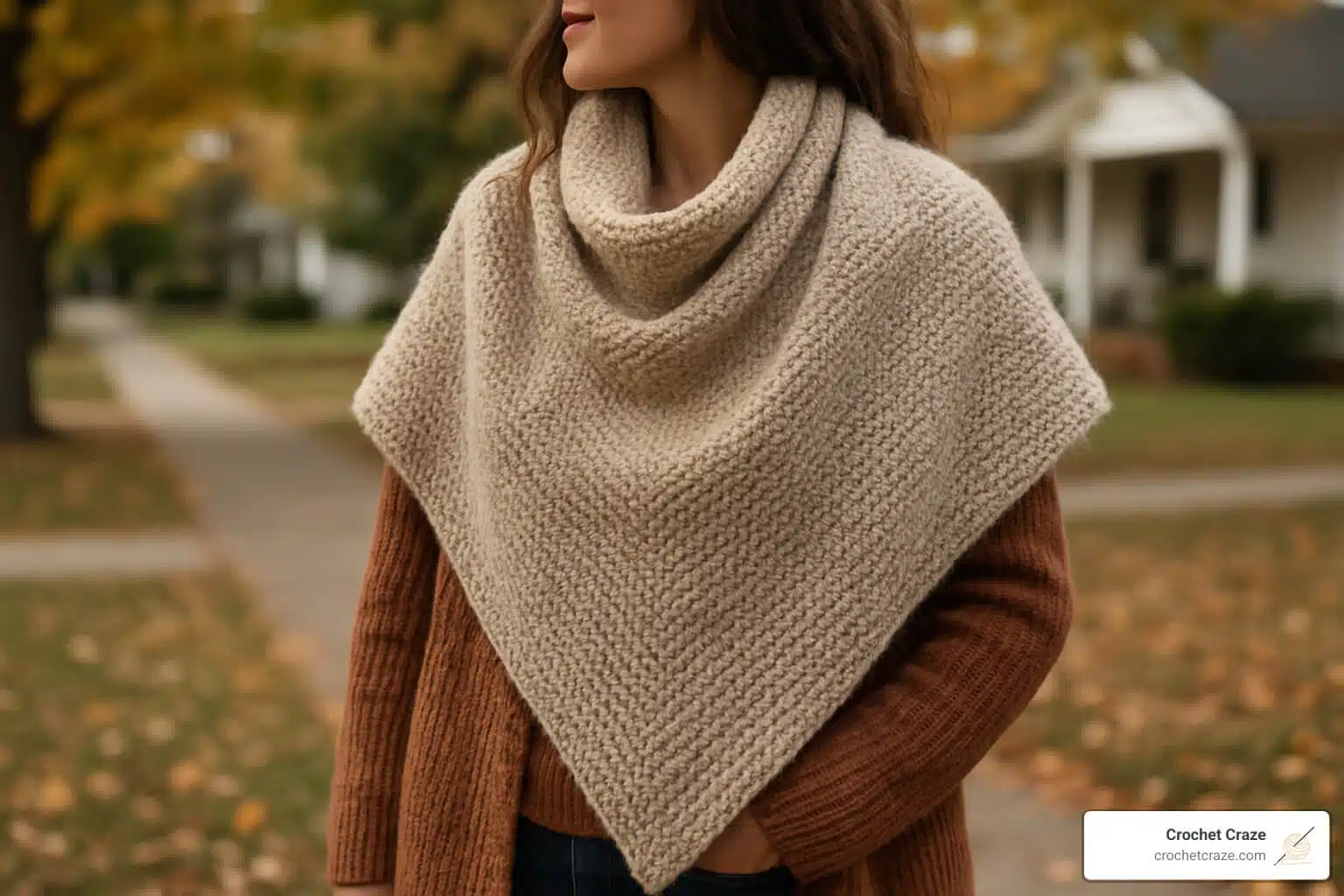
Easy knit shawl patterns: 7 Best Cozy Designs for 2025
Find Your Perfect Beginner Shawl
Easy knit shawl patterns are the perfect gateway into the wonderful world of knitting accessories. If you’re looking for beginner-friendly shawl patterns that are both cozy and stylish, here are the key features to look for:
- Simple stitch patterns – primarily garter stitch or basic knit/purl combinations
- 2-row repeats that are easy to memorize
- Minimal shaping techniques
- Adjustable sizing that lets you stop when you’re happy with the dimensions
- Super bulky or worsted weight yarns for faster completion
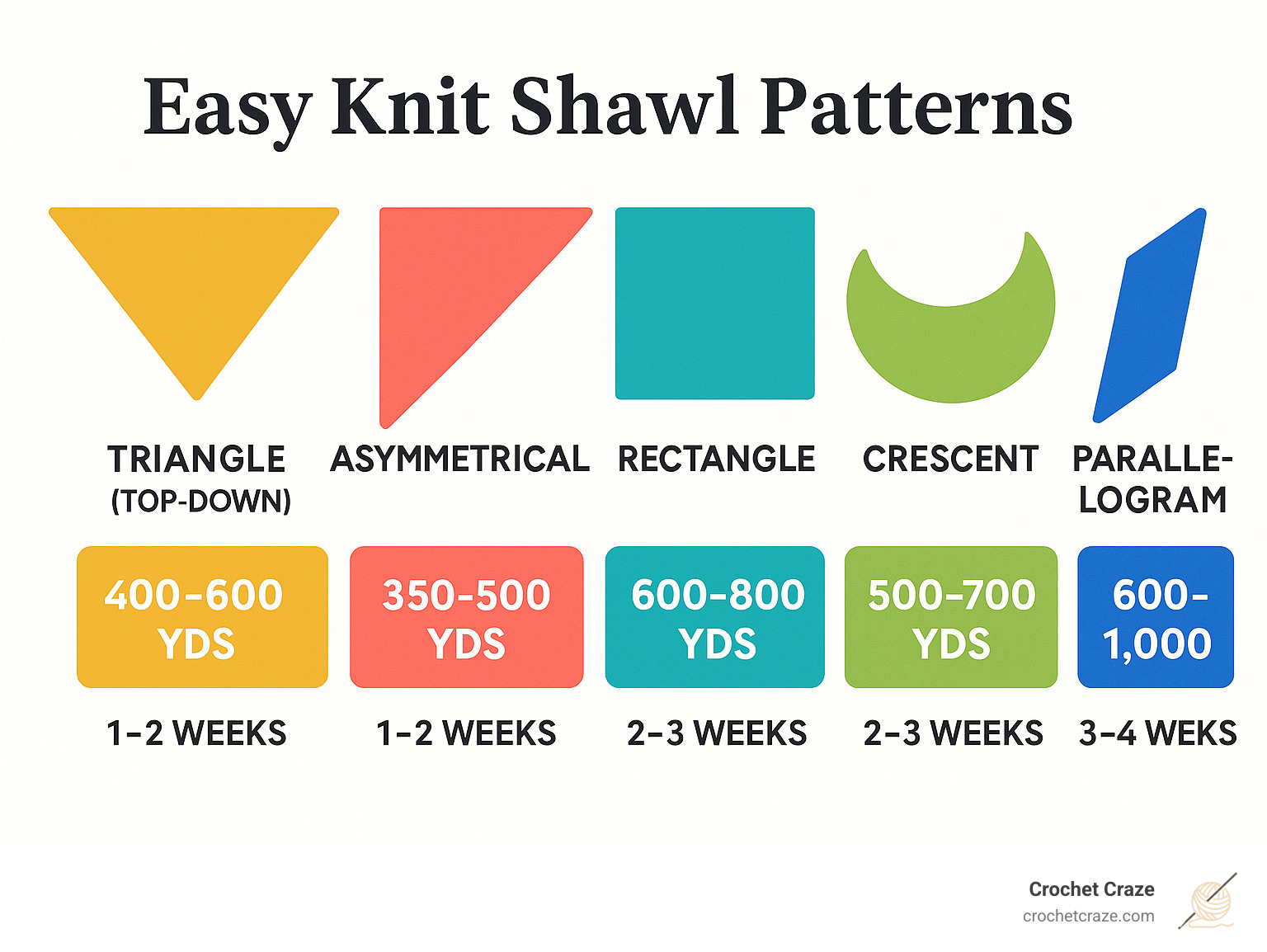
These beginner-friendly patterns typically require just 350-1000 yards of yarn and use needle sizes between US 8-15, making them both accessible and quick to finish.
There’s something incredibly satisfying about wrapping yourself in a shawl you’ve created with your own hands. As Elizabeth Zimmermann, the famous knitting author once said, “Knit on with confidence and hope, through all crises.” A simple shawl is the perfect project to build that confidence.
I’m Sonji Huerta, and while I’m newer to the fiber arts community, I’ve found easy knit shawl patterns to be the perfect balance of achievable technique and rewarding results that have helped me build my crafting confidence.
What Makes a Knit Shawl Pattern Beginner-Friendly?
Ever picked up a knitting pattern and felt your heart sink at the complicated instructions? We’ve all been there! At Crochet Craze, we believe that easy knit shawl patterns should welcome you with open arms, not send you running for the hills.
The most beginner-friendly shawl patterns share some wonderfully approachable qualities. They typically feature garter stitch as their star player—that’s just knitting every row, creating a beautiful, reversible fabric that won’t curl at the edges (a true blessing for beginners!). These patterns often follow simple 2-row repeats that you’ll memorize before you know it, letting you knit while chatting with friends or binging your favorite show.
The beauty of beginner shawls is their forgiving nature. They use just a handful of techniques throughout, offer adjustable sizing (finish when you’re happy with it or when your yarn runs out!), and feature constructions where small mistakes blend right in. Many designers thoughtfully include spots for stitch markers to help you track your progress and increase points automatically.
There’s something deeply satisfying about the “mindless knitting” sections in these patterns—those long stretches of simple stitches that become almost meditative. As one designer beautifully put it, these designs are “stress-free and meditative to relax from a long day.” Isn’t that exactly what we all need?
Core Skills You’ll Need
Don’t worry—you don’t need a master’s degree in knitting to create a gorgeous shawl! You’ll just need to be comfortable with these fundamental techniques:
- Cast-on: The long-tail method works beautifully for most shawl edges
- Knit stitch: Your faithful companion for creating garter stitch
- Yarn over (YO): This simple increase creates lovely decorative holes
- KFB increase: Knitting into the front and back of a stitch for subtle increases
- K2tog decrease: Knitting two stitches together to shape your shawl
- Bind-off: Preferably a stretchy version to maintain that beautiful drape
- Selvage edge: Creating neat, tidy edges that look professional
The wonderful thing about easy knit shawl patterns is how they reinforce these skills through gentle repetition. By the time you cast off your first shawl, these techniques will feel like second nature! Even if you’re still perfecting these skills, don’t hesitate to jump in—there’s no better teacher than a project you’re excited about.
Every knitter started somewhere. Your first shawl might not be perfect, but it will be perfectly yours—and that’s what makes handmade items so special.
Tools & Yarn: Setting Up for Success
Selecting the right supplies for your shawl project isn’t just about function—it’s about creating an enjoyable knitting experience from start to finish. Let me guide you through choosing materials that will set you up for shawl-making success!
Needles
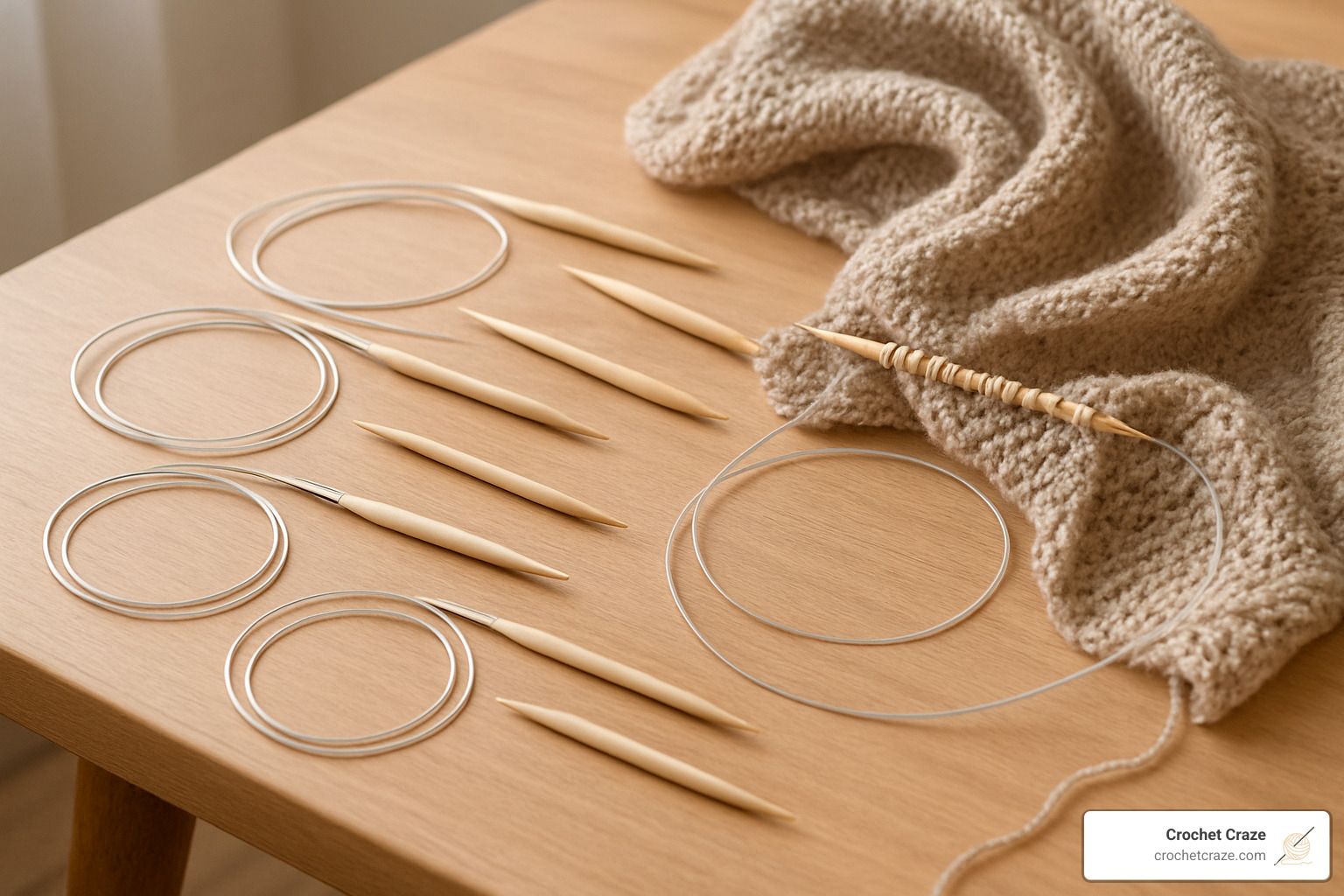
When it comes to knitting shawls, circular needles are your best friend—even though you’ll be working back and forth rather than in the round. Why? As your beautiful creation grows stitch by stitch, you’ll need somewhere for all that fabric to rest comfortably. The flexible cable on circular needles gives your expanding shawl room to breathe without cramping your stitches or your style.
For your first shawl trip, I recommend:
* Needle size: Choose between US 8 (5.0 mm) and US 15 (10 mm), depending on your yarn. Larger needles create airier, drapier fabrics that work up quickly—perfect for the impatient beginner!
* Cable length: A 32″ cable offers the sweet spot of maneuverability and growth space for most shawl projects.
* Material: Smooth bamboo or wooden needles provide just enough grip to keep your stitches from sliding away when you set your project down for a coffee break.
Yarn Selection
Your yarn choice is where the magic really happens—it determines not just how quickly your shawl grows, but how it drapes around your shoulders and feels against your skin. For beginners diving into their first easy knit shawl patterns, I have a few favorite options:
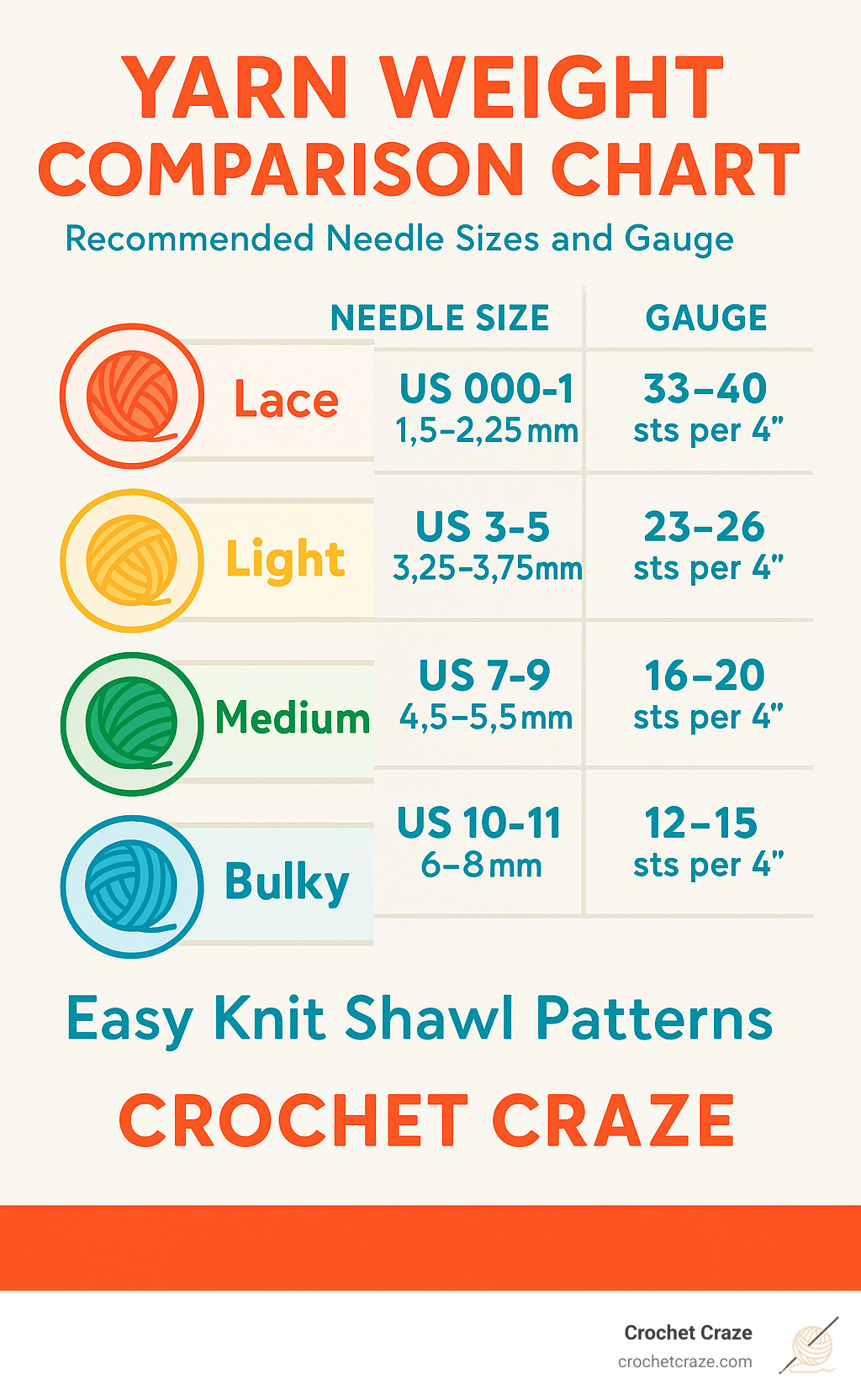
Worsted weight (category 4) yarn offers the perfect middle ground—not too thick, not too thin. It works up at a satisfying pace and creates a versatile shawl you can wear in multiple seasons. This weight is widely available in craft stores and comes in endless color options.
Super bulky (category 6) is your friend if you’re looking for nearly-instant gratification. These thick, cozy yarns create dramatic, snuggly shawls that work up incredibly fast—sometimes in just a weekend! They’re perfect for those winter hugs-from-yarn feelings.
Fingering/sock weight (category 1-2) takes more time and patience but rewards you with a lighter, more delicate fabric that’s perfect for spring evenings or air-conditioned summer spaces. Save this weight for your second or third shawl project.
For your inaugural shawl, choose yarn that feels wonderful against your neck and shoulders—you’ll be wearing this creation, after all! Solid or semi-solid colors work best for beginners as they make it easier to see your stitch pattern developing. Look for good stitch definition so you can admire your handiwork as it grows.
Most easy knit shawl patterns call for between 350-1000 yards of yarn. If you’re working with super bulky yarn, you’ll typically need 400-500 yards, while a fingering weight project might require 800+ yards to achieve a generous size.
The drape factor matters tremendously with shawls—how the fabric flows and folds around your body. Fibers like merino wool, alpaca blends, and bamboo create beautiful, fluid drape, while acrylic can work well in softer formulations designed for garments.
For deeper dives into selecting the perfect materials, check out our comprehensive guides on Knitting Yarn and Circular Knitting Needle Kits. You might also find Yarnsub’s guide helpful for finding alternative yarns that match your pattern requirements.
7 Foolproof Easy Knit Shawl Patterns
Now comes the part we’ve all been waiting for! I’ve gathered seven of the most beginner-friendly shawl patterns that will help you create something beautiful without overwhelming you. Each of these easy knit shawl patterns balances simplicity with stunning results, making them perfect for building your confidence as a new knitter.
Triangle Shawl: The Classic Easy Knit Shawl Pattern
There’s something magical about starting with just one stitch and watching it grow into a gorgeous triangle shawl. This classic construction begins at the center top and expands outward, creating that iconic triangular shape we all recognize.
What makes this style perfect for beginners? You’ll start with just 1-3 stitches (talk about low pressure!), then add increases at the edges and center spine. Working entirely in garter stitch means you’re just knitting every row – no purling required! The visible growth with each row provides constant motivation as you see your creation taking shape.
The “Openness Triangle Shawl” exemplifies everything wonderful about this style. Worked in super bulky yarn on US size 15 needles, it creates what many knitters affectionately call a “hugging shawl” because of its substantial, cozy feel. When finished, it measures approximately 72″ wide by 36″ tall – perfect for wrapping around your shoulders on chilly evenings while feeling that wonderful pride of “I made this!”
Want to try this style? Save it to your Ravelry library!
Asymmetrical Easy Knit Shawl Pattern
Looking for something with a modern twist? Asymmetrical shawls offer a contemporary silhouette that still keeps things beginner-friendly. I love recommending these to friends who want something a bit more fashion-forward without tackling complex techniques.
These shawls typically start with just 3-5 stitches and increase along only one edge. This creates that elongated triangle with one straight edge and one angled edge that drapes so beautifully around your shoulders. They’re particularly wonderful for showing off gradient or variegated yarns – the asymmetrical shape really highlights color transitions!
The “Be Simple” pattern stands out as a perfect example. It works beautifully in both fingering and worsted weight yarns, making it incredibly versatile. You’ll work in soothing garter stitch throughout with increases on just one edge. Many knitters add the optional decorative picot bind-off for a touch of flair. Best of all, it can often be completed with just one skein of fingering/sock weight yarn (400-450 yards), making it budget-friendly too!
Rectangle / Prayer Shawl
If you’re an absolute beginner looking for the simplest path to shawl success, the rectangle is your best friend. This straightforward shape requires no increases or decreases – just cast on and knit straight rows until you reach your desired length.
Rectangle shawls (sometimes called prayer shawls) create a meditative knitting experience. Their simple 2-row repeat patterns make them perfect for “movie knitting” – you can watch your favorite show while your hands work almost automatically. Most measure about 20″ wide by 60″ long, though you can easily adjust to suit your preferences.
One popular version alternates bands of garter stitch and stockinette stitch, creating subtle texture without complex techniques. As one designer beautifully puts it, this approach allows you to “let your random inner self play” by varying the width of each band according to your mood. There’s something deeply satisfying about this free-form approach to a simple rectangle.
Crescent / Wingspan Shawl
Crescent shawls create a gentle curve that hugs your shoulders beautifully. While they might look impressive, many crescent designs are surprisingly accessible for beginners.
The wingspan construction uses strategic increases at the center and edges to create that graceful curved shape. You’ll typically work about 6 increases every 2 rows (4 on right side rows, 2 on wrong side rows), gradually building a crescent that wraps comfortably around your shoulders without constant readjusting.
Most crescent shawls require about 350-500 yards of worsted weight yarn and work up relatively quickly on US size 8-9 needles. The finished shape stays on your shoulders more easily than some other styles, making them practical as well as beautiful.
Parallelogram “Palette” Shawl
For something a bit different, the parallelogram shawl offers an interesting geometric shape that’s still completely beginner-friendly. This versatile design can be styled multiple ways, making it a true wardrobe workhorse.
The “Palette Shawl” showcases this construction with its adjustable cast-on and simple 2-row repeat that’s easy to memorize. What I particularly love about this pattern is how forgiving it is – you can stop knitting at any point without worrying about running out of yarn or disrupting the pattern.
As one designer notes, it’s “great for chatting and knitting at the same time” and makes a perfect “travel or movie cover-up” due to its versatile shape. The standard dimensions are approximately 20″ by 60″, but you can easily adjust by changing your cast-on count. This adaptability makes it perfect for using exactly the yarn you have on hand.
Super-Bulky 8-Hour Hug Shawl
When you need a quick project with maximum impact, super bulky shawls are the answer. These chunky creations work up incredibly fast – often in just a single day – and create dramatic, cozy wraps perfect for cold weather.
The aptly named “8-Hour Shawl” lives up to its promise, providing almost instant gratification. Worked in garter stitch on US size 15 needles with super bulky yarn like Lion Brand Wool Ease Thick & Quick, this triangle shawl grows so quickly you can almost watch it happen. The substantial weight creates what many knitters describe as a “hugging” sensation when worn – like a portable weighted blanket for your shoulders!
This style typically requires about 500 yards of super bulky yarn and creates a finished shawl measuring approximately 72″ wide by 36″ tall. It’s perfect for last-minute gifts or when you need a quick crafting win to boost your confidence.
Two-Ball Stash-Buster Shawl
For those of us with yarn collections that seem to multiply overnight, the two-ball stash-buster shawl offers the perfect solution. This clever pattern combines two colors of worsted weight yarn into a striking asymmetrical triangle.
What makes this pattern unique is its approach to yarn management – you make the decorative tassels first to reserve yarn, then use the remainder for the shawl body. This ensures you won’t run out of yarn for those finishing touches that really make a project special.
The pattern features a simple two-row repeat, alternating colors every two rows for a subtle striped effect. The finished dimensions are approximately 54.5″ wingspan by 15″ center spine, creating a versatile wrap that works for all seasons.
As one designer playfully notes, “Need a quickie? Have a big stash?” This pattern answers both questions with a resounding yes! It’s perfect whether you’re a process knitter who enjoys the journey or a project knitter who wants quick, satisfying results.
Customizing, Blocking, and Caring for Your Shawl
The most delightful part of creating your own shawl is making it truly yours. Your hands have lovingly crafted each stitch, and now you can add those personal touches that transform a simple pattern into something special that reflects your style.
Size Adjustments
One of the beautiful things about easy knit shawl patterns is their forgiving nature when it comes to size. Think of the pattern as a suggestion rather than a strict rule. If you’re petite and want something less overwhelming, simply stop a few repeats early. Craving a dramatic wrap that envelops you like a warm hug? Keep those needles clicking for a few more repeats.
For rectangular shawls, you have even more control—just adjust your initial cast-on to create a wider or narrower piece. Your personal knitting tension might differ from the pattern designer’s, which will naturally customize your finished dimensions. Accept this uniqueness!
Color Customization
Even the most basic garter stitch shawl becomes a statement piece with thoughtful color choices. Solid colors showcase the beautiful simplicity of your stitch pattern and the graceful lines of your shawl’s shape. If you’re feeling playful, variegated yarns add visual interest without requiring any additional technique—the yarn does all the work for you!
Gradient yarns create a mesmerizing color progression that makes people ask, “How did you do that?” (Your secret: you didn’t—the yarn did!) For those ready to play with multiple colors, try alternating two complementary or contrasting shades every couple of rows. Pro tip: carry the unused color up the side rather than cutting it each time—your future self will thank you when there are fewer ends to weave in.
Adding Decorative Elements
Simple embellishments can lift your shawl from lovely to extraordinary. Consider adding fringe or tassels along the bottom edge—they add movement and a bit of playful swing to your creation. A picot bind-off creates a delicate, feminine edge that looks far more complicated than it actually is.
For subtle texture, try incorporating a few rows of simple eyelets using yarn overs. If you’re creating a special occasion piece, pre-strung beads add a touch of sparkle and sophistication. These little touches make your shawl uniquely yours while keeping the project firmly in beginner-friendly territory.
Blocking Your Finished Shawl
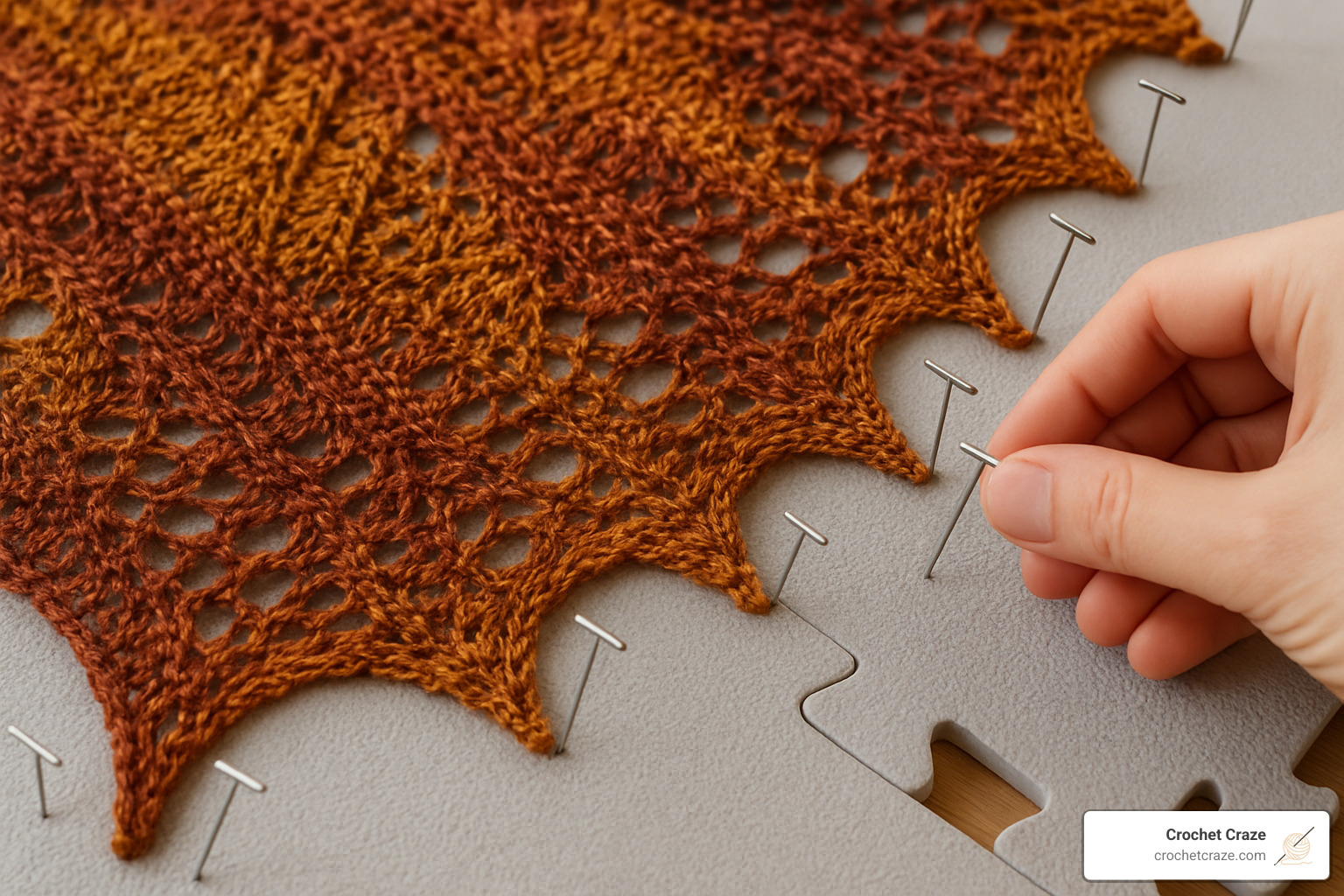
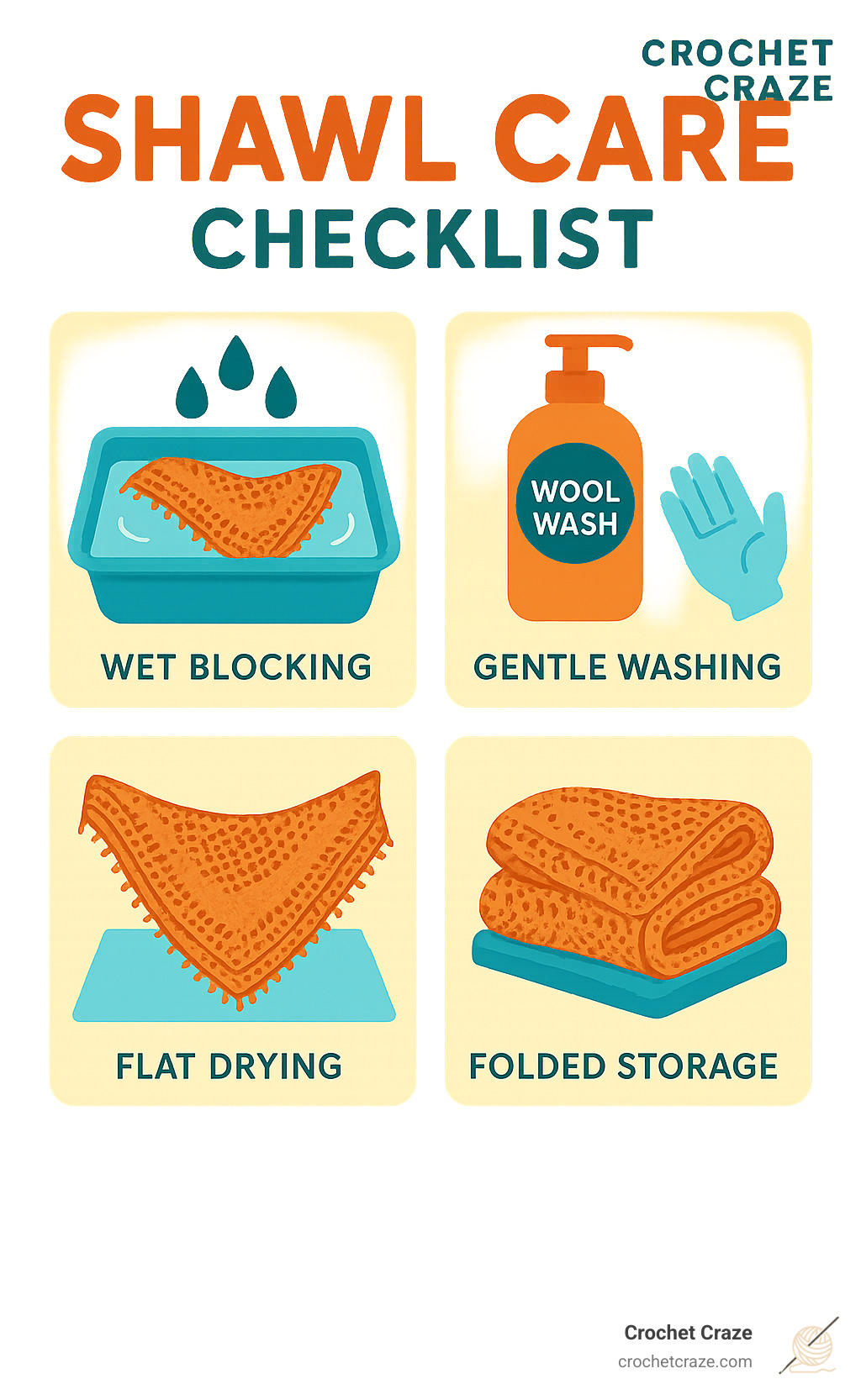
Blocking is the magical final step that transforms your knitting from “homemade” to “handcrafted.” Think of it as helping your stitches relax and settle into their best selves. For natural fibers like wool, alpaca, or cotton, wet blocking works wonders:
Fill your sink with lukewarm water and a capful of gentle wool wash. Submerge your shawl and gently squeeze the water through—no wringing or agitating! After a 15-minute soak, carefully lift it out (supporting its weight) and press it between towels to remove excess moisture. Lay it on blocking mats or a towel, and pin the edges to achieve your desired shape. Now comes the hard part—waiting 24-48 hours for it to dry completely!
For synthetic fibers that don’t respond as well to wet blocking, try steam blocking instead. Lay your shawl flat and hover a steamer (or iron set to steam) about an inch above the fabric, letting the steam penetrate without touching the iron to your precious knitting. Pin as desired and let it cool completely.
While many easy knit shawl patterns mention that blocking is optional (especially for chunky garter stitch pieces), I promise it’s worth the effort. Your stitches will even out, your edges will straighten, and the drape will improve dramatically—particularly for lighter-weight projects.
For more detailed guidance on finishing techniques and other helpful tips, check out our Knitting Tips section. Your shawl deserves this final bit of care before it becomes your favorite accessory!
Troubleshooting & Pro Tips for Smooth Knitting
Even the most easy knit shawl patterns can present a few challenges along the way. Don’t worry though – we’ve all been there! Here’s how to keep your knitting journey smooth and enjoyable:
Maintaining Neat Edges
Have you ever noticed those slightly wonky edges on your knitting? It happens to everyone! The good news is that neat edges are totally achievable with a few simple tricks.
Try slipping the first stitch of each row purlwise with your yarn in front – this creates a beautiful chain edge that looks almost braided. Or add a selvage stitch by knitting the first and last stitch of every row, regardless of the pattern between them. The most important thing is consistency – whatever technique you choose, do it the same way every time.
“I used to have the messiest edges until I started slipping my first stitch,” one of our Crochet Craze community members told me. “Now my shawls look so much more professional!”
Using Lifelines
Think of lifelines as insurance for your knitting – they’re absolute lifesavers! A lifeline is simply a piece of smooth, contrasting yarn threaded through all the stitches on a row. If disaster strikes later (we’ve all been there!), you can confidently rip back to your lifeline knowing your stitches are safe and sound.
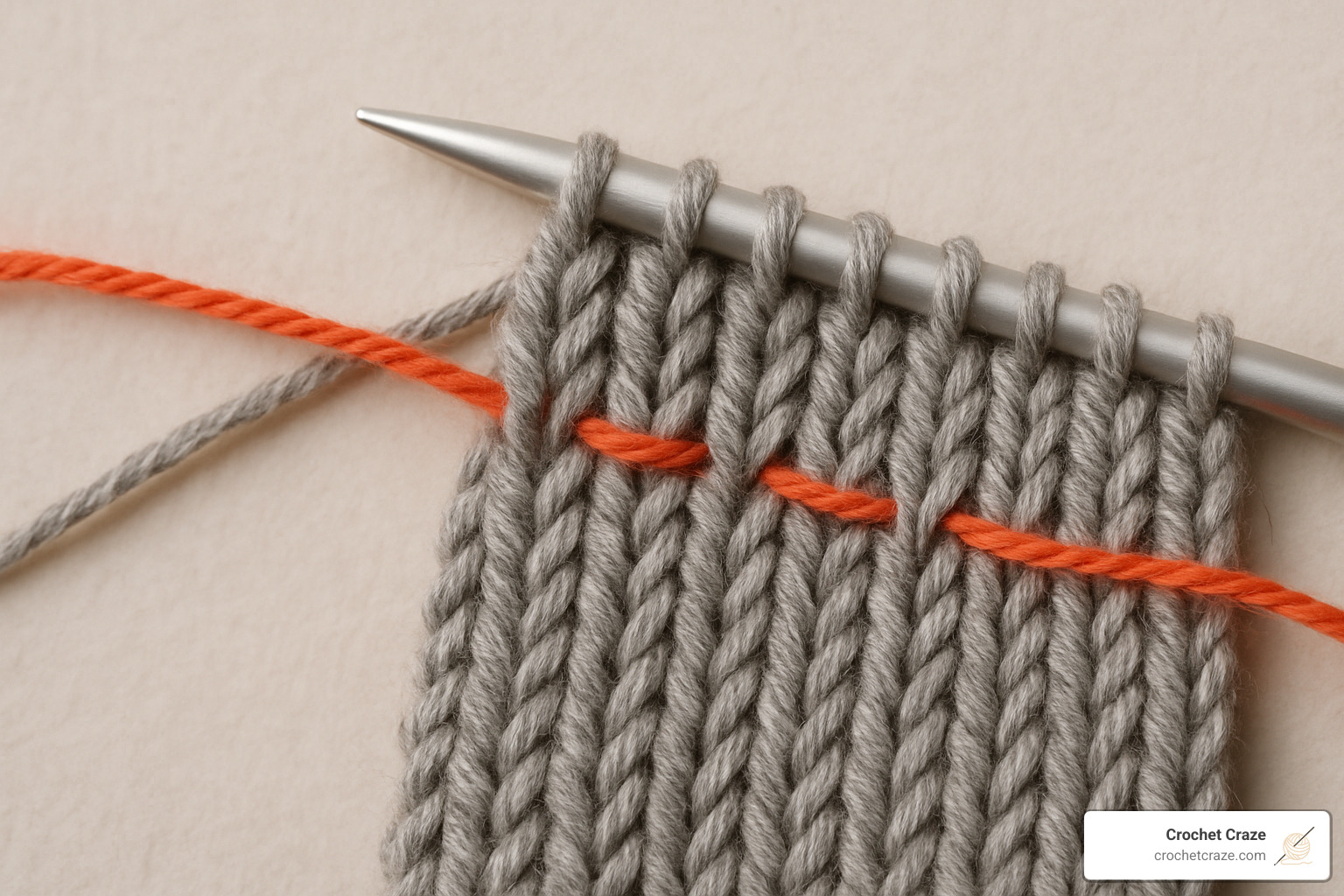
For your easy knit shawl patterns, try placing a lifeline every 10-20 rows using dental floss or smooth cotton yarn. Thread it through all your stitches except the stitch markers (so they don’t get trapped). Your future self will thank you when that inevitable distraction leads to a missed increase!
Tracking Your Progress
There’s nothing more frustrating than losing your place in a pattern. Trust me, I’ve spent more time than I’d like to admit counting stitches and trying to figure out where I left off!
Row counters are absolute game-changers – whether you prefer a physical clicker that hangs on your needle or a handy app on your phone. For shawls with regular increases, place removable stitch markers at each increase point and move them up as you work.
I also love taking progress photos every few days. Not only does this help you see how much you’ve accomplished (so satisfying!), but it’s also incredibly motivating when you feel like your shawl isn’t growing fast enough.
Fixing Common Mistakes
We all make mistakes – it’s part of the knitting journey! The good news is most errors are totally fixable.
When you drop a stitch (and you will!), don’t panic. Simply insert a crochet hook through the dropped stitch, then use the hook to pull each horizontal strand through the loop, working from bottom to top. Finally, place that rescued stitch back on your needle. Crisis averted!
If you’ve miscounted your increases, do a quick stitch count at the end of each right-side row. Short a few stitches? Add make-up increases on the next row near the edges where they’ll blend in. Too many stitches? Decrease discreetly near an edge.
For those pesky curling edges, garter stitch borders work wonders. Also, always bind off loosely – use a needle one size larger if needed. And don’t underestimate the power of proper blocking!
Time Management
“How long will this take?” is perhaps the most common question I hear from new knitters. While everyone works at their own pace, here’s what you can generally expect:
Those chunky super bulky shawls are weekend warriors – many can be completed in just 4-8 hours of actual knitting time. Worsted weight projects typically need about 10-20 hours at the needles, while those delicate fingering weight shawls might require 20-40+ hours to complete.
Rather than marathon knitting sessions (which can lead to sore hands!), try breaking your knitting into 30-60 minute sessions. Your shawl will grow steadily, and you’ll enjoy the process so much more. As one of my favorite knitting teachers says, “The joy is in the journey, not just the finished shawl.”
For more helpful troubleshooting guidance, be sure to check out our Knitting Tips section where we dive even deeper into these techniques.
Frequently Asked Questions about Easy Knit Shawl Patterns
How long does an easy shawl take to knit?
“How long will this take?” might be the most common question I hear from new knitters. The honest answer? It depends on your personal knitting journey:
Your yarn choice makes a huge difference – those super bulky shawls aren’t just cozy, they’re speedy too! Working with chunky yarn on large needles means fewer stitches and faster progress. Meanwhile, a delicate fingering weight project creates a beautiful fabric but requires more patience.
Your own knitting rhythm matters too. Some knitters naturally work quickly, while others (like me when I started!) take a more methodical approach. Both are perfectly valid! Your speed naturally increases with practice.
Life also has a way of determining your timeline. Thirty minutes of knitting during your lunch break adds up differently than a weekend crafting marathon. Many knitters find that easy knit shawl patterns fit nicely into the rhythm of daily life – a few rows before bed, some stitches during your child’s soccer practice, or while unwinding with your favorite show.
As a general guideline, that “8-Hour Shawl” really can be completed in a day of dedicated knitting if you’re using super bulky yarn. Worsted weight projects typically take 10-20 hours of actual knitting time, while those gorgeous lightweight shawls might require 20-40+ hours.
The joy is in the journey! Many knitters find that the meditative process of creating becomes as rewarding as wrapping up in the finished shawl.
Do I really need to block my shawl?
I remember wondering this exact question after finishing my first shawl. The pattern said blocking was “optional,” and I was eager to wear my creation immediately!
Here’s what I’ve learned since: while technically optional (especially for super bulky garter stitch shawls), blocking transforms your knitting in ways that feel almost magical:
Your shawl develops beautiful drape as blocking relaxes the fibers, creating that fluid, neat movement you see in professionally made pieces. Those little tension inconsistencies that happen when you’re learning? They virtually disappear with proper blocking. The stitch definition becomes clearer too, revealing the beautiful texture you’ve created.
Natural fibers like wool, alpaca, and cotton respond dramatically to blocking. Synthetic fibers benefit less from wet blocking but can still be improved with gentle steam blocking for better drape.
Still unconvinced? Try this little experiment that changed my mind: block just half of your shawl and leave the other half untouched. The difference side-by-side is usually all the persuasion you need!
For more detailed guidance on finishing techniques, our Knitting Tips section has step-by-step blocking tutorials.
What if I run out of yarn before finishing?
The dreaded yarn shortage! This happens to even experienced knitters, but there are both preventive measures and creative solutions:
Before you begin, weighing your yarn gives you valuable information about how far it will stretch. If your pattern includes tassels or fringe, make those first to reserve that yarn. And if you’re getting close to the end of your ball, it’s perfectly fine to stop a few rows early – most easy knit shawl patterns are forgiving that way.
If you do find yourself short on yarn, don’t panic! Look for a matching dye lot if possible, but if that’s not an option, get creative. Many beautiful shawls have been “saved” by introducing a complementary color for the border or bind-off. You might even create an intentional gradient effect by using a similar shade.
Your bind-off choice can help too – a standard bind-off uses less yarn than decorative edges like picot or ruffled finishes.
As one designer wisely reminded me, “Many hand-dyed yarn colors are produced in small, limited-edition batches,” so planning ahead is especially important when working with specialty yarns.
Knitting is inherently creative – sometimes these “yarn emergencies” lead to design choices that make your shawl even more special and uniquely yours!
Conclusion
There’s something truly magical about wrapping yourself in a shawl you’ve created with your own two hands. We hope this guide to easy knit shawl patterns has sparked your creativity and given you the confidence to cast on your very first shawl project!
Shawls truly are the perfect beginner endeavor. They forgive little mistakes, don’t demand perfect fitting like garments do, and reward you with a versatile accessory you’ll reach for again and again. Whether you’ve chosen a quick super-bulky hug or a delicate fingering weight creation, each stitch represents a moment of calm in our hectic world.
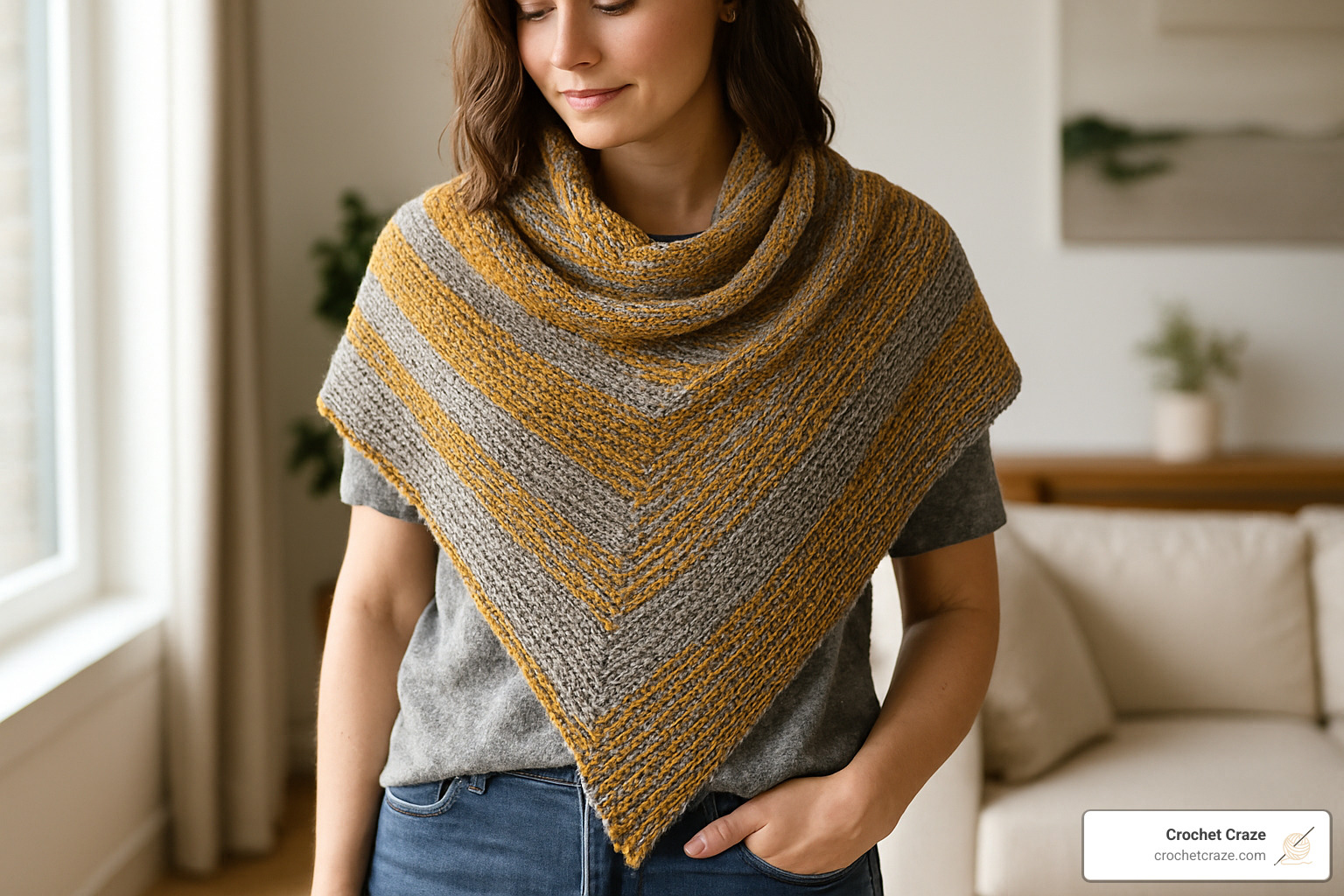
Knitting is as much about enjoying the journey as reaching the destination. Each row is an opportunity to practice mindfulness, to breathe deeply, and to create something beautiful one stitch at a time. As you work through your first shawl, you’re not just crafting an accessory – you’re developing skills, building confidence, and joining a centuries-old tradition of makers.
Here at Crochet Craze, we believe crafting should welcome everyone with open arms. We’re passionate about helping beginners find their footing in the wonderful world of fiber arts. The joy that comes from saying “I made this!” is something we want everyone to experience.
Has the knitting bug bitten you? Wonderful! Your first shawl is just the beginning of your fiber arts trip. When you’re ready to explore more, our patterns section is brimming with inspiration for your next project. From cozy accessories to stunning home décor, there’s a whole world of creativity waiting for your unique touch.
So grab those needles, choose your yarn, and take that first stitch. Your shoulders are waiting for the warm accept of a handmade shawl – and we’re here cheering you on every step of the way. Happy knitting, friends!