This guide will help you find the perfect knitting machine for beginners. You’ll learn about gauges, yarn types, and easy-to-use models like the Silver Reed LK150. Whether you’re making hats, blankets, or panels, we’ve got you covered.
Discover real options from Silver Reed. The LK150 is great for mid-gauge, while the SK155 is perfect for bulky yarns. The SK280 and SK840 are ideal for standard-gauge projects. You’ll see which machines work best with different yarns and why mid-gauge is often the best choice.
Machine knitting makes projects faster and eases hand strain. It’s a great addition to your hand knitting, not a replacement. For a quick start, check out this machine-knitting resource. Use it with this guide to find the right machine for your needs and budget.
Key Takeaways
- Machine knitting speeds up projects and eases repetitive hand work.
- Silver Reed LK150 is a top pick as the best knitting machine for beginners in mid-gauge.
- Choose gauge to match yarn weight: Lace–Sport, Sport–Worsted, Worsted–Bulky.
- Most machines can make hats and baby blankets; finish and ease depend on gauge and yarn.
- Start with a clear goal—gear toward quick wins like hats and scarves before tackling complex shaping.
Why a Knitting Machine Is a Game-Changer for Beginner Crafters
Using a knitting machine can really speed up your work. You’ll save time, get even fabric, and your hands will thank you.
Speed and consistency compared to hand knitting
Need to make lots of scarves or panels? Knitting machines are way faster than doing it by hand. Models like Silver Reed and older Brother units can knit stockinette much quicker.
Getting consistent stitches is easier with a machine. The tension control and precise needle spacing make your fabric even. This is great for beginners who want reliable results.
Reduced physical strain and accessibility
Machines also reduce hand strain. They cut down on the repetitive motions that cause fatigue. Electric models make it even easier by doing the hard work for you.
For those with arthritis or mobility issues, machines are a game-changer. You can work longer without worrying about sore hands.
Why machine knitting complements hand knitting
Machine knitting isn’t meant to replace hand knitting. Many use machines for bulk work, then add hand details. This way, you save time and keep handwork special.
Combining machine and hand work lets you try out designs fast. Try machine-knit panels with hand-seamed edges, or use a double bed setup for ribbing before adding hand-stitched embellishments.
Understanding Knitting Machine Types and Which Fits Your Goals
Choosing the right machine is like picking a new best friend for your craft. You want one that fits the projects you love, not one that gathers dust. Below, you’ll find the practical strengths of each option to help you match tools to goals with confidence.
Flat bed machines for garments and shaping
Flat bed machines are great for making sweaters, panels, and pieces that need shaping. They give you control over increases, decreases, and short rows. You can add a ribber bed for true ribbing and use lace carriages or patterning tools for texture.
Home users often choose Silver Reed SK280 or SK840 for their balance of features and parts availability. These models accept accessories that turn simple panels into tailored garments.
Circular machines for seamless tubes like hats and socks
If you love making hats, socks, sleeves, or quick accessories, a circular knitting machine is perfect. It produces seamless tubes quickly. It works well with medium-weight yarns and reduces seaming work.
Beginners like circulars because they are easy to set up and fast to produce finished items. You trade some shaping flexibility for speed and ease.
I-cord and specialized machines for trims and decorative elements
When you need cords, straps, or repeated trim work, an I-cord machine is a must. It automates narrow tubes that you would make by hand with tedious repetition. Models like the Caydo Electric I-Cord Machine speed up long cords and reduce wrist work.
Specialized machines and attachments let you add professional finishing touches without long hand-sewn steps. Use them when your project needs consistent trims or decorative elements repeated many times.
Match your choice to your project list. Choose flat beds for garment versatility, circulars for fast tubular items, and I-cord or specialty machines for trims and repeated cord work. Accessories such as ribbers, lace carriages, or DesignaKnit software will expand what a single machine can do.
Gauge Matters: Choosing Standard, Mid, Fine, or Chunky
Gauge is the needle spacing on a machine. It affects the fabric’s drape and stitch definition. Choosing the wrong gauge can lead to jams, poor fabric, or endless yarn changes. The right gauge makes projects flow smoothly, matching your yarn and design goals.
What gauge means and the needle spacing differences
Needle spacing controls stitch size. Fine and standard gauges are closer together. The Silver Reed SK280 and SK840 have a 4.5 mm spacing.
Mid-gauge machines, like the Silver Reed LK150, have a 6.5 mm spacing. Chunky or bulky gauge machines, such as the Silver Reed SK155, have a 9 mm spacing.
Which gauge suits yarn weights: lace to bulky
Fine gauge is best for lace and fingering yarns. It’s great for delicate work. Standard gauge works well with fingering through sport yarns, sometimes light DK if doubled.
Mid-gauge machines, like the LK150, are perfect for sport, DK, and worsted yarns. They offer hand-knit-like results. Chunky gauge machines are ideal for worsted and bulky yarns, making fast, cozy pieces.
Project examples by gauge: delicate shawls to bulky blankets
For delicate shawls, lightweight socks, or thin garments, choose fine or standard gauge. Sweaters and everyday clothes do well on standard and mid-gauge machines.
Mid-gauge is great for DK sweaters, cardigans, or kids’ clothing that look like hand knits. For thick scarves, quick hats, and blankets, go with chunky gauge for speed and texture.
Practical tip: the LK150 mid-gauge is versatile and easy for DK or worsted yarns. For fine work, choose standard or fine gauge. For quick bulky projects, use a bulky gauge like the SK155 from Silver Reed. Learn more at selecting your knitting machine.
| Gauge | Needle Spacing | Typical Yarn Weights | Ideal Projects |
|---|---|---|---|
| Fine / Standard | 4.5 mm | Lace, Fingering, Sport | Delicate shawls, lightweight socks, fitted garments |
| Mid-Gauge | 6.5 mm | Sport, DK, Worsted | Everyday sweaters, cardigans, kids’ wear |
| Chunky / Bulky | 9 mm | Worsted, Bulky | Blankets, thick scarves, quick hats |
Match your yarn to the machine’s needle spacing before buying. This small check saves time, money, and frustration, keeping your projects smooth.
Best Beginner-Friendly Models to Consider
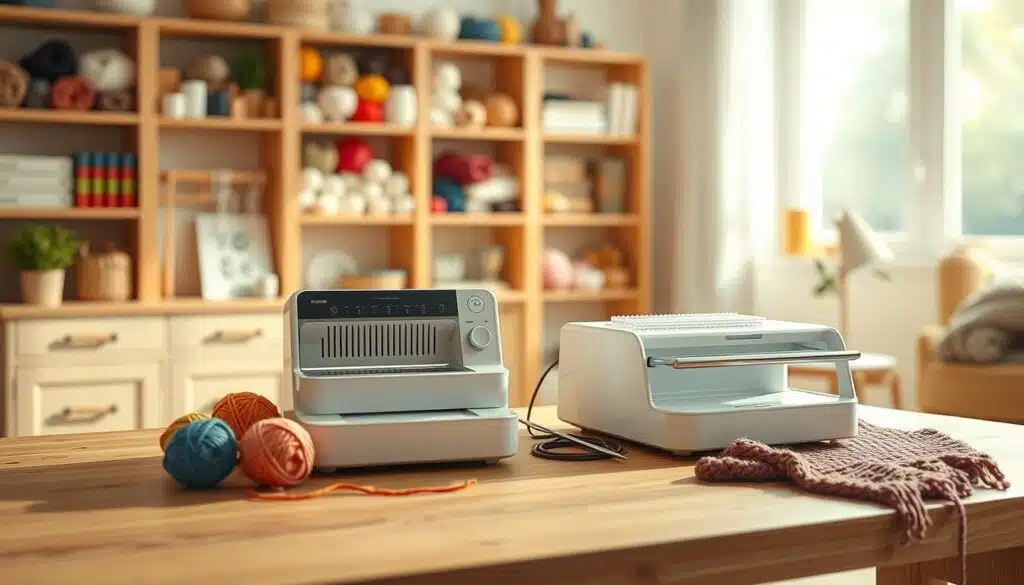
Choosing your first knitting machine is like picking a reliable friend. You want something easy to use, durable, and fits your yarn preferences. The right choice also depends on if you plan to explore more complex patterns and software later.
Silver Reed LK150 as the easiest mid-gauge entry option
The Silver Reed LK150 is a top pick for beginners. It has 150 needles and 6.5mm spacing. Its manual controls and simple design make learning quick and easy.
If you like working with Sport, DK, or Worsted yarns, this machine is perfect. It’s known for teaching the basics without being too complicated.
SK155 for quick worsted and bulky projects
For those who love working with thick yarns, the Silver Reed SK155 is ideal. It has 9mm needles and a metal bed for clear stitches. This makes it great for fast projects like sweaters and blankets.
The SK155 also has an automated patterning feature. This means you can focus on knitting without worrying about the technical stuff.
SK280 and SK840 for users aiming to grow into more advanced machine knitting
The Silver Reed SK280 is perfect for making lighter garments. It has a 4.5mm gauge and is great for lace and fine yarns. Accessories like the SRP60N ribber and a lace carriage let you create more.
The SK840 also has a 4.5mm gauge but is designed for designers. It works with DesignaKnit software and Silver Link cables for automated patterns. Even without software, you can make stockinette and hand-manipulated stitches.
When looking at the best knitting machine models, think about your yarn choices and what you want to do. Each beginner model has its own purpose. Choose one that fits your creative goals.
How Yarn Choice Affects Machine Performance and Results
Choosing the right yarn makes your knitting machine work smoothly. The wrong yarn can cause jams and dropped stitches. Think about how the yarn affects the fabric’s drape and the machine’s wear before starting.
Matching yarn weight to machine gauge
Match yarn weights to your machine’s needle spacing. Fine and lace yarns are best for 7- and 9-gauge machines. Mid weights work well on standard mid gauges for DK and worsted. Bulky yarns need chunky gauges.
Silver Reed and Brother suggest specific yarn weights for each model. Following these guidelines helps avoid uneven fabric and needle jams.
Yarns to avoid and why
Fuzzy, textured novelty yarns hide dropped stitches and snag needles. Slick synthetic yarns can slip through tension discs and feed unevenly on fine gauges. For i-cord and trim, choose smooth, well-spun fibers.
Caydo users find fewer issues with non-fuzzy yarns on delicate settings.
Tension management and yarn feeding tips
Proper tension keeps stitches even and protects machine parts. Adjust tension discs slowly and use yarn guides. Add a small weight to panels when needed.
Tension stands help smooth feed from cones and prevent dropped loops.
Wind yarn into cakes to prevent tugging. Check skeins for slubs or broken filaments. Always knit a swatch to test yarn compatibility before a large project.
| Issue | Cause | Quick Fix |
|---|---|---|
| Repeated dropped stitches | Yarn too thick for gauge or fuzzy novelty yarn | Switch to recommended yarn weights; swatch on target gauge |
| Uneven fabric tension | Incorrect tension disc setting or inconsistent feed | Fine-tune tension discs; use a tension stand and yarn guide |
| Jamming at carriage | Slick yarn slipping or snags from loose filaments | Rewind to cakes; clean tension paths; trim stray fibers |
| Poor stitch definition | Incompatible fiber texture for the stitch pattern | Choose smoother machine knitting yarns with clear plies |
| Uneven i-cord or trims | Irregular feed or unstable surface placement | Stabilize yarn path; maintain even pull and surface support |
For technical insight into how knit structure and conductive yarn interaction changes performance, read this study on knit architecture and material behavior conductive knit structures. Use those findings to think about how different machine knitting yarns and yarn weights behave in real samples.
Manual vs Electric: Which Operation Style Works for You
Choosing between manual and electric knitting machines changes your knitting experience. A manual machine gives you hands-on control and simplicity. On the other hand, electric and computerized machines offer fast production and complex patterns.
Durability and simplicity
Mechanical knitting machines, like the Silver Reed SK155 and SK280, are made of metal. They don’t need electricity and are easy to fix. If you want something durable and simple, a manual machine is a good choice.
When automation helps
An electric knitting machine makes tasks easier and faster. The Silver Reed SK840 works with DesignaKnit and Silver Link cables for automatic patterns. A computerized machine is great for those who love software and complex designs.
Learning curve and effort
Manual machines teach you about tension and timing through touch. You see the effects of your actions right away. Computerized machines take time to learn but offer precision and ease of repetition.
Practical trade-offs
If you prefer hands-on work and don’t like electronics, a manual machine is for you. For faster work and detailed patterns, an electric machine is better.
| Factor | Manual / Mechanical | Electric / Computerized |
|---|---|---|
| Power | No electricity needed; runs by hand | Requires outlet; some models need computer connection |
| Durability | Robust metal parts; long service life | Durable but electronics can fail; firmware updates needed |
| Cost | Lower purchase price and repair costs | Higher initial cost; software and cables add expense |
| Pattern complexity | Good for basics and manual patterning | Excellent for intricacy and repeatable designs |
| Physical demand | More hands-on effort, useful for skill building | Less repetitive strain; better for long runs |
| Best fit | Beginners who prefer tactile learning and low tech | Designers and makers who want automation and speed |
Essential Accessories That Make Machine Knitting Easier
You want your machine knitting to be smooth and stress-free. The right accessories can make your work faster, look better, and let you try new things. This way, your garments can look like they were made by a pro.
First, consider a ribber bed for cuffs, collars, or true ribbing. It adds more stitch options and gives your garments a pro look. Many knitters use a Silver Reed SRP60N ribber with standard gauge machines for great results.
Small tools are big helpers. Row counters and fabric weights keep your work steady. Transfer tools and yarn guides save time. Cleaning brushes and spare needles protect your machine and prevent mistakes.
Don’t forget maintenance supplies. A soft brush and oil keep your machine running smoothly. Replace bent needles quickly to avoid problems.
For advanced patterning, software and cables are key. DesignaKnit with Silver Link cables lets you use automatic patterning on machines like the SK840. This turns manual charts into instructions for your machine.
As you get better, try new accessories. Lace carriages, color changers, and yarn tension stands can do more. Add them as you need them for your projects.
Keep your tools and accessories within reach. This saves time and reduces frustration. With the right accessories, your machine will feel like a part of you.
Troubleshooting Common Problems and Keeping Your Machine Happy
Most knitting machine issues can be fixed with simple checks and habits. This guide will help you solve problems like dropped stitches, bent needles, jams, and more. It’s all about keeping your Silver Reed and Brother machines running smoothly.
Fixing dropped stitches and bent needles
Spotting dropped stitches? Stop and look at the needle bed. Bent or misaligned needles can cause issues. Replace any damaged needles and adjust the needle positions before starting again.
If you think yarn or gauge might be the problem, test it on a swatch. This will confirm if it works with your machine.
Dealing with jams and tension issues
Carriage jams? Stop right away to avoid damage. Carefully remove the jammed yarn and clean out lint from the feed paths. Check the tension discs and guides for any trapped fibers.
Adjust the tension settings a little at a time. Test it on a swatch until the yarn feeds smoothly and evenly.
Routine cleaning, oiling, and storage best practices
Regular maintenance keeps your machine running well. Brush the needle bed after each project and clean the tension paths. Use the right oil for your machine, following the manufacturer’s instructions.
Check the power cords on electric machines for wear. This can prevent unexpected problems.
Preventative habits that save time
Always swatch before starting a big project. Use yarns that match your gauge and machine model. If you’re buying a used machine, think about getting it professionally reconditioned.
Many reconditioned machines come with warranties. Store your machine in a dust cover and a dry place. This prevents corrosion and keeps it in good working order.
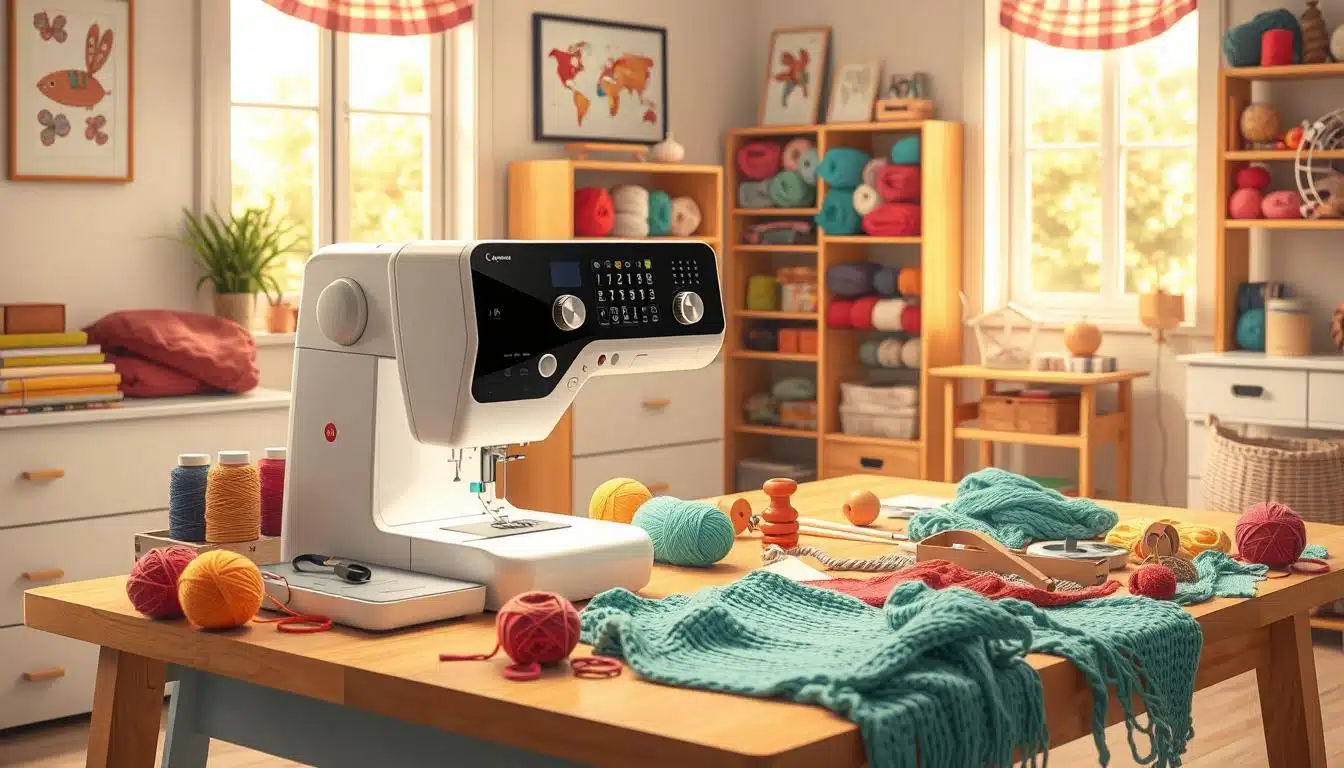
Setting Up Your Workspace for Machine Knitting Success
Begin by making your knitting machine workspace clear and organized. A tidy area helps avoid mistakes and keeps your focus on the craft. It saves time and ensures consistent results.
Consider the ergonomics of your workspace, from your chair to the lighting. Use a sturdy table at a height that prevents neck and shoulder pain. Choose a chair with lumbar support and an adjustable back for comfort during long sessions.
Lighting is key. Place a lamp that can be adjusted to illuminate needles and tools clearly. For more tips on ergonomics and lighting, check out a practical guide on ergonomic knitting.
Organizing your machine knitting area is essential for smooth workflow. Keep yarn, row counters, weights, and tools within reach. Use bins or shelves to sort yarn by weight and color. Store finished projects on a rack to prevent tangles and stretching.
Plan your workflow to avoid interruptions. Have a waste bin and cleaning brush ready for quick cleanups. Wind yarn cakes before starting to reduce tangles. A well-organized system helps you switch yarns quickly and maintain stitch quality.
Electric machines require special care. Place your machine on a level, solid surface to prevent vibration. Ensure a grounded outlet is nearby and keep cords organized to avoid tripping or snags.
Make room for accessories. Reserve space for yarn feeders, cake holders, and patterning hardware. A stable surface helps prevent dropped stitches and ensures even tension.
| Area | Key Items | Why it Helps |
|---|---|---|
| Ergonomics | Adjustable chair, stable table, task lamp | Reduces back and shoulder strain, improves focus and stitch accuracy |
| Organization | Clear bins, shelving, labeled baskets | Speeds yarn selection, prevents tangles, keeps workspace tidy |
| Tools & Workflow | Row counters, weights, waste bin, cleaning brush | Makes maintenance quick, prevents build-up of lint and dropped stitches |
| Electric Setup | Grounded outlet, cord management, level surface | Prevents vibration, reduces electrical hazards, improves machine stability |
| Yarn Handling | Winder, cake holders, feeder space | Minimizes tangles, ensures steady feed and even tension |
Small adjustments can make a big difference. A well-organized workspace, focusing on ergonomics, will boost your productivity. Treat electric machine setup as part of your craft routine to protect your equipment and maintain consistent tension.
Getting Started Projects to Build Skill and Confidence
Start with short, satisfying projects that teach core skills. Try quick scarves and headbands to practice tension, carriage movement, and yarn feeding. Seeing results fast keeps you motivated.
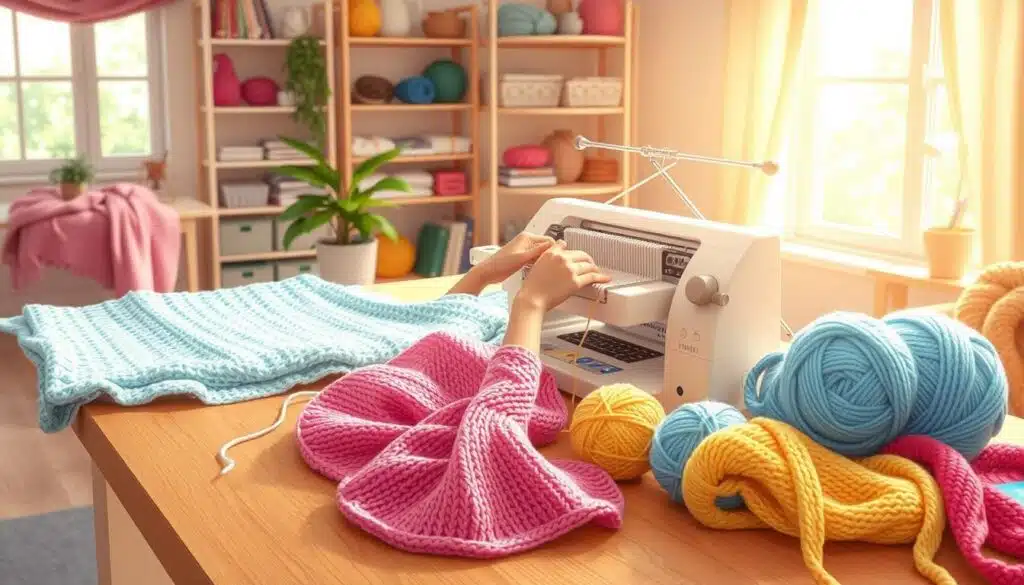
Choose projects that match your machine. Circular machines are great for seamless tubes like hats and sleeves. Flatbeds are best for panels you’ll seam into garments. This helps you learn each machine’s strengths and how to finish pieces cleanly.
Try a simple machine knit hat to learn shaping and ribbing. A simple machine knit hat gives quick feedback on gauge and decreases. After one small hat, you’ll understand how stitches behave when you change tension or needle configuration.
Experiment with machine knit scarves to learn consistent rows and edge control. Scarves are forgiving. You can test different yarns, see how stitch patterns read, and practice blocking without a large time investment.
Combine machine speed with hand techniques to add polish. Combining hand and machine knitting lets you machine-knit the main panels and use hand-knitted ribbing, cuffs, or decorative borders. This hybrid approach boosts the professional look of finished items.
Use i-cords or trims from specialty attachments as drawstrings or edging. These small details lift simple projects and teach you how accessories integrate with machine work. You get comfortable switching between tools and techniques.
Follow a steady progression. Begin with scarves, headbands, and a simple machine knit hat. Move on to panels for sweaters and blankets, then add ribber work and simple patterning as you grow. Each project builds a clear skill set.
| Project | Machine Type | Key Skill Learned | Why It’s a Good Win |
|---|---|---|---|
| Machine knit scarves | Flatbed | Tension control and even rows | Long practice surface, forgiving mistakes |
| Headbands | Flatbed or circular | Edge control and simple seaming | Quick to finish, boosts confidence |
| Simple machine knit hat | Circular | Shaping and decreases | Teaches seamless work and fit |
| Machine-knit panel for a sweater | Flatbed with ribber | Gauge matching and finishing | Prepares you for garment construction |
| Hybrid trim and finish | Any | Combining hand and machine knitting | Improves appearance with minimal extra time |
For gear reviews and model ideas, check a trusted resource like knitting machine reviews. Use those recommendations to pick machines that fit the projects you want to try next.
Cost, New vs. Second-Hand, and Brand Considerations
Choosing a knitting machine should match your budget and goals. Consider the cost, features, and how much you like to tinker. A good choice now can save you from future repair troubles.
Budget ranges for entry-level to professional machines
For beginners, circular and manual machines cost $30–$150. They’re perfect for learning the basics without spending too much.
Mid-range flat beds and mid-gauge machines cost $200–$800. They’re great for making sweaters and larger items with better control.
Specialized units for i-cord or small trims are $50–$100. Professional electronic machines over $1,000 offer software for heavy users and designers.
Pros and cons of buying used machines and reconditioned options
Used machines are cheaper and let you try machine knitting. Old metal-bed models can work well if well-maintained.
Reconditioned machines from trusted dealers come with a short warranty and clean parts. This is safer than buying from random online auctions.
New machines come with a full warranty and no hidden problems. If you want hassle-free use, a new Silver Reed might be worth the extra cost.
Brand overview: Silver Reed, Brother/Knitmaster and parts availability
Silver Reed is currently made and parts are easy to find. This is good for those planning to upgrade.
Brother and Knitmaster machines are common in the used market. They’re known for being durable. But, finding parts can be tough as models get older and production stops.
When choosing between Silver Reed and Brother, think about parts availability and service needs. Consider how often you’ll need items like ribbers or software cables.
| Category | Price Range (USD) | Best For | Notes on Parts & Support |
|---|---|---|---|
| Entry-level Circular / Manual | $30–$150 | Beginners, quick experiments | Simple parts; many are available |
| Mid-range Flat Bed / Mid-gauge | $200–$800 | Garments, consistent tension | Good balance of price and service; accessories sold separately |
| Specialized (I-cord, trims) | $50–$100 | Decorative work, trims | Small footprint, easy to replace basic parts |
| Professional Electronic | $1,000+ | Designers, heavy production | Software and electronics may need vendor support; higher knitting machine cost |
| Used / Reconditioned | Varies widely | Cost-conscious buyers | Reconditioned machines from dealers are safer; inspect before buying |
If unsure, start with a used machine or try a workshop. This helps you decide if the investment is right for you.
Conclusion
Choosing the right knitting machine depends on what you want to make and the yarn you like. The Silver Reed LK150 is great for beginners with DK or worsted yarn. For quick chunky projects, the SK155 is a good choice.
If you’re into fine garments or computerized patterns, the SK280 or SK840 with DesignaKnit is perfect. These machines offer more features for advanced projects.
Before buying, test the machine’s gauge and swatch. You might want to try a reconditioned model to save money. Add accessories like ribber or lace carriage as needed.
Remember, tension and needle gauge control the stitch size. Small tests can prevent big problems.
Beginners should start with simple projects and mix machine speed with hand finishing. Keep learning and practicing. This guide about machine knitting is a great starting point. If you’re interested in circular machines, look into compact models for their capabilities.
FAQ
What makes a knitting machine a better choice than hand knitting for some projects?
Machines are faster at making stockinette, panels, and repetitive pieces. They offer uniform stitch tension and quick design tweaks. Plus, you can make many items for gifts or small sales.
But, machines can’t replace hand techniques. They work best with machines for the heavy work. Use hand knitting for cables, textured work, and finishing touches.
Which machine type should I choose if I want to make sweaters and shaped garments?
For sweaters and shaped garments, choose a flat bed machine. The Silver Reed SK280 and SK840 are great for this. They make flat panels easy to shape and accept accessories like ribbers and lace carriages.
Flat beds are perfect for garment construction that needs seaming or hand finishing.
I mostly make hats and sleeves—should I get a circular or flat machine?
For seamless tubes like hats and sleeves, a circular machine is best. They’re quick to learn and perfect for tubular items. Use a flat bed for more shaping options and seaming panels into garments.
What does “gauge” mean and why does needle spacing matter?
Gauge is the needle spacing, measured in millimeters. It affects what yarn weights the machine can handle and the fabric’s look. Standard/fine is about 4.5mm, mid-gauge is 6.5mm, and bulky is roughly 9mm.
Match the gauge to your yarn to avoid problems like dropped stitches, jams, or limp fabric.
Which gauge should I pick for DK or worsted yarns?
Mid-gauge is best for DK and worsted yarns. The Silver Reed LK150 (6.5mm) is a popular choice. It works well with Sport, DK, and Worsted yarns.
If you want fine garments, choose a 4.5mm standard machine. For chunky projects, go with a 9mm bulky machine.
Can one machine handle many yarn weights, or do I need several machines?
Many machines handle a limited range best. Standard/fine machines work with lace to sport weights. Mid-gauge covers Sport to Worsted, and bulky handles Worsted to Bulky.
Trying the wrong yarn in a machine can cause tension problems or jams. Some makers use one machine and carefully switch projects or yarns.
What beginner-friendly models should I consider first?
If you use DK/worsted yarns, the Silver Reed LK150 is a great start. It’s affordable, mid-gauge, and easy to learn. For chunky, fast projects, the SK155 (9mm) is perfect.
If you plan to make finer garments or use computerized patterning, consider the SK280 (standard) or SK840 (standard with DesignaKnit compatibility).
Do I need an electric or computerized machine as a beginner?
Not necessarily. Mechanical machines are durable, simpler, and often cheaper. If you want automation and complex patterning, computerized machines like the SK840 with DesignaKnit offer more options.
Choose based on whether you enjoy tech and want automation.
Which yarns should I avoid on machines and why?
Avoid very fuzzy, heavily textured novelty, and super-slippery yarns on many machines. Fuzz hides dropped stitches, textured yarns can snag or jam, and slippery yarns feed inconsistently. Smooth, regular yarns are safer for consistent machine performance.
How do I manage tension and feeding to avoid jams and uneven fabric?
Use the machine’s tension discs correctly, wind yarn into cakes, and use a tension stand or guide. Add weights to long panels, test swatches before committing, and keep yarn paths clean.
For I-cord or trim machines, ensure even yarn flow and stable placement to prevent slippage.
What accessories are essential for professional-looking results?
A ribber bed (SRP60N) is essential for true ribbing and professional cuffs and collars. Also get row counters, fabric weights, transfer tools, yarn guides, and cleaning brushes.
If you plan to pattern digitally, budget for DesignaKnit software and Silver Link cables for compatible machines like the SK840.
How do I fix dropped stitches or bent needles?
Stop the carriage, inspect needle positions, and replace bent or damaged needles. Use transfer tools to pick up dropped stitches and check that yarn weight matches the gauge.
Regularly replace worn needles to prevent recurring problems.
What should I do if my machine jams?
Stop immediately, remove power if electric, and gently clear the jammed yarn. Brush lint from the bed and tension paths, inspect for bent needles, and check tension settings.
Swatch and adjust tension before resuming to prevent repeat jams.
How often should I clean and oil my knitting machine?
Brush lint from the needle bed after each major session and follow the manufacturer’s oiling schedule for moving parts. Keep tension paths clean and inspect power cords on electric models.
Store the machine covered in a dry place to prevent corrosion.
Is buying a used or reconditioned machine a good idea?
Yes—reconditioned machines can be a cost-effective way to try machine knitting. Reconditioned dealers often offer guarantees and servicing. New Silver Reed machines give you a warranty and no prior wear but cost more.
If buying used, prefer reputable reconditioners over random auction listings.
What workspace setup reduces strain and improves results?
Use a stable table at a comfortable height, supportive seating, and bright lighting. Keep yarn, tools, weights, and waste bins within reach. Electric machines need access to a power outlet and solid, level surfaces to minimize vibration.
What small projects should I start with to build confidence?
Start with scarves, headbands, and simple hats—fast projects that teach tension control and carriage handling. Move to panels for sweaters once you’re comfortable, then add ribber work and patterning as skills grow.
Can I combine machine knitting with hand finishing?
Absolutely. A common and smart workflow is to machine-knit panels and use hand knitting for ribbing, collars, or decorative techniques. Machine-knit I-cord or trim can be combined with hand-sewn finishes for a polished look.
How much should I expect to spend on a beginner setup?
Entry-level circular or small gadgets can be –0. Mid-range flat beds and mid-gauge machines typically run 0–0. I-cord electrics and specialty tools are –0. Professional electronic machines and software can exceed
FAQ
What makes a knitting machine a better choice than hand knitting for some projects?
Machines are faster at making stockinette, panels, and repetitive pieces. They offer uniform stitch tension and quick design tweaks. Plus, you can make many items for gifts or small sales.
But, machines can’t replace hand techniques. They work best with machines for the heavy work. Use hand knitting for cables, textured work, and finishing touches.
Which machine type should I choose if I want to make sweaters and shaped garments?
For sweaters and shaped garments, choose a flat bed machine. The Silver Reed SK280 and SK840 are great for this. They make flat panels easy to shape and accept accessories like ribbers and lace carriages.
Flat beds are perfect for garment construction that needs seaming or hand finishing.
I mostly make hats and sleeves—should I get a circular or flat machine?
For seamless tubes like hats and sleeves, a circular machine is best. They’re quick to learn and perfect for tubular items. Use a flat bed for more shaping options and seaming panels into garments.
What does “gauge” mean and why does needle spacing matter?
Gauge is the needle spacing, measured in millimeters. It affects what yarn weights the machine can handle and the fabric’s look. Standard/fine is about 4.5mm, mid-gauge is 6.5mm, and bulky is roughly 9mm.
Match the gauge to your yarn to avoid problems like dropped stitches, jams, or limp fabric.
Which gauge should I pick for DK or worsted yarns?
Mid-gauge is best for DK and worsted yarns. The Silver Reed LK150 (6.5mm) is a popular choice. It works well with Sport, DK, and Worsted yarns.
If you want fine garments, choose a 4.5mm standard machine. For chunky projects, go with a 9mm bulky machine.
Can one machine handle many yarn weights, or do I need several machines?
Many machines handle a limited range best. Standard/fine machines work with lace to sport weights. Mid-gauge covers Sport to Worsted, and bulky handles Worsted to Bulky.
Trying the wrong yarn in a machine can cause tension problems or jams. Some makers use one machine and carefully switch projects or yarns.
What beginner-friendly models should I consider first?
If you use DK/worsted yarns, the Silver Reed LK150 is a great start. It’s affordable, mid-gauge, and easy to learn. For chunky, fast projects, the SK155 (9mm) is perfect.
If you plan to make finer garments or use computerized patterning, consider the SK280 (standard) or SK840 (standard with DesignaKnit compatibility).
Do I need an electric or computerized machine as a beginner?
Not necessarily. Mechanical machines are durable, simpler, and often cheaper. If you want automation and complex patterning, computerized machines like the SK840 with DesignaKnit offer more options.
Choose based on whether you enjoy tech and want automation.
Which yarns should I avoid on machines and why?
Avoid very fuzzy, heavily textured novelty, and super-slippery yarns on many machines. Fuzz hides dropped stitches, textured yarns can snag or jam, and slippery yarns feed inconsistently. Smooth, regular yarns are safer for consistent machine performance.
How do I manage tension and feeding to avoid jams and uneven fabric?
Use the machine’s tension discs correctly, wind yarn into cakes, and use a tension stand or guide. Add weights to long panels, test swatches before committing, and keep yarn paths clean.
For I-cord or trim machines, ensure even yarn flow and stable placement to prevent slippage.
What accessories are essential for professional-looking results?
A ribber bed (SRP60N) is essential for true ribbing and professional cuffs and collars. Also get row counters, fabric weights, transfer tools, yarn guides, and cleaning brushes.
If you plan to pattern digitally, budget for DesignaKnit software and Silver Link cables for compatible machines like the SK840.
How do I fix dropped stitches or bent needles?
Stop the carriage, inspect needle positions, and replace bent or damaged needles. Use transfer tools to pick up dropped stitches and check that yarn weight matches the gauge.
Regularly replace worn needles to prevent recurring problems.
What should I do if my machine jams?
Stop immediately, remove power if electric, and gently clear the jammed yarn. Brush lint from the bed and tension paths, inspect for bent needles, and check tension settings.
Swatch and adjust tension before resuming to prevent repeat jams.
How often should I clean and oil my knitting machine?
Brush lint from the needle bed after each major session and follow the manufacturer’s oiling schedule for moving parts. Keep tension paths clean and inspect power cords on electric models.
Store the machine covered in a dry place to prevent corrosion.
Is buying a used or reconditioned machine a good idea?
Yes—reconditioned machines can be a cost-effective way to try machine knitting. Reconditioned dealers often offer guarantees and servicing. New Silver Reed machines give you a warranty and no prior wear but cost more.
If buying used, prefer reputable reconditioners over random auction listings.
What workspace setup reduces strain and improves results?
Use a stable table at a comfortable height, supportive seating, and bright lighting. Keep yarn, tools, weights, and waste bins within reach. Electric machines need access to a power outlet and solid, level surfaces to minimize vibration.
What small projects should I start with to build confidence?
Start with scarves, headbands, and simple hats—fast projects that teach tension control and carriage handling. Move to panels for sweaters once you’re comfortable, then add ribber work and patterning as skills grow.
Can I combine machine knitting with hand finishing?
Absolutely. A common and smart workflow is to machine-knit panels and use hand knitting for ribbing, collars, or decorative techniques. Machine-knit I-cord or trim can be combined with hand-sewn finishes for a polished look.
How much should I expect to spend on a beginner setup?
Entry-level circular or small gadgets can be $30–$150. Mid-range flat beds and mid-gauge machines typically run $200–$800. I-cord electrics and specialty tools are $50–$100. Professional electronic machines and software can exceed $1,000.
Consider a reconditioned machine if you want lower upfront cost.
Which brands have good parts availability and long-term support?
Silver Reed is currently in production and offers parts and accessories. Brother and Knitmaster are popular historically but many models are out of production so parts can be harder to find. Choose a brand with service and part availability if long-term maintenance is important.
How do I choose between the LK150, SK155, SK280, and SK840?
Match the machine to your yarns and goals. Choose the LK150 (mid-gauge) for DK/worsted and an easy learning curve. Pick SK155 (bulky) for chunky, fast projects.
Go with SK280 (standard) for finer garments and lots of accessory options. Choose SK840 if you want designer-level capabilities and plan to use DesignaKnit for computerized patterning.
Any quick troubleshooting habits to prevent problems before they start?
Swatch before you commit, use recommended yarns for your gauge, keep the needle bed clean, and replace bent needles promptly. Maintain a steady tension path and stop at the first sign of a jam.
These habits save time and protect the machine.
,000.
Consider a reconditioned machine if you want lower upfront cost.
Which brands have good parts availability and long-term support?
Silver Reed is currently in production and offers parts and accessories. Brother and Knitmaster are popular historically but many models are out of production so parts can be harder to find. Choose a brand with service and part availability if long-term maintenance is important.
How do I choose between the LK150, SK155, SK280, and SK840?
Match the machine to your yarns and goals. Choose the LK150 (mid-gauge) for DK/worsted and an easy learning curve. Pick SK155 (bulky) for chunky, fast projects.
Go with SK280 (standard) for finer garments and lots of accessory options. Choose SK840 if you want designer-level capabilities and plan to use DesignaKnit for computerized patterning.
Any quick troubleshooting habits to prevent problems before they start?
Swatch before you commit, use recommended yarns for your gauge, keep the needle bed clean, and replace bent needles promptly. Maintain a steady tension path and stop at the first sign of a jam.
These habits save time and protect the machine.