
If you’ve ever wanted to knit bold Fair Isle or Shetland colorwork without wrestling with purl rows, steeking knitting is your secret weapon. Steeks are extra vertical stitch columns you add while knitting in the round. Later, you cut them to make openings for cardigan fronts, armholes, or necklines. This steek tutorial breaks it down into clear, friendly steps so you can learn how to steek with confidence.
Steeking is loved because you keep knitting in the round, maintain even tension, and manage colors with ease. For steek beginners, this means fewer jogs, neater floats, and a smoother fabric overall. With the right reinforcement method—crochet or machine-sewn—you’ll cut knitting safely and have a tidy, secure edge.
This guide covers the essentials you’ll need: choosing yarn (non-superwash wool is generally best), swatching and testing a steek on a scrap, crochet reinforcement techniques, basting and marking, safe cutting methods, and picking up stitches for button bands or sleeves. You’ll also see alternatives like machine reinforcement and simple troubleshooting tips.
Practice on a swatch before committing to a full sweater. Try a small steek on a scrap of stranded knitting, reinforce it, and cut—then admire the magic. Steeking is achievable, satisfying, and oddly addictive once you see how neatly your colors sing when knitted in the round.
Key Takeaways
- Steeking knitting lets you knit stranded colorwork in the round and later cut openings for cardigans and necklines.
- Practice on a swatch first to learn how to steek and cut knitting safely.
- Non-superwash wool is usually preferred for its natural grip and reduced fraying.
- Crochet reinforcement or machine sewing keeps steek edges secure before you cut.
- Steek beginners benefit from simple projects like cardigans or small swatches to build confidence.
What is steeking knitting and why knitters love it
Steeking is a bold move in knitting. It’s about adding a narrow column of stitches, then cutting it to make an opening. This method keeps your knitting even and smooth, without the need to turn it back and forth.
Steek origin is rooted in northern Britain. It’s most famous in Shetland Fair Isle, where knitters created strong sections for armholes and cardigans. This way, they could keep their colorwork going without stopping.
Steeking makes stranded colorwork easier. It prevents purling with floats and keeps your gauge steady. Patterns like Quince & Co. Ebba show how it lets you knit a sweater body in one piece.
Steeking might seem daunting, but it’s safe thanks to reinforcement. You can use crocheted lines or sewn edges to keep the stitches in place. Non-superwash wool also helps by felting and securing the stitches.
Modern tutorials make steeking easier to learn. They mix old techniques with new tools. This makes the idea of cutting your knitting less intimidating. Once you try it, you might find you prefer the clean finishes and design freedom steeks offer.
When to choose steeking for your sweater or project
Steeking is a bold choice, but it offers clean openings and steady colorwork. It’s perfect for knitting a seamless tube in the round. Then, you can turn that tube into an opening. This method keeps the tension even and keeps the pattern continuous.
Cardigan fronts are a classic reason to steek. A steek turns a pullover into a buttoned front without breaking your colorwork. An armhole steek is great for drop-shoulder or set-in sleeve styles. It lets you knit the body as a tube and cut the opening later.
Neckline steeks create clean vertical openings for crew, V, or keyhole necks.
Project types that benefit most
Stranded colorwork sweaters like Fair Isle or Shetland patterns look great with steeking. Patterned pullovers and cardigans benefit from continuous knitting. This keeps floats neat and tension consistent.
Drop-shoulder designs, like the Ebba pullover, use armhole steeks for simple construction and tidy joins.
Design considerations and visualizing sleeve placement
Plan steek placement early in your pattern or while knitting. Choose odd-numbered steek stitch columns for easier stitch leg identification. Use stripe-based columns where leg colors contrast for simpler reinforcement.
Visualize sleeve placement as you work the body. Match the steek or planned armhole to the sleeve point to avoid misaligned set-in sleeves. Consider the final look and whether the cut edge will have a visible band or an internal finish.
Think about the final look. A cardigan steek that shows a band needs neat reinforcement and even stitches for buttonholes. An armhole steek that will be covered by a sleeve can have a different finish but must be elastic where you expect movement.
Yarn and materials best suited for steeking
Choose yarn that makes you feel confident when cutting. Wool with good tooth is usually the best for steeking. Non-superwash wool fibers have scales that grip each other, making a non-superwash wool steek hold and felt slightly at the raw edge.
Superwash and many synthetic blends do not felt. So, they need different handling or machine reinforcement.
Why non-superwash wool works well
Yarn that behaves well when stressed is key. Non-treated wool grabs itself after cutting, preventing strands from sliding apart. This natural felting quality is why many knitters prefer non-superwash wool for steeks.
If you must use superwash or a non-wool fiber, plan to reinforce with machine stitching or a tighter crochet reinforcement. A quick read on tried-and-true methods can help; see a classic tutorial for practical steps here.
When to make a steek swatch
Always test. Knit a steek swatch in the yarn and color you plan to use. A steek swatch answers three big questions: does the yarn felt, can your reinforcement hold, and will you pick up stitches cleanly after cutting.
You won’t waste much yarn compared to a ruined project. Practice reinforcements, cut, and finish the swatch exactly as you would a garment. That hands-on test prevents costly surprises.
Must-have steeking tools
Gather proper tools before you cut. Steeking tools should include a crochet hook a few sizes smaller than your needles, a darning needle for weaving and tacking, and sharp scissors for steeking. Sharp scissors for steeking make a clean cut through the ladder without crushing stitches.
Optionally, have reinforcement yarn—smooth, strong, slightly lighter weight like sock yarn—and waste yarn for provisional basting. Pins or a sewing machine may help for extra stability on some fibers. For a quick guide to faster crochet prep, check this resource on technique and speed here.
- Crochet hook: one or two sizes smaller than needles to avoid puckering.
- Darning needle: for tacking flaps, weaving ends, and sewing button bands.
- Sharp scissors for steeking: small, knife-like blades cut ladders cleanly.
- Reinforcement yarn: contrasting or matching for visibility while working.
- Waste yarn: provisional basting to mark the center and hold shape.
Practice on a steek swatch, use the right steeking tools, and prefer non-superwash wool steek when possible. That combination gives you the safest path to a tidy, durable cut edge and neat pick-up for bands or sleeves.
Understanding the anatomy of a steek
Before you cut, get friendly with the anatomy of a steek. This short primer shows you what to look for so your scissors and confidence stay intact.
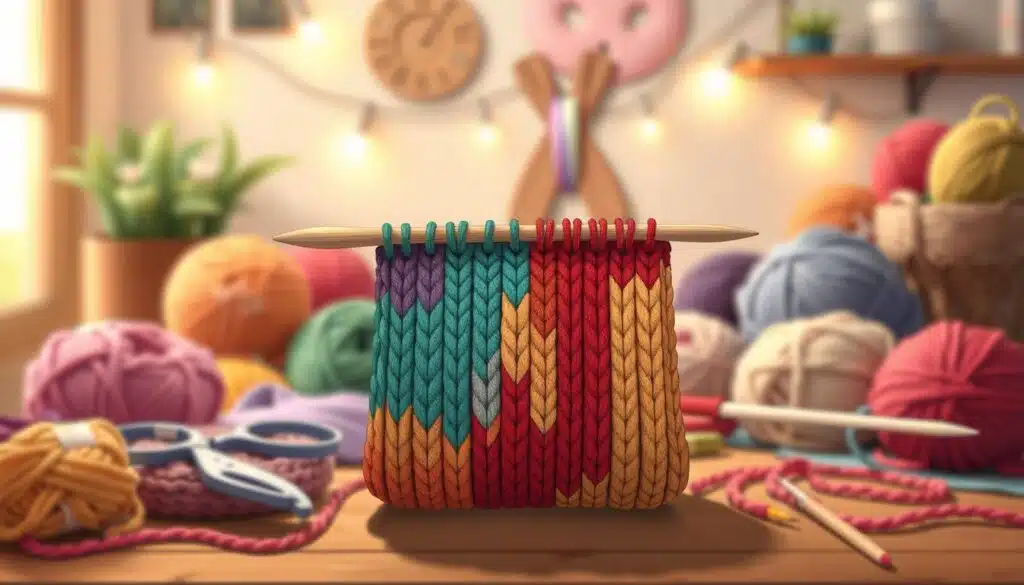
What a steek column looks like
A steek column is worked over an odd number of stitches—common choices are 3, 5, or 7. Picture narrow vertical bands running from cast-on to bind-off. Designers sometimes label them as columns 3–5 or 7–9 to mark which stitches form the cut zone. The center stitch becomes your cutting line, surrounded by stacked V’s that make a tidy visual guide.
Stitch legs: left leg and right leg explained
Each knit stitch has two stitch legs that form the V. When you reinforce, you’ll grab specific legs to lock the fabric. Crochet reinforcement typically picks up the right leg of one stitch and the left leg of its neighbor. That pairing creates mirrored brackets that bind the two sides and keep your edges neat after cutting.
How steek columns relate to pattern stripes and color changes
Striped steeks and colorwork steek placement make life easier. Adjacent stitch legs often belong to different colors, so you can spot which leg to pick when reinforcing. Traditional Fair Isle patterns such as those used in Icelandic and Shetland designs place steeks in tidy stripes to simplify both reinforcement and cutting.
After reinforcement, the steek wants to fold along that column. You’ll see horizontal ladder rows between the reinforced lines. Those ladders mark where to cut, leaving clean columns of V’s along the raw edges for neat finishing.
Preparing your work before reinforcing and cutting
Before you start, take a moment to prepare your garment carefully. Finishing steps are key to ensure your stitches are even. A relaxed fabric makes the reinforcement process smoother and the edge cleaner.
Blocking before steek means blocking to the final size and letting it dry completely. This keeps your steek placement steady and your edges matching the pattern. For a detailed guide on finishing basics, check out finishing knits.
Mark the center of the steek with a visible basting stitch. For a five-stitch steek, baste through the third stitch for a reliable center. Use contrasting waste yarn so it’s easy to remove later.
Weave in ends away from the cutting line if you can. If an end is near the steek, leave it a bit longer. This way, it gets trapped in the finished edge. Learning to weave in ends this way prevents loose tails from showing after cutting.
Secure pockets before cutting by sewing down pocket tops and finishing seam edges. This helps prevent distortion when the steek is opened. It also keeps pocket openings neat. If your pattern requires pre-sewing or picking up stitches for bands, do it before cutting to reduce tension.
Final checks: pick your reinforcement yarn and hook, lay out sharp scissors, and work in bright light. Double-check your stitch counts and placement from the pattern. Clayoquot and similar designs use a five-stitch steek with the cut through stitch three. Take your time—good preparation makes the rest of the process calm and precise.
How to crochet reinforce a steek
You’re about to make a knitted bridge into a neat edge. First, pick a steek hook size that’s a bit smaller than your needles. Then, choose a smooth yarn that’s lighter than your main yarn. Remember, keep your tension even to make cutting easy.
Choosing hook size and reinforcement yarn
Use a hook size just below your needles. For example, if you knit on US 5 / 3.75mm needles, try a US F / 3.5–3.75mm hook. Choose a strong, smooth yarn that’s not superwash; sock-weight wool is good. A lighter yarn helps keep the edge stable without bulk.
Step-by-step: attaching yarn and starting single crochet reinforcement
Make a slip knot and insert the hook into a stitch outside the steek column. Pull a loop through and leave a long tail for weaving. Attach one stitch to the right for extra security. To start the single crochet steek, insert the hook through the right leg of the outer stitch and the left leg of the center stitch. Pull up a loop, yarn over, and pull through both loops. Make sure each stitch is snug but not too tight.
Working up one side and down the other to form mirrored brackets
Work your single crochet steek up from the cast-on edge to the bind-off. Join stitch legs so each crochet joins stitch 3 to stitches 2 and 4 in turn. Fasten off by catching a bound-off stitch slightly to the left. Rejoin yarn at the top to the right of the center column and work down the opposite side. The two rows will form mirrored brackets framing the ladder you plan to cut.
Tension tips to avoid puckering and how to adjust if needed
Check the tension by tugging the single crochet line. If it puckers, try a larger hook or lighter yarn. If it sags, go smaller. Your goal is a flat reinforcement that encourages the fabric to fold toward the steek. For a visual guide, see this practical guide at Cruden crochet steeks.
Cutting your steek safely and confidently
Take a deep breath. Your steek is reinforced and the stitches are secure. Now, you’ll remove the temporary basting and see the ladder rows. These rows mark the center line.
First, gently remove the basting stitch at the center. Keep one hand behind the reinforcement. Then, slowly pull the fabric apart. The ladder rows will show between the reinforced columns.
Scissor technique: cutting small sections and checking the blade
Use sharp steek scissors with a fine tip. Cut in small sections. Make sure the bottom blade is in the ladder rows before cutting.
What the cut edge should look like and why the reinforcement holds
After cutting, the edge will have neat V-shaped stitch legs. The single crochet brackets or sewn line keep these stitches in place. Non-superwash wool will felt over time, making the edge even more secure.
Practical caution: if you’re nervous, stop and breathe. Move slowly and check after each small cut. For superwash or slippery yarns, consider using machine-sewn reinforcement or hand-stitching the edges down first.
| Step | What to look for | Tool tip |
|---|---|---|
| Remove basting | Center stitch revealed, ladder rows visible | Sharp tapestry needle for gentle picking |
| Inspect reinforcements | Single crochet or sewn lines intact | Good light and loupe if needed |
| Cut ladder rows | Bottom blade slightly visible in ladders | Fine-tip steek scissors for control |
| Check cut edge steek | V-shaped stitch legs with brackets holding them | Tension check and gentle steam/block if needed |
| Secure edges for slippery yarns | Minimize fray, use machine or sewn reinforcement | Sewing machine or small whipstitch with matching yarn |
Picking up stitches and finishing the raw edge
You’ve cut the steek and breathed. Now, you need to make your garment’s edges neat and wearable. This guide will help you pick up stitches for button bands and sleeves. It also shows how to choose the right pickup rate and finish the steek flaps or add trims.
For button bands, fold the flap inward so the V’s line up. Place your needle in each V as the pattern says. For sleeve openings, pick up new stitches in the gap between the last stitch and the steek. This gap will close quickly as you knit.
The pickup rate affects how the edge looks. A common rate is two stitches for every three rows. This makes the edge look neat and even. The wrong side will have a running-stitch look that folds under and stabilizes the edge.
Attaching flaps is key for comfort. Use a whip stitch or zig-zag tacks to the wrong side for a natural feel. Many knitters fold and invisibly tack button band steek flaps to prevent rubbing. Avoid inelastic ribbon on armholes for better stretch.
Choose steek trims based on wear and style. Ribbon trims are good for button bands for a decorative touch. For armholes, softer finishes or felting work well for stability. For invisible structure, use tiny stitches and press lightly.
Here’s a practical checklist for you:
- Fold flaps inward and align V’s before picking up stitches.
- Follow pattern pickup rate steek; try 2 per 3 rows if unsure.
- Sew down steek flaps with whip or zig-zag stitches to the wrong side.
- Reserve ribbon steek trims for button bands only when elasticity is not required.
Done carefully, picking up stitches after steek turns the scary cut into a clean, confident finish. Your button band steek and sleeve openings will look professional, move well, and last long.
Alternate reinforcement methods and troubleshooting
Choosing how to reinforce a steek depends on speed, look, and yarn behavior. Machine reinforcement steek is fast and neat, great for smooth fibers. Crocheted single crochet is popular for its easy access and visible bracket.
Superwash and synthetic yarns need extra care. A superwash steek might not felt, so sewing or extra rows can help. Always test on a swatch to see how your yarn behaves.
Here’s a quick guide to troubleshoot steeking issues.
- Loose reinforcement: If your single crochet looks slack, try a smaller hook or lighter yarn. If it’s not better, redo the line.
- Uneven edges or puckering: Even out tension by practicing on a swatch. Use a smaller hook and ensure consistent stitches around attachment points.
- Fraying after cutting: For non-felting yarns, use machine stitching or zig-zag whip stitching over the edge. You can also sew on ribbon for button bands.
- Stress at button bands: Pick up button bands before cutting. Tack flaps to the wrong side to reduce strain as you finish.
Deciding between machine and crochet reinforcement? Here’s a quick comparison to help you choose based on fiber, speed, and look.
| Method | Best for | Pros | Cons |
|---|---|---|---|
| Machine reinforcement steek | Smooth fibers, superwash steek tests, fast production | Speedy, neat, strong; hides well under trims | Requires a sewing machine and careful alignment; less traditional look |
| Crocheted single crochet | Wool that felts, hand-knit aesthetic, accessible to most knitters | Visible bracket for guidance, easy to unpick and redo, no machine needed | Can pucker if tension is loose; takes longer than machine stitching |
| Sewing/tape/ribbon | Superwash steek, delicate or novelty yarns | Customizable stability, decorative options for button bands | Extra materials and work; may alter drape if heavy |
If you’re having trouble with steek fixes, check out tutorials by Eunny Jang, Kate Davies, and pattern notes for Clayoquot or Sweetshop. Practice small swatches until you get the tension and finish right.
When troubleshooting steeking, keep track of hook sizes, reinforcement yarn, and stitch counts. This will save you time and build your confidence with each successful cut and finish.
Project ideas and practice recommendations
Ready to start a new project? Choose ones that teach you steeking in a gentle way. Look for patterns with steeks in stripes. This makes cutting and reinforcing easier and less scary.
Patterns to try
Find designs with clear steek options. The Galloway Cardigan and Peaks Pullover are great for beginners. Ashland Pullover and Quince & Co. Ebba are good for sweaters. Redshift Shawl and Clayoquot or Sweetshop cardigan variants are perfect for shawls or short cardigans.
Recommended practice
Knit a big swatch with a steek column. Follow a tutorial to crochet the reinforcement and cut the steek. Test how your yarn felts and if it puckers the fabric. This practice saves time and worry later.
Choosing your first steek project
Start with something simple. Choose a cardigan or pullover with a clear steek column. Use a yarn recommended by the designer. Non-superwash wool is good for its grip and felting.
Building confidence
Learn from experts like Kate Davies and Eunny Jang. Practice in short sessions. Take deep breaths when cutting, work slowly, and trust your reinforcement. Many find the first cut empowering once they see the neat edge.
Conclusion
Steeking knitting summary: you can knit stranded colorwork in the round. Then, reinforce a central column. After that, create clean openings by cutting the steek.
Non-superwash wool is best because it felts and locks stitches. This makes the edge forgiving. Crochet single crochet reinforcement is easy and reliable. Machine sewing is also a good option for a different finish.
Remember these steek final tips: block your work first, then baste the center stitch. Next, crochet mirrored reinforcement lines with the right hook and yarn. Remove the basting, cut the ladders carefully, and pick up stitches for bands or sleeves.
Lastly, sew down flaps as needed. These steps make the process easier and less surprising when you open the steek.
This steek beginner conclusion is simple: practice on a swatch, gather the right tools, and use steady motions. With these habits, steeking becomes joyful. It opens up many colorwork possibilities. Go forth, steek smartly, and enjoy turning a round tube into a wearable masterpiece.
FAQ
What is steeking and where did it come from?
Steeking is a knitting technique. It involves adding extra stitches to create openings like cardigan fronts. This method is rooted in Shetland Fair Isle knitting.
It also appears in Norwegian and Icelandic knitting. It helps avoid purling back or sewing seams in colorwork.
Why do knitters love steeking?
Steeking lets you knit in the round without purling back. This makes tension even and color management simpler. It also avoids floats on the wrong side.
You can see where sleeves and armholes will go as you knit. The edge, when done right, is neat and secure.
Is cutting your knitting really safe?
Yes, cutting is safe with the right prep. Reinforce the area first. Use crochet or machine-sewing to bind the stitches together.
Non-superwash wool helps the edges stick. Baste, remove, and then cut the ladders while keeping the reinforcements intact.
What common uses are there for steeks?
Steeks are used for cardigan fronts, armholes, and necklines. Designers often place them in striped columns. This makes the stitch legs easy to identify.
Quince & Co. Ebba is a good example for armhole steeks.
Which projects benefit most from steeking?
Sweaters with stranded colorwork, like Fair Isle, benefit a lot. So do pullovers and cardigans. Any design that improves tension and color consistency is a good candidate.
Drop-shoulder pullovers and striped steek columns are great for beginners.
How do I plan steek placement in a design?
Plan steek placement early in your design. Align sleeve positioning with the steek. Choose odd-numbered steek columns for easier reinforcement.
Place steeks in striped columns for better visibility. Think about how sleeves or bands will be picked up.
Why is non-superwash wool recommended?
Non-superwash wool felts slightly. This helps the cut edges stick together. Superwash and many non-wool fibers don’t felt well.
They may fray, so they need machine-sewing or other finishes. Always test your yarn.
How should I steek a swatch and why bother?
Knit a swatch with a steek column in your yarn and needles. Block it to the final size. Baste the center stitch and crochet or machine-sew the sides.
Remove the basting and cut the ladder rows. Swatching shows how the yarn felts and how reinforcement works. It’s worth the extra yarn.
What tools do I need to steek safely?
You need a crochet hook smaller than your needles, sharp scissors, and a darning needle. Use waste yarn for basting and reinforcement yarn for the sides.
Optional tools include a sewing machine and pins. Good light and a steady surface are also important.
What does a steek column look like?
A steek column is an odd-numbered vertical set of stitches. It’s usually 3, 5, or 7 stitches. The center stitch marks the cutting line.
When reinforced, mirrored lines bracket the center stitch. After cutting, you’ll see neat V-shaped stitch legs for picking up.
What are stitch legs and why do they matter?
Each knit stitch has two legs: the right and left leg that form a V. Reinforcement techniques catch specific legs to bind them together.
This stops unraveling after cutting. It’s important for a neat edge.
How do stripes and color changes affect steeking?
Striped steek columns are helpful because adjacent stitch legs are different colors. This makes it easy to see which leg to pick for reinforcement.
Many classic patterns place steeks in stripe-based columns. This simplifies the reinforcement and makes the edge tidier.
What should I do before reinforcing and cutting?
Block your swatch or sweater to the final size and let it dry. Baste a waste yarn through the center stitch to mark it.
Weave in nearby ends or secure pockets and seams. Picking up button bands before cutting is often recommended.
How do I crochet-reinforce a steek—hook and yarn choices?
Use a crochet hook slightly smaller than your knitting needles. Choose a smooth, strong reinforcement yarn slightly lighter than the main yarn.
Non-superwash wool is ideal for reinforcement when the main yarn also felts.
Step-by-step: how do I attach yarn and start single crochet reinforcement?
Make a slip knot on your hook and insert it into a stitch outside the steek column. Pull a loop through and secure with a tail long enough to weave in.
Work single crochet by inserting the hook through the right leg of one stitch and the left leg of the adjacent stitch. Pull up a loop, then yarn over and pull through both loops—continue up the column with even tension.
How do I form mirrored crochet brackets?
Work a single crochet line from the cast-on toward the bind-off edge on one side of the center stitch. Fasten off at the top. Rejoin yarn at the top to the opposite side and work back down.
Insert the hook through the opposite pair of legs (mirror image). The two lines then bracket the center stitch to form mirrored reinforcement.
What if the crochet line puckers or is loose?
Adjust tension or hook size. If it puckers, try a larger hook or lighter reinforcement yarn. If it’s loose, go down a hook size or use a tighter yarn.
Rework the line if necessary—better to fix it before cutting than after. Periodically tug the line to check behavior without distorting adjacent colorwork.
How do I remove the basting and find the ladder rows to cut?
After both reinforcement lines are secure, snip and remove the waste yarn basting that marks the center stitch. Gently pull the reinforced sides apart with your fingers behind them.
Horizontal ladder rows will appear between the reinforcements—these ladders are what you cut, not the crochet or sewn lines.
What’s the safe scissor technique for cutting a steek?
Use small, sharp scissors and cut in small sections. Let the bottom blade peek slightly through the ladder before each tiny cut so you can see you aren’t slicing the reinforcement.
Cut down the center of the ladder area slowly and deliberately. If you feel nervous, cut a bit at a time—no rush.
What should the cut edge look like and will it unravel?
After cutting you’ll see split V-shaped stitch legs along the edge with single crochet or machine-stitched brackets outside them. With proper reinforcement and non-superwash wool, the edge won’t unravel; the stitches remain anchored.
Over time, felted fibers will help the raw edge firm up even more.
How do I pick up stitches for button bands or sleeves after cutting?
Fold flaps inward and pick up stitches from the neat column of V’s bordering the cut. Follow your pattern’s pickup rate (many patterns give exact counts).
For sleeves, pick up new working stitches in the gap appropriately so the sleeve joins cleanly. Folding and tacking flaps can make the edge neat before you work bands or sleeves.
What pickup rates should I use—any example?
Rates vary by pattern. An example from Ebba-style designs is 2 stitches for every 3 rows. That spacing helps pairs of cast-on stitches form quickly and leaves a neat wrong-side line that folds under to secure the cut edge.
Always check the pattern for recommended pickup counts.
How should I finish flaps and choose trims?
You can invisibly tack flaps to the wrong side with a whip stitch or zig-zag stitch. For cardigan button bands, folding and sewing down flaps or adding ribbon is common—but avoid rigid ribbon on armholes because it limits stretch.
Use flexible hand-sewn tacking for armholes and seams that need give.
Should I crochet or machine-sew reinforcement—and when to choose which?
Both work. Crocheted single crochet reinforcement is accessible and popular; it’s visible and reliable for wool yarns. Machine sewing is fast and historically common in Norway and modern practitioners who prefer it.
Choose based on your comfort level, yarn type (superwash often needs machine sewing), and whether you want a visible bracket or a flatter reinforcement.
What if I’m using superwash or non-wool yarn?
Superwash and many non-wool fibers don’t felt, so the raw cut edge can be more prone to fraying. For these yarns, prefer machine-sewn reinforcements, extra stitching, or taped/ribboned finishes.
Always swatch-test your specific yarn.
What common problems happen and how do I fix them?
Loose reinforcement: redo with a smaller hook or lighter yarn. Puckering: try a larger hook or lighter yarn and even tension. Fraying: consider sewing down flaps, using a machine reinforcement, or switching to non-superwash wool.
Uneven pickup: block fully before picking up and use generous stitch guides. Practicing on a swatch and studying tutorials by Eunny Jang, Kate Davies, and pattern-specific notes helps a lot.
What patterns are good for a first steek project?
Look for patterns that explicitly include steeks or place them in striped columns—examples to search: Galloway Cardigan, Peaks Pullover, Ashland Pullover variants, Clayoquot and Sweetshop cardigans, Redshift Shawl, and Quince & Co. Ebba for armhole steeks.
Pick a pattern the designer recommends for steeking and use their suggested yarn.
Any final tips for a first-time steeker?
Practice on a swatch, block it, baste the center stitch, reinforce with crochet or machine stitching, and cut slowly with sharp scissors. Pick up bands or sleeves before cutting when patterns suggest it.
Use non-superwash wool when possible. Take deep breaths—the moment you cut is both nerve-wracking and euphoric; properly reinforced steeks hold up beautifully and open many colorwork design possibilities.