
Welcome—you’re about to make your space bloom without a single florist trip. This guide gathers the best free crochet flower patterns and clever ideas. You can turn yarn into lasting decor. Whether you want a single daisy for a mug or a full crochet bouquet, you’ll find patterns, material lists, and assembly tips.
Expect nine starter motifs like sunflower, cherry blossom, freesia, carnation, lilac, daisy, rose, and daffodil, plus dozens of variations for more adventurous projects. The patterns include step-by-step written instructions and links to video tutorials so you can follow along at your pace.
If you prefer ready-to-use supplies, the guide suggests reliable kits and yarn choices for realistic yarn flowers. Use your blooms as appliqués, garlands, wreaths, vases, wearable art, or full crochet bouquets that stay vivid season after season.
Key Takeaways
- You will learn simple crochet flower patterns suited for beginners and makers with some experience.
- The guide compiles free crochet flower patterns and video tutorials from well-known sources like Ravelry and Pinterest.
- Yarn flowers can be used for decor, wearable art, and durable crochet bouquets.
- Suggested materials and kits help you choose cotton, acrylic, or wool based on the look you want.
- Projects range from tiny appliqués to large bouquet builds, all with clear, followable steps.
Why Crochet Flowers Make Your Day Brighter
Getting fresh flowers can make you feel instantly happy. Crocheting flowers gives you that same joy. It’s not just about the look; it’s about the feeling of accomplishment.
These handmade blooms can boost your mood and sharpen your focus. They’re also great for mental health crafts you can do at home.
When you pick up yarn and a hook, you create something that lasts. Unlike fresh flowers, crochet blooms stay with you for years. They’re perfect for everyday decor and for keeping joy alive.
There are many ways to use crochet flowers. You can add them to sweaters, make garlands, or fill a vase. These projects make great crochet gifts that feel special.
Online boards, like Pinterest, show the craft’s endless possibilities. You can create color palettes for any occasion. Each project is a way to take care of yourself and stay calm.
Looking for gifts that are both practical and personal? Crochet gifts are perfect. They don’t wilt, travel well, and can be customized. This makes them ideal for seasonal displays or wearable art.
Stitching a bouquet connects creativity to routine. The repetition helps reduce stress and gives you something beautiful. This is why many makers love the benefits of crochet flowers.
Essential Materials and Tools for Crochet Flower Projects
Start by choosing tools that enhance your flower’s beauty. The yarn you pick will greatly affect the look and feel of your flowers. Look at free patterns from Craftsy Amore, Golden Lucy Crafts, Hookok, Moara Crochet, and Stitching Space. They list yarns and tools to help you begin.
Yarn choices affect the flower’s edge and how it hangs. Cotton gives a natural look that’s perfect for rustic bouquets. It also keeps its shape well. Acrylic is cheap and easy to care for, making bright, washable flowers great for beginners. Wool adds warmth and is ideal for winter flowers.
Yarn weight determines the flower’s size. Fingering weight is good for small flowers like forget-me-nots. Light weight yarn is best for larger flowers like sunflowers. Choose yarn based on the softness or stiffness you want your petals to be.
Crochet hook sizes also matter. They affect how tight or loose your stitches are. Use a 2.0 mm hook for small work and a 2.5 mm for light-weight cotton. You might need to change hooks to get the right look. Keep a small hook handy for adjusting without changing yarn.
Essential crochet flower tools include sharp scissors, tapestry needles, and stitch markers. Iron wire and flower stems are useful for shaping. Hot melt glue is handy for putting parts together. Big flowers like sunflowers might need two stems or a stronger wire.
For making bouquets, you’ll need stems, floral tape, and wired leaves. A kit with extra hooks and a small glue gun makes assembly easier. Keep your workspace organized so you can easily switch between different flower types.
| Item | Purpose | Recommended Specs |
|---|---|---|
| Cotton yarn | Realistic, matte petals for rustic bouquets | Light weight (sport/ DK), cotton vs acrylic vs wool: choose cotton for structure |
| Acrylic yarn | Affordable, washable blooms for everyday decor | Fingering to light weight; easy-care choice |
| Wool yarn | Cozy texture for seasonal, warm-toned flowers | Light to worsted; great for winter accents |
| Crochet hooks | Control stitch size and petal drape | Crochet hook sizes: 2.0 mm (fingering) and 2.5 mm (light weight cotton); keep a small set |
| Tapestry needle & scissors | Finishing, sewing petals, trimming ends | Sharp scissors; blunt tapestry needle for weaving |
| Iron wire & flower stems | Structure and stem length for bouquets | Iron wire for shaping; stems in 30 cm and 40 cm; two stems for large blooms |
| Hot melt glue | Secure layers and attach stems | Small glue gun with low-temp sticks for yarn and wire |
| Optional kits | Starter sets with recommended yarns and patterns | Look for kits from reputable makers that include video guides |
Beginner-Friendly Simple Crochet Flower Patterns
Ready to make blooms that look charming and take less time than a coffee run? These easy crochet flower patterns are perfect for beginners. They offer quick wins and pretty results. Start with a small hook, light-weight yarn, and a tapestry needle, and you’ll have petals in no time.
Quick daisy: materials, stitches to know, and size options
The quick daisy crochet is a great first project. Use fingering or light-weight yarn and a 2.0–2.5 mm hook for delicate petals. Learn chain, single crochet, and slip stitch; those three will build most daisy motifs. You can change size by switching yarn weight or using a larger hook for jumbo daisies.
For a clear step-by-step guide, you can try patterns curated on Pinterest and photo-tutorial pages or follow a pattern collection at Lucy Kate Crochet for inspiration.
Mini rose and multi-head rose for tiny bouquets
Want tiny roses to tuck into brooches or crowns? A mini rose pattern uses short rows and tight stitches to form neat spirals. Group three to five tiny roses on one stem and you have a charming accent.
When you need a fuller bunch, the multi-head rose technique gives you several small blooms on a single stem. This multi-head rose approach mimics multiflora clusters and works brilliantly as bouquet filler.
Forget-me-not and baby’s breath as easy fillers
Forget-me-not crochet pieces and baby’s breath-style clusters make bouquets feel lush without heavy work. Use fingering yarn and small hooks for tiny, delicate flowers that read as realistic filler. Make stems longer or shorter to fit your arrangement.
| Pattern | Yarn | Hook | Skill | Best Use |
|---|---|---|---|---|
| Quick Daisy | Fingering or light-weight cotton | 2.0–2.5 mm | Beginner | Appliqués, garlands, brooches |
| Mini Rose Pattern | Light-weight or sport | 2.5 mm | Beginner to easy | Tiny bouquets, hairpins, corsages |
| Multi-head Rose | Fingering or sport | 2.0–2.5 mm | Easy | Filler clusters, boutonnières |
| Forget-me-not Crochet | Fingering | 2.0 mm | Beginner | Fillers, delicate trims |
| Baby’s Breath Style | Fingering or light-weight | 2.0–2.5 mm | Beginner | Cluster fillers, bouquets |
Tip: use a floral stem or thin wire and a dab of hot glue to secure tiny blooms for wearable pieces. Patterns and photo tutorials on Pinterest, Ravelry, and Lucy Kate Crochet will keep your stitch confidence high while you play with color and scale.
Classic and Realistic Flower Patterns to Try
For showstoppers, choose patterns that look like real flowers. Start with a bright main flower, add some romantic roses, and then add textured pieces for depth. These patterns are perfect for bouquets, wreaths, and single-stem gifts.
Sunflowers are bold and great for beginners. Craftsy Amore’s free Sunflower Bouquet pattern is easy to follow. It symbolizes happiness and loyalty. A typical sunflower pattern is about 10 cm across, making it a clear focal point.
Use two stems and a leaf for a natural look. Pair sunflowers with small daisies or slender calla lilies for balance. For a compact bouquet, use one large sunflower as the star and surround it with tiny fillers.
Crochet rose patterns offer many moods. The classic layered rose looks like glass with realistic depth. Thai roses open wider and feel breezier. Cappuccino roses bring warm, vintage coffee tones. Wild or memorial-style roses add a loose, hand-gathered vibe.
Mix sizes with crochet rose patterns. Use larger blooms as mains and smaller ones for accents. Pinterest boards have great multi-size photo tutorials to follow.
For realism and texture, choose dahlia and gerbera builds. A realistic dahlia crochet captures tight, layered petals that catch light. Dahlia motifs add volume and drama to centerpieces. The gerbera pattern often reads as a single, strong bloom, perfect for minimalist designs or one-flower arrangements.
When combining realistic dahlia crochet with gerbera and sunflowers, you get a dynamic bouquet. Play with yarn weight, petal count, and subtle color shifts to mimic natural gradients. This makes each flower feel alive.
Seasonal and Themed Crochet Flower Ideas
Ready to stitch a year of blooms? Choose patterns and colors that match each season. For spring, go for delicate pieces. Summer calls for bold shapes. Autumn is all about earthy textures, while winter is cozy and rich.
Spring collection
Try tulips in open and stuffed versions for versatile bouquets. Golden Lucy Crafts’ cherry blossom pattern is tiny at 1 1/8″ (3 cm) and pairs well with bonsai-style displays. Stitching Space lilac patterns bring a soft, first-love vibe. These spring crochet flowers work great as corsages, table sprigs, or delicate garlands.
Summer showstoppers
Choose sunflowers and daisies for high-impact centerpieces. Freesia from Hookok makes a lovely, fragrant-inspired filler that moves from late winter into summer decor. Consider gerbera or African daisy when you want bold color and drama. These summer crochet blooms stand out in bright yarns and chunky stitches.
Autumn and winter accents
Bring warmth with cotton flowers for earthy tones and symbolism tied to purity and motherly love. Add pine cone motifs to holiday bouquets for texture and seasonal interest. Deep-toned roses create a rich, elegant statement for cooler months. Use these autumn crochet accents to ground arrangements or lift neutral palettes.
To curate a coherent set, browse Pinterest boards for themed color stories and tutorials. Combine seasonal yarn flowers across sizes and textures so each arrangement reads like a single, polished design. Swap one main bloom, add two fillers, and finish with a few textured accents to give each piece balance and personality.
Creative Arrangements: How to Build a Crochet Flower Bouquet
Begin with a playful plan. Consider scale, color, and the story you want to tell. A bold centerpiece with smaller companions adds depth. Have your materials ready: stems, wire, glue, and yarn for texture.
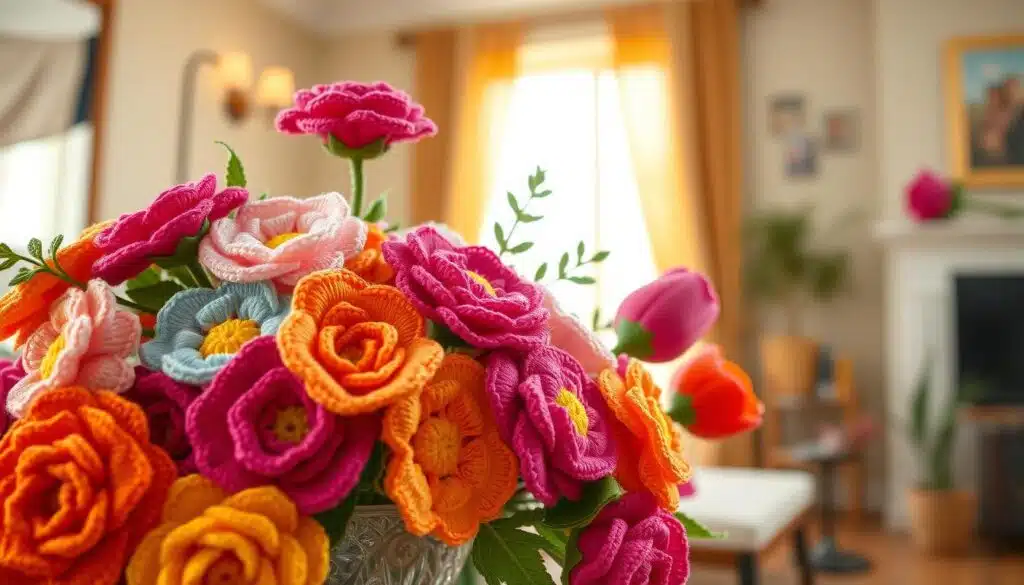
Choosing a focal bloom and supporting pieces
Choose a strong focal bloom first. Sunflower, dahlia, and classic rose are good choices. You can use one large flower or two similar ones for interest.
For secondary blooms, pick tulip, calla lily, or pink champion. Add fillers like forget-me-not, baby’s breath, or multi-head rose. For more ideas, visit crochet bouquet patterns.
Adding greenery for depth
Greenery enhances the arrangement. Use fern and big leaf patterns for contrast. Mix leaf shapes and colors for a journey through the bouquet.
Include special leaves or large Musa basjoo leaves to frame flowers. Stick to consistent greenery patterns for balance with flowers.
Wiring, stem lengths, and practical arranging tips
Wiring keeps flowers in shape and lasts longer. Learn to wire flowers properly: secure the center, wrap petals, and cover with yarn or tape. Sunflowers might need two stems for stability.
Use different stem lengths to look natural: shorter in front, longer in back. Create open and half-open flowers for realism. Hot melt glue at joins for a clean look and to hold heavy pieces.
| Role | Examples | Recommended stem |
|---|---|---|
| Main flower | Sunflower, Dahlia, Classic Rose | 40 cm; double stem for large diameters |
| Secondary / Accenter | Tulip, Calla Lily, Freesia | 30–40 cm; single stem with wire |
| Filler | Forget-me-not, Baby’s breath, Multi-head rose | 30 cm; fingering weight yarn recommended |
| Greenery | Fern leaf, Big leaf, Special-shaped leaves | 30–40 cm; flexible wire for shaping |
- Assemble in stages: build clusters, bind stems, then shape the whole bouquet.
- Test balance: hold the bouquet at stem base to check weight distribution.
- Protect finishes: avoid sparkly or heavy trims that crush petals over time.
Building your crochet bouquet is easier with a plan. Start by preparing materials, picking the main flower, and adding supporting blooms. Then, add greenery and finalize the arrangement. Small adjustments can make your bouquet look wild and natural.
Mix & Match: Color Palettes and Yarn Weight Tips
You want your crochet blooms to read like a mood, not a math problem. Start by picking a color story. Choose pastel romance for soft spring vibes, bold contrast for modern punch, or neutral vintage for a chic look. Use a neutral third color, like cream or light gray, to tie contrasting shades together.
Think about yarn weight for flowers before you buy more skeins. Fingering-weight yarn is great for tiny fillers like forget-me-nots and baby’s breath. Light-weight or DK yarn is best for sturdy mains like sunflowers and dahlias. Many patterns list the recommended yarn weight for flowers.
To get natural shading, use gradient methods. Variegated skeins or planned color shifts create ombré crochet petals. Try Lion Brand Mandala or similar self-striping yarns for built-in fades, or plan gradual changes across rounds for precise control.
For palette ideas, pin inspiration on Pinterest with search terms like “winter color palettes” or “cotton candy color combinations.” Compare those pins to yarn swatches in-store. Coolors.co and Design Seeds help you extract and test combinations from photos. You can find practical notes on choosing palettes at how to choose yarn color combinations.
Practical tips: balance one strong color with two muted tones, or anchor a pastel crochet bouquet with a deeper center. When you use self-striping yarns, moss stitch and textured patterns may soften color transitions. Test a swatch before committing to a full bouquet.
If you want brand-specific shade options for complex palettes, check yarn lines with wide ranges. Stylecraft Special, Paint Box Yarns, and KnitPicks Brava offer many hues and weights. For beginner-friendly pattern picks and weight guidance, see the floral roundup at Crochet Craze.
Use small swatches to evaluate how color and yarn weight interact under your chosen stitch. This quick test saves time and keeps your bouquet cohesive. Whether you aim for delicate ombré crochet petals or a graphic, two-tone corsage, it works.
Crochet Flowers for Home Decor and Special Occasions
Give your living room, front door, or party table a personal touch. Small crochet flowers make stunning centerpieces that are spill-proof and easy to send. Mix big flowers with tiny ones for a natural look.
Seasonal displays can be enhanced with crochet flower garlands, wreaths, or small vases. Pinterest and pattern collections offer easy styling ideas. They make creating your decor fast and fun.
Planning a wedding? A crochet wedding bouquet is a unique, lasting keepsake. Choose yarn like cotton for a soft look or acrylic for bright colors. Patterns help you create a bouquet that matches your style.
At baby showers and birthdays, a crochet bouquet is a bright, lasting memory. Use tutorials to make smaller flowers and add greenery. Secure stems with wire or glue for travel and keepsakes.
Small appliqués add charm to gifts, brooches, and accessories. Turn a cluster into a brooch or attach it to hair. For inspiration, visit Hookok’s bouquet patterns for ideas from small to large.
When making accessories, focus on light materials for comfort. Use fingering or light yarn for hair flowers. Shape petals with wire and secure with beads or studs.
To make decor for events, plan your colors and choose a main flower. Add two secondary blooms and a filler. This mix creates wreaths, garlands, and bouquets that look great under soft light.
Advanced Techniques and Challenging Flower Patterns
You’re ready to level up. This section covers advanced crochet flowers that need patience, focus, and courage. You’ll learn about layered builds, sculpted centers, and stitch combos that bring petals to life. Video tutorials from designers like Golden Lucy Crafts and YouTube guides help when written patterns are unclear.
Layered petals, 3D centers, textured stitches
Begin with layered petals in dahlias and gerbera to master depth. You’ll stack and overlap rounds to shape each tier naturally. Textured stitches like popcorn, bobble, and post stitches add shadow and definition. Make a small swatch first to get the tension right before starting a full bloom.
Anemone, water lily, and complex rose builds
Anemone and water lily crochet patterns often have a raised center with radial petals. Water lily crochet blooms are about 15 cm across, using short rows for curves. Complex rose patterns layer spirals and tuck petals, requiring precise increases and strategic blocking. Video walkthroughs help make assembly easier.
Integrating beads, embroidery, stuffing for dimension
Embellished crochet flowers come to life with beads for pollen, embroidery for veins, or stuffing for dimension. Wire and iron keep curved shapes and stems upright. Pre-thread needles for beads to ensure even placement. For stuffed tulips and 3D petals, use small amounts of fiberfill and close the opening with invisible stitches.
Try mixing techniques in one project. Combine textured centers with layered petals and finish with beadwork. This way, you can turn a flat motif into a garden-ready bloom that looks like real flowers.
- Practice tip: Break complex patterns into stages and check each section against a video.
- Tool tip: Use fine wire for shaping and a tapestry needle for clean finishing.
- Finishing tip: Steam-block gentle cotton yarn to settle layers without crushing texture.
Care, Maintenance, and Storage for Crochet Flower Creations
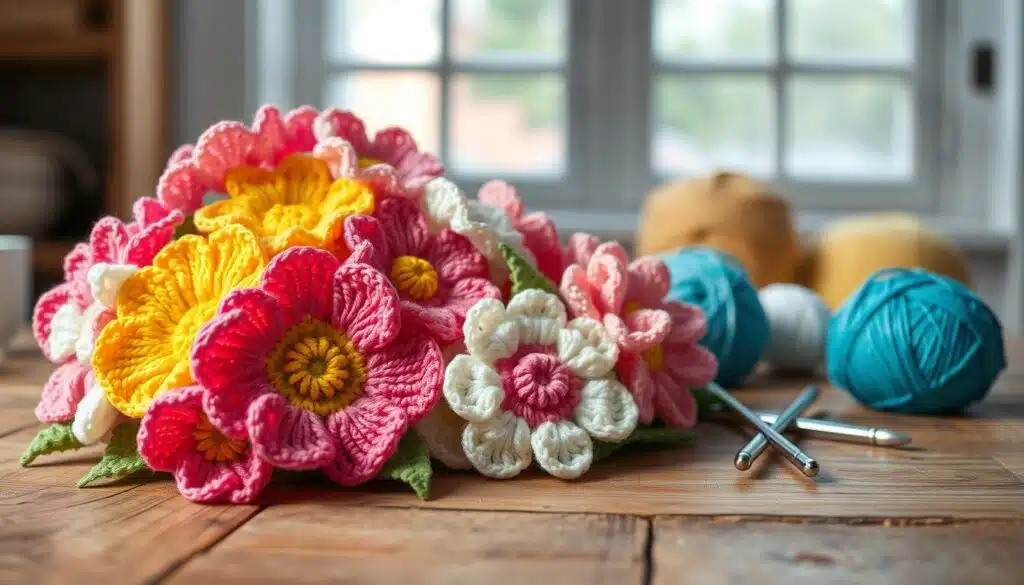
Yarn blooms are beautiful, but they need care to stay vibrant. To keep them looking great, gently clean them and avoid strong light and heat.
Cleaning and dusting methods to keep colors vibrant
Dust settles quickly. Use a soft-bristled brush or compressed air to clean without harming petals. Be gentle; rough handling can damage the stitches and dull the colors.
For a deeper clean, use mild detergent and cool water. Gently reshape and air-dry flat. For more tips, visit yarn-care tips.
Proper storage to avoid crushing and color fading
Store yarn flowers upright in vases or breathable boxes. Use soft padding to prevent damage. Avoid folding petals, as they lose shape easily.
Keep them away from direct sunlight to prevent color fading. Store in a cool, dry place. Use acid-free tissue between stems for long-term storage.
Repair tips: rewiring stems, reattaching petals, and restuffing
Small repairs can save your crochet flowers. Use iron wire to strengthen stems and replace single stems on large blooms. For quick fixes, use hot glue or a whip stitch.
Restuff soft centers by opening a seam, adding fiberfill, and closing with small stitches. Reinforce joints for repairs and test before displaying.
Tip: Keep a repair kit handy. It should include extra yarn, a tapestry needle, floral wire, and a mini glue gun for quick fixes.
Where to Find Free Patterns, Tutorials, and Inspiration
Want to make a bunch of cute flowers without spending money? Start by looking at websites with free crochet flower patterns. They have everything from simple daisies to complex dahlias. You can find step-by-step guides for making bouquets, kits, and single flowers that match your skill level.
For single-pattern downloads, check out Craftsy Amore for sunflowers and carnations. Golden Lucy Crafts has a video on cherry blossoms that shows how to shape petals and attach stems. Hookok offers visual guides for the freesia pattern and other spring flowers.
Moara Crochet has daffodil and tulip patterns with a modern twist. Stitching Space lists lilac and filler flowers for mixed bouquets. For a detailed guide, see the creative crochet projects roundup for pattern links and ideas.
Video tutorials are great for learning hand placement and tension. Look for creators who use short clips and photo guides. This way, you can pause and follow each stitch. Some sellers offer pattern kits or bouquets for a quick start.
Pinterest boards and Ravelry downloads are good for inspiration and patterns. Search for boards with 400+ pins for tutorials and YouTube links. Instagram accounts like tanoshiimajo share short videos and photos for new color ideas.
Use the mini table below to compare patterns based on skill level and use. This helps choose the right patterns for decor, wearables, or bouquets.
| Pattern Source | Best For | Notable Example |
|---|---|---|
| Craftsy Amore | Quick decorative blooms, beginners | Craftsy Amore patterns — sunflower |
| Golden Lucy Crafts | Video-led realistic petals | Golden Lucy Crafts cherry blossom |
| Hookok | Spring displays and corsages | Hookok freesia pattern |
| Moara Crochet | Classic bulbs and variations | Moara Crochet daffodil |
| Stitching Space | Filler flowers and mixes | Lilac and small fillers |
Mix patterns from different sources to create a bouquet. Use photo guides to plan petal counts and wiring. This saves time and ensures predictable results.
Keep track of pattern versions and notes on yarn and hook size. This keeps your finished pieces consistent. Keep trying new things until your collection feels like your own garden.
Conclusion
You now have a clear crochet flowers conclusion that ties the whole guide together. You learned why yarn blooms lift your mood, which yarns and hooks work best, and which simple patterns to try first. Use resources like Craftsy Amore, Golden Lucy Crafts, Hookok, Moara Crochet, Stitching Space, Pinterest, and Ravelry plus video tutorials to move from quick daisies to layered dahlias.
If you want to start crocheting flowers, pick a small project, choose a palette, and match yarn weight to the bloom you imagine. Try a mini rose or forget-me-not to build confidence, then plan a crochet bouquet summary for a centerpiece, wedding, or gift. You can make your own bouquet, buy a starter kit, or adapt patterns for decor and accessories.
Keep care tips and wiring tricks in mind so your creations last. With a hook in hand and a plan, you’ll progress from beginner stitches to advanced textures and full arrangements. Now pick a pattern, grab your yarn, and start crocheting your forever garden.
FAQ
What will I learn in “Crochet Flowers Simple Patterns and Creative Ideas”?
You’ll learn nine basic crochet flower patterns. These include sunflower, cherry blossom, and more. You’ll also find directions to many more free patterns and variations.
The guide uses resources from Craftsy Amore and others. It shows you how to make lasting blooms for decor and gifts.
Why do crochet flowers lift your mood like real flowers?
Crochet flowers make you happy by releasing dopamine. They give you a creative boost and a sense of satisfaction. Plus, they add color and texture to your space.
How are crochet flowers more practical than fresh-cut flowers?
Crochet flowers never wilt and can be kept as keepsakes. They’re customizable and easy to handle. You can use them on garments or in vases.
With simple care, they stay vibrant forever.
What basic materials and tools do I need to start?
You’ll need yarn, small crochet hooks, scissors, and a tapestry needle. For bouquets, you’ll also need flower stems and iron wire.
There are kits available if you prefer a ready-made start.
Which yarn should I choose: cotton, acrylic, or wool?
Cotton is good for durable, realistic flowers. Acrylic is affordable and easy to care for. Wool is warm and cozy for winter blooms.
Choose the right yarn weight for your flowers. Fingering for tiny blooms, light weight for larger ones.
What hook sizes work best for delicate versus bold flowers?
Use 2.0 mm for tiny fillers. For larger flowers, try 2.5 mm or slightly larger. Patterns may suggest different sizes for the right look.
Which patterns are best for absolute beginners?
Start with daisies and simple appliqués. Daisy patterns are easy and uplifting. Mini roses and small fillers are also great for beginners.
What are the go-to patterns for realistic, show-stopping blooms?
Try the Craftsy Amore Sunflower Bouquet and classic layered rose patterns. Thai and cappuccino roses add depth to your bouquets.
Which flowers work best by season?
Spring: tulips, cherry blossoms, and lilacs. Summer: sunflowers and daisies. Autumn/Winter: cotton flowers and deep-toned roses.
How do I build a balanced crochet bouquet?
Choose a main flower and add secondary blooms. Finish with fillers and greenery. Use different stem lengths and open states to look natural.
Can I adapt blooms for weddings and events?
Yes. Crochet bouquets are customizable for any event. Use neutral tones or bold colors to match your theme. Mini blooms make great hairpieces or boutonnieres.
How can I create realistic petal shading and texture?
Use gradient yarns or change colors for shading. Layered petals and textured stitches add depth. Advanced techniques include stuffing and wire shaping.
Where can I find free patterns and video tutorials?
Check Craftsy Amore, Golden Lucy Crafts, and more. Pinterest and Ravelry have many patterns and tutorials. Many creators share videos to help you.
What are easy filler flowers and how are they made?
Forget-me-not and baby’s breath are great fillers. Use tiny hooks and fingering yarn for forget-me-nots. Baby’s breath is made with small stems.
What assembly supplies and techniques do I need for bouquets?
Use hot melt glue and iron wire for assembly. You’ll also need flower stems and tape for finishing. Tapestry needles help with invisible joins.
How should I care for and store crochet flower creations?
Dust gently and avoid direct sunlight. Store bouquets upright in vases or breathable boxes. For repairs, rewire stems and reattach petals with hot glue.
Can I buy ready-made crochet bouquets or starter kits?
Yes. Many sellers offer ready-made bouquets and starter kits. They include yarn, stems, and pattern guides. Kits are great for a quick start.
What advanced patterns should I try once I’m comfortable?
Try anemone, water lily, and complex roses. Layered dahlia and gerbera builds are also advanced. Video tutorials can help with these patterns.
Are there recommended yarn-weight pairings for different flowers?
Yes. Use fingering yarn for tiny fillers and light weight for main flowers. Swap hook sizes for the right petal drape. Patterns suggest yarn weights.
Which online communities and accounts are good for inspiration?
Check Pinterest and Ravelry for pattern collections. Follow Instagram makers for process shots and variations. Many creators share YouTube videos and tutorials.