You’re holding a loop of possibility. This guide starts with the basics so you can move from curiosity to cast-on with confidence. Whether you’re new to knitting and crochet or need a refresher, you’ll find clear, practical notes. These notes respect both tradition and innovation.
Think of yarn as a language: fibers are the alphabet, spinning is grammar, and your stitches tell the story. Influential voices like Genevieve Ann Christeson show how crochet and yarn crafts lower stress and build confidence. Purl Soho highlights the long history and tactile richness of natural fibers. That Yarn Blogs reminds you that luxury and regenerated fibers shape choices, prices, and the boutique markets you’ll explore.
You’ll also get things you can use right away: beginner-friendly tips, essential tools, and a sense of when to choose cotton over cashmere. If you want a quick collection of beginner tricks, check practical advice and stitch hints at crochet tips and tricks to jump-start projects without fuss.
Key Takeaways
- This yarn guide gives you a friendly, practical start to yarn basics and stitchwork.
- Knitting and crochet guide tips can reduce stress and build creative confidence.
- Understanding fibers—natural and regenerated—helps you pick the right yarn for each project.
- Beginner resources and essential tools make casting on and finishing easier.
- Knowing market cues lets you choose between budget, boutique, or luxury yarns.
Why Yarn Captivates You: The Emotional and Practical Appeal of Fiber Crafts
The allure of yarn is more than just its colors and textures. It offers a calming effect and rewards your hands. This piece explores how fiber crafts soothe, spark creativity, and open doors to earning through small-scale making.
The therapeutic benefits of knitting and crochet
Repetitive stitches can calm your mind and slow down racing thoughts. Studies show that these crafts can lower anxiety and boost mood. For those with busy lives, knitting provides a peaceful focus.
Starting out is easier with clear, step-by-step guides. A beginner’s guide to stitches, symbol charts, and left-handed tips can reduce overwhelm. This makes it easier to keep going.
How yarn gives you a sense of accomplishment and creative expression
Every finished project shows you’ve created something valuable and beautiful. This boosts your confidence, lasting beyond the project. Choosing fibers and colors deepens your connection with materials.
Working with yarn encourages creative problem-solving. You learn to adjust patterns, mix textures, and tweak designs. These small victories shape your unique maker’s voice.
Turning hobby into hustle: selling finished pieces and craft-based income ideas
You can turn your passion into profit in many ways. Many makers sell their work at farmers markets, Etsy, or local boutiques. Digital products like pattern writing and online classes also scale well.
Artisan markets and boutique yarn shops create demand for unique items. This scarcity allows you to price your handcrafted goods higher, thanks to quality and story.
| Income Path | What You Do | Why It Works |
|---|---|---|
| Sell finished pieces | Create hats, scarves, and home items to sell online or at shows | Buyers pay for craftsmanship and unique designs |
| Pattern sales | Write clear, tested patterns for knitters and crocheters | Digital delivery scales with little extra effort |
| Workshops and teaching | Host local classes or virtual lessons | People pay for guided learning and hands-on help |
| Craft side hustle bundles | Offer curated kits with yarn, pattern, and tools | Kits lower buyer friction and increase perceived value |
| Wholesale to boutiques | Partner with local shops to stock small batches | Retail relationships expand reach and credibility |
Yarn offers a way to create, grow, and even sell handmade items. Whether for mental health or a side hustle, yarn crafts are calming and profitable.
What Yarn Is and How It’s Made: From Fiber to Skein
Ever wonder how yarn is made? This guide takes you from raw fiber to a skein ready for your next project. You’ll learn about fiber sources, staple length, micron count, and how spinning and plies affect your yarn’s look and feel.
Fiber sources: plant, animal, and regenerated fibers
Choosing your fiber source is key. Animal fibers like Merino wool and silk offer warmth and softness. Plant fibers, such as cotton, provide breathability. Regenerated fibers, like viscose, are soft and dye well.
Each type reacts differently to washing and wear. For a quick guide, check this yarn and fiber guide for comparisons and care tips.
Staple length, micron count, and why they matter to feel and strength
Staple length ranges from under an inch to over eight inches. Short staples make fuzzier yarns. Long staples result in smooth, strong yarns.
Micron count measures fiber diameter. Fine fibers like cashmere are soft. Coarser fibers are stronger but less soft.
Spinning, twist, and plies: how structure changes performance and texture
Spinning involves carding or combing. Carding makes airy yarns. Combing creates dense yarns. Twist level affects yarn strength and texture.
Plies combine strands into multi-ply yarns. Two- or three-ply yarns balance strength and drape. Multi-ply yarns resist snagging. Single-ply yarns show rustic texture.
| Property | Typical Range | Effect on Fabric |
|---|---|---|
| Staple length | Under 1″ to 8″+ | Short: fuzzy, warm. Long: smooth, strong, defined stitches. |
| Micron count | 14–30 µm (common) | Lower: softer, finer garments. Higher: durable, less delicate. |
| Spin method | Woolen vs. worsted | Woolen: loft and warmth. Worsted: smoothness and stitch clarity. |
| Twist level | Low to high | Low: airy, halo. High: strong, smooth texture. |
| Plies | Single to multi-ply | Single: rustic and soft. Multi-ply: durable, stable, great for cables. |
| Fiber source examples | Merino, cashmere, cotton, lyocell | Choose by season, care needs, and desired drape. |
With these basics, you can understand yarn labels. This knowledge lets you pick the right yarn for your projects. You’ll match fiber sources, staple length, micron count, and spinning and plies to your needs.
Understanding Yarn Weight and Gauge: Choosing the Right Thickness for Your Project
Finding the right yarn is like finding a perfect match. You want the right feel, warmth, and fit. A yarn weight chart helps you find the right yarn by showing ranges from lace to jumbo. But remember, fiber, spin, and your tension also play a big role.
Standard yarn weight categories from lace to jumbo
Categories like Lace, Fingering, Sport, DK, Worsted, Bulky, Super Bulky, and Jumbo give you a common language. Purl Soho and the Craft Yarn Council list needle sizes and stitches per inch for each category.
Use wraps per inch or WPI when labels are missing. Count wraps around a pencil and compare to a yarn weight chart. This will quickly tell you where the yarn fits on the scale.
How gauge interacts with needle/hook size and your personal tension
Gauge is about stitches per inch. Needle sizes affect stitch size. If your gauge is tight, use a bigger needle. If it’s loose, use a smaller one. Small changes can make a big difference in size and drape.
Make a 4-inch-by-4-inch swatch and measure it. A good gauge guide will tell you if your swatch matches the pattern. If it doesn’t, adjust your needle sizes until it does.
Practical tips: swatching, adjusting patterns, and substituting yarns
Swatching tips: always swatch in the stitch pattern the project uses. Block the swatch the same way you will block the finished item. Measure after blocking to get a true gauge.
When substituting yarns, compare weight, yardage per skein, fiber content, and stitch definition. Choose yarns with similar yardage and fiber behavior to avoid surprises. Keep extra skeins when trying a new brand like Madelinetosh or Cascade for a safer swap.
Want a deeper chart that ties needle sizes to common weights and recommended gauges? Check this helpful resource for a detailed yarn weight chart and guide: yarn weight chart and guide.
| Category | Typical WPI | Stitches per inch (approx.) | Common needle sizes (US) | Best uses |
|---|---|---|---|---|
| Lace | 16–32 | 8–9 | 000–2 | Sheer shawls, delicate trims |
| Fingering (Super Fine) | 14–18 | 7–8 | 1–3 | Socks, lightweight garments |
| Sport / Fine | 12–14 | 6–7 | 3–5 | Baby clothes, light sweaters |
| DK (Light) | 10–12 | 5–6 | 5–7 | Children’s garments, versatile knits |
| Worsted / Aran (Medium) | 9–11 | 4–5 | 7–9 | Blankets, adult sweaters, accessories |
| Bulky | 6–8 | 3–4 | 9–11 | Chunky scarves, heavy sweaters |
| Super Bulky | 4–6 | 2–3 | 11–17 | Very chunky blankets, oversized outerwear |
| Jumbo | 1–3 | 1–2 | 17 and up | Arm knitting, statement pieces |
Practice with known yarns to get better at choosing. Keep track of your swatching tips in a notebook. Over time, you’ll learn how needle sizes, fiber, and twist work together to create a beautiful stitch.
Animal Fibers Demystified: Wool, Alpaca, Cashmere, Mohair, Silk, and More
Animal fibers are great for warmth, stretch, and a luxurious feel. They range from everyday options to special treats. Knowing the difference helps you choose the right one for your project.
Wool varieties offer different textures and benefits. Merino wool is soft and perfect for close-to-skin wear. Cormo wool is great for cables because of its spring and stitch definition.
Andean and other highland wools are durable and have natural loft. They’re perfect for outdoor use.
Superwash wool care makes many wools safe for machines. But, the wash cycle and detergent matter for how long it lasts. Always read labels and handle special pieces with care.
Wool varieties: merino, Cormo, Andean, and superwash considerations
Merino wool is ideal for softness. Cormo wool is great for bounce and resilience. Andean or Peruvian wools are best for outdoor, durable garments.
Superwash wool care makes machine washing easier. But, it might lose some loft or natural oils. Choose based on the look and feel you desire.
Luxury animal fibers: cashmere, alpaca, yak, and their care
Cashmere yarn is incredibly light and warm. It’s luxurious but expensive. Treat it like fine silk: use cool water, gentle soap, and dry flat.
Alpaca yarn comes in Huacaya and Suri types. Huacaya is fluffy and warm. Suri is silky with a sheen. Alpaca is good for those with wool sensitivity. Most alpaca needs handwashing to keep its shape.
Yak and baby camel yarns offer warmth similar to cashmere. Mohair adds shine and halo. Silk blends enhance strength and drape, perfect for shawls and garments needing fluid movement.
When to choose animal fibers for warmth, elasticity, and drape
Animal fibers are perfect for winter essentials: hats, mitts, sweaters, and wraps. Use wool types for elasticity and stitch memory, like in fitted sleeves or ribbed cuffs.
Choose cashmere yarn for lightweight luxury. Alpaca yarn is great for unmatched insulation. Blend fibers for warmth, sheen, and resilience.
For more beginner-friendly guidance on selecting the right animal fiber, check this yarn fiber guide that walks you through common choices and care tips.
Plant and Regenerated Fibers: Cotton, Linen, Bamboo, Lyocell, Hemp
Plant-based and regenerated yarns are perfect for warm-weather projects. They offer cool comfort and practical performance. You’ll enjoy their breathability, easy care, and clean drape.
Properties of plant fibers:
Plant fibers are cool to the touch and absorb moisture quickly. Cotton yarn ranges from sturdy denim to soft mercerized skeins. Linen yarn starts strong and softens with wear.
Hemp and bamboo add durability with low environmental impact. They use less water in their production.
Regenerated fibers explained:
Regenerated fibers are made from cellulose and mimic natural fibers. Viscose and modal offer shine and softness. Lyocell yarn is eco-friendly and has great drape.
Blending natural fibers with regenerated ones can enhance softness, strength, or handle.
Best uses for plant-based yarns:
- Use summer knitting yarns for breathability and absorbency. Lightweight tops and coverups look great in cotton and linen.
- Dishcloths and towels do well with cotton or cotton blends. They hold water and scrub without pilling.
- Lyocell yarn is perfect for garments needing fluid movement and easy washing. Think camisoles and summer skirts.
For production work, shop cones or skeins with Nm counts. Artisan dyers and mills list fiber content and put-up options. This way, you can match texture to pattern without guessing.
Pair crisp linen yarn with relaxed stitch patterns for airy structure. Choose cotton yarn for sturdy, washable items. Opt for lyocell yarn for silk-like drape with easier care than pure silk.
Color and Dyeing Techniques: Solid, Heathered, Tweed, Hand-Dyed, and More
Color is key in your project. You want yarn that looks good in patterns, works well with textures, and stays vibrant after washing. This section explains the main dyeing methods so you can choose colors with confidence.
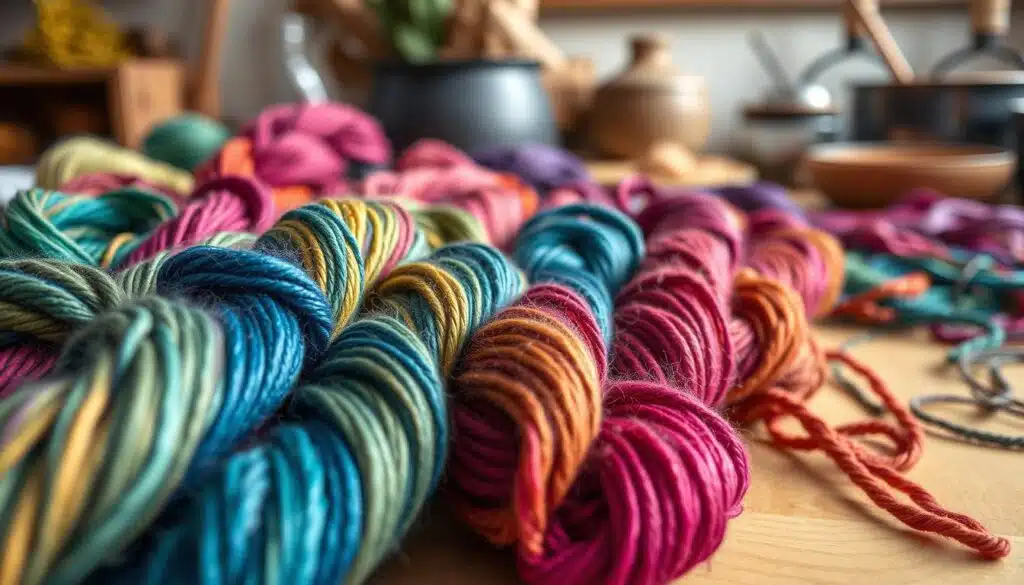
Fiber-dyed vs yarn-dyed vs printed is important for depth, durability, and pattern looks. Fiber-dyed yarns are colored before spinning, giving a soft, blended look. Yarn-dyed yarns glow from within. Printed yarns may show wear faster.
Classic styles include heathered yarns for subtle mottling and tweed yarns for rustic texture. Self-striping yarns create stripes without changing skeins. Hand-dyed yarns offer unique, artistic skeins.
Dye behavior changes with fiber type. Silk and mohair absorb color deeply, while cotton and linen need special processes. Blends offer layered colors that can enhance or soften patterns.
Plan your colorwork with contrast and movement in mind. Solids show off cables and lace well. Heathered yarns add depth while keeping texture clear. Tweed hides small mistakes, and self-striping yarns are great for quick projects.
Hand-dyed yarns from indie dyers like Purl Soho or Brooklyn Tweed sell out quickly. They offer unique colors, but check for colorfastness and care instructions. Fiber-dyed vs yarn-dyed affects consistency across skeins.
For experimenting, make a swatch that mirrors your project’s stitch density. This shows how the color behaves in real life. Try mixing solid with speckled or using heathered for the body and solid for trim. These swaps highlight the best of each dye style without complicating your project.
Yarn Structure and Spin: Worsted vs. Woolen, Single-Ply vs. Multi-Ply
You want your project to look and feel just right. The choice between worsted-spun and woolen-spun yarns is key. It affects how clear your stitches are, how warm it keeps you, and how it moves.
Worsted-spun yarns have fibers that are combed and aligned. This makes the yarn smooth and your stitches crisp. It’s perfect for cables and textured patterns that need to show off every detail.
Woolen-spun yarns are made from carded fibers. They trap air, making the yarn soft and warm. This is great for accessories and cozy clothes that you want to feel extra soft.
Yarn twist is important for how the yarn behaves. A higher twist makes the yarn stronger and less fuzzy. But a lower twist makes it softer and can cause it to pill over time.
Ply count also plays a role. Single-ply yarns are soft and have a nice sheen. They drape well but might pill or come apart easily.
Multi-ply yarns are made from several singles twisted together. They are more stable and have cleaner stitches. This makes them great for items that get a lot of use, like socks and jackets.
Choose the right yarn for your project. Use high twist and multi-ply yarns for cables and dense patterns. For softness and warmth, go with woolen-spun or single-ply yarns. For colorwork, a balanced ply count keeps colors neat while allowing for blending.
- Stitch definition: worsted-spun + multi-ply yarn + higher yarn twist.
- Warmth and halo: woolen-spun + single-ply yarn + lower twist.
- Durability: multi-ply yarn with tighter yarn twist.
When shopping for yarn, check the labels and feel it. Make a swatch to see how it works with your pattern. This small step can save you a lot of time and effort later.
Reading Yarn Labels and Shop Smart: Fiber Content, Care, and Yardage
Before you buy, learn to read yarn labels like a pro. A quick glance tells you fiber content, care symbols, and yarn yardage. These details help keep projects on track and make washing less scary.
Decoding label terms you’ll see often
Know the superwash definition: it’s wool treated to reduce felting and accept gentle machine washing. Look for mercerized cotton on labels when you want sheen and stronger dye uptake. Machine-washable does not mean identical care across fibers, so follow the specific instructions on each skein.
Compare yardage, weight, and put-up for pattern needs
Two skeins might share a weight category yet differ in yarn yardage. Check yards per skein, recommended needle size, and fiber percentage. Pay attention to put-up: hanks need winding, cakes sit ready, cones are great for big projects. These choices affect winding, storage, and tension.
Smart shopping: online vs. local yarn shops
When you buy yarn online you gain access to detailed specs like micron, staple length, and vendor photos. Keep an eye on dye-lot numbers and return policies. In-person shopping at stores such as Purl Soho or a nearby indie shop lets you feel texture, test drape in real light, and ask for substitution tips.
Practical tip: always buy an extra skein for large garments and stash the label. That makes matching dye-lots easier later and helps you confirm fiber content if you need to replace yardage mid-project.
Tools and Materials Every Maker Needs: Hooks, Needles, and Accessories
Start with the basics. Choose a few reliable tools and add more as you learn. A small set saves time and keeps your space organized.
Selecting sizes that match yarn and tension
Hook and needle size matter for your project’s look. Use guides like Purl Soho’s to pick the right size. For worsted weight yarn, start with a 5.5 mm hook or US 8 needles and adjust as needed.
Accessories that speed up and tidy your work
Stitch markers are key for colorwork and shaping. Have both locking and split-ring markers. Don’t forget darning needles, measuring tapes, and row counters for accuracy.
Blocking tools and storage solutions
Blocking tools make your work look better. Use mats, pins, and wires for straight edges and open lace. Store yarn in airtight bins and use labeled bags to keep everything organized.
Ergonomics and left-handed crochet tips
Comfort is important for long crafting sessions. Try ergonomic handles from Tulip or Knitter’s Pride. Left-handed crocheters should look for tutorials and ambidextrous hooks. Many use soft-grip needles to ease tension.
Choosing quality over quantity
Invest in a few good brands and tools. Italian-made needles and artisan hooks last longer. Add specialty items like cone holders as you get better.
Quick starter checklist
- Basic set of crochet hooks in common sizes
- Knitting needles: straight and circular in a couple sizes
- Varied stitch markers and darning needles
- Blocking tools: mats, pins, and wires
- Measuring tape, row counter, and storage bags
Practical Care and Longevity: Washing, Blocking, Pilling, and Storage
Keep your handmade pieces looking fresh with simple, fiber-smart routines. Knowing your yarn’s fiber is key. Treat each skein like a diva with specific needs. A little attention now saves time and heartbreak later.
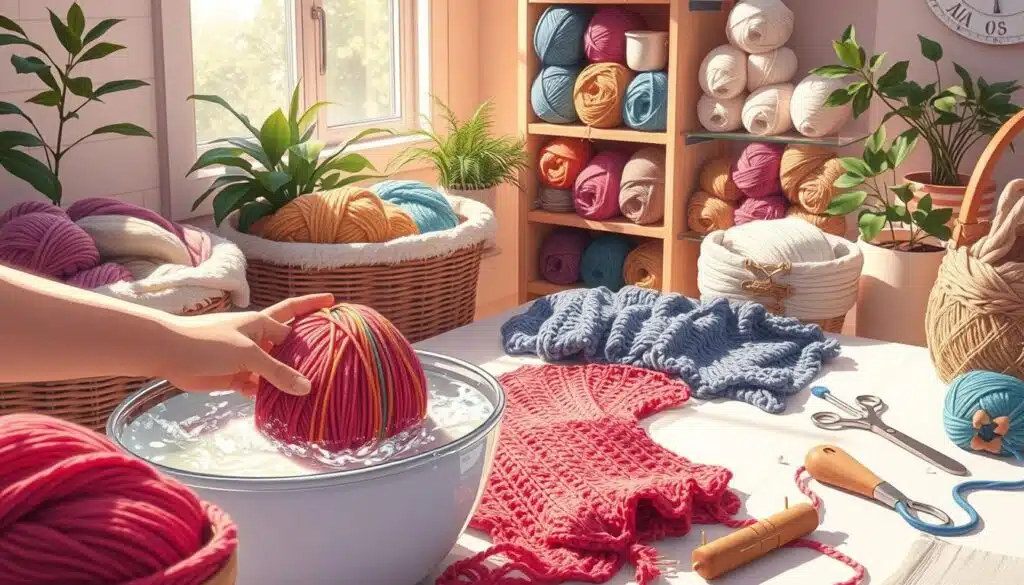
Wool can felt if you’re heavy-handed. Wash wool in cool water with gentle soap and minimal agitation. If it’s “superwash,” you can relax a bit, but choose gentle cycles. Lay wool items flat to dry and gently reshape while damp to restore form.
Cotton and linen can handle more robust care, but they relax and stretch with washing. Machine-wash cotton on a gentle setting and reshape while damp. Silk needs low agitation, mild detergent, and quick drying away from direct heat to keep its sheen and strength intact.
To prevent pilling, choose stronger, tightly spun yarns for high-friction items. Rotate wear of popular pieces and handle them gently in the wash. When pills appear, remove them with a fabric shaver or a careful comb. Treat the surface instead of stressing the whole garment.
Blocking is your friend if you want crisp stitches and correct sizing. Wet or steam block according to fiber type, then pin to shape on blocking mats or use wires for straight edges. Blocking helps stitches sit properly and keeps your project looking polished.
Store yarn the right way to keep elasticity and fend off moths. Fold finished garments and place them in breathable cotton bags or sealed plastic bins, depending on humidity. Add cedar blocks or lavender sachets to deter insects. Avoid long-term hanging; it stretches shoulders and distorts knitwear.
If you need to store large amounts of yarn, keep cones and skeins in a cool, dry place with stable climate control. For commercial stock, label fiber content and care notes clearly. Manufacturer instructions and treatments like mercerization or superwash affect how you should wash wool or machine-care other yarns, so follow those directions when present.
Quick checklist:
- Read the label before you wash wool or other fibers.
- Use gentle soaps and cold water for delicate fibers.
- Block knitting when damp to lock in shape and size.
- Rotate wear and use a shaver to prevent pilling.
- Store yarn in breathable containers with moth deterrents.
yarn guide
You want a clear path from idea to finished piece. Use this yarn guide planning to set goals, choose tools, and avoid last-minute yarn runs. Begin by naming the project’s purpose: wearable warmth, easy-care home goods, or a statement accessory. That step makes project planning yarn faster and smarter.
How to use this guide to move from idea to finish
Start small. Pick a project that teaches one or two skills. Swatch for gauge, check stitch definition, and note how the fiber handles blocking. Keep a simple project notebook with yarn, hook or needle size, gauge, and a photo of the swatch.
Match your choice to use: choose cotton, linen, or lyocell for cool, washable garments. Choose worsted wool, alpaca, or blends for warmth and structure. For delicate halos, reach for mohair or brushed alpaca. This type of fiber pairing helps you predict drape and care needs.
Project matchups: fibers, weights, and finished uses
Use this quick matrix to pair fiber and weight with the final item. Refer to a practical deep dive like complete yarn resources when you need more specifics.
| Final Item | Best Fibers | Typical Weight | Why it works |
|---|---|---|---|
| Summer top | Cotton, Linen, Lyocell | Fingering–DK | Breathable, drapes nicely, machine-washable |
| Sweater | Worsted wool, Alpaca blends | DK–Worsted | Warmth, elasticity, stitch definition |
| Beanie | Superwash wool, Wool blends | Worsted–Chunky | Structure, easy shaping, quick to knit |
| Dishcloth | Unmercerized cotton | Sport–DK | Absorbent, durable, gets softer with washing |
| Haloed scarf | Mohair, Brushed Alpaca | Lace–Fingering held double | Lightweight warmth, luminous halo, great drape |
| Market tote | Hemp, Linen, Cotton blends | Worsted–Bulky | Durable, dense fabric, carries weight well |
Quick starter projects to build core skills
Pick beginner knitting projects and crochet starter projects that teach basic shaping and gauge.
- Scarf in garter or single crochet to practice tension and blocking.
- Simple beanie to learn circular work and decreases.
- Dishcloth for practicing textured stitches and fiber absorbency.
- Market tote to practice sturdy edges and sturdy fibers.
- Beginner amigurumi to learn tight gauge and joining techniques.
When you plan, log fiber behavior: elasticity, loft, and surface structure. If you plan to sell, focus on reproducible small goods with strong photography and tell the yarn story. Use project planning yarn to map time, yardage, and finish steps so each piece ships on time and looks polished.
Lastly, keep experimenting with fiber pairing and small projects to build confidence. The more you match fiber to function, the better your finished pieces will feel and wear.
Conclusion
Yarn crafts are both useful and fun. Learning basic stitches boosts your confidence. Knowing about fiber, weight, and structure helps you pick the right materials.
This guide wraps up by saying practice swatching, read labels, and try different fibers. This way, your projects will look and feel just right.
For your next steps, start with a simple project and a good pattern. Then, visit local shops to touch and learn about fibers. Ask questions too.
To learn knitting and crochet quickly, practice a bit every day. Use online tutorials and join local classes or meetups for feedback and community.
As you get better, try artisan and regenerated yarns. Study technical details and experiment with dyeing and spinning. This will grow your skills.
For a quick guide and resources, check out this brief yarn primer from Diving Ducks Crochet: yarn guide.
FAQ
What makes yarn crafts like crochet and knitting so good for your mental health?
Yarn crafts calm your nervous system with simple tasks. You get a sense of accomplishment with each finished piece. Beginner guides and affordable materials make it easy to start and keep going.
Can you really turn a hobby with yarn into a side hustle?
Yes, you can. Sell your creations, write patterns, teach, or supply shops. Luxury yarns can fetch high prices. Start with small items and focus on quality and stories to attract buyers.
What are the main fiber categories and why should you care?
Fibers are divided into animal, plant, and synthetic types. Each type has unique properties. Knowing this helps you choose the right yarn for your project.
How do staple length and micron count affect what a yarn feels and how it lasts?
Staple length and micron count affect yarn’s feel and durability. Longer staples and finer fibers make yarn softer but require gentler care. Coarser fibers are more rugged.
What’s the difference between worsted and woolen spinning, and does twist or ply matter?
Worsted spinning makes yarn smooth and dense. Woolen spinning creates warmer yarn. Twist and ply affect durability and look. Choose based on your project’s needs.
How do yarn weight categories work and which should you pick for a project?
Yarn weights range from Lace to Jumbo. Weight is just a starting point. Match the pattern’s weight and always swatch to confirm gauge.
Why is swatching so important and how do you do it right?
Swatching proves your gauge and stitch definition. Knit or crochet a square, wash and block it, then measure stitches per inch. Adjust sizes until your swatch matches the pattern gauge.
What should you know about animal fibers like merino, alpaca, and cashmere?
Animal fibers vary in softness, warmth, and care needs. Merino is soft and elastic, while cashmere is luxurious but delicate. Consider these factors when choosing.
When is it better to choose plant or regenerated fibers?
Choose plant fibers for breathability and absorbency. Regenerated fibers offer drape and sheen. Consider your project’s needs when deciding.
How does fiber content affect dyeing and color choices?
Fiber chemistry affects dye uptake. Silk and mohair take dye vividly, while wool takes it warmly. Different fibers require different dyeing approaches.
What are common label terms you should understand before buying yarn?
Read labels for fiber, yardage, weight, and care instructions. Key terms include superwash, mercerized, and machine-washable. Also, note put-up as it affects storage.
How do yardage and put-up affect substitutions and planning?
Compare yardage and weight when substituting yarns. Cone put-up and Nm counts matter for large-scale buying. Always buy extra and check dye-lot matches.
Which tools and accessories should you invest in first?
Start with quality hooks or needles, a tape measure, stitch markers, and blocking tools. Ergonomic tools and left-handed tutorials are helpful. Good storage protects your stash.
How do care and storage differ by fiber to keep your work lasting?
Different fibers require different care. Untreated wool can felt, while many cottons can be machine-washed. Store in breathable containers to prevent damage.
What quick starter projects help you practice essential skills?
Start with scarves, simple beanies, dishcloths, market totes, and basic amigurumi. These projects help you practice gauge and shaping. Use accessible yarns to build confidence.
How do industry metrics like Nm counts and cone put-up matter as you advance?
Nm counts help compare industrial yarns to retail skeins. Cone put-up is efficient for production runs. Tracking spinning details lets you predict yarn behavior.
How should left-handed crafters approach learning and tools?
Use left-handed tutorials and ergonomic hooks. Many beginner guides include left-handed instructions. Practice mirror-image techniques and choose tools that feel comfortable.
How can you shop smart online and at local yarn stores?
Online shopping offers curated yarns and detailed specs. Local shops let you feel fibers and get advice. Ask for dye-lot matches and check return policies.