Ready to improve your crochet skills? This guide is for you, the maker eager for better results. You’ll find practical tips and tricks to enhance your crochet experience.
This guide offers clear advice on choosing projects, tools, and stitches. You’ll learn about tension, finishing, and yarn care. It’s designed to help you work faster and enjoy your crochet more.
Get friendly advice and links to trusted resources like Zoe Bateman and Dora Does. For more tips, check out game-changing crochet tips and techniques from A Crafty Concept.
The guide is written in a friendly, second-person style. It aims to teach you crochet without making you feel overwhelmed. Whether you’re new to crochet or looking to improve, this guide has you covered.
Key Takeaways
- Practical crochet tips and tricks help you make faster progress with focused practice.
- This beginner crochet guide covers tools, foundations, stitches, tension, finishing, and care.
- Follow trusted resources like Zoe Bateman, Dora Does, and yarnsub.com for deeper learning.
- Directed practice yields neater items, better fit, and more enjoyable crafting time.
- The guide speaks directly to you with witty, usable crochet advice for beginners and intermediates.
Why Start Simple: Project Selection and Beginner-friendly Patterns
Starting with simple projects makes learning fun. Choose projects that let you repeat the same stitch and finish quickly. This builds skills and keeps you excited for more beginner crochet projects.
Pick projects that build confidence
Begin with items like washcloths, simple scarves, or a square for a blanket. These projects use repetitive rows and teach you to keep an even tension. Short projects reward you with usable results and motivate steady practice.
Recognize unrealistic first-project expectations
Don’t start with a fitted sweater or an intricately designed lace shawl. Zoe Bateman warns new crocheters against ambitious first projects. Choose patterns that match your current stitch set.
Beginner-friendly pattern features to look for
Search for patterns that list materials clearly, include gauge information, and show stitch counts for each row. Good simple crochet patterns offer diagrams or step-by-step photos. Patterns that point out common pitfalls save you time and frustration.
Practical progression
- Start with a swatch, then make a washcloth or scarf.
- Move to a simple hat or baby blanket as your confidence grows.
- Use medium or bulky yarn and light colors to spot mistakes easily.
When planning your projects, think of a short path from practice to purpose. Repetition plus clear patterns speeds learning. Your next project can be a little bolder once you’ve mastered the basics and finished several easy crochet ideas.
Essential Tools and Supplies to Make Crochet Easier
Start by gathering a small toolkit for easy project picking. A neat project bag with yarn, hook, scissors, pattern, and markers makes crafting simple. This setup saves time and keeps you stitching.
Your basic kit should have various crochet hooks, a tapestry needle, and medium-weight yarns. Also, include a measuring tape and stitch markers for marking rounds and counting.
Must-have tools for beginners and beyond
Have hooks in different sizes and try ergonomic ones like Clover Amour for comfort. Sharp scissors and a blunt tapestry needle are also key. Store everything in a project bag for easy access.
How hook style affects your stitching and comfort
Hooks differ in shape, depth, and finish. A smooth hook helps yarn flow, while a slightly sticky one offers control. Avoid hooks that split fibers to maintain stitch quality.
Experiment with materials like aluminum, bamboo, or ergonomic handles. The right hook can enhance your stitching experience and comfort during long sessions.
Choosing yarn: weight, fiber, and dye lots
For beginners, choose light-colored yarn in medium or bulky weight for clear stitches. Learn about weight labels and fiber textures. Acrylic is easy to work with, while cotton offers crisp stitches but can be hard on hands.
When buying multiple skeins, check the yarn dye lot. Mixing different dye lots can cause color shifts. Use yarnsub.com to find substitutes that match your project’s needs.
Always carry stitch markers, a tapestry needle, and extra hooks. This combination of tools, smart yarn choices, and the right hook makes learning faster and improves your work.
Setting Up Your Crochet System: Bags, Logs, and Kits
Make crafting easy with a good system. Keeping things organized helps you stay focused and avoid stress. Have all you need in one place so you can start right away.
Project bag setup for grab-and-go crafting
Find a big project bag for your yarn, pattern, and tools. Put in the yarn, a hook, scissors, stitch markers, a tapestry needle, and a spare hook. Keep your pattern in a plastic sleeve to protect it.
Keeping a crochet logbook: what to record and why
Your crochet logbook is a treasure. Write down the pattern source, yarn details, hook size, and start date. Also, note any changes and care instructions. This helps you improve and avoid mistakes.
Tracking progress with printed patterns and tallies
Use printed patterns to track your work. Mark rows with a pencil or a small card. Keep a row tally for easy reference.
Carry a small notebook for gauge checks and stitch counts. A simple kit card in your bag can list hook size, yarn, and a row tally. This makes tracking easy and keeps your work organized.
Mastering Foundations: Chains, Magic Ring, and Swatching
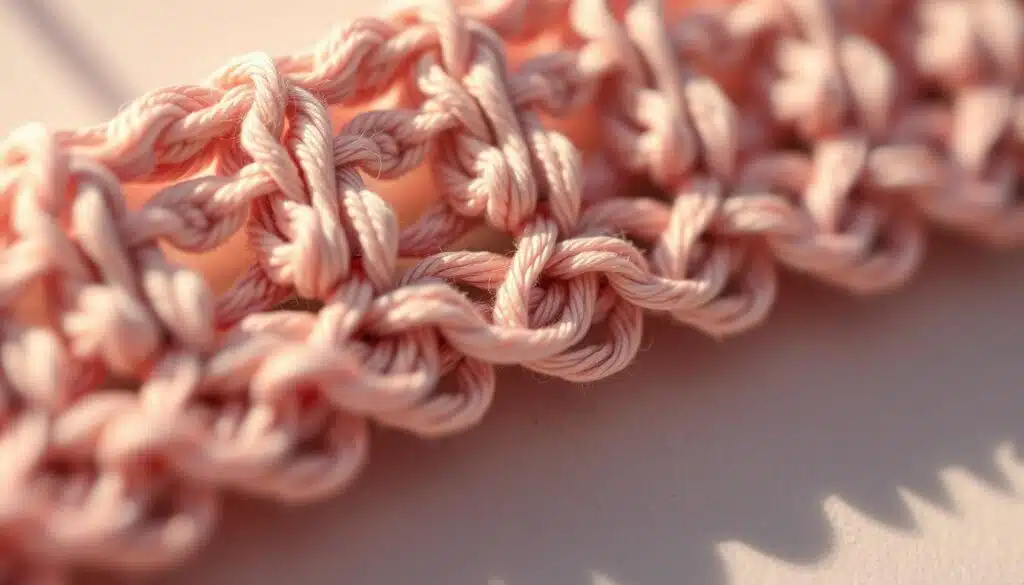
Starting your project right is all about a solid foundation. Small decisions early on can impact your edges and chain tension. If your first row looks puckered, try using a bigger hook for the foundation chain. Then, switch to the pattern hook for the next row.
How to get your foundation chain loose and even
Experiment with different starting points to alter your edge’s look. Try the back bump, the top loop, and under the top/middle loops until you find a neat edge. If your chain feels tight, switching to a larger hook for the chain only can help. This trick can solve many tension issues without redoing the whole swatch.
Magic ring techniques and when to use them
Master at least two starting methods: the classic adjustable loop and a chain-based alternative. Magic ring crochet is great for amigurumi and round projects needing a solid center. Finish the ring by weaving in tails securely to prevent “fairy dust” from coming loose.
Why you should always swatch and label samples
Swatching is a time-saver. Create labeled swatches for gauge, stitch appearance, and color planning. Note the hook, yarn, stitch used, and measured gauge after blocking. A good gauge swatch shows if your stitch fits the pattern and how variegated yarns will pool.
Keep a small library of swatches and notes for future reference. This way, you can check chain tension and stitch behavior later. For fixing starts or edge issues, use a troubleshooting guide like this repair resource for practical fixes and visual examples.
Stitch Anatomy and Reading Patterns Like a Pro
Think of each stitch as a tiny machine. Learn about loops, posts, and which loop to work into next. This knowledge helps you adjust patterns easily and fix uneven edges quickly.
Understand stitch construction to adapt and improvise
When you see a textured pattern, figure out which loop or post creates it. Working into different loops or posts changes the fabric’s look and feel. This skill lets you tweak patterns, adjust sizes, or add fancy details.
Try out different variations on scrap yarn. This way, you can see how changes affect the fabric. It makes improvising feel intentional, not random.
Reading rows, repeats, and chart symbols
Read the pattern all the way through before starting. Mark important row numbers and highlight repeat sections. Look for asterisks or parentheses to spot repeats, like “Row 4–8” or “*…repeat*”. Missing a repeat can mess up a scarf or sweater sleeve.
Learn common crochet chart symbols to switch between written and diagrammed patterns. Use tally charts to keep track of repeats when you pause. For tricky parts, watch a video and follow the written pattern at the same time. Or, check out this guide: how to read crochet patterns.
US vs UK terminology and pattern translation tips
Keep a cheat-sheet for US vs UK crochet terms handy. A US single crochet is the same as a UK double crochet. Knowing this prevents mistakes when using patterns from LoveCrafts or Rowan.
When translating, focus on matching stitch height and gauge, not just names. If a pattern uses both written rows and charts, check both. A quick swatch test saves time and yarn.
| Issue | What to check | Quick fix |
|---|---|---|
| Skipped stitch | Row/round numbers and repeat markers | Unpick to last confirmed marker, use stitch counter |
| Wrong texture | Loop or post used (FL, BL, front post) | Rework that row using the indicated loop/post |
| Pattern from UK source | US vs UK crochet terms | Consult a conversion cheat-sheet, test swatch |
| Confusing chart | crochet chart symbols and legend | Match symbols to written row, watch a tutorial |
| Losing place in long repeats | Repeat counts and interruptions | Use tally charts and highlighter for repeat blocks |
Keeping Your Work Neat: Tension, Counting, and Checking Progress
Your project looks better when your stitch size stays steady and edges stay true. Small habits curb wobble and let you fix crochet mistakes before they bloom into an entire frogging session. Use a calm routine to practice crochet tension control and make your pieces drape the way you expect.
Start by building two simple rituals. First, count stitches at the end of every row. That habit helps you spot a missing or extra stitch early so you can correct it fast. Second, add quick gauge checks every hour on larger works. Gauge checks keep your dimensions honest and stop subtle size drift.
Practical tips to control fluctuating tension
Change in mood or tired hands will tweak stitch size. Try switching your grip, swapping to a different hook material, or breathing and stretching for a minute. Consistent practice trains your hands; using consistent yarn and the same hook helps too.
Count your stitches regularly to avoid shape problems
Work into every stitch, including the last one in a row — that shorter final loop tends to be forgotten. Use stitch markers at beginning-of-row points and at increase or decrease zones. A tally on a sticky note or a row counter makes counting painless during repeats.
When and how to pause and assess larger projects
Take short breaks and perform progress checks every couple of hours. Change your viewpoint by draping the piece over a chair or mannequin to spot uneven shaping. Inspect dye lots, hook consistency, and edge behavior on seams. If something looks off, step back and decide how to fix crochet mistakes before moving on.
If you want a clear walkthrough on common fixes, read this helpful guide at mastering your crochet for concrete examples you can apply while you work.
| Check | When to do it | Quick fix |
|---|---|---|
| Count stitches | End of every row | Insert missed stitch or undo last few stitches and replay row |
| Gauge checks | Start and every few inches | Change hook size or adjust tension technique |
| Progress checks | Every 2 hours on large projects | Reassess shaping, dye lots, and edge symmetry |
| Tension control | When you feel tightness or looseness | Switch grip, rest hands, or try a different hook material |
Finishing Like a Pro: Seaming, Weaving Ends, and Blocking
You’ve made a beautiful piece, and now it’s time to make it even better. Finishing techniques can turn a handmade item into a family treasure. Keep notes on what worked best for each project.
Neat seaming methods for garments and blankets
Choose a seam that fits the fabric’s feel. Mattress stitch is great for clear lines. Whipstitch is quicker for thick blankets.
Best practices for sewing in ends that stay put
To weave in ends, thread the tail through several stitches on the wrong side. Backtrack to secure it. Use a bent-tip needle for tricky yarns. Trim close but don’t cut the working yarn.
Blocking basics: when it matters and how to do it
Blocking can change a piece’s shape and open up lace. Test on a swatch first. Wool needs a gentle wet block, while acrylics might do better with steam.
Use mattress stitch for seams, weave in ends carefully, and block as needed. Practice on small swatches. Soon, your work will look like a pro’s.
Yarn Substitution, Hook Size Pairing, and Caring for Handmade Items
You want your finished piece to look and last like it was meant to. Start by logging brand, dye lot, and fiber in your project notes. This makes future yarn substitution choices smart and simple. Recording yardage per ball also gives you a safety net for substitutions and repairs.
Choosing a suitable substitute yarn and tools
Use yarnsub to compare fibers, plies, and yardage when you need a swap. Match weight and yardage per ball, then swatch to check gauge and hand. Think about fiber behavior: cotton and linen change with water, wool can bloom or shrink, acrylic stays stable.
Matching hook sizes to yarn weight for desired drape
Start with the pattern gauge, then tweak for drape. A smaller hook gives a firmer fabric; a larger hook produces more drape. Learn typical pairings—light weight #3 often needs a 2.25mm hook, medium #4 around 2.75mm, bulky #5 near 3.25mm, super bulky #6 about 6mm—and adjust for your tension. Your individual tension matters: if you crochet tight, try a larger hook; if you crochet loose, try a smaller one.
For amigurumi, aim for tight stitches with no gaps. Recommended hook sizes on yarn labels can be too large for toy work, so use a firmer hook than the label suggests. For an illustrated reference to amigurumi hook sizing, see this helpful hook size guide.
Washing, storing, and preserving your finished crochet pieces
Learn how each fiber reacts to washing and heat to avoid surprises. Use fiber-specific care: hand wash delicate fibers or use a gentle cycle for sturdier blends. Dry garments flat to keep shape and prevent stretching.
Store finished items in sealed bins or cotton bags and add cedar or lavender to deter pests. Note care instructions in your log so recipients know how to treat the piece. When washing handmade items, treat them with patience and low heat; a single hot wash can ruin months of work.
- Substitution checklist: match weight, yardage, and fiber behavior; swatch to verify.
- Hook pairing checklist: use pattern gauge as a start, then adjust for drape and individual tension.
- Care checklist: follow fiber-specific washing, dry flat, store to avoid pests, and document care in your project log.
Developing Your Crojo: Practice, Frogging, and Finding What You Love
Your creativity needs room to breathe. Start with short, focused crochet practice sessions. Target one skill at a time, like working in the round or mastering front post stitches. Small wins build momentum and make the messy middle feel manageable.
Accept that frogging is part of learning. Ripping back taught stitch placement can reveal what went wrong faster than stubbornly forging ahead. Keep frogged swatches and note what you learned from each unraveling so you can track real improvement.
Set deliberate goals. Pick measurable steps such as completing three swatches of a new stitch or following a single YouTube tutorial from start to finish. These mini-challenges turn practice into progress and keep developing crojo from feeling aimless.
Embrace directed practice
Direct your time toward techniques that matter to projects you love. If garments excite you, drill shaping and gauge. If amigurumi calls, practice tight, consistent stitches. This kind of focused work speeds skill growth and boosts confidence.
Frogging as feedback
View frogging as guided feedback, not failure. Each rip-back shows tension issues, pattern-reading mistakes, or yarn choices that clash. Schedule a frogging session when a project stalls, then make a small change and test it on a fresh swatch.
How to find projects that keep you burning
Use prompts to discover what truly lights you up. Ask which finished piece makes you happiest to wear or give away. Try motif-based tests to see if you love repetitive patterns or prefer one-off statement pieces.
Collect creative inspiration from places like Ravelry, Pinterest, and Instagram hashtags that resonate with you. When you need a reset, visit practical guides such as the one at how to get your crojo back for fresh prompts and habits.
- Make and label swatches to compare progress over time.
- Keep a small stash of inspiring yarns so a touch of color can spark a new idea.
- Try social challenges or short tutorials to expand your toolkit without pressure.
As you follow this path, you’ll naturally find your crochet niche. The mix of steady crochet practice, intentional frogging, and curated creative inspiration will keep your passion alive and refine what you enjoy most.
Conclusion
Here’s a quick recap of crochet tips: start simple, pick the right tools, and keep things organized. Use a project bag and a logbook. Learn the basics like loose foundation chains and the magic ring.
Practice makes perfect, but don’t worry if it’s not perfect at first. Frogging is okay when things don’t go as planned. Start with small projects like a potholder or swatch sampler.
For more tips, check out best crochet tips. Keep trying new hooks and fibers, and log what you learn. Bring a small project when you wait.
FAQ
How do I pick a first crochet project so I don’t get overwhelmed?
Start with something simple like washcloths, scarves, or granny squares. Avoid big projects like wedding dresses. Choose patterns with clear instructions and use medium or bulky yarn in light colors.
Make sure the yarn and pattern are easy to follow. This way, you’ll actually finish your project.
What pattern features should I look for as a beginner?
Look for patterns with row-by-row instructions and stitch diagrams. They should also have clear gauge guidance and video tutorials or photo steps. Avoid patterns that are too advanced without tutorials.
Patterns that use US/UK terminology or include a cheat-sheet are great.
What tools are must-haves for a beginner’s kit?
You’ll need a set of hooks, including an ergonomic one like Clover Amour. Also, medium or bulky light-colored yarn, scissors, tapestry needles, stitch markers, and a measuring tape. Don’t forget a project bag.
Adding a small notepad or erasable tally for repeats is helpful. And, keep a spare needle for tricky yarns.
How does hook style change my stitching and comfort?
Hook anatomy is important. The shape, throat depth, and surface affect yarn flow. Smooth, well-shaped hooks work better.
Ergonomic handles reduce hand fatigue. Try different materials to find what works best for you.
How do I choose yarn—weight, fiber, and dye lot tips?
Learn about yarn weight categories and choose medium or bulky yarns for beginners. Light colors help you see mistakes.
Check how different fibers behave. Acrylic is forgiving, while cotton shows definition but can be harsh on hands. Always match dye lot numbers for color consistency.
What should I pack in a project bag for grab-and-go crafting?
Include labeled yarn, the right hook(s), scissors, and a printed or photocopied pattern. Don’t forget stitch markers, a tapestry needle, and a small project card or notebook.
Having a printed pattern makes it easy to mark rows and jot down notes.
What belongs in a crochet logbook and why keep one?
Record project details like name, pattern source, hook size, and yarn brand. Include starting gauge, alterations, start and end dates, and blocking notes. It helps you repeat successes and avoid mistakes.
How can I track progress during a project?
Use printed patterns with pencil ticks and stitch markers. Keep a tally chart for repeats. Pause every few hours to count stitches and check gauge.
Small, regular checks catch mistakes early.
My foundation chain is too tight — what do I do?
Make your chain with a larger hook, then switch to the pattern hook for the first row. Try different insertion points to find your preference. Swatch starting methods and label them for later use.
When should I use a magic ring and how do I close it neatly?
Use a magic ring for amigurumi and circle projects to avoid gaps. Learn at least two methods and practice finishing by weaving the tail securely. Always weave the end through several stitches to lock it.
Why swatch, and how should I label samples?
Swatches test gauge, stitch look, and colorplay. They’re low-cost practice. Label each with yarn, hook, stitch name, and measured gauge after blocking.
Keep swatches for future reference and to plan color combos or substitutions.
How do I read rows, repeats, and chart symbols without getting lost?
Read the whole pattern first to spot tricky parts. Highlight repeat sections and use pencil ticks for completed rows. Learn common chart symbols and map them to written steps.
Combine written instructions with video tutorials if needed.
What’s the trick to understanding stitch anatomy so I can adapt patterns?
Learn where stitches are worked—the top loops, back loops, posts, and front loops. Knowing anatomy lets you use front- or back-loop-only stitches, work post stitches for ribs, and troubleshoot missed or uneven stitches.
How do US and UK crochet terms differ and which should I follow?
US single crochet = UK double crochet, and US double crochet = UK treble crochet. Keep a quick conversion chart handy when following foreign patterns. Patterns usually note the terminology—double-check before you start.
How can I control fluctuating tension while crocheting?
Practice and small routines help. Switch hook materials or size, change grip, and take short breaks to relax hands. Use ergonomic hooks if hands fatigue.
Count stitches at row ends and check periodic gauge to spot drift before it becomes a problem.
How often should I count stitches and check project dimensions?
Count stitches at the end of every row for shaped pieces and every few hours for large projects. For blankets and garments, pause every couple of hours to measure and compare to your gauge.
Early detection saves frogging later.
When should I stop and assess a larger project?
Stop if tension drifts, stitch counts change, or the piece’s dimensions don’t match the pattern. Change perspective—hold it up, measure flat, and compare to your gauge.
Use a checklist: stitch count, gauge, dye lot consistency, and hook size.
What are neat seaming methods for garments and blankets?
Use mattress stitch for invisible seams on flat pieces and whipstitch for sturdier joins on blankets. Match seam tension to the main fabric so joins lie flat. Practice on swatches to get consistent results before seaming the final piece.
How do I weave in ends so they stay put?
Thread the tail through several stitches on the wrong side, backtrack a few stitches, and lock with small stitches. Use a bent-tip tapestry needle for slippery yarns and weave along the yarn’s plies to hide the tail.
Record your method in your logbook so you can repeat what worked.
When should I block a piece and how do I do it?
Block when stitch definition, drape, or size needs refining. Wool responds well to wet blocking; acrylic often needs low-heat steam or no blocking—test on a swatch first. Pin to shape on a flat surface, let dry fully, and follow fiber-specific care.
How do I substitute yarn safely using yarnsub.com?
Match weight, yardage, and general fiber behavior first. Use yarnsub.com to find similar yarns and swatch to verify gauge and drape. Check dye lots and texture—a different ply or spin can change stitch definition and fabric behavior.
How should I match hook sizes to yarn for the drape I want?
Start with the pattern’s recommended hook as a baseline, then swatch: smaller hooks create a firmer fabric, larger hooks give drape. Consider fiber: smooth, plied yarns may need a smaller hook for definition; fuzzy yarns hide stitch detail and may work better on a larger hook.
What are the best care practices to preserve handmade items?
Learn fiber reactions—hand wash or delicate cycles for many handmades, dry flat, and store in sealed bins or with cedar to deter pests. Document care in your logbook and follow label instructions when using commercial yarns.
How do I get through the “messy middle” of learning crochet?
Embrace directed practice: set small, measurable goals (master the magic ring, practice front post stitches). Accept frogging as normal—each unravelling teaches you faster. Keep swatches to compare progress and focus on projects that bring you joy.
Why is frogging useful and how should I treat it?
Frogging reveals mistakes and teaches technique. Schedule deliberate frogging sessions as checkpoints, note what went wrong in your logbook, and try the same section again with a focused goal. Your skills improve faster this way.
How do I discover the projects I’ll love making over and over?
Try prompts and short experiments—granny squares, garments, amigurumi, or texture samples—and note what satisfies you most. Ask: Do you love repetitive meditation or detailed shaping? Build a progression plan from swatches to washcloths to hats and garments to find your niche.
What should my next steps be after reading this guide?
Make a small confidence-building project, create labeled swatches, bookmark yarnsub.com, and follow Zoe Bateman and Dora Does for tutorials. Keep a logbook, try ergonomic hooks like Clover Amour, and allow yourself to frog—your future projects will thank you.