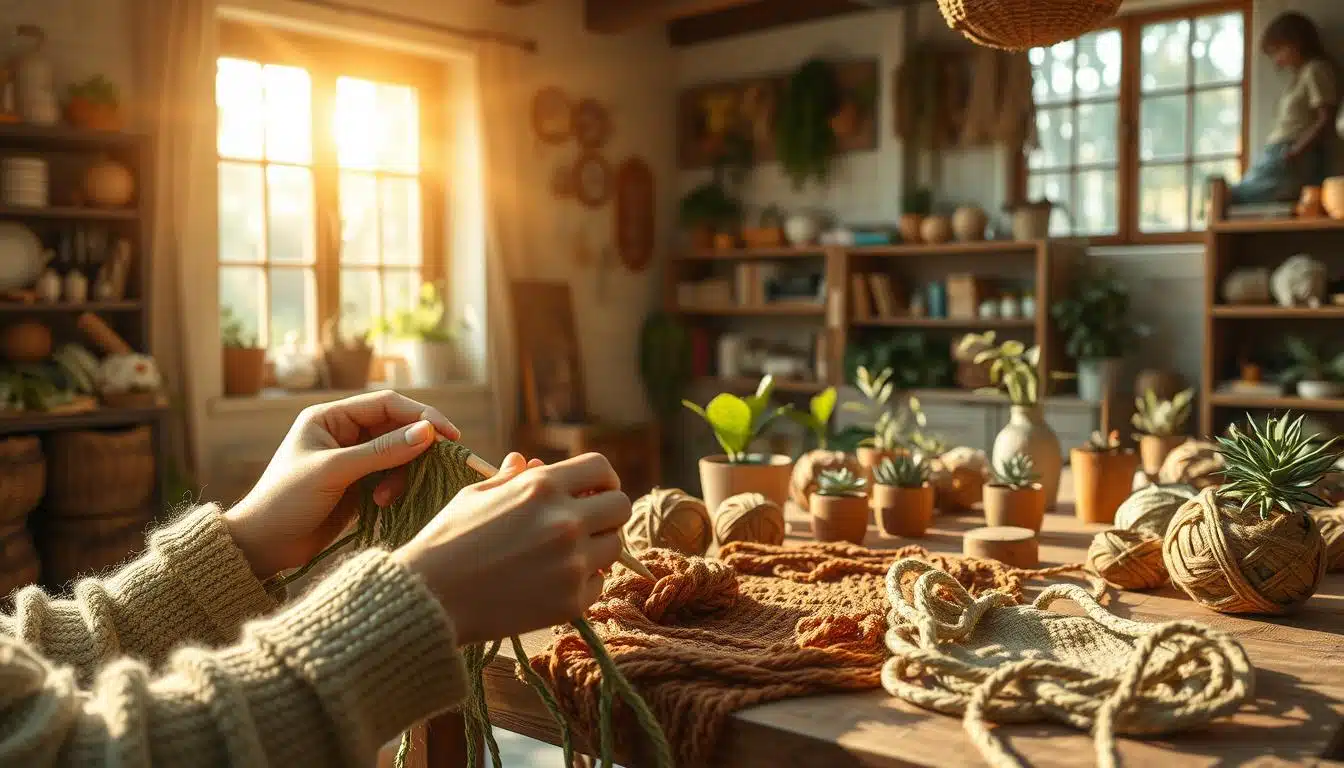
You’re about to make your knitting greener. Sustainable yarn knitting is more than a trend. It’s a way to reduce waste and support good supply chains. You can choose from organic yarn, recycled fibers, or plant-based options like bamboo and hemp.
This guide is your map to greener knitting. You’ll learn about shopping for eco-friendly yarns. Brands like Michigan Fine Yarns and Cascade Ultra Pima are great options. You’ll also discover how to make your projects better for the planet.
Key Takeaways
- Eco-friendly knitting starts with choosing the right yarn: organic, recycled, or plant-based.
- Retailers like Michigan Fine Yarns offer a wide range of sustainable yarns and helpful details for planning.
- Good knitting practices include upcycling and designing for minimal waste.
- Choosing the right yarn for your project makes it last longer and reduces waste.
- By focusing on quality and care, you’ll save money in the long run.
Why Sustainable Yarn Knitting Matters for the Planet
You want your clothes to be good for the planet. Sustainable textiles help reduce pollution and waste. By choosing fibers with a low environmental impact, your projects can be kinder to the Earth.
The environmental cost of conventional fibers
Conventional cotton farming uses a lot of water and pesticides. This harms rivers and ecosystems. Synthetic yarns, like polyester, come from oil and release microplastics in the wash, harming marine life.
Natural fibers like wool, linen, and organic cotton break down over time. They don’t contribute to landfill waste like synthetics do. Using recycled yarns and plant fibers also saves resources and energy.
Learn about ethically made yarns at ethically made yarns guidance. It shows how your yarn choices affect the world.
How knitting and crochet fit into a circular mindset
Circular knitting is more than a method; it’s a lifestyle. Designing for durability and repairability keeps clothes in use longer. Custom fits and colors also reduce impulse buying.
Upcycling and mending extend the life of your creations. This reduces waste and the environmental impact of yarn. Small changes in your project planning can make a big difference over time.
Top Eco-Friendly Yarn Types to Choose
You want yarn that’s good for the planet but doesn’t lose quality. Here are some top picks for low-impact fibers and when to use them.
Natural fibers that biodegrade
Biodegradable yarns are great for items that will eventually return to nature. Wool and linen are good choices. Linen is perfect for summer clothes because it’s crisp and gets stronger when wet.
Organic cotton is ideal for baby clothes and items that touch your skin. It’s grown without harmful chemicals. Keep in mind, natural fibers can vary in durability, so choose wisely.
Regenerative and fast-growing plant fibers
Hemp yarn is a top pick for its low environmental impact and durability. It gets softer over time and lasts long, making it great for outerwear and bags. Hemp also helps the soil when grown sustainably.
Bamboo yarn is known for growing fast and needing little water. Opt for mechanically processed bamboo or transparent viscose mills to reduce chemical use. This makes bamboo a soft and eco-friendly choice.
Recycled and upcycled yarns
Recycled yarns turn old textiles into new ones. They reduce the need for new materials and waste. While they aim for consistency, texture and color can vary.
Use recycled yarns for items like sweaters and accessories where a bit of uniqueness is okay. For things like socks that get a lot of wear, mix recycled yarns with stronger fibers for longer life.
Quick tip: match the yarn’s properties with the item’s needs. For softness, choose bamboo or organic cotton. For durability, go with hemp or blends. For eco-friendliness, pick recycled and biodegradable yarns.
How to Read Yarn Labels for Sustainability
When you pick up a skein, look for facts, not fluff. Clear labels help you choose the right yarn for your project. They tell you about washability, durability, and compostability. Look for detailed information on product pages, like those from Michigan Fine Yarns.
Start by checking yarn certifications on the label. Look for GOTS yarn logos for organic cotton and blends. For low-toxin processing, check for OEKO-TEX yarn marks. If animal welfare is important, choose yarns with the Responsible Wool Standard.
Certifications to look for
Yarn certifications help you trust the yarn. GOTS yarn covers organic farming and social criteria. OEKO-TEX yarn ensures low-toxin processing, great for baby projects. The Responsible Wool Standard shows animal welfare and land management.
Be careful of vague terms like “eco” or “natural” without a logo. If a label has a certification, check the product page or certification database. This confirms the fiber’s origin and care instructions.
Material blends and what they mean for the environment
Blends solve real-world problems. A wool-nylon mix is strong and long-lasting. Pure plant fibers biodegrade easily. Choose based on your project’s needs.
Blends make recycling and composting harder. For recycling, choose mono-fiber yarns or brands with take-back programs. Match label details to your goals: OEKO-TEX for low toxins, GOTS for organic farming.
Use the label to set realistic care expectations. Brands like Michigan Fine Yarns tell you if it’s machine-washable or needs hand care. This keeps your knits in use longer and reduces waste.
When unsure, read more: product pages and trusted write-ups help. A guide on fiber types and feel is at yarn types unraveled. Keep scanning labels, comparing certifications, and asking sellers until you feel confident in your choice.
Where to Buy Sustainable Yarns in the U.S.
Looking for sustainable yarns? Start by checking local yarn shops. Here, you can touch the yarn, see the colors, and get advice from staff. Indie shops often carry organic, recycled, and small-batch yarns, helping you reduce your carbon footprint.
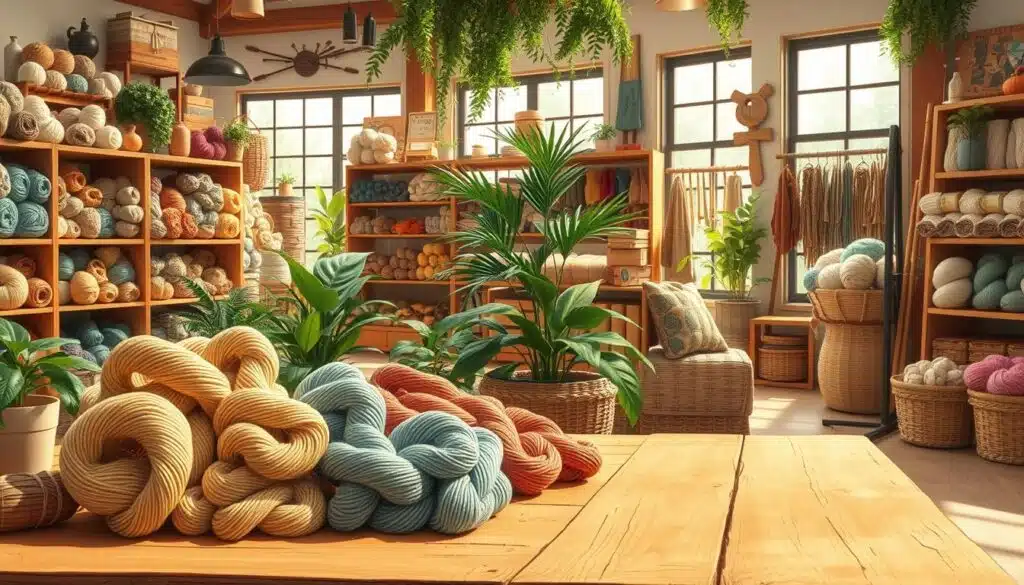
Brick-and-mortar yarn shops with eco-friendly selections
Local yarn shops offer more than just yarn. They provide expert advice and help you choose the right yarn for your project. They stock organic cotton, recycled fibers, and regenerative blends.
Independent retailers also offer unique yarns from small producers. They host mending circles and swaps, keeping materials in use. For nearby options, check out this yarn store locator that highlights eco-friendly shops.
Reliable online sources and specialty retailers
Online yarn stores let you compare different yarns easily. Michigan Fine Yarns is a great example, with a wide selection and clear information. They offer secure payment, order tracking, and rewards, making online shopping safe and rewarding.
Look for online retailers that show where their yarns come from and have clear return policies. They often carry organic cotton, recycled yarns, hemp, and bamboo. Always read customer reviews and check product pages for details before buying.
Whether you like to shop in person or online, combining both is the best way to find sustainable yarns. Use local shops for a personal touch and online stores for a wider selection.
sustainable yarn knitting
You can make your knitting eco-friendly with small choices. Start with smart yarn project planning and a few habits. These steps help reduce yarn waste and keep your creativity flowing.
How to make your knitting practice inherently eco-friendly
Calculate yardage before buying yarn. Use pattern estimates for Malabrigo Rios, Chunky, or Arroyo. This ensures you buy the right amount for your project.
Pick modular or adjustable patterns for better fit. This way, you can adjust your project without starting over. Choose durable stitches to make your garments last longer. This reduces the need for new projects and supports sustainable knitting.
Practical habits for greener crafting
- Track your stash with a simple spreadsheet or app. Knowing what you own stops impulse buys and helps you reduce yarn waste.
- Prioritize quality over novelty. A well-spun wool or a robust plant fiber lasts longer and saves resources over time.
- Swap or borrow yarn and patterns from your knitting circle. Sharing cuts cost and lowers the demand for new skeins.
- Choose near-zero-waste designs and customize sleeves, hems, and lengths to use yarn fully. That is the core of eco-friendly knitting practices.
- Care for finished pieces gently: cold-water wash and air dry to conserve energy and extend wear.
Make a habit of testing gauge and washing a swatch. This small step prevents big mistakes and extra purchases. With intentional yarn project planning, you will reduce yarn waste, enjoy more finished projects, and build lasting sustainable knitting habits.
Upcycling and Reclaiming Yarn from Old Garments
You can give new life to old sweaters and worn-out knits. Start by carefully checking seams and weak spots. Decide if you want to reclaim yarn or respin it into a new strand. This way, you reduce waste and create unique textures for your projects.
To unravel a sweater, first cut the seams and remove hems with sharp scissors or a seam ripper. Be careful around labels and reinforcement stitches. Small, neat cuts help avoid snags in the yarn.
Once you’ve freed the fabric, gently tease out the rows. Roll the yarn into a loose ball as you go to prevent tangles. Clean the yarn by washing it in cool water with mild soap, then air dry it flat. You might need to clip off pilled or thin parts before respinning.
Reclaimed yarn can be delicate. Use it for items like scarves, patchwork blankets, or decorative pillows. For wearable items, mix it with a strong eco-friendly yarn from brands like Cascade or Malabrigo. This adds durability and consistent gauge.
Keep track of the yarn’s fiber content and yardage as you work. This information is useful for planning projects and matching colors from Michigan Fine Yarns swatches.
Creative upcycled yarn projects benefit from variety. Try mending a sweater with color-block patches, making a striped tote from mixed skeins, or weaving a throw that celebrates texture differences. These designs welcome irregularities, making each piece unique.
Remember to protect your efforts. Treat the yarn for pests and odors before storing. Test a small swatch for strength and felting response. If a strand feels weak, respin it by plying it with another filament for added body and resilience.
| Step | Action | Tip |
|---|---|---|
| 1 | Inspect and deconstruct | Cut seams, remove hems, and save labels for fiber clues |
| 2 | Unravel sweater rows | Work slowly to prevent knots; roll yarn into loose balls |
| 3 | Clean and dry | Use cool water and mild soap; dry flat to avoid stretching |
| 4 | Assess and repair | Trim pilled sections; test strength before a big project |
| 5 | Respin yarn if needed | Ply reclaimed strands with a sturdier yarn for wearable items |
| 6 | Plan upcycled yarn projects | Choose scarves, home goods, or patchwork to embrace texture |
| 7 | Document yardage and content | Label balls with fiber notes and estimated yardage for future use |
Choosing Animal-Friendly and Ethical Wool Alternatives
Finding yarn that’s kind to animals and the planet is easier than you think. You can find warm, durable, and ethical yarn by asking a few questions. Brands like Michigan Fine Yarns offer merino and superwash options like Malabrigo Sock and Mechita. This shows that wool is common and why knowing where it comes from is important.
Responsible wool sourcing and standards
When you shop, look for traceability claims and certifications. The Responsible Wool Standard (RWS) ensures animal welfare and land care. If a label says RWS yarn, ask for details about the farm. This tells you about animal care and land use.
Support brands that share their supply chain. If a retailer can’t show where the yarn comes from, think twice. Choosing RWS yarn means you support systems that check animal welfare and land use.
Plant-based and synthetic alternatives with lower impact
Vegan yarn alternatives are plenty and worth trying. Plant-based yarns like linen, soy, and bamboo are breathable and compostable. They feel and perform differently, so test them first.
Synthetic yarns don’t use animals but have their own issues. They can shed microplastics and last a long time in the environment. When choosing vegan or synthetic yarns, look for clear manufacturing info and recycling plans.
Blends offer a mix of benefits. A bit of responsibly sourced wool can add warmth and stretch to plant-based yarns. But blends might make recycling and biodegradation harder.
To shop with confidence, choose RWS yarn for wool. For a fully animal-free option, pick plant-based yarns with clear info. Upcycling old clothes and supporting transparent brands help reduce harm and let you knit with a clear conscience.
Caring for Eco-Friendly Knits to Maximize Longevity
You want your handmade sweaters and scarves to last a long time. To do this, start with simple habits. Read the yarn label, use gentle detergents, and treat each piece like an investment. These small steps can double a garment’s lifespan and reduce waste.
Washing and blocking with the planet in mind
To wash wool sustainably, use cold water and a wool-specific soap like Eucalan or Woolite. Hand wash when you can. If machine washing, choose a delicate cycle with low spin and a mesh bag.
After washing, avoid wringing. Gently press out water and lay flat to air dry. This keeps the shape and size of your knitwear. Blocking while damp helps restore the drape of lace and fitted pieces.
For more detailed care notes and product guidance, see this practical guide on how to care and maintain knitwear garments for step-by-step tips.
Storage habits that prevent damage
Fold heavy knits and store them on shelves or in breathable cotton bags. Use cedar blocks or lavender sachets to deter moths instead of chemical mothballs. Rotate pieces seasonally and keep them out of prolonged sunlight to avoid fading.
Delicate fibers like cashmere benefit from padded drawers and loose folding. Avoid hanging bulky garments unless you use wide, support-friendly hangers designed for knits.
Practical mending techniques to keep pieces out of landfills
Learning basic mending techniques saves money and the planet. Start with darning for holes, invisible mends for worn elbows, and small patches for stressed areas.
Offer repairs in-store or partner with local menders. Teaching customers simple stitches builds a repair culture. This keeps garments in use and reduces disposal.
- Quick tip: Treat snags immediately to prevent runs.
- Quick tip: Reweaving or visible mending can add character while extending wear.
- Quick tip: Use matching fiber yarns when you mend to keep fabric behavior consistent.
When you commit to proper care for eco-friendly knits, you cut energy use and avoid replacements. This keeps great pieces in your closet longer and waste out of the landfill.
Patterns and Projects That Use Less Yarn and Waste Less
You want designs that look intentional while cutting down on yarn and scraps. Choose styles that let you adapt yardage on the fly. Use contrast accents to spend small amounts. Favor constructions that eliminate bulky seams.
Start by choosing yarn weight to match project goals. Bulky yarns like Malabrigo Rasta are great for chunky hats and home accessories. They finish pieces fast with little waste. Fingering or sport weights such as Arroyo are perfect for lightweight garments.
Top-down sweater methods let you try on as you go. With a top-down sweater, you measure length and shaping in real time. This trims waste and nips surprises before they happen. Modular or adjustable designs give you the same control for sleeves, hems, and yokes.
Minimal-seam knitting reduces finishing time and leftover bits. When you use mattress stitch sparingly or choose seamless raglans, you cut the need for extra joining. Seamless accessories like cowls and mitts are natural scrap-busting projects.
Colorwork and contrast stripes shine in scrap-busting projects. Small color repeats, Intarsia squares, and mosaic blocks turn tiny scraps into deliberate accents. Patchwork throws and granny-style blankets make striking patterns from varied yarns.
Choose patterns with flexible yardage and clear options for scaling. Look for adjustable cuffs, modular repeats, and trading instructions for contrast accents. This way, you use every last scrap and practice zero-waste knitting without sacrificing fit or style.
Accessory projects are your best friends when stash diving. Hats, headbands, slippers, and amigurumi soak up short skeins. Home items like potholders, coasters, and small pillows welcome mismatched weights and textures.
Execution tips to save yarn: prefer top-down or circular construction, add narrow contrast details to use odds-and-ends, and reserve bulky skeins for statement pieces. With these tactics, you will turn leftover yarn into intentional design, not landfill fodder.
The Social Impact of Choosing Sustainable Yarns
Choosing sustainable yarns does more than just make a sweater. It supports farmers, dyers, and small shops. They value fair pay and taking care of the land. Brands like Michigan Fine Yarns and Malabrigo show how important it is to learn about the yarn.
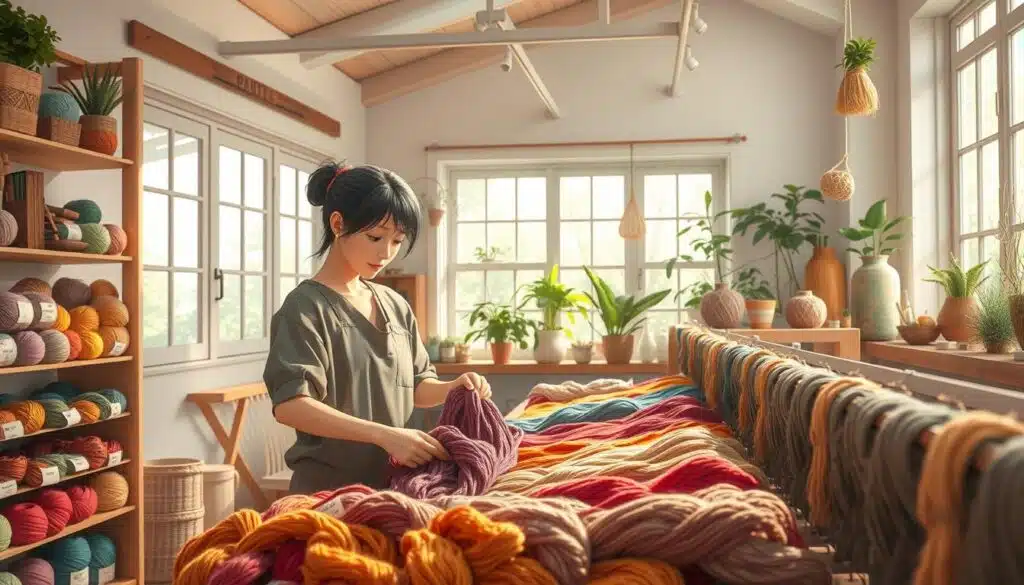
Buying yarn with transparency helps rural economies. It supports sustainable farming and reduces waste. You can find responsibly made yarn by visiting craft yarn stores near me.
Supporting small producers and fair labor
Buying from indie dyers helps everyone involved. It supports the dyer, the shepherd, and the shop. Indie dyers are often more open about how they make their yarn.
Choosing small-batch yarns helps keep traditional skills alive. It ensures fair wages and better farming practices. Your choice supports a fair supply chain.
Community initiatives and swaps
Change happens in our communities. Knitting groups share skills and projects. They also host yarn swaps to reduce waste.
Yarn swaps let you trade for colors you’ll love. They reduce the need for new yarn and strengthen local connections. Repair cafés and knit-a-thons give back to the community.
| Action | Impact | How to Start |
|---|---|---|
| Buy from indie dyers | Supports fair labor and local economies | Follow maker pages, read product notes, ask about origins |
| Join community knitting groups | Shares skills, reduces isolation, increases repair culture | Check libraries, yarn shops, or community centers for meetups |
| Host yarn swaps | Reduces waste and refreshes your stash | Set simple rules: clean, labeled yarn; small entry fee for charity |
| Donate finished handknits | Meets local needs and promotes longevity of handmade goods | Coordinate with shelters, hospitals, or veteran groups |
| Promote ethical yarn sourcing | Incentivizes brands to be transparent and fair | Share trusted sources and review small producers online |
You can make a big difference, even with small actions. Swap a few skeins, join a stitch night, or support a maker who values transparency. Together, we can create a big positive impact.
Cost Considerations: Sustainable Yarn on a Budget
It’s possible to save money without giving up on quality or ethics. By choosing affordable yet durable yarns, you can create a budget-friendly sustainable yarn collection. Michigan Fine Yarns offers a range of prices, from $6.00 for Fixation to $11.00–$25.60 for Malabrigo. This shows that you can find sustainable yarns at various price levels.
For projects that need to last, use high-quality yarns for the main parts and cheaper yarns for trim. Use Cascade Ultra Pima or Blue Sky Organic Cotton for the base and reclaimed yarns for the colors. This way, you save money on the yarn while keeping your project’s look and feel consistent.
Keep an eye out for sales at your favorite yarn stores. Buying in bulk when your favorite yarn is on sale can save you a lot. Michigan Fine Yarns and other shops often have deals on mid-range yarns like Universal Bamboo Pop at $11.00. Planning your purchases can help you stretch your budget without sacrificing quality.
Instead of throwing away old sweaters, learn to mend them. Repairing a sweater instead of buying a new one can save you money. Making things that last longer means you spend less over time and help the environment too.
Look for affordable, eco-friendly yarns that are also good quality. Keep your yarn collection organized to avoid buying too much. Use a high-quality yarn for the main parts and recycled yarns for accents. Always watch for sales and focus on making items that will last a long time.
Make smart choices by using high-quality yarns for important projects and cheaper yarns for practice. This way, you can keep your budget in check while making beautiful items. Over time, this approach will save you money and help the planet.
Conclusion
You’ve learned about natural fibers like hemp, linen, and organic cotton. They use less water and have fewer chemicals. Brands like Malabrigo and Cascade offer these options. They also tell you how to care for them.
Knitting and crochet help fight fast fashion. By using scraps and durable fibers, we waste less. For more tips, check out this eco-friendly knitting guide.
Start by checking labels for eco-friendly certifications. Buy from local shops and choose hemp or recycled yarns. Small actions like washing less and blocking gently make a big difference.
Remember, your knitting needles are tiny heroes. Knit with care and wear your creations with pride.
FAQ
What counts as a sustainable yarn?
Sustainable yarns are fibers that don’t harm the environment or society. They include organic cotton, bamboo, recycled yarns, and responsibly sourced wool. Look for certifications like GOTS and RWS to ensure they meet high standards.
How do I read a yarn label to judge sustainability?
Check the fiber content, care instructions, and any certifications on the label. Look for details on the product page about where the fibers come from and how they’re processed. If you’re unsure, ask the retailer or choose a brand that shares this information.
Are natural fibers always better than synthetics?
Natural fibers like wool and cotton are good because they’re biodegradable. But, they can have drawbacks. For example, conventional cotton uses a lot of water. Synthetics shed microplastics but can be durable. Choose certified natural fibers or blends when possible.
What certifications should I look for when buying yarn online?
Look for GOTS for organic cotton, OEKO-TEX for low-toxin processing, and RWS for wool. These certifications ensure the yarn meets certain standards. Reputable retailers will display these logos and provide detailed information about the yarn.
Can reclaimed yarn from thrifted sweaters be used for new projects?
Yes. Unraveling thrifted garments is a great way to upcycle. Cut seams, remove hems, and gently unwind the yarn. Wash and sanitize it, then rewind into balls. Check for weak spots before using it in your project.
Which sustainable yarns are good for socks and high-wear garments?
For durability, choose strong fibers like wool or hemp blends. Yarns like Cascade Ultra Pima and Malabrigo Sock are good for socks. Pairing wool with nylon increases durability. Always check the care instructions for machine-washability.
Is bamboo yarn eco-friendly? Which type should I pick?
Bamboo can be eco-friendly because it’s fast-growing and uses less water. Look for mechanically processed bamboo to retain its benefits. Check the product page for transparent sourcing and responsible manufacturing.
How can I verify claims made by a yarn brand or retailer?
Check the product page for fiber percentages, care instructions, and certifications. Reputable retailers like Michigan Fine Yarns provide detailed information. If claims seem vague, contact customer service or buy from shops that share sourcing details.
What are practical habits to knit more sustainably every day?
Plan yardage carefully to avoid overbuying. Choose durable stitches and patterns. Repair instead of replacing items. Wash in cold water and air dry. Store knits with cedar or lavender to deter pests. Mix high-quality yarns with reclaimed or recycled fibers.
Can sustainable yarns be affordable? Any budget strategies?
Yes. Sustainable yarns range from affordable recycled blends to premium organic or artisan skeins. Mix investment-quality yarns with reclaimed or recycled accents. Shop sales, buy in bulk, and prioritize durability to save money over time.
How do I care for eco-friendly knits to maximize their lifespan?
Follow the yarn’s care instructions. Use cold-water or gentle washes, mild detergents, and air dry. For wool, use wool-specific wash when needed. Learn basic mending and store garments properly to prevent moth damage.
What projects work best for using reclaimed or small-quantity yarns?
Use small amounts for hats, scarves, patchwork blankets, accessories, amigurumi, and contrast-color accents. Modular and top-down patterns are forgiving. Use adjustable designs and colorwork techniques to create unique pieces.
How important is animal welfare when choosing wool?
Very important. Responsible animal welfare affects wool’s sustainability. Look for RWS or other traceability claims. Ask brands about shepherding and land management. Choose plant-based fibers like hemp or bamboo if you prefer a vegan option.
Which recycled yarn options should I consider and what are their benefits?
Recycled yarns are made from pre- or post-consumer textile waste. They reduce landfill impact and often cost less. Quality can vary, so match them to lower-stress projects or blend with stronger fibers. Check product pages for processing details and consistency notes.
Are there eco-friendly substitutes for conventional cotton?
Yes. Organic cotton avoids synthetic pesticides and fertilizers. Linen and hemp use less water and agrochemicals. For soft drape, choose mechanically processed bamboo. Always verify processing transparency.
Where can I buy sustainable yarns if I don’t have a local shop?
Many online specialty retailers stock sustainable yarns. Look for detailed product pages with fiber content, certifications, and care. Michigan Fine Yarns is a curated U.S. retailer that lists brands with clear information.
How do I blend new and reclaimed yarns without ruining a project?
Assess the reclaimed yarn’s gauge, fiber content, and strength. Ply it with a new sturdier strand if needed. Use it as contrast in non-structural areas. Swatch first to check drape and gauge. Use retailers’ colorway listings to match or contrast shades.
What role do local yarn shops and communities play in sustainable knitting?
Local indie shops offer eco-friendly selections, advice, and support local economies. Community initiatives like yarn swaps and repair cafés help redistribute materials and teach mending skills. Engaging locally amplifies the social benefits of sustainable crafting.