
You’re about to learn a colorwork knitting style that makes big, bold shapes look effortless. Intarsia knitting is the technique knitters use for large color blocks or picture motifs. Think flags, stars, or graphic panels.
This intarsia tutorial will show you why it’s easy for beginners. Instead of carrying one yarn across the row, you use separate yarns for each color area. This results in cleaner fronts, lighter fabric, and fewer tension headaches compared to stranded knitting or Fair Isle.
Practical tools like bobbins or small yarn balls keep your work tidy with many color changes. You’ll also learn simple tricks, like twisting or “trapping” yarns on the wrong side to avoid holes. These small moves make a big difference in finished intarsia patterns.
Knitting culture is wonderfully imperfect. Many knitters juggle multiple projects, skip a swatch, or skip blocking now and then. This guide takes a pragmatic, forgiving tone. It lets you dive into colorwork knitting without pressure and still produce pieces that pop.
Key Takeaways
- Intarsia knitting creates large color blocks and picture motifs without floats on the back.
- Use separate yarn sources for each color area—bobbins help prevent tangles.
- Twisting or trapping yarns on the wrong side prevents holes at joins.
- Intarsia differs from stranded/Fair Isle by avoiding carried floats and heavy fabric.
- This intarsia tutorial is friendly to beginners and encourages practical, forgiving approaches.
What Is Intarsia Knitting and How It Differs from Other Colorwork
Want to add bold pictures to your knitting easily? Intarsia is the way. It creates crisp, single-layer color blocks that look like appliqué. You use separate yarns for each area, making picture knitting fast and fun.
Definition and core concept
Intarsia is simple at its core. Treat each color patch as a mini-project. Pick up a new yarn for each area and twist yarns at joins to close gaps. This keeps your fabric even and not doubled-up.
Difference between intarsia, stranded knitting, and Fair Isle
Intarsia vs stranded knitting mainly differs in how colors move. Stranded knitting has floats across the back, making fabric denser. Fair Isle focuses on small motifs and two colors per row, emphasizing tension. Choose intarsia for large blocks and Fair Isle for small patterns and warmth.
Typical uses: large color blocks, picture motifs, and panels
Intarsia is great for bold designs like oversized hearts and animals. It’s perfect for panel work and statement yokes. Use it where clear images are more important than subtle texture.
| Feature | Intarsia | Stranded / Fair Isle |
|---|---|---|
| Back of work | Separate yarns, no floats | Floats carry color across fabric |
| Fabric thickness | Single-layer, flat | Thicker, double-layer feel |
| Best for | Large blocks, picture knitting, panels | Small repeating motifs, warmth, Shetland-style sweaters |
| Tension concerns | Moderate; joins need twisting to avoid holes | High; floats tighten fabric if pulled too tight |
| Tools | Bobbins, small balls, many yarn sources | Two or more yarns carried; fewer separate sources |
Essential Tools and Materials for Intarsia Projects
Stock up with the right tools to keep your intarsia knitting looking sharp. Choosing the best yarns and gadgets makes the process enjoyable. It turns intarsia into a form of art.
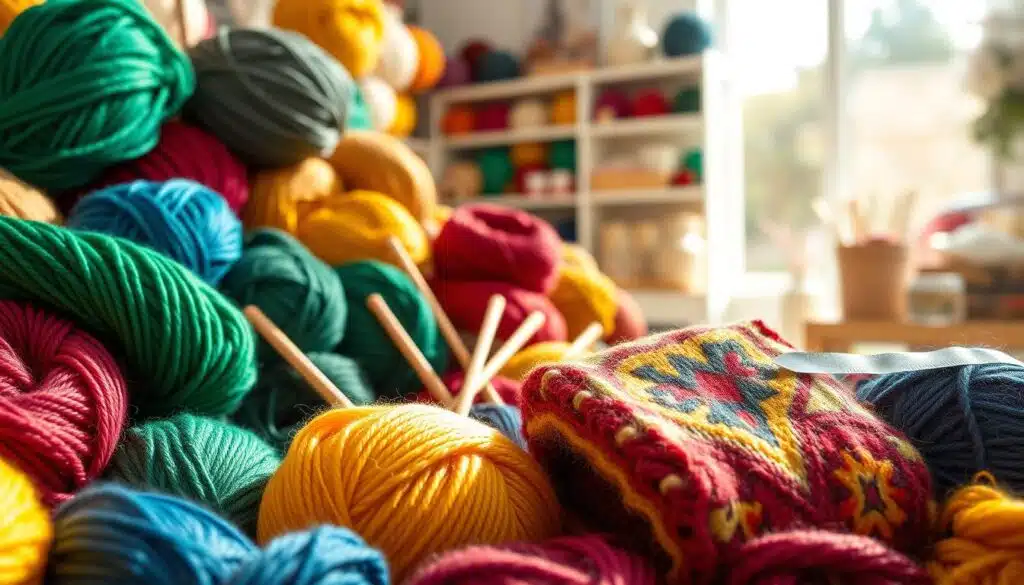
Yarns: types, fiber choices, and why wool & blends work well
Wool and wool blends like Shetland and Merino are great for clear color edges. They have natural stretch that keeps stitches even and bouncy. Alpaca blends add warmth, while silk gives a luxurious sheen.
Choose yarns that show stitch details well. Avoid fuzzy mohair or angora for sharp designs. Nylon adds durability where needed.
Purl Soho and others offer natural fibers and kits perfect for intarsia. Stick with forgiving yarns like wool blends for colorwork. Avoid stiff cotton or linen.
Bobbins, small balls, and organizers to prevent tangles
Use many small balls or bobbins for each color. Winding colors onto bobbins saves time when changing colors often.
Get bobbins, small containers, or a yarn bowl. Use clips and holders to keep threads tidy when pausing.
Label bobbins and use household items like muffin tins for color separation. These tools reduce tangles and speed up your work.
Needles, stitch markers, and tapestry needles for finishing
Choose needles that fit your pattern, often circulars or short cables. Circulars are great for wide panels and many stitches.
Use stitch markers to mark colors and patterns. A blunt tapestry needle is key for neat end weaving.
Don’t forget blocking mats and pins for even blocks after finishing. A set of intarsia tools keeps your work neat and professional.
Basic Rules and Techniques of Intarsia Knitting
You want clear color blocks and neat joins. Follow a few simple intarsia rules and your motifs will look like a pro-made sweater. Start with separate yarn sources for each color area and keep tension relaxed so your fabric stays elastic.
When you learn how to intarsia, treat every color patch as its own mini-project. Use bobbins, small balls, or dedicated yarn cakes so strands don’t cross the back of the work. This core rule prevents a double-thick backing and keeps color blocks flat.
Why you use separate yarn sources for each color area
Each color needs its own feed so stitches line up in single layers. If you were to carry a yarn across the wrong side you’d create a stranded backing that bulks up the fabric and blurs sharp edges.
Using separate balls makes rows manageable and reduces tangle drama. This method also gives you fine control of tension when shapes meet.
How and when to twist or “trap” yarns to avoid holes
The trapping yarn technique closes tiny gaps at color joins. On the wrong side bring the old yarn in front of the new yarn, then continue with the new color. That simple twist locks the join and keeps holes from forming.
For vertical color changes twist on the wrong side every time you switch. For diagonal slants you can sometimes drop yarns briefly between stitches, but when in doubt, twist. Practicing this lets you know when a trap is necessary.
Working intarsia on right-side and wrong-side rows
Most of the trapping happens on the wrong side when you switch colors. On right-side knit rows you focus on neat stitches and even tension. On wrong-side purl rows you still trap by bringing the old yarn forward before the new yarn.
Don’t pull joins tight. Tight joins pull the surrounding stitches and change the drape. Keep the same gentle tension you use for the rest of the row.
| Situation | Action | Why it helps |
|---|---|---|
| Starting a new color block | Attach a new bobbin or ball | Keeps color areas single-layer and tidy |
| Switching colors on wrong-side | Bring old yarn in front of new yarn to trap it | Prevents holes and secures the join |
| Diagonal color change | Twist when gap risk is high; drop yarn briefly if safe | Balances neatness with minimal yarn handling |
| Multiple small blocks close together | Use bobbins and clip organizers | Reduces tangles and keeps tension consistent |
| Tension issues after switching | Relax your grip; maintain even stitch length | Preserves elasticity and stitch evenness |
Intarsia Knitting: Handling Vertical, Diagonal, and Complex Color Changes
When you do intarsia, aim for clean joins and sharp motifs. Think of each color area as a mini-project. This approach helps keep joins neat and prevents snagging.
Vertical color changes: step-by-step handling on knit and purl rows
On knit rows, drop the old yarn before picking up the new. On purl rows, bring the old yarn in front to trap it. This stops laddering and makes your work look professional.
When switching colors mid-row, twist the yarns once. This twist reduces holes and keeps tension even.
Diagonal slants: when to twist versus when you can drop yarn
Diagonal intarsia needs careful handling due to frequent joins. Always twist yarns for right slants to avoid gaps. Twisting is key for right slants.
For left slants, you can drop the old yarn and pick up the new. But, twisting is safer for neat joins. It’s the better choice when unsure.
Practical tips when designs have many small color blocks
Small color blocks in intarsia can be stunning. Use bobbins and label them. Make a row-by-row plan to avoid color hunting.
Consider yarn dominance and contrast when placing motifs. High contrast makes each block stand out. Stranded knitting or Fair Isle might be quicker for wide areas, but intarsia offers sharp blocks.
Use clips and bobbin organizers to avoid tangles. Embrace working on multiple projects at once. Practice on small items before tackling big projects. These tips make complex work fun and manageable.
Design Planning: Charts, Color Placement, and Yarn Dominance
Good design starts before you pick up your needles. You need a clear plan for your picture motifs and a sense of which colors will guide the eye. It’s also important to match your yarn to your design.
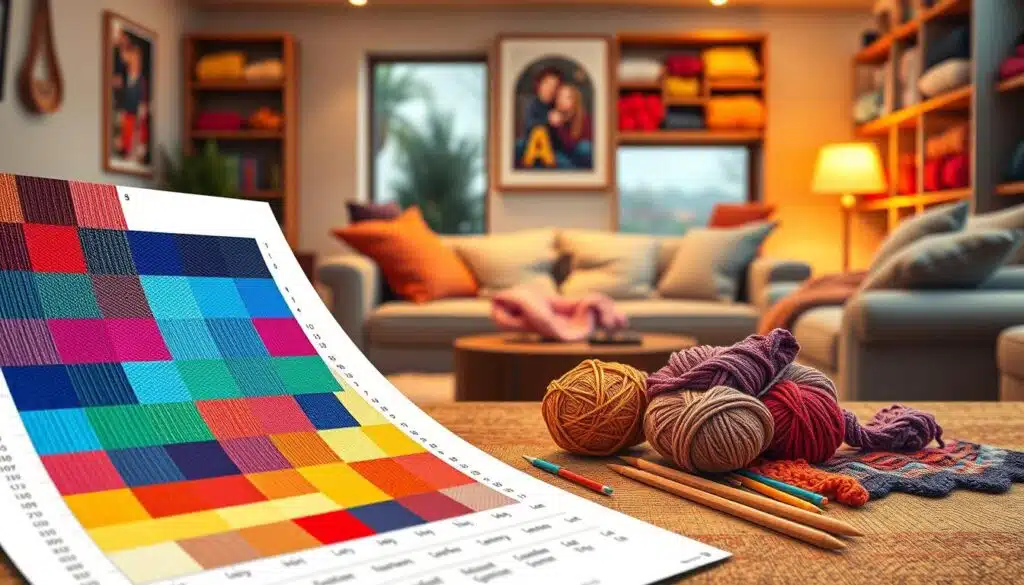
Reading intarsia charts is like treating each colored block as its own yarn. Start from the bottom up. Note where vertical and diagonal lines are, as these are where you’ll twist or trap to avoid holes. For picture motifs, mark each color area and use a bobbin or small ball to keep things organized.
Creating intarsia charts is easier with three values: light, medium, dark. This gives you a base for your design. Start with a small motif, seven to fifteen stitches wide, to see how lines work. Use digital tools like graph-paper apps or Stitch Fiddle for quick edits.
Choosing dominant colors is about proportion and hue. Pick a main background color and order more of it. This prevents visual competition and keeps your design clear. Remember, the color that reads as foreground should be larger or positioned to lead the eye.
Planning proportions is key for visual balance. Use 60–75% of the area for the dominant shade, then distribute the rest among accents. Fewer contrast shades keep your design from looking busy. If unsure, try out colors in natural light at a yarn shop.
Color placement intarsia needs careful contrast. Place midtones between light and dark areas for smooth transitions. Use bright colors to anchor focal points. For diagonal joins, plan where you will cross yarns; some joins can be left loose if the block is small, but larger boundaries should be twisted to secure the edge.
Tonal contrast knitting makes patterns pop without extra effort. Test a three-value swatch to ensure your motif is clear from a distance. If shapes disappear, increase contrast between tones rather than adding more colors.
Practical planning intarsia design means matching your ambition to your time. Limit complexity when juggling many projects. Choose patterns that fit your finishing tolerance. Keep notes on yarn dominance, bobbin counts, and blocking needs for future reference.
| Planning Step | Action | Why It Helps |
|---|---|---|
| Start small | Create a 7–15 stitch motif chart | Checks how lines and tonal contrast knitting read at scale |
| Assign yarn sources | Match bobbins or small balls to each chart color | Prevents tangles and clarifies color placement intarsia |
| Decide dominance | Pick a main background color and order more yardage | Establishes yarn dominance and visual balance |
| Plan joins | Mark vertical and diagonal transitions on the chart | Shows where to twist or trap to avoid holes |
| Swatch values | Knit a three-value swatch in natural light | Confirms tonal contrast knitting and motif legibility |
| Scale complexity | Limit color blocks if working multiple projects | Makes planning intarsia design realistic for your time |
Tension Control, Blocking, and Finishing for Crisp Intarsia Results
You want your intarsia to look flat and sharp, not puckered. Start by checking the tension as you work. Use relaxed hands and spread stitches on the needle. Avoid pulling new colors too tight.
If a join looks tight, leave a slack loop on the wrong side. Then, trap it on the next row to avoid puckering.
Choose yarns that give a bit. Natural fibers like wool or blends recover well. This helps prevent distortion when blocking.
Re-Cashmere, for example, has enough elasticity. It helps even out pressure points and makes color edges neat.
Before binding off, use a short checklist. Twist joins on the wrong side to seal gaps. Trim bobbin tails carefully and secure stray ends with a tidy knot only when needed. These steps make finishing intarsia seams quicker and cleaner.
Common tension issues and fixes
If color blocks pull in, the fabric might cup or ripple. Try using slightly larger needles for the body of the color block. Or, use a firmer, more elastic yarn in high-change areas.
If you notice tight spots, gently tug and redistribute stitches. This avoids tightening the join.
Make it a habit to check both sides after a few repeats. If needed, rip back a few rows and rejoin with a looser twist. This small fix can save hours of rework later.
Blocking techniques that improve appearance
Blocking intarsia will transform uneven stitches. Wet-block or steam-block based on fiber content. Then, pin motifs to true lines on a mat.
Shape color blocks so edges are straight and centers sit flat. Allow fibers to dry fully before unpinning. Blocked pieces show better stitch definition and can even rescue minor intarsia tension hiccups by relaxing yarn memory.
Neat ways to weave and hide joins
Weaving ends intarsia is a ritual. Use a tapestry needle and follow color columns when burying tails. Run the tail along the color stripe for an inch or two, then reverse to lock it in place. This method keeps joins invisible on the right side.
If you have many ends, group them by column and weave them in one pass for speed. For seams, mattress stitch gives a polished look while finishing intarsia seams, keeping motifs aligned across panels.
For extra guidance on colorwork tension and blocking with a luxe yarn, check out this short write-up and video from Bettaknit using Re-Cashmere: Bettaknit Re-Cashmere. It shows practical moves that help prevent puckering intarsia and make finishing look pro-level.
Project Ideas and Beginner-Friendly Intarsia Patterns
You want quick wins and steady progress. Start with small, satisfying intarsia projects. They teach joining, tension, and neat edges without overwhelming you.
Small practice projects
- Hot pad intarsia is a perfect first test. A felted hot pad or a simple square with a bold motif gives fast feedback on color changes and twisting technique.
- Pillows and simple motifs let you practice multiple color blocks while avoiding complex shaping.
- Try a Stars + Stripes Felted Hot Pad pattern or a similar starter to learn bobbin management and trap joins.
Progressing to garments
- When you feel confident with small pieces, add a colorwork panel to a scarf or a sweater yoke. Panels let you control stitch counts and practice repeating motifs.
- An intarsia sweater may look intimidating, but you can build up to a statement piece by combining small panels and testing gauge on swatches first.
- Adjust needle size or stitch count to ease transitions between plain fabric and color blocks. Expect to adapt instructions to your yarn and tension.
Where to find patterns and kits
- Look for beginner intarsia patterns on designer blogs and community hubs like Ravelry for charts and user notes.
- Purl Soho offers clear tutorials, yarn choices, and helpful intarsia kits for natural fibers if you prefer a guided start.
- Local yarn shops stock intarsia kits and one-on-one advice that speeds learning and helps pick compatible yarns.
Pick projects that match your tolerance for finishing work. Practice with scrap yarn and bobbins before committing to an intarsia sweater. For a personal twist, turn a sketch into a knit motif and follow the design as it evolves. If you want a step-by-step read, visit this project write-up for hands-on tips and lessons learned.
Troubleshooting, Quick Hacks, and Crafting Confessions
Intarsia troubleshooting starts with a simple habit. Always check joins on the wrong side and twist or trap yarns as you go. If a gap appears at a join, don’t panic. Unpick to the last clean row or use a darning needle to thread the tail and snug the stitches together to fix intarsia hole problems quickly.
For diagonal slants that went rogue, re-twist the yarns where they cross. If the tension looks uneven, rip back a few rows and re-set the join. When you need a step-by-step visual, this guide can help you learn common repairs and techniques: mastering common fixes.
Fixing holes and misjoins
Most holes at joins come from missed twists on the wrong side. To fix intarsia hole issues, insert a tapestry needle and weave the tail through adjacent live stitches to close the gap. If the stitch collar is loose, pick up the stitch and work a short row to stabilize the area.
Organization that saves time
Yarn organization hacks win projects. Use numbered bobbins or binder clips for tiny color blocks. Label bobbins with sticky tabs so you know which shade goes left or right. Yarn bowls and corded clips cut down tangles when you juggle dozens of strands.
Left/right yarn strategy
Decide which yarn will dominate the eye and keep it consistent on one side of each motif. That visual rule keeps color dominance steady across panels and helps prevent accidental color swaps when you pick up a new bobbin.
When many small blocks crowd a row, extra-long tapestry needles speed end-weaving. Clips on the needle tips stop bobbins from unraveling between sessions. These small moves combine into big time savings and neater joins.
Knitting confessions and multi-WIP life
Your knitting confessions likely include skipped swatches and forgotten blocking. You are not alone. Many knitters skip swatching when time is tight or juggle projects the way Ravelry users often do—several at once.
Multi-WIP tips: keep a project notebook, separate project totes, and a single labeled bag of bobbins per project. That cuts down on color-misplacement mistakes and stops you from reaching for the wrong yarn when you pick up a project at night.
Pragmatic shortcuts are real: hot-glue fixes for non-washable craft pieces, skipping sleeves on a sample sweater, or using stitch holders as tiny lifelines. You can normalize these choices while still encouraging the basics: swatch when the fit matters, block for a crisp finish, and weave ends for longevity.
| Problem | Quick Fix | Tool |
|---|---|---|
| Hole at a join | Weave tail through adjacent stitches or unknit to last clean row | Darning needle |
| Color swapped on a row | Unwind to the error, re-twist the join, re-knit the section | Markers and labeled bobbins |
| Tangled bobbins | Number bobbins, use binder clips or yarn bowl | Binder clips, yarn bowl |
| Small color blocks overload | Use numbered bobbins and extra-long needles for ends | Numbered bobbins, long tapestry needle |
| Multiple projects clutter | Keep a project notebook and separate totes by project | Project tote, sticky labels |
Conclusion
Intarsia is great for bold colors and pictures. It’s easy to start with and can grow into big projects. To get started, remember to use different yarns for each color and twist them on the wrong side to avoid holes.
Start with small projects to get better. Practice changing colors vertically and diagonally. If unsure, twist the yarns.
Choose the right technique for your design. Use wool or wool blends for better stretch and easier shaping. Plan your colors so your design is clear.
Use tools like bobbins and clips to keep yarns organized. This helps as you move from small projects to bigger ones.
Don’t worry if your work isn’t perfect. Real knitters use shortcuts and flexible methods to keep going. Grab your yarn and bobbins, pick a simple chart, and start.
Practice joining yarns, block your work well, and weave in ends neatly. When you’re ready, try a panel or sweater and enjoy the journey.
For a detailed guide and patterns, check out Knit-Sis intarsia guide or CrochetCraze for more advanced techniques. Now, take these tips, start intarsia today, and have fun with colorwork.
FAQ
What is intarsia knitting and how does it differ from stranded or Fair Isle colorwork?
Intarsia is a way to knit large blocks of color and pictures. It uses separate yarns for each color area. Unlike stranded or Fair Isle, you don’t carry yarn across the wrong side.
Stranded knitting has two or more colors across the back. This creates floats and a thicker fabric. Use intarsia for big patches and pictures. Use stranded for small motifs and Fair Isle patterns.
Why do you use separate yarn sources for each color area in intarsia?
Separate yarns keep each color area neat and single-layered. This avoids long floats and creates sharp edges. For many color changes, bobbins prevent tangles and keep things organized.
Which yarn fibers work best for intarsia projects?
Wool and wool blends are great for intarsia. They’re elastic, have good stitch definition, and block well. Alpaca blends add softness, silk adds shine, and nylon is durable.
Avoid fuzzy fibers like mohair for detailed pictures. Be careful with stiff fibers like cotton or linen. They don’t block as well.
What basic tools should you gather before starting intarsia?
You’ll need small balls or bobbins, bobbin holders or a yarn bowl, and the right needles. Use stitch markers for boundaries, tapestry needles for ends, and blocking supplies. Binder clips, numbered bobbins, and extra-long tapestry needles help with many colors.
How and when do you twist or “trap” yarns to avoid holes at color joins?
Twist or trap yarns on the wrong side when switching colors. On a wrong-side row, bring the old yarn in front of the new before the next stitch. This prevents holes. Always twist if unsure.
Does trapping yarn differ between right-side and wrong-side rows?
Trapping happens on the wrong side, whether the next stitch is knit or purl. On right-side knit rows, the twist is on the wrong-side row. For diagonal slants, twist on either side or both. If unsure, twist.
How do you handle vertical color changes step-by-step?
Knit or purl to the color boundary, then turn to the wrong side if needed. Bring the old yarn in front of the new to trap it. Work the next stitch with the new color. Spread stitches to avoid puckering and don’t pull the new yarn too tight.
What about diagonal color slants—when can you drop the old yarn without twisting?
Drop the old yarn without twisting if the motif slants left. If it slants right, you must twist. If unsure, twist to avoid holes.
My pattern has many small color blocks—any practical tips?
Number your bobbins and use clips or a bobbin holder. Plan joins ahead and limit new colors. For dense blocks, consider stranded colorwork. But if using intarsia, organize well: label yarns, arrange bobbins, and tidy often.
How do you read and create intarsia charts for picture motifs?
Treat each colored cell as its own column of yarn. Plan a separate yarn source for every color area. Mark joins and note diagonal transitions. Use a chart on a printable or digital sheet and assign bobbin numbers or color labels.
How should I choose dominant colors and proportions for a balanced design?
Choose a main background color in greater quantity. Use one or two contrast shades for the motif. Mix light, medium, and dark tones for depth. View colors in natural light and assemble yarns before starting to tweak proportions.
What common tension issues occur in intarsia and how do you fix them?
Puckering at joins and uneven stitch size are common issues. Don’t pull new yarns too tight when switching. Spread stitches on the needle to redistribute tension. If uneven, rip back to a clean row and rework the join.
How important is blocking and how do you block intarsia pieces?
Blocking is very important. It evens stitches, relaxes tension, and sharpens motifs. Use blocking mats and pins, gently wet or steam the piece, and shape to the correct dimensions. Wool and natural fibers respond best.
What’s the cleanest way to weave in the many ends intarsia creates?
Use a tapestry needle to follow color columns and weave tails along the wrong side. Trim tails to a safe length after weaving. Mattress stitch or sewn seams can tidy edges in finished pieces. Neat weaving and blocking make a project look handmade.
What good beginner projects to practice intarsia?
Start with small projects like hot pads, coasters, pillows, or a simple charted panel. These give quick visual payoff and manageable numbers of ends. Kits and simple patterns from Purl Soho, Ravelry, or local yarn shops are great starting points.
When should I try intarsia on garments like sweaters or yokes?
Move to garments once you’re comfortable with joins, tension, and finishing on small pieces. Start with a single intarsia panel or a sweater front, then progress to yokes and full panels. Adapt stitch counts or needle sizes for transitions.
How do I fix holes at joins or correct color-misplacement mistakes?
For holes, re-twist the yarns and secure the gap with a darning needle and the tail, or unknit to the join and redo it cleanly. For misplaced colors, rip back to a row before the error and rework with careful bobbin placement. Small diagonal mistakes often correct by re-twisting; bigger errors are easier to fix early than later.
Any organization hacks for managing many bobbins and yarn ends?
Number your bobbins, use binder clips to keep strand length tidy, employ a bobbin holder tray or yarn bowl, and tuck active bobbins into a muffin tin or small containers. Adopt a left/right yarn strategy for color dominance if it helps you stay consistent. These small habits save time and frustration.
Is swatching and blocking mandatory, or can I skip them like many crafters confess to doing?
Swatching and blocking are highly recommended. They prevent surprises in gauge and tension. That said, many knitters skip swatches or block selectively for quick projects. If you crave speed and visual impact, choose small practice pieces where perfect gauge isn’t critical, but know that swatching and blocking will improve finished results significantly.
What quick fixes do knitters use when juggling multiple WIPs or tight deadlines?
Common hacks include using hot glue or temporary adhesives for nonwear items, clipping and labeling bobbins, using extra-long tapestry needles to speed weaving, and ripping back to a clean row rather than wrestling a messy join. Embrace pragmatic solutions—intarsia is forgiving if you prioritize learning and finished looks over perfection.