
You’ve got a basket of tiny skeins and half-hanks staring at you. Instead of letting them become landfill, this guide shows simple ways to use them up. You’ll learn quick ideas to cut waste and stretch your craft budget.
These ideas come from trusted sources like Lion Brand Yarn and Vickie Howell tutorials. You’ll find projects like pom-poms, tassels, granny squares, and woven panels. They’re perfect for small time investments with big results.
Want a quick mood boost? Try making small ornaments or mini coasters. For a bigger project, think about patchwork blankets or stuffing for poufs. For step-by-step examples, check out ways to use leftover yarn or explore at Crochet Craze.
Key Takeaways
- Using scrap yarn reduces waste and saves money.
- Small projects like pom-poms and tassels give quick satisfaction.
- Granny squares and weaving are great for odd colors and textures.
- Yarn bits can be used as stuffing for toys, pillows, and poufs.
- You can package, donate, or sell scrap kits to keep your stash moving.
Why you should care about using scrap yarn: waste reduction and creativity
You already love making things. Using leftover yarn makes your projects more sustainable and fun. Learning to save and sort scraps helps reduce waste and lets you try new colors.
Every year, the world throws away 92 million tons of textile waste. Saving small pieces keeps them out of landfills. You can use them at home, donate, or give to schools and shelters. This turns waste into something useful for others.
Textile waste and the impact of saving scraps
Small pieces of yarn might seem useless, but they add up. A few inches from many projects can become a lot of usable yarn. Saving them helps reduce waste and supports sustainability.
Wrapping scrap yarn neatly makes it easy to share. In the U.S., crafters share yarn through guilds, shops, and schools. This keeps materials in use and creative.
Creative benefits of working with scraps
Working with scraps encourages you to try new things. Mixing colors and textures leads to unique pieces. It’s a chance to learn new stitches and patterns.
Using scraps can lead to surprising color combinations and richer textures. It lets you create a personal style that stands out.
Practical benefits for crafters in the United States
You can teach classes, host swap nights, or sell kits made from scraps. Many U.S. crafters turn leftover yarn into products to sell or teach with. It’s a smart way to make money and teach others.
Using scraps also saves money. It stretches expensive yarns and reduces costs over time. This makes scrap use a smart choice for makers.
Quick and satisfying projects: pom-poms, tassels, and mini ornaments
You can make fast and cute items from small yarn pieces. Projects like pom-poms and yarn tassels use up yarn scraps quickly. They’re great for last-minute gifts, craft fair items, or a quick creative break.
For these projects, you need simple tools like a fork or a cardboard template. Wrap, tie, and trim to make dozens of tassels and pom-poms in under an hour. To make fuller tassels, tie several strands together.
Pom-poms are perfect for making garlands, keychains, or hat trim. They’re a hit at holiday markets. Layered tassels with wooden beads or leather cords add a boutique touch.
Make mini yarn ornaments like stars, hearts, or tiny trees on a simple loom or cardboard frame. Add beads or a gold thread loop to make them stand out for holiday displays.
Group ornaments into sets and tie them with twine. Add a label for a gift-ready look. This way, small yarn projects become attractive holiday crafts that sell well at fairs or online.
Use scraps to make wearable accessories: bracelets, cuffs, and headbands
You can turn tiny yarn bits into stylish pieces that sell well at craft fairs or make thoughtful gifts. Start with simple techniques like braiding, wrapping, or finger crochet. This way, you can make quick yarn bracelets and friendship bracelets yarn projects without fuss.
For mixed-media flair, wrap embroidery hoops, metal bangles, or thrifted bracelets with yarn. Mix embroidery thread, fabric strips, and scrap yarn for bold color and texture. Adding a clasp or keyring can make a scrap wristpiece look polished.
Friendship bracelets and braided yarn accessories
Braid three strands for a classic look or use kumihimo or inkle techniques for firmer bands. These methods are great for short lengths, joining pieces seamlessly for a continuous feel.
Find patterns and inspiration at Crochet Craze for quick builds that use tiny scraps. Add beads or toggles for personality and to make each item feel custom.
Chunky crochet cuffs and wrist warmers
Combine two or three thin strands to mimic bulky yarn and crochet bold cuffs that look expensive. Tubular weaving, circular crochet, or sewing small panels together produces chunky crochet cuffs that hold their shape and wear well.
Use a small loom to weave sturdy pieces into woven wrist warmers or adapt panels into chunky cuffs. Attach snaps or elastic for an easy on-off fit. These accessories are compact, quick to shop for, and ideal for bundling with yarn headbands or other small goods.
Scrap-friendly home decor: coasters, mug rugs, and small woven pieces
You’ve got a basket of odds and ends that refuses to behave. Turn those scraps into useful accents that look intentional. Small woven projects let you mix color and texture without committing to a big blanket. A quick loom session or a cardboard loom will give you tidy results fast.
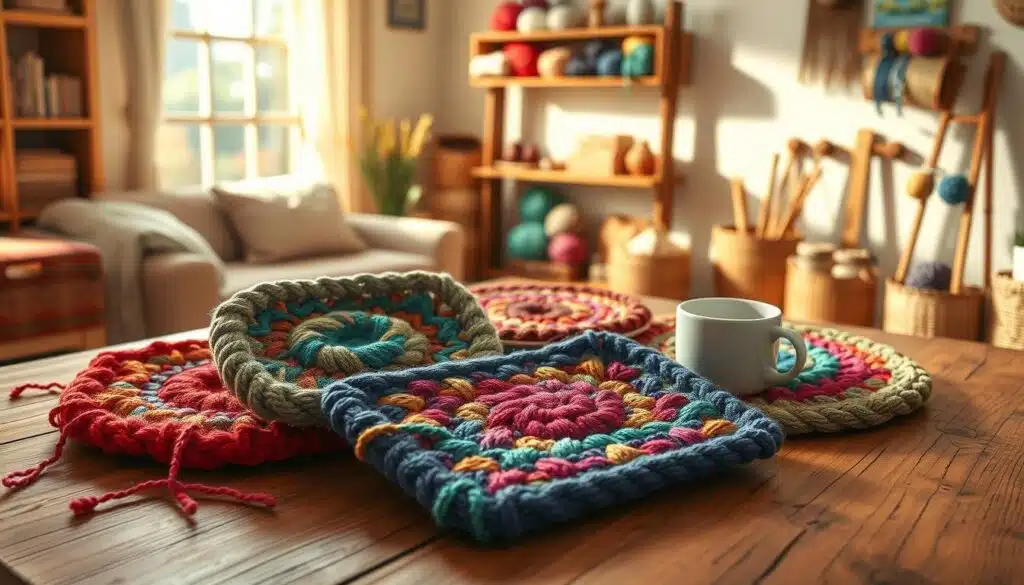
Weaving and loom-friendly small projects
Grab a lap loom or a potholder loom and plan a tiny panel. Loom-friendly yarn crafts shine when you alternate thick and thin strands. Use cotton for absorbent mug rugs and wool or acrylic for decorative pieces.
Keep edges snug with a hemstitch or simple folded hem. Add tassels for flair or a running stitch to lock fringe. These finishing touches stop fraying and make your work gift-ready.
Rope and scrap yarn coasters
Pair old rope with scrap yarn to make sturdy, stylish coasters. Vickie Howell popularized rope scrap yarn coasters that hold up to daily use and look great grouped on a tray. Wrap rope in yarn, stitch coils together, then press flat.
Make sets of four for quick presents and tie them with twine for a rustic bundle. For a polished look, use matching thread to blind-stitch the underside. Cotton blends help with spills, while mixed fibers add visual depth.
| Project | Best Yarn Types | Tools | Finish Tips |
|---|---|---|---|
| Woven mug rugs | 100% cotton, cotton blends | Cardboard loom, tapestry needle | Hemstitch edges, add corner tassels |
| Tiny woven panels | Wool, acrylic, mixed fibers | Lap loom, small shuttle | Secure warp ends, add hanging loop |
| Rope scrap yarn coasters | Cotton rope, scrap yarn wraps | Hot glue or whip stitch, scissors | Blind-stitch underside, press flat |
| Coiled yarn coasters | Acrylic, wool, cotton mix | Hot glue gun or sturdy sewing thread | Stitch coils tightly, add felt base |
Granny squares, scrap blankets, and patchwork projects
You have a lot of leftover yarn and want to create something beautiful. Granny squares are perfect for this. They turn small pieces of yarn into stunning scarves, bags, or throws.
These projects are great because they can grow with your stash. Instead of feeling overwhelmed, you can use your yarn to make something amazing.
Why granny shapes work so well
Granny squares are easy to make because they’re modular. You start with one square, then keep adding more. This way, even the tiniest bits of yarn can be used.
Using the same size squares makes joining them faster and neater. But, if you want something more unique, you can use different sizes.
There are many ways to use up small pieces of yarn. You can make beanies or colorful blankets. For more ideas, visit fabulous scrap patterns.
Color choices and mixing textures
Choosing colors for your granny squares can change the whole look. You can go for an ombre effect, high-contrast colors, or a coordinated palette. This makes all the different yarns work together.
It’s also smart to mix different textures. Try combining thick yarn with thin yarn for a unique feel. Adding a square with a shiny yarn can add a special touch.
When making a blanket, plan your colors carefully. Use a mix of neutral and bright colors to keep it interesting. This way, your blanket will look great and be easy to make.
How you join the squares matters too. Invisible joins are great for a clean look, while decorative joins can add a special touch. Choose one method to make your project go faster.
If you’re new to granny squares, start small. Try making a pillow or a bunting. These projects are perfect for beginners and can help you get the hang of it.
Functional kitchen and bath items from scraps
Transform your leftover skeins into useful items that make daily tasks fun. Small projects save yarn and time, adding charm to your home. Use cotton where it matters and mix textures for visual interest.
Crochet washcloths are great with 100% cotton. Cotton absorbs spills and handles heat better than synthetic fibers. Try simple combo stitches and short color changes for cheerful, striped washcloths that use little yarn.
Looking for quick ideas? Check out leftover yarn patterns. They show how to make full-sized dish helpers from tiny scraps.
For tougher tasks, make yarn potholders with sturdier yarns or double layers. Cotton loops provide grip and heat resistance. Add acrylic for color and shape, but don’t rely on it for heat protection.
Yarn scrubbers are a smart use of small lengths. Use textured stitches and tighter hooks for tough pots. Keep a few in a drawer for quick replacements or gift them to friends and shelters.
Mix techniques to create multiuse items. A cotton dishcloth can also be a gentle face cloth. A padded yarn potholder can fold into a trivet. These items fit well into eco-friendly kitchen crafts and zero-waste routines.
- Materials: 100% cotton for absorbency, choose sturdier cotton or combined layers for potholders.
- Design tips: work stripes or mosaic patches to use scraps without complex color planning.
- Giving: donate handmade washcloths and kitchen items to community swaps or shelters.
Small gifts and decor: embroidered canvas, cards, and framed scraps
You can make beautiful keepsakes from small yarn scraps. Start with a painted canvas, then add yarn outlines and accents. This creates an embroidered yarn canvas that looks like art.
For quick gifts, wrap glass bottles or make pom-pom ornaments. You can also design yarn greeting cards from small strips. Use glue and a 3-inch loom for tidy yarn art. Add handmade envelopes for a complete gift.
Handmade yarn gift tags add a special touch to presents. Cut cardstock, glue on strips, and add beads for shine. These tags are perfect with yarn cards and make your gifts stand out.
For more ideas, visit Crafty Chica for a list of small yarn projects. This guide helps you mix techniques like stitched canvases and glued cards. It shows off your skills and uses different scrap sizes.
How you present your work matters. Mount mini weavings or place stitched panels in frames. Grouping yarn cards with gift tags makes a professional-looking product line.
Embroidered canvas art with yarn accents
Start with a painted background and a sketched design. Then, stitch with embroidery floss or thin yarn. The stitches add depth and make the art feel real.
Handmade cards and gift tags using woven or glued yarn strips
Weave or glue yarn strips into card windows. Add lettering with a brush pen. For a polished look, mount cards on heavy cardstock and include a matching envelope.
Make or refill stuffing: amigurumi filler, poufs, and pillows
Do you think you have to throw away leftover yarn? Think again. You can turn these scraps into stuffing for toys, cushions, and more.
Using yarn bits as stuffing for toys and cushions
For small toys, use less pretty yarn inside and nicer yarn outside. This makes your toy look good and saves money. Always wash and dry yarn for kids’ items first. Stuff it tightly to keep it even.
Large-item filler strategies for big scrap stashes
Got a lot of yarn? Use it for big items like poufs and bean bags. Line them with strong fabric to keep the yarn inside. Stuff it in parts to make it even.
Want to make new yarn from old? You can card or spin it yourself. Or, you can send it to places like Sumi & Me to make it into yarn for you.
Here are some tips: use bags for pillow inserts, weigh and pack yarn for poufs, and make partitions to keep it in place. Always check and wash yarn before making toys for kids.
Need to use up yarn fast? Stuff a lumbar pillow with scraps and zip it up. It’s a great way to reuse yarn and make something useful.
Turn scraps into wearable or woven projects on a loom
You can make stunning handwoven pieces from small yarn scraps. Start with small projects to avoid getting overwhelmed. Use a rigid heddle, frame loom, or even cardboard for quick success.
Try simple tapestry or Krokbragd picks for dramatic texture. Use a branch, quilt hanger, or wooden dowel as your top bar. Add tassels or beads where the weave ends. You’ll get wall-ready art that shows off your stash without a giant project commitment.
Wall hangings and small woven panels
Small woven panels on a rigid heddle or cardboard loom become quick decor or wearable pieces. Make several 6–8 inch panels and seam them into hats, bag panels, or pocketed wraps. Hem the edges so the fabric stays neat when washed or handled.
Woven wrist warmers, hats, and notebook covers
Woven wrist warmers work well as individual panels or tubular weaves. Stitch the short edges together, add a knit or crochet brim for comfort, and hem seams for durability. If you prefer knitting, use woven strips as insets for a mixed-texture look.
A woven notebook cover is a fast gift idea. Weave a rectangle slightly larger than your notebook, fold it around the cover, and stitch the sides. Add a button or elastic closure for function and style.
| Project | Approx. Yarn Used | Recommended Loom | Finishing Touches |
|---|---|---|---|
| Mini wall hanging | 10–30 yards mixed scraps | Frame loom or rigid heddle | Tassels, branch hanger, beads |
| Small woven panel (6–8″) | 15–40 yards | Cardboard loom or rigid heddle | Hemmed edges, seamed into garments |
| Wrist warmers woven | 20–50 yards | Inkle loom or small frame loom | Stitched seam, knit/crochet brim |
| Woven notebook cover | 15–35 yards | Rigid heddle or frame loom | Button/elastic closure, lined interior |
When planning, keep loom projects leftover yarn in mind. Use contrast bands to hide color joins. If you have a stash of varied fibers, woven wall hangings scrap yarn will sing when you pair unexpected textures.
Want to scale up? Piece many small panels into larger throws or patchwork garments. The same techniques that make wrist warmers woven and a woven notebook cover useful also translate to hats and bags. Add pom-poms, beads, or a knit brim for character.
Repurpose and sell: kits, bundles, and community exchange ideas
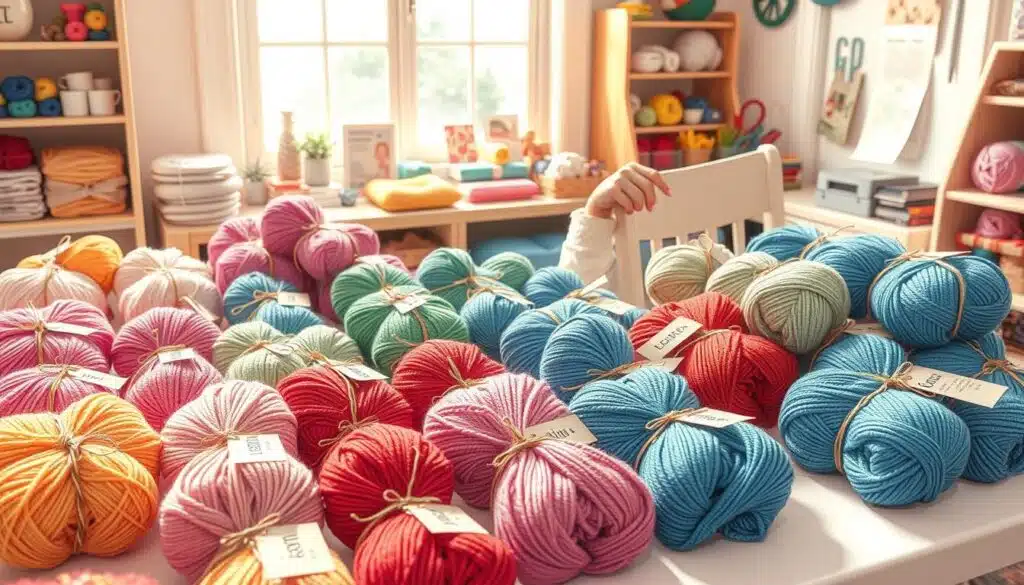
You can make money or help others with leftover yarn. Package scraps nicely to attract beginners and makers. Create simple bundles for craft fairs or Etsy.
Include fiber content and yardage on each pack. Use clear packaging that shows colors and has a small pattern. This makes scrap yarn kits perfect for beginners.
Packaging scrap kits for classes or selling
Make workshop kits that match the class project. For crochet nights, put together colorways and add needles or a pattern. Good packaging makes it easy for teachers and appealing for buyers.
Price kits by weight and fiber type. Add a care label and project ideas. This makes kits look complete. Sell kits at classes to give students a head start.
Donating, swapping, and spinning services
Donate excess yarn to schools, shelters, or local shops. This helps makers who can’t afford new yarn.
Host a yarn swap or join a local community. Swaps refresh your stash and connect you with other crafters.
Send scraps to a spinning service for unique handspun skeins. These can be sold as special bundles or stock.
| Offer | Best Use | Price Tip |
|---|---|---|
| Starter kit (mixed small skeins) | Beginner classes, craft fair impulse buys | Price by weight; include pattern card |
| Theme bundle (holiday, neutrals, boho) | Seasonal markets, Etsy listings | Bundle color-coordinated pieces; mark fiber type |
| Donation pack | Schools, shelters, after-school programs | Sort and label; include simple project ideas |
| Swap lot | Yarn swap community events, meetups | Group by weight and value; trade for missing colors |
| Handspun from scraps | Premium bundles, artisan markets | Use scrap yarn spinning service to upcycle ends |
Yarn leftover ideas
You’ve got a basket of odd balls and tails. Turn them into projects that sing with color and purpose. Below you’ll find scrap buster patterns, mixed-media tips, and kid-friendly activities that make every leftover count.
Scrap buster patterns are tailor-made for leftovers. Try multi-color beanies that alternate thin stripes, striping blankets started as a log-cabin stripe, or a medley of granny squares stitched into a lap throw. These patterns let you use tiny bits without waste.
Pick patterns with short repeat rows and clear color changes. That keeps progress visible and motivates you to finish small pieces. When you need a quick win, a striped cowl or a patchwork cushion panel fits the bill.
Non-textile yarn uses open fun doors beyond knitting and crochet. Wrap bangles, craft yarn roses using the fork method, or build God’s eye garlands for mantel displays. Decorative bottle wraps and string art give your home a handmade edge.
For gifts, swap traditional ribbon for yarn-wrapped bundles. Fill small clear jars with tiny yarn balls as shelf accents. These non-textile ideas stretch yarn into décor, not clutter.
Kids yarn crafts thrive on simple steps and bright colors. Cardboard looms work for basic weaving. Make yarn butterflies, sewing cards, or friendship bracelets to practice fine motor skills and patterns.
When you donate leftovers to schools, curate age-appropriate kits and add safety notes about scissors and small parts. Classroom yarn projects shine in art lessons, seasonal crafts, and after-school programs.
| Project Type | Best For | Skill Level | Why It Uses Leftovers |
|---|---|---|---|
| Multi-color beanie | Adults, teen knitters | Beginner+ | Short stripe repeats use tiny amounts of many colors |
| Striping blanket | Home decor, gift | Beginner | Each row uses small skeins; easy to change color |
| Granny square throw | Scrap-busting large item | Beginner | Squares take tiny scraps, then join into a big piece |
| Yarn-wrapped bangle | Non-textile gift | Beginner | Uses short lengths for decorative wrapping |
| God’s eye garland | Wall decor, parties | Beginner | Small pieces wrap around sticks to create color bursts |
| Cardboard loom weaving | Kids classes | Child-friendly | Safe, low-waste activity that uses bits and teaches weaving |
| Friendship bracelets | Classroom projects | Beginner | Short lengths knot into wearable gifts |
Conclusion
No scrap is too small to spark something useful. In this yarn leftover ideas conclusion, you learned that saving bits of yarn cuts waste, sparks creativity, and saves money. You can make pom-poms, craft coasters, try granny squares, stuff a pillow, weave a wall hanging, or package scrap kits for selling or donating.
Each choice stretches your stash further and keeps fibers out of the landfill.
Ready for practical next steps? Sort and label scraps by fiber and color, pick two or three go-to projects, and set a weekly ten-minute tidy session. If you want techniques for thin yarn projects, check a helpful tutorial like this thin yarn guide to turn tiny bits into polished pieces.
This use scrap yarn summary is simple: plan, choose projects that match your scraps, and tap community options such as classes, swaps, or spinning services to extend value. For a final stash-busting push, treat leftover yarn like edible leftovers—you wouldn’t throw out half a pie. Give those bits new life and enjoy the wins in your stash busting wrap-up.
FAQ
What counts as scrap yarn and how small is too small to keep?
Scrap yarn is leftover yarn that’s not enough for the original project. This includes short tails, partial skeins, and bits from color changes. Even tiny lengths can be used for pom-poms, tassels, and more.
Sort your scraps by fiber and color. This makes it easy to find what’s good for stuffing or visible parts.
How does reusing scrap yarn help reduce textile waste?
Reusing scraps keeps fibers out of landfills. It also stretches the value of materials you’ve already bought. Small efforts, like making coasters or stuffing pillows, can make a big difference.
Which small projects give the biggest environmental bang for your buck?
Quick wins include coasters, mug rugs, washcloths, and stuffed toys. These projects use short lengths and are useful. They also travel well as donations or market items.
Woven placemats and patchwork blankets are great for large stashes. They prevent the need to buy new materials.
What tools are best for working with tiny yarn pieces?
Keep a fork, pom-pom maker, small cardboard loom, potholder loom, and sharp scissors handy. Finger crochet, simple braiding, and small looms are good for turning scraps into functional items.
Can I mix different fiber types in one project?
Yes, mixing textures creates lively scrappy pieces. But match the function to the fiber. Use 100% cotton for dishcloths and scrubbers for absorbency.
For decorative coasters or wall hangings, blended fibers are fine. Wash and inspect scraps before making items for donation or kids.
How do I make pom-poms and tassels from tiny bits?
Wrap scraps around a fork or cardboard to form pom-poms. Tie additional short strands together to make tassels. Layer colors for interest or add beads and metallic thread for polish.
A lifetime supply of pom-poms and tassels is easy to make. They use the smallest leftovers.
What are simple scrap-friendly wearable projects I can sell or gift?
Friendship bracelets, yarn-wrapped bangles, and woven key fobs are fast and customizable. Combine strands for chunky crochet cuffs. Headbands made on small looms are also quick and sell well.
Label fiber content and estimate yardage for buyers. These projects are marketable and beginner-friendly.
How can I use scraps for home decor like coasters and mug rugs?
Use a small loom, cardboard, or a potholder loom to weave coasters and mug rugs. Mix scrap yarn with rope or cotton cord for durability. Vickie Howell demos rope-and-scrap coasters that are stylish and sturdy.
Finish edges with hemstitch or tassels to prevent fraying.
Are granny squares still a good scrap-busting method?
Absolutely. Granny squares let you mix colors and textures into scarves, totes, and blankets. Keep squares a consistent size for easy joining.
Color planning helps avoid a chaotic final piece. Try ombre, palettes, or themed bundles.
What should I use scraps for in the kitchen and bath?
Crochet cotton washcloths and dishcloths are ideal. Use 100% cotton for absorbency and heat resistance. Potholders and scrubbers can use sturdier remnants.
Be cautious with acrylic near hot surfaces. Group sets of four for gifting or donation to shelters.
Can tiny yarn bits be used as stuffing?
Yes—small, less-attractive scraps make excellent stuffing. Use them for amigurumi, cushions, poufs, and bean bags. Bag and compress scraps, line inserts with sturdy fabric to prevent poking.
Wash scraps before stuffing items destined for children or donation.
What are creative non-textile uses for leftover yarn?
Yarn-wrapped bottles, greeting cards with woven strips, and yarn roses are charming. God’s eye decorations and yarn-wrapped frames are also great. Small clear jars filled with color-coordinated yarn balls make attractive decor or market displays.
How do I package scrap kits for selling or classes?
Curate color-coordinated or themed bundles. Label fiber content and estimated yardage. Include a simple project suggestion or pattern.
Sell small kits for pom-poms, tassels, coasters, or mini-weaving workshops. These are marketable and beginner-friendly.
Where can I donate or swap my scrap yarn in the U.S.?
Local yarn shops, community centers, schools, women’s shelters, and kids’ art programs welcome sorted scraps. Meetup groups, library craft swaps, and community centers often host exchanges.
Label age-appropriate packs with safety notes if donating to schools.
What about spinning or upcycling services for big scrap stashes?
If you have a large, fiber-rich stash, consider carding and spinning scraps into new yarn. Services like Sumi & Me specialize in scrap spinning. This adds value and can turn many small leftovers into sellable skeins or coordinated kits.
How should I sort and store scraps for future projects?
Sort by fiber (cotton, wool, acrylic), color families, and weight where possible. Use clear bins, labeled zip bags, or divided drawers. Small containers for single-color mini-bundles make grabbing scraps for pom-poms or tassels effortless.
Any quick tips to make scrap projects look intentional rather than messy?
Plan palettes—choose a limited color story or intentional contrast. Mix textures sparingly and finish edges cleanly with hemstitching, piping, or tassels. Framing small woven panels or mounting on stretched canvas elevates even the tiniest scraps into gallery-style pieces.
Can kids use scrap yarn safely in classrooms?
Yes, with supervision and age-appropriate projects. Cardboard looms, simple weaving, friendship bracelets, and yarn butterflies are classroom-friendly. Include safety notes about scissors and small parts when donating to schools or running workshops.
Where can I find tutorials and inspiration for scrap projects?
Look to Lion Brand Yarn tutorials, Vickie Howell demos, Darn Good Yarn resources, craft blogs, and Pinterest collections for step-by-step guides. These sources cover everything from pom-poms and mini-weavings to scrap-based coasters and granny-square patterns.
What’s a good first project if I want to start using scraps immediately?
Pom-poms or tassels are the fastest wins—almost zero investment and immediate gratification. Next, try woven coasters on a cardboard loom or simple cotton washcloths. These deliver quick use, donation potential, and teachable techniques for swaps or classes.
Any final practical next steps to manage a overflowing yarn stash?
Sort and label by fiber and color, pick three go-to scrap projects (pom-poms, coasters, granny squares), and decide whether you’ll donate, sell kits, or spin leftovers. Host a scrap swap or teach a community class to spread the love and reduce waste—your stash (and the planet) will thank you.