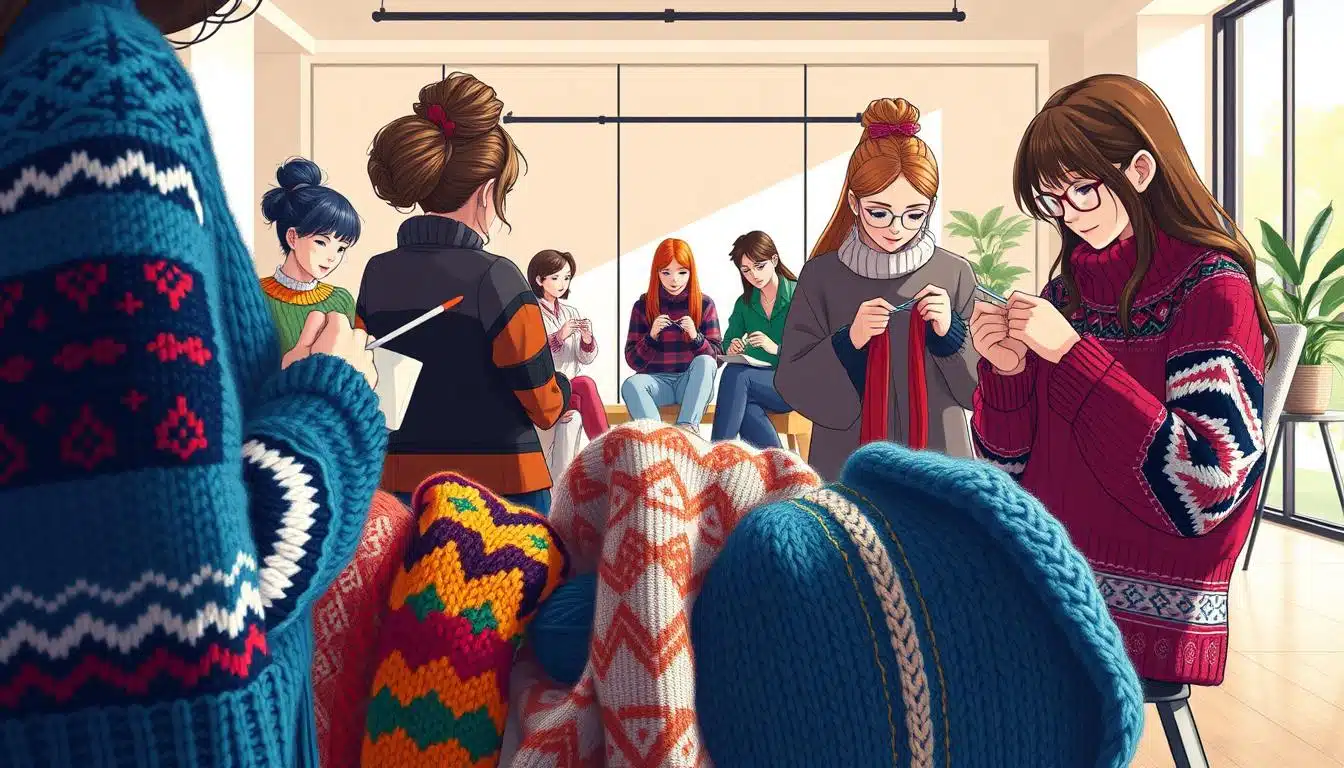
You’ve loved classic stitches, but now it’s time for something new. Modern knitting styles mix old and new, giving you fresh looks. You’ll see runway-ready neck scarves and skinny scarves, all made with sustainable materials.
Knitting trends move fast, thanks to Instagram and other platforms. By 2025, we’ll see more individuality and eco-friendly choices. Expect to see recycled yarns, plant-based fibers, and machine-knit ideas alongside hand-knitted pieces.
This article will guide you on why modern knitting matters. You’ll learn about the best materials and techniques. Plus, where to find inspiration and how to shop and craft responsibly. Ready to upgrade your knitting and make pieces that are both stylish and sustainable? Let’s get started.
Key Takeaways
- Modern knitting styles mix new techniques with respect for traditional craft.
- Sustainable knitting is central to current trends and material choices.
- Runway and retail are normalizing knitted neckwear as fashion staples.
- Social media accelerates adoption of knitting trends and ideas.
- This guide will show materials, techniques, and shopping tips to modernize your projects.
Why Modern Knitting Styles Matter for You
Knitting has moved from grandma’s den to social media, fashion shows, and craft nights. This change makes knitting a public statement of style and purpose. By choosing patterns and yarns, you contribute to a discussion on modern craftsmanship.
How knitting reflects cultural shifts
Knitting reflects our changing values on time, skill, and individuality. Today, makers focus on creating pieces that reflect their personality and craftsmanship. When designers like Stella McCartney feature knitwear, it quickly becomes a street style trend.
Sustainability and the values behind contemporary choices
Your yarn choices show your commitment to sustainable knitting. Opting for recycled or plant-based fibers supports eco-friendly and ethical production. Small choices, like using recycled yarn or supporting indie dyers, make a big difference.
From hobby to mindful practice: the emotional and social benefits
Knitting can be a calming activity that reduces stress and improves focus. These benefits lead to a more relaxed and mindful lifestyle. By choosing knitting over scrolling, you clear your mind.
Knitting also fosters community. Joining knitting circles, Ravelry groups, or local yarn shops turns solo activities into social events. You learn new skills and feel connected when you share your progress and help others.
Top Materials Driving the Modern Knitting Styles Movement
You’re looking for yarn that’s stylish, comfortable, and eco-friendly. Recycled yarns made from plastic bottles and old clothes fit the bill. Brands like Patagonia and Unifi turn old plastics into strong, easy-to-clean yarns perfect for accessories and clothes.
Plant-based fibers offer a unique feel. Bamboo yarn is soft and shiny, great for flowy tops and summer shawls. Linen and hemp add texture and keep you cool, perfect for summer projects.
Recycled, remade: what’s in the process
First, plastics are sorted, cleaned, and melted. Then, they’re spun into fibers. These fibers are as good as new, perfect for making durable hats, sweaters, and more.
Why you might pick plant-based fibers
Plant-based fibers are good for the planet and use less water than animal-based fibers. Bamboo yarn is soft when mixed with cotton. Hemp knitting makes fabric that lasts and has a rustic look. These fibers are ideal for summer clothes and accessories.
Balancing eco-conscious yarn blends and performance
Eco-conscious yarn blends mix recycled and plant-based fibers. They offer the best of both worlds. When shopping, check the fiber content and care instructions. These blends often list percentages that show how they’ll behave after washing and blocking.
For more on modern knitting techniques, check out modern knitting resources. They compare yarns and suggest projects.
| Material | Key Benefits | Best Uses |
|---|---|---|
| Recycled yarns | Durable, washable, reduces landfill waste | Hats, bags, outerwear |
| Bamboo yarn | Silky, breathable, natural sheen | Summer tops, shawls, lightweight scarves |
| Hemp knitting | Strong, becomes softer with use, low-impact crop | Market bags, durable garments, textured sweaters |
| Linen blends | Cool, crisp drape, long-lasting | Warm-weather garments, relaxed silhouettes |
| Eco-conscious yarn blends | Balanced performance, lower footprint, versatile | Everyday wear, mixed-fiber patterns, gift items |
Techniques That Will Upgrade Your Knitting
Ready to level up your stitch game? Pick two modern techniques and you’ll transform simple yarn into high-design pieces. These methods reward patience with bold texture and colorwork that looks far more complex than the effort you put in.
Brioche gives you a lofty, pillowy rib that drapes beautifully on sweaters and scarves. A solid brioche knitting tutorial will show how the slipped stitches and yarn-overs create depth and spring. Start with a narrow swatch to feel the rhythm before you commit to a large garment.
Want colorwork without juggling two yarns each row? Try mosaic knitting. The mosaic knitting pattern technique uses one color per row to produce striking two-color motifs. You’ll get intriguing-looking panels with fewer mistakes and faster progress.
Both techniques pair well. Use brioche for collars and cuffs and mosaic for body panels. The contrast between volume and crisp color blocks makes modern pieces pop.
Where should you learn? Short-form videos on TikTok and tutorial reels on Instagram break these methods into bite-sized steps. Search hashtags, follow designers such as Stephen West and Isabell Kraemer for clear demos, and bookmark a solid brioche knitting tutorial playlist.
If you prefer hands-on help, check knitting classes near me at local yarn shops like WEBS, Purl Soho, or your neighborhood independent store. Workshops give real-time feedback on tension and stitch placement that video can’t offer.
Want a plan? Start with a basic brioche scarf project and a simple mosaic knitting pattern for a hat. Use online lessons to learn techniques and local classes to polish your skills. You’ll learn knitting techniques faster when you combine both approaches and practice regularly.
Pattern Trends You’ll Want to Try
This season, you’ll see three big trends: oversized drama, clean lines, and bold accessories. You can pick one or mix them. Each trend works with different yarns and needles, so you can match your skills and style.
Oversized, chunky pieces
Oversized knitting is big because it’s both comfy and stylish. Imagine slouchy cardigans and big sweaters for cozy days or coffee runs.
Chunky sweaters are easy to make and look great. Use big needles and thick yarn for fast, simple projects. A simple cable or rib pattern shows off texture well.
Minimalist modern designs
Minimalist knitting is all about clean lines and precise details. It’s perfect for showing off yarn quality with simple designs.
Use finer yarns for a drapey look. A simple pullover or cardigan can add a modern touch to your outfit, whether with jeans or a coat.
Accessories as statements
Accessories are your chance to be creative. Knitted scarves and bandannas can instantly elevate your look.
Try short-row shaping or twisted stitches for interest. Styling tricks like twisting or using rings can add a chic touch without effort.
For more inspiration, check out fall knitting trends to see how designers are updating neckwear and proportions.
| Trend | Good For | Yarn & Gauge | Quick Tip |
|---|---|---|---|
| Oversized cardigans | Layering, cold-weather wear | Super-bulky, US 11–17 needles | Elongate sleeves for a slouchy look |
| Chunky knit sweaters | Statement pieces, fast knits | Bulky to super-bulky, bold texture | Use minimal seaming for clean finishes |
| Minimal tops | Workwear, everyday staples | Light worsted to DK for drape | Focus on clean edges and necklines |
| Knitted neck pieces | Accessory statement, versatile wear | Fingering to worsted; varied gauges | Try twisted styling or rings instead of knots |
How Social Media Is Shaping Your Knitting Aesthetic
Social media changes how trends spread and makers connect. You see a color palette on Pinterest, then a pattern on Instagram. Next, you start a new project.
Follow designers like Brooklyn Tweed and teachers like Clara Parkes on Instagram. Share your progress, reels, and styling shots. This helps grow your online maker identity and gets feedback from others across the U.S.
Instagram and Pinterest as trend incubators
Visual networks speed up design trends. Scrolling helps you find inspiration for mood boards and seasonal palettes.
When you pin a stitch repeat or save a sweater, you signal trends. Brands and indie designers notice these signals. They then release new yarn lines and patterns quickly.
TikTok and short-form tutorials that drive quick adoption
TikTok tutorials make complex moves easy. You learn tricks, quick cast-ons, and styling hacks in short videos. You can replay them while you work.
Those viral clips make items like knitted neck scarves popular. You can adopt a technique the same day you watch it.
Building a maker identity and sharing finished pieces effectively
Be careful how you share your work. Tag patterns, credit designers, and link to resources like advanced knitting techniques when you post.
Share process photos, before-and-after shots, and short tutorials. Use engaging captions and consistent visuals. This helps you stand out when people search for knitting on Instagram and Pinterest.
Where to Find Inspiration, Patterns, and Community
Look for inspiration everywhere. Knitting pattern libraries and social feeds show projects in real life. Instagram is great for seeing how a design looks on someone. Ravelry threads have fit notes, and indie designers share tips and photos.
Online pattern libraries offer free and paid patterns for all skill levels. Look for clear gauge info, multiple sizes, and step-by-step guides. For basic yarn advice, check out this beginner yarn guide.
Online pattern libraries and independent designers
Find pattern libraries with user reviews and photos. Indie designers post detailed notes and photos. Their patterns offer fresh designs and unique details.
Local yarn shops, workshops, and knitting groups in the U.S.
Local yarn shops are key. They offer hands-on time with yarn and quick advice. Workshops and groups provide support and fitting help.
How to vet pattern quality and sustainability claims
Start by checking designer credentials and pattern test reports. Look for clear sizing charts and finished photos. Community comments can reveal fit issues.
For sustainable yarn, ask about fiber percentages and recycled content. Look for certifications like GOTS or GRS. If a claim seems vague, ask the maker for details.
| Source | What to look for | Red flag |
|---|---|---|
| Knitting pattern libraries | Filterable project photos, gauge, multiple sizes, tester notes | No photos, missing gauge, single ambiguous size |
| Indie knitting designers | Pattern updates, tester feedback, clear instructions, tech support | No contact info, zero tester notes, vague finishing steps |
| Local yarn shops USA | Hands-on yarn selection, workshops, repair and fitting help | Limited staff knowledge, no samples to touch, no local groups |
| Sustainability claims | Certifications, recycled content %, origin of fibers, transparent supply chain | Buzzwords only, no numbers, unclear fiber source |
| Social reviews | Multiple real projects, tagged patterns, honest fit notes | Only polished photos, no project tags, identical comments |
Practical Tips to Modernize Your Knitting Projects
Ready to give your knits a fresh, wearable edge? Start by thinking like a stylist and a maker at once. Small choices in yarn, silhouette tweaks, and clean finishing make homemade pieces look like they belong in a boutique window.
Selecting the right yarn for contemporary drape and texture
To choose yarn for drape, feel the skein and imagine the garment moving with the body. Recycled and plant-based blends give soft flow without losing structure. Match fiber to purpose: choose silk blends or fine mohair for fluid tops, cotton-linen blends for breathable summer layers, and wool or aran blends when you need shape and warmth.
Swatch with the needles you plan to use. Blocking can change drape dramatically, so test wet and steam blocking before you commit to large pieces. If you want inspiration across weights and silhouettes, see a curated pattern round-up like the one at the Transitional Edit for examples of drape and gauge in real patterns.
Adapting vintage patterns to modern silhouettes
If you want to adapt vintage knitting patterns, think in proportions. Swap a fitted waist for a boxy drop shoulder or lengthen a cropped cardi into an oversize coatigan. Keep beloved stitch motifs, but scale them or place them as panels to read as intentional modern detail.
Update necklines and sleeve volume to suit current tastes. Shorten hems for a cropped look or add ease for an oversized silhouette. When you change gauge, recalculate yardage and stitch counts; a modest schematic redraw saves frogging later.
Finishing techniques and styling tips for wearable results
Finishing techniques knitting will make even simple stockinette sing. Master mattress stitch for invisible seams, tidy bind-offs for polished hems, and thoughtful blocking to set shape and stitch definition. Invest time here; the payoff shows in hang, comfort, and longevity.
For styling knitted garments, experiment beyond the obvious. Twist a scarf instead of knotting it. Use rings as a bolo to preserve length. Wear a light wrap as a head covering with hair clips for a modern boho look. Try layering textures and proportions to move a classic piece into a current wardrobe.
| Project | Yarn & Drape | Pattern Update | Finishing Priority | Styling Tip |
|---|---|---|---|---|
| Lightweight tee | Fingering or linen blend for fluid drape | Shorten body; keep vintage stitch panel | Block to gauge; clean shoulder seams | Wear tucked into high-rise jeans |
| Everyday cardigan | DK cotton-wool blend for soft structure | Add ease; swap tailored waist for drop shoulder | Mattress stitch; neat button bands | Belt over dresses or open over tees |
| Sophie-style scarf | Light mohair or silk blend for halo and flow | Lengthen; use gauge to keep weight reasonable | Secure ends with tidy bind-off | Twist, loop, or use a ring as a bolo |
| Structured vest | Aran or worsted for body and drape balance | Modernize with cropped length or elongated hem | Reinforce edges; folded hems for clean lines | Layer over shirts or under jackets for contrast |
Shopping Smart: Where to Buy Modern Yarn and Accessories
Finding the right yarn and gear is like searching for hidden treasures. Look for brands that are open about their materials and certifications. This includes yarns made from recycled plastic or organic fibers like bamboo.
Ethical brands and recycled-yarn producers to consider
Check out Instagram and brand websites for real feedback. Purl Soho has a wide selection of natural fibers and detailed product pages. Visit their site for quality options and project ideas: Purl Soho.
When looking at recycled yarn, compare the fiber blends for quality. Choose blends that are strong yet soft for everyday items. Opt for plant-based yarns for a lower environmental impact.
Budget vs. splurge: when to invest in luxury fibers
Think of luxury yarn as an investment for special items. Spend on cashmere or merino for pieces you’ll wear often.
Save on trend items and bulky accessories with cheaper yarns. Decide to splurge on softness or spend less for quick projects.
Tools and accessories that speed up modern techniques
Modern knitting needs the right tools. Use short circular needles for brioche and flexible cables for wide shawls. Quality stitch markers help with complex patterns.
Invest in essential items and add budget-friendly options for occasional use. Your toolkit should match your knitting style and favorite projects.
| Shop Type | When to Buy | What to Look For |
|---|---|---|
| Artisan & boutique | Heirloom or next-to-skin pieces | Luxury knitting yarn, transparent sourcing, small-batch colorways |
| Large online retailers | Basics and bulk buys | Price, color range, consistent dye lots |
| Recycled-yarn suppliers | Sustainable wardrobe staples | Verified recycled content, blend performance, care instructions |
| Local yarn shops | Hands-on selection and community | Touch, drape testing, expert advice, knitting tools for modern techniques |
Use the table to find the right yarn and tools for your projects. Look at community feedback and product photos for real drape and color. With the right choices, your projects will be worth the effort.
Conclusion
Modern knitting combines sustainability, new materials, and old techniques. This makes your projects stylish and meaningful. You can make your knitting modern by using recycled yarns or plant-based fibers.
Learning brioche and mosaic stitches is also a great idea. You can also update vintage patterns for a cleaner look. This shows that making things now is about values and staying trendy.
Knitted neck scarves are a big trend, showing knitting’s place in fashion. You can learn quick tricks and styling tips on Instagram and TikTok. Or, take a workshop at a local yarn shop.
These places are full of designers, patterns, and tips to help you grow as a maker. They help you find your style and improve your skills.
To keep knitting sustainable, try eco-friendly blends and buy wisely. Invest in quality fibers for special items and choose ethical brands for everyday use. Trying new things and sharing your work makes your knitting both fashionable and meaningful.
When you do this, your knitting is ready to be worn, given as a gift, or sold with pride. It becomes a way to express yourself and connect with others.
FAQ
How do modern knitting styles reflect broader cultural shifts?
Modern knitting shows how culture is changing. It’s all about being green, being unique, and caring about what we buy. Knitters mix old skills with new ways and eco-friendly materials. This shows off their personal style and values.
Why choose recycled yarns and plant-based fibers?
Recycled yarns turn old plastic and clothes into new yarns. This cuts down on waste and saves resources. Plant-based fibers like bamboo and hemp are good for the planet. They’re also soft and strong.
Will eco-conscious blends compromise the look or performance of my projects?
No, they don’t have to. Modern blends are made to look good and last long while being kind to the earth. Choose the right blend for your project to get both style and sustainability.
What techniques should I learn to make my knitting look contemporary?
Learn brioche for big, fluffy textures and mosaic for cool two-color effects. These modernize your knitting. Short videos and local classes make learning easy. Then, you can update old patterns with new looks.
Where can I find quality tutorials for brioche and mosaic knitting?
TikTok, Instagram Reels, and Pinterest have quick, easy tutorials. For more, follow designers on Instagram or take classes at yarn shops. Mixing online demos with hands-on learning helps you learn fast.
What pattern trends are hot right now?
Big, chunky sweaters and blankets are in for their cozy feel. Simple designs show off yarn quality. Scarves, bandannas, and skinny scarves are also trendy, adding a personal touch.
How do knitted neck scarves fit into current fashion?
Scarves and bandannas are back in fashion, seen on runways and in stores. They’re versatile and stylish. Try twisting them or wearing as a headband for a fresh look.
How can I vet pattern quality and sustainability claims?
Check the designer’s background, pattern tests, and clear instructions. Look for clear fiber content and eco-friendly claims. Instagram can help you see finished projects and get feedback before buying.
Should I adapt vintage patterns or follow contemporary designs?
Do both. Update old patterns with new sizes and styles. Modern designs focus on clean looks and wearability. Mix old stitchwork with new shapes and yarns for a unique touch.
What finishing techniques give a professional result?
Spend time on clean bind-offs, neat seams, and blocking. Blocking makes your work look polished. Instagram shows how finishing can transform a project.
How do social platforms shape knitting trends and learning?
Instagram and Pinterest show off trends and patterns. TikTok shares quick tutorials. Share your work to get feedback and join the knitting community.
Where can I find patterns, yarns, and community resources?
Look online for patterns and yarns. Local shops and groups offer hands-on learning. Instagram and Pinterest help you find designers and see yarns before buying.
Which brands and price points should I consider when shopping?
There’s a range from eco-friendly to luxury brands. Choose wisely for special items and try affordable options for experimenting. This balances your budget and creativity.
What tools make modern techniques easier?
Use short needles and flexible cables for brioche. Blocking mats and pins are key for finishing. Scarf rings and stitch markers help with complex patterns. The right tools speed up your work.
How many times should I repeat a keyword when writing about knitting trends?
Keep keyword use natural. Aim for about 2 repeats per 100 words. This keeps your writing easy to read and search-friendly.
How can I start experimenting with sustainable materials and new techniques right away?
Start with a simple project using eco-friendly yarn. Learn new techniques from short tutorials. Try vintage patterns with a modern twist. Shop indie and local to feel the yarn and learn in person.