
Meet the tool that can make or break your project: the crochet hook. This guide will show you how to pick the right hook for any yarn and pattern. Whether you’re starting out or looking for a faster, more comfortable option, we’ve got you covered.
We’ll dive into the details of hook anatomy and materials. You’ll learn about different types, like Tunisian and steel, and why changing sizes can affect tension. We’ll also share tips on when to trust yarn labels and when to swatch. Plus, how to match hooks with brands like Clover Amour and Lion Brand.
Need a quick guide for sizes? Use this chart to convert mm to US sizes and avoid mistakes: crochet hook sizes reference chart. It helps you match hook, yarn weight, and your tension before starting.
Key Takeaways
- This crochet hook guide helps you choose the right hook for projects from scarves to lace.
- Learn about different hook types and materials—like aluminum and wood—to find the perfect feel and glide.
- Always check yarn labels and designer notes, then swatch if gauge matters.
- Trusted brands to consider: Clover Amour, Tulip Etimo, Prym, Boye, Furls, Susan Bates, Knit Picks.
- Use an accurate conversion chart early to avoid tension and sizing surprises.
Why the Right Crochet Hook Matters for Your Projects
Choosing the wrong hook can make your sweater fit strangely. The size of your hook changes how tight or loose your stitches are. This can make your finished project bigger or smaller than expected.
How hook choice affects tension and finished size
Using a small hook can make your stitches too tight. This can cause your sweater to be too small. On the other hand, a big hook can make your stitches too loose. This can make your sweater too big and sloppy.
Patterns and yarn labels give you a starting point. But, designers might suggest a different feel. Always make a swatch before starting a project. This helps ensure your finished item will fit right.
Why material and shape change stitch glide and speed
The material of your hook affects how fast you crochet and how even your stitches are. Aluminum and steel hooks are fast and smooth. Wood and bamboo hooks add a bit of drag, which helps with slippery yarns. Plastic hooks are light but might slow you down over time.
The shape of your hook is also important. Inline hooks, like Bates-style, help keep your stitches even. Tapered hooks, like Boye, can make your stitches tighter. You’ll feel the difference right away.
Real-world examples: when the wrong hook size ruined a garment
Imagine a sweater made with a hook that’s too big. It will be loose and full of holes. Or, if you use a hook that’s too small, it will be too tight and won’t zip.
Many people share their mistakes online. They talk about how the wrong hook size ruined their projects. For tips on choosing the right hook, check out Crochet.com and CrochetCraze.
Knowing about hook materials and sizes gives you control over your crochet. This control helps you avoid surprises and makes your projects turn out just right.
Understanding the Anatomy of a Crochet Hook
Before you pick a hook for your next project, get to know the parts that actually do the work. Knowing the crochet hook anatomy helps you choose the right tool. It ensures your yarn, stitch style, and comfort needs are met.
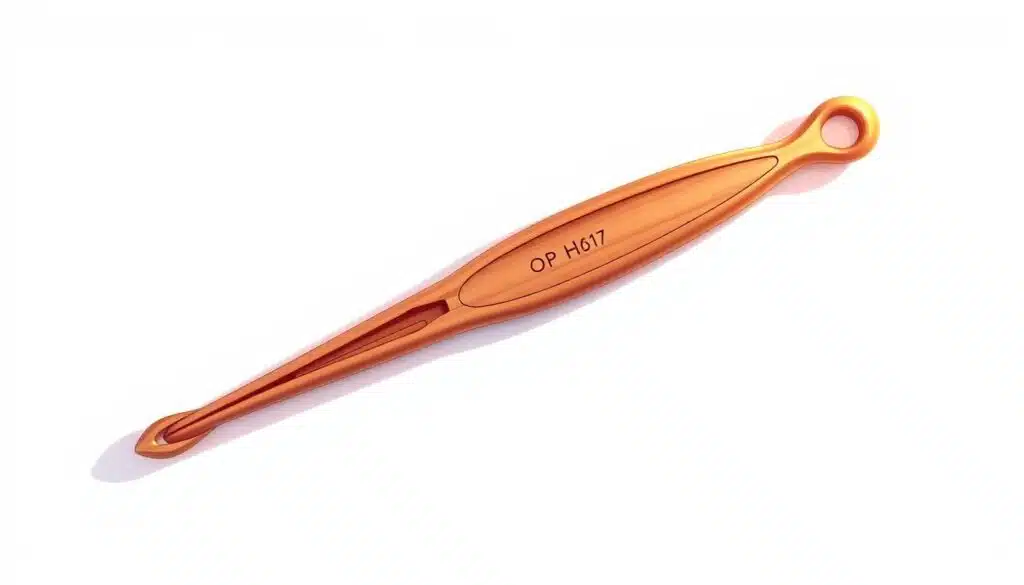
The head: point, throat, and lip — how they interact with yarn
The head controls how your yarn enters and leaves a stitch. A blunt or rounded point slides through bulky yarn without splitting fibers. A sharp point won’t let slippery thread escape tight stitches.
The throat, or groove, holds the loop as you work. A deeper, rounded throat keeps yarn seated for steady tension. A shallow, straight throat lets yarn slip more freely, so your gauge may loosen.
The lip finishes the system. A sharp lip grips yarn in the throat and can give clear stitch definition. A more rounded lip feels forgiving with fuzzy fibers but may allow more slippage.
The shank and its effect on stitch consistency (tapered vs inline)
The shank sets stitch size and rhythm. Tapered hooks narrow behind the lip, so the loop pulls into a smaller throat before the shank widens. That often yields slightly snugger stitches.
Inline hooks keep head and shank diameters similar. That creates a smooth transition and very uniform stitch sizes. Historic examples include Bates’ inline feel versus Boye’s tapered tradition, yet many modern hooks blend the two.
Handle and length: ergonomics, grip styles, and fatigue management
Handle shape changes comfort for long sessions. Soft, thicker handles from Clover Amour and Tulip Etimo cushion your grip and reduce strain. Slim aluminum handles like Boye feel light but can tire your hand faster.
Length matters for how you hold the tool. Longer hooks, such as some Prym and Furls models, work well if you switch between pencil and knife grips. Shorter hooks fit tidy project bags and suit certain grip habits.
Ergonomic crochet hooks often add thumb rests, foam, or contoured shapes. These features spread pressure and lower the chance of repetitive-strain aches during marathon crochet.
crochet hook guide
Start here for calm, predictable results. This guide helps match yarn and hook. It also keeps your hands happy while stitching.
How to read this guide: match yarn, pattern, and personal comfort
Learn about anatomy, materials, and sizing before choosing a hook. This gives you context for head shape, shank taper, and grip options.
Use the yarn label as a starting point. Then think about your tension and the fabric you want. Decide if you prefer a slick metal or grippy bamboo hook.
Using the yarn label and designer recommendations as your starting point
Yarn labels usually suggest a hook size and yarn weight. For example, #4 worsted with a 5mm suggestion. See this as useful guidance, not a strict rule.
Pattern designers often specify a hook for a certain drape or density. Follow these instructions unless you want a different fit.
For hook-size context, check the Craft Yarn Council notes or this primer on sizes and steel hooks: understanding crochet hook sizes.
When to trust conversions and when to swatch for gauge
Conversions between mm, US, and UK sizes are helpful. But they vary by manufacturer. Use charts to narrow choices, not to finalize them.
Always make a gauge swatch for garments or fitted items. A correct gauge swatch tells you whether to go up or down a hook size.
For casual projects, you can often trust yarn label guidance and skip the swatch. But for wearable items, swatch and adjust until the fabric is right.
Types of Crochet Hooks and What They’re Best For
Choosing the right tool makes your project easy to crochet. This guide helps you pick the best hook for your yarn, pattern, and comfort. You’ll enjoy crafting more with less guesswork.
Standard hooks: everyday workhorses
Standard crochet hooks are made of aluminum, plastic, and wood. They work well for many projects, like sweaters and dishcloths. Brands like Boye and Susan Bates offer a wide range at good prices.
Want to know the difference between metal and wood hooks? Check out this aluminum vs wood hooks guide. It explains how material affects your stitch speed and control.
Tunisian hooks: long-shaft needs for Afghan stitches
Tunisian hooks have a long shaft for holding many stitches. They’re perfect for dense, textured fabrics and classic Afghan stitchwork.
For smooth shafts and reliable stitch spacing, try Takumi Clover and Lantern Moon. They’re great for long rows.
Steel hooks: fine gauges for lacework
Steel hooks are great for working with tiny threads and fine motifs. They’re perfect for doilies, lace trims, and detailed edgings where precision is key.
Boye and Susan Bates have steel hook lines. Clover also offers ergonomic steel options for a cushioned grip on delicate threads.
Ergonomic and interchangeable hooks: comfort and versatility
Ergonomic hooks, like Clover Amour and Tulip Etimo, have contoured handles for comfort. They’re good for people with joint issues.
Interchangeable sets have removable shafts and cushioned handles. They’re great for carrying multiple sizes without a bulky case. They’re perfect for switching between projects often.
| Hook Type | Best For | Notable Brands |
|---|---|---|
| Standard crochet hooks | Everyday garments, blankets, accessories | Boye, Susan Bates |
| Tunisian hooks | Afghan stitch, long rows, dense fabric | Takumi Clover, Knitter’s Pride, Lantern Moon |
| Steel hooks | Thread work, doilies, lace | Boye, Susan Bates, Clover |
| Ergonomic hooks | Long sessions, joint-friendly crafting | Clover Amour, Tulip Etimo, Prym |
| Interchangeable sets | Portable, multi-size flexibility | ChiaoGoo, KnitPro, HiyaHiya |
| Specialty jumbo/long hooks | Chunky yarn, arm knitting, oversized stitches | Clover jumbo, Susan Bates jumbo |
Materials Explained: Aluminum, Plastic, Wood, Resin, and Luxury Options
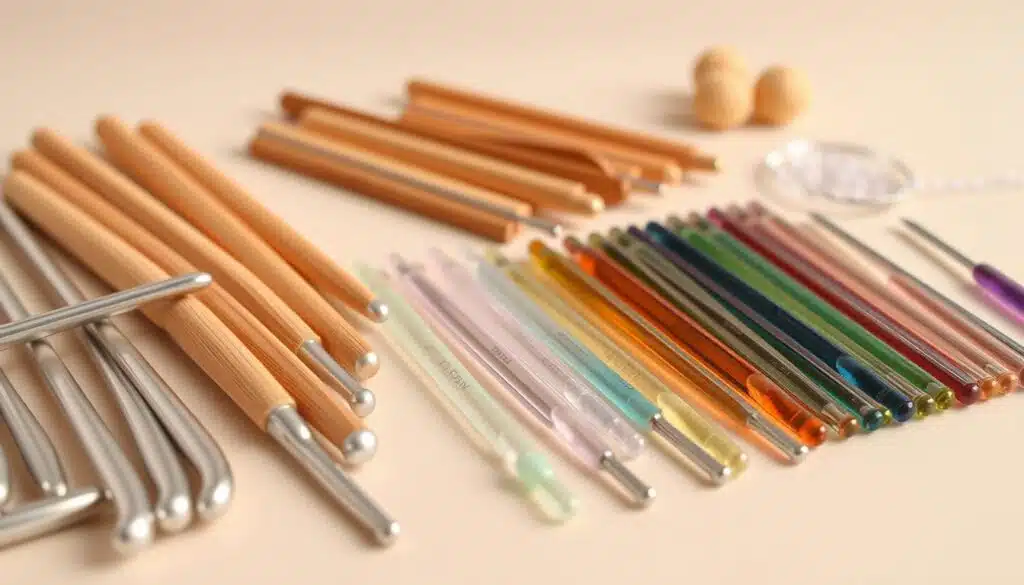
Choosing the right crochet hook material changes how your yarn behaves in your hands. You want glide, control, and comfort. Here are some tips to match material to project and personality.
Aluminum
Aluminum hooks give a smooth glide and solid durability for most projects. Brands like Boye and Susan Bates make dependable aluminum hooks. They work well with acrylic and cotton yarn. Some crocheters find aluminum cold to the touch or a bit squeaky with certain acrylics in hot weather.
Plastic
Plastic hooks are lightweight, colorful, and easy on the wallet. You can score jumbo sizes for bulky yarn without breaking the bank. Expect less longevity than metal and a chance of nicks over time. Prym’s lightweight designs surprised many by feeling comfortable despite being plastic-like.
Wood and bamboo
Wooden crochet hooks feel warm and slightly grippy, which helps tame slippery yarns. Knit Picks and Furls carry wooden lines that appeal to crafters who like a tactile, steady pull. Poorly finished wood can snag, so inspect tips before committing to lace or very fine work.
Resin, titanium, and specialty finishes
Resin crochet hooks and titanium options bring premium performance and eye-catching finishes. Furls leads with polished resin and hybrid pieces that pair luxury crochet hooks with ergonomic comfort. Titanium offers strength and light weight for heavy use. Expect a higher price for these specialty items.
Practical tip: slippery yarns do best with wooden crochet hooks or slightly grippy finishes. Sticky or fuzzy yarns prefer slick aluminum hooks or resin crochet hooks to avoid bunching.
| Material | Best For | Pros | Cons | Notable Brands |
|---|---|---|---|---|
| Aluminum | Everyday projects, mixed yarn types | Smooth glide, durable, widely available | Can feel cold; may squeak with some acrylics | Boye, Susan Bates, Silvalume |
| Plastic | Large hooks, beginner sets, colorful projects | Lightweight, affordable, bright colors | Less durable, can nick; mixed tactile appeal | Prym (lightweight designs), generic brands |
| Wood / Bamboo | Slippery yarns, long sessions, tactile preference | Warm feel, slight grip, comfortable | May snag if unfinished; less slick for fine work | Knit Picks, Furls |
| Resin / Titanium / Specialty | Serious hobbyists, gift purchases, ergonomic focus | Polished finish, durable, elegant looks | Higher cost; investment for comfort and style | Furls, premium makers |
How to Choose the Right Hook Size for Your Yarn
Finding the right hook should be easy, not a mystery. Start with the Craft Yarn Council’s advice. Then, make adjustments with a swatch. A clear chart shows which yarns go with which hooks, saving yarn and ensuring a good fit.
Begin with the yarn label and the Craft Yarn Council’s guide. Use metric millimeters for the most accurate diameter. Then, look up the US or UK size for your hook.
Matching yarn weight to hook size
Worsted/medium yarns usually match with 5.0–6.5 mm hooks. Many crocheters prefer 5.5 mm (I) or 6.0 mm (J) for worsted weight. Bulky and super-bulky yarns need 8 mm and up. Lace and sock yarns are best with 2.25–3.5 mm hooks.
Hook size conversion basics
Metric (mm) gives exact diameter. US and UK sizes offer alternatives. A conversion table goes from 2.00 mm to 30 mm. For example, 4.5 mm is US 7. Keep a conversion table handy when switching patterns.
Practical tips you can use right now
- If your hook lacks markings, measure it with a gauge tool like the Susan Bates Knit-Check.
- Swatch for garments to confirm gauge; casual items can usually follow the yarn label’s recommendation.
- When a pattern lists a range, try the middle size first and adjust after a small swatch.
Below is a compact conversion table to guide common choices and comparisons. Use it to match what’s in your hook case to what your pattern calls for.
| Metric (mm) | US Size | UK Size | Typical Use |
|---|---|---|---|
| 2.25 | B-1 | – | Sock, lace |
| 3.5 | E-4 | – | Fingering weight |
| 4.5 | 7 | – | Light worsted, sport |
| 5.5 | I-9 | – | Worsted favorite |
| 6.0 | J-10 | – | Worsted, sturdy fabric |
| 8.0 | 11 | – | Bulky projects |
| 12.0 | 17 | – | Super-bulky, chunky blankets |
Trust the Craft Yarn Council as your starting map, use hook size conversion when you swap patterns or tools, and pick a worsted weight hook size that suits your tension and project. Small tests save large frustrations, and a quick swatch tells you more than guessing ever will.
Starter Kits, Recommended Hooks, and Best Buys for Beginners
Starting out? Use worsted-weight yarn and a 5.0–5.5 mm hook. This combo is easy to work with. Try yarns like Red Heart Super Saver, Lion Brand Vanna’s Choice, or Caron Simply Soft.
Begin with one ergonomic hook in your favorite size. Then, add a small metal set for more options. This way, you can practice without spending too much. It also lets you upgrade when you need more comfort.
Beginner-friendly kit checklist
- One 5.0–5.5 mm ergonomic hook for daily practice
- A few affordable metal hooks in adjacent sizes
- Scissors, yarn needles, flexible tape measure, and stitch markers
- Small hook gauge to verify sizes
Looking for the best beginner hooks? Clover Amour and Tulip Etimo are great. They offer comfort and are easy on the wallet. Prym hooks also have ergonomic handles and embossed sizes.
Boye and Susan Bates offer reliable aluminum and steel hooks. Their sets are a good value for trying different sizes without breaking the bank.
For a luxury touch, check out Furls. They have resin and wood blends. These hooks are polished and can help reduce hand fatigue.
Affordable starter kit picks
- Basic multi-hook sets with common sizes, scissors, and needles
- Compact kits that include stitch markers and a measuring tape
- Single ergonomic hook + small metal set for flexibility and comfort
When shopping, think about what you’ll use most. A good beginner kit should have a solid hook and some extras. Once you find your favorite, you can splurge on brands like Furls.
Common Problems, Quick Fixes, and Tips to Improve Your Crochet
When your crochet looks off, you need quick fixes you can trust. Small signs like waviness or cupping tell you what’s wrong. Spotting these early saves yarn and time.
What wrong hook size looks like
Waviness or a loose sheen means your hook is too big or your tension is too loose. The fabric will drape but lose shape.
Cupping, where rounds form a bowl shape, signals a hook that’s too small or tension that’s too tight. This ruins collars and cuffs.
Stretched fabric with visible gaps comes from an oversized hook or an overly open tension. Sleeves and garments look holey and weak.
Adjusting tension, switching materials, and doing a swatch
A quick fix is a size swap: go down one size for loose fabric, up one size for cupped work. Make one change at a time so you can judge results.
Switch hook materials when yarn splits or slips. Choose a pointier metal hook for slick acrylic or silk. Pick wood or bamboo for control with fuzzy or slippery fibers.
Always swatch for wearables. Measure stitches and rows per inch, then compare to pattern gauge. If the count misses, tweak hook size and try again. For more ideas on hands-on crochet troubleshooting, visit crochet troubleshooting.
Ergonomic tips: grip styles, handle swaps, and rotating hooks to prevent fatigue
Experiment with grip styles. The pencil grip sits between thumb and index finger. The knife grip rests in the palm. Each alters tension and stroke.
Try cushioned handles like Clover Amour or Tulip Etimo when pressure builds. Prym and Furls offer longer shafts that ease switching grips and keep hands relaxed.
Rotate hooks during long sessions. Alternate materials and take short breaks with simple hand stretches. These ergonomic crochet tips cut strain and keep projects enjoyable.
- Use the Susan Bates Knit-Check gauge tool to confirm hook diameter.
- Keep a small library of hooks across materials to match yarn behavior.
- If you hit the same snag twice, write down which hook and grip fixed it for future reference.
Conclusion
This crochet hook guide covers the basics: the hook’s parts, material, shape, and size. These factors affect your stitches’ look and feel. Start with yarn labels and pattern notes, but always swatch for fit-sensitive garments.
Beginners should start with a worsted-weight yarn and a 5–5.5 mm ergonomic hook. As you get more comfortable, try different materials like aluminum, wood, and resin. Look for brands like Clover Amour, Tulip Etimo, Prym, Boye, and Furls for comfort and value.
For final tips, use the Craft Yarn Council tables and prefer metric (mm) for accuracy. Keep a gauge tool and tape measure handy. For more on matching hooks and yarn weights, check out this resource: complete guide to crochet hook sizes and yarn.
With this guide and a few simple swatches, you’ll choose the right hook with confidence. You’ll have fewer mistakes and more cozy projects. Now, grab the right hook and start creating something amazing.
FAQ
Why does the crochet hook I choose change my tension and finished size?
The size of the hook affects how tight or loose your stitches are. Smaller hooks make stitches tighter, which can cause your work to cup or shrink. Larger hooks make looser stitches, which might make your work drapey or holey.
Your personal tension also plays a role. Always swatch before starting a project to ensure your gauge matches the pattern.
How do hook material and shape affect stitch glide and speed?
Aluminum and metal tips glide smoothly, making stitching faster. Wood and bamboo add a bit of drag, helping control slippery yarns. This is good for those who prefer a more controlled stitch.
Inline (Bates-style) heads and shanks help make stitches uniform. Tapered (Boye-style) hooks have narrower throats, which can tighten stitches. Choose based on the yarn and your preferred hand feel.
What real-world problems happen when I use the wrong hook size?
Using a hook that’s too small can make your work cup or shrink. Using a hook that’s too large can make your work limp or holey. These issues are common and can usually be fixed by swatching and adjusting your hook size.
What are the key parts of a crochet hook I should understand?
Pay attention to the point (blunt vs. sharp), throat/groove, and lip. Also, consider the shank/taper. Tapered hooks narrow into the throat and can tighten stitches. Inline hooks have uniform head and shank diameters for consistent sizing.
Handle length and shape also affect comfort and grip.
How does the hook point, throat, and lip interact with yarn?
A sharp point is good for tight stitches and slippery yarns. A blunter tip works better for bulky yarns and avoids splitting. The throat determines how much yarn sits on the hook.
A rounded or sharp lip affects how securely the yarn sits before the next stitch is pulled through.
What’s the difference between tapered and inline shanks?
Tapered hooks narrow from lip to shank, often producing tighter stitches. Inline hooks keep head and shank diameters uniform, giving a smoother transition and more consistent stitch size. Some modern hooks blend both styles for ergonomic benefits.
How do handle and length affect my crochet comfort?
Larger, cushioned handles (Clover Amour, Tulip Etimo, Prym) reduce strain during long sessions. They’re good for people with joint issues. Longer shafts (Prym, Furls Streamline) make switching between pencil and knife grips easier.
Shorter hooks (Clover Amour compact versions) are portable and suit certain grip styles.
How should I use this guide to pick a hook?
Start with yarn label or pattern recommendations. Consider your personal tension and preferred hand feel. Then, swatch to match the pattern.
Read about anatomy, materials, and sizing here to decide between a slick aluminum hook for speed or a wooden hook for control. Factor in comfort: buy one ergonomic hook in your go-to size first.
Should I follow the yarn label or the designer’s hook recommendation?
Yarn label recommendations are a solid baseline for general success. Designer pattern recommendations may differ to achieve a specific drape or hand—follow the pattern for garments unless you intentionally want a different finish. When in doubt, swatch to match pattern gauge.
When should I swatch and when can I skip it?
Always swatch for garments, fitted items, or anything where size matters. For loose scarves, dishcloths, or practice pieces, you can usually follow the yarn label. If pattern gauge is specified, swatch until you match it.
How reliable are hook size conversion charts?
Metric (mm) is the most reliable for exact diameter. US and UK sizing are useful but inconsistent across brands, so use conversion charts as a guide and verify with a swatch. The Craft Yarn Council is a good baseline for matching yarn weight to hook size.
Which hook sizes work best for common yarn weights?
Worsted/Medium (#4) typically pairs with 5.0–6.5 mm hooks; many U.S. crocheters favor 5.5 mm (I) or 6.0 mm (J). Lace and sock weights use 2.25–3.5 mm; bulky and super-bulky use 8 mm and up. If your hook lacks markings, use a gauge tool like the Susan Bates Knit-Check.
What are the main types of hooks and when should I use each?
Standard hooks (aluminum, plastic, wood) are the everyday workhorses. Tunisian hooks have elongated shafts for Afghan crochet. Steel hooks are for thread and lace. Ergonomic hooks (Clover Amour, Tulip Etimo, Prym) reduce fatigue. Interchangeable sets give size flexibility without full-handled kits.
Which hook brands should I consider for different budgets?
For comfort and affordability try Clover Amour, Tulip Etimo, and Prym. For broad, budget-minded sets check Boye and Susan Bates. For luxury ergonomics and finishes consider Furls. Knit Picks, Red Heart, Lion Brand, and Caron are good references for yarn-and-hook pairings in starter combos.
How do aluminum, plastic, wood, and resin hooks compare?
Aluminum offers smooth glide and durability but can feel cold and squeaky with some acrylics. Plastic is lightweight and colorful but less durable. Wood and bamboo feel warm and add grip—great for slippery yarns. Resin, titanium, and specialty finishes (Furls) deliver luxury feel and consistent glide at higher cost.
What practical tips help when yarn is splitting, slipping, or behaving oddly?
Switch to a pointier metal hook for slippery or fine yarns; use wood or bamboo for extra control with slippery fibers. If fabric is too tight or cupped, go up a hook size; if too loose or holey, go down. Always swatch for fit-sensitive projects.
What does a wrong hook size visually look like?
Waviness and loose stitches mean your hook is too large; cupping and bowl-shaping (in rounds) mean it’s too small. Stretched fabric and visible gaps indicate an oversized hook or overly loose tension.
What should a beginner buy first?
Start with a worsted-weight (#4) yarn such as Red Heart Super Saver, Lion Brand Vanna’s Choice, or Caron Simply Soft and a 5.0–5.5 mm ergonomic hook. Add a small set of affordable metal hooks, a tape measure, stitch markers, yarn needles, and a Susan Bates Knit-Check gauge tool.
Are interchangeable or jumbo hooks worth it?
Interchangeable sets are great for crafters who need many sizes without bulky handles. Jumbo hooks, available in plastic or metal, are essential for super-bulky yarns and projects like chunky blankets. Choose based on the yarns you use most and your storage/portability needs.
How do I prevent hand fatigue and repetitive strain while crocheting?
Try different grip styles (pencil vs. knife), use ergonomic cushioned handles (Clover Amour, Tulip Etimo, Prym), rotate hooks during long sessions, and take regular breaks with hand stretches. Longer shafts help if you switch grips frequently.
Any quick fixes when a project looks wrong mid-way?
Measure a small swatch in the same stitch pattern to check gauge. Adjust the hook size one step up or down depending on whether fabric is too tight or too loose. If yarn is splitting or slipping, swap to a different material (metal vs. wood) or a hook with a different point shape.
Where can I check recommended hook sizes and yarn weights?
Use the Craft Yarn Council’s YarnStandards.com for baseline yarn-weight-to-hook-size guidance, but rely on metric mm measurements and pattern-specific recommendations. Yarn labels also list suggested hook sizes and are a helpful starting point for non-fit projects.
Any final practical shopping tips?
Value and durability matter more than cheapest price—buy one ergonomic hook in your most-used size and a small affordable set of metals. Upgrade to luxury brands like Furls if you crochet often and want maximal comfort. Keep a hook gauge and tape measure handy for quick checks.