
If you hate flipping your work every row, knitting backwards is the clever shortcut you’ve been waiting for. This reverse knitting method lets you form knit stitches on the public side. This way, you avoid turning narrow strips and keep your eyes on charted colorwork. Plus, you sidestep purling if that’s your nemesis.
Some knitters call the move purling back backwards, but here we’ll use knitting backwards when the stitch that shows on the public side is a knit. We reserve purling back backwards for the true purl-on-the-right-side version. This distinction matters when you work stranded knitting or follow detailed charts.
This technique keeps your stitch orientation normal — it’s not the mirror image you get with left-handed knitting — but it does flip your needle-and-yarn motion into a reversed sequence. Once you get the hand motions down, you’ll find entrelac technique and short-strip projects become faster and neater. Charted colorwork is far easier when you never turn your piece.
Later sections show motion-by-motion steps, float trapping for stranded knitting, handling decreases and increases, and tips for Continental, English, and hybrid knitters. So, you can fold knitting backwards into your regular toolkit.
Key Takeaways
- Knitting backwards lets you work without turning the piece, ideal for narrow strips and entrelac technique.
- We use “knitting backwards” for knit stitches on the public side; “purling back backwards” names the purl equivalent.
- The method preserves normal stitch orientation but reverses needle-and-yarn motions.
- It helps purl-shy knitters and makes charted colorwork and stranded knitting easier to follow.
- You’ll learn how to apply it to decreases, short rows, and mixes of Continental and English styles in later sections.
What knitting backwards is and why it matters
Knitting backwards is a smart trick. It lets you keep the right side of your work facing you. You work the return row without turning the work over. This way, you see knit stitches on the right side, not purl bumps.
Definition and core concept
The core idea of reverse knitting is to flip the usual way of knitting. The left needle becomes the working needle, entering stitches from left to right. This way, you make standard knit stitches on the right side, not purls on the wrong side.
This small change keeps your stitch orientation the same as regular knitting. So, your gauge and fabric look just like usual. For a quick demo and diagrams, check Meg’s clear write-up at this Schoolhouse Press post.
How it differs from left-handed knitting and purling
Knitting backwards is often confused with left-handed knitting. True left-handed knitting mirrors right-handed knitting, with a mirrored stitch orientation. Knitting back backwards keeps your usual stitch orientation but reverses direction; it is not a mirrored method.
Knit vs purl replacement: regular purling makes a purl bump on the right side. Knitting backwards makes a knit stitch on the same visible face. The needle and yarn motions feel reversed, but the result is knit on the RS.
When you’ll want to use it
Know when to use knitting backwards and when to stick with purling. It’s great for full purl rows in stockinette, short-row shaping, bobbles, heels, and narrow-strip work like entrelac. Use it when you want the RS facing you for charted knitting advantages and easier float management in colorwork.
The method won’t replace purling when a row mixes knits and purls. If a pattern requires both on the same row, stick with conventional techniques. For entrelac tips and narrow strips, the method saves time and keeps your orientation consistent across many small pieces.
| Use Case | Why KBB Helps | Notes |
|---|---|---|
| Stockinette reverse rows | Eliminates turning and purling across WS | Best for full purl rows; preserves stitch orientation differences |
| Entrelac and narrow strips | Saves time and keeps RS visible | Entrelac tips: maintain consistent tension when joining strips |
| Charted colorwork | Charted knitting advantages from always facing public side | Improves float handling and makes reading charts easier |
| Short rows, bobbles, heels | Reduces bulk and keeps shaping tidy | Good for yokes, sock heels, and Aran details |
| Rows mixing knits and purls | Not suitable | Use traditional purling for mixed-row patterns |
knitting backwards technique: step-by-step motions
Ready to flip your routine? This section guides you through knitting backwards motions. You’ll learn to compare purl and reverse knit with ease. The main idea is to switch which needle does the work while keeping the needle movement and stitch orientation correct. Take it slow and check each stitch as you go.
Needle and yarn movement compared to a regular purl
A regular purl has the right needle enter the stitch from right to left. The working yarn goes up, over the top, and down between the needles. Then, the right needle pulls the new stitch through from front to back.
In knitting backwards, the roles are reversed. Stitches start on the right needle. The left needle becomes the working needle. It enters between the right needle and the back loop from left to right. The working yarn comes up behind the left needle, goes over the top, then down between the needles. The left needle tip pulls the new stitch through from back to front.
How stitches should sit on the needle
Check stitch orientation: completed stitches should sit with their left legs in back and their right legs in front. This matches standard knitting orientation, so the fabric behaves the same when you return to right-side rows.
If you see the opposite orientation, you likely used a combination-style or reversed wrapping variation. Those produce stitches that twist or sit with stitches on needle left leg in back incorrectly. You can correct twisted or reversed stitches on the next right-side row by working through the back loop.
Common mistakes to watch for
Yarn wrapping errors top the list. If the yarn doesn’t mirror the reversed motion, you’ll get stitch orientation problems or twisted stitches. Throwers often let the working yarn pop off the needle tip, causing dropped loops or uneven tension.
Another frequent issue is inserting the needle into the wrong loop — front versus back — which changes the stitch type. Some knitters get confused about which needle should move; you may hold one needle and move the other if that feels natural. What’s critical is the relative position of yarn and needles, not which hand moves them.
Practical checks help you avoid knitting backwards mistakes: inspect the stitch legs on the needle after each few stitches, slow down when wrapping the yarn, and if stitches look twisted on the next RS row, work them through the back loop to fix them. Practice on a small swatch before using the method on a project and consult resources like fix knitting mistakes for visual troubleshooting tips.
Adapting knitting backwards to your knitting style
When you start knitting backwards, you can pick a method that feels right for your hands. It’s different from regular knitting and left-handed knitting. But, it becomes natural once you adjust your finger and needle positions.
Continental knitters’ approach
If you hold the yarn in your left hand, the Continental method works best. For Continental knitting backwards, you bring the yarn up behind the left needle. Then, you move it over the tip and down between the needles.
Use your left forefinger to guide the yarn over the tip. Then, push it down without dropping the needle. This keeps the tension steady.
Some left-hand knitters reverse purl by briefly letting go of the left needle. They wrap the yarn and then grab it again. You can also use your right hand to hold the needles together. This lets your left hand wrap the yarn smoothly.
This method is easier than regular purling. It’s because you scoop the yarn instead of pushing it out.
English (throwing) knitters’ approach
If you hold the yarn in your right hand, you’ll use a scooping motion instead of throwing. For English knitting backwards, bring the yarn from behind the left needle tip. Then, push it down between the needles, unlike a normal knit.
Apply firm pressure to keep the yarn from slipping off the needle tip. Use your right hand to control the tension. If scooping feels hard, try moving the right needle toward the left needle.
Combination and hybrid techniques
Combination knitting backwards changes how stitches are arranged. In this method, your wrap goes up between the needles. This makes the new stitch easier to pull through but flips the stitch orientation.
Usually, you’ll work those stitches through the back loop on the next right-side row. This corrects the stitch orientation. Hybrid methods mix scoop and throw techniques. Find one that keeps even tension and clean stitch mounts.
Try short swatches of Continental, English, and combination knitting backwards. For a visual guide on combined and reverse combined mounting, check out this tutorial. For more technique tips, see this resource.
Using knitting backwards in entrelac and narrow-strip work
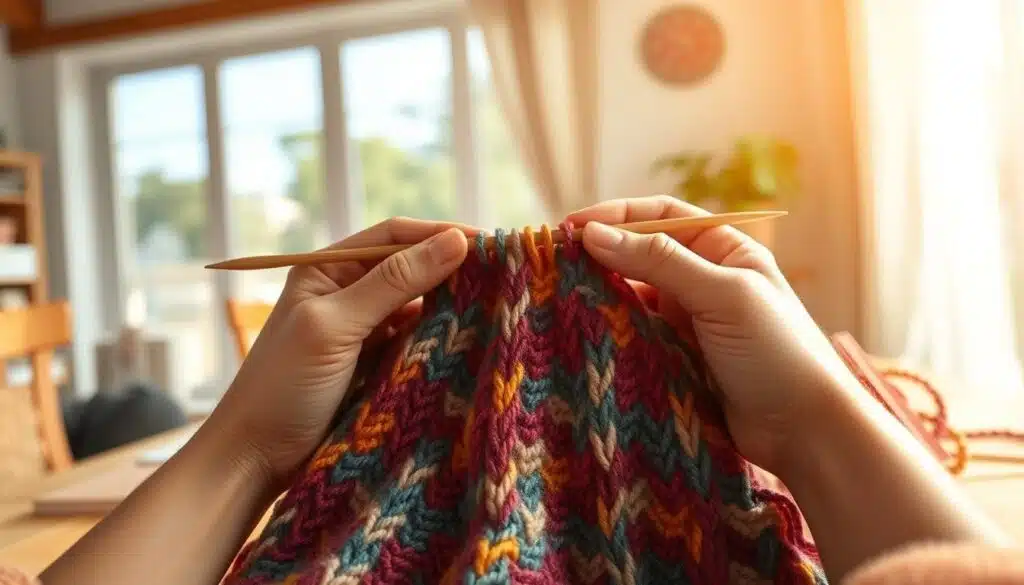
Entrelac involves knitting short, narrow pieces that come together to form a larger fabric. Turning the work after each piece can be tiring. Knitting backwards entrelac keeps the right side facing you, avoiding the need to turn. This method saves time and makes longer sessions more comfortable.
Why it shines for small strips
Knitting backwards makes handling small strips easier. You won’t have to deal with as much fabric manipulation. This method also improves your posture and speeds up muscle memory development.
Practical tips for entrelac
- Start with a small entrelac swatch to get used to the technique before starting a full project.
- Double-check the stitch orientation on early strips to avoid mistakes later.
- Use longer needles or a flexible cable needle for short lengths to ease hand strain.
- Keep your tension even to prevent visible ladders at strip joins and trap floats promptly when working colorwork.
- Practice knitting backwards entrelac by working a few rows each session to master the technique.
This method is great for avoiding the hassle of turning. Try it on a simple basket-weave scarf or a swatch of Elizabeth Zimmermann-style entrelac. You’ll see how knitting backwards entrelac changes your work rhythm.
Knitting backwards for charted designs and colorwork
Knitting backwards keeps the right side facing you. This makes it easy to read charts without turning. You can follow the motif flow as written, thanks to RS-facing charts.
Reading charts while you knit
Mark RS and WS rows to keep track. This way, errors are easier to spot. Practice mapping knit and purl symbols to your hand motion before starting a long color section.
Take a quick swatch to compare the chart to your fabric. This check saves time and keeps your work neat.
Float handling and tension in colorwork
Knitting backwards helps control tension in stranded knitting. Purl rows can push loops, causing gaps. Your backward knit motion lifts and preserves stitch height, reducing gaps.
Handling floats backwards gives you better access to trap floats. You can see how colors stack and adjust floats as needed.
Stranded knitting float trap steps
Trap floats knitting backwards works for both picking and throwing. Practice the sequences below until trapping feels natural.
Trap color held in LEFT hand if working color is in RIGHT hand:
- Wrap/throw left-hand yarn under-to-over.
- Wrap/pick right-hand yarn over-to-under.
- Unwrap left-hand yarn and lift the old stitch over the right-hand color to complete the stitch; the carried yarn ends up over the working yarn.
- Knit the next stitch with right-hand color; the left color becomes free.
Trap color held in RIGHT hand if working color is in LEFT hand:
- Wrap/pick right-hand yarn over-to-under.
- Wrap/throw left-hand yarn over-to-under.
- Unwrap/unthrow right-hand yarn and lift the old stitch over the left-hand color to complete the stitch; the carried yarn ends up over the working yarn.
- Work the next stitch with left-hand color; the right color becomes free.
These steps are great for two-handed knitters and single-handers who adapt. Try them on a 20-stitch swatch to ensure floats sit snug without twisting.
| Challenge | Backward knitting benefit | Quick tip |
|---|---|---|
| Keeping chart orientation | RS-facing charts stay readable; you never flip the work | Mark RS rows with a highlighter or sticky tab |
| Uneven row height | Tension stranded knitting reduces rowing out | Use the same hand motions for knit and knit-backwards rows |
| Long floats | Float handling knitting backwards makes trapping easier | Trap floats knitting backwards every 3–5 stitches on runs |
| Two-handed color control | Charted knitting backwards simplifies color swaps | Practice the handed trapping sequence that matches your dominant hold |
For a related technique, check out brioche stitch basics. It changes stitch feel and ease, similar to knitting backwards.
When to use purling back backwards versus knitting backwards
Both purling back backwards and knitting backwards are great if you prefer the right side up. Purling back gives you purl bumps on the front, while knitting back shows knits. This is super helpful for narrow strips, entrelac, or colorwork.
Definitions and when each is appropriate
Knitting back is best when you need to fix a wrong-side purl row. This keeps the right side showing knit stitches. Purling back is perfect for patterns that need purl bumps on the right side, like garter ridges. Both methods let you keep the right side up and make chart reading easier.
How to execute purling back backwards
Begin with the yarn in front of the needles. Insert the left needle between the stitch’s back leg and the right needle, moving from right to left. Twist the left needle so the tips face each other. Bring the yarn up between the needles, over the left needle, then down the front.
Use the left needle tip to pull the stitch through from front to back. The new stitch should sit on the left needle with the working yarn in front.
Orientation checks and corrections
Always do a quick visual check: the stitch should have the left leg in back and the right leg in front. If it’s twisted, you might have wrapped the yarn wrong or used a combination move. To fix it, work the stitch through the back loop on the next right-side row.
Practice with a small swatch to see the difference in texture and tension.
Practical tips
- Go slow at first and check stitch alignment often, specially after decreases or joins.
- If you notice incorrect orientation, fix it on the following RS row instead of ripping back.
- Repeat the purl backwards steps until your stitches sit correctly without thinking.
Working decreases and increases while knitting backwards
At first, working decreases and increases backwards feels strange. The moves are similar to what you do on the right side. You insert the left needle into multiple stitches, keeping the rhythm. This simple change keeps your stitch count and shaping right without turning your work.
For decreases, treat joined stitches like singles. Insert the left needle into two stitches as if reaching forward. Then, wrap and draw the yarn through in the backwards motion. The result looks familiar when viewed from the right side.
About k2tog backwards: place the left needle into two adjacent stitches. Wrap the yarn as you do for single stitches when knitting backwards. Pull the new loop through both stitches. The finished decrease can lean left or right based on your convention and needle angle. Test k2tog backwards on a swatch to ensure your stitch library shows the correct slant.
Increases reverse knitting need small changes in placement and wrap direction. Yarn-over, make-one (M1), and lifted increases work fine with the wrong-side orientation. Place the new stitch so its leg faces the same direction the pattern expects on the right side after turning the work.
Practice decreases and increases reverse knitting on scrap before using them in a live project. Swatches reveal twist, slant, and tension issues quickly. Keep a notebook with stitch photos and notes from brands like Cascade or Malabrigo if you reference yarn behavior while testing.
Use the table below to compare common backward decrease and increase choices, the motion you use, and the expected right-side appearance. The notes help you choose whether to mirror a standard decrease or intentionally reverse its lean for design impact.
| Move | Backward Action | Right-side Appearance | Notes |
|---|---|---|---|
| k2tog backwards | Insert left needle into two stitches, wrap with knitting-backwards motion, draw loop through both | Creates a decrease that may lean depending on needle angle; test to confirm lean | Good for standard decreases when you want minimal shaping surprises |
| ssk equivalent (backwards) | Slip stitches and orient them so the final wrap mirrors a left-leaning decrease when viewed from RS | Left-leaning decrease on the right side | Use when pattern calls for left-leaning decreases; check direction on a swatch |
| Yarn-over (backwards) | Bring yarn forward or around needle with backwards wrap to create an extra loop | Eyelet appears where pattern expects after turning to RS | Watch tension to avoid elongated holes |
| M1 / lifted increase (backwards) | Lift bar and wrap or knit into it using reversed motion so the new stitch sits correctly | Neat increase whose leg faces the intended direction on RS | Preferred when you need invisible increases in pattern alignment |
Practice strategies and troubleshooting
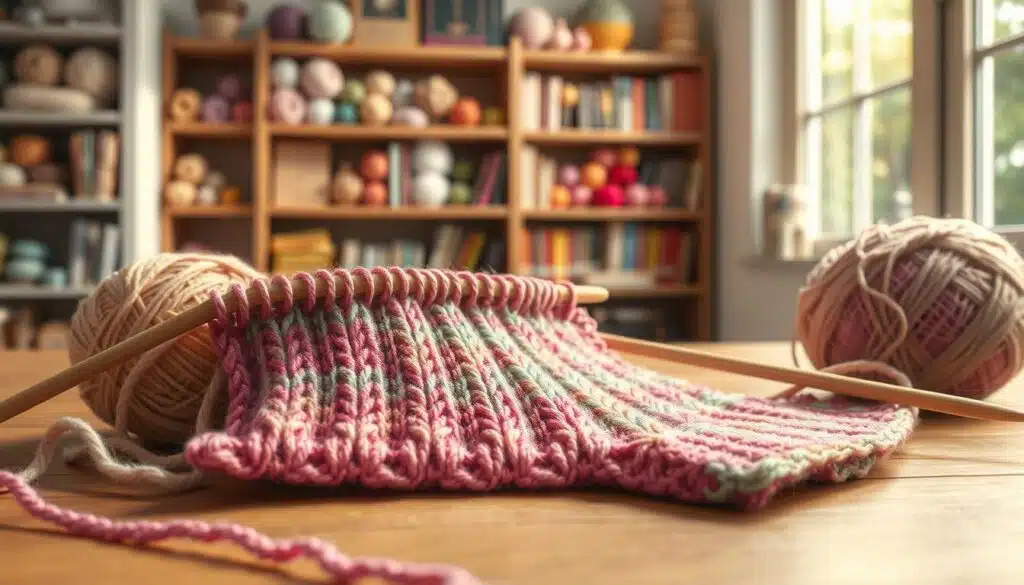
Start small and stay cheeky. Begin with a knitting backwards practice swatch to learn the motions without risking a sweater. Try garter-strip swatches, short entrelac squares, or a starter projects entrelac swatch to build confidence while you focus on hand placement and tension.
Use bulky yarn and larger needles at first. Many instructors demo with Addi Turbo needles and chunky wool or alpaca blends to make loops easy to see and handle. If you want guided instruction, search for a knitting backwards video or a purling backwards class; watching a skilled teacher clears up finger placement faster than a dozen written descriptions.
Starter swatches and mini projects
Pick tiny motifs where gauge does not matter. A small colorwork motif will let you practice float trapping and chart reading without turning the work. The Twisted Christmas Tree pattern or a short entrelac square makes an approachable starter projects entrelac swatch.
Film yourself or have a friend record a practice session. Comparing your movements to a knitting backwards video helps you spot where yarn wrapping or needle angle differs from the model. You can also follow the detailed writeup at this guide for step visuals and tips.
Common problems and fixes
Yarn popping off needle is a frequent complaint, specially for English throwers. Grip the working yarn with a firmer tension and hold the needle tips where they cross to stabilize. If yarn popping off needle persists, try slightly larger needles for practice to reduce slips.
If you notice twisted stitches, slow down and check stitch orientation after every few stitches. To fix twisted stitches, work them through the back loop on the next right-side row or unpick a few stitches and re-knit them correctly. A short unpick and re-knit often saves hours later.
Tension that causes “rowing out” is common because knitting backwards and purling can sit differently on the needle. To troubleshoot knitting backwards, focus on consistent yarn wrap and practice even pressure. Let go of the left needle briefly if wrapping gets awkward, then re-stabilize the needles and continue.
Using videos and classes to accelerate learning
Look for short mini classes and longer courses such as Improve Your Knitting alternative methods for structured progress. A one-hour purling backwards class will teach the reverse purl motion, while full courses cover entrelac routines and float management.
When you watch, note exact hand positions, yarn feeds, and how instructors prevent yarn popping off needle. Many sample videos show bulky yarn and Addi Turbo needles for clarity. If a stitch error stays stubborn, unpick a few stitches and re-knit slowly until the motion becomes automatic.
| Issue | Quick Fix | Practice Drill |
|---|---|---|
| Yarn popping off needle | Hold needles where they cross; use larger needles | Practice with bulky yarn for 10 minutes |
| Twisted stitches | Work through back loop next RS row; unpick few stitches | Re-knit a small entrelac square slowly |
| Uneven tension / rowing out | Match tension on reverse rows; relax grip | Alternate knit and knitting backwards practice swatch rows |
| Incorrect yarn wrapping | Stabilize needles and use finger to guide yarn | Repeat single-stitch drills on garter-strip swatch |
| Difficulty inserting left needle | Angle needle toward stitch back; scoop down firmly | Slow-motion practice using a knitting backwards video |
If you prefer step-by-step troubleshooting for fixes beyond quick drills, browse targeted how-to guides at fix knitting mistakes. Use what you learn there to unpick smartly and re-knit with better habits.
Tools, yarns, and needle choices for mastering the method
Choosing the right tools makes learning easier. Start with needles that are smooth and easy to use. Many knitters like Addi Turbo needles because they help stitches move smoothly.
Keep your tools simple. You’ll need a pair of needles, a tape measure, stitch markers, and a project bag. This will help you stay organized.
Needle types and sizes that help
Find needles that feel right in your hand. Metal tips, like Addi Turbos, are smooth and easy to use. Wooden tips are better if your yarn slips too much.
Start with larger needles for practice. They make it easier to see what you’re doing. As you get better, try smaller needles.
Yarn choices for practicing
Choose yarns that show each stitch clearly. A bulky yarn is good for beginners because it’s easy to see. Avoid slippery yarns for now.
Use yarns with contrasting colors for stranded work. This makes it easier to see your stitches. Smooth yarns are best for swatching.
Project suggestions to build confidence
Start with small projects to build your skills. Try garter strips and small colorwork swatches. These help you practice without feeling overwhelmed.
Try entrelac mini projects next. These are great for practicing short strips. Start with small projects before moving to bigger ones.
Keep your tools in a good project bag. dellaQ Knitting Bags and Cases are popular for keeping things organized.
Conclusion
You’ve learned how knitting backwards can change your knitting game. It saves time on narrow projects and helps with colorwork charts. It also improves control over floats and tension.
Start with small swatches to get the hang of it. Focus on yarn wrapping and stitch orientation. Use videos or classes to learn faster.
Try different tools like Addi Turbo needles and bulky yarns. This will show you the benefits quickly. Remember, trap floats and adapt to your style. Only change what improves your knitting.
When you use reverse knitting in real projects, you’ll see better rhythm and tension. For a comparison of English and Continental techniques, check this guide here.
FAQ
What is “knitting back backwards” and why should you care?
Knitting back backwards is a technique where you work from left to right. This keeps the right side of your knitting facing you. It’s great for avoiding the hassle of turning your work and for those who don’t like purling.
How does knitting back backwards differ from true left-handed knitting and from regular purling?
Unlike true left-handed knitting, knitting back backwards keeps your stitch orientation the same. The needle and yarn motions are reversed compared to purling. This method produces knit stitches on the right side, unlike regular purling.
When is knitting back backwards appropriate and when won’t it work?
It’s perfect for replacing wrong-side purl rows in stockinette and for narrow-strip entrelac. It also works well for short rows, bobbles, and flat colorwork. But, it won’t work for rows that need both knit and purl stitches.
What are the exact needle and yarn movements compared to a regular purl?
For a regular purl, the right needle goes in from right to left. The yarn comes up, goes over, and down between needles. Then, the right needle pulls the new stitch through from front to back. Knitting back backwards reverses this: the left needle goes in from left to right, and the yarn comes up behind, over, and down between needles.
How should completed stitches sit on the needle after knitting back backwards?
Correct stitches should have their left legs in back and right legs in front. If they look twisted or sit the opposite way, you might have wrapped the yarn wrong or used a combination-style wrap.
What common mistakes should you watch for and how do you fix them?
Watch out for twisted stitches, yarn popping off the needle, and confusing which needle is working. To fix, slow down, check stitch legs, apply firm pressure when scooping yarn, or rework mistaken stitches. You can also unpick and re-knit them correctly.
How do Continental knitters adapt to knitting back backwards?
Continental knitters hold yarn in their left hand and scoop. For knitting back backwards, they bring the yarn up behind the left needle, over the tip, and down between needles. They often use their left forefinger to guide the wrap. Some momentarily release the left needle at the crossing point to make the wrap, then regain their grip.
How should English (throwing) knitters approach the motion?
English knitters usually throw with their right hand. When knitting back backwards, they scoop instead of throw. They bring the yarn from behind the left needle tip and push it down between the needles. Applying firm downward pressure and holding tension helps keep the yarn from popping off the needle tip.
What about combination-style or hybrid knitters—any special notes?
Combination knitters wrap yarn in the opposite direction. Knitting back backwards in combination style may produce stitches that sit in the opposite orientation. Those stitches must be worked through the back loop on the following RS row to correct them. Experiment to find the wrap that gives you the best control and tension.
Why is knitting back backwards great for entrelac and narrow-strip work?
Entrelac involves many tiny turns and narrow strips. Knitting back backwards eliminates frequent turning, so you keep the RS facing you. It reduces handling and makes managing joins, trapping floats, and maintaining even tension easier when pieces are tiny.
What practical tips help when using knitting back backwards for entrelac?
Practice with a bitty entrelac swatch first. Use slightly longer needles or flexible cables for very short strips. Check stitch orientation frequently and keep tension even to avoid ladders. Trap carried yarns immediately in small colorwork strips to avoid long loose floats.
How does knitting back backwards improve charted colorwork and stranded knitting?
You never turn your work, so you always view the RS shown on the chart and read charts in the same direction you knit. This simplifies tracking motifs and seeing how colors line up. It often yields more even tension, makes float handling easier, and gives better opportunities to trap floats as you form stitches.
What are the step-by-step float-trapping methods for two-handed stranded knitting?
Two common sequences depend on which hand holds which color. To trap a color held in the left hand while working with the right: wrap the left-hand yarn under-to-over, wrap the right-hand yarn over-to-under, unwrap the left yarn and lift the old stitch over the right color, then knit the next stitch with the right color. Reverse the sequence if the working color is in the left hand. Practice these on a swatch to ensure floats sit snug and untwisted.
What’s the difference between “knitting back backwards” and “purling back backwards”?
Knitting back backwards forms knit stitches on the RS while working the row in reverse. Purling back backwards is the related reverse technique that produces purl bumps on the RS. Use knitting back backwards to replace full WS purl rows when you want knit-faced stockinette on the RS; use purling back backwards when the pattern requires purl texture visible on the RS, such as garter bumps or charted RS purls.
How do you execute purling back backwards and check orientation?
Purling back backwards involves bringing the yarn to the front between needles, inserting the left needle between the back leg of the stitch and the right needle from right to left, bringing the yarn up between needles and over the left needle, then pulling the stitch through so the new stitch sits with the working yarn extending from the back. As with knitting back backwards, check that stitches sit with left leg in back and right leg in front; wrong orientation requires working affected stitches through the back loop on the next RS row.
How are decreases and increases handled when knitting back backwards?
Decreases are done by inserting the left needle into multiple stitches the same reversed way you insert for singles. For example, k2tog backwards means placing the left needle into two stitches, wrapping and pulling as usual to make a decrease. Increases (yarn-overs, M1, lifted increases) are adapted so the new stitch sits with correct orientation and placement; practice these on swatches to confirm how they lean and where they sit in your stitch library.
What practice strategies and starter projects help you learn this technique?
Begin with small swatches: garter-strip swatches, bitty entrelac squares, tiny colorwork motifs, or a short stranded sampler. Use bulky yarn and larger needles—Addi Turbo circulars or straights shown in many demos make motions easier to see. Try contrasting colors so floats and trapping are visible. Record yourself or compare to video demos and classes to refine hand positions and wraps.
What common problems will you hit while learning and how do you fix them?
Expect yarn popping off the needle tip (especailly if you throw), incorrect wrapping, twisted stitches, and uneven tension. Solutions: apply downward pressure when scooping, hold steady tension, grasp needles at the crossing point if you must briefly release one needle, unpick a few stitches and re-knit, or work twisted stitches through the back loop on the next RS row. Slow practice and swatching prevent major mistakes in projects.
Which needles and yarns are best for practicing knitting back backwards?
Start with smooth, familiar needles that slide—Addi Turbo needles are frequently used in demonstrations. Use larger needles and bulky wool or wool/alpaca blends so stitches are clear and easier to handle. Avoid very slippery or highly haloed yarns at first. Flexible cables or slightly longer needles help with very short strips.
What project suggestions help you build confidence before using the technique in a garment?
Try small entrelac scarves, bitty colorwork swatches, garter-strip practice, or tiny stranded motifs. Only move to larger pieces such as sweater panels (examples like Ombre Dyed Sweater demos) after you’re comfortable. Keep practice tools organized in a project bag like dellaQ so you can focus on motion and tension.
Any final quick tips to keep in mind while learning?
Practice deliberately on swatches, frequently check stitch legs for orientation, trap floats as you work small pieces, adapt motions to Continental, English, or combination styles, and use video demos or a short class to watch hand positions. Experiment with Addi Turbo needles and bulky wool blends during practice—your hands will learn faster than your brain expects.