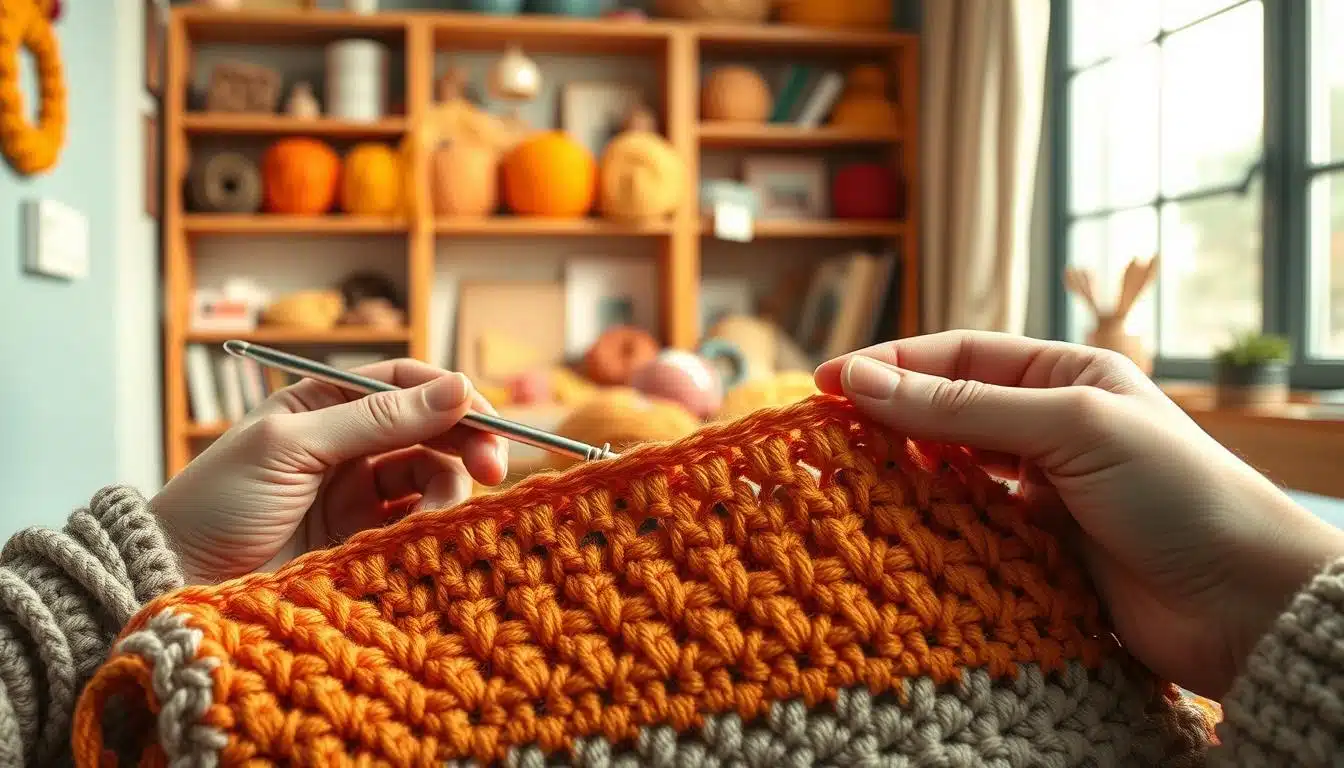
You’re about to learn a finishing move that makes any project look professional. This crab stitch tutorial, also known as reverse single crochet or RSC, creates a corded, slightly twisted edge. It’s perfect for blankets, bags, and sweaters, adding a simple yet striking touch.
This crochet border tutorial explains why crocheters love crab stitch edging. It shows how it differs from a regular single crochet and its practical benefits. You’ll learn how to apply it to real projects, from studio cotton dishcloths to cozy Caron throws.
Expect clear steps, tool and yarn suggestions, and quick fixes for common slip-ups. By the end of this piece, you’ll be ready to add a neat, durable finish. Your handmade items will look like they were made with skill.
Key Takeaways
- The crab stitch tutorial uses a reverse single crochet (RSC) to create a corded, durable edge.
- Crab stitch edging differs from a regular single crochet by working in the opposite direction for a twisted look.
- Ideal for finishing blankets, bags, and garment cuffs where structure matters.
- This guide focuses on right-handed, left-to-right technique and practical prep tips.
- You’ll get tool and yarn suggestions plus quick troubleshooting to keep edges tidy.
What is the Crab Stitch and Why You’ll Love It
Have you ever seen those neat, twisted edges on blankets and bags? Wondered how they got that rope-like finish? The crab stitch is the answer. It’s a simple way to add a professional touch to your edges.
Definition and other names
The crab stitch is just a single crochet done in reverse. It’s also known as the reverse single crochet or RSC. For right-handed folks, you insert the hook into the stitch on the right and work left-to-right. This flip creates the signature twist.
What makes it different from a regular single crochet
You use the same yarn-over and draw-through motions as a standard single crochet. But, the direction is reversed. This change makes each stitch sit at an angle, giving it a corded look.
When you compare crab stitch vs single crochet, the crab stitch looks more rope-like. The single crochet lies flat. The reverse single crochet definition explains why one is structured and the other is soft.
Why crocheters choose it for edges — sleek, corded look and durability
Crocheters love this finish for many reasons. It creates a slim, unisex corded edge that suits many projects. The twist adds a touch of elegance without bulk.
Durability is another plus. The crab stitch strengthens edges on items like washcloths and tote bags. This helps them resist stretching and keeps their shape after many washes.
Try using a contrasting color to highlight the rope effect. The crab stitch works well after almost any border or stitch pattern. It gives your projects a neat, handmade look.
crab stitch tutorial
Want to add a neat, corded edge to your crochet? This guide will show you how to do the reverse single crochet. It makes your edges look clean and planned. Just follow the steps, practice the motion, and you’ll master it quickly.
Step-by-step written instructions for right-handers (working left to right)
Start on the left side of your project, working from left to right. Instead of inserting the hook to the left, do it to the right. If the point feels off, twist the hook to the left. Then, yarn over and pull up a loop, leaving two loops on the hook.
Yarn over again and pull through both loops. This completes one reverse single crochet. Keep repeating in each base stitch to the right until you finish the edge.
How to start: prepping a neat edge with a round of single crochet
If your edge is uneven, start with a round of single crochet. For squares, put sc, ch2, sc in each corner. This makes the crab stitch fit neatly into the corners.
Use the same yarn and hook as your main project. This keeps the tension and texture the same. If you want a contrasting edge, go for it. For a better understanding, check out a photo or video tutorial. A clear guide with photos can help you see the twist.
Finishing the round: joining with slip stitch on the underside for a tidy finish
Don’t turn your work after finishing the crab stitch round. Keep going left to right, working into the next stitch as needed. When you get back to the start, join with a slip stitch into the first single crochet on the underside. This makes the join neat. Then, fasten off and weave in the ends.
Blocking can make the corded edge look smoother. If you like visuals, look up a step-by-step crab stitch video or the reverse single crochet tutorial link. They offer extra guidance and practice tips.
Tools, yarn, and prep: what you need before you begin
Before starting a crab stitch border, make sure you have the basics. This ensures your finish is crisp and fits perfectly. A small kit of crab stitch materials saves you from searching for tools in the middle of your work. Choose yarn that matches your project and pick a hook that blends with the original tension.
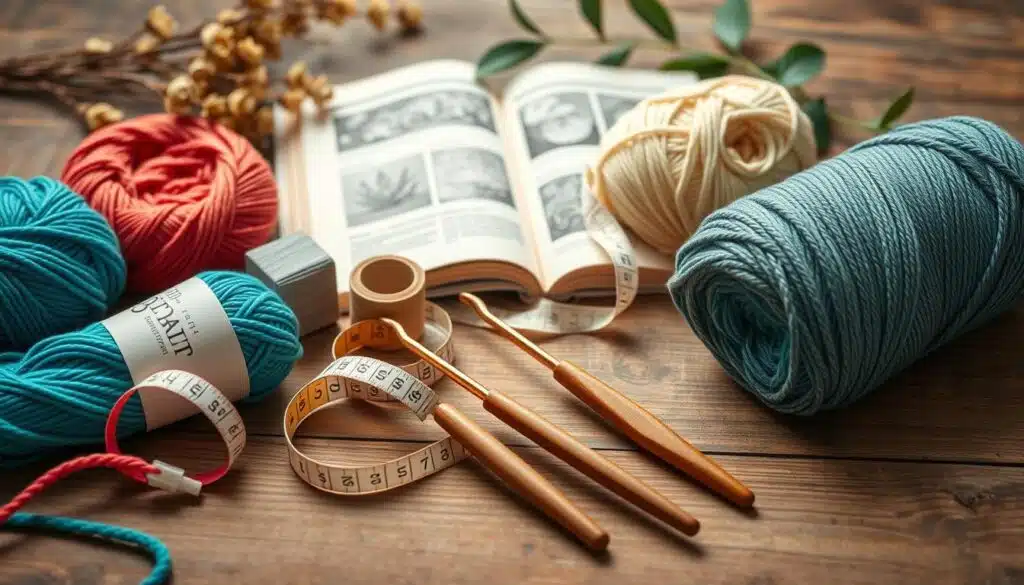
Fine cotton is great for doilies and coasters, giving sharp definition and a neat edge. DK (double knit) is versatile for bags, garments, and medium blankets. Aran or worsted is best for large throws and blankets, adding a sturdy, chunky rim. The sample shown used Aran for a bold texture.
Choosing the right hook
Start with the hook size from the yarn ball band to keep the project gauge right. If adding crab stitch to an existing piece, use the same hook size as the main work. This prevents a border that’s too tight or too loose. For delicate cotton, a slightly smaller hook sharpens the cord; for Aran, use the recommended size for a balanced look.
Other supplies
Have scissors and a yarn needle ready for neat ends and secure joins. Optional blocking tools—mats, pins, and a spray bottle or steam iron—are useful for a polished edge on ripples or garment hems. Good supplies for edging make finishing faster and more satisfying.
Shopping and brand tips
Buy from trusted sellers like Michaels, Joann, or Amazon. Choose reputable yarn brands such as Lion Brand, Cascade, or Berroco for quality fiber. Check the fiber content and care labels before buying; they help you decide on yarn weight and whether a project needs machine washability.
Quick checklist
- Crab stitch materials: yarn matching your project and a spare ball for border continuity.
- Crochet hook size crab stitch: match the original hook to maintain tension.
- Supplies for edging: scissors, yarn needle, pins or blocking tools for a neat finish.
Common technique tips to master the reverse motion
Start with a tiny practice swatch to save time and avoid frustration. The reverse single crochet technique is simple once you get the twist right. Think of the first stitch as a firm handshake.
How to insert the hook and twist for a clean first stitch
Put the hook into the base stitch to the right of you. Twist the hook tip slightly to the left or rotate your wrist. Pull up the loop, then yarn over and draw through both loops like a single crochet.
Keep practicing this motion on scrap yarn until it feels natural. This trains your hand for the twist.
Troubleshooting uneven stitches and how to keep tension consistent
If your edge looks loose, try a smaller hook or hold the yarn tighter. If it puckers, use a larger hook or relax your grip. Count stitches and mark every tenth to avoid mistakes.
Work at a steady pace and check tension often. Fatigue can make stitches uneven, so take breaks.
Tips for left-handed crocheters and adapting the motion
Left-handed crab stitch is the same but mirrored. Work from right to left and insert into the stitch to the left. Mirror the twist and yarn-over motions until it feels natural.
Watch a left-handed tutorial like this left-handed guide for extra help.
Quick practical checklist to master the edge
- Prep your base with a round of single crochet for structure.
- Keep your hook grip and yarn hold consistent with the main fabric.
- Practice how to twist hook crab stitch on scraps before committing to the project.
- Use good lighting and a darning needle to weave tidy ends.
For a clear visual reference and more crab stitch tips, see this practical tutorial: crab stitch tutorial.
Working corners, curves, and tricky edges with the crab stitch
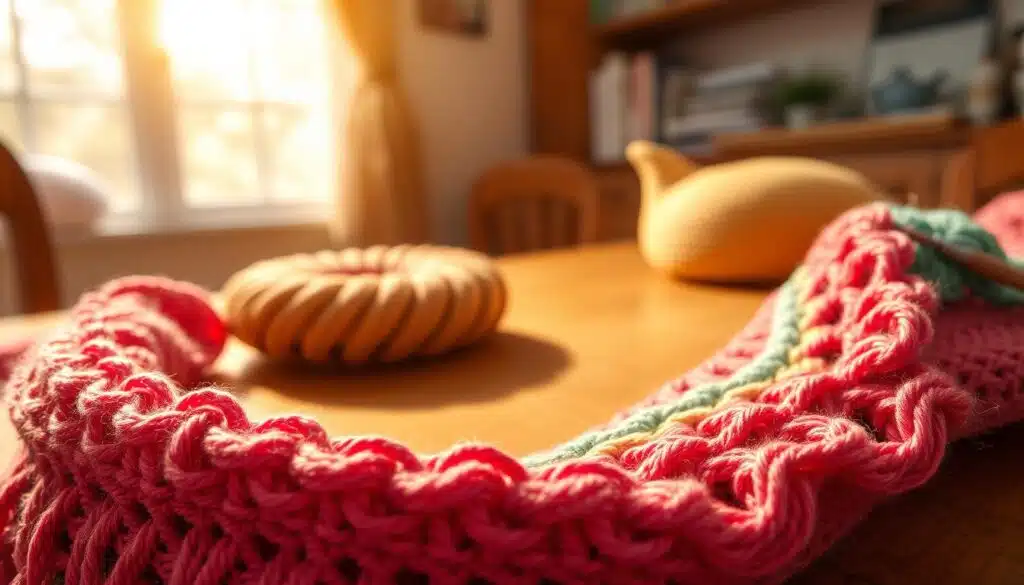
The crab stitch creates a neat, corded finish that hides awkward shapes. Start with a tidy foundation round of single crochet. This makes your edge behave well. On sharp turns and soft waves, the crab stitch adds strength without bulk.
90-degree corners
Prepare corners by working sc, ch2, sc in the previous round. This creates a clear corner space. Work crab stitch into each stitch and the ch-2 corner space as needed. This lets the corner turn smoothly without bunching. Keep the sequence continuous; do not turn the work when starting the crab stitch.
Scallops and picots
For a decorative rim, work scalloped or picot rounds first. Then, place the crab stitch on top of each scallop’s base. This gives a corded outline that sharpens delicate scallops and adds definition.
Ripples and waves
Start a crab stitch ripple blanket with one round of single crochet. This stabilizes the wavy edge. If the ripple causes uneven stitch counts, add or skip single crochet in low or high spots. This ensures the crab stitch has a steady base. Blocking after finishing helps the row lie flat and blends the corded finish with the wave.
Practical tips for tricky spots
- Insert the hook into the stitch to the RIGHT and work the reverse motion; the movement feels odd at first but smooths out quickly.
- If the edge won’t sit flat, tweak your foundation single crochets until the fit is correct, then work the crab stitch on top.
- When you reach the round’s start, slip stitch into the first crab stitch, cut your yarn, and weave in ends for a tidy join.
For more step-by-step photos and corner examples, check out this crab stitch guide. It shows how to handle corners, tweak edges, and stabilize knitted hems with a finishing round.
Design ideas and real-world uses for the crab stitch
The crab stitch adds a big touch to small details. It’s perfect for finishing off pieces with a neat, corded edge. It’s versatile, working well on everything from home goods to clothes. Here are some practical ideas and where this stitch really stands out.
The crab stitch creates a firm, rope-like border with a reverse motion. On blankets and throws, it keeps ripples and motifs in place. Try it after scallops or single crochet rows for a polished look.
For bags, the crab stitch adds structure. It strengthens rims and joins, keeping totes in shape. Designers use it for a decorative edge that also adds durability to handles and openings.
In garments, it gives a neat, unisex look. It’s great for collars, cuffs, and hems. It prevents stretching and adds a tailored finish, perfect for menswear-friendly pieces.
Small items also benefit. Use it on dishcloths and coasters to strengthen edges. In amigurumi, a short round of crab stitch can tidy up bases or tiny accessories, giving them a professional look.
Here’s a quick comparison to help you decide where to use the crab stitch in your next project.
| Project | Primary Benefit | Best Use Tip |
|---|---|---|
| Blankets and Throws | Stability and framed look | Apply after scallops or multiple sc rounds for a defined finish |
| Bags and Totes | Structural strength at rims and seams | Work crab stitch around openings and panel joins for durability |
| Garments and Cuffs | Prevents stretch and adds a sleek edge | Use on necklines and cuffs for a unisex appearance |
| Dishcloths & Coasters | Reinforced handling edges | Finish with a single round of crab stitch for longevity |
| Amigurumi | Decorative, rounded edge | Use sparingly to keep shapes tidy without bulk |
Color and style variations to make the crab stitch pop
Play with color and texture to make your crab stitch stand out. A few smart choices can elevate your projects from homemade to designer-level. This is all without extra effort on shaping or patterning.
Contrasting-color accents for a bold frame
Use contrasting crab stitch to outline edges and make shapes clear. Try a bright rim on a muted throw, or a deep navy crab stitch against a cream cushion. This defines the silhouette well.
This trick works great on blankets, cushion covers, and hems. A crisp border adds polish.
Build volume with multiple rounds
For a chunkier finish, work one or more rounds of single crochet before the crab stitch. This creates a layered crab stitch edge. It adds bulk and a stronger look that resists stretching.
Use this when you need stability on bag rims or to beef up a flimsy blanket border.
Combine edgings to customize the look
Pair crab stitch with scallops, picots, or reverse shells to highlight motifs. Work the decorative row first, then outline it with a contrasting crab stitch for definition. For a modern look, use cotton. Choose wool or Aran-weight yarn for a rustic, cozy finish.
Mixing these approaches gives you a toolbox of crab stitch color ideas. Pick one bold rim, try a layered crab stitch edge, or pair trims for a bespoke border. This suits your project and yarn choice.
Troubleshooting and frequently encountered problems
Small mistakes in the crab stitch show up fast. You might see a twisted edge, a loose cord, or a join that refuses to hide. Read these quick checks so you can spot if the issue is technique, tension, or placement.
Why your edge looks twisted or loose
A crab stitch that looks twisted or floppy often comes from an inconsistent reverse motion, a hook that’s too large, or a different tension than the body of the piece. Practice the reverse twist on scrap to lock the movement into muscle memory. Swap to the same hook size used for the main fabric, or try one size smaller to tighten the cord. If your yarn grip loosens while edging, tighten your hold and work slowly for a few stitches to set a steady rhythm. These steps will help you fix crab stitch loose edges without reworking the whole project.
Fixes for uneven joins and visible starting points
An awkward start often makes the crab stitch join visible. Beginning in an odd base stitch or failing to join on the underside reveals the seam. Start on the left and work left-to-right when appropriate. Join your last crab stitch with a slip stitch into the first single crochet on the underside for a neater finish. If you find the crab stitch join visible, add one more round of single crochet before the crab stitch or change the join into a deliberate contrasting detail.
When to rip back versus when to block or adjust
You should frog the row when the crab stitch is consistently too tight or too loose, or when the color or placement is wrong. Reworking a puckered edge is faster than living with a problem that distorts your project. Use blocking and small tension tweaks when the issue is minor. Blocking evens small inconsistencies, which is great for blankets and garments. If the edge relaxes after blocking, you avoid extra stitches and save time.
Visual troubleshooting and learning aids
Compare your work to clear photos and short videos from trusted sources like Craftsy or YouTube tutorials by experienced crocheters. Visual references help you tell technique errors from tension issues. Match what you see, make the small correction, and try one round on scrap before reattaching to the main piece.
| Problem | Likely Cause | Quick Fix |
|---|---|---|
| Twisted or floppy edge | Inconsistent reverse motion or large hook | Practice on scrap, switch to smaller hook, tighten yarn hold |
| Crab stitch join visible | Started in awkward stitch or joined on top side | Start left-to-right, join on underside with slip stitch, add SC round |
| Uneven tension across edge | Different tension than main fabric | Adjust grip, work slowly, block after completing edge |
| Wrong color or placement | Misplaced round or accidental color change | Rip back the crab stitch row and rework in correct color |
Conclusion
The crab stitch is actually the reverse single crochet. It adds a neat, corded edge to your projects. This edge looks professional and works well on many items.
For a strong finish, start with a clean round of single crochet. Make sure your hook and yarn match the main fabric. Practice the twist until it feels natural.
Join the round on the underside to hide the start. This keeps the edge looking seamless. Try contrasting colors or add an extra single crochet round for extra flair.
Watching a photo or video tutorial can help. Then, practice on a swatch. Soon, you’ll use the reverse single crochet for many projects.
FAQ
What exactly is the crab stitch (reverse single crochet)?
The crab stitch, also called reverse single crochet (RSC), is a single crochet worked in reverse. Instead of inserting your hook into the stitch to the left and working right-to-left, you insert into the stitch to the right and work left-to-right (for right-handers). This creates a twisted, rope-like, slightly raised cord that makes a sleek, professional-looking edge.
How does the crab stitch differ from a regular single crochet?
Mechanically it’s the same yarn-over and draw-through actions as a regular single crochet, but the direction is flipped. The reversed insertion and slight twist of the hook produce a corded texture that sits differently on the fabric — more defined and less likely to stretch than a standard sc edge.
Why should I use the crab stitch on my projects?
You should use it when you want a durable, tidy, unisex finish. It reinforces high-use edges (bags, blankets, cuffs), frames motifs cleanly, and adds a subtle decorative twist without bulk. It’s also handy after other border rounds like scallops or picots, or to stabilize ripple edges.
What are the step-by-step instructions for right-handed crocheters?
Begin on the left side of your work so you’ll work left-to-right. Insert the hook into the next base stitch to the right. Twist the hook tip slightly to the left if needed, yarn over and pull up a loop (two loops on hook). Yarn over and pull through both loops to complete one crab stitch. Repeat into each base stitch to the right around the piece, then join with a slip stitch to the first sc on the underside for a neat finish.
How should I prep an edge before crab stitching?
If the edge is uneven or you want a clean base, work a round of single crochet around the piece first. For rectangular corners, work [sc, ch2, sc] in each corner so the crab stitch has defined corner spaces to sit into. A tidy sc base makes the crab stitch look its best.
Should I turn my work when doing the crab stitch round?
No. Do not turn your work. Keep working left-to-right (for right-handers) in a continuous round. Finish by joining with a slip stitch to the first sc on the underside to hide the join and produce a cleaner start/stop.
What yarn weights work best with the crab stitch?
Fine cotton gives crisp definition for coasters and doilies. DK is versatile for garments and medium blankets. Aran/worsted adds bulk and structure for throws and heavy-use items. Use the yarn you used for the main project unless you want a contrasting rim.
What hook size should I use for the crab stitch?
Match the hook size recommended for your yarn and the one you used in the main body. If the crab stitch looks too loose, try one size smaller. If it puckers, go up a size or relax your tension. Matching gauge keeps the edging harmonious.
What extra supplies should I have on hand?
Scissors and a yarn needle for weaving in ends are essential. Optional blocking tools — mats, pins, and a spray or steam iron — help flatten and polish the finished edge, making it look better on wavy blankets or garment hems.
How do I make the twisting motion for the first crab stitch?
Insert your hook into the stitch to the right, then give the hook tip a slight twist to the left or rotate your wrist as you yarn over. Pull up the loop and complete the stitch like a regular sc. Practice on a scrap swatch until the motion feels natural.
My crab stitches look uneven — how can I fix that?
Check tension and hook size first. If stitches are loose, tighten your yarn hold or drop one hook size. If the edge is too tight and puckers, go up a size or loosen tension. You can also add or skip a sc in the base round to even stitch counts before crab stitching.
How do left-handed crocheters work the crab stitch?
Left-handers mirror the directions: work right-to-left and insert the hook into the stitch to the left (from your perspective). Keep the same reversed single crochet orientation but adapt the twist and wrist motion to your dominant hand.
How do I handle 90-degree corners with the crab stitch?
Prepare corners with a preceding round of [sc, ch2, sc] so there’s a ch-2 space to work into. When crab stitching, work into each sc and into the ch-2 corner space as needed to let the corner turn without bunching.
Can I crab stitch over scalloped or picot borders?
Yes. Work your scallop or picot rounds first, then outline them with the crab stitch. You can stitch into the base of each scallop or into specific edge stitches to add a corded definition that makes delicate borders pop.
How do I keep the crab stitch flat on ripple or wavy edges?
Stabilize the edge with a round of single crochet first. Adjust stitch counts by adding or skipping single crochets in high or low spots so the crab stitch has a consistent base. Blocking after finishing will further flatten and harmonize the edge.
Is the crab stitch good for bags and structural edges?
Absolutely. The crab stitch adds a sturdy, corded rim that resists stretching, making it ideal for bag rims, joining panels, and other high-use edges where structure matters.
Can I use a contrasting color for the crab stitch?
Yes — a contrasting crab stitch creates a bold framed look. Use it to highlight hems, cushion covers, or blankets. You can also layer with extra sc rounds first for a chunkier colored rim.
When should I rip back versus block or adjust tension?
Rip back when the crab stitch row is consistently the wrong tension, the wrong color, or placed incorrectly. Block or tweak tension when irregularities are minor — blocking often evens and flattens small inconsistencies without reworking the whole edge.
My join is visible — how do I hide it?
Start the crab stitch on the left and finish by joining the last crab stitch with a slip stitch to the first sc on the underside. If the join is visible, add another sc round before crab-stitching or embrace the visible join as a deliberate contrasting accent.
Any quick practice tips to master the crab stitch?
Practice the reverse motion on a scrap swatch and watch a short video or photo sequence to copy the hand position. Start slowly, focus on consistent tension, and try different hook sizes if the edge looks loose or tight. You’ll be fluent after a few rows.
Which projects most benefit from crab-stitch edges?
Blankets and throws (stabilizing ripples), bags and totes (structural rims), garment hems and cuffs (unisex, tidy finish), and small items like dishcloths, coasters, and amigurumi bases all gain durability and a polished look from a crab-stitch edge.