You’re just one skein away from instant coziness. Whether you aim for a quick throw or a bold blanket, this guide has you covered. It offers fast, easy patterns that are both warm and stylish.
Beginner-friendly designs are perfect for quick progress and keeping you motivated. These patterns often have reversible textures. This means your throw looks great whether it’s folded or draped.
For yarn, choose trusted brands like Lion Brand Thick & Quick or Bernat Wool-Ease Thick & Quick. Look for curated kits or ad-free PDFs on Etsy and Ravelry for clear instructions. For a quick guide on bulky yarn, check out this yarn guide.
Key Takeaways
- Chunky knit blanket pattern options range from all-knit beginner stitches to simple knit-and-purl combos.
- Super bulky blanket projects give fast results and bold texture for gifting or home use.
- Choose durable, machine-friendly yarns like Lion Brand Thick & Quick for easy care and loft.
- Reversible stitch choices increase versatility and keep both sides attractive.
- Find free, quick patterns and clear tutorials on blogs and pattern shops—start with a beginner-friendly option from a trusted source like this pattern collection: quick easy knit blanket patterns.
Why a Chunky Knit Blanket Pattern Is the Ultimate Cozy Upgrade
You want big, fast, and beautiful. A chunky knit blanket pattern is perfect. It uses super bulky yarn and large needles for quick growth. This makes it great for last-minute gifts or a fast update to your living room.
Simple stitches create a striking texture without complicated shapes. Garter, seed, and basic stockinette stitches add interest while keeping it easy. Adding a few motifs makes the throw look high-end and sculptural on both sides.
Wool-blend and super bulky yarns keep you warm by trapping air. They’re perfect for cold evenings and movie nights. Choose durable, easy-care yarns for a pet-friendly blanket that can handle paws and naps.
The table below compares what you care about: speed, texture, warmth, and pet-friendly durability. It helps you choose the right stitch and yarn for your blanket.
| Feature | Why it matters | Best pick |
|---|---|---|
| Speed | Large gauge and big needles cut project time. Finished blanket appears fast. | Super bulky yarn speed with US 15–17 needles |
| Texture | Simple repeats yield bold, readable stitches that show up from across the room. | Garter or seed stitch for chunky texture |
| Warmth | Loft traps heat; dense stitches block drafts for cold-climate comfort. | Wool-blend or thick acrylic blend |
| Pet use | Durability and easy care keep naps looking tidy; no delicate fibers to shed excessively. | Machine-washable, sturdy blends for a pet-friendly blanket |
| Style | Sampler or stripe layouts create visual impact and hide wear. | Quick knit blanket designs with varied motifs |
Materials and tools for the best chunky knit blanket pattern
You want a cozy throw that knits up fast and stands up to daily life. Start by choosing yarn and tools that match your skill and care needs. Picking the right fiber, needle size, and accessories makes the project smooth and the finished blanket long-lasting.
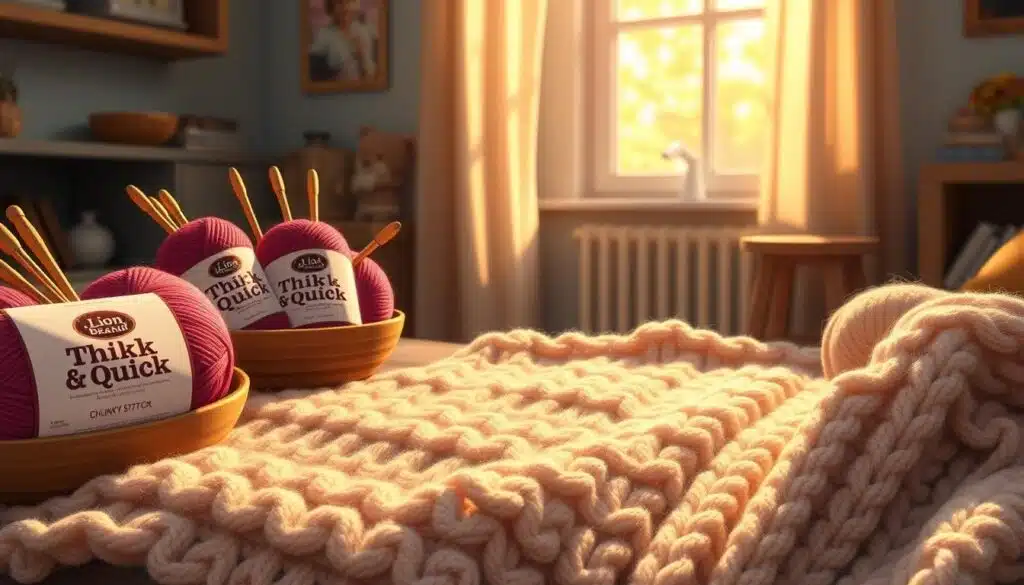
Recommended yarns: Lion Brand Thick & Quick and other super bulky options
Lion Brand Thick & Quick is a top pick for speed and loft. It gives bold texture and bounces back after use. If you want alternatives, look at Malabrigo Rasta, Cascade Spuntaneous, We Are Knitters The Wool, Wool and the Gang Crazy Sexy Wool, Madelinetosh A.S.A.P., and Yarnalia Softy.
Patterns often list yarn amounts by size. A lapghan can use about six skeins of Thick & Quick, while a full throw may need around ten. For more pattern specifics, check a tested guide like the DIY chunky-knit blanket instructions at Nourish & Nestle.
Needles and notions: US size 15–17 circular needles and basic tools
Your needles shape the fabric. Use US 15 needles up to US 17 when called for. Long circulars in 36″ or 40″ work best for wide blankets that are knit flat. They keep many stitches neat on the cable and reduce strain on your hands.
Bring a tapestry needle, sharp scissors, and an optional tape measure. If you want looser stitches, try larger diameter tools such as broomstick hooks or PVC piping. Needle options like 35mm circular needles can make carrying large stitch counts easier when you want a roomy drape.
How to choose color and fiber for durability, loft, and machine-washability
Decide how the blanket will be used. For homes with kids or pets, choose washable chunky yarn or a wool blend labeled machine washable. Wool-Ease type blends offer resilience and easier care than pure wool.
If loft and drape matter more than machine care, single-ply luxury yarns give sumptuous texture but may need gentle washing. Pick color for season and style: soft neutrals photograph well, while glacier or sky tones stand out on social feeds.
| Item | Why it matters | Quick suggestion |
|---|---|---|
| Yarn | Determines warmth, weight, washability | Lion Brand Thick & Quick or washable chunky yarn blends |
| Needles | Controls gauge and stitch size | US 15 needles to US 17 circular needles for blankets |
| Tools | Finishing and handling large projects | Tapestry needle, scissors, long circular cable, optional blocking pins |
| Care | Longevity and household fit | Choose washable blends for pet-friendly homes |
- Practical tip: If someone in your household is allergic or you have heavy shedding pets, favor machine-washable blends.
- Gauge note: Super bulky yarn recommendations often point to roughly 2–3 stitches per inch; always swatch with your chosen US 15 needles to confirm.
- Extras: Consider tassel supplies and a kit if you want everything bundled for a 40″×60″ throw.
Beginner-friendly stitches that make a stunning throw
You want a throw that looks great but doesn’t need a PhD in knitting. Start with simple stitches that add shape, texture, and stability. These stitches work well with super bulky yarn and big needles, so you see progress quickly and enjoy the feel of it.
Garter stitch is your go-to. Knit every row for a soft, non-curling edge. Use a garter stitch border at the start and end to keep the blanket’s shape. It stops the stockinette sections from curling and gives a clean finish.
Seed stitch makes plain yarn look fancy and dense. It’s great for a reversible look. Try the moss stitch blanket method for a flat, even surface. Both seed stitch and moss stitch options lay flat without needing to block too much.
The ridged eyelets pattern adds decorative holes to your throw. Use yarn overs and decreases like p2tog to create a pattern. This adds interest without needing to know complex lace.
Stockinette panels give a smooth, luxe look. Work flat by knitting one row and purling the next. To stop curling, pair stockinette sections with a garter border or seed/moss bands.
All these stitches are based on knit, purl, yarn over, and simple decreases. Mix a garter stitch border with seed stitch panels, a moss stitch center, and ridged eyelets rows. This creates a sophisticated yet cozy sampler throw.
Step-by-step pattern structure and sizing guidance
Get ready to create a chunky blanket with ease. First, pick the size you want. Then, check your gauge and plan your cast-on. This ensures your blanket looks great from start to finish.
Start with fixed edge stitches for a clean look. Many patterns use garter edges, like K6 on each side. Place these stitches first, then add the center pattern.
To figure out yarn needs, compare lapghan and throw sizes. A lapghan is smaller, using about six bulky skeins. Throws need more yarn. For yardage estimates, check the size chart on this reference.
To change blanket width, adjust the cast-on. For example, if your center is a multiple of 2 plus border stitches, cast on the same. This keeps your pattern smooth and avoids bumps.
Length is easier to change. Add more pattern blocks to make it longer. The Winter Cuddler-style repeats the main block for bigger sizes, not changing stitch density.
Gauge is important. A sample gauge of 9 sts and 18 rows = 4″ in garter on Lion Brand Thick & Quick with US 15 needles makes a chunkier fabric. Adjust needle size if your swatch is different; this affects drape and yardage.
Here’s a quick checklist for planning:
- Check your gauge swatch before casting on.
- Decide border stitch count and note the multiple-of stitch repeat for the center.
- Calculate cast-on for chunky blanket using border + (repeat × number) + border.
- Estimate yarn using blanket yardage estimates from similar patterns or the pattern’s chart.
- To adjust blanket width, alter the number of repeats; to lengthen, add full pattern blocks.
| Size | Approx Dimensions (unblocked) | Example Yarn Use | Cast-on Guide |
|---|---|---|---|
| Lapghan | ~32″ × 38″ | ~6 bulky skeins (170 g each) | Edge stitches (K6 each side) + center multiple-of 2 to reach width |
| Throw | ~48″ × 52″ | ~10–19 skeins depending on yarn; check blanket yardage estimates | Use same border; increase center repeats in the multiple-of stitch repeat |
| Afghan | ~57″ × 38″ | ~10–16 skeins depending on pattern and yarn weight | Add several full main-block repeats; adjust cast-on if you want a wider afghan |
Stash tip: always round up on blanket yardage estimates and allow extra for dye-lot swaps. If you need to change yarn mid-project, plan joins and keep your stitch math handy so you can adjust cast-on for chunky blanket pieces on the fly.
Detailed pattern notes and abbreviations to follow
Before starting, quickly review the key abbreviations and notes. This makes the project more enjoyable. US patterns use simple shortcuts like k, p, and yo. Brands like Lion Brand and popular designs like Winter Cuddler provide clear keys for these abbreviations.
Write down the abbreviation key on your pattern or in a notebook. This simple step helps avoid confusion during your knitting. If a pattern lists stitch counts, mark them off as you knit. This helps you keep track of increases or decreases.
Common US knitting abbreviations used in chunky blanket patterns
Keep a cheat sheet handy: CO means cast on, BO means bind off, and k means knit. P means purl, yo means yarn over, and p2tog means purl two together. St/sts means stitch/stitches, and RS/WS means right/wrong side. These are the basics for most patterns.
Patterns for quick projects use repeats and common abbreviations. This makes it easier to memorize sequences. If you’re unsure about a term, look up a reliable guide like fixing crochet mistakes for help with knitting too.
Row repeats, multiple-of rules, and keeping consistent tension
Many patterns use two-row or four-row repeats. Seed and moss stitches often follow a two-row pattern. Garter sections might be 14 rows long. Some patterns, like Winter Cuddler, require a specific multiple-of rule.
When changing the width, keep the repeat consistent. This helps maintain the pattern’s flow and prevents uneven edges.
Super bulky yarn can highlight tension issues. Aim for consistent tension for even fabric. Test a swatch to check your gauge. If it’s off, adjust your needle size to match the pattern.
Keep an eye on tension as the blanket grows. Take breaks and check your gauge regularly. This ensures your blanket stays the right shape.
When to block, how blocking affects dimensions and drape
Blocking even out stitches and opens small eyelets. This can slightly change the size of your finished blanket. Designers often give measurements “before blocking,” so expect some changes afterward.
For wool-blend and delicate fibers, use gentle wet-blocking. Follow the yarn care labels for best results. Machine-washable blends might need a different approach, so always check the yarn manufacturer’s instructions.
After blocking, dry the blanket flat on a towel or mesh rack. This keeps the edges straight. A well-blocked throw will look better, drape nicer, and show pattern repeats clearly.
Troubleshooting common issues with chunky throws
Small problems can make a cozy blanket feel fussy. You can fix most snags with simple steps and the right tools. Read on for quick fixes that keep your project looking pro.
Uneven edges are often due to inconsistent cast-on tension. Try a long-tail cast-on and keep your first stitch tension even. If a messy edge persists, work an extra garter border; an uneven edges garter border of 6 stitches will hide bumps and give a neat frame.
Gauge matters with super bulky yarn. If your fabric feels too tight, switch to larger needles. If it looks loose, go down a needle size and swatch again. That one change can rescue a whole blanket without reknitting rows.
Curling stockinette drives knitters mad. The best curling stockinette solution is to anchor the panel with non-curling stitches. Surround stockinette with garter, seed, or moss stitch borders to make edges lie flat. Choose a fully reversible moss pattern when you want no curl at all.
Dropped stitches on large needles are easier to spot but tricky. To repair super bulky knit drops, use a smaller crochet hook or spare needle to pick up the ladder and work back to the live stitch. Tighten gently, then weave in tails with a tapestry needle for security.
When you need to repair super bulky knit joins, prefer methods that look seamless. Russian joins and neat overlapped joins hide ends well. If you must seam panels, mattress stitch gives an invisible finish that keeps a reversible texture intact.
Maintaining a two-sided look requires care. Follow stitch counts and mirror edge treatments on both faces. Avoid single-sided trims unless you want one face to pop; keep borders consistent to preserve reversibility.
| Issue | Quick Fix | Best Tool |
|---|---|---|
| Uneven cast-on edge | Long-tail cast-on; add a 6-stitch garter border | US size 15–17 circular needles |
| Gauge off with super bulky yarn | Change needle size and swatch | Spare needle set and measuring tape |
| Stockinette curling | Surround with garter or moss stitch border | Stitch markers for border alignment |
| Dropped stitch on large needles | Pick up ladder with smaller hook, recreate stitch | Crochet hook and tapestry needle |
| Visible joins between skeins | Use Russian join or neat overlapped join | Yarn needle and matching yarn |
Style variations and finishing touches for trendy throws
Choose a finishing style that fits your room and lifestyle. Small details can make a big difference. Look for balanced edges, neat joins, and trims that are practical for daily use. You can keep a throw simple for everyday use or add a touch of elegance for special occasions.
Tassels and pom-poms
Adding tassels to chunky blankets can give them a boho look. Make sure the tassels are the right size for the blanket. For a fun twist, use pom-pom trim and secure it with a firm knot. This way, the poms stay in place even after washing.
Striping, color blocking, and ombré
Striping can make a blanket look interesting and use up small skeins of yarn. For a bold statement, go for a color block blanket with big panels of bright colors. If you prefer something more subtle, try an ombré effect for a calming look on sofas and beds.
Reversible vs. one-sided textures
Opt for reversible throws if you want both sides to look good. Seed and moss stitches are great for this because they’re pretty on both sides and hide pet hair. For a throw that looks smooth on the outside and cozy on the inside, choose a one-sided texture like stockinette.
Finishing tips
After weaving in ends, block the throw to shape and even out the edges. Choose trim yarn that matches the main color for a cohesive look, or go for a contrasting shade to make the tassels stand out. For throws that can be washed in a machine, avoid delicate trims that can tangle and use sturdy, washable yarns instead.
| Finish | Best For | Care | Style Impact |
|---|---|---|---|
| Tassels on chunky blanket | Boho rooms, teen bedrooms | Hand-stitch and spot-clean; trim if needed | Adds playful motion and texture |
| Pom pom trim throw | Photo shoots, light-use throws | Secure core and gentle wash recommended | Whimsical, youthful accent |
| Color block chunky blanket | Modern interiors, statement pieces | Block to square; washable yarns preferred | Bold, graphic presence |
| Reversible throw patterns | Living rooms, pet households | Machine-washable blends work best | Versatile and furniture-friendly |
Project ideas, gifting, and care instructions
Want to make your pattern into a gift, keepsake, or social media post? Think about occasions, care, and how to take a photo that will wow on Instagram and Pinterest.
Best occasions and sizing
Give a chunky blanket for housewarmings, winter holidays, baby showers, or college send-offs. For babies, choose a lapghan about 32” x 38”. A cozy throw of 50” x 60” fits couches and dorm beds.
For larger beds, use overnight and afghan size charts from brands like Lion Brand and Malabrigo.
Care you can follow
Start with the yarn label for blanket care. Wool-Ease and many blends can be machine washed on cool with tumble low or flat drying. But pure wool or single-ply yarns like Malabrigo Rasta need hand washing and drying flat.
If washing a wool blend, use mild detergent, avoid hot water, and reshape while damp. For pilling, remove pills with scissors or a fabric de-piller to keep the chunky texture.
Presentation and social sharing
When photographing a knit blanket, use soft natural light and neutral backdrops. Show the throw draped over a chair or bed to highlight its thickness. Include a close-up of stitch detail and a full shot to show size.
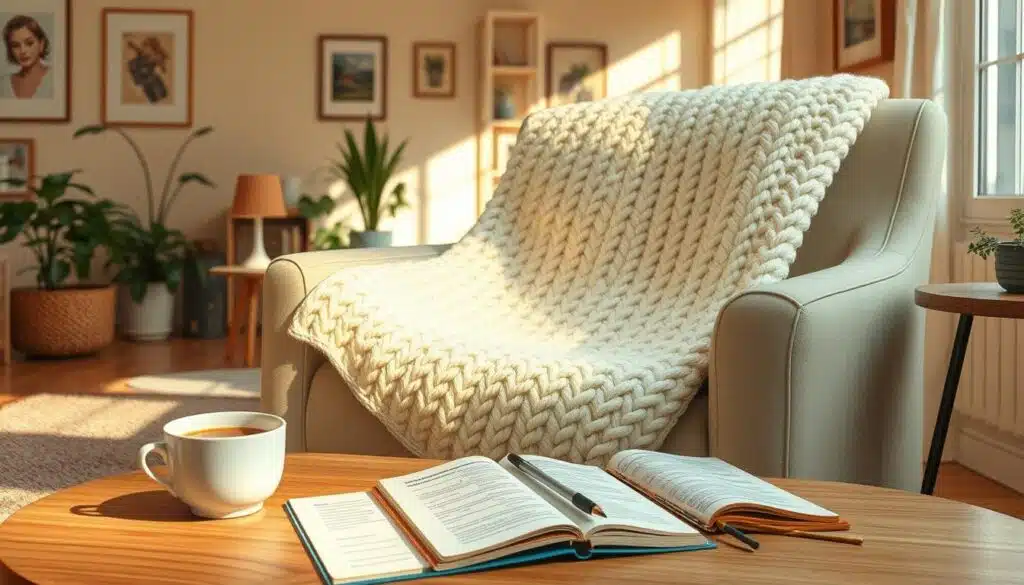
For Pinterest, add simple props like a mug, a novel, or a houseplant. Use clear titles like “chunky knit blanket pattern,” “cozy throw,” or “DIY knit blanket.” Offer an ad-free PDF on Etsy or Ravelry or a printable pattern on your blog with size and yardage charts for planning.
Conclusion
Speed, texture, and coziness are key in the best chunky knit blanket patterns. With basic knit and purl skills, you can make a stylish throw in just a weekend. Choose patterns like sampler-style or moss-stitch for both beauty and warmth.
When picking a pattern, think about your lifestyle. Use super bulky yarn for quick projects. Decide on the blanket’s size before buying yarn. Follow the pattern’s notes and gauge to avoid mistakes.
Add color and finishing touches to make your blanket stand out. Try stripes, tassels, or poms on a moss or garter border. For more ideas, check out this roundup of crochet blanket ideas.
It’s time to start your chunky blanket. Cast on and enjoy the process. With the right pattern and yarn, your cozy throw is just a few stitches away.
FAQ
What makes a chunky knit blanket pattern the best choice for a quick, cozy project?
Chunky knit blankets use super bulky yarn and big needles. This means your blanket grows fast and you see progress right away. Simple stitches like garter and seed/moss make the blanket soft and squishy without being hard to do.
This makes it perfect for quick projects, like last-minute gifts or a weekend binge-knit.
Which yarns should you use for a chunky throw that looks great and holds up?
For durability, use super bulky yarns like Lion Brand Thick & Quick. For easier care, choose wool-blend yarns. Luxury singles like Malabrigo Rasta add beauty but might need hand washing.
Washable wool-blend yarns are great for pet-friendly throws that can be machine washed.
How many skeins or yards will I need for a lapghan, throw, or afghan?
The amount of yarn needed varies by pattern and yarn type. For example, the Winter Cuddler lapghan uses about 6 skeins of Lion Brand Thick & Quick. The afghan needs roughly 10 skeins.
The Overnight moss-stitch pattern lists yardage for different sizes. Always check the pattern’s yardage table and add extra for dye-lot changes.
What needle sizes and notions do you need for chunky blankets?
Use US size 15 to 17 circular needles with a long cable. This helps handle large stitch counts while knitting flat. Bring a tapestry needle, scissors, and optional blocking tools.
For joins, a small crochet hook and spare needle help fix dropped stitches quickly.
Which stitch patterns give the best reversible texture so both sides look great?
Seed stitch and moss (broken seed) are dense and reversible. They lay flat and are good for furniture. Garter stitch edges prevent curling and provide a sturdy frame.
Ridged eyelets and sampler blocks combine with reversible motifs. If you want zero curling, favor moss/seed or use garter borders around stockinette panels.
How do you adjust width or length while keeping the stitch pattern intact?
Change width by increasing or decreasing your cast-on in the multiple required by the center pattern. To change length, knit more or fewer pattern repeats before the final garter border.
Keep edge stitches (for example K6 garter edges) unchanged to preserve symmetry and neat edges.
What gauge should I expect with super bulky yarn, and how important is swatching?
Gauge examples: Winter Cuddler gets about 9 sts & 18 rows = 4” in garter on US 15; Overnight moss stitch around 7 sts & 12 rows = 4” on US 17. Super bulky yarn magnifies tension differences, so swatching is vital.
If your swatch is too tight, go up a needle size; if too loose, go down. Consistent tension ensures your final dimensions match the pattern chart.
Will stockinette curl on a chunky blanket, and how do you prevent that?
Yes—stockinette can curl at the edges even on super bulky yarn. Prevent curling by framing stockinette panels with garter stitch or seed/moss borders.
Choose fully reversible patterns like moss stitch to avoid curling entirely without extra finishing.
How do you fix dropped stitches on large needles without making a mess?
Dropped stitches are easy to spot on big needles. Use a smaller crochet hook or spare needle to ladder up the dropped stitch row by row and place it back on the needle.
Secure ends with a tapestry needle. For joining new skeins, use Russian joins or neat overlapped joins to keep texture consistent.
Are chunky blankets warm enough for cold climates and pet use?
Absolutely—super bulky and wool-blend yarns provide loft and insulation. They make chunky throws ideal for cold rooms and winter layering.
For pet households, pick durable, machine-washable blends like Wool-Ease Thick & Quick. Avoid delicate singles if you expect heavy wear.
How do you choose color and fiber for style and care needs?
For easy care, choose machine-washable wool blends or acrylic blends. For luxe drape and color depth, pick single-ply luxury yarns but plan for hand-wash care.
Neutrals and glacier/sky shades photograph well for Pinterest; bold color blocks or ombré effects add visual drama. Consider allergies and pet hair when selecting fiber.
What are the common abbreviations and notation you’ll see in chunky blanket patterns?
Most patterns use US abbreviations: k (knit), p (purl), yo (yarn over), p2tog (purl two together), st/sts (stitch/stitches), CO (cast on), BO (bind off), RS/WS (right/wrong side). Patterns like Winter Cuddler and Overnight include keys and row-by-row repeats to keep you on track.
When and how should you block a super bulky blanket?
Blocking evens stitches, opens eyelets slightly, and adjusts drape. Many patterns list dimensions “before blocking,” so expect minor changes. Use gentle wet-blocking for wool blends; follow yarn care—machine-washable blends may tolerate different handling.
Always reshape while damp and dry flat to maintain size.
Can you change stitch patterns mid-blanket for a sampler look and yet keep it reversible?
Yes. Sampler-style blankets mix stitches like garter, moss, ridged eyelets, and short stockinette panels for interest. To keep the whole blanket reversible, use reversible stitches in the major blocks or mirror one-sided textures with an opposing panel.
Keep consistent edge treatments so joins between motifs look intentional.
How should you finish edges and weave in a lot of bulky ends neatly?
Add garter borders (for example K6 edges) to hide uneven cast-on tension and stabilize edges. Weave in ends with a large tapestry needle, following the stitch direction to hide tails. Match trim yarn color if you want a cohesive look.
For heavy tassels or poms, secure several passes of yarn and hide ends inside the trim.
What are safe washing tips for Wool-Ease Thick & Quick versus Malabrigo Rasta?
Wool-Ease Thick & Quick is a wool-blend often labeled machine-washable—use a gentle cycle in cool water and tumble low or reshape and lay flat. Malabrigo Rasta (pure single-ply) usually needs hand wash and flat dry to avoid felting or stretching.
Always follow the yarn label and use mild detergent; avoid high heat.
Which pattern formats are available and where can you find ad-free PDFs or free patterns?
Many designers publish free blog patterns and sell ad-free PDFs on Etsy or Ravelry. Patterns like Winter Cuddler and Overnight are available in both free tutorial formats and paid PDF versions with size charts and yardage tables.
Buying the PDF often supports the designer and provides printable references.
What finishing touches make a chunky blanket look high-end for gifting?
Consider sampler combos, subtle striping, or a carefully chosen neutral that photographs well. Add proportionate tassels or large pom-poms for a boho upgrade. Neat blocking, cleanly woven ends, and matching trim yarn elevate the handmade look—perfect for housewarmings, holidays, or college send-offs.
How do you photograph a chunky throw to show scale and texture on Pinterest?
Use natural light and neutral backgrounds. Drape the blanket over a chair or fold it to show thickness and a close-up of stitch detail. Include a prop—mug, book, or a cozy chair—for scale.
Capture a full shot plus a macro shot of the stitch pattern to highlight the squishy texture.
What quick projects do you recommend if you want instant gratification?
Try a lapghan in Winter Cuddler or the Overnight moss-stitch throw. Both use super bulky yarn and large needles so you’ll finish quickly. Simple garter or moss stitch throws are also fast—you’ll see dramatic progress every hour and have a finished, cuddly piece in a weekend.