Choosing yarn is more than just picking a material. It’s a vote for the planet. Today, many makers prefer natural, organic, recycled, and low-impact fibers. Hemp and Seacell are great choices because they use less resources and have sea-inspired benefits.
These fibers add unique texture and feel to your projects. They make your creations stand out.
When picking yarn, you consider performance, ethics, and cost. Eco-friendly yarns like recycled silk and traceable wool might be pricier. But, brands like Patagonia and Brooklyn Tweed invest in fair labor and clear supply chains. This supports real social and environmental benefits.
The yarn industry is shifting away from acrylic and polyester. It’s moving towards biodegradable and recycled options. Tests show sustainable yarns, like Echoview Ranger Merino, can match conventional yarns. But, they might need gentle care, like hand washing and flat drying.
For more green knitting tips and eco-friendly crochet techniques, visit eco-friendly crochet. It offers patterns and ideas that reflect your values.
Key Takeaways
- Choosing sustainable yarn is both a creative and ecological decision that affects the lifecycle of your knitwear.
- Natural fibers like hemp and Seacell offer sensory and environmental benefits you can see and feel.
- Recycled and traceable yarns may cost more but support fair labor and better sourcing.
- Sustainable yarns perform well in tests but sometimes require gentler care routines.
- Use reliable resources to find projects and brands that align with sustainable knitting goals.
Why Choose Sustainable Yarn: Benefits for You and the Planet
You want yarn that feels good, lasts long, and is kind to the planet. Eco-friendly fibers offer benefits that show up in your projects and your conscience.
Environmental wins: Natural fibers like hemp and linen use less water and no harsh chemicals. They grow without pesticides. Seacell blends seaweed with lyocell in a closed-loop system that recovers most solvents. Recycling textiles saves water and cuts CO2 emissions.
Durability and value: Hemp and linen are incredibly strong. They soften with wear but keep their shape. This fits the slow fashion knitting mindset. Your garments will last longer, need fewer replacements, and can be mended.
Comfort and skin health: Many plant and responsibly produced animal fibers are gentle on skin. Hemp is antibacterial and hypoallergenic. Seacell may soothe skin with seaweed compounds. Organic cotton and ethically raised merino are soft and irritation-free.
Care and longevity: Sustainable yarns need gentle care but offer better drape, warmth, and biodegradability. They are breathable and build less odor. This means you wash less and extend garment life. Less washing uses less energy and reduces chemicals in wastewater.
| Benefit | What It Means for You | Example Fibers |
|---|---|---|
| Lower environmental impact | Less water, fewer pesticides, smaller carbon footprint | Hemp, linen, Seacell, recycled cotton |
| Longevity | Stronger garments that soften, fewer replacements | Hemp, linen, responsibly produced merino |
| Skin-friendly wear | Reduced irritation, natural antibacterial effects | Hemp, Seacell, organic cotton, hypoallergenic yarn blends |
| Social impact | Supports fair wages and ethical production in supply chains | Recycled and certified yarns from traceable mills |
| Slow-fashion value | Encourages thoughtful projects, repair, and longevity | Hemp, linen, durable plant and animal fibers |
Understanding Eco-Friendly Fibers: Hemp, Seacell, Linen, and More
Looking for yarn that’s good for you and the planet? You’re in the right spot. This section dives into the benefits and trade-offs of top eco-friendly yarns. You’ll learn about their performance, care, and what they bring to your projects.
Hemp: low-water, pesticide-free, and thermoregulating
Hemp is a standout for its low water needs and strong qualities. It grows with less water than cotton and without pesticides. Hemp yarn benefits include durable, breathable clothes that get softer and smell better over time. It keeps you cool in summer and warm in winter.
Seacell and marine-derived innovations
Seacell yarn mixes Icelandic seaweed with lyocell for a soft, skin-friendly fabric. It’s made with a closed-loop system to reduce waste. The result is a fabric that’s biodegradable, wicks moisture, and is gentle on skin. The seaweed adds extra benefits as it interacts with the skin.
Linen, organic cotton, bamboo, and plant-based options
Linen yarn is made from flax and excels in hot weather. It needs little water and few pesticides, gets softer over time, and makes crisp, breathable items for summer. Organic cotton yarn avoids harsh pesticides and is great for baby items and close-to-skin projects. Bamboo offers a silky, cooling option with a smooth feel and good drape.
Responsible animal fibers and recycled options
Animal fibers like merino and alpaca are warm, control moisture, and have low odor when sourced responsibly. Look for traceable mills like Echoview Fiber Mill in the U.S. for clear supply chains. Recycled silk yarn and other reclaimed fibers help reduce waste and support circular systems. For more on water savings and closed-loop processes, check out this guide from Biscotte Yarns: eco fibers explained.
| Fiber | Key Benefit | Care Notes | Best Uses |
|---|---|---|---|
| Hemp | Durable, low water, antibacterial | Machine wash gentle; softens with wear | Outerwear, bags, durable garments |
| Seacell yarn | Silky hand, skin-friendly, biodegradable | Hand wash or gentle cycle; air dry | Next-to-skin tops, scarves, baby items |
| Linen yarn | Lightweight, breathable, gains softness | Hand wash or gentle machine; press while damp | Summer garments, table linens, shawls |
| Organic cotton yarn | Pesticide-free, soft, versatile | Machine wash; avoid high heat | Baby items, everyday wear, accessories |
| Bamboo | Silky, cooling, good drape | Wash gentle; reshape while damp | Tanks, drapey tops, linings |
| Recycled silk yarn | Low waste, luxe hand, circular | Hand wash recommended; gentle handling | Delicate garments, trims, luxury accessories |
| Responsible wool (merino, alpaca) | Warm, breathable, odor-resistant | Spot clean; hand wash or gentle wool cycle | Sweaters, socks, cold-weather gear |
How to Spot Truly Sustainable Yarn: Certifications and Labels
Want yarn that’s really eco-friendly? Learn to read labels carefully. Look for yarn certifications and clear information about where it comes from. A good yarn will tell you about its standards, mills, or regions, not just use buzzwords like “eco-friendly” or “natural.”
Key eco-certifications to look for
Start with familiar stamps. GOTS means the yarn is organic and made ethically. OEKO-TEX says it’s safe from harmful substances. GRS checks if it’s recycled and made well. These marks help avoid greenwashing yarn.
Also, check for mill-level credentials. Brands that are open about their factories are usually trustworthy. They might share test reports or audits. This detail is more important than fancy packaging.
Transparent sourcing and small-batch mills
Traceability is key. If a brand tells you where the yarn comes from, you can check on animal welfare. Look for info on closed-loop processes or solvent recycling in lyocell production.
Small-batch mills and cooperatives, like Manos del Uruguay, often share environmental and social data. This helps you judge their claims.
Red flags and greenwashing to watch for
Be cautious of claims without proof. If a yarn says it’s recycled but doesn’t show its content, doubt it. Missing care instructions or no certifier are red flags.
Vague language or big marketing photos can hide weak standards. If unsure, check the product page or brand statement against a guide like this sustainable yarn guide.
- Quick tip: Compare labels on two similar yarns. The one with GOTS, OEKO-TEX, or GRS and clear supply notes usually wins.
- Quick tip: Favor brands that publish third-party test results or detailed origin stories over those that lean on fluffy marketing.
green knitting tips
You want your knits to last and be kind to the planet. Start by thinking like a designer. Match the fiber, stitch, and end use before you start knitting. This way, you save time, money, and yarn while making garments you love.
Choose the right yarn for the project
Choose a yarn that fits the garment you want to make. For shawls, soft merino or Seacell blends work best. For bags, use sturdy hemp or linen that gets better with time.
When picking sustainable yarn, check reviews for quality. Brands like Echoview Ranger Merino show how important testing is.
Use appropriate needle and hook sizes and patterns
Use the right needle or hook size for the fiber. For stiff fibers like hemp and linen, use a larger size for breathability. For soft fibers like Seacell, choose stockinette or loose garter to show off drape.
Avoid patterns that need too much stretch if the yarn can’t handle it.
Plan projects to reduce waste
Good planning means checking yardage, swatching, and choosing patterns that fit the skein size. Swatches help avoid costly mistakes. Use leftover yarn for small projects or join Laine Magazine-style scrap projects.
Try to use whole skeins when possible to reduce waste.
| Decision | Why it helps | Practical tip |
|---|---|---|
| Yarn choice | Better match to use means fewer returns and longer wear | Read product specs and test swatches; favor tested yarns for durability |
| Needle/hook size | Controls drape, density, and comfort | Increase size for stiff fibers; follow recommended sizes for merino-like yarns |
| Pattern selection | Simple textures highlight natural fibers and reduce mistakes | Choose openwork or light cables for linen and Seacell; skip high-elasticity motifs |
| Yardage planning | Minimizes leftover skeins and project abandonment | Measure carefully, buy extra only when necessary, and compost or repurpose scraps |
| Supporting conscious brands | Encourages recycled and reclaimed yarn production | When it fits your project, choose suppliers like Darn Good Yarn for recycled options |
Practical Techniques for Working with Eco Fibers
Plant-based yarns act differently than acrylics. Start with a warm-up: swatch with bigger needles or hooks. Note the gauge and how stitches drape. This helps adjust tension when using hemp yarn or linen blends.
Adapting tension and stitch choices
For stiff fibers, use needles one or two sizes up. This avoids a stiff fabric and improves drape. Soft blends like Seacell do well with stitches that show fluid movement.
Avoid elastic patterns like dense cables with plant fibers. Instead, choose open lace, simple rib, or elongated stitches. These let the yarn breathe. Remember, your stitch choices affect how a garment looks and feels.
Blocking and finishing to transform texture
Blocking can transform your work. Soak knits in lukewarm water with eco detergent, then gently press in a towel. Pin to shape and dry flat for the best results. This softens hemp and linen, and evens Seacell fabric.
Repeat gentle blocking after washing to keep the shape and drape. Proper blocking brings out stitch definition and a polished look. It makes simple patterns stand out.
Joining, seaming, and invisible finishes
For invisible seams, use mattress stitch for sides and Kitchener grafting for stockinette edges. This keeps natural-fiber garments looking clean and neat.
When working with recycled or delicate yarns, match tension at joins and weave-in tails securely. Plant fibers soften after blocking, so check and reinforce seams if needed once dry.
Care, Maintenance, and Longevity for Sustainable Knits
Take good care of your work to make it last longer. Use low temperatures and mild, eco-friendly detergents. Always dry flat. For more tips, check out yarn care tips that fit your fibers.
Washing, drying, and storage tips
Most natural fibers can be machine washed at 30°C on delicate cycles. Use an eco-friendly detergent and a mesh bag for small items. Never twist or wring; press out water gently and lay flat to dry.
Animal fibers like merino and recycled silk need hand washing. Follow the brand’s instructions. Superwash merino can go on a delicate machine cycle. Store clean knits folded in breathable cotton bags to prevent damage.
Odor control and reduced washing frequency
Air your knits after wearing to reduce wash cycles. Fibers like merino, hemp, and Seacell resist odors. Spot clean stains to avoid full washes and save water and energy.
For travel or layered pieces, use a garment steamer or a quick freshen on a hanger outdoors. These steps help care for sustainable yarn and reduce your impact.
Repair, unravel, and upcycle strategies
When a sweater shows wear, repair it instead of throwing it away. Simple darning or invisible repairs add character and extend life. If it’s beyond repair, unravel it and use the yarn for new projects.
Upcycle yarn scraps into scarves, cushions, or rugs. Many brands offer take-back or recycling programs. Learning to repair and upcycle turns waste into something valuable.
| Task | Best for | Method | Why it helps |
|---|---|---|---|
| Machine delicate wash | Hemp, linen, Seacell blends | 30°C, gentle cycle, mesh bag | Maintains fiber integrity and saves time |
| Hand wash | Merino, recycled silk, high-quality animal fibers | Cold water, mild detergent, gentle squeeze | Prevents felting and reduces fiber stress |
| Drying | All natural fibers | Reshape damp garment, dry flat | Preserves shape and drape |
| Short-term odor control | Merino, hemp, Seacell | Air out, steam, spot clean | Reduces full washes and water use |
| End-of-life options | All yarn types | Unravel, repair, upcycle | Circulates materials and honors care sustainable yarn |
Best Sustainable Yarns and Brands to Try in the U.S. Market
Yarn should feel good, last long, and help the planet. Look for brands that share where they get their yarn, support local artisans, and use certified fibers. This makes shopping easier and your projects more meaningful.
Certified and traceable mills
Choosing sustainable yarn means looking for traceable brands. Echoview Fiber Mill has a Gold LEED-certified facility and lists its wool sources. Manos del Uruguay supports local farmers and spinners through cooperative production.
Top-performing yarns from testing and reviews
Some yarns are praised for their quality. Echoview Fiber Mill’s Ranger Merino is soft and has minimal tangling. Darn Good Yarn offers vibrant recycled silk skeins that support artisans in India.
Manos Del Uruguay’s Wool Clásica and Franca lines show great craftsmanship and ethics. Independent tests highlight various fiber blends for different projects. We Are Knitters offers recycled cotton options, and Wool and the Gang meets strict standards.
Where to buy: indie shops, co-ops, and conscious brands
Eco yarn is available in local shops and online co-ops that share their sources. Many brands sell directly on their websites, where you can learn about their certifications. Etsy is great for finding artisans who use eco-friendly dyes and materials.
For a list of reviewed yarns, check out this guide: best sustainable yarns. Echoviewnc.com is a good place to buy traceable, regionally milled wool.
| Brand or Mill | Standout Fiber | Why it’s notable |
|---|---|---|
| Echoview Fiber Mill | Ranger Merino (merino blend) | Gold LEED mill, regional sourcing, soft with stable drape |
| Manos del Uruguay | Wool Clásica, Franca | Cooperative production, hand-spun options, ethical traceability |
| Darn Good Yarn | Recycled silk | Social-impact production, supports women artisans, vibrant skeins |
| We Are Knitters | The Tape, Bamboo | Recycled cotton tape, plant-based bamboo, accessible kits |
| Wool and the Gang | Alpachino Merino | Certified lines (REACH, Oeko-Tex), contemporary colorways |
| Max and Herb / Small dyers | Organic cotton, hand-painted blends | Low-impact dyes, artisanal colorways, boutique runs |
When choosing yarn, ask about its origin, certifications, and community impact. This helps you find the best sustainable yarn brands in the U.S. and where to buy eco yarn that matches your values and projects.
Eco-Friendly Dyeing and Color Choices
Choosing colors for your project is all about mood and impact. Natural colors go well with organic fibers, making your clothes last longer. You can pick plant-based tones or certified mill-dyed yarns for sure colors and safety.
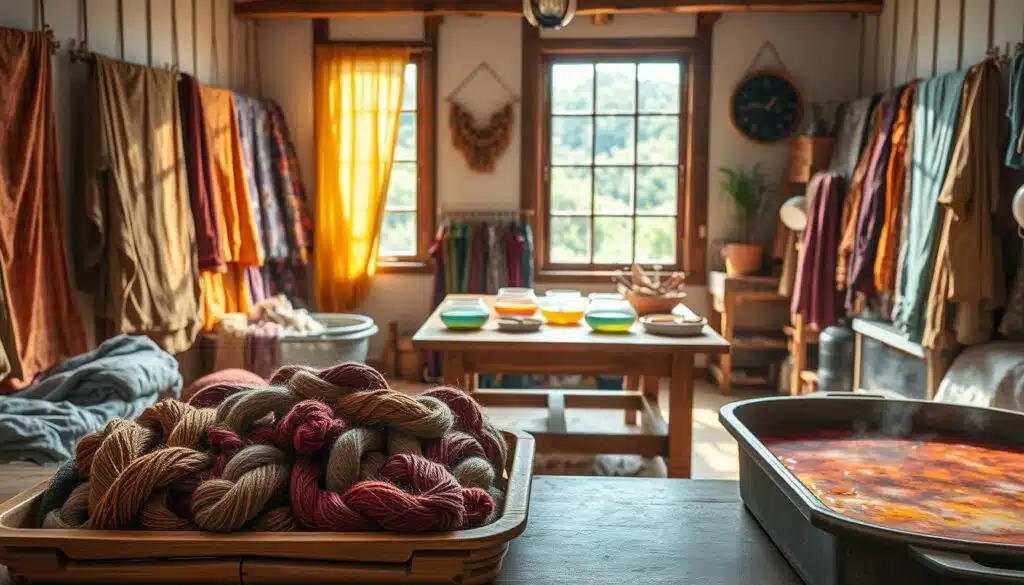
Natural dye basics
Natural dyes come from plants, insects, and minerals. They give soft, layered colors that age beautifully. Learning about mordanting and pH can help your colors stay true over time.
Natural dye basics and low-impact alternatives
Low-impact dyeing uses less water and milder chemicals. Brands like Madelinetosh and Cascade offer eco-friendly options. If you DIY, use plant-based modifiers or low-impact acid dyes and manage waste well.
Hand-dyeing at home versus certified mill-dyed yarns
Hand-dyeing at home lets you control the colors and amounts. It’s great for small projects and reduces waste. But, you need to know about mordants, time, and temperature for consistent results.
Mill-dyed yarns offer consistent colors and safety. Look for REACH or Oeko-Tex certifications for safety. While they may require more yarn, they’re easier to work with and clean up.
Color planning to minimize waste
Try to use full skeins whenever you can. Design your projects so odd skeins can be used for details. Leftover yarn is perfect for small items like hats or mitts.
Choose slow fashion colors like muted greens and soft golds. They look good all year. For tips on green colors and iron mordant use, check out this guide: natural green dyes for yarn and.
- Use natural dyes yarn for blended, wearable hues.
- Adopt low-impact dyeing choices to reduce water and chemical load.
- Hand-dye yarn when you want creative control; pick mill-dyed for reliability.
Sourcing on a Budget: Eco-Conscious Choices That Don’t Break the Bank
You can build a sustainable stash without emptying your wallet. Expect higher prices for fair labor and traceable supply chains. But, plan purchases and mix strategies to stretch every dollar while keeping eco-ethics intact.
Finding discounted sustainable yarn and shop strategies
Watch for mill ends and end-of-line clearances from brands like Quince & Co. and Cascade. Indie stores and Etsy sellers often run remnant sales. Here, you can score affordable sustainable yarn for small projects.
Sign up for newsletters to catch seasonal sales and Black Friday deals. Use price filters on marketplaces and set alerts for brands you trust. This way, you can land recycled yarn bargains and markdowns.
Recycled and repurposed yarn hacks
Unravel thrifted sweaters to reclaim fiber for new makes. You can blend reclaimed yarn with commercially recycled lines like Darn Good Yarn. This adds strength and color depth.
Turn scraps into patchwork scarves, multi-colored hats, or rug projects. These hacks support budget green knitting. They cut waste and add unique texture to your work.
Prioritizing projects: where to splurge and where to save
Spend on garments and gifts where hand-feel and durability matter most. Choose premium sustainable fibers for sweaters and heirloom pieces.
Save on home accessories, practice swatches, and linings by using recycled yarn bargains or plant-based basics. Reserve the priciest skeins for visible surfaces. Use cheaper fill yarns for hidden or structural parts.
| Project Type | Where to Save | Where to Splurge |
|---|---|---|
| Everyday sweater | linings, seams | body yarn with good wear and hand-feel |
| Home cushion or rug | background color, backing | durable yarn for high-wear areas |
| Practice swatch / sampler | reclaimed or remnant skeins | none—use cheap scraps to learn |
| Gift scarf | neutral filler yarn | visible yarn with sustainable certification |
By combining smart buys, reclaimed fiber, and selective splurges, you can enjoy budget green knitting without sacrificing ethics. Know where to save on yarn and where a higher price yields long-term value.
Conclusion
Choosing ecological fibers like hemp and Seacell makes knitting rewarding and responsible. These materials offer unique textures, long wear, and are good for your skin. Your finished piece will feel as good as it looks green.
Buying sustainable supports people too. Brands like Manos del Uruguay and Darn Good Yarn pay fair wages. This adds real social value to your craft.
Many eco-friendly yarns, including fine merino, meet high standards. They might need gentler care, but they’re worth it.
For sustainable knitting, pick the right fibers and check certifications. Learn gentle techniques and plan to reduce waste. Use reputable sources and patterns for inspiration at modern knitting.
The key to eco-friendly yarn is to honor the fiber and care for your work. Let your craft choices reflect your values. Follow these tips, and your next project will be cozy, long-lived, and kinder to the planet.
FAQ
What makes yarn “sustainable” and how do I spot greenwashing?
Look for clear sourcing and verifiable certifications. Genuine signals include Oeko‑Tex or REACH compliance. Also, check for traceability to mills or farms.
Claims should be backed by production details. Seacell uses sustainably harvested Icelandic seaweed. It’s processed in a closed‑loop solvent system.
Red flags are vague terms like “eco‑friendly” or “natural” without proof. Also, watch for recycled claims that hide heavy polyester content. Missing care instructions or no transparency about labor conditions are also warning signs.
If a brand discloses farm, mill, or artisan partners and certification documents, it’s usually worth your trust.
Why choose hemp, Seacell, or linen for my next project?
Hemp grows fast with little water and no pesticides. It’s naturally antibacterial and thermoregulating. Plus, it softens with age.
Seacell blends seaweed with lyocell for a silk‑like, biodegradable yarn. It wicks moisture and offers cosmeto‑textile skin benefits. Linen (flax) uses little water and resists pests without heavy chemicals.
It becomes suppler over time, ideal for breathable summer garments. These fibers support slow‑fashion values: durability, unique texture, and less frequent washing.
Are sustainable yarns more difficult to work with than acrylic or nylon?
They can behave differently, but not necessarily worse. Plant fibers like hemp and linen can be stiffer on the needle. They may need larger needles or hooks to open up the fabric.
Seacell and responsibly sourced merino drape beautifully but may require gentler handling. Some recycled silks or delicate animal fibers ask for hand wash and flat drying. Many well‑made sustainable yarns perform as well as synthetics.
They often reward you with better drape, warmth, and longevity.
Do eco‑friendly yarns cost significantly more and are they worth it?
Sustainable yarns often carry higher price tags. This reflects ethical labor, traceable sourcing, and eco‑conscious processing. The cost usually includes fair wages and social benefits.
You often get longer‑lasting garments and a reduced environmental footprint. For staples and gifts, the investment tends to pay off. For practice pieces, recycled or plant‑based budget options work well.
Which sustainable animal and recycled yarns perform best?
Independent testing highlights responsible merino such as Echoview Ranger Merino. It has excellent drape, softness, and minimal tangling. Manos del Uruguay is praised for ethical, small‑batch wool.
Recycled picks like Darn Good Yarn’s recycled silk and We Are Knitters’ recycled cotton tape give strong environmental and social benefits. Look for mills with traceability and certifications; these often align with superior performance.
How should I choose stitches and patterns for plant‑based fibers?
Pick patterns that flatter the fiber’s characteristics. Use openwork, light cables, stockinette, or loose garter to showcase drape and texture. Avoid patterns needing extreme elasticity or heavy bounce if you’re using inelastic fibres such as hemp or linen.
For stiff fibers, use slightly larger needles/hooks to create airier fabric. Seacell benefits from stitches that emphasize softness and flow.
What are the best blocking and finishing practices for eco fibers?
Blocking transforms many natural fibers. Fully immerse and gently squeeze out water, press between towels, pin to shape, and dry flat for best drape and stitch definition. Blocking softens hemp and linen and evens Seacell stitches.
Use mild, eco‑friendly detergents and avoid excessive heat. For seaming, mattress stitch and invisible joins preserve aesthetics; for stockinette, Kitchener grafting gives seamless results.
How should I wash and store sustainable knits?
Follow yarn‑specific instructions: many plant fibers are machine‑washable on gentle cycles at low temps, while high‑quality animal fibers and some recycled silks prefer hand wash and flat dry. Use unscented, ecological detergents, never wring, and reshape while damp.
Store garments folded in a cool, dry place; air merino items between wears to reduce washing thanks to natural odor resistance.
Can sustainable yarns be repaired, unraveled, or recycled at end of life?
Yes. Natural and many recycled fibers are ideal for circular practices. Unravel end‑of‑life garments to reclaim yarn, practice darning or visible mending to extend life, and repurpose scraps into patchwork or accessories.
Some brands run take‑back programs; check with your retailer. Repairing and reusing aligns perfectly with the slow‑fashion ethos.
Are there certifications I should look for when buying yarn in the U.S.?
Key labels include Oeko‑Tex and REACH for chemical safety, GOTS for organic fibers, and LEED or documented mill sustainability for production facilities. Traceability statements from mills like Echoview and community credentials from groups like Manos del Uruguay or Darn Good Yarn add social credibility.
Certifications plus transparent supply‑chain details are the gold standard.
Where is the best place to buy sustainable yarns?
Shop local indie yarn stores and co‑ops for curated, small‑batch options and expert advice. Buy direct from traceable mills (e.g., Echoviewnc.com), conscious brands (Wool and the Gang, We Are Knitters), or ethical makers on Etsy. Look for retailers that disclose sourcing, certifications, and care guidance so you know what you’re getting.
How can I save money while choosing eco‑friendly yarns?
Hunt mill ends and remnant sales at indie shops, sign up for newsletters to catch clearance events, and buy discounted skeins from conscious brands during seasonal sales. Reclaim yarn by unraveling thrifted garments and use recycled tape yarns for practice pieces and home accessories.
Prioritize splurges for garments you’ll wear often and save on linings or non‑visible parts.
Is hand‑dyeing yarn at home a sustainable option?
Hand‑dyeing can be sustainable at small scale if you use low‑impact dyes, control water use, and manage wastewater responsibly. It lets you create unique colorways and avoid mass‑dyeing impacts. Mill‑dyed, certified yarns offer tested colorfastness and environmental assurances, which might be preferable for large projects or when consistency matters.
How do recycled fibers impact water and carbon footprints?
Recycling textiles saves significant resources: reprocessing one ton of textiles can save roughly 20,000 liters of water and avoid about 3.6 tons of CO2 versus virgin production. Recycled yarns reduce landfill and lower raw‑material demand, though blends with synthetic content must be examined for true biodegradability benefits.
Which yarns are best for sensitive skin or baby items?
Organic cotton and responsibly produced merino are gentle choices for sensitive skin and babywear. Hemp and Seacell also offer hypoallergenic and antibacterial properties. Always check for GOTS or Oeko‑Tex certification and test a small swatch against skin when in doubt.
Any quick tips to reduce waste when planning projects?
Swatch to lock gauge and avoid redo; calculate yardage carefully and choose patterns that use full skeins. Turn leftovers into trims, accessories, or scrap‑yarn projects. Opt for neutral or natural palettes to reduce heavy dyeing, and repurpose odd skeins in contrast panels to use them up.