Welcome! You’re about to learn why amigurumi crochet is so rewarding. It turns yarn into tiny smiles. These small projects teach you core crochet skills and give you adorable toys fast.
After seven to eight years of practice, I’ve got tested advice for you. You’ll learn how to avoid common mistakes like lopsided limbs and lumpy heads. This guide covers yarn and tool choice, magic ring, stuffing, and more.
Amigurumi is forgiving. Patience and practice are key. You’ll learn to read patterns, choose the right tools, and make toys that look neat and durable.
Note: craft writers often link to products they use for transparency. I’ll point you to trusted resources. Watch this essential amigurumi tips primer before you start.
Key Takeaways
- Amigurumi crochet makes quick, satisfying projects that teach core skills.
- This guide distills seven to eight years of practical experience into usable tips.
- Follow simple steps to avoid common beginner mistakes in crochet toys.
- You’ll learn how to choose yarn, hooks, and stuffing for beginner amigurumi.
- Expect to practice the magic ring, basic stitches, and finishing for polished results.
Why You’ll Love Amigurumi Crochet
Amigurumi turns yarn into tiny, joyful things that finish fast. Small projects give you quick wins. This keeps your momentum and makes learning fun.
The joy of small, quick projects
Quick crochet projects like keychain amigurumi, pocket pals, and mini bunnies often take just a few hours. You can stitch a cheerful charm during a coffee break or an evening TV show. Finishing pieces fast helps you build skill without feeling overwhelmed.
Try tiny coasters, scrubbies, or a rainbow monster for craft-fair-ready samples. A short pattern loop teaches increases, decreases, and finishing in a small, forgiving format.
Stress relief and slow-craft benefits
Amigurumi fits the slow-craft movement because repetitive stitches guide your breathing and focus. That makes these projects effective stress relief crafts after a busy day.
Using a slightly smaller hook for tighter stitches encourages patience and mindful rhythm. You’ll notice calmer evenings and clearer thinking as you work through rounds of single crochet.
Perfect gifts, decor, and marketable handmade items
Handmade gifts gain their power from being tactile and unique. Amigurumi pieces shine as seasonal decor—Easter bunnies, spring chicks—or as personalized presents that feel special.
Many makers turn small amigurumi into real craft business ideas. Tiny, cute toys sell well at craft fairs and on Etsy. If you want a primer on how amigurumi differs from broader crochet techniques, see a helpful comparison at amigurumi vs. crochet.
Between the benefits of amigurumi, endless design options, and the thrill of quick crochet projects, you get stress relief crafts that double as charming handmade gifts or smart craft business ideas.
Choosing the Best Yarn for Amigurumi
You want your toys to look great, last long, and feel good while making them. The yarn you choose affects how they look, how long they last, and how easy they are to work with. The right yarn makes your projects easier and more enjoyable.
https://www.youtube.com/watch?v=1cZnqoLdXOc
Why fiber matters
Cotton and blends offer clear stitch definition and a firm shape. This makes small toy details stand out. Acrylic is easy to care for and affordable, making it great for washing toys without worry. Wool adds bounce and durability but can felt or itch.
Why avoid chenille for beginners
Chenille looks soft but hides stitches, sheds, and is hard to frog. Beginners should avoid it until they get better at seeing stitches and managing tension. Save soft yarns like Hobbii Honey Bunny for bigger, cuddlier projects later.
Recommended weights and colors for starters
Beginners should use worsted weight yarn (#4). It’s thick, easy to work with, and common in patterns. Choose light, solid colors to see each stitch clearly. Dark or variegated yarns can hide mistakes and slow you down.
Personal yarn favorites and where to find them
Premier Basix is a budget-friendly choice for beginners. It’s reliable and easy to find. For a mid-range option, try Paintbox Wool Mix Aran for its warmth and stitch definition. Berroco Vintage is a premium choice for its excellent stitch definition. Buy yarn locally for color checks and feel, or online for a wide selection.
- Best for learning: Premier Basix — affordable and consistent.
- Mid-range pick: Paintbox Wool Mix Aran — soft, sturdy, forgiving.
- Premium choice: Berroco Vintage — excellent stitch definition.
Picking the Right Crochet Hook and Tools
Your hook choice is key in amigurumi. Metal hooks offer a smooth glide and sharp stitches. But, cheap kit hooks can snag or bend, making tight rounds hard.
Ergonomic crochet hooks are great for your wrists. They help prevent hand fatigue. Look for cushioned grips or larger handles for comfort and steady tension.
Metal vs. cheap kits: glide, control, and ergonomics
Metal hooks make single crochet easy. They help you achieve clean tension and fewer split fibers. This is important for dense fabric to hide stuffing.
Cheap kits often lack size accuracy and finish. This can cause inconsistent gauge and frustration. Choose tools that fit your pace and protect your hands.
Recommended brands and hook size strategy
Clover Amour hooks are known for their smooth heads and comfy grips. Many crocheters find them better for small-stitch control, making amigurumi work enjoyable.
For dense fabric, use a hook smaller than the yarn label suggests. Yarn labels are for general projects, not tight toys. Check out a size guide to find the right hook for your yarn.
Keep different sizes ready. A tighter crocheter might need a larger hook, while a looser one might prefer a smaller one. Always test a swatch before starting a toy.
Essential extras: stitch markers, neck light, magnifier, yarn needle
Some items seem optional until you need them. Locking stitch markers keep rings in place and make counting rounds easy. Use lightbulb-shaped markers to avoid damage.
A neck light or task lamp saves your eyes during late-night crochet. It provides strong, focused light for small details.
Don’t forget a blunt bent-tip yarn needle for sewing, sharp scissors for trimming, and a safety-eye snap tool for easy eye installation.
- Must-haves: best crochet hooks for amigurumi, ergonomic crochet hooks, essential amigurumi tools
- Handy extras: stitch markers, neck light, magnifying light, stitch counter
- Pro tip: swap hook sizes to test fabric density so stuffing won’t show
Master the Magic Ring and Core Stitches
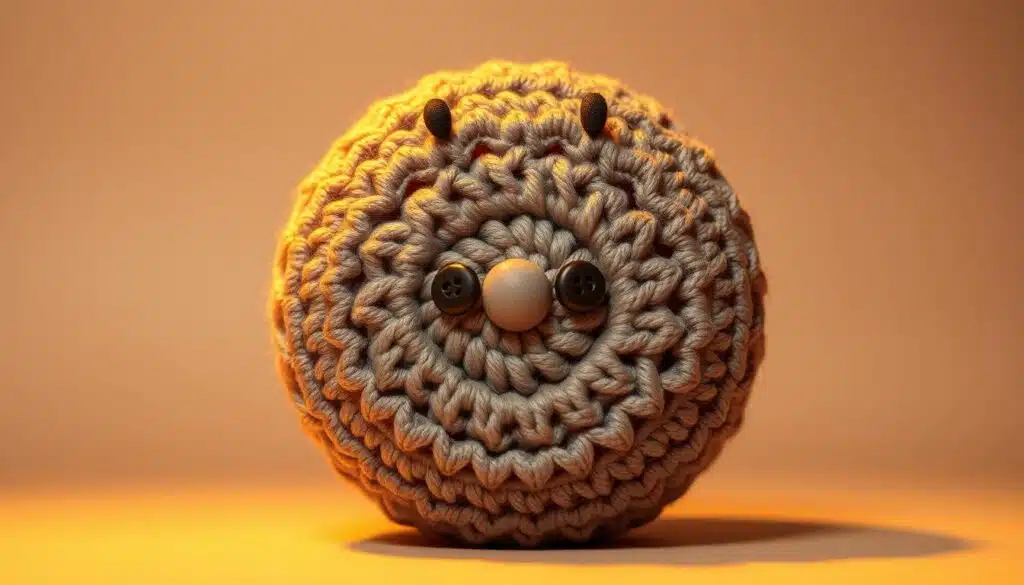
Begin with a tight center for professional-looking toys. The magic ring amigurumi start ensures a closed center. This keeps stuffing from showing on heads and small limbs. Most patterns require this neat start, saving you trouble later.
Learning the magic ring takes some practice. Watch different video demos to find the motion that feels right for you. If you’re new, try a beginner kit or use pre-made rings. This helps build your confidence with yarn and hooks.
Why the magic ring matters
The magic ring makes an adjustable loop that you can pull tight. This tight center is key for small pieces and sewing parts together. Use a stitch marker to keep track of rounds and avoid getting lost in continuous rounds.
Practice tips and alternatives
Practice exercises are helpful. Make small spheres from a magic ring, working rounds of single crochet. Add increases and decreases to feel shaping. Try different starts and join-as-you-go methods to expand your skills.
Core stitches you’ll use most
The single crochet is essential in amigurumi. Learn neat, compact single crochet for dense fabric. Master increases and decreases for curves and limbs. Use slip stitch for tidy joins or to close rounds, but mostly work in continuous rounds for smoother seams.
For a quick guide and practice drills, check out this beginner resource: amigurumi for beginners.
| Skill | Why it matters | Quick drill |
|---|---|---|
| Magic ring amigurumi | Creates closed centers for heads and tiny pieces | Make 10 rings, close tightly, then work 6 rounds of single crochet |
| Single crochet | Forms dense fabric that holds stuffing | Swatch 20 sts x 10 rounds; aim for even loops and consistent tension |
| Increases and decreases | Shape curves, create limbs and joins | Increase every 6 sts for spheres; practice invisible decrease for clean joins |
| Continuous rounds | Prevents visible seams and keeps gauge uniform | Work 3 projects in continuous rounds using a stitch marker to track start |
Match Your Hook to Your Yarn, Not the Label
Yarn labels tell one story, but your toy needs another. They’re made for drape in garments. For amigurumi, you want dense, even fabric that hides stuffing. So, choose a hook based on feel and results, not just the label’s suggestion.
Why size on the label can mislead
Manufacturers suggest hook sizes for sweaters and scarves. These projects need loose stitches. But, your plush friend needs tight crochet fabric to keep stuffing hidden.
Using the label size often leads to holes and a floppy shape.
How to run a quick stuffing visibility test
Make a 3–4 inch swatch in rounds or a small flat rectangle. Try two or three hook sizes around the label suggestion. Hold a little stuffing against the swatch or place it behind the fabric to see if fibers show. Note the stitch spacing and whether the fabric shapes well.
Questions to ask while testing
- Does the hook glide smoothly through the stitches?
- Are stitches snug enough to hide stuffing?
- Does the fabric feel firm while staying flexible for shaping?
Simple experiments to find your ideal match
Make a quick sample sphere. Start with a magic ring, increase rounds, then work a few rounds of even single crochet. Stuff lightly and see if filling escapes. This mini test shows real-world performance better than a flat swatch.
Keep a personal reference list
Record your tension habits, yarn brand, hook model, and the result. Over time, you build a go-to pairing for each yarn type. This saves time and keeps your amigurumi gauge consistent across projects.
| Yarn Type | Label Hook | Test Hook Size | Result Notes |
|---|---|---|---|
| Worsted weight acrylic (Red Heart) | 5.5 mm (I) | 4.0–4.5 mm | Tighter stitches, minimal stuffing visibility test passed at 4.5 mm; good shape retention. |
| Sport weight cotton (Lily Sugar’n Cream) | 3.75–4.5 mm | 2.75–3.5 mm | 3.0 mm produced firm fabric and clean detail; 2.75 mm felt dense but slightly stiff. |
| DK blend (Patons) | 4.0 mm | 3.5–4.0 mm | 3.5 mm balanced tight crochet fabric with a soft hand; stuffing visibility test clear. |
Begin with Simple Patterns and Build Confidence
Start with simple projects to learn the basics without feeling overwhelmed. Choose patterns that teach you how to shape, stuff, and sew in a few easy steps. This helps you practice stitch counts and assembly before moving on to clothes or accessories.
Why start with basic toys
Basic projects help you master tension, increases, and decreases. Simple amigurumi toys give you quick wins that boost your confidence.
Always count your stitches every few rounds to avoid mistakes. Small errors can add up, so checking your work often keeps your shapes round and even.
Video tutorials vs. written patterns
Video tutorials are great when you need to see how to do something. Look for close-ups and clear voice-overs so you can follow along easily.
Written patterns are best when you want step-by-step instructions. Use both formats: watch a video, then follow the written pattern as you crochet.
Examples of beginner-friendly projects
Start with one-piece head/body projects like Bubble the Catster to practice seamless shaping. Pocket pals, mini octopi, donut amigurumi, and mini monsters are small and quick to make.
Consider starter kits like the Woobles kit for guided supplies and step-by-step support. Kits often include helpful extras that speed up your learning.
| Project | Skill Focus | Why it’s Great for You |
|---|---|---|
| Bubble the Catster | One-piece shaping, simple embroidery | Teaches seamless body/head joins and basic facial features |
| Mini octopus | Even stuffing, uniform tentacles | Quick to finish, ideal for practicing consistent tension |
| Donut amigurumi | Round shaping, finishing holes | Simple rounds teach increases and decreases with fun results |
| Jelly Bean Bunny | Ear shaping, sewn-on limbs | Small parts teach placement without complex clothing |
| Pocket pals | Compact shaping, quick assembly | Great for practice and gifting, low time investment |
| Starter kit: Woobles kit | Guided supplies, curated pattern | Makes practice easier with included materials and instructions |
Use beginner amigurumi patterns that focus on core techniques. Repeat a few simple amigurumi toys until the motions become relaxed and natural.
Stuffing, Shape, and Durability Tips
You want toys that keep their charm through squeezes and play. Polyester fiberfill like Poly-fil stuffing is great for most amigurumi. It’s easy to shape, washes well, and stays consistent across projects. Try a few brands to find the loft you like.
Stuffing amigurumi works best when you add small tufts as you go. This prevents lumps and makes smoothing simple. Press gently, shape with your fingers, and avoid packing the head or limbs too early while you’re crocheting.
Best stuffing materials and a quick how-to
Poly-fil stuffing is the go-to for most makers because it’s lightweight and forgiving. For a firmer feel, mix in tiny yarn scraps or a teaspoon of plastic pellets at the base for weight. If you want a reference on recommended techniques, check this helpful guide from Crochet Craze: amigurumi characters guide.
How much to stuff without regrets
Slight overstuffing is a common trick to counter long-term compression. Firm heads hold shape better over years of hugs. Overstuffing amigurumi to extremes will stretch stitches and distort the design, so aim for firm but slightly squeezable.
Neck and limb tricks for a pro finish
For neck stability, roll a strip of felt and tuck it into the neck before attaching the head. Felt neck support gives structure without weight. Foam rollers make excellent lightweight internal braces when you need a longer support piece. Use foam rollers or felt, not heavy materials that strain seams.
Stuff limbs strategically: fill lower halves to about the elbow or knee and leave the tops less dense. This helps arms and legs lie against the body. Keep stuffing a little back from seam edges so sewing stays neat and stuffing doesn’t peek through.
- Tip: Patch small gaps by tightening your tension or switching to a slightly smaller hook.
- Tip: To avoid lumps, add stuffing in tiny tufts and knead gently between additions.
- Tip: When you need extra sit-and-stay weight, use a small sealed bag of pellets at the base instead of filling the whole toy.
Attaching Pieces and Finishing Like a Pro
You want your amigurumi to look neat and last through playtime. Good pin placement and regular checks save time and headaches. Lay out parts, step back, and look from different angles to ensure everything is straight.
Pinning for placement and visual checks before sewing
Use sewing pins or small safety pins to mark spots while assembling amigurumi. Pin placement helps fix crooked features early. Move pieces until they look symmetrical, then take a quick photo to compare both sides.
Sewing tips: hide stitches, use correct needles, sew features before closing head
Choose a blunt bent-tip yarn needle that fits your yarn weight. Follow yarn needle tips to thread and handle it without straining your fingers. When sewing, aim to hide stitches by tucking the joining yarn into the valleys between crochet stitches.
Work facial features before closing the head. It’s easier to position eyes and embroider a mouth on an open piece. When sewing amigurumi parts, take small, even passes and pull just enough to sit pieces snugly without puckering.
Finishing touches: weaving ends, reinforcing seams, and trimming neatly
Weave tails through many stitches to secure them and hide knots where stress points will face handling. Reinforce attachment points with multiple passes if the toy will be hugged often. Trim stray fibers close to the fabric for a crisp finish.
Do a final inspection: check seams, shift stuffing if needed, and add a round of slip stitch or a few extra reinforcement stitches at the base of limbs. Use embroidery floss for fine features when you want crisp details and extra durability.
Safety Considerations and Embroidered Alternatives
When making toys, safety should be your top priority. Many makers choose “safety eyes” for a neat look. But, these eyes can pose a risk to toddlers and pets because their backs can come loose over time.
For toys safe for kids, embroidered eyes are the best choice. They eliminate choking hazards and let you add personality with simple stitches. Use strong embroidery floss, tight knots, and small, neat stitches to make the features last through washes and play.
When you want more detail, try layered embroidery. Add a stitched pupil, a tiny highlight, and a few lashes for character without tiny parts. Back your stitching with felt or an extra row of crochet inside the head to spread stress and reduce wear.
If your market or gift list targets adults, high-quality plastic or glass eyes can work. Buy from reputable suppliers like Glass Eyes Online or 6060 Eyes to lower the chance of backs failing. Even with premium parts, reinforce the area by stitching around the post and adding internal backing where possible.
Always choose materials rated for kids when making toys for young children. Use machine-washable acrylic or cotton blends and non-toxic stuffing like Polyfil for easy care. Avoid tiny buttons, beads, and glued decorations that could detach during rough play.
Use practical assembly tricks to boost safety. Locking stitch markers help hold placement while you sew. Double-stitch attachment points and add felt backing for extra insurance. These steps make your pieces stronger and give buyers peace of mind.
In short, pick embroidered eyes for toddlers and pets to ensure child-safe amigurumi. Reserve safety eyes for adult collectors, and source them from trusted vendors like Glass Eyes Online and 6060 Eyes when you do. Your careful choices keep toys charming and safe for every recipient.
Creative Spring & Seasonal Amigurumi Ideas
Ready to brighten up your shop or craft area? Use light colors like pastels and nature tones for spring amigurumi patterns. These patterns will catch the eye at fairs and online. Small projects are great when time is short and shoppers want something special.
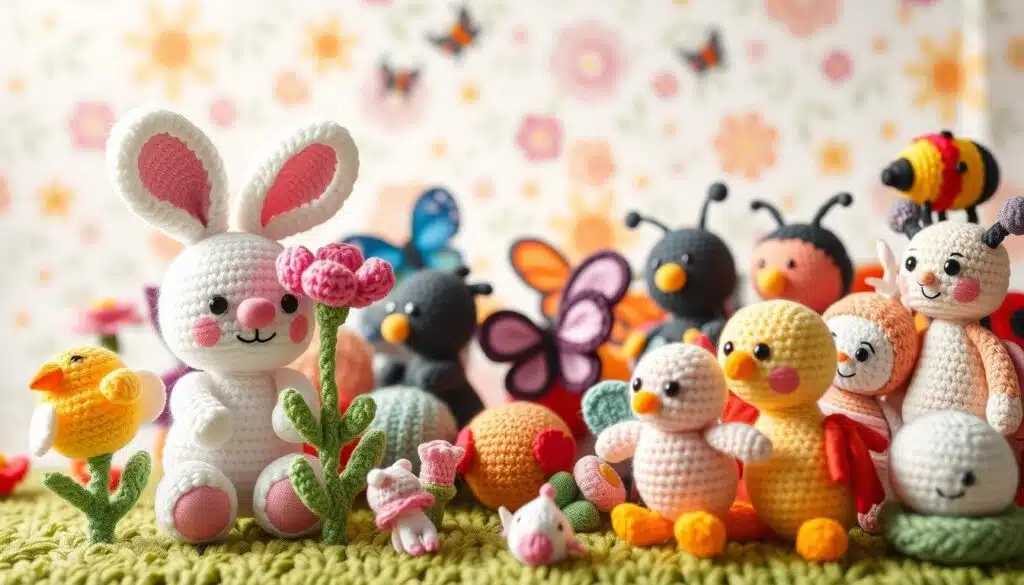
Quick wins: make mini bunnies, bees, and chicks for last-minute buyers. Offer them in three sizes: keychain, pocket pal, and plush. Start with a Jelly Bean Bunny or a pocket pal chick. Many Easter toys are easy to make in a weekend.
Vegetable and flower toys are great for play and classrooms. You can make carrots, pea pods, strawberries, daffodils, and carnations. They’re perfect for farmers’ markets and classrooms. Using leftover yarn for vegetables and experimenting with flower textures is fun.
Spring palette and themed characters
Choose pastels and greens for a fresh look. Bunny amigurumi in soft colors is a hit. Add embroidered faces for safety instead of eyes. Offer themed sets like bunny and carrot for easy gifts.
Vegetable and flower ideas for markets
Make small bundles for play kitchens and bins. Pea pods, strawberries, and daffodils are great. Include care tags to highlight the materials used.
Fast seasonal makes for gifts and fairs
Focus on quick makes: bulky yarn is soft and fast. Make bees, ladybugs, ducks, and monsters in bulk. Offer both neutral and pastel colors. For inspiration, check 12 Spring Amigurumi Patterns for 2025 and adapt them to your needs.
| Item | Size Options | Best Yarn | Market Use |
|---|---|---|---|
| Mini Bunny | Keychain, Pocket, Plush | Worsted #4 or bulky | Easter baskets, gift tags |
| Pea Pod | Small, Medium | Cotton DK for crisp stitches | Pretend-play, classroom sets |
| Daffodil | Posy, Single Stem | Hand-dyed pastels or acrylic blend | Decor, bouquet add-ons |
| Bee Pocket Pal | Keychain, Pocket | Soft acrylic blend | Craft fairs, kid gifts |
Keep a small stock of Easter toys and add whimsical creatures like butterflies and hedgehogs. A focused seasonal line sells faster than a big catalog.
Practice Projects and 101 Quick Crochet Ideas to Beat Boredom
You want fast wins that sharpen skills without hogging your day. Pick one-skein makes and scrap-friendly patterns to keep momentum. These tiny victories turn idle minutes into steady progress and fresh ideas for gifts or markets.
Small, fast projects to build skill
Start with coasters, scrubbies, mug cozies, and simple dishcloths. They teach tension control, edges, and finishing in predictable bites. Keychain amigurumi and mini octopi let you practice shaping and sewing without a big commitment.
Use quick crochet patterns that favor bulky yarn or larger hooks when time is tight. You can finish a practical piece in an afternoon and feel accomplished.
Adorable toys and small projects list to spark creativity
When you need inspiration, consult lists of 101 crochet projects for variety. That mix usually includes potholders, tiny dinosaurs, baby booties, and novelty pieces like mini donut amigurumi and rainbow monsters. Having a long queue keeps your craft mojo flowing.
Try grouping ideas by purpose: kitchen items, wearable accessories, small amigurumi projects, and gifts. Rotate through categories to build a rounded skill set.
How to use leftover yarn for mini amigurumi and gifts
Leftover yarn projects are perfect for tiny toys: peas in a pod, butterflies, mini animals, and charms. Scraps add color interest and bulk when you stuff multiple mini pieces into gift bundles. Making several small items improves speed and consistency.
For stitch tips and thin-yarn choices suitable for lightweight minis, check this handy roundup on easy crochet projects with thin yarn, which lists fibers, weights, and hook ranges to match your scraps: thin yarn project guide.
- Same-day makes: bulky coffee cozies, chunky coasters.
- Practice pieces: scrubbies, pot holders, keychain pals.
- Gift-ready sets: trio of mini amigurumi projects tied with ribbon.
Keep a notebook of quick crochet patterns you love. When boredom hits, you can pick a short project and get crocheting instead of scrolling. The result: more finished pieces, less stash guilt, and steady improvement in your craft.
Conclusion
This amigurumi crochet guide takes you from picking yarn and tools to the final touches in simple steps. Start with worsted weight #4 yarn and avoid chenille at first. Use a slightly smaller hook than suggested to hide stuffing.
Choose metal ergonomic hooks like Clover Amour, and use lock stitch markers. Count rounds often to keep shapes neat.
Practice the magic ring and core stitches like single crochet, increases, and decreases. Test different hook-yarn combos until your tension is just right. Stuff in small parts with Polyfil and add felt or foam for neck support.
Always pin pieces before sewing. For kids’ toys, use embroidered eyes and reinforce seams for safety and durability.
If you want to start amigurumi today, choose a simple pattern from the 101 quick ideas. Practice with short projects to build your confidence. To learn more, check out amigurumi adventures and tips.
Now, grab your hook, pick a cheerful yarn, and dive into the world of amigurumi crochet. It will put a smile in your hands and someone else’s.
FAQ
What makes amigurumi a good place to start crocheting?
Amigurumi is great for beginners because it’s quick and rewarding. You learn important crochet skills and make adorable toys. It’s forgiving, so you can practice and improve without getting frustrated.
After years of experience, we’ve distilled the most important tips. These help you avoid common mistakes like uneven limbs and stitch errors.
Which yarn should I choose first and why does fiber matter?
The type of yarn you choose affects how your project looks and feels. Start with a #4 Worsted weight yarn in light colors. This makes it easy to see your stitches.
Cotton or cotton blends are good because they keep their shape well. Acrylic is affordable and easy to care for. Wool is bouncy but might felt or itch. Avoid chenille because it hides stitches and sheds.
Do you have yarn brand recommendations and where to buy them?
Experienced crocheters often use Premier Basix for its affordability. Paintbox Wool Mix Aran or similar blends are mid-range. Berroco Vintage is premium for its stitch definition.
For bulky chenille projects, try Hobbii Honey Bunny and Sweet Snuggles. Buy yarn at local shops for a better feel. Online sellers and Amazon are convenient. For safety eyes, check out Glass Eyes Online and 6060 Eyes.
How does hook choice affect my amigurumi?
The hook you choose affects the tension and look of your project. Metal hooks are smooth and reduce hand strain. They’re better for small stitches than flimsy kit hooks.
Ergonomic handles are comfortable and reduce wrist fatigue. Clover Amour is a favorite for its smoothness and consistent sizing. Use a smaller hook than suggested to create dense fabric.
What extra tools will make amigurumi easier?
You’ll need locking stitch markers, a neck or task light, and magnifying lights if needed. Also, a blunt bent-tip yarn needle, sharp embroidery scissors, and a safety-eye snap tool are essential.
Optional tools include a magnifying glass with light, a stitch counter, and contrast yarn for temporary markers.
Why is the magic ring important and how do I learn it?
The magic ring helps you start your project without a center hole. It’s a key skill for amigurumi. Learning it takes time, so watch different tutorials until you understand it.
Beginner kits with pre-made magic rings can help you learn other skills while avoiding frustration.
What core stitches should I master for amigurumi?
Focus on single crochet, increases, decreases, and slip stitch. Single crochet is the foundation of amigurumi. Increases and decreases shape your project.
Work in continuous rounds and use a stitch marker to keep track. Practice with small swatches or spheres to understand shaping and stitch counts.
How do I choose the right hook size if the yarn label isn’t correct for toys?
Yarn labels are for garments, not toys. Crochet a swatch or small sphere with your yarn and a few hook sizes. Check if the fabric is firm and the hook glides well.
If stuffing shows, use a smaller hook. If it’s too stiff, use a larger one. Record the best hook and yarn combinations for your tension.
Which patterns should beginners start with?
Start with simple patterns that teach you how to shape and stuff. Try small bunnies, pocket pals, mini octopi, donut amigurumi, and simple toys. These projects help you practice stitch counts and build confidence.
Use video tutorials for tension and assembly, and written patterns for precise steps. Both are helpful.
What stuffing should I use and how much is right?
Polyester fiberfill is the best choice because it’s easy to shape and consistent. Stuff in small tufts to avoid lumps. Slightly overstuffing helps maintain round shapes.
For limbs, stuff the lower halves more so they lie flat. Try different brands to find your favorite texture.
How do I prevent lumpy or saggy amigurumi over time?
Stuff incrementally with small tufts and firm up heads more than appendages. Use slightly more stuffing than you think for long-term resilience. For necks, use structural aids like a rolled felt strip or lightweight foam hair rollers.
Mixing in small yarn scraps adds weight and helps maintain shape.
Any tips for neat assembly and invisible seams?
Pin pieces in place and check from multiple angles before sewing. Sew facial features before closing the head for easier access. Use a blunt bent-tip yarn needle and stitch into the valleys between stitches.
Reinforce high-stress attachment points with multiple passes and weave tails through many stitches. Hide knots and trim close for a clean finish.
Are safety eyes actually safe for kids?
Not always. Plastic “safety” eyes can loosen and present choking hazards for children under three or for pets. For toddler-safe toys, embroider eyes and other facial features instead.
If you use plastic eyes for adult-targeted items, buy high-quality ones and reinforce attachments with extra stitching or felt backing.
How do I make amigurumi safe and durable for children?
Use machine-washable acrylics or cotton blends, non-toxic stuffing like Polyfil, and avoid small detachable pieces. Embroider facial features, double-stitch stress points, and choose sturdy yarn/needle combinations.
Always follow age-appropriate safety guidance and check site disclaimers or product disclosures.
What are good spring and seasonal amigurumi ideas?
Spring favorites include Jelly Bean Bunnies, pocket pal chicks, bees, mini ducks, carrots, pea pods, strawberries, daffodils, and butterflies. Vegetable and flower amigurumi are great for pretend play and farmers-market tables.
Make no-sew or minimal-sew versions for speed. Consider pastel palettes and lively accents for seasonal charm.
What quick projects keep momentum and practice stitches?
Small, fast projects include keychain amigurumi, pocket pals, mini bunnies, donut monsters, coasters, scrubbies, mug cozies, and mini octopi. Leftover yarn is perfect for tiny charms or peas-in-a-pod.
These bite-sized builds finish quickly and keep your confidence up—perfect for evening relaxation and slow-crafting rituals.
How can I turn amigurumi into sellable items for craft fairs?
Small, cute toys like rainbow monsters, donuts, and tiny animals sell well at craft fairs. Offer multiple sizes (keychain, pocket pal, plush), keep a consistent color palette, and create seasonal lines (Easter bunnies, spring chicks).
Price in tiers, package as gift bundles, and use strong finishes and secure attachments to build customer trust.
Any final checklist before I start my first amigurumi?
Gather #4 worsted yarn in light colors, a smaller metal hook (test sizes), Clover Amour or ergonomic hooks if possible, locking stitch markers, Polyfil, blunt yarn needles, sharp scissors, and a neck light. Practice the magic ring, count stitches often, stuff in small amounts, pin before sewing, and prefer embroidered eyes for child-safe toys.
Then pick a small beginner pattern and get crocheting—your first small, satisfying toy is closer than you think.