Welcome to the world of knitting basics! As a beginner, it’s key to start with the basics. Knitting is more than a hobby; it’s a way to make something from scratch. It’s a way to relax and show your creativity.
Begin by learning the basic stitches and techniques. Check out this detailed guide on How To Knit. It covers casting on, knit and purl stitches, and how to cast off.
Key Takeaways
- Understand the basic knitting stitches and techniques.
- Learn how to cast on and cast off.
- Familiarize yourself with common knitting terms.
- Start with simple projects like scarves or hats.
- Practice regularly to improve your skills.
The Wonderful World of Knitting
When you start knitting, you enter a world where creativity and calm meet. Knitting is more than a hobby; it’s a journey that brings many benefits. It helps with stress and even boosts your brain power.
Why Knitting Is Making a Comeback in the Digital Age
In our digital world, knitting offers a break from screens. It’s a hands-on, creative activity. The benefits of knitting are being found again as people look for real-life hobbies. A study on knitting for mental health shows it can greatly improve well-being.
Surprising Benefits of Knitting for Your Brain and Stress Levels
Knitting can make your brain work harder and improve memory. The motion of knitting can be calming, helping to lower stress relief through knitting. It’s great for those wanting to manage anxiety and boost their mental health.
What You Can Expect on Your Knitting Journey
Starting your knitting journey means creating something beautiful and feeling its therapeutic effects. Whether it’s a scarf, hat, or blanket, making it with your hands is very rewarding.
| Benefits of Knitting | Description |
|---|---|
| Stress Relief | Reduces anxiety through meditative repetitive motion |
| Cognitive Improvement | Challenges the brain and promotes memory |
| Creativity | Allows for self-expression through various patterns and colors |
Essential Knitting Supplies for Beginners
To start knitting, you’ll need a few must-have supplies. These tools will make your experience enjoyable. As a beginner, it’s easy to feel overwhelmed by the many options. But don’t worry, we’ve got you covered.
Needle Knowhow: Choosing Your First Knitting Needles
Knitting needles come in different materials like wood, metal, and plastic. For beginners, start with bamboo or wooden needles. They are warm to the touch and easy to hold. You can find these at knitting tool suppliers.
The size of the needle depends on your project. Start with a versatile size like US 8 (4mm).
Yarn101: Selecting the Perfect Starter Yarn
Start with a medium-weight yarn for your first project. It’s easy to handle and works for many projects. Acrylic yarns are great for beginners because they are soft and easy to care for.
Look for yarns labeled as “beginner-friendly” or “easy care”. This will help you start smoothly.
The Supporting Cast: Other Tools You’ll Need
Scissors, Stitch Markers, and Tapestry Needles
You’ll also need sharp scissors, stitch markers, and a tapestry needle. These tools are essential for cutting yarn, marking your place, and weaving in ends.
Nice-to-Have Accessories
While not essential, accessories like a yarn bowl or a knitting bag can improve your experience. A yarn bowl keeps your yarn clean and untangled. A knitting bag helps you stay organized while you’re on the go.
Understanding Yarn Types and Weights
Choosing the right yarn is essential for your knitting projects. The yarn you pick can change how your project looks, feels, and lasts. It’s all about finding the perfect match.
Cracking the Code: How to Read Yarn Labels
Yarn labels are full of useful info. They show you the yarn weight, fiber content, and recommended needle size. Knowing these details helps you pick the right yarn for your project.
For example, the yarn weight tells you if your project will be light or thick. To learn more about yarn weights, check out The Endless Skein.
From Lace to Super Bulky: Yarn Weight Explained
Yarn weight is key in knitting. It goes from lace to super bulky. Lace is fine, while super bulky is thick and fast to knit.
The weight of the yarn decides how dense and warm your project will be. Lace yarn is ideal for light, detailed garments. Super bulky yarn is perfect for warm, quick-to-make accessories.
Fiber Fundamentals: Wool, Cotton, Acrylic, and Beyond
The fiber in your yarn changes its feel, durability, and how to care for it. Wool is warm and stretchy. Cotton is cool and breathable. Acrylic is versatile and easy to care for.
Blends mix different fibers’ best traits. They offer a mix of performance and practicality.
Knitting for Beginners: Basic Techniques
Starting your knitting journey means learning basic techniques first. These skills are the foundation for creating beautiful items. We’ll cover the essential techniques you need to begin.
Cast On: Getting Those First Stitches on Your Needle
Casting on is the first step in any knitting project. There are several methods, but the long-tail and knitted cast on are popular.
Long-Tail Cast On Method
The long-tail cast on is great for most projects. It creates a flexible edge. Start with a slip knot, then measure yarn for the width of your project. Use the yarn to create the stitches, keeping the tension even.
Knitted Cast On Method
The knitted cast on is good for projects needing more elasticity. It’s a bit easier for beginners. It creates a firmer edge that’s less likely to drop stitches.
The Knit Stitch: Your New Best Friend
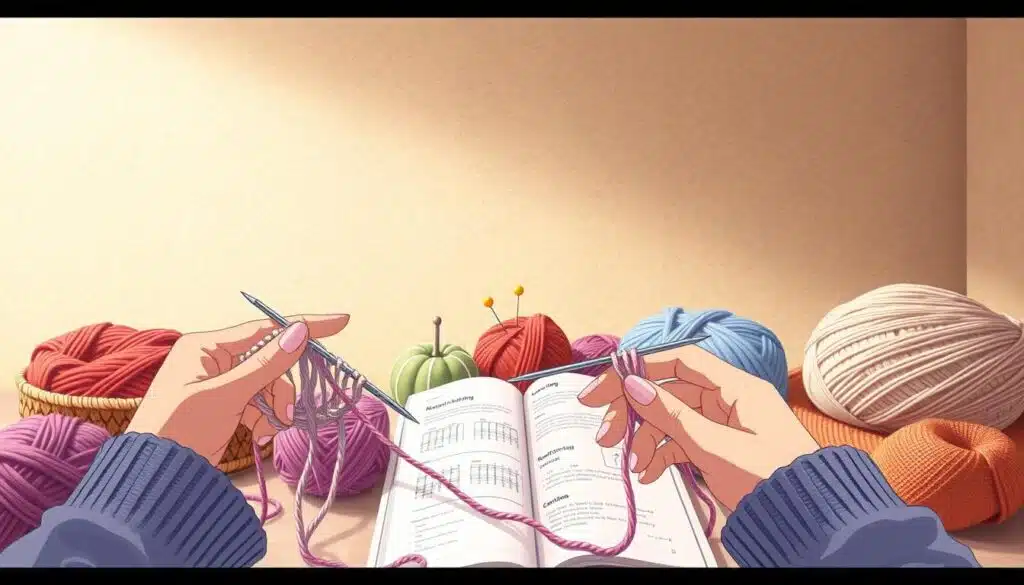
The knit stitch is the most basic stitch. It’s the foundation for many patterns. To knit, insert the right needle into the first stitch, wrap the yarn, and then bring it back through. Repeat until you’ve finished the row.
The Purl Stitch: The Other Side of the Coin
The purl stitch is the counterpart to the knit stitch. Together, they form the basis of most patterns. To purl, insert the right needle into the first stitch, but wrap the yarn in the opposite direction. This creates a textured fabric that’s reversible.
Binding Off: Finishing Your Work with Flair
Binding off is the final step in completing your project. It’s important to do it correctly to prevent unraveling. The basic bind-off involves knitting the first two stitches, then passing the second stitch over the first. Continue until you’ve bound off the required number of stitches, finishing with a secure final stitch.
Mastering these basic knitting techniques will help you create beautiful items. You’ll be able to knit functional items that you’ll cherish for years.
Common Knitting Terms and Abbreviations
To start knitting, you need to learn the knitting language. You’ll find many terms and abbreviations that might seem hard to understand at first. Knowing these terms helps you follow patterns correctly and enjoy knitting more.
Decoding Pattern-Speak: K2tog, YO, and Other Mysteries
Knitting patterns use short terms like “K2tog” (knit two together) and “YO” (yarn over). These abbreviations make patterns shorter but can confuse beginners. Learning these terms is key to reading knitting patterns well.
| Abbreviation | Meaning |
|---|---|
| K2tog | Knit two together |
| YO | Yarn over |
| P2tog | Purl two together |
Reading Patterns Without Losing Your Mind
Reading knitting patterns needs focus and a basic knowledge of knitting terms. Always read the pattern fully before starting. This helps you know any new terms or techniques you might need.
Visual Learners Rejoice: Understanding Knitting Charts
Charts are great for visual learners. They show the pattern in a way that’s easier to follow than written instructions. Learning to read these charts makes knitting more fun and less likely to have mistakes.
Troubleshooting Common Knitting Mistakes
Knitting mistakes can be frustrating, but you can fix them easily. Even pros make mistakes, but knowing how to fix them saves time and stress.
Oops! Dropped Stitches and How to Rescue Them
Dropped stitches are a common mistake. They happen when a stitch falls off the needle, making your work look like a ladder. To fix it, use a crochet hook or spare needle to pull it back up. Act quickly to stop the mistake from spreading.
Tension Troubles: When Your Knitting Is Too Tight or Too Loose
Tension problems can mess up your knitting’s fit and look. If it’s too tight, it might be stiff and uncomfortable. If it’s too loose, it could sag or lose shape. Keep your yarn tension even and use the right needle size for your yarn.
The Art of Frogging: When to Rip It and Start Again
At times, you might need to “frog” your work – rip it out to start over. It’s a normal part of knitting. Frogging lets you fix big mistakes or change your project’s direction. When you frog, be patient and take your time to unravel carefully, then start again.
Counting Stitches: The Simple Habit That Saves Heartache
Counting your stitches regularly is a simple way to avoid mistakes. This habit helps you spot errors early, making them easier to fix. It’s a simple yet powerful technique that can save you from the frustration of having to frog your work.
5 Easy Knitting Projects for Absolute Beginners
Creating something with yarn is incredibly satisfying. These beginner-friendly projects are a great starting point. They help you build confidence and skills as you begin your knitting journey.
Let’s explore five easy knitting projects for beginners. These projects are perfect for practicing your stitches. They also result in useful or stylish items you can enjoy or give to others.
The Classic Garter Stitch Scarf: Your First Knitting Victory
A garter stitch scarf is a great first project. It only needs the knit stitch, helping you practice your tension. Plus, it’s a versatile accessory for anyone.
Practical Magic: Simple Knitted Dishcloths
Knitted dishcloths are another beginner-friendly project. They’re practical and easy to make. They also make great gifts or personal items for your kitchen.
Keep Your Ears Warm: A Basic Headband Pattern
Headbands are a fantastic way to practice knitting in the round. They’re quick to finish and make great gifts or personal accessories to keep you warm during the colder months.
Hand Happiness: Easy Fingerless Mitts
Fingerless mitts are a great way to get comfortable with knitting small items. They’re also a thoughtful gift for anyone who loves to keep their hands warm.
Top It Off: A Beginner-Friendly Beanie Hat
Lastly, a simple beanie hat is a great project for beginners. It’s a quick project that results in a stylish and functional hat.
These easy knitting projects are designed to help you build your skills and confidence. By starting with simple projects, you’ll be well on your way to creating beautiful, functional items that you can be proud of.
Taking Your Knitting Skills to the Next Level
Now that you know the basics, it’s time to explore advanced knitting techniques. You’ll find new challenges and ways to make beautiful projects. This journey will help you grow as a knitter.
Beyond Knit and Purl: Fun Stitches to Expand Your Repertoire
Once you master knit and purl, try new stitches. The herringbone and moss stitch add texture. Look for tutorials and patterns online or in books to learn these stitches.
In the Round: Working with Circular and Double-Pointed Needles
Knitting in the round changes the game for projects like hats and sweaters. You’ll need circular needles or double-pointed needles. Circular needles are best for big projects, while double-pointed needles work for small ones. For more help, check out advanced knitting techniques.
Adding Color to Your Life: Basic Stripes and Color Changes
Color can make your knitting pop. Start with stripes or simple color changes. As you get better, try more complex colorwork patterns.
Texture Adventures: Simple Cables and Lace Patterns
Cables and lace bring new life to your knitting. Start with simple patterns to add texture. With practice, you’ll make stunning, professional-looking pieces.
Exploring these advanced techniques will improve your knitting and open up new creative paths. So, pick up your needles and yarn, and get ready to elevate your knitting!
Building Your Knitting Community
As you grow in your knitting journey, you’ll likely crave connection with fellow yarn enthusiasts. The good news is that the knitting community is vast, welcoming, and full of resources. These resources help you improve your craft and share your passion.
Digital Knitting Circles: Online Resources and Forums
The internet is full of online knitting communities. Here, you can share projects, ask for advice, and learn from experienced knitters. Websites like Ravelry and Knitting Help offer patterns, tutorials, and forums for all knitting aspects.
In-Person Inspiration: Finding Local Knitting Groups
Connecting with knitters in person is also valuable. Local yarn stores, community centers, and knitting guilds host knitting circles. Here, you can meet fellow crafters, learn new techniques, and work on projects together.
Hashtag Knitting: Social Media Communities for Yarn Lovers
Social media platforms like Instagram and Facebook are full of knitting groups. Using hashtags like #knittingcommunity or #yarnlove, you can discover new patterns. You can also share your projects and connect with other knitters worldwide.
Knitting for Good: Charity Projects for Beginners
Being part of a knitting community means participating in charity knitting projects. Many organizations accept handmade items like hats, scarves, and blankets for those in need. It’s a great way to give back while improving your skills.
Conclusion
As you finish this beginner’s guide to knitting, you’ve started a journey of creativity and calm. You now know the basics and are ready to keep learning. For a beginner knitting summary, remember that knitting gets better with time and practice.
Be kind to yourself, enjoy the journey, and don’t worry about mistakes. With each project, you’ll grow more confident and skilled. Knitting’s wonderful world is waiting for you, and you’re ready to explore it.
Keep practicing, and soon you’ll make beautiful things that will be loved for years. Happy knitting, and enjoy making something special and unique.
FAQ
What are the essential supplies I need to start knitting?
To start knitting, you’ll need a few basic things. You’ll need knitting needles, yarn, scissors, and a tapestry needle. It’s best to start with medium-weight yarn and needles made from wood or metal.
How do I read yarn labels, and what information is important?
Yarn labels have important details like yarn weight, fiber content, and care instructions. Knowing the yarn weight helps you understand the thickness and warmth of your project. The fiber content affects the texture, durability, and how to care for your item.
What are the basic knitting techniques I need to learn as a beginner?
As a beginner, you’ll need to learn a few basic techniques. You’ll need to know how to cast on, knit, purl, and bind off. Casting on starts your project, knit and purl stitches are the base of most patterns, and binding off finishes your project.
How do I fix common knitting mistakes like dropped stitches?
Fixing dropped stitches is possible by working them back up to the needle. If you’re unsure, there are many online resources and tutorials to help. Counting your stitches regularly can also prevent many mistakes.
What are some easy knitting projects for beginners?
Beginners can start with simple projects like a garter stitch scarf or knitted dishcloths. Headbands, fingerless mitts, and beanies are also great for beginners. These projects help you practice your tension and build confidence.
How can I join a knitting community or find resources for learning?
You can join online forums, social media groups, or local knitting groups to connect with other knitters. Many cities have local yarn stores that host knitting classes or events. These are great places to share tips and learn from others.
What are some advanced knitting techniques I can try once I’m more confident?
Once you’re more confident, you can try working in the round with circular or double-pointed needles. You can also add color to your knitting through stripes or colorwork. Experimenting with textured stitches like cables and lace is another option.
How can I troubleshoot tension issues in my knitting?
Tension issues can be fixed by adjusting your knitting style, using the right needle size, or practicing regularly. If your knitting is too tight or too loose, it can affect the fit and look of your finished project.