
Confession: I once tried knitting for mental health because I thought it would make me look artsy at coffee shops. Turns out, the real magic happened in my brain, not my Instagram feed. Whether you’re tangled in yarn or untangling your thoughts, knitting for mental health is more than a quirky hobby—it’s a secret weapon for your mind. Grab your needles and let’s follow the thread (pun intended) into why this age-old craft is a bona fide brain superfood.
How Knitting Outwits Stress (and Your To-Do List)
Knitting for mental health has gained attention as a therapeutic activity that can alleviate stress and promote emotional well-being.
When considering stress relief methods, knitting for mental health stands out as a unique and effective practice.
Many find that knitting for mental health serves a dual purpose: creating beautiful items while nurturing their mental wellness.
With each stitch, knitting for mental health invites tranquility into our busy lives.
Practicing knitting for mental health has been shown to provide relaxation and joy, significantly enhancing mood.
As more people discover the benefits of knitting for mental health, it is gaining traction in therapeutic communities.
Knitting for mental health is often recommended by therapists as a calming activity that can be integrated into self-care routines.
When you focus on knitting for mental health, you find a unique outlet for creativity while soothing your mind.
Understanding the impact of knitting for mental health can empower more individuals to engage in this fulfilling practice.
In summary, choosing knitting for mental health as a regular hobby could be life-changing for many.
Let’s be honest: your to-do list is probably longer than the scarf you started in 2012 and never finished. But what if I told you there’s a secret weapon hiding in your yarn basket? Yes, I’m talking about knitting—the quirky, colorful hobby that’s basically a ninja when it comes to Stress Reduction Techniques and Knitting Mental Health Benefits. Grab your needles, because we’re about to unravel the science (and a few giggles) behind why knitting is the ultimate anxiety-busting sidekick.
Knitting for mental health provides a notable boost to happiness and overall well-being.
The practice of knitting for mental health can also be a social activity, enhancing connections with others.
Remember, engaging in knitting for mental health can transform your mood and outlook.
Repetitive Stitches: Your Brain’s Built-In Meditation App
This is why knitting for mental health is being embraced by so many as a positive coping mechanism.
When we discuss activities that support mental health, knitting for mental health consistently emerges as a frontrunner.
From personal experience, knitting for mental health has changed many lives, including my own.
Knitting for mental health delivers therapeutic benefits that are hard to ignore.
As discussions about mental health evolve, knitting for mental health has found its rightful place in these conversations.
Picture this: you, a cozy chair, and the hypnotic click-clack of needles. Each stitch is like a tiny “shhh” to your overworked brain. Research shows that repetitive motions—like those in knitting—work wonders for Cortisol Reduction. Cortisol, if you’re not on a first-name basis, is the stress hormone that turns you into a frazzled ball of nerves. But when you’re knitting for mental health, your body basically tells cortisol, “Thanks, but no thanks. I’ve got this.”
In fact, a 2017 study found that 81% of knitters reported feeling ‘very happy’ after a session. That’s not just happy—it’s “I-just-finished-my-tax-return” happy. The rhythmic, repetitive nature of knitting acts like a meditation hack, grounding you in the present. You’re not worrying about tomorrow’s meeting or whether you left the stove on. You’re counting stitches, feeling the yarn, and—let’s be real—occasionally untangling a mess that looks suspiciously like your last attempt at adulting.
Knitting: The Anxiety Shield You Never Knew You Needed
Move over, deep breathing and bubble baths. Knitting is here to steal the spotlight as one of the most effective Anxiety Relief Methods on the block. Studies indicate that the act of knitting for mental health can be as soothing as traditional mindfulness practices—except you get a hat at the end instead of just a vague sense of calm.
Let’s talk about my neighbor, who ditched doomscrolling for knitting during Zoom meetings. Her anxiety chart didn’t just dip—it did a full-on limbo dance. Swapping screen time for knitting is linked to lower anxiety, more present-moment awareness, and a sense of calm that even your meditation app would envy. (Plus, you can’t accidentally like your ex’s vacation photo if your hands are full of yarn.)
Science-Backed Happiness (and Bonus Hats)
But don’t just take my word for it. Here’s what the experts and the data have to say:
- 81% of knitters report increased happiness after knitting sessions (2017 study—yes, science is on your side!).
- Repetitive activities like knitting are proven to decrease cortisol levels, which means less stress and more “ahhh.”
- People who substitute screen time with knitting report a significant reduction in anxiety. (Sorry, social media, you’ve been replaced by a ball of wool.)
‘Knitting gave me back a sense of control during tough times.’ – Dr. Pippa Burns
And let’s not forget: knitting isn’t just about stress-busting. It’s a full-on mental health power-up. Research shows that regular knitters enjoy improved cognitive function, better fine motor skills, and even a boost in serotonin (that’s the happy brain chemical, in case you missed biology class). Plus, learning new stitches literally rewires your brain—take that, Sudoku!
Knitting vs. Stress: The Numbers Don’t Lie
| Benefit | Data |
|---|---|
| Increased Happiness After Knitting | 81% (2017 study) |
| Cortisol Level Decrease | Significant reduction during repetitive activities |
| Anxiety Reduction (Screen Time Swap) | Marked improvement reported |
Visualizing the Zen: Stress & Happiness Before and After Knitting
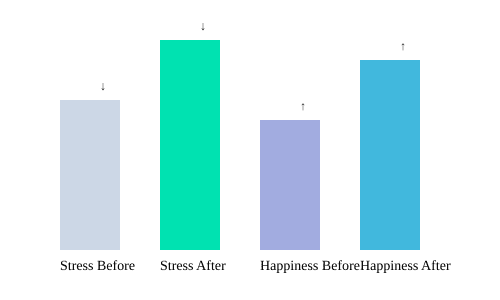
So, next time your to-do list gives you the side-eye, remember: a few rows of knitting might just be the best Stress Reduction Technique you haven’t tried yet. And if anyone asks, you’re not procrastinating—you’re investing in your mental health (and possibly a new pair of mittens).
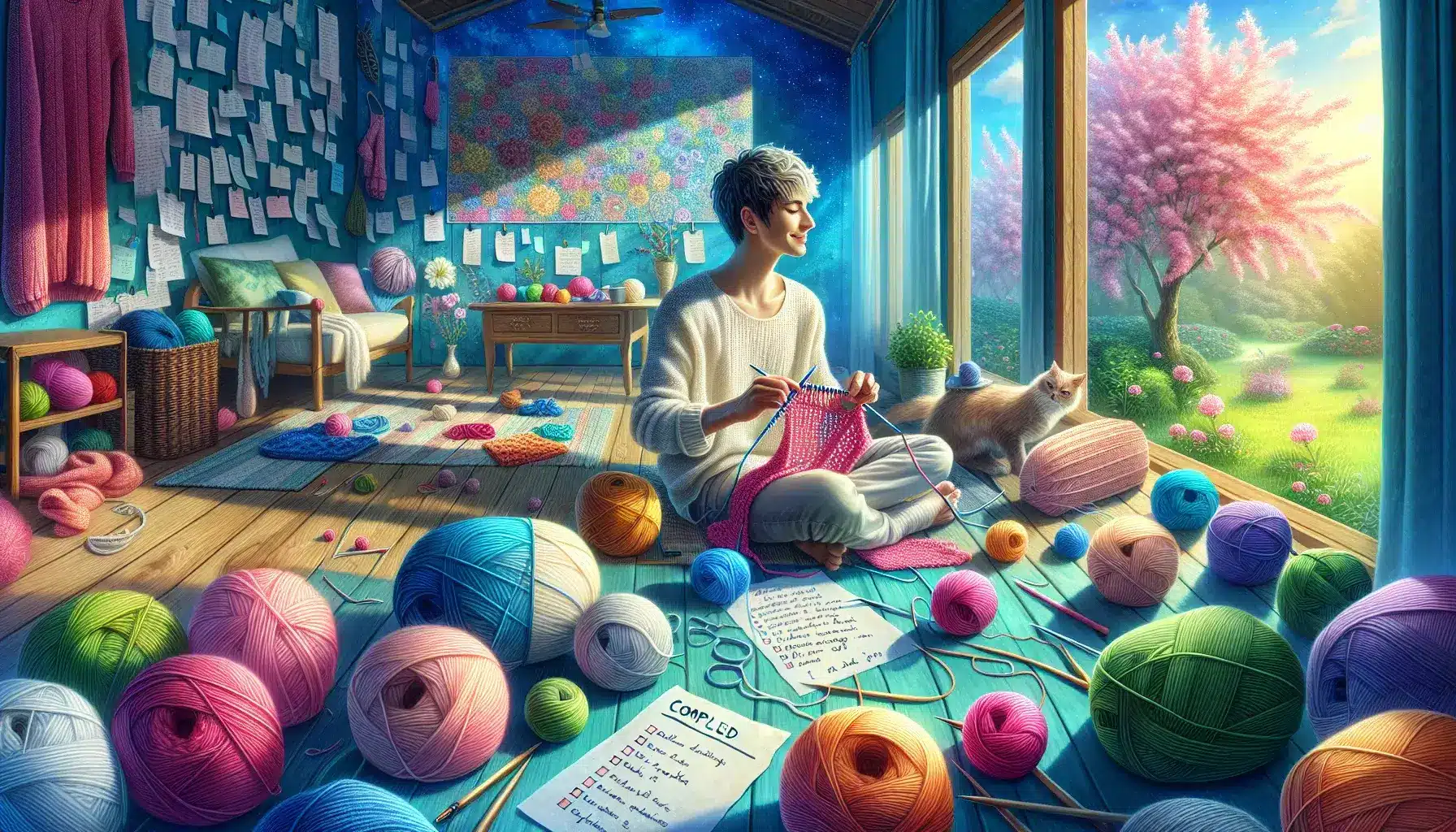
Brain Gains: Knitting as a Cognitive Workout (Turns Out, It’s Nearly Gym for the Mind)
Let’s be honest: when you think “cognitive function improvement,” your mind probably jumps to crossword puzzles, brain-training apps, or maybe that one time you tried to learn chess and ended up just moving the horsey piece around. But what if I told you that knitting for mental health—yes, the thing your grandma does while watching her soaps—might just be the ultimate gym for your mind? Grab your needles, because we’re about to unravel the quirky superpowers of therapeutic knitting.
Knitting: The Sweater-Wearing Sudoku for Your Brain
Picture this: you, a ball of yarn, and the kind of focus you haven’t had since you tried to assemble IKEA furniture without swearing. Knitting keeps your neurons nimble in ways that would make even Sudoku jealous. Every stitch, every pattern, every “wait, was that knit or purl?” moment is a mini workout for your brain. Research shows that regular knitting doesn’t just pass the time—it actually boosts memory, sharpens attention, and flexes your problem-solving muscles.
- Memory: Remembering rows, stitches, and patterns? That’s your brain’s version of interval training.
- Attention: Drop a stitch, and you’ll see just how focused you need to be.
- Problem-solving: Fixing a mistake without unraveling the whole thing? Olympic-level mental gymnastics.
Studies indicate that crafting activities like knitting can actually slow cognitive decline. That’s right—while your friends are downloading the latest brain game app, you’re quietly building cognitive reserve with every scarf and sock.
Neuroplasticity: Your Brain’s Secret Knitting Superpower
Here’s where things get science-y (but don’t worry, no lab coat required). Learning new knitting patterns is like sending your brain to a bootcamp. Each new stitch, each unfamiliar technique, sparks neuroplasticity—which is basically science-speak for “your brain likes a challenge and gets stronger when you give it one.”
Multi-step activities, like mastering a tricky cable or finally nailing that lace pattern, help your brain create new pathways. According to Dr. Catherine Carey:
‘When we engage our hands and our minds with knitting, the brain creates new pathways—just like learning a new language.’
So, next time someone raises an eyebrow at your yarn stash, just tell them you’re increasing your neuroplasticity. (Bonus points if you say it with a straight face.)
Fine Motor Skills & Hand Dexterity: Not Just for Concert Pianists
Knitting isn’t just about what’s happening upstairs in your brain. It’s also a full-on hand workout. Fine motor skills and hand dexterity get a serious upgrade with every project. This is especially true for older adults, who might find that their hands are a little less nimble than they used to be. Regular knitting helps keep those fingers flexible and coordinated—like yoga, but with less spandex.
Research shows that older adults who take up knitting see real improvement in hand-eye coordination and manual dexterity. And let’s face it, being able to untangle a ball of yarn is a life skill that should be on every resume.
Quick Aside: Grandma’s Knitting Memory vs. My Lost Keys
On a personal note, my grandma’s memory for “right over left, left over right” utterly destroys my ability to remember where I put my keys. She can recall a pattern from 1972, while I’m still searching for my phone… which is, of course, in my hand. Maybe I should knit a keychain.
Knitting vs. Non-Knitting: The Cognitive Showdown
Knitting for mental health invites you to take a break from the chaos and enjoy a moment of zen.
The act of knitting for mental health becomes a ritual that fosters joy and relaxation.
Ultimately, incorporating knitting for mental health into your life can lead to profound changes.
Countless individuals can attest to the transformative power of knitting for mental health.
Knitting for mental health is a practice that can be embraced by people of all ages.
Consider knitting for mental health as a form of self-care that yields tangible results.
Let’s get visual for a second. Here’s a quick look at how knitters stack up against non-knitters when it comes to cognitive function and fine motor skills:
Cognitive & Fine Motor Skill Improvement
Improvement Score
20
15
10
5
0
Knitters
So, whether you’re new to the craft or a seasoned knitter, knitting for mental health has something to offer everyone.
Remember to cherish each moment spent knitting for mental health, as it contributes to your overall wellness.
Non-Knitters
Knitters
Non-Knitters
Cognitive
Fine Motor
So, next time you pick up your needles, remember: you’re not just making a scarf—you’re giving your brain and hands a full-on workout. And honestly, that’s way more impressive than a Sudoku puzzle (unless you can knit and Sudoku at the same time, in which case, teach me your ways).
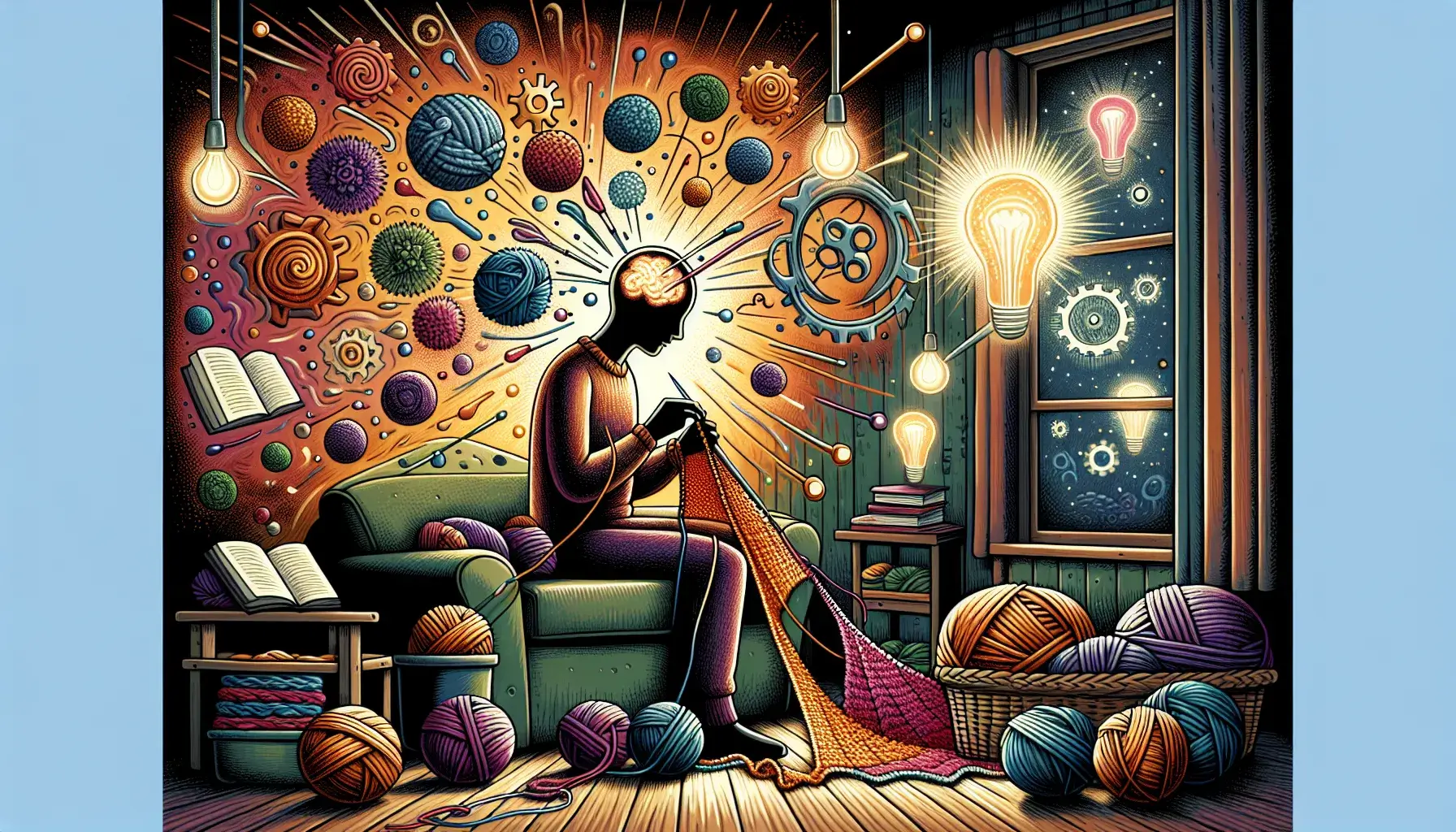
Mood Magic: The Emotional Upside of Yarn-Driven Self-Care
Let’s be honest: finishing a scarf you started three months ago feels way more satisfying than binge-watching yet another sitcom that everyone swears “gets better after season three.” There’s something magical about those final stitches—like you’ve just unlocked a secret level in the game of Emotional Well-being. And guess what? Science is totally on your side here. Research shows that knitting for mental health isn’t just a quirky self-care hobby; it’s a full-blown relaxation technique with superpowers for your mood.
First, let’s talk about what’s really happening inside your brain when you’re tangled up in yarn. Every time you slip a stitch or conquer a tricky pattern, your brain releases a cocktail of feel-good neurotransmitters—dopamine for that sweet sense of accomplishment, and serotonin for a gentle mood lift. Yes, you heard right: knitting for mental health literally lights up your brain’s ‘happy’ circuits. It’s like a serotonin release party, and everyone’s invited (except stress and anxiety, they’re not on the guest list).
But wait, there’s more! The repetitive motions of knitting—those soothing, rhythmic loops—are basically the spa day your nervous system didn’t know it needed. Studies indicate that these motions can lower your cortisol levels, which means less stress and more calm. It’s like meditation, but with a bonus scarf at the end. And if you’ve ever found yourself zoning out mid-row, only to realize you’ve accidentally knitted an extra sleeve, congratulations: you’ve achieved a state of mindfulness. (Don’t worry, uneven sleeves are totally a design choice.)
Now, if you’re thinking, “Sure, but I’m not exactly the crafty type,” let me introduce you to the social side of knitting. Picture this: a circle of humans, all quietly working away, occasionally pausing to share a snack or a story. No one’s judging your dropped stitches or your questionable color choices. In fact, social knitting circles have become the new secret support groups—no judgy therapists, just snacks and a shared love of yarn. According to trend data, the number of support knitting groups is rising in major cities, and honestly, it’s about time. Who knew that a bunch of people with pointy sticks could foster such emotional support and community?
Dr. Sarah McKay sums it up perfectly:
‘Knitting is a kind of therapy for people who hate the word “therapy.”’
And she’s not wrong. For those dealing with PTSD, depression, or chronic pain, knitting offers a soothing, structured escape. It’s recommended in some therapeutic settings for exactly this reason. Completing creative tasks like knitting for mental health increases dopamine and serotonin, boosting mood and calmness. Plus, there’s the added bonus of improved cognitive function—memory, attention, and problem-solving skills all get a gentle workout. Who knew your grandma’s favorite pastime was actually a brain-boosting, stress-busting, happiness-generating machine?
Let’s not forget the sense of accomplishment that comes with finishing a project. Whether it’s a lopsided hat or a perfectly patterned blanket, that feeling of “I made this!” is a powerful antidote to the daily grind. It’s a little victory, a tangible reminder that you can create something beautiful (or at least functional) with your own two hands. And in a world where so much is digital and fleeting, there’s something deeply satisfying about a hobby that leaves you with a cozy, real-world result.
| Benefit | Research Insight |
|---|---|
| Serotonin & Dopamine Release | Levels rise during repetitive motions like knitting, boosting mood and relaxation. |
| Social Support | Number of support knitting groups is rising in major cities, fostering emotional well-being. |
So, next time you’re tempted to scroll endlessly or rewatch that comfort show for the tenth time, consider picking up some needles instead. Knitting for mental health isn’t just a quirky pastime—it’s a proven path to Emotional Well-being, a self-care hobby that delivers a serotonin release with every stitch, and a relaxation technique that’s as cozy as your favorite sweater. Who knew yarn could be your new best friend? Go ahead, knit your way to happiness—your brain (and maybe your wardrobe) will thank you.
TL;DR: Knitting for mental health isn’t just for grandmas—it’s a hands-on hack for better mental health, proven to melt stress, sharpen focus, and soothe your soul (with bonus cozy scarves!).