
Picture this: I once confidently crocheted what I thought was a swanky scarf, but it turned into what can only be described as ‘yarn lasagna.’ Turns out, one wrong stitch and your dreams unravel fast! If you’ve ever wanted to turn a mess of string into a masterpiece, or maybe just avoid scarf-shaped disasters, this blog is for you. Let’s hook in and stitch up some serious skills—bonus points for giggling at your own wonky early projects.
1. Embracing Basic Crochet: From Knotty Beginnings to Smooth Loops
Welcome to the wild and woolly world of Basic Crochet, where every epic blanket, scarf, or slightly lopsided coaster begins with a humble knot and a dream. If you’re a beginner crochet enthusiast, you’re about to meet the “holy trinity” of crochet stitches: slip stitch, single crochet, and double crochet. Yes, these are the Beyoncé, Kelly, and Michelle of the yarn universe—everyone starts here, and honestly, some of us are still here, living our best yarn lives.
The Holy Trinity: Slip Stitch, Single Crochet, Double Crochet
Let’s break it down. The slip stitch is your go-to for joining rounds or sneaking across stitches like a ninja. The single crochet is the sturdy workhorse—think of it as the bread and butter (or the toast and avocado, if you’re fancy) of crochet stitches. And then there’s the double crochet, which is taller, a bit more dramatic, and perfect for when you want your project to grow faster than your yarn stash.
- Slip Stitch (sl st): The shortest, sneakiest stitch. Great for joining and edging.
- Single Crochet (sc): Short, strong, and versatile. Ideal for amigurumi and dense fabrics.
- Double Crochet (dc): Tall, airy, and speedy. Perfect for blankets and shawls.
Navigating the Wild World of Tension
Now, let’s talk about tension. No, not the kind you feel when you drop a stitch and pretend you didn’t see it. We’re talking yarn tension! Research shows that consistent tension is the secret sauce for even, professional-looking fabric. Too tight? Your project will resemble a crocheted stress ball. Too loose? Well, you might accidentally invent mesh fashion. Aim for that Goldilocks “just right” tension, and your beginner crochet journey will be much smoother.
Stitch Anatomy: Yes, Stitches Have Elbows
Here’s where things get delightfully weird: every stitch has an anatomy. That’s right—your single crochet and double crochet stitches have legs, a post, and top loops. Understanding these parts is like learning the secret handshake to the crochet club. It sets you up for fancier patterns, like cables and textured stitches, where you’ll need to know exactly where to poke your hook (without causing a yarn mutiny).
- Legs: The vertical strands you see on the front.
- Post: The body of the stitch—where all the action happens.
- Top Loops: The “V” at the top. This is where you usually insert your hook.
‘Crochet is like yoga for your hands—breathe in, yarn over.’ – Lily Chappell
The Six Basic Crochet Stitches: A Colorful Comparison
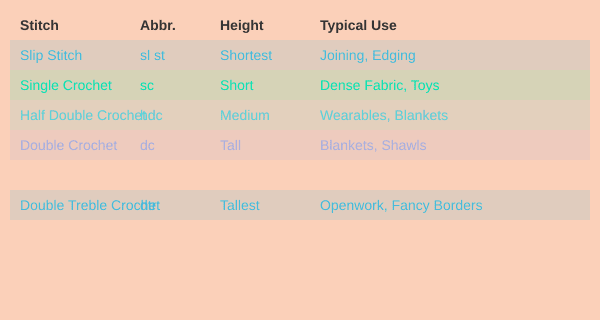
So, grab your hook, channel your inner yarn whisperer, and remember: every master of crochet stitches started with a single loop. And possibly a few knots. Or a lot of knots. But hey, that’s half the fun!
2. Hook-Ups & Hang-Ups: Conquering the Trickier Crochet Techniques
So, you’ve mastered the single crochet. You can double crochet in your sleep. Maybe you’ve even dabbled in the mysterious world of the half double. But then—bam!—someone mentions front post and back post stitches, and suddenly you’re tangled in yarn, questioning your life choices and wondering if your blanket is secretly plotting against you. Welcome to the wild side of Advanced Crochet techniques, where every stitch has a personality and your crochet skills are truly put to the test.
When Textured Stitches Attack: Personal Catastrophe Edition
Let’s get real: If you’ve ever tried a front post double crochet and ended up with a lumpy, bumpy, questionably-shaped “scarf,” you’re not alone. My first attempt at textured crochet patterns was supposed to be a chic throw. It ended up looking like a psychedelic potholder with commitment issues. (Research shows that mastering basic stitches is the foundation for advanced crochet, but nobody warns you about the existential crisis when your “texture” looks like modern art gone rogue.)
Front Post & Back Post Stitches: The Secret Sauce of Texture
Here’s the lowdown: Front post and back post stitches are the gateway to textured crochet work. These advanced crochet techniques involve working your hook around the post of the stitch, not into the top loops like you’re used to. The result? Raised ridges, dramatic cables, and enough texture to make your basic granny square jealous. Studies indicate that these techniques are essential for anyone looking to level up their crochet skills and tackle more intricate crochet patterns.
- Front Post Stitch: Insert your hook from front to back around the post. It’s like giving your stitch a big, yarny hug.
- Back Post Stitch: Insert your hook from back to front. Think of it as a sneaky ninja move—your stitch never saw it coming.
From Flops to Fabulous: The Learning Curve
Let’s be honest, your first attempts at advanced crochet will probably look like they belong in a “Pinterest Fails” gallery. But every wonky blanket and lopsided beanie is just a fuzzy stepping stone to greatness. The journey from basic to advanced crochet techniques is less of a straight line and more of a rollercoaster—complete with unexpected loops and the occasional yarn-induced meltdown.
If Crochet Stitches Were Party Guests…
Imagine your stitches at a party. The single crochet is the reliable friend who brings snacks. The double crochet is the life of the party, always in the middle of the action. And then there’s the double treble—the show-off cousin who arrives fashionably late, demands all the attention, and leaves you wondering how they got so much height. As Jaime Sorenson wisely said:
“The double treble stitch is the diva of crochet.”
So, next time you’re wrestling with advanced crochet techniques, remember: every tangled mess is just a plot twist in your crochet adventure. And if your project ends up looking more “abstract art” than “Pinterest-perfect,” just call it a design choice.
Basic
Intermediate
Advanced
Difficulty & Texture
Low
Medium
High
3. Practical Crochet Tips: Crafting Like a Pro (With Less Frogging)
Let’s get real for a second: if you haven’t threatened to launch your crochet hook across the room at least once, are you even doing beginner crochet right? Whether you’re just starting your first granny square or you’ve already got a blanket that could double as a “what not to do” sampler, you’re in the right place. This crochet blog section is your backstage pass to the practical crochet tips I wish someone had slipped under my door before I tangled myself in yarn spaghetti.
Table of Woe: Top Newbie Crochet Blunders (and How to Fix Them)
Before you start your next crochet project, let’s take a peek at the most common beginner crochet mistakes—and, more importantly, how to fix them before you’re tempted to frog (that’s “rip it, rip it”) your entire masterpiece. Research shows that even seasoned crafters revisit these basics, so don’t feel alone!
| Common Mistake | How to Fix It |
|---|---|
| Losing count of stitches | Use stitch markers, count out loud, or bribe your cat to help (okay, maybe not the last one) |
| Twisted stitches | Double-check your yarn direction before pulling through—slow down and watch those loops! |
| Skipping rows | Mark the start of each row and check your work regularly (bonus: you’ll look very professional doing this) |
| Uneven edges | Practice consistent tension, and don’t be afraid to frog a few rows to get it right |
Time-Saving Tips I Wish Someone Had Yelled at Me Sooner
- Count your stitches—seriously, don’t just “eyeball it.” Your future self will thank you when your scarf doesn’t end up shaped like a trapezoid.
- Stitch markers are your new BFFs. They’re not just for the pros. Pop them in at the start of rows or pattern repeats. (Bonus: they come in cute shapes!)
- Check your work every few rows. It’s easier to fix a mistake after three rows than thirty. Trust me, I’ve done the research—painfully.
- Practice makes progress, not perfection. Your “mistake blanket” is actually a badge of honor. Every uneven row is a lesson in disguise.
Why Frogging Is Secretly Good for Your Crochet Skills
Here’s the thing: “frogging” (ripping out stitches) feels like defeat, but it’s actually the ultimate crochet skill-builder. Each time you unravel, you’re learning what not to do—and that’s half the battle. As Andrea Vega wisely said:
‘Perfection in crochet isn’t found in flawless rows, but in fearless unraveling.’ – Andrea Vega
So, the next time you’re tempted to hide your wonky project in the back of the closet, remember: every stitch, even the ones you undo, is a step toward crochet greatness. Engaging crochet blogs (like this one!) are packed with resources, tutorials, and patterns for every skill level, so you’ll never run out of ways to improve your crochet skills—or find new ways to laugh at your own learning curve.

4. Visual Inspiration: Patterns, Progress, and Your Very Own Crochet Learning Curve
Let’s be honest: mastering crochet stitches isn’t just about making a scarf that doesn’t look like a lumpy caterpillar. It’s about seeing your progress, one glorious (and occasionally wonky) stitch at a time. If you’ve ever looked at your first chain and thought, “Is this modern art or a noodle disaster?”—congratulations, you’re officially on the crochet learning curve!
Now, before you go searching for crochet resources in your grandma’s attic (spoiler: you’ll mostly find dust bunnies and maybe a rogue button), let’s talk about the modern world of crochet patterns and crochet tutorials. The internet is bursting with vibrant crochet blogs, video guides, and communities that cheer you on when your granny square turns out more “abstract” than “square.” Research shows that there are resources for every level, from “I just bought my first hook” to “I can cable stitch with my eyes closed.”
But how do you know you’re actually getting better? Enter: skill tracking! Imagine a chart where you start at “Beginner”—mastering the humble slip stitch, single crochet, and maybe even a scrap yarn blanket (the ultimate practice project, and yes, it’s as forgiving as it sounds). As you move up to “Intermediate,” you’ll be crafting textured pillows and learning to decipher patterns that look like secret codes. And for the brave souls at “Advanced,” there’s the majestic cable shawl—because nothing says “I’ve arrived” like a project that makes your friends gasp and your cat jealous.
| Skill Level | Typical Project |
|---|---|
| Beginner | Scrap Yarn Blanket |
| Intermediate | Textured Pillow |
| Advanced | Cable Shawl |
Finding the right pattern for your level is like finding the perfect pair of jeans—sometimes it takes a few tries, but when you get it right, you never look back. Skip the dusty library books (unless you love the smell of nostalgia) and dive into online crochet resources. There are endless crochet tutorials and crochet projects tailored for every skill tier. And if you ever feel lost, remember: every skein of yarn is a potential treasure map. Where will yours lead you next—a cozy blanket, a funky hat, or perhaps a slightly lopsided but loveable amigurumi friend?
Visualization isn’t just for athletes and motivational speakers—it’s for crocheters, too! Picture your progress, celebrate every milestone (even the ones with uneven tension), and don’t be afraid to dream big. As Tara Linwood wisely said:
“Every project is proof you’re trending upward.”
So, whether you’re a beginner still wrestling with the anatomy of a single crochet or an expert plotting your next advanced masterpiece, remember: your crochet journey is uniquely yours. Keep exploring new crochet patterns, lean on the vibrant crochet blog community, and most importantly—enjoy every twist, turn, and tangled skein along the way. Happy stitching!
Finally, enjoy the process of learning and mastering your crochet stitches!
Don’t hesitate to experiment with various crochet stitches in different yarns.
Understanding the differences between crochet stitches can enhance your creativity.
Many patterns feature a variety of crochet stitches to keep things interesting.
Practice will lead you to discover your own unique crochet stitches style.
Learning various crochet stitches will help you build a diverse skill set.
Choosing the right crochet stitches for your project can make all the difference.
Each crochet stitch contributes to the overall design and feel of your project.
Even experienced crafters can learn new crochet stitches to enhance their work.
As you progress, you’ll be able to teach others about crochet stitches.
Each project is an opportunity to refine your technique with crochet stitches.
Remember to document your progress with different crochet stitches in your projects.
Through experimentation, you will discover innovative ways to use crochet stitches.
Join crochet communities to share your favorite crochet stitches and techniques.
There are countless resources available to learn various crochet stitches.
Mastery of crochet stitches will unlock endless project possibilities.
We will also cover how to combine crochet stitches for more complex designs.
Learning new crochet stitches keeps the craft exciting and fresh.
As you practice, you will find your favorite crochet stitches that suit your projects.
Each of these crochet stitches has its unique application and style.
Understanding crochet stitches can elevate your skills to new heights.
In this blog, we explored a variety of techniques that utilize different crochet stitches.
TL;DR: Too long, didn’t stitch? Beginners learn foundational crochet moves, pros pick up advanced tricks, and everyone gets eye-candy charts, handy tips, and giggle-worthy tales. Your next project is about to get a whole lot snazzier!