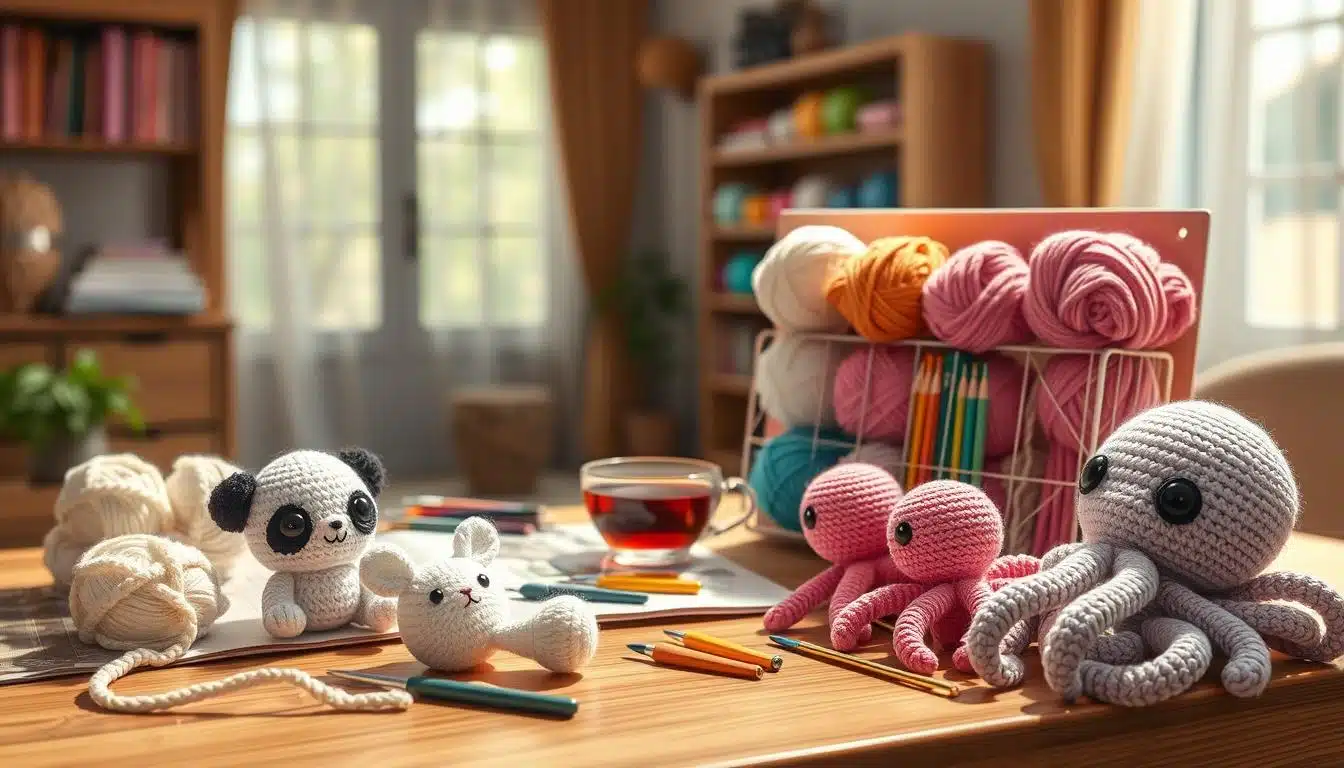
Discover how a simple crochet kit can turn spare minutes into a shelf of handmade plush treasures. Whether you choose a beginner amigurumi bundle or a full starter set, the appeal is the same. You get small projects, fast wins, and toys that look like they belong in a boutique.
Brands like Hardicraft show that kits save time and money. They bundle yarn, stuffing, and eyes so you don’t have to hunt for every tiny piece. DidoCraftWorks and other makers prove that these mini projects teach stitches quickly and build your confidence. And for daily inspiration and feedback, Instagram feeds are full of finished pieces and real makers sharing tips.
This article will help you choose the right crochet kit, use it well, and personalize each design. So, your first beginner amigurumi becomes a proud, polished handmade plush you’ll want to gift or sell.
Key Takeaways
- An amigurumi kit bundles materials so you can start quickly and affordably.
- Beginner amigurumi projects teach core stitches and finish fast.
- Hardicraft-style kits cover themes from mini dolls to holiday pieces.
- Instagram is a great place to find ideas and community feedback.
- You can personalize kits to create unique handmade plush gifts or products.
Why an Amigurumi Kit Is Perfect for Beginners
Grab a beginner crochet kit and you’re set for success. Social media is filled with adorable, quick-to-make toys. These tiny projects can turn an afternoon into a finished piece, making you hooked.
Begin with simple designs like bees, bunnies, or donuts. These patterns teach you the basics of crochet. You’ll learn single crochet, increases, decreases, and how to sew parts together. These small projects build your confidence and skills.
These kits come with everything you need, saving you time and money. Brands like Lion Brand and Red Heart match the yarn to the pattern. This means you don’t have to search for the right yarn or worry about making expensive mistakes.
Many kits offer optional hooks or let you use your own. This makes the kit affordable and flexible, fitting your needs.
Clear instructions are key when you’re starting out. Kits often include printed patterns, diagrams, and links to tutorials. Add quick video demos, and you’ll learn fast without getting confused.
Try making a few small projects in a row. Finishing several tiny toys helps you get the hang of rhythm and tension. This is why amigurumi kits are a favorite among beginners.
What Comes Inside a Typical Amigurumi Kit
Opening an amigurumi kit reveals everything you need to start stitching. Makers on Instagram often show what’s inside to help buyers know what to expect. This preview helps you feel sure about your purchase.
High-quality pre-selected yarn
Kits usually come with yarn in colors picked for the project. Brands like Scheepjes and Paintbox Yarn are often used. They ensure the yarn is good quality and won’t fade.
Pre-measured skeins are included. This means you don’t have to guess how much yarn you’ll need.
Filling, safety eyes, and optional embellishments
Beginner kits often have stuffing and safety eyes. Hardicraft-style kits include yarn, stuffing, safety eyes, and small extras like felt cheeks or tiny buttons. These extras help you finish faster and neater.
Step-by-step pattern and tutorials
Most kits come with a pattern. You might get a printed guide or a digital download with easy-to-follow instructions. Brands like DidoCraftWorks may also include a correct hook size and a video or PDF tutorial to help you learn faster.
Want to learn more before starting? Check out a beginner guide at amigurumi for beginners. It offers quick tips that match your kit and pattern.
Choosing the Right Amigurumi Kit for Your Skill Level
Finding the right kit can turn a fun weekend into a rewarding project. Think about what you want: a quick desk decoration, a cute toy, or a special gift. Choosing a kit that fits your goals helps avoid frustration and makes the process more enjoyable.
Before buying, consider the kit’s theme. Animal and doll kits are simple and quick. Holiday and lifestyle items might have small parts or decorations, making them more challenging. Brands like Hardicraft often offer polished patterns for these themes.
Project size is key to its difficulty and time needed. Tiny charms and bees are fast and easy for beginners. Bigger projects like bunnies and bears require more effort and skill. Check the project’s difficulty level before starting.
The type of yarn used greatly affects the final look. Cotton is great for clear details, while acrylic or blends add softness. Make sure the kit includes the right yarn and hook before you start.
Here’s a quick guide to help you choose:
| Project Type | Typical Time | Skill Cue | Yarn Weight Impact |
|---|---|---|---|
| Bag charm / Donut | 1–3 hours | Beginner-friendly shaping, few parts | Light weight keeps small details neat |
| Mini doll | 3–6 hours | Basic assembly, simple limbs | DK or sport yields balanced texture |
| Animal (bunny, bear) | 4–10 hours | Moderate shaping, multiple pieces | Worsted adds plushness; cotton sharpens features |
| Holiday ornament / themed decor | 2–8 hours | May include small embellishments or attachments | Finer weights for detail; bulkier yarn for a cozy look |
When choosing, consider theme, time, and yarn. If a seller lists difficulty, trust it and check materials. This way, you’ll pick a kit that suits your skill and mood, and you’ll be proud of your finished project.
Essential Tools You May Need Beyond the Kit
When you open an amigurumi kit, you might find most basics included. But, a few extra tools will make your build cleaner and faster. Choosing the right extras helps avoid frustration and gives a polished finish to small toys and charms.
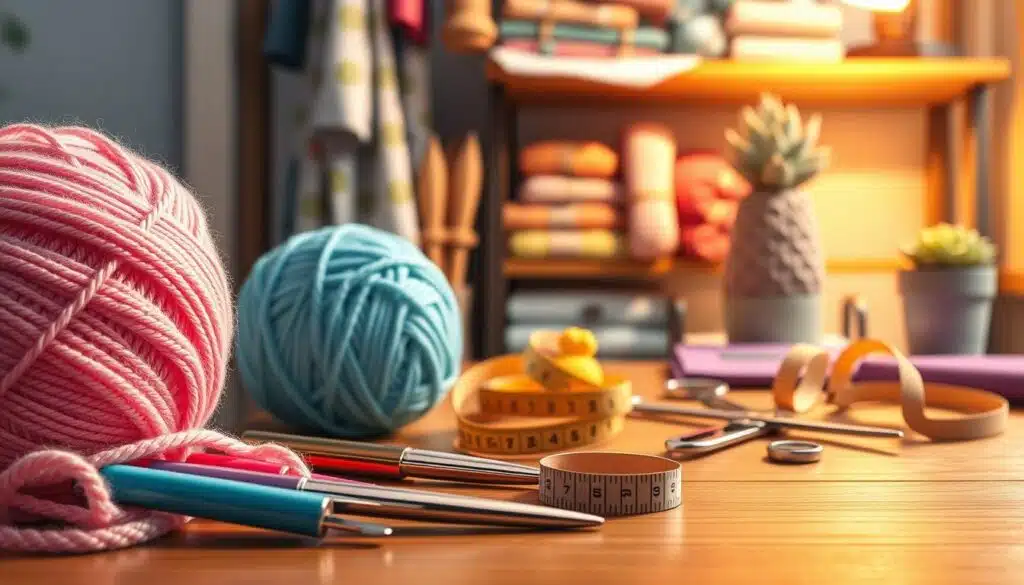
Selecting the right hook size is key when a hook is not in the kit. Your gauge, yarn weight, and the pattern’s tension determine the best hook size. For guidance on matching yarn and hook, check a reliable crochet hook guide from Crochet Craze by following this link: crochet hook guide.
Keep a set of tapestry needle types on hand. A blunt tapestry needle is perfect for sewing parts together and weaving ends. Sharp needles are handy for small embroidery details. Having both reduces damage to yarn and speeds up finishing.
A simple stitch marker saves time and prevents row-counting mistakes. Use a stitch marker to mark the beginning of rounds or to reserve live stitches. Choose what fits your style and the project.
Small finishing tools round out a tidy kit. Tiny scissors, locking stitch markers, stuffing tools, and a ruler give you control over size and shape. When you add buttons, beads, or embroidery floss, these extras make customization straightforward without stress.
If you want to personalize faces or clothing, keep a few optional accessories nearby. Embroidery floss in complementary colors, small buttons, and safety eyes expand expression and charm. These add-ons lift your amigurumi from cute to character-rich.
Quick and Cute Amigurumi Projects to Try First
Start with small, quick projects to learn stitches and feel confident. These tiny makes can be done in one afternoon. They’re perfect for a quick crochet kit when you need a fast start.
Try making a bee to learn working in rounds and color changes. A donut is great for practicing circular crochet and color switching. A bunny helps you practice shaping and simple assembly. These patterns are easy and don’t take a lot of time.
Beginner-friendly designs
Beginner amigurumi projects like bees, donuts, and bunnies are easy and show progress quickly. The bee teaches you how to increase and decrease in small rounds. The donut helps you practice joining colors and can be finished in under two hours.
Mini animals and bag charms
Mini animals and bag charms are great for practice and sell well at craft fairs. Try making tiny bears, birds, and pacifier clips for quick keychains. Use thinner yarn for smaller sizes or super bulky yarn for a plush look.
Seasonal picks
Seasonal picks like snowmen and Christmas ornaments are easy to make and perfect for practice. Snowmen teach consistent stuffing and stitch tension. Ornaments let you try out embellishments and safety eyes on a small scale.
For quick video guides and printable tags, check out quick amigurumi tutorials. You can make a donut or baby bird in under an hour.
Use beginner amigurumi projects as warm-ups between bigger projects. Keep quick crochet kits ready for travel, last-minute gifts, or craft fair stock. You’ll learn skills fast and make adorable pieces that friends will love.
Tips for Using Your Amigurumi Kit Effectively
Before you start, read the whole pattern. This helps you spot tricky parts, color changes, and stitch counts. You can also learn from Instagram makers who share their projects.
Practice basic stitches on a scrap swatch. This helps you find the right hook for your look. Hardicraft suggests having extra hooks and needles ready to avoid delays.
Review the pattern before starting to reduce mistakes
Go through the pattern and mark important points. Use stitch markers for tricky rows and keep track of stitch counts. If you’re unsure, check a video or an Instagram post for help.
Practice basic stitches and maintain consistent tension
Make a small swatch with the yarn to check your tension. DidoCraftWorks recommends cotton for sharp stitches. Remember to breathe and relax your hands while crocheting.
Stuff gradually and sew parts together for a polished finish
Stuff your amigurumi little by little to avoid lumps. Make the head firmer than the limbs for balance. Use a blunt needle and ladder stitch for invisible joins.
Use stitch markers to keep track of your progress. If you’re stuck, look up resources like amigurumi crochet resources. These tips will help you complete your project beautifully.
| Problem | Quick Fix | Why it helps |
|---|---|---|
| Loose stitches | Drop one hook size and re-swatch | Tighter stitches improve shape and prevent gap filling |
| Tight tension | Relax hands, take breaks, use a larger hook | Prevents stiff fabric and eases seaming |
| Lumpy stuffing | Stuff gradually, use small fiber bits, smooth with pencil | Creates even curves and cleaner joins |
| Mismatched pieces | Count stitches, align rounds, baste with pins | Ensures symmetrical assembly and easier sewing |
| Unclear steps | Watch a short tutorial or consult pattern notes | Visuals reinforce written instructions and prevent rework |
How to Personalize Your Amigurumi Creations
You’ve got everything you need to start. Now, make your amigurumi truly unique. Simple changes and details can transform your creations without needing a new pattern.
Try mixing colors and parts to create something special. Pair soft pastels with bright accessories for contrast. Add stripes or patches with leftover yarn to give each toy a unique look.
Mix colors and parts
Sketch or pin pieces before sewing to test combinations. Use a completed head as your guide for size changes. Keep notes for stitch counts if you make big changes, so you can repeat them later.
Add facial detail and accessories
Embroidery adds personality to your amigurumi. Use backstitch or French knots for expressions. Tiny scarves, felt pockets, and hats add charm without taking much time.
Adjust shape and expression
Stuffing and tension control let you shape and mood your amigurumi. Firmer stuffing makes it sturdy. Looser stuffing makes it soft and cuddly.
Use stitch markers for increases and decreases. Pin parts to check balance. If proportions are off, adjust stitch counts or seams before final sewing.
Study photos and sketch shapes to simplify designs. Collect references in Evernote or follow inspiration on Instagram. Break designs into basic shapes when writing your own pattern, using pattern-writing tips.
| Personalization Step | What to Try | Quick Tip |
|---|---|---|
| Color swaps | Mix leftover yarn across kits for new palettes | Test a small swatch to check gauge |
| Facial embroidery | Use simple stitches for eyes and mouth | Embroider before assembling for cleaner lines |
| Accessories | Add tiny hats, scarves, or sewn-on buttons | Sew buttons securely if gift goes to a child |
| Size & expression | Alter stuffing and stitch tension for mood | Compare pieces as you go using the head as a reference |
| Shape tools | Use cones, spheres, and tubes to guide 3D forms | Simplify complex parts into basic shapes first |
Seasonal and Gift-Worthy Amigurumi Ideas
Handmade gifts are special and loved. Small, themed kits are perfect for beginners. They finish fast and are easy to carry.
Baby crochet kits are great for thoughtful gifts. You can make pacifier clips, mini blankets, and soft toys quickly. Brands like Hardicraft offer kits with everything you need.
Baby-themed kits: pacifier clips, mini blankets, and soft toys
Choose a pattern for newborns and use soft yarn. A compact kit makes your project easy to manage. For free ideas, visit this resource.
Holiday decorations and stocking stuffers from themed kits
Seasonal motifs like snowmen and reindeer are perfect for the holidays. They make great decorations and gifts. Small projects fit well in stockings and on trees.
Creating thoughtful handmade gifts quickly with compact kits
Need quick presents? Choose easy or intermediate patterns. Mini toys like teddy bears or deer finish in a few hours. Use safety eyes and follow tutorials for a nice finish.
| Pattern | Skill Level | Best For | Notes |
|---|---|---|---|
| Buttons the Bunny | Intermediate | Easter amigurumi gifts | Soft shape, great seasonal present |
| Miles & Millie Moose | Easy | Winter décor and stocking stuffer crochet | About 14″ tall; worsted weight; 3.5mm hook |
| Tut the Turkey | Advanced | Thanksgiving centerpiece | DK yarn; two hook sizes; photo tutorial |
| Baby Owl Tree Ornament | Easy | Holiday amigurumi decoration | Option to omit hanger for toy use |
| Mini Crochet Teddy Bear | Easy | Portable baby or kid-friendly gift | Step-by-step video tutorial included |
| Bearrison Bear | Easy | Classic amigurumi gifts | Works well with fur yarn; tips for handling pile |
| Deer Fawn | Intermediate | Small seasonal present | Video tutorial helps with shaping and finishing |
Connecting with the Crochet Community for Inspiration
When you share your finished amigurumi online, you get real feedback and fresh ideas. Post your progress on amigurumi Instagram and see others suggest color changes, stuffing tips, and more.
Join online crochet groups or local workshops to share patterns and tips. Brands like Lion Brand and Clover often share free patterns and tools that save time.
Find clear video tutorials when you’re stuck. Experienced makers’ channels offer step-by-step help for tricky parts. You can pause and replay as needed.
Use hashtags, group threads, and pattern swaps to stay inspired. Connecting with the community makes your hobby a constant source of inspiration and learning.
Advanced Ideas: Combining Kits to Level Up Your Craft
You can make something big from small kits with a bit of planning and creativity. Start by arranging the colors, textures, and finished pieces you want to make. This will help your work look cohesive.
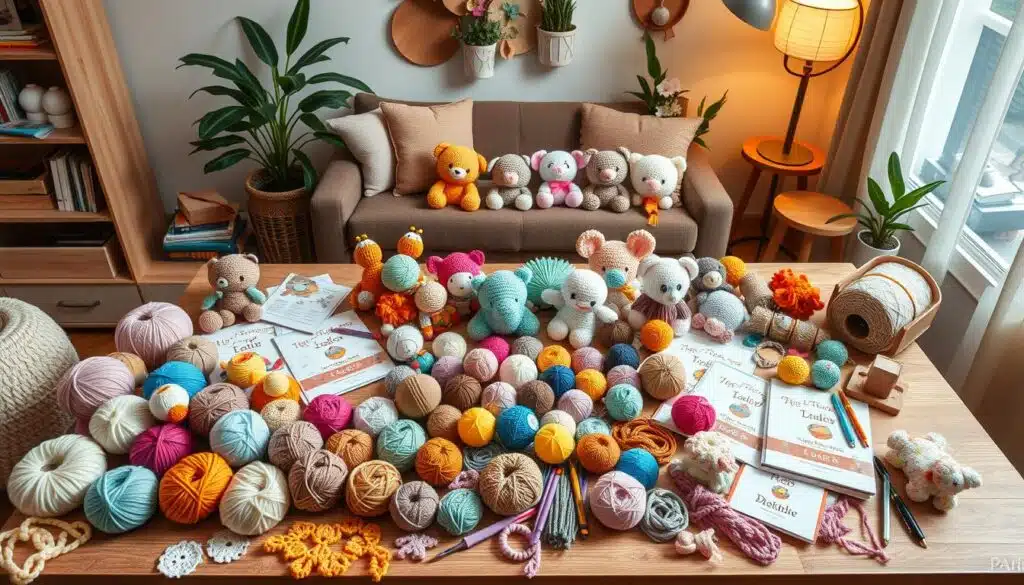
Use multiple kits to create themed collections like matching nursery sets or holiday ornaments. You can stitch mini motifs into a baby blanket or join charms into a mobile. You can also arrange toys into a display set that looks polished and intentional.
Instagram feeds show makers selling collections and accepting custom orders. This proves that bundled projects catch eyes and buyers.
Make texture and scale your strength
Try different yarn weights to change size and feel. Swap a DK yarn for worsted to make a toy bigger or choose fingering weight to make it smaller. Mixing heavier and lighter yarns creates unique texture without changing the pattern.
Try mixed-media crochet
Combine crochet with knitting panels, felted accents, or sewn fabric bits. This turns classic amigurumi into mixed-media crochet pieces. You can add a knitted scarf, felt ears, or embroidered faces to raise perceived value and visual interest.
Turn projects into products
If you want to sell amigurumi, focus on presentation and consistency. Package themed sets, offer custom color options, and photograph items on neutral backgrounds. Use resources like easy crochet crafts to make for pricing, platform choices, and packaging tips.
Advanced amigurumi ideas include creating limited-run collections, numbering pieces, or adding accessories. These tactics help you build a brand and attract repeat buyers.
When you combine crochet kits and embrace mixed-media crochet, you open up new possibilities. You’ll discover new shapes, textures, and ways to make money. This moves you from hobbyist into maker-seller territory.
Conclusion
An amigurumi kit offers many benefits. It comes with pre-selected yarn, clear instructions, and small projects. This makes it easy to start making amigurumi today.
Instagram is great for getting ideas and feeling part of a community. It’s also where you can share your finished work. Makers like Hardicraft show that kits are a good way for beginners to start crocheting.
Choose a kit that fits your mood and skill level. This way, you can avoid mistakes that slow you down.
Start with simple patterns like bees, donuts, bunnies, or a snowman. These help you build your skills. DidoCraftWorks advises that quick successes boost your confidence and keep you going.
If a kit doesn’t include a hook, pick one that works for you. Good tools make your amigurumi look professional.
As you get better, try new things. Mix kits, use different yarns, or make your amigurumi into gifts or a business. The cycle of learning, making, and sharing on Instagram is quick and rewarding.
With the right kit and a good hook, you’ll be making cute amigurumi in no time. Now, pick a kit, grab your hook, and let your creativity shine.
FAQ
What makes an amigurumi kit a good choice for beginners?
Amigurumi kits are great for beginners because they come with everything you need. You get yarn, filling, safety eyes, and clear instructions. Brands like Hardicraft and DidoCraftWorks offer small projects that teach you the basics quickly.
These kits help you build confidence and save time and money. They focus on small, easy projects that finish fast.
What typically comes inside an amigurumi kit?
Kits usually have yarn, stuffing, safety eyes, and step-by-step patterns. Some may include buttons or tiny props for extra details. Hardicraft kits often don’t have hooks, so you can use your own.
But, some beginner kits from DidoCraftWorks might include the right hook.
Do amigurumi kits include crochet hooks and needles?
It depends on the kit. Many Hardicraft kits don’t include hooks or needles. This helps keep costs down and lets you use your own tools. Some beginner kits from DidoCraftWorks might include the correct hook.
You’ll likely need tapestry needles, stitch markers, and small scissors to finish your project neatly.
How long does a typical kit project take to finish?
Most small amigurumi projects are quick. Donuts or bees can take under two to three hours. Bag charms and mini animals usually finish in a few hours.
For slightly larger dolls or bears, a weekend is often enough. The size of the project and your skill level affect the time it takes. But kits are designed for fast, motivating results.
Which beginner projects should I try first?
Start with quick, skill-building patterns like a bee, donut, or simple mini animal. These teach you round crocheting, color changes, and basic stitches. Bunnies and bears are next as you learn parts assembly and finishing.
How do yarn weight and fiber choice affect my amigurumi?
Yarn weight changes the size and stitch definition of your amigurumi. Cotton yarn gives crisp, defined stitches that are great for small details. Softer acrylics create squishier toys.
Pre-selected colors in kits remove guesswork. But mixing yarn weights or substituting fibers will change proportions and texture.
Can I personalize a kit project? How?
Absolutely. You can swap colors, mix and match leftover yarn, and add embroidery for faces. Attach buttons or beads, and stitch tiny clothing or scarves. Adjusting stuffing density and stitch tension also changes expression and size.
Instagram is full of inspiration and quick customization ideas.
What tools beyond the kit help achieve a polished finish?
Useful extras include a comfortable crochet hook (if not included), tapestry needles for sewing and weaving ends, and stitch markers to track rounds. Small scissors and stuffing tools or chopsticks are also helpful. Optional items like embroidery floss, buttons, and safety niters let you personalize faces and clothing.
How do I avoid common beginner mistakes like uneven shapes or lumps?
Read the pattern before you start, practice basic stitches, and keep tension consistent. Use stitch markers to track rounds and count stitches often. Stuff gradually and evenly to avoid lumps.
Accept that small mistakes are part of learning. They often add charm.
Are amigurumi kits suitable for making gifts or seasonal decorations?
Yes. Kits are ideal for quick handmade gifts—baby-themed sets, pacifier clips, mini blankets, and soft toys make thoughtful presents. Holiday kits for snowmen and ornaments finish fast and fit well into seasonal displays or stocking stuffers.
How can I level up from kits to larger projects or selling my work?
Combine multiple kits to create blankets, themed collections, or matching sets. Experiment with different yarn weights and mixing knit elements with crochet to create new textures. Polish finishing, consistent proportions, and cohesive themes help you produce marketable products for craft markets or Etsy shops.
Where can I find extra help, patterns, and inspiration?
Social platforms like Instagram are excellent for finished-project inspiration, quick tutorials, and community feedback. Join online groups, forums, or local workshops for free patterns and tips. Video tutorials and step-by-step guides can help when you’re stuck and speed up learning.
Should I follow the kit pattern exactly or improvise?
Follow the pattern to learn techniques and ensure correct proportions, at least on your first few projects. Once you’re comfortable, improvise—change colors, add embellishments, or tweak stitch tension to develop your signature style. Combining kits and experimenting helps you grow creatively.
What safety considerations should I keep in mind for baby toys?
For baby items, choose kits designed for infants and follow safety guidance. Securely attach safety eyes or opt for embroidered features. Avoid small loose parts, use baby-safe yarns, and double-check seams. Many baby-themed kits from Hardicraft are designed with these concerns in mind.
How can I use leftover yarn from kits?
Leftover yarn is perfect for accents, tiny accessories, or combining with other kits to create coordinated sets. Save scraps for surface embroidery, mini clothing items, or small add-ons like scarves and hats to personalize projects.
Can I turn amigurumi into a small business?
Yes. Makers on Instagram often sell collections and take custom orders. Start by creating polished, consistent pieces, photograph them well, and build themed offerings. Combining kits, refining finishing techniques, and engaging with the crochet community will help you grow a shop on platforms like Etsy or craft fairs.
How do I pick the right kit theme for my goals?
Choose by purpose: pick baby kits for nursery gifts, holiday kits for seasonal decor, and lifestyle or bag charm kits for everyday accessories. Consider whether you want a quick weekend project or something that showcases advanced shaping. Theme and size drive skill development and end-use.