Discover how to turn a skein of yarn into adorable friends. This intro explains why amigurumi is so fun for beginners. It also talks about where to find free patterns and why simple toys are great for starters.
Begin with quick projects like mini bees and bunnies. They’re done in no time. Experts say start with basic shapes and small pieces to build confidence. This guide offers clear tools, easy patterns, and tips for your first projects.
Key Takeaways
- Begin with small, simple crochet toys to build skills fast.
- Search trends show strong interest in free beginner amigurumi patterns on Pinterest.
- Kawaii crochet projects like mini animals and food are ideal for quick success.
- Start with basic stitches and tight rounds for neat, durable toys.
- This guide covers tools, patterns, and ethical sources so you can create with confidence.
What is Amigurumi and Why You’ll Love These Easy Amigurumi Patterns
Get ready to enter a world of tiny, charming crafts. Amigurumi combines simple stitches with big charm. It’s perfect for those curious about kawaii crochet.
These projects are small, affordable, and fun to customize. They keep you excited to create more.
Definition and Japanese origins
Amigurumi is a Japanese craft of making small stuffed toys. It combines ami (to knit or crochet) with nuigurumi (stuffed doll). It became popular in Japan in the 1980s and spread worldwide by the 2000s.
Now, you can find patterns for animals, food, and tiny characters. For tips, check Clover’s blog for beginner amigurumi advice.
Why amigurumi is ideal for beginners
You only need basic skills to start. Most patterns use single crochet and continuous rounds. This means you learn one skill and use it over and over.
Small projects are quick to finish. They use less material, which is great for beginners. This helps you build confidence fast.
The appeal: kawaii style, quick wins, and giftability
The kawaii look is all about big eyes and rounded shapes. It makes even simple dolls adorable. Finishing a piece quickly gives you a big emotional boost.
Amigurumi are small, so they don’t take long to make. They’re perfect for gifts, keychains, or swaps. Start with yarn like Scheepjes Catona for clear stitches, then try softer yarns as you get better.
| Why Try It | What You’ll Learn | Beginner-Friendly Tips |
|---|---|---|
| Fast projects with big charm | Single crochet, continuous rounds, basic shaping | Use stitch markers, size down your hook, stuff firmly |
| Low material cost | Yarn selection, safety vs. embroidered eyes, stuffing techniques | Start with cotton yarn, try Clover Amour hooks if hands hurt |
| Highly customizable gifts | Color changes, simple accessories, facial expressions | Practice tiny pieces first; learn one new technique per project |
Essential tools and materials for beginner amigurumi
Starting out is simpler with the right tools. Choose medium-weight acrylic or cotton yarn, a set of comfy hooks, basic assembly tools, and soft polyester fill. Light colors help with counting stitches and spotting mistakes on small pieces.
Yarn choices: acrylic, cotton, and why light colors help
Many free patterns use acrylic yarn for beginners. It’s affordable, durable, and easy to work with. Cotton, like Lily Sugar’n Cream, offers clear stitch definition. Choose based on what matters most to you: durability, clarity, or softness.
Start with light yarn to learn new stitches. It makes counting and fixing mistakes easier.
Hook sizes for tight stitches and recommended ranges (2.5mm–3.5mm)
Tight stitches prevent stuffing from showing. Use an amigurumi hook size smaller than the yarn label suggests. For DK or worsted, 2.5mm–3.5mm hooks are best for beginners.
Metal hooks from Clover or Boye work well. They help keep your stitches even. If stitches are loose, try a smaller hook.
Other must-haves: stuffing, safety eyes vs. embroidered eyes, stitch markers, tapestry needles
Polyester fiberfill is the top choice for stuffing. It’s light, washable, and used in small amounts to avoid lumps. Look for low-lint or toy-safe stuffing.
Choosing between safety eyes and embroidered eyes depends on your needs. Safety eyes are quick and shiny for display. For toddler-safe toys, embroider eyes with floss and secure them to avoid choking risks.
Complete your kit with stitch markers for round tracking and bent-tip tapestry needles for neat sewing. These tools save time when joining limbs and embroidering faces.
Basic stitches and techniques you need to know
To make cute amigurumi, you need to learn a few key stitches. Start with the single crochet. Also, learn to work in continuous rounds for fabric without joints. Practice increases and decreases to shape heads and limbs.
Get comfortable with the magic ring to start your projects without holes.
Single crochet and working in continuous rounds
The single crochet is the foundation of most amigurumi. Keep your stitches tight so stuffing won’t show. When working in continuous rounds, skip the join and mark the first stitch of each round with a stitch marker.
Continuous rounds give a smooth look, perfect for faces and bodies. If you need a visible seam, use joined rounds. But, you’ll get a ridge at each turn.
Increases and decreases for shaping
To widen a piece, place two single crochet stitches into one stitch for an increase. For tapering, use sc2tog or the invisible decrease to tighten the fabric without a noticeable gap.
Count stitches at the end of each round to catch mistakes early. Use stitch markers and row counters to track increases and decreases for consistent shaping.
Magic ring explained and why it matters
The magic ring tutorial shows an adjustable loop that tightens to close the center hole. This trick is essential for heads, spheres, and any round that starts with only a few stitches.
Practice until you can pull the loop closed without twisting the first round. A neat magic ring sets you up for tidy single crochet amigurumi and clean joins when you later sew parts together.
| Technique | What it does | Quick tip |
|---|---|---|
| Single crochet | Forms dense fabric for stuffing and detail | Keep tension even and count stitches each round |
| Continuous rounds | Creates seamless tubes and spheres | Use a marker to track round starts without joining |
| Increase (2 sc in 1) | Expands circumference for shaping | Place increases evenly to avoid lumps |
| Decrease (sc2tog / invisible) | Tapers pieces and smooths joins between parts | Use invisible decrease for cleaner surfaces |
| Magic ring (adjustable loop) | Starts rounds with no center hole | Tighten the loop fully before working the next round |
How to read beginner-friendly amigurumi patterns
Starting with a pattern can seem like a secret code. Begin with the abbreviations list and pattern notes. These sections explain gauge, hook size, and designer’s tricks. If there’s a PDF with a photo or video, watch it while crocheting to follow along.
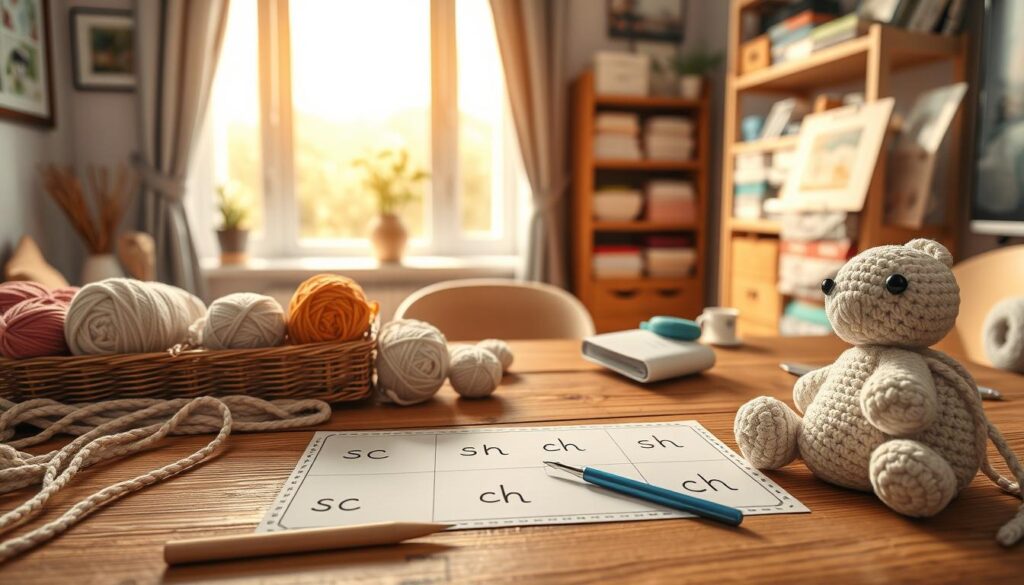
Common abbreviations and pattern structure
Patterns start with an abbreviations list: sc, inc, dec, ch, and more. Learning these abbreviations helps you read patterns quickly. Patterns then outline each row or round and end with a stitch count. Use this count to check your work after each round.
Counting stitches and using stitch markers
For stitch counting, mark the first stitch with a marker or scrap yarn. Count at the end of every round, not just when you think you’ve made a mistake. This is important because small toys can quickly add up errors.
Troubleshooting pattern steps and when to rip back
If a shape looks wrong, compare the stitch counts. Inconsistent tension might mean you need a different hook or practice swatches. If counts don’t match and shapes are off, rip back to the last correct round. Then, rework from there.
Removing and repositioning safety eyes often means you must rip back until the eyes come free. Then, reattach them in the right spot.
Easy amigurumi patterns
You want quick wins that teach basic shaping, stuffing, and finishing. Start with simple round forms and a few repeating rows. Pick projects that keep parts to a minimum so you can focus on stitch tension and neat joins.
Classic animals make great first makes. A small bear, a tiny bunny, or a pocket cat use basic increases and decreases. These projects reinforce the magic ring, single crochet rounds, and simple limb attachment without overwhelming you.
You can search free patterns for familiar names like Bunny Rabbit Crochet Pattern or Stuffed Cat Crochet Pattern Free. Those patterns often list yarn weight, hook size, and step-by-step photos, which helps when you’re learning.
Next, try sweet amigurumi food patterns. Strawberries, donuts, and cupcakes teach smooth shaping and color changes. Food items hide small imperfections because their charm comes from bold colors and simple silhouettes.
Snack-sized projects often appear in roundups under titles such as Donut, Ice Cream Cone, and Cupcake. Work each piece in few sections, then sew them together for fast satisfaction.
Mini projects give instant gratification and are perfect for gifting or decorating. Tiny bee keychains, mini octopi, and pocket-sized dinos finish in an evening. They help you practice stuffing evenly and attaching safety eyes or embroidered faces.
If you want to turn makes into accessories, explore mini amigurumi keychain patterns. They show you how to add loops, metal findings, and reinforced seams so your charms survive daily wear.
When picking patterns, favor those labeled beginner or easy. Look for clear stitch counts, photo steps, and a short parts list. That keeps frustration low and confidence high as you move from simple animals to food and tiny keepsakes.
Free pattern sources and where to find quality tutorials
Looking for quick wins and reliable lessons? Knowing where to look saves time and frustration. Start with visual platforms for ideas, then move to designer blogs for tested instructions. Use libraries for pattern filtering. Make sure your finished amigurumi looks like the picture.
Pinterest and curated roundups for inspiration
Pinterest is a great tool for finding free amigurumi patterns. Use search phrases like “Free Amigurumi Pattern,” “Tiny Amigurumi,” or “Free Crochet Kawaii Patterns” to find pins that link to tutorials and video guides.
Curated roundups collect dozens of options in one place. These lists point you to step-by-step posts, YouTube demos, and downloadable PDFs. This way, you can compare styles and difficulty quickly.
Designer blogs and trusted pattern libraries
Many designers publish free patterns on their blogs. Look for names you trust like Repeat Crafter Me, Wonder Crochet, Nicole Chase, The Friendly Red Fox, A Crafty Concept, and Moogly. They often publish clear, tested tutorials. You can find a handy guide on where to spot reliable blog roundups at Nicole Chase’s resource post.
Ravelry is essential when you want to filter by free vs. paid and read pattern notes from other makers. Search Ravelry amigurumi to narrow results to well-rated designs. You can also save patterns in your library for later.
When to choose free vs. paid patterns and how to support creators
Free patterns are great for practice and quick projects. Expect varying levels of detail. If you need polished photos, test notes, and responsive support, paid patterns often deliver that extra care.
When you buy patterns on Etsy, Ravelry, or directly from designer sites, you help sustain the craft. If budget is tight, choose a mix: use free tutorials for small projects and purchase a few paid patterns from your favorite designers. This way, you support crochet designers you love.
| Source | Best for | How to use |
|---|---|---|
| Fast inspiration and visual browsing | Search targeted phrases, follow trusted boards, verify original blog links before starting | |
| Designer blogs | Clear tutorials and free amigurumi patterns | Follow favorites like Repeat Crafter Me or Wonder Crochet; subscribe for updates and pattern roundups |
| Ravelry | Database filtering and community reviews | Use Ravelry amigurumi filters, read project notes, add to your library to track projects |
| Yarn company archives | Brand-tested patterns and yarn pairing | Browse Lion Brand or Yarnspirations for free patterns and recommended yarns |
| Video platforms | Step-by-step visual guidance | Watch tutorials that link to written patterns in descriptions for follow-along learning |
| Library & book collections | Curated, edited patterns in one place | Check physical books or Libby/OverDrive for reliable, tested designs |
Project ideas that use scrap yarn and quick amigurumi makes
You’re looking for small wins with leftover skeins. Scrap yarn amigurumi is ideal for this. These projects use little yarn, finish quickly, and make great gifts or keychains for craft fairs.
Your time is valuable. Fast crochet projects that finish in an evening are perfect. Choose patterns that are easy to assemble and have repetitive stitches. This way, you can practice single crochet rounds and shaping without getting frustrated.
Scrap-friendly patterns: snakes, hearts, tiny fruits
Little snakes and tiny fruits like strawberries or cherries are great with odds and ends. You can make a short body, work in continuous rounds, and stuff lightly. Hearts are forgiving of uneven tension, making them perfect for mixed scrap thicknesses.
No-sew amigurumi options for minimal finishing
No-sew amigurumi patterns save time because they reduce sewing and weaving in ends. Look for patterns that are one piece or have crocheted joins. These are great if you dislike needlework or need a quick gift.
Using bulky yarn for chunky amigurumi and fast results
Chunky amigurumi made with bulky yarn grows fast on the hook. You get plush, tactile toys with fewer rounds. Avoid textured chenille for first attempts because counting stitches gets tricky. Bulky weights give you the satisfying, speedy outcome you want from fast crochet projects.
Tips for assembly, facial details, and finishing touches
You want your amigurumi to look polished and sturdy. Start by pinning parts in place so you can see where to sew. Many makers recommend stuffing gradually and using a slightly smaller hook to reduce gaps.
If you need more step-by-step pointers, check this handy tip roundup for amigurumi finishing: crochet tips.
Sewing limbs and heads with minimal gaps
When sewing amigurumi parts, use a bent-tip tapestry needle. It gives better control when sewing into tight rounds. Pin the limb, check alignment with stitch markers, and sew with ladder stitch or whip stitch.
Stuff the limb lightly first, then finish stuffing as you attach it. This prevents lumps and keeps tension even. If seams gap, pick up fewer stitches on the body side or use an invisible decrease to tighten the join.
Embroider expressions versus safety eyes
Decide on safety or embroidered eyes early. Safety eyes add instant character for decorative toys. For baby-safe items, embroider amigurumi eyes and mouths at the end for natural placement.
Practice simple satin stitch eyes and split-stitch smiles on scrap swatches first. A well-placed, stitched expression can make a tiny project feel heroic.
Adding useful and cute finishing details
To attach amigurumi limbs securely, use three-point anchoring for arms or legs on larger toys. This method reduces twisting and spreads stress across stitches. You can also add a short chain loop if you plan to attach keyrings.
Small amigurumi accessories elevate a piece. Think tiny scarves, hats, or keyring loops. Sew or glue embellishments with care. For ideas on no-sew or low-sew projects and quick accessory builds, see this beginner-friendly guide: amigurumi basics.
- Sew amigurumi parts: pin first, use a bent needle, and ladder stitch for neat joins.
- Embroider amigurumi eyes: save embroidery for last when you want precise facial placement.
- Attach amigurumi limbs: stuff gradually, use anchors, and align with stitch markers.
- Amigurumi accessories: add loops, keyrings, or tiny props to increase play or gifting value.
Common beginner mistakes and easy fixes
Starting amigurumi can be a bit bumpy. Small mistakes can affect the shape, fit, and look of your work. Here are quick fixes for common problems to make your next plush look great.
Uneven tension
Loose and tight stitches? Try changing how you hold the yarn. Wrap it around your fifth finger for better control. Practice single crochet until your hand gets steady.
Drop one hook size to fix tension without changing patterns. Use stitch markers to keep track of rounds and counts. Short practice sessions help more than trying to finish a project with shaky tension.
Gaps when stuffing
Awkward holes near joins? Stuff too fast or too much fiber at once. Add small amounts of polyfill and pack it gently. Smooth the filling as you go to avoid lumps.
Use a bent-tip tapestry needle and mattress stitch for tight seams. This method gives a clean finish and keeps the shape better.
Misplaced safety eyes
Set a safety eye off-center? You might need to rip back to remove it. Safety eyes can’t be reused after removal. Plan eye placements with T-pins or temporary markers before sewing on the washer.
For child toys, use embroidered eyes instead of safety eyes. Embroidery is safer and easier to correct if needed.
Need more help? Check this guide from Crochet Craze for detailed fixes and visuals: fixing crochet mistakes.
- Practice tension in short sessions to build muscle memory.
- Stuff gradually and re-shape as you go to avoid stuffing gaps.
- Mark eye positions before attaching to prevent removal headaches; if you must remove safety eyes amigurumi, rip back carefully and replace with embroidered options for child-safe toys.
How to level up: modifying patterns and experimenting
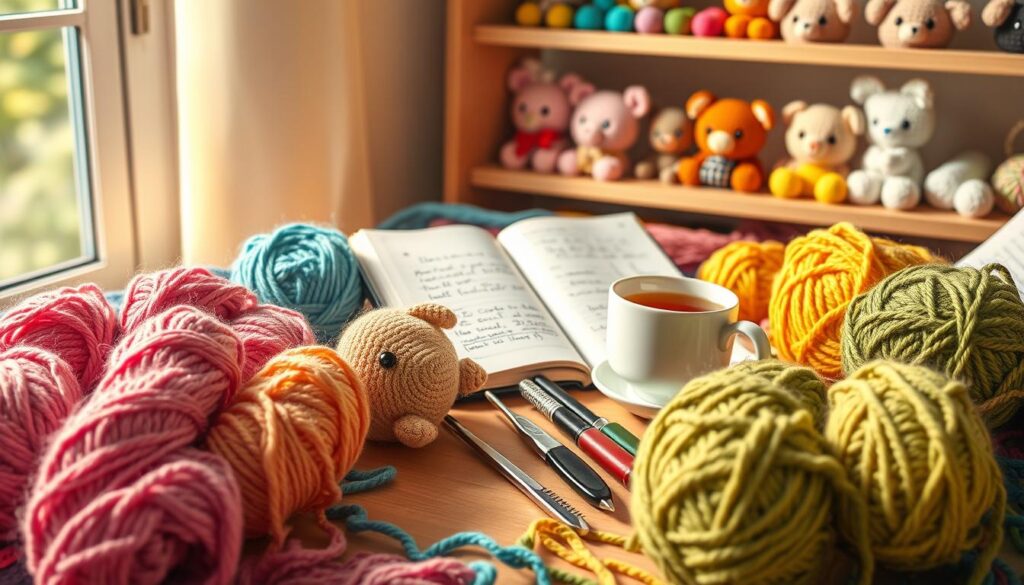
You’ve mastered the basics and now aim to elevate your amigurumi collection. Small adjustments can significantly enhance your work. Try different colors, hooks, and yarns to transform a single pattern into a series you’re proud to share.
Changing colors, sizes, and simple shape alterations
Switching colors can dramatically change your amigurumi’s mood. Pastel bunnies are soft and serene, while neon ones are lively and modern. To adjust sizes, simply change your hook or yarn weight.
Remember to keep an eye on your gauge. Even small size changes can affect how much stuffing you need and where limbs should go. Shortening or lengthening a body is easy with fewer or more rounds. Adjusting increase rows can also alter the shape without needing a new pattern.
Mixing yarn types and texture experiments (when to avoid chenille)
Blend different yarns for unique textures and colors. Start with a swatch to ensure the mix works well. This approach often leads to interesting and complex textures.
Be cautious with chenille and very fuzzy yarns until you’re experienced. They can hide stitches and make shaping difficult. Pairing them with smooth yarns like cotton can help maintain neat edges.
Turning one pattern into many: series and collections
Start a series by tweaking small details like ears or hats. You can also create themed sets, like seasonal donuts or tiny octopi. This way, you offer variety while keeping production efficient.
For detailed facial features and neat finishes, check out a tutorial on amigurumi face embroidery. Good eyes, mouths, and blush can make each piece unique.
| Modification | Easy change | Effect on finished toy |
|---|---|---|
| Hook size | Use one size up or down | Alters overall size; affects stitch tightness and stuffing show-through |
| Yarn weight | Swap DK for worsted | Creates bulkier, sturdier toys or finer, delicate ones when lighter yarn used |
| Color palette | Change primary color or accent | Transforms mood and theme; easy way to make an amigurumi series |
| Texture mix | Combine cotton with acrylic | Improves structure while adding soft surface texture when you mix yarns amigurumi |
| Shape tweak | Adjust increase/decrease rows | Changes proportions without rewriting pattern; useful to scale amigurumi patterns |
Community, learning resources, and ethical pattern use
Get ready to make your crochet hobby a social activity. The amigurumi community is active on Facebook groups, Instagram hashtags, and forums. Here, crocheters share tips, celebrate successes, and ask for advice.
For quick learning, check out video tutorials or step-by-step blog posts. YouTube and tutorial pages offer clear instructions. Some posts include video links and brief summaries to speed up your learning.
It’s important to respect the designers of your favorite amigurumi. Avoid sharing pirated patterns and report any groups that do. Instead, buy patterns from reputable sources like Lilleliis, Ravelry, Etsy, or a designer’s website.
Buying patterns supports designers and helps them improve their work. This means better photos, clearer instructions, and accurate measurements. Fair compensation leads to higher quality patterns.
Here’s a quick guide to help you choose the right resources and follow etiquette.
| Resource | What it offers | How it helps you |
|---|---|---|
| Facebook groups & Instagram hashtags | Community feedback, inspiration, short tutorials | Fast answers, project ideas, exposure to diverse styles |
| YouTube & dedicated video tutorials | Visual walkthroughs of techniques and pattern steps | Improves muscle memory and reduces mistakes |
| Designer shops (Etsy, Ravelry, Patreon) | Original patterns, updates, tester notes | Ensures payment to creators and better-quality patterns |
| Curated blog roundups | Collected free and paid patterns with links | Quick discovery and comparison; try a linked guide like how to read crochet patterns |
Use hashtags to connect with others, watch video tutorials when needed, and support designers by buying their patterns. Your actions help keep the amigurumi community vibrant and ethical.
Conclusion
You can start making amigurumi without a lot of yarn or special tools. There are many free patterns for bees, turtles, bunnies, fruits, and keychains. You can begin today with just scrap yarn and a simple hook.
Start with a small set of tools: learn the magic ring, single crochet, and how to increase and decrease. Use a 2.5mm–3.5mm hook and light-colored yarn. With these basics and video tutorials, you can make beginner toys quickly.
Begin with small projects to get better and make gifts. Always use patterns from trusted sources and respect the creators. Try a list of 35 patterns or a curated selection to keep your ideas fresh. Pick a pattern, grab your hook, and enjoy making your first amigurumi.
FAQ
What is amigurumi and where did it come from?
Amigurumi is a Japanese craft of making small stuffed toys. It combines “ami” (knit/crochet) and “nuigurumi” (stuffed doll). It became popular in Japan in the 1980s and spread worldwide by the 2000s. Now, you can find kawaii animals, food plushies, and mini keychains everywhere.
Why is amigurumi great for beginners?
Amigurumi projects are small, fast, and use basic stitches. This means you can quickly see your progress. It also requires minimal materials and lets you practice shaping without a big project.
What yarn should I use for beginner amigurumi?
Start with medium-weight yarn in a light color. This makes it easy to count stitches. Acrylic and cotton are good choices because they are affordable and forgiving. Avoid fuzzy or chenille yarn until you’re sure you can count stitches well.
What hook size should I pick?
Choose a hook that’s one size smaller than the yarn label suggests. This helps keep the stitches tight. Beginners often use hooks in the 2.5mm–3.5mm range for DK/worsteds.
What other tools do I need?
You’ll need polyester fiberfill, stitch markers, and a tapestry or bent-tip needle for assembly. Safety eyes or embroidery thread are needed for faces. Metal hooks are smoother than plastic. A pair of small scissors and a stitch counter are also helpful.
Should I use safety eyes or embroidered faces?
Safety eyes give a quick expression but are not safe for infants or young children. For child-safe toys, embroider eyes and mouths. If using safety eyes, add them before stuffing and follow the pattern’s placement tips carefully.
Which basic stitches and techniques do I need to learn first?
Learn single crochet, increases (two sc in one stitch), decreases (sc2tog or invisible decrease), the magic ring (adjustable loop), and working in continuous rounds. These moves shape most amigurumi pieces.
What is the magic ring and why is it important?
The magic ring (magic circle) creates a tight, adjustable starting loop. It helps avoid a hole in the center of your round piece. It’s essential for heads, bodies, and other round amigurumi parts.
How do I read beginner-friendly amigurumi patterns?
Start by learning common abbreviations (sc, inc, dec, ch). Follow stitch counts for each round and use a stitch marker to mark the first stitch. Check counts at the end of rounds. Many free patterns include written steps plus photos or video links.
What if my tension is uneven or stitches don’t match counts?
Try a smaller hook, practice holding the yarn differently, or wrap yarn around a finger for steadier tension. If counts are off, rip back (frog) to the round before the mistake and redo it. Consistent practice will improve speed and evenness.
How do I avoid gaps when stuffing or sewing pieces together?
Stuff gradually with small amounts of fiberfill, tighten your gauge by switching hooks if needed, and use a smaller hook for a denser fabric. When sewing limbs, use a bent-tip needle and mattress stitch techniques to minimize gaps.
What are easy first projects you recommend?
Start with round, minimal-piece patterns: tiny bees, mini octopi, simple bunnies, bears, cats, strawberries, donuts, cupcakes, and tiny keychain toys. No-sew options or one-piece head-and-body patterns cut finishing time dramatically.
Where can I find free beginner amigurumi patterns?
Pinterest and curated roundups are treasure troves for free patterns. Trusted sources include designer blogs and pattern libraries like Ravelry. Many designers such as Lilleliis publish free beginner patterns; always follow the designer’s page for updates and tutorials.
Free or paid patterns — which should I choose?
Free patterns are great for learning and experimenting. Paid patterns often come with testing, clearer instructions, and support the designer. If you love a design, buying it on Etsy or Ravelry helps maintain quality designs in the community.
How can I use scrap yarn for amigurumi?
Small projects like snakes, tiny hearts, strawberries, and mini fruit are perfect for scrap yarn. No-sew patterns and tiny keychain toys make efficient use of leftover skeins and give you fast, satisfying results.
Are there amigurumi patterns that don’t require much sewing?
Yes. No-sew patterns and designs that crochet head and body in one piece reduce finishing. Look for “no-sew” or “one-piece” in pattern descriptions for minimal assembly.
Can I change a pattern’s size or color easily?
Absolutely. Change yarn weight and hook size to scale the finished toy. Swap colors for variety, and try simple alterations like longer limbs or different ear shapes to customize a pattern into a whole collection.
Should I avoid certain yarns when experimenting with textures?
Avoid chenille and very fuzzy yarns until you’re comfortable counting stitches — their texture hides stitches and makes shaping tricky. Once confident, mix cotton, acrylic, and wool blends for different looks and textures.
How do I safely remove or correct misplaced safety eyes?
Misplaced safety eyes are tough: you usually must rip back to the eye insertion point to remove the washer and reattach. For toddler-safe toys, plan from the start to embroider eyes instead.
How can I display or sell small amigurumi like keychains or plushies?
Add sturdy loops or keyrings, tidy finishing, and consistent sizing. Create themed series (donuts in flavors, mini octopi sets) for cohesive displays. If selling, photograph clearly and credit pattern designers or use your original designs.
Where can I learn techniques visually?
Many free patterns link to video tutorials; YouTube and designer blogs often include step-by-step videos for magic ring, invisible decreases, and assembly. Videos are helpful for mastering tricky steps quickly.
How do I respect designers and avoid pirated patterns?
Always download patterns from the designer’s site, Etsy, or Ravelry, and avoid groups that distribute pirated packs. Supporting creators financially ensures continued testing, updates, and fresh designs.
What communities can I join for support and inspiration?
Join supportive Facebook groups, follow Instagram hashtags (like #amigurumi or #tinyamigurumi), and explore Ravelry forums. These communities share tips, pattern roundups, and project inspiration without promoting piracy.
Any quick troubleshooting tips for beginners?
If your toy looks misshapen, check stitch counts, switch to a smaller hook, and stuff gradually. Use stitch markers to track rounds. When in doubt, pause, rewatch a tutorial, or rip back a few rounds — it’s faster than finishing a badly shaped piece.
What are fun mini project ideas to build skills fast?
Try tiny bees, mini octopi, pocket dinos, strawberries, cupcakes, and tiny keychains. These projects are fast, scrap-friendly, and teach shaping, joining, and finishing while delivering instant gratification.