
You’re about to enter a world where small hooks and yarn create big smiles. Wondering how to start amigurumi? It’s simple. Just pick a few reliable tools and a forgiving yarn. Then, learn the basic moves: magic ring, single crochet, and working in spirals.
For beginners, start with a beginner yarn kit or grab Loops & Threads Super Bulky from Michaels during a sale. This bulky yarn and a comfy Tulip Etimo or Clover Soft Touch hook make stitches easier and faster. Keep several stitch markers ready; they disappear quickly.
For quick confidence, watch a short amigurumi tutorial on YouTube. It will show you the magic ring and joining techniques. Use 14mm safety eyes for finished toys, but choose embroidered eyes for baby-safe projects. Stock up on polyfil or inexpensive pillow stuffing for practice—small scraps teach you shaping without wasting good yarn.
Key Takeaways
- Start small: a beginner yarn kit or Loops & Threads Super Bulky speeds learning and gives plush results.
- Learn the basics in order: magic ring, single crochet, spirals, increases, decreases, and finishing.
- Use ergonomic hooks like Tulip Etimo or Clover Soft Touch to reduce hand strain.
- Keep multiple stitch markers, tapestry needles, sharp scissors, and stuffing within reach.
- Watch short amigurumi tutorials to pair visual learning with patterns for faster progress.
Why Amigurumi Is the Most Fun Way to Learn Crochet
Amigurumi projects are quick to finish, making them fun and rewarding. They turn into cute plush toys in just a few hours. This fast result keeps you excited and makes learning crochet feel like a game, not homework.
Learning in the round helps you pick up key skills quickly. You’ll master magic rings, single crochet, and more. This hands-on method teaches you how to shape objects and control tension.
What makes amigurumi different from flat crochet
Flat crochet makes squares and motifs that you have to sew together. Amigurumi, on the other hand, builds shapes continuously. This means fewer seams and more instant feedback on your work.
Benefits: quick wins, three-dimensional learning, and creative freedom
Finishing a small plush toy in a day boosts your confidence. Amigurumi teaches you to shape and stitch quickly. It also lets you experiment with different yarns and hooks.
Real-world uses: toys, decor, keychains, and small products to sell
Amigurumi can be used to make adorable gifts and useful items. Think of soft toys, decor, keychains, and more. You can even sell your creations at craft fairs or on Etsy.
Start with a free, simple pattern to improve your skills. This practice helps you see which ideas work well for small sales and which are best as gifts.
Essential Tools and Materials for Amigurumi Success
Get gear that makes your tiny toys look pro and saves time. Choose yarn based on what you want: clear stitches, softness, or quick work. For sharp stitches, pick 100% cotton or a cotton blend. For fast, soft results, try a super bulky yarn like Loops & Threads Super Bulky (size 6).
It’s easy to handle and gives a squishy feel. For balanced projects, pick the best yarn for amigurumi based on stitch definition and care instructions.
Yarn tips and stuffing
Keep a small stash of cotton, cotton-blend, and one super bulky option. Buy yarn on sale at Michaels to stretch your budget. Polyester fibrefill, or polyfil, is great for stuffing because it’s lightweight and holds shape well.
For practice, try stuffing with batting or yarn scraps before using premium polyfil.
Hook selection and ergonomic picks
Choose hooks that feel good in your hand for long sessions. Ergonomic handles reduce strain and help keep tension steady. Favorites include Tulip Etimo and Clover Soft Touch.
Match hook size to yarn: 2.25–3.5 mm for cotton sport to worsted, 6.0–8.0 mm for super bulky. A 3.0 mm or 3.5 mm hook is a reliable starting point for many patterns.
Essential handheld amigurumi tools
Round up these basics: tapestry needles, sharp scissors, T-pins, and reliable stitch markers. Use large-eyed, blunt-tipped tapestry needles for weaving and sewing pieces. Sharp embroidery scissors keep ends neat when you trim.
Glass-headed pins and T-pins help align parts during assembly.
Stitch markers are tiny workhorses in every project. Locking types, like Clover Locking stitch markers, stay put in tight single crochet rounds. Keep a few sizes so you can mark the start of rounds or shape points.
Good stitch markers speed up counting and reduce undoing rows.
Safety eyes are handy for finished looks, but avoid them for toys meant for children under three. For baby-safe amigurumi, use embroidered features instead.
| Item | Why it matters | Example / Tip |
|---|---|---|
| Yarn choices | Defines stitch clarity and drape | 100% cotton for detail; Loops & Threads Super Bulky for plush speed |
| Hooks | Comfort and correct gauge | Tulip Etimo or Clover Soft Touch; sizes 2.25–8.0 mm as needed |
| Stitch markers | Keep rounds tidy and counts accurate | Clover Locking or metal rings in multiple sizes |
| Tapestry needles | Secure joins and hide ends | Large-eyed, blunt steel needles |
| Stuffing | Shape retention and squish | Polyfil polyester fibrefill; try batting or yarn scraps for practice |
| Assembly pins & scissors | Precision during sewing and trimming | T-pins, glass-headed pins, sharp embroidery scissors |
If you like a guided start, look for a beginner yarn kit. It bundles yarn, a hook, needles, and simple patterns. You can learn the magic circle and basic joins with minimal gear.
For extra reference, check a focused guide like amigurumi crochet tips to match tools to your first projects.
Mastering the Magic Ring and Working in Spiral
Getting a tight center and neat amigurumi rounds starts with a confident magic ring. Practice makes this move second nature. Use slow-motion or step-by-step videos to watch finger placement and tension before you try it on your own.
Start small and stay patient. The magic circle gives you control over that pesky hole at the base of toys. Once you learn the wrap-and-pull method, your stuffed animals will look polished and professional.
Step-by-step magic ring technique for a tight center
Wrap the yarn tail around your finger to form a loop. Insert the hook into the loop, yarn over from the skein, and pull up a loop. Yarn over and pull through to secure the first stitch. Work the required stitches directly into the ring, then pull the tail to close the center snugly.
How to work in continuous spirals and why you skip turning chains
When you are working in spiral, you do not turn your work or make turning chains at the start of rounds. Instead, you place a stitch marker in the first stitch of the round and move that marker up as you crochet. Continuous rounds keep seam lines from forming and create smooth, rounded shapes for plushies.
Use a locking stitch marker like Clover Locking to prevent lost starts. Marking the first stitch and shifting it each round makes counting easier and keeps your amigurumi rounds even.
Common mistakes and quick fixes to keep your rounds neat
Gaps at the center often come from loose tension or failing to tighten the ring before adding the next round. Tighten the tail, then work slowly for the first few stitches. Maintain the same tension through each round to avoid visible ridges.
If you lose track of the start stitch, stop and recount with your marker. If a hole appears after stuffing, remove a few stitches and rework the center or add a tiny amount of fiberfill to press the opening closed.
| Issue | Cause | Quick Fix |
|---|---|---|
| Loose center | Ring not tightened or inconsistent tension | Tighten tail before next round; practice the magic ring tutorial slowly |
| Visible seam | Turning chains used instead of continuous rounds | Switch to working in spiral and use a stitch marker for the first stitch |
| Lost start stitch | Marker slipped or not moved | Use a locking marker and move it up each round |
| Gaps after stuffing | Stuffing pushed through hole or too few stitches | Unpick a few stitches, tighten the ring, restuff, and resew |
| Uneven rounds | Uneven increases or uneven tension | Count stitches frequently and practice consistent tension |
For a friendly primer that pairs well with these tips, check an amigurumi beginner guide at amigurumi for beginners. Try short practice pieces focused on continuous rounds to build confidence before you start a full plushie.
Single Crochet Fundamentals and Stitch Control
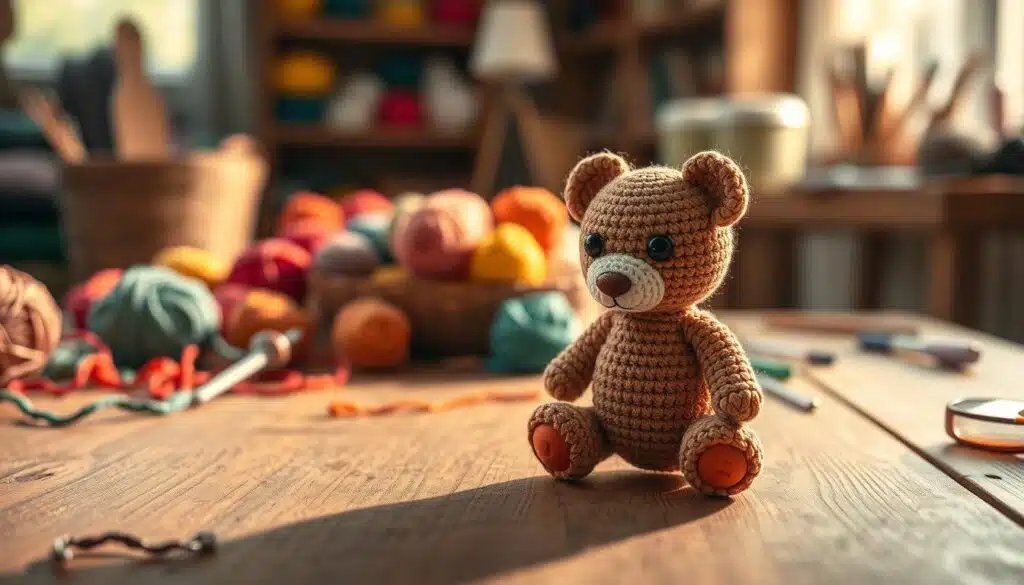
Single crochet is key for tight, defined shapes in amigurumi. Master the basic steps: insert the hook, yarn over, pull up a loop, yarn over, pull through both loops. This unlocks most patterns. Your pieces will stay stuffed right.
Why this stitch matters
Single crochet creates a dense fabric that prevents gaps and stretching. This is why designers often use it for toys. If your doll’s stuffing shows or seams are loose, your stitch or tension might need adjusting.
Tension tips for steady results
Choose a hook that feels comfortable. Ergonomic hooks from Tulip or Clover can help maintain steady tension. Try a smaller hook than the yarn label suggests to tighten loops without straining your hands.
Practice with short swatches and measure them. Keep your turns even and check your gauge against the pattern. Use these tips to avoid loose stitches that can ruin your work.
Crochet stitch control: V vs X single crochet
Two single crochet styles, “V” and “X,” change your fabric’s look and feel. The “V” method makes softer, staggered Vs that drape well. The “X” method creates tighter, pixel-like finishes great for small details. Switching between them helps build muscle memory.
Learn the mechanics and see a demo at two ways to make a single crochet. This will help you decide which to use for your next project.
When to add texture with other stitches
Once you’re comfortable with single crochet, try bobble stitch amigurumi for raised spots or double crochet for ridges and curves. Texture adds character without losing shape if you keep stitch spacing consistent.
Make small samples with each textured stitch to see how they affect tension. This ensures your amigurumi pieces stay proportional and neat.
| Focus | Effect on Fabric | Best Use |
|---|---|---|
| Single crochet (V) | Soft, slightly open drape | Garments, soft accessories |
| Single crochet (X) | Tight, dense, minimal gaps | Amigurumi bodies and small parts |
| Bobble stitch amigurumi | Raised texture, sculpted bumps | Features, textured accents |
| Double/triple crochet | Open, taller stitches | Ridges, curves, decorative trims |
| Tension practice | Consistent gauge, less stuffing show-through | All amigurumi and wearable pieces |
Shaping: Increasing, Decreasing, and Sculpting Forms
You’ll shape amigurumi by adding and removing stitches with purpose. Good shaping keeps curves smooth, limbs balanced, and faces friendly. Learn increases and decreases early so your pieces look professional and hold their form when handled.
Easy increase methods to grow your shapes evenly
For steady growth, work two single crochets into one stitch. Place increases evenly around the round to avoid bulges. Use stitch markers to mark repeat points so your amigurumi increases stay symmetrical as you build heads, bodies, and bellies.
Decreasing techniques that avoid gaps and keep symmetry
To decrease without holes, use a single crochet decrease that closes two stitches together. Insert the hook through the front loops of two stitches, yarn over, and pull through both loops in sequence. Pull the working yarn a touch tighter to draw the fabric closed. Place markers opposite each other to mirror decreases and balance form as you work amigurumi decreases.
Stuffing strategy while shaping to avoid lumps and maintain curves
Stuff in small amounts while you shape so you can sculpt curves as you go. Use chopsticks, a stuffing tool, or the blunt end of a crochet hook to push fiber into tight corners. Add batting or yarn scraps to core areas if you want extra firmness without overstuffing. These stuffing tips help you avoid lumps and keep seams sleek.
You can practice increases and decreases on spare yarn before altering a project. Small tests help you see how a few added or removed stitches change silhouette. That practice makes shaping amigurumi faster and less stressful.
| Technique | When to Use | Quick Tip |
|---|---|---|
| Two SC in one stitch (increase) | Expand heads, bellies, or flared bases | Space increases evenly; use markers every repeat |
| SC decrease (front-loop) | Taper limbs, close openings, define necks | Work through front legs only and tighten yarn slightly |
| Stuff-as-you-go | Smooth round shapes; avoid lumps | Add small amounts, shape with chopstick or tool |
| Core stuffing with scraps | Practice pieces, firm centers without bulk | Use yarn scraps or batting to save polyfill |
Finishing Like a Pro: Joining, Weaving, and Hiding Ends
You want your amigurumi to look handmade, not hand-wrestled. A neat finish makes toys sturdy and gift-ready. Use simple tools and a few pro moves to sew limbs, weave ends, and hide yarn tails so seams stay invisible and parts do not wobble.
Best ways to sew limbs and features for stability
Pin pieces in place with glass-headed pins or T-pins before stitching. This saves time and keeps things symmetrical on heads, arms, and legs. Use a steel tapestry needle with a blunt tip and large eye for easy threading and clean passes.
When sewing, take small, even stitches through the front loop and back loop to anchor each limb. For extra grip, try the slip-knot tail trick: slip knot the tail into the piece before you sew to reduce wobble while you work. Aim to sew one stitch at a time for balanced tension and long-term durability.
Weaving in ends invisibly with a tapestry needle
Leave about ten inches when you cut an end. Fold the tail, thread the tapestry needle, then weave in ends amigurumi-style by passing through the front loop of consecutive stitches for roughly two inches. Pull snug but not tight so fabric keeps its shape.
On very tight fabric, go under stitch tops and reverse direction once to lock the yarn. For lacy or open sections, weave through base chains and stitch clusters to spread tension and hide the tail. If you want a helpful tutorial, see a clear guide at weave in ends amigurumi.
Alternatives to slip-stitch finishes to avoid visible seams
Skip visible slip-stitch finishes when possible. Slip-stitch edging can leave ridges that show on small toys. Try crocheting over the tail for the last one or two stitches, or pass the end through the top loops of the final round to hide imperfections.
For amigurumi with stuffing, poke the needle into the center and out the side, then tug to bury the yarn into the stuffing before snipping close. That method will hide yarn tails and create a smooth exterior without a no-slip-stitch finish that draws attention.
Safety and Eye Options: Choosing Between Safety Eyes and Embroidery
When picking eye finishes, think about your project’s purpose and who it’s for. For decor or gifts for adults, safety eyes amigurumi offer a neat, store-bought look. But, for toys for babies and toddlers, embroidered eyes are safer and make parents happy.
When to favor secure fastenings and age guidance
Choose durable parts for amigurumi that will be handled a lot. For kids under three, use stitches instead of plastic parts. If it’s for display, bigger safety eyes are safe to use.
How to attach safety eyes and practical washer advice
To attach safety eyes, push the ribbed shaft through the fabric and secure the washer from inside. Some washers fit easily, others need more effort. Use a blunt tool or a cloth-wrapped pair of pliers to avoid scratching the eye. Look for good tutorials and quality brands for better washers.
Hand-stitched eyes and noses for baby-safe toys
Embroidered eyes for babies let you create unique expressions and sizes. You can make small pupils or sleepy lids with simple stitches. This method is safe and adds character to each toy.
Want a quick comparison? See a detailed side-by-side summary at safety eyes vs embroidered eyes.
| Feature | Safety Eyes | Embroidered Eyes |
|---|---|---|
| Best use | Decor, gifts for older kids, collectibles | Baby-safe toys, washable softies, heirloom pieces |
| Installation | Push through fabric, snap on washer; easier to attach quickly | Stitched with thread or yarn; requires time and neat tension |
| Durability | High when you attach safety eyes with quality washers | Very high; no small parts to detach |
| Customization | Limited to available sizes, colors, and designs | Unlimited shapes, expressions, and tiny details |
| Child safety | Acceptable for ages 3+ with correct installation and eye washer tips followed | Preferred for under-3s and daycare-safe toys |
| Skill level | Beginner-friendly to attach | Requires basic embroidery skills and precision |
Tools & Hacks to Speed Up Your Projects and Reduce Frustration
You want your amigurumi to be quick, neat, and sturdy. These hacks make your work faster and keep you calm. Try them out and see how your amigurumi go from wobbly to wonderful in no time.
First, make it easy to find your stitch markers. Lost markers are a big problem for many.
Use safety pins, bobby pins, or paper clips as markers when needed. Clover markers are great if you prefer something made for the job. Keep a small container near you to avoid losing them.
Stuffing tools make your amigurumi smooth and even. A long chopstick or a stuffing tool helps get stuffing into tight spots. Work in small amounts and shape as you stuff.
For cheap stuffing, try using pillow stuffing or polyester batting. Yarn scraps are also good for practice. These options save money and keep your shapes even.
The slip-knot tail trick stops your amigurumi from wobbling. Put the slip-knot tail in the seam before sewing the limb. Pull it tight, sew the limb, then weave the tail through the body to secure it.
Also, add stuffing bit by bit and shape as you go. Use T-pins or glass pins to hold pieces while stitching. Watching a YouTube tutorial can help with tricky steps like joining and magic rings.
Here’s a quick guide to help you choose the right hack or tool for common issues.
| Problem | Quick Fix | Best Tool | Why It Works |
|---|---|---|---|
| Lost stitch markers | Use household clips | Safety pins or paper clips | Readily available and cheap, act as reliable stitch marker substitutes |
| Gaps when sewing limbs | Slip-knot tail trick | Slip-knot with extra tail | Locks the piece in place before final weaving; reduces wobble |
| Lumpy or unreachable corners | Gradual stuffing and poking | Chopstick or stuffing tool | Pokes fiber into tight spots and shapes as you go, avoiding lumps |
| Markers slipping on rounds | Use locking markers | Clover locking-style markers | Locks onto the stitch to prevent accidental movement |
| Budget stuffing needs | Repurpose household batting | Pillow stuffing or polyester batting | Affordable option that gives a smooth finish when used right |
Yarn Selection Deep Dive: Fibers, Weights, and Texture Effects
Choosing the right yarn gives your amigurumi its unique charm. The type of fiber and weight affect its shape, how fast it’s made, and how easy it is to clean. Here are some practical tips for your next project.
Why cotton and cotton blends shine
Cotton and cotton blends offer clear stitch definition. This makes small details stand out. They also keep their shape well, which is great for selling or gifting.
Cotton is different from acrylic. Pima cotton is good for tight stitches. A 3mm hook works well with cotton-weight yarns for a neat fabric.
Using bulky yarns for fast, plush amigurumi
Bulky yarn amigurumi is quick to make. It uses fewer stitches, assembles fast, and is soft and cuddly.
Loops & Threads super bulky is perfect for beginners. It’s easy to work with, quick to make, and looks modern. Michaels often has sales or rewards to help save on yarn.
Care considerations for toys and decor
For toys that will be played with, choose washable yarn. Acrylic and cotton blends are safe for machines and washing. Use washable polyester stuffing to avoid surprises after washing.
For decorative items, try silk blends and specialty fibers. They add shine and drape but are harder to care for.
Quick comparison to guide your choice
| Yarn Type | Best Use | Care | Feel |
|---|---|---|---|
| 100% Cotton | Detailed features, sale-ready toys | Machine wash gentle, air dry | Firm, crisp stitches |
| Cotton Blend | Balanced definition and softness | Usually machine washable | Slightly softer than pure cotton |
| Acrylic / Washable Blends | Everyday washable yarn toys | Machine wash and dry | Soft, durable |
| Super Bulky (size 6) | Fast projects, plush amigurumi | Depends on fiber; many acrylic options are washable | Plush and chunky |
Practical tips for experimenting
- Make small swatches with your intended hook to check stitch density and shape retention.
- Label swatches with fiber content and hook size so you repeat winning combos.
- When you need durability, favor washable yarn toys choices and polyester fill for easy care.
Choosing the right yarn for amigurumi depends on the look and use. Try bulky yarn for quick, plush toys or cotton blends for crisp details and lasting shape.
Pattern Reading and When to Trust Video Tutorials Over Written Patterns
You want projects that flow smoothly, not puzzles that get you stuck. Start by learning to read amigurumi patterns step by step. A good pattern shows you rounds, stitch counts, and where to increase or decrease.
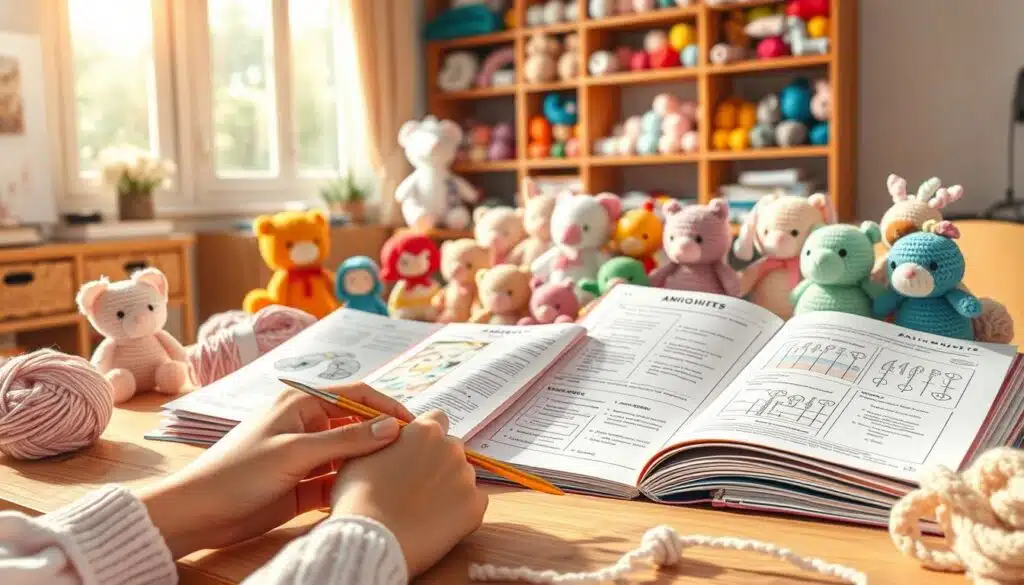
First, learn the basics: magic circle, single crochet, working in spiral, increases, and decreases. These basics are common in most patterns. When you understand amigurumi abbreviations, the patterns become clear maps.
How to decode common amigurumi abbreviations and pattern structure
Abbreviations save space. SC means single crochet, MR or magic ring starts a round, INC adds a stitch, DEC removes one. Read the pattern once before starting to crochet. This way, you can spot where rounds change and where to mark the first stitch.
Pros and cons of written patterns vs. video tutorials for beginners
Written patterns are precise and easy to carry. You can count rows, check stitch counts, and fix mistakes easily. Video vs written crochet tutorials is a debate. Videos show hand position, timing, and rhythm. If you learn by watching, a YouTube demo from makers like Bella Coco or The Crochet Crowd can save time.
Written instructions let you jump to specific rounds. Videos let you watch a motion until it clicks. Use written patterns for accuracy and videos when a technique—like the magic ring or invisible decrease—feels unclear.
Combining both methods: follow the pattern, watch the technique
Pairing methods gives you the best of both worlds. Read the pattern to understand flow. Pause a video to copy a technique. Compile a playlist of trusted creators for tricky moves and keep printed patterns at your side while you watch.
Practice a short, free pattern that uses the core sequence. Try one round at a time: read the line, watch the move, then crochet it. This loop trains your hands and your pattern-reading skills at once.
amigurumi tips
Start small and keep a playful attitude. Veteran makers say patience and practice are key. Michaels or Joann’s beginner kits have everything you need to avoid frustration early on. Try a super bulky yarn for quick practice pieces that build confidence.
Top beginner tips from experienced makers
Focus on tension first: tight stitches make neat toys. Use lots of stitch markers; they disappear faster than you think. Learn the magic ring and working in spiral early. Repeat simple patterns until you can make them without checking instructions.
Organization tips for your tools
Keep small zip pouches or a craft caddy for safety eyes, tapestry needles, and scissors. Use clear containers so you can see spare hooks and yarn at a glance. For pins, glass-headed pins in a pin dish prevent them from wandering off.
Monetizing your hobby and craft business tips
Make small batches of consistent, well-finished pieces before you list them. Use Instagram and YouTube to build social proof with photos and short tutorials. Offer keychains and small plushies as starter products to test demand.
When you decide to sell amigurumi, list clear care instructions and age safety—embroidered features for baby items sell better to parents. Track your costs so your pricing reflects time, materials, and fees. Treat your first sales like market research.
Conclusion
You don’t need much to start making amigurumi. A beginner yarn kit, a Tulip Etimo hook, stitch markers, safety eyes, a tapestry needle, and good polyfil are all you need. Start with simple shapes and a free pattern to practice the basics.
These basics include the magic circle, single crochet, working in spiral, increases, decreases, and finishing. With each try, you’ll get better. Remember, small steps lead to big achievements.
When patterns seem too much, use online video tutorials. They show you how to do things. Mix written and video guides to learn both the pattern and the hands-on skills.
This approach helps you move from practice pieces to finished toys. You’ll be proud to give or sell them.
As you get better, pay attention to stuffing and finishing. Use a tapestry needle for neat ends, secure eyes for safety, and stuff consistently. This makes your pieces last longer and look professional.
For your next steps, try a more complex free pattern or a small paid pattern pack. This will boost your confidence. You can even sell small batches or give them as gifts to friends.
FAQ
What is amigurumi and how is it different from flat crochet?
Amigurumi is the Japanese art of crocheting small, stuffed 3D characters and objects. It’s different from flat crochet because it’s worked in the round. This creates spheres, cylinders, and other shapes.
Why is amigurumi a great way for you to learn crochet?
Amigurumi gives fast, satisfying results. Many small toys can be finished in a few hours. This helps you build skills and confidence quickly.
Working in the round teaches core techniques. These techniques are useful for many projects. Plus, making toys, keychains, and decor keeps practice fun and purposeful.
What real-world uses can amigurumi have?
You can make soft toys, decorative pieces, keychains, door stops, and napkin holders. Many makers sell small batches of keychains or plushies on Etsy or at craft fairs.
What yarn should you start with for amigurumi?
Start with 100% cotton or cotton blends for crisp stitch definition. If you want plush results, try super-bulky yarn. Experiment to see how different fibers affect texture and drape.
Which crochet hook should you choose?
Choose a hook that’s comfortable for you. Ergonomic hooks like Tulip Etimo and Clover Soft Touch are popular. Use sizes around 2.25–3.5mm for cotton yarns; larger hooks for bulky yarn.
What are the must-have tools and supplies for amigurumi?
Keep stitch markers, tapestry needles, sharp scissors, T-pins or glass-headed pins, polyester fiberfill, and safety eyes or embroidery floss handy.
How do you make a magic ring for a tight center?
Wrap the yarn tail around your finger to form a loop. Insert the hook into the loop, yarn over, and pull up a loop. Then, chain or pull through to close the ring.
Work the required stitches directly into the ring. Pull the tail to tighten the center. Practice for neat results.
What does “working in continuous spirals” mean and why skip turning chains?
Continuous spirals mean crocheting rounds without joining and turning. You don’t make turning chains. Instead, mark the first stitch of each round with a stitch marker.
This produces smooth, seamless fabric ideal for amigurumi shapes.
What common mistakes happen when working spirals and how do you fix them?
Mistakes include losing track of the first stitch, creating gaps at the magic ring, or uneven tension. Fixes: use a reliable stitch marker, tighten the magic ring before adding rounds, practice consistent tension, and recount stitches regularly.
For holes in decreases, try front-loop-only decreases or pull the yarn slightly tighter when closing stitches.
Why is single crochet so important in amigurumi?
Single crochet makes a dense, tight fabric that holds stuffing and maintains shape. It’s the backbone of most amigurumi patterns because it produces clear, compact stitches that sculpt well.
How do you control tension so stitches are tight but comfortable to crochet?
Use a slightly smaller hook than the yarn label suggests if you need tighter stitches. Ergonomic hooks reduce hand strain and help maintain consistent tension. Practice small swatches and adjust until the stuffed piece feels firm without being strained to make.
When should you experiment with other stitches for texture?
Once you’ve mastered the basics—magic ring, single crochet, increases, decreases—you can add texture with bobble stitches, double or treble crochet, or popcorn stitches. Use them sparingly to accentuate the single crochet foundation.
How do you increase stitches evenly to shape forms?
Increase by working two single crochets into one stitch. Space increases evenly around the round and use stitch markers to maintain symmetry. Counting and planning increases by rounds keeps shapes smooth and predictable.
What’s the best way to decrease without leaving gaps?
Use standard single crochet decreases or front-loop-only decreases to pull stitches together. Insert the hook into the front legs of the next two stitches, yarn over and pull up a loop, then yarn over and pull through remaining loops. Tighten slightly more than usual and place stitch markers to keep shaping symmetrical.
How should you stuff your amigurumi to avoid lumps?
Add stuffing gradually and shape as you go. Use a stuffing tool, chopstick, or dedicated stuffing stick to push fiber into corners and small areas. For practice, batting or yarn scraps work well; for finished toys use polyester fiberfill for washable bounce and durability.
What are the best methods for joining and sewing limbs securely?
Use a tapestry needle (bent-tip needles help in tight spots) and whipstitch or ladder stitch to attach limbs. Position pieces first with T-pins or glass-headed pins to check placement. Consider the slip-knot tail trick—insert a slip knot tail into the piece before weaving in ends—to reduce wobble.
How do you weave in ends invisibly?
Leave a 6–10 inch tail, thread it on a tapestry needle, pass through the front loop of each stitch in the final round, pull tight to close, then weave the tail back through several inner stitches to hide and secure it. Trim excess yarn close to the fabric.
Why avoid slip-stitch finishes and what are alternatives?
Slip-stitch finishes can leave visible ridges or seams. Alternatives include tightening the final round by threading the tail through the last stitches and pulling snug, using a few single crochet decreases to close, or weaving the tail through inner stitches for a seamless look.
When are safety eyes appropriate and what age rules apply?
Safety eyes are great for decor and toys for older kids, but do not use them for toys intended for children under 3. For baby-safe items, embroider eyes and noses with secure floss to eliminate choking hazards.
How do you attach safety eyes so they stay put?
Insert the safety eye through the fabric at the indicated round, push the washer onto the ribbed shaft from the inside, and snap it in place. Some washers can be tricky; firm pressure or a small pliers designed for craft use helps. Choose quality eyes and test the washer before gifting to children.
What are the pros of embroidered facial features over safety eyes?
Embroidered eyes and noses are fully child-safe, washable, and give a handcrafted aesthetic. They’re the recommended choice for baby toys and items that will be handled roughly or laundered frequently.
What low-tech hacks help you avoid frustration with tools?
Keep multiple stitch markers because they get lost—use low-cost substitutes like safety pins, paper clips, or bobby pins in a pinch. Store small items in zip pouches or a craft caddy. Use chopsticks or a stuffing tool to reach corners, and repurpose inexpensive pillow stuffing for practice.
What’s the slip-knot tail trick and why use it?
The slip-knot tail trick means leaving a slip-knot tail when attaching limbs or features and inserting that tail into the piece before weaving in. It anchors parts from wobbling and adds stability without visible bulk.
Why choose cotton or cotton blends for amigurumi definition?
Cotton and blends show stitch definition clearly and hold shape well, which is ideal for small, detailed amigurumi. They resist stretching, making facial features and sculpted shapes crisper than some acrylics or fluffier fibers.
When should you use bulky yarn for amigurumi?
Use bulky or super-bulky yarn when you want fast, plush projects and easier handling—great for beginners seeking quick wins. Bulky yarn makes larger, cuddlier toys but changes hook size, stitch count, and stuffing needs.
What care considerations should you keep in mind for toys versus decor?
For toys that will be handled or washed, choose washable yarns and polyester fiberfill. For decorative pieces that won’t be laundered often, you can use more delicate fibers or novelty yarns. Always include care instructions if you sell or gift items.
How do you read amigurumi patterns and common abbreviations?
Learn basic abbreviations (sc = single crochet, inc = increase, dec = decrease, rnd = round) and remember many patterns are worked in continuous spirals with a marked first stitch. Read through a pattern fully before starting and keep a stitch counter or marker handy.
Should you follow video tutorials or written patterns as a beginner?
Use both. Videos show hand positioning and timing—ideal for visual learners learning the magic ring or joining techniques. Written patterns are precise and portable. Watch technique videos to complement the written instructions until you feel confident.
What are top beginner tips experienced makers give?
Be patient and practice consistently. Start with one simple free pattern to master the six core skills: magic ring, single crochet, working in spiral, increases, decreases, and finishing. Keep extra stitch markers, practice with inexpensive stuffing, and try bulky yarns for quick confidence-building projects.
How do you keep stitch markers, safety eyes, and other small tools organized?
Use small containers, zip pouches, or a craft caddy. Keep T-pins and glass-headed pins in a pin dish. Label pouches for different sizes of safety eyes and stitch markers to reduce time spent searching.
Can you sell amigurumi and how do you start small?
Yes. Start with a few consistent, well-made items like keychains or small plushies, photograph them well, and list them on Etsy or social platforms. Emphasize safety (embroidered features for baby items), include clear care instructions, and build social proof through photos and short how-to clips.
Where should you buy beginner supplies?
Retailers like Michaels offer broad selections, sales, and rewards that make stocking up economical. You can also find ergonomic hooks from brands like Tulip or Clover, cotton yarns from suppliers such as Lion Brand and Bernat, and safety eyes from reputable craft suppliers.
What’s a simple learning path to master amigurumi quickly?
Follow a short sequence: learn the magic circle, practice single crochet, work in continuous spirals, learn increases and decreases, and practice finishing techniques like sewing parts and weaving in ends. Make one small free pattern—such as a basic sphere or keychain—to apply each step.