When you start a new knitting technique, you feel that excitement. Portuguese knitting changes one thing: the yarn is against your neck or on a pin. This small change makes your stitches smooth and even.
Learning Portuguese knitting means mastering a small thumb flick. Liat Gat of KnitFreedom has great photos and videos to teach you. These lessons show how the flick creates even stitches for both knit and purl.
For those who love travel and crafts, Portuguese knitting is a perfect match. Workshops in Lisbon and classes at shops like Retrosaria Rosa Pomar offer a unique learning experience. You get to learn from artisans while touching local yarns.
Key Takeaways
- Portuguese knitting uses yarn around the neck or on a pinned knitting pin for consistent tension.
- A small thumb flick creates even stitches in the Portuguese knit and purl.
- Many knitters find the Portuguese purl easier than American or Continental purls.
- Video tutorials from KnitFreedom offer step-by-step help for beginners.
- Hands-on workshops in Portugal connect technique to local yarn and tradition.
Why Portuguese Knitting Matters: Tradition, Efficiency, and Comfort
Every stitch in Portuguese knitting tells a story. It connects today’s craft to the past. Craftsmen in local wool industries and village workshops shaped this tradition. Places like Retrosaria Rosa Pomar and small mills show how yarn, technique, and place come together.
In Portugal, knitting is all about being practical. Before the Industrial Revolution, it had to be efficient and comfortable. This need led to the development of methods that help knitters work faster and more comfortably.
Today, many knitters are drawn to Portuguese knitting for more than just tradition. It’s because it makes hand motions easier and reduces strain. Workshops and tours show how it pairs well with artisan yarns and small-group learning, making skill gains quick and fun.
The ergonomic benefits of Portuguese knitting are a big part of its appeal. It focuses on gentle yarn tensioning and light threading through the right hand. This reduces strain on tendons and joints, allowing you to knit for longer without pain.
Portuguese knitting offers steady tension, faster stitch forming, and less gripping force. Swatching is important, but the method makes your gauge more consistent. Ergonomics tips help you spot and fix areas where you apply too much force.
For more on ergonomic knitting and easing hand strain, check out modern ergonomics guides. They explain how to reduce workload and make adjustments to your knitting. These tips work across different styles, adding value to your knitting toolkit.
| Focus | Traditional Practice | Practical Outcome |
|---|---|---|
| Yarn tensioning | Yarn around neck or pinned knitting pin | Even stitches with less hand gripping |
| Hand movement | Light threading through right hand | Reduced repetitive strain and smoother motion |
| Learning context | Small workshops, artisan yarns, local mills | Faster skill uptake and cultural connection |
| Ergonomics | Awareness of forces, needle angles, z-axis tension | Greater comfort, improved productivity, consistent fabric |
Understanding the Basics: How Portuguese Tensioning Works
Learning Portuguese tensioning is easy if you focus on simple steps and gentle movements. Hold the needle with live stitches in your left hand. Wrap the yarn around your neck from left to right for a classic setup.
If this feels awkward, try using a knitting pin. Pin a small dowel or specialized pin to your shirt. Both methods give a stable yarn feed, helping you keep a steady rhythm.
Yarn placement around the neck or knitting pin
Position the yarn so it goes from the ball, behind your neck or around the pin, then down to your right hand. This keeps the yarn at constant tension. The yarn-around-neck method is quick and easy to carry. The knitting pin method is better for layered clothing or a fixed anchor point.
How threading through your fingers controls tension
Weave the yarn lightly through your right hand fingers so it returns to the ball. To feed more yarn, open your fingers slightly; to tighten, close them. Adjusting your hand distance changes tension quickly. Many say to gently push your hands away while knitting to keep even tension.
Comparing Portuguese tensioning to Continental and American styles
Portuguese tensioning differs from Continental and American styles in yarn position and needle movement. Continental knitting has the left hand holding the yarn, while American often uses the right hand for a throw. Portuguese uses a consistent feed that can make the knit-purl transition feel unusual at first.
| Feature | Portuguese tensioning | Continental | American |
|---|---|---|---|
| Yarn anchor | Neck wrap or knitting pin tension method | Loose feed from left fingers | Throw from right hand |
| Tension control | Finger weave + hand distance adjustments | Finger wrapping on left hand | Right-hand wrapping or loops |
| Ease of purl | Often easier for many knitters | Moderate, thumb flick method | Can be fussy for purl stitch |
| Speed of knitting | High once you master the rhythm | High for experienced practitioners | Moderate to high depending on tempo |
| Good for hand pain | Yes; reduces repetitive gripping | Sometimes; depends on technique | Less often; can strain wrist |
Learn the Portuguese Purl Stitch
Ready to add a gentle, fast purl to your toolkit? The Portuguese purl stitch makes purling simple. It keeps the working yarn at the front and uses your thumb to flip the yarn over the right needle tip. This method trims repetitive motion, so you get smooth, even stitches with less fuss.
Step-by-step purl instructions for the Portuguese method
Start with the yarn tensioned around the back of your neck or through a pin. Place the right needle tip into the first stitch as if to purl. Keep the working yarn at the front of the work.
Use your left thumb to push the yarn over the tip of the right needle, then rotate the needle to catch the loop. Pull the new loop through and slide the old stitch off the left needle. Repeat across the row for neat, consistent purls.
If you want a short visual guide, follow a clear purl tutorial that shows the thumb flip and yarn path in motion.
Why the Portuguese purl can be easier for knitters with arthritis
Your hands will thank you. The tension comes from the yarn wrapped around your neck or a pinned loop, so you use smaller thumb movements to form each stitch. That setup cuts down on grip strain and repetitive wrist action.
You can adopt the Portuguese purl alone and get relief. Many knitters find that this single change—one purl for arthritis technique—lets them keep working on familiar projects with less pain.
Using garter-stitch and purl-every-row techniques
Want garter in Portuguese style? Purl every row. For flat pieces, simply purl across and turn. For circular items, purl every round and turn the finished piece right side out if needed.
This makes scarves, hats, and simple garments easy to convert. Classes from experienced teachers often show how the purl-every-row approach fits real projects. This helps you practice the motion while finishing something wearable.
| Step | Action | Tip |
|---|---|---|
| 1 | Position yarn around neck or pin | Keep yarn path taut but comfortable |
| 2 | Insert right needle into stitch as if to purl | Needle tip goes from back to front through stitch |
| 3 | Use left thumb to flip yarn over right tip | Thumb motion is small and gentle for less strain |
| 4 | Rotate needle to catch yarn and pull loop through | Maintain even pull to keep stitch size consistent |
| 5 | Slip old stitch off left needle and repeat | Practice slowly until rhythm feels natural |
Learn the Portuguese Knit Stitch
Start with a relaxed posture and a calm rhythm. The Portuguese knit stitch is different because the yarn goes over the right needle and around your neck. This changes how you move your hands and needles.
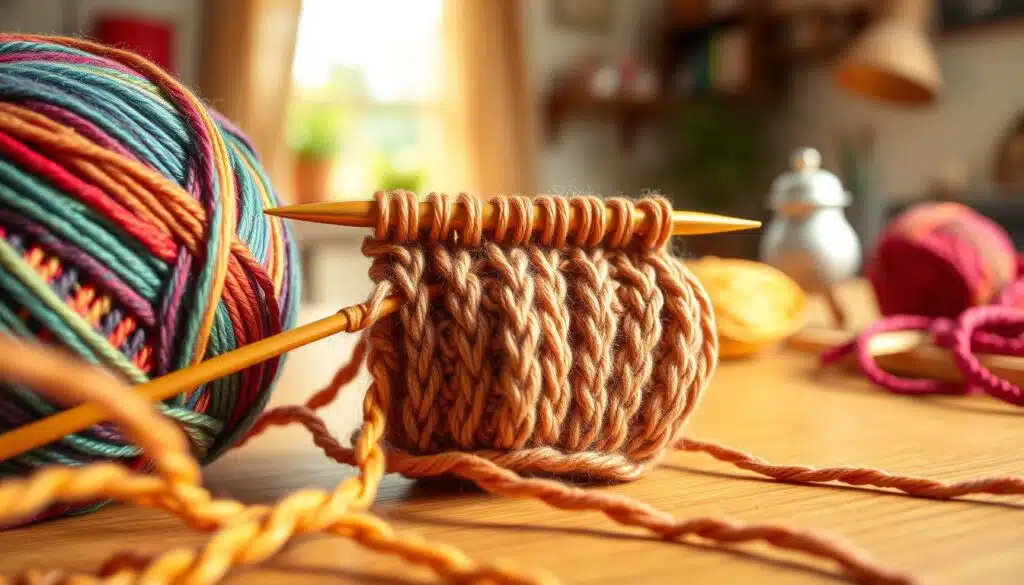
Follow a clear step-by-step routine to learn how to Portuguese knit. Insert the right needle through the first stitch from front to back while the right needle stays in front of the left. Use your left thumb to push the yarn away over the tip of the right needle. Rotate the right needle-tip to the right to catch the yarn. Push your hands slightly away to keep the tension, then scoop the right needle-tip to the left while pulling the new loop through. Slide the stitch onto the right needle and repeat.
The thumb flick knit movement is key. Your left thumb does a small push that acts like a cast-on flick for the knit row. This movement is similar to purling, so you’re using a familiar pattern in a new way. Practice the thumb flick slowly until it feels natural with the needle rotation.
Expect some counterintuitive moments. The way you hold the yarn and move the needles is different from American and Continental styles. This might feel odd at first. Video demonstrations by teachers like Liat Gat and KnitFreedom can help clarify these steps. Watching the motion helps your brain understand the sequence before you get it by muscle memory.
Use short, focused practice knit exercises to speed learning. Repeat the full sequence in sets of ten stitches, then rest for a minute. Move to longer runs once your thumb flick and needle rotation sync. Try alternating three knit rows with one relaxed row to avoid tension buildup in your shoulders and fingers.
Attend an in-person workshop when you can. Teachers at Retrosaria Rosa Pomar and local knitting retreats guide hand placement and real-project practice. Working with authentic yarn and immediate feedback accelerates mastery of the Portuguese knit stitch.
| Practice Drill | Purpose | Reps |
|---|---|---|
| Slow single-stitch loop | Focus on left-thumb flick knit and right needle rotation | 10–20 |
| Row runs with pause | Build rhythm; check tension after every 5 stitches | 3 rows, repeat |
| Timed 5-minute knitting | Increase speed while keeping even tension | 3 sets |
| Patterned swatch | Apply Portuguese knit stitch to garter or stockinette for real-project feel | 4–6 inches |
Tools and Setup for Portuguese Knitting
For smooth tension and less hand strain, the right setup is key. Find a calm, well-lit spot to sit with feet flat. Keep your shoulders relaxed for comfort.
Using a knitting pin pinned to your shirt vs. yarn around the neck
Wrapping yarn around your neck is simple and steady. It’s great for moving between projects easily.
Or, pin a knitting pin to your shirt near the collarbone. This method is neater and works well for travel. It’s perfect for tops that allow a secure anchor.
Needles, yarn types, and ergonomic aids for comfort
Choose needles that match your yarn and hand speed. Try polished Addi or KnitPro Symfonie needles for smooth glide. Ergonomic tools and blunt tips reduce hand fatigue.
Use yarns like Beiroa from Retrosaria Rosa Pomar for clear stitch definition. Smooth, even-spun yarns are best for tensioning. Test swatches to confirm gauge and feel.
Clothing and posture tips for long, pain-free sessions
Wear comfortable clothing and shoes. Choose a supportive chair for workshop days. Dress in a way that lets you pin a knitting pin or use neck tensioning without chafing.
Keep your hands slightly away from your body for tension. Use light pressure when feeding yarn. Small breaks and stretches keep your shoulders and wrists happy during long sessions.
| Setup | Pros | Cons |
|---|---|---|
| Yarn around neck (neck tensioning) | Fast to set up, natural tension, minimal hardware | May feel odd for some, can shift with movement |
| Knitting pin pinned to shirt | Neat for travel, consistent anchor, no yarn on skin | Requires a secure top, you must carry a pin |
| Ergonomic needles and grips | Reduces wrist strain, improves control, comfortable for long sessions | Slightly higher cost, personal feel varies |
| Yarn choice (smooth vs. textured) | Smooth yarns give even tension; textured yarns add interest | Textured yarns can hide tension inconsistencies |
Techniques to Improve Tension and Stitch Consistency
Fixing uneven rows is easy with a few simple steps. Start by checking how far your hands are apart. Changing this distance helps control tension without trouble.
How to adjust distance between hands to change tension
Spread your hands apart to pull the yarn tighter and make stitches tighter. Move them closer to let the yarn flow more freely and create softer stitches. Practice small adjustments on a test swatch to see the results.
Feeding yarn through fingers: fine-tuning for even stitches
Pass the yarn lightly through your right hand’s fingers. Adjust how much yarn you let go to change the stitch size. Use a gentle push to keep a steady flow and achieve even stitches.
Troubleshooting common tension problems
If your knitting looks tight or loose, stop and start again. Check your hand distance and yarn feeding. If needed, use a knitting pin to help with tension.
For tight knitting, focus on one problem at a time. Try short practice sessions to improve.
Record a video of your hands to spot issues. Watching it at normal speed helps you see and fix bad habits. Small changes lead to better knitting.
Adapting Portuguese Knitting to Patterns and Projects
You can add Portuguese techniques to almost any project with some planning and practice. When adapting patterns, focus on how each step handles knits and purls. For example, use the Portuguese purl for garter-stitch scarves by purling every row.
For sweaters, keep your Portuguese purl consistent in each round. Turn the garment right side out when the pattern says to.
Working flat or circular is similar once you get the hang of it. The motions for knit and purl stay the same. The only difference is how you hold the needles.
If you’re knitting in the round, practice keeping your yarn tension even. Small changes in how you wrap and feed the yarn can make a big difference in your stitches.
Swatching is key to getting the right tension. Use the same yarn and needle size as the pattern. Make swatches in stockinette and any textured stitch used in the design.
If your tension is off, change your needle size until your swatch matches the pattern. Liat Gat and many instructors say swatching removes guesswork and keeps your project fitting right.
If you learn better in person, look for workshops and shops that teach project-focused lessons. Places like Retrosaria Rosa Pomar and Burel offer hands-on sessions. You can try sweater, hat, and scarf builds while experts watch your tension.
How to work Portuguese knitting into garment patterns
Begin by translating each pattern step into Portuguese motions. Mark rows where purls occur and decide whether to purl in place or work a Portuguese purl. For colorwork or textured patterns, swatch each motif with your Portuguese tension before committing.
Keep notes on needle swaps and any increases or decreases that change hand orientation.
Working in the round vs. flat
When switching between flat and circular, watch for side-switches in right and wrong sides. In flat knitting, you flip the work; in the round, you don’t. This means a Portuguese purl on a wrong-side row may behave like a right-side movement when worked in-the-round.
Practice small circular projects, like hats, to smooth the transition.
Swatching and gauge tips when using Portuguese tensioning
Create at least three swatches: one in stockinette, one in pattern stitch, and one blocked to pattern dimensions. Measure after washing if the yarn will be washed before wear. Record stitch counts per inch and row gauge.
If your gauge is off, adjust needles or alter stitch counts to preserve fit when adapting patterns.
For more technique refreshers and practical pointers, check this helpful resource at knitting techniques and tips.
| Project Type | Portuguese Technique Tip | Swatch Focus |
|---|---|---|
| Sweater (in the round) | Keep Portuguese purl steady each round; mark raglan and increase points | Blocked stockinette + pattern repeat over shoulder shaping |
| Hat | Practice continuous rounds to keep even tension; use smooth joins | Hat circumference after blocking and brim elasticity |
| Scarf (garter) | Purl every row Portuguese-style for faster, gentler fabric creation | Garter stitch width and edge tension after light blocking |
| Colorwork | Maintain consistent tension on floats; swatch stranded motifs larger | Multiple-color swatch measuring gauge across colors |
Health Benefits and Accessibility: Knitting with Less Pain
Changing how you knit can make a big difference. The Portuguese method uses a special way to hold the yarn. This makes your fingers move less, helping you knit for longer without getting tired.
Why Portuguese knitting helps knitters with arthritis and hand pain
The Portuguese method reduces the need for hard thumb movements. It uses soft, small motions. This is easier on your joints and tendons.
Many knitters with arthritis find it helps them knit without pain. They say it makes purling easier too.
Testimonials and reported outcomes from knitters and instructors
Liat Gat suggests this method for those with hand pain. She has tutorials to help with pain relief. KnitFreedom members say it helped them finish projects they thought were too hard.
Workshop attendees in Lisbon, like those at Retrosaria Rosa Pomar, saw big improvements. They felt a lot of relief after getting hands-on help.
Simple modifications to make the method more accessible
If your neck hurts, try using a knitting pin instead. Experiment with different yarn paths and hand distances. Choose needles that are soft or ergonomic, like KnitPro or HiyaHiya.
Start with short practice sessions. Look for help from instructors or online forums. This way, you can adjust the method to fit your needs.
These easy changes can make knitting more comfortable. You can keep enjoying your projects without pain.
Where to Learn and Resources to Deepen Your Practice
You want clear instruction and hands-on correction. Start with online Portuguese knitting tutorials for step-by-step practice. You can pause and repeat as needed. For calmer lessons, check KnitFreedom Portuguese videos. They offer demos of the Portuguese knit and purl techniques.
For a mix of free and paid content, visit a curated write-up. It offers practical tips and history. It links well with video courses and photo tutorials. Mastering the Art of Portuguese Knitting pairs history with how-to steps.
In-person learning speeds up your progress. Small-group knitting workshops in Portugal let you feel yarn and get instant corrections. Multi-day retreats like Portugal Knitting Experience and Wool Works mix cultural outings with lessons.
Lisbon’s Retrosaria Rosa Pomar classes offer local flavor and artisan supplies. Rosa Pomar stocks Beiroa yarn and hosts classroom-style lessons. Other shops like Burel Mountain Originals and A Vida Portuguesa provide specialty wools and regional craft insight.
Blending online and in-person learning is best. Use online content for daily drills and reference. Then, join a local class or knitting retreat for tactile feedback. For more video options, check a well-organized round-up of tutorials and video links. Knitting tutorials and video pages often point to channels that suit your pace.
- Online: step-by-step video practice with membership support.
- Workshops: short intensive sessions in Portugal with cultural immersion.
- Shops and teachers: classroom lessons and artisan yarns like Beiroa at Retrosaria Rosa Pomar.
Mixing these options gives you muscle memory from videos, real-time fixes from teachers, and inspiration from Portuguese yarns. This mix helps your projects move from experiment to confident work without strain or guesswork.
Portuguese Knitting in Context: Travel, Culture, and Yarn Tourism
Plan a trip that combines technique and place. Learn Portuguese knitting in workshops and visit mills. Shop in yarn stores and enjoy local pastries. This mix turns practice into a sensory journey that changes how you pick fibers and design.
Visiting shops and mills
In Lisbon, Retrosaria Rosa Pomar offers lessons and Beiroa yarns. Meet makers, touch native fibers, and buy skeins that show regional character. Burel Mountain Originals and small mills outside Lisbon let you see traditional production.
Curated knitting tours
There are eight to eleven day itineraries that mix workshops with cultural visits. You’ll have classroom time, visits to shepherds and mills, and meals that highlight local produce. These tours cover Lisbon, Évora, Covilhã, the Silver Coast, and the Algarve.
Practical travel tips
English is widely spoken, and Portugal is affordable. Pack sturdy shoes for Lisbon’s hills and cobbles. Bring a lightweight project for transit and a travel needle case for yarn.
How immersion shapes your work
Handling regional fleece on a mill tour or talking with artisans changes your color and pattern choices. Sourcing yarn locally connects you to its origin. This often leads to bolder colors and more thoughtful projects.
Experiences to seek
- Hands-on workshops that teach Portuguese purl and knit methods.
- Factory visits to understand spinning and finishing processes.
- Market stops for artisanal notions, buttons, and leather goods.
Yarn tourism Portugal and textile tours Portugal guide you to these experiences. If you want to improve your craft and learn about culture, knitting travel Portugal is for you. A week here can refresh your skills and inspire new projects.
Conclusion
Want to learn Portuguese knitting? Start with a simple swatch and focus on the Portuguese purl. The anchored tension system helps by reducing thumb flicking and easing strain. This small change can make a big difference, leading to steadier stitches, less hand pain, and a quicker rhythm.
For clear step-by-step guides, try online video lessons like KnitFreedom. Or, join a local workshop to speed up your progress. If you can, plan a trip to Portugal for hands-on classes and yarn shopping. Places like Retrosaria Rosa Pomar and brands like Beiroa and Burel are must-visits.
Your practical takeaway is simple: try the neck-wrap or a pinned yarn setup, practice the Portuguese purl first, and mix self-study with in-person coaching when possible. When you start Portuguese knitting, you may find faster work, gentler tension, and a new reason to pack an extra suitcase for yarn and a pastel de nata.
FAQ
What is Portuguese knitting and how does it differ from American or Continental styles?
Portuguese knitting keeps the working yarn at the back of your neck or on a pin. Then, it goes through your right-hand fingers. This method creates stitches with a small left-thumb flick. It’s different from American and Continental styles, but it leads to even tension and faster purling.
Why would I switch to Portuguese knitting?
It’s more comfortable and efficient. The setup reduces strain on your hands. It’s great for those with arthritis or hand pain. Plus, it speeds up your knitting, making purling easier.
How do I set up the yarn tension for Portuguese knitting?
Hold the needle in your left hand. Wrap the yarn around your neck or use a pin. Then, weave it through your right-hand fingers. Adjust the tension by changing how far apart your hands are.
Can I use a knitting pin instead of wrapping yarn around my neck?
Yes. A knitting pin does the same job as yarn around your neck. Many prefer it for comfort or learning in public. Liat Gat’s tutorials show both options.
Is the Portuguese purl really easier than the American or Continental purl?
Yes, many find it easier. The same small left-thumb flick works for both purl and knit. The anchored yarn makes purling simpler, helping those with limited finger mobility.
How exactly do I do the Portuguese purl step by step?
Place the right needle tip into the first stitch as if to purl. Make sure the yarn runs from the left needle around your neck left-to-right. Use your left thumb to push the yarn over the right needle tip. Rotate the right needle tip to catch the yarn, then pull the loop through. Repeat this for each stitch.
What about the Portuguese knit stitch—does it differ a lot?
The knit uses the same anchored yarn and left-thumb flick. But, the needle insertion and rotation are different. It feels counterintuitive at first, but practice makes it easier.
Can I mix Portuguese purl into my existing knitting without learning the full method?
Absolutely. You can use the Portuguese purl for garter stitch. It’s a simple way to get ergonomic benefits and see if you like the method.
How do I fix stitches that are too tight or too loose with Portuguese tensioning?
Adjust how you feed the yarn through your right-hand fingers. Change the distance between your hands to control tension. Re-anchor the yarn if needed. If problems persist, try different needles or get feedback from a video or teacher.
Do I need special needles or yarn for Portuguese knitting?
No special tools are needed, but ergonomics help. Use smooth yarns and the right needle size for your gauge. Ergonomic needles can also help with hand pain.
How should I swatch and check gauge when using Portuguese tensioning?
Always swatch with the exact yarn, needle size, and Portuguese tensioning you’ll use. Work a flat or in-the-round swatch and measure stitches per inch after washing. Adjust needle size if needed. Liat Gat recommends focused practice swatches to build reliable gauge.
Can I knit in the round with Portuguese tensioning?
Yes. The motions remain the same; only orientation changes. For circular garments, keep your tension steady while working continuous rounds. Use Portuguese purl-every-round to create garter-like ridges.
Where can I learn Portuguese knitting online or in person?
Online, KnitFreedom (Liat Gat) offers step-by-step tutorials for Portuguese knit and purl. In person, shops and workshops in Portugal offer hands-on classes. Curated knitting tours include immersive workshops and artisan visits.
What should I expect from a knitting tour or in-person workshop in Portugal?
Expect focused, small-group lessons with local yarns and textile history. You’ll handle regional fibers, visit mills or shops, and get immediate corrections. Tours also include cultural activities and local food.
Does Portuguese knitting really help with arthritis and hand pain?
Yes, many knitters report reduced pain. The technique minimizes tight repetitive finger movements. The small left-thumb flick is low force, and the anchor takes strain off fingers.
What common troubleshooting tips help learners master Portuguese knitting?
Slow down and isolate each movement. Swatch repeatedly to build muscle memory. If the neck wrap is awkward, try a knitted pin. Adjust hand distance, re-thread yarn through fingers, change yarn or needle size, and consult video or in-person feedback.
Which Portuguese shops and brands are recommended for learning and sourcing yarn?
Retrosaria Rosa Pomar in Lisbon is a top recommendation for lessons and artisan yarns like Beiroa. Burel Mountain Originals is the go-to for traditional Burel wool products. A Vida Portuguesa and local markets also showcase Portuguese-made goods.
How do I build practice routines to make Portuguese movements automatic?
Start with short, focused swatches—purl-only rows are excellent. Repeat tiny sequences until the left-thumb flick and needle rotation feel natural. Use timed practice and follow step-by-step videos.
Are there modifications for people who can’t or won’t wear yarn around their neck?
Yes. Use a knitting pin pinned to your shirt as the anchor. You can also experiment with different anchoring points or wearable clips. Ergonomic needles and posture adjustments further reduce discomfort.
Will Portuguese tensioning change my pattern instructions?
The patterns remain the same, but you must execute knit and purl instructions with Portuguese motions. Pay attention to row/round orientation and whether a pattern assumes right-side turning. For garter techniques, purl-every-row or purl-every-round choices map well to Portuguese purl. Always swatch to confirm gauge and behavior before committing to a full garment.