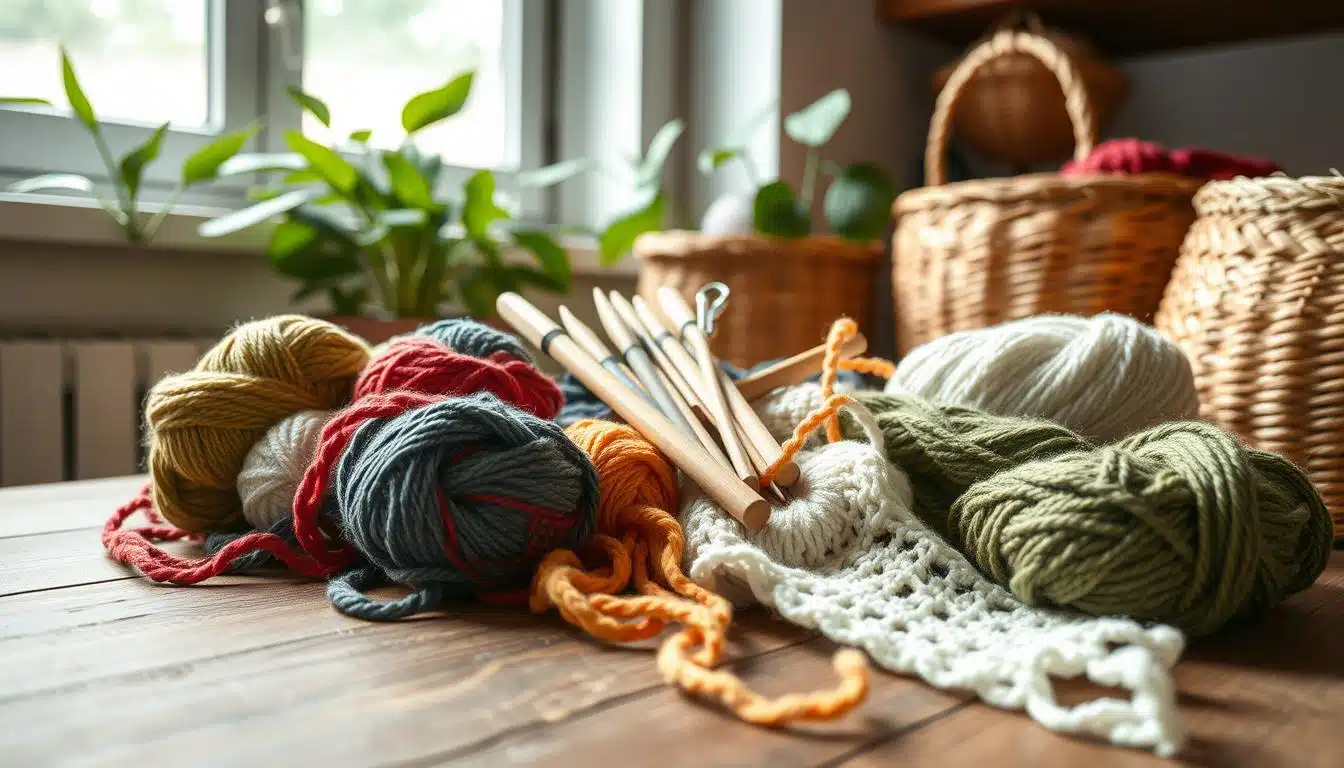
You’re about to start a six-article journey that shows crochet can be both beautiful and responsible. This series focuses on the materials you choose. The yarn you pick affects the project’s impact, from simple washcloths to cozy sweaters. Sustainable crochet materials help us meet today’s needs without harming tomorrow’s world.
Let’s get the basics right so you can crochet with confidence. “Sustainable” means something can be kept up forever. “Eco-friendly” means products and methods that don’t harm the environment. “Eco-conscious crafting” is the mindset behind these choices. Choosing sustainable yarns means you’re supporting eco-friendly crochet and the slow yarn movement.
Price might be a concern, and it’s understandable. Sustainable options might cost more at first, but they last longer and waste less. Many makers use durable fibers like cotton and wool to replace disposable items. Brands like WeCrochet, Lion Brand, and Lily Sugar’n Cream offer sustainable patterns you can start with today.
Conventional supply chains have hidden costs like water waste and pesticides. By choosing eco-conscious crafting and sustainable yarns, you reduce these impacts. The slow yarn movement encourages you to value quality over quantity. This means smaller stashes, better fibers, and projects that truly matter.
Key Takeaways
- Sustainable crochet materials focus on fibers that last and break down naturally.
- Eco-friendly crochet combines sustainable production with mindful use.
- Eco-conscious crafting aligns your purchases with values like reduced waste and fair production.
- The slow yarn movement values quality, longevity, and mindful consumption.
- Brands like WeCrochet, Lion Brand, and Lily Sugar’n Cream are featured in many eco-focused patterns.
- Replacing single-use items with crocheted goods saves resources over time.
- Start with small projects to learn about fiber behavior before tackling bigger ones.
For a practical guide on eco-friendly crochet projects and materials, check out this resource at eco-friendly crochet.
What sustainable crochet means and why it matters
You care about yarn and where it comes from. Sustainable crochet means picking fibers and processes that last forever. It keeps ecosystems and human lives safe.
Defining sustainable, eco-friendly, and eco-conscious in crafting
Sustainable goes beyond just products. It looks at supply chains, worker rights, and how long things last. Eco-friendly is about materials and methods that don’t harm nature. Eco-conscious crafting is about thinking about materials, waste, and energy at every step.
How your material choices affect the environment and future generations
Your yarn choice impacts water use, pollution, and carbon emissions. Cotton needs lots of water and chemicals. Acrylic and other synthetics use fossil fuels and take ages to break down.
Choosing natural, regenerative, or recycled yarns cuts pollution and saves resources for others.
How crochet as a handmade practice fits into the slow yarn movement
Crochet lets you think and create with care. The slow yarn movement encourages buying less, choosing better, and making things that last. By making items like dishcloths and tote bags, you show the value of sustainable yarns in daily life.
Sustainable crochet materials
Choosing the yarn is a powerful step. Opting for natural and biodegradable fibers can make a big difference. The textile industry faces big challenges, but you can make a change today by choosing better materials.
Overview of natural, renewable, and biodegradable fibers
Organic cotton, bamboo, hemp, and wool are great choices. They break down easily and return to nature. Recycled yarns from old plastics or fabrics also help reduce waste. These options feel better in your hands and last longer.
Why avoiding petroleum-based synthetics reduces long-term waste
Many yarns, like acrylic, come from oil and take ages to decompose. They also release microplastics when washed. By avoiding these, you help reduce landfill waste and lower your carbon footprint. Choosing biodegradable fibers not only clears your conscience but also helps the environment.
Balancing cost, accessibility, and sustainability
It’s true that eco-friendly yarns can be pricier. Start with affordable options like Lily Sugar’nCream for towels or WeCrochet Dishie for home items. For projects needing drape, try Lion Brand Truboo or bamboo blends. For warmth, WeCrochet Wool of the Andes Worsted is a good choice.
To keep costs down, start with small projects. Buy single skeins before committing to a big project. Compare prices online and in local shops to find deals. These steps help you find sustainable yarns that fit your budget and craft.
| Fiber | Benefits | Best Uses | Typical Price Range |
|---|---|---|---|
| Organic cotton | Low pesticide use, soft, biodegradable | Dishcloths, towels, baby items | $4–$8 per skein |
| Bamboo (viscose) | Silky drape, breathable, renewable | Summer garments, scarves | $6–$12 per skein |
| Hemp | Durable, softens with use, low water | Bags, durable accessories | $5–$10 per skein |
| Wool (ethically sourced) | Warm, long-lasting, biodegradable | Sweaters, outerwear, warm accessories | $8–$20 per skein |
| Recycled blends | Reduces landfill, unique textures | Statement pieces, mixed-media projects | $6–$15 per skein |
| Acrylic (for comparison) | Cheap, widely available, non-biodegradable | Budget projects, toys | $2–$6 per skein |
Organic cotton and certified cotton yarns
You want yarn that cares for your projects and the planet. Organic cotton yarn is a great choice. It cuts down on pesticide use and lowers chemical runoff. Plus, it makes a softer, breathable fabric that’s good for sensitive skin.
Benefits: water use, pesticide reduction, and hypoallergenic qualities
Organic cotton fields use smarter irrigation and avoid synthetic pesticides. This means less toxic runoff into rivers and healthier soil for future crops.
Your finished pieces stay breathable and gentle. If you or someone you gift to has sensitive skin, the hypoallergenic nature of organic fibers makes towels and garments safer to wear.
Certifications to look for and what they mean
When you shop, look for GOTS cotton and Oeko-Tex yarn labels. GOTS cotton confirms organic farming plus social and environmental criteria during processing.
Oeko-Tex yarn signals testing for harmful substances. This means you avoid chemical surprises in baby items and kitchen linens.
Best project types for organic cotton: dishcloths, towels, homewares
Cotton for dishcloths and kitchen linens shines because it soaks, scrubs, and holds up to frequent washing. Brands like WeCrochet Dishie and Lion Brand 24/7 Cotton give real-world examples of yarn behavior across projects.
For budget-friendly scrubby options, classic choices such as Lily Sugar’n Cream work well for washable items. Pick eco-friendly cotton yarn when you want reusable, durable homewares that cut single-use waste.
| Project Type | Recommended Yarn Example | Why It Works | Certification to Seek |
|---|---|---|---|
| Dishcloths and washcloths | WeCrochet Dishie | Soft, absorbent, holds up to hot water and scrubbing | GOTS cotton or Oeko-Tex yarn |
| Towels and bath linens | Lion Brand 24/7 Cotton | Denser, sturdy stitch definition for long-term use | GOTS cotton |
| Potholders and trivets | Lily Sugar’n Cream | Affordable, firm texture that resists heat with tight stitches | Oeko-Tex yarn |
| Produce bags and soap savers | Generically labeled organic cotton yarn | Lightweight, washable, and compostable at end-of-life | GOTS cotton |
Bamboo and hemp fibers for eco-friendly drape and durability
Choose fibers that fit your project’s vibe. Bamboo and hemp offer unique benefits. Bamboo gives a silky feel, while hemp is strong and softens over time.
Fast-growing crops: lower water use and minimal pesticides
Bamboo and hemp grow fast, needing less water than cotton. This makes them great for those who want to reduce chemical use and water consumption.
Properties: silkiness of bamboo, strength and softening of hemp
Bamboo yarn is light and silky, perfect for flowy garments. It also has natural antibacterial properties, ideal for warm-weather clothes.
Hemp yarn is initially tough but gets softer with each wash. This makes accessories like bags and belts durable yet comfortable.
Where to use them: garments, summer wear, durable accessories
Use bamboo yarn for summer clothes like tops and dresses. It adds a lovely drape. Brands like Lion Brand Truboo show how well it works.
For items that need to be tough, like bags and belts, hemp yarn is the way to go. Mix hemp with softer fibers for items that need both strength and comfort.
Wool and other animal fibers with ethical sourcing
You want yarn that lasts, keeps you warm, and is good for the planet. Natural animal fibers like Merino wool meet these needs. They offer warmth, breathability, and last a long time, reducing the need for frequent replacements.
Longevity, warmth, and biodegradability advantages
Wool’s natural crimp traps air, keeping your sweater warm for years. This longevity helps make sustainable wool choices better for the environment.
These fibers are biodegradable. They break down cleanly, returning nutrients to the soil when disposed of properly.
Ethical considerations: traceability, humane husbandry, and certifications
Ethical sourcing is key, not just the yarn’s color. Look for traceable wool that names farms or regions. Brands like WeCrochet make it easy to check origins and quality.
Seek certifications and clear policies on humane husbandry. Traceable wool shows that animal welfare was respected during production.
For more on eco-friendly fibers and how to verify them, see this guide: eco-friendly knitting and crochet.
Care tips to extend the life of your projects and keep them sustainable
Wool care is simple. Air garments to freshen them; merino often self-cleans with a bit of airing, which reduces washes and preserves fibers.
When washing, use cool water, a mild unscented detergent, and a washing net for delicate items. Avoid high-heat drying to prevent shrinkage and fiber damage.
Mend small holes early and block gently to restore shape. Proper storage—clean, dry, and folded—protects against pests and extends usefulness.
| Benefit | What to look for | Practical tip |
|---|---|---|
| Durability and warmth | Worsted or bulky counts like Wool of the Andes | Choose heavier weights for outerwear; wash sparingly |
| Ethical sourcing | Brands with farm-level traceability and welfare policies | Prefer traceable wool and request provenance info |
| Biodegradability | Natural animal fibers with minimal processing | Compost worn-out pieces or recycle responsibly |
| Low-maintenance freshness | Merino’s odor resistance and moisture control | Air items instead of washing to save water and energy |
| Longevity strategies | Regular mending, proper storage, gentle washing | Keep a small darning kit and learn basic repairs |
Recycled and upcycled yarns from post-consumer waste
Your crochet hook can do more than make pretty things. Using recycled yarn or yarn from plastic bottles helps you turn waste into warm, wearable art. These choices cut demand for virgin materials and pull discarded items out of landfills.
Start small by trying upcycled yarn made from old garments or textile scraps. You can also find sustainable recycled fibers spun from post-consumer bottles and factory offcuts. Many makers report similar softness and strength to traditional yarns, with less environmental cost.
How recycled yarns reduce landfill and virgin resource use
Recycled yarn diverts textiles and plastics from dumps while lowering the need for new fibers. Processing uses less water and energy than making virgin yarn, which makes it an effective step toward greener crafting.
Sources: plastic bottles, textile scraps, and upcycled garments
Some yarns begin life as PET bottles. Those bottles become fine filaments that knit up like conventional yarn. Other options come from pre-loved tees and production scraps repurposed into sturdy, characterful skeins. For a practical primer on processes and benefits, see a clear industry overview from RG Fibers explaining recycled yarn benefits.
Textural and color benefits for creative, unique projects
Expect interesting twists in color and feel. Upcycled yarn often yields unique texture yarns that add depth to simple stitches. You can mix a smooth organic cotton with a slubby recycled strand for a lived-in, artisanal look.
When you choose recycled or upcycled yarn, you give projects a story. Your pieces become part of a circular craft movement that values resourcefulness and style.
Choosing sustainable yarn brands and verifying ethical sourcing
You want yarn that feels good in your hands and aligns with your values. Look for brands that clearly state their supply chain transparency and have verified certifications. Brands that share fiber origin, mill partners, and processing steps help you choose sustainable yarn.
For organic cotton or blended fibers with strict standards, search for GOTS yarn brands. GOTS labels ensure environmental limits and chemical controls. Oeko-Tex and similar seals also confirm low-toxicity dyeing and finished goods.
Trusted sellers include specialist eco shops, local yarn stores, and reputable online retailers like We Are Knitters, Darn Good Yarn, and LoveCrafts. These places offer detailed product pages, customer reviews, and staff ready to answer questions about ethical yarn sourcing.
Before buying, ask direct questions about fiber origin, manufacturing impact, and labor conditions. Demand evidence of third-party audits and traceability. Brands that are transparent usually publish reports or FAQs with specific data.
Shopping small supports local shops, cutting shipping footprints and getting advice. Online, choose eco-friendly yarn retailers that show mill names, certificate numbers, and clear return policies. This helps avoid greenwashing and ensures durable yarn.
| What to Check | Why It Matters | Where to Find It |
|---|---|---|
| Fiber origin | Shows environmental and social context of raw materials | Product page, fiber label, brand transparency report |
| Certifications (GOTS, Oeko-Tex) | Independent verification of organic practices and low-toxicity processing | Certification page, product tag, downloadable certificates |
| Mill and dyehouse details | Helps verify wastewater treatment and chemical controls | Supply chain statements, published audits, customer service |
| Labor practices | Ensures fair wages and safe working conditions | Code of conduct, audit reports, third-party certifications |
| Recycled content or post-consumer source | Reduces virgin materials and landfill impact | Product descriptions, material breakdowns, sustainability pages |
Practical swaps and project ideas that reduce waste
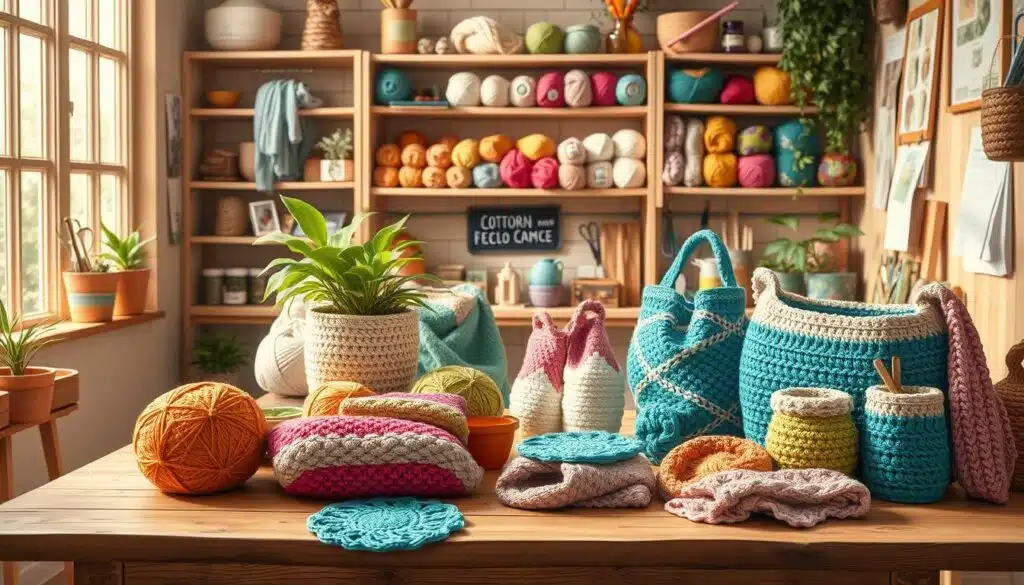
Simple yarn can turn into useful items that save money and cut waste. Start with small projects that are quick and useful right away. These projects make sustainable crochet swaps fun, not a chore.
Reusable home essentials you can make today
Make dishcloths to replace paper towels and cut kitchen trash. Try different patterns, from textured scrubbies to plush cotton squares.
Potholders, soap savers, produce bags, and shower puffs can replace single-use plastics. Use a produce bag crochet pattern for market trips. Keep soap savers in a travel kit.
Patterns that replace single-use items and extend home longevity
Choose patterns that are durable and easy to care for. Double-thick potholders protect surfaces longer. Thick cotton washcloths last through daily scrubbing.
Use reliable pattern sources to learn about stitch density and fabric drape. For step-by-step help, check out crochet patterns for beginners. Adapt those skills for reusable crochet projects.
How starting small helps you learn fiber behavior
Beginner eco projects teach you about fibers’ reactions to water, stretch, and wear. A simple washcloth shows how cotton blooms after washing. A small soap saver shows how stitch size affects drainage and longevity.
These small experiments save time and yarn for larger projects. You’ll learn to choose favorite fibers and blend materials. This builds confidence for bigger sustainable crochet swaps.
| Project | Why it helps | Skill level | Suggested use |
|---|---|---|---|
| Dishcloth | Replaces paper towels and single-use sponges | Beginner | Daily dishwashing and cleaning |
| Potholder | Protects surfaces, lasts longer than store-bought pads | Beginner to Intermediate | Hot pans and trivets |
| Produce bag | Eliminates disposable plastic produce bags | Beginner | Farmers market and grocery trips |
| Soap saver | Reduces soap waste and extends bar life | Beginner | Shower, travel, and gift sets |
| Reusable face pad | Replaces disposable cotton rounds | Beginner | Makeup removal and skincare |
| Shower puff | Reusable alternative to synthetic poufs | Intermediate | Exfoliation and lathering |
Care, longevity, and end-of-life for sustainable crochet pieces
You want your handmade items to last long and be gentle on the planet. Start with smart habits like gentle washing and timely repairs. These crochet care tips help you avoid fast replacements and reduce waste.
Washing, blocking, and repair strategies
Wash with care. Use cold water and mild detergent for wool, or follow the yarn label. Treat cotton and hemp like linens: warm wash for stains, low tumble or air dry for shape retention. These simple routines are key to sustainable knitting care.
Block to restore drape and fit after washing. Pin to shape on a flat surface and let pieces dry fully. Blocking revives stitch definition and lengthens the time between major repairs.
Mend early. Learn to darn, patch, or reweave small holes before they grow. When you mend crochet items, you preserve function and beauty while honoring the labor that went into each stitch.
Compost, recycle, and disposal options
Natural fibers often return to soil. If your cotton, wool, bamboo, or hemp yarn is untreated and dye-free, you can compost natural yarn scraps or worn pieces. Cut into small pieces to speed decomposition and add to a balanced compost bin.
Synthetic blends do not break down easily. Seek local textile recycling programs or creative upcycling to keep plastic-based yarn out of landfills. If you need ideas for small sustainable projects, check an easy pattern resource like easy crochet crafts that reuse leftover skeins and help you recycle yarn into useful items.
Gifting, community, and repair culture
Make gifts with purpose. When you give a durable, well-cared-for item, you model mindful consumption and extend the object’s life through valued use. Pack care notes with each gift to share sustainable knitting care tips.
Join or start a mending circle. Trade skills to learn how to mend crochet items and swap tools or yarn. Community repair events encourage reuse and reduce single-use purchases across neighborhoods.
When you compost natural yarn, recycle yarn, and commit to repair, you close loops and build a quieter, kinder crafting habit. Those small acts add up to a big difference for the planet and for future handmade traditions.
Conclusion
Sustainable crochet isn’t just a choice; it’s a path to follow. By picking natural fibers like hemp and organic cotton, you help the planet. You also make items that last longer.
Small changes can make a big difference. Replacing disposable items with crochet pieces adds value to your home. It also makes your daily routine better.
Choosing sustainable materials doesn’t have to break the bank. You can find affordable recycled yarns or splurge on premium fibers. Both options help reduce waste and last longer.
It’s important to know what you’re buying. Look for labels that show where and how materials are made. Follow care tips to keep your creations in good shape for longer.
Sharing what you make is key. Start with simple items like cloths or bags. Try blending fibers for unique textures. Show your community how making mindful choices can make a difference.
For more tips and resources, check out this guide on eco-friendly knitting and. It will help you keep going on your sustainable journey.
FAQ
What does “sustainable crochet” actually mean?
Sustainable crochet means picking materials and methods that don’t harm the planet or people. It’s about using eco-friendly and eco-conscious ways. This means choosing renewable fibers, buying from brands that are open about their practices, making things that last, and fixing instead of throwing away.
How do my material choices affect the environment?
Your yarn choices can impact water use, pesticide use, carbon emissions, and waste. Cotton and acrylic can harm the environment a lot. Cotton uses a lot of water and pesticides, while acrylic is made from oil and takes a long time to break down. Natural fibers like organic cotton, bamboo, hemp, and wool, plus recycled yarns, are better for the planet.
How does crochet fit into the slow yarn movement?
Crochet fits well with slow yarn values. It’s about making quality items, doing projects with care, and being mindful of what you buy. You create items that last, like baskets and towels, instead of using things once and throwing them away. Slow yarn encourages you to enjoy the process, choose better materials, and make items that last longer.
Which fibers are considered sustainable for crochet?
Natural, renewable, and biodegradable fibers are best: organic cotton, bamboo, hemp, and wool from ethical sources. Recycled yarns and upcycled materials are also good. Each fiber has its own benefits: cotton for home goods, bamboo for softness, hemp for strength, and wool for warmth.
Why should I avoid petroleum-based synthetics like acrylic?
Acrylic is made from oil and takes centuries to break down. It adds to plastic pollution and waste. Choosing natural fibers reduces waste and carbon footprint. If you must use synthetics, look for recycled or blended yarns with clear recycling paths.
Can sustainable yarns be affordable and accessible?
Yes, you don’t have to spend a lot to be eco-friendly. Affordable options like Lily Sugar’n Cream and Lion Brand 24/7 Cotton work well for home items. Start with small projects to test fibers and build confidence. Compare yarn prices to project needs and focus on making things that last.
What are the benefits of organic cotton over conventional cotton?
Organic cotton avoids harmful pesticides and fertilizers, reducing pollution and health risks. It uses better soil practices and often less water. Organic cotton is breathable and hypoallergenic, making it great for clothes and home items.
Which certifications should I look for when buying cotton or other fibers?
Look for certifications like GOTS for organic textiles and Oeko‑Tex Standard 100 for chemical limits. These signals show a brand’s commitment to environmental and social standards. Also, check brand websites for information on where their materials come from.
What cotton yarns are recommended for kitchen and home projects?
Good choices include WeCrochet Dishie for soft dishcloths, Lion Brand 24/7 Cotton for sturdy baskets, and Lily Sugar’n Cream for affordable towels. Choose the right yarn for the job—stiffer cotton for baskets, softer for towels.
How does bamboo and hemp fit into sustainable crochet?
Bamboo and hemp are fast-growing, needing little water and pesticides. Bamboo yarn is silky and antibacterial, perfect for summer clothes. Hemp is strong and softens over time, great for durable items like bags and baskets.
Is wool a sustainable choice for crochet?
Wool can be sustainable if sourced ethically. It’s renewable, biodegradable, and lasts a long time. Choose brands that care about animal welfare and follow proper care to make your wool items last.
How do I verify ethical sourcing and animal welfare claims?
Look for certifications, supply chain statements, and third-party audits. Brands that share farm-to-yarn details and humane practices are better. If unsure, ask questions—your interest can push brands to be more open.
What are recycled and upcycled yarns, and why use them?
Recycled yarns come from plastic bottles or old clothes, reducing waste. Upcycled yarns come from repurposed materials. They offer unique textures and colors, making eco-friendly projects while reducing waste.
Where should I shop for sustainable yarns?
Shop at local yarn stores, eco-specialist shops, and online at places like We Are Knitters and LoveCrafts. Look for detailed product pages that list fiber content, origin, and certifications.
What practical swaps can I crochet to reduce single-use waste?
Make durable crochet items like dishcloths, washcloths, and produce bags. Use patterns like Blue Star Crochet’s potholders or Goldenberry’s washcloths. These items are made to last and can replace disposable items.
How do I choose the right yarn for a reusable home item versus a garment?
For home items, choose cottons like WeCrochet Dishie or Lion Brand 24/7. For clothes, pick fibers with drape and comfort like bamboo blends or soft wools. Consider the item’s function—bamboo for softness, hemp for strength.
What care practices extend the life of sustainable crochet pieces?
Wash items gently, using cold water and mild detergent. Block items to restore shape and mend snags early. Store items properly to avoid pests. Proper care prevents early replacement and reduces waste.
Can I compost or recycle my crochet pieces at end-of-life?
Yes, natural fibers like untreated cotton, wool, hemp, and bamboo can be composted if free of toxic dyes. Synthetics can’t be composted but can be recycled or upcycled. Consider mending, donating, or swapping before throwing away.
How can I balance sustainability with budget and practicality?
Start small and choose affordable options like Lily Sugar’n Cream for kitchen items. Try budget-friendly brands for practice projects. Buy higher-cost yarns only for items you’ll use often. Mix recycled or blended yarns when needed and focus on durability.
What questions should I ask a brand before buying yarn?
Ask about fiber origin, processing, dye impact, labor practices, and certifications like GOTS or Oeko‑Tex. A transparent brand will have clear answers and documentation on their website.
Any tips for getting started with sustainable crochet projects?
Start with small, useful items like face rounds, washcloths, and soap savers. Use affordable yarns like Lily Sugar’n Cream or WeCrochet Dishie. Track how items wear and share your experiences to inspire others.