If you want to learn knitting stitches without drama, you’re in the right place. This intro is a friendly push toward beginner knitting success. It offers clear tips on tools, yarn, and quick wins to keep you knitting.
Start simple: pick worsted-weight yarn and medium straight needles in the US 7–US 9 range. Bamboo or wooden needles make how to knit feel kinder—less slipping, more grip—while aluminum and plastic remain budget-friendly if you prefer. These choices help your first stitches look good and teach you tension control faster.
Find visual inspiration everywhere. Jane Morgan’s Pinterest collection “72 Knit Picky and knitting tutorial ideas” collects approachable stitch patterns and motifs. It shows how beginner knitting can scale from scarves to playful collage cardigans. For technique videos, Skill Set’s short clips and creators like Erin Guimond (@PickyFemme) demonstrate colorwork and intarsia that will spark your curiosity.
Ready for practice? Start with basic knit and purl repeats, watch one short clip, then try a small swatch. As you work, use resources like this stitch-pattern library on Knit It Now to explore textures and openwork at your own pace: stitch pattern collection. Learning is stepwise—each neat row is a win that nudges you toward bigger projects.
Key Takeaways
- Choose worsted yarn and US 7–US 9 needles for visibility and control.
- Bamboo or wood needles help reduce slipped stitches for beginners.
- Use short tutorial videos and Pinterest boards for quick inspiration.
- Practice small swatches to build tension control and confidence.
- Explore stitch libraries and simple patterns to expand your skills.
Why You’ll Love Learning to Knit: Joy, Creativity, and Cozy Results
When you start knitting, something special happens. Simple stitches turn into calming moments and then into something cozy. This is the magic of knitting: it turns yarn into warm, wearable items that brighten your day.
Knitting has emotional benefits that are both subtle and strong. Finishing a scarf or hat proves your skill. These small victories help reduce stress and build confidence.
The emotional payoff of making wearable art
Finishing a sweater or a color panel is a big deal. It shows your creativity. This joy comes from making something both useful and beautiful. Your projects become part of your story, making gifts even more special.
How small wins (like a neat purl row) keep you coming back
Early success is key. Easy patterns and comfortable needles help you master knit and purl rows quickly. These small victories create a habit loop that keeps you knitting without hassle.
Real-world inspiration: collage cardigans and playful motifs
Look to Erin Guimond for collage cardigans inspiration. Her work combines intarsia, stranded colorwork, and whimsy. You learn new techniques while making pieces that are full of life and color.
| What You Get | How It Helps | Try This Next |
|---|---|---|
| Calm, focused time | Reduces anxiety and boosts mood | Start a simple garter stitch scarf |
| Tangible accomplishments | Builds confidence with visible progress | Make a hat to learn circular knitting |
| Creative expression | Turns ideas into wearable art | Sketch motifs, then try small intarsia panels |
| Community connection | Shared projects spark feedback and support | Post progress photos, join a local group |
Essential Tools for Beginners: Needles, Yarn, and Starter Kits
Starting to knit? You want tools that make learning fun, not hard. Choose items that help you control your stitches and fix mistakes easily. The right tools can make you feel confident and skilled quickly.
Choosing needle materials: why bamboo or wood help beginners
Bamboo and wooden needles hold yarn gently, preventing stitches from slipping. This gentle grip is perfect for beginners with uneven tension. Knitter’s Pride and Addis offer affordable, reliable options.
Aluminum and plastic needles are slicker but might be harder for beginners. Start with bamboo and switch to aluminum or plastic later for speed.
Needle sizes to start with: why US 7–US 9 is a sweet spot
Beginners should use medium needles for easy stitch visibility and yarn handling. Sizes US7 to US9 are ideal for clear stitches and quick progress. Knitting experts like Cassie May recommend worsted weight yarn with these sizes for beginners.
Start with straight or short circulars in these sizes. Once you get the hang of it, try larger or smaller needles to change the fabric’s feel.
Yarn basics: avoid chenille, eyelash, and mohair when starting
Choose yarns that show stitches well, like worsted wool or acrylic blends. Avoid yarns that hide stitches. Chenille, eyelash, and mohair are bad choices for beginners because they make mistakes hard to spot.
Beginners should pick smooth, medium-weight yarn in a light color. Light yarns help you see your stitches. Use bamboo needles with smooth yarn to make learning easier.
Check out We Are Knitters beginner kits for ready-made options. These kits include everything you need to learn quickly.
- Quick checklist: bamboo needles, needle sizes US7 US9, smooth worsted yarn, and avoid fuzzy yarns.
- Bonus tip: keep a small notebook to note which needle and yarn combos you like best for future projects.
Setting Up Your First Project: Simple Tips to Avoid Frustration
Starting your first knitting project should be fun, not a puzzle. Choose a simple pattern with basic stitches. Look for easy projects like scarves, dishcloths, and hats on Pinterest. For a good starting point, check out a guide on knitting basics at knitting techniques and tips.
Selecting a beginner-friendly pattern
Find a pattern that clearly states yarn weight, needle size, and size of the finished project. Opt for patterns marked as “beginner” or “easy”. These usually use medium-weight yarn and US 7–US 9 needles. Stay away from fuzzy yarns that make counting stitches hard.
Start with short projects for quick wins. A simple scarf or dishcloth teaches you about row consistency and edge control. Remember, your first project is for practice, not perfection.
How to swatch and why it matters
Swatching is key to avoiding problems later. Cast on a square of 20–30 stitches, knit a few inches, and measure your stitches per inch. Adjust your needle size to match the pattern’s gauge.
Swatching helps you check your tension and get a feel for the yarn. If your gauge is wrong, your finished piece will be off too. Avoid using mohair and eyelash yarns for swatching.
Organizing yarn, needles, and charts so you actually finish
Good organization is key to keeping your project on track. Use labeled bags for yarn, a small pouch for needles and markers, and a clipboard for charts. Keep photos and pattern notes together. Erin Guimond and the Skill Set approach show how visuals help with pattern placement.
Before starting a complex project, plan where motifs will start and end. Mark raglan lines, underarms, and panel edges. This planning helps avoid mid-project confusion and ensures you finish on time.
Basic Stitches Demystified: Knit, Purl, and Tension Control
Learning the basics is easier when you break each step into simple, watchable parts. Start with medium needles and worsted-weight yarn. This lets you see what your hands are doing.
Short clips help you understand the knit stitch. Quick repeats build muscle and confidence.
Step-by-step visual cues make the knit stitch easy. Notice how the working yarn sits behind the right needle. See how the right needle enters the loop from left to right. And how the loop slides off the left needle.
Practice these motions slowly. This will help you feel the rhythm naturally.
Purl basics are the opposite of knit. A good purl stitch how-to shows the working yarn in front. The right needle enters from right to left, and the loop is drawn through toward you.
Switch between knit and purl to see how simple repeats create different patterns. This includes ribbing, stockinette, and seed stitch.
Managing tension is key to turning stitches into fabric. It’s about keeping your hands and yarn feeding consistent. If your stitches are too tight, try larger needles. If they’re too loose, go down a size.
Swatching is the fastest way to judge your stitch consistency. Use bamboo or wooden needles for better grip while improving tension control.
Short, frequent practice sessions are better than long ones. Treat each swatch as a mini experiment. Make one focused adjustment each time.
Below is a compact comparison to guide your practice choices and speed up learning.
| Focus | Tip | What to Watch For |
|---|---|---|
| Knit stitch tutorial | Keep yarn behind the work and use rhythmic motion | Even loop size, smooth needle entry |
| Purl stitch how-to | Bring yarn to the front and pull the loop toward you | No twisted stitches, consistent bumps |
| Tension control knitting | Swatch with US 7–US 9 needles and worsted yarn | Uniform stitches across rows, relaxed hands |
| Stitch consistency | Adjust needle size or yarn and repeat swatches | Same gauge across multiple swatches |
Common Beginner Techniques That Make a Big Difference
Start here and save yourself time and swearing. A few beginner knitting techniques can greatly improve your projects. You don’t need fancy tools for clean results. Just focus on small swatches for the biggest gains.
Casting on methods and when to use them
Choose a cast-on that fits your project. A long-tail cast-on is great for stretchy cuffs and hats. For a neat start, use a knitted cast-on. A cable or loop cast-on works well for seamed edges.
Try different cast-ons on a scrap swatch. Pinterest guides from Lion Brand and Knit Picks help. These visuals make learning easier for beginners.
Binding off cleanly for professional edges
Clean bind-offs frame your work. Use a standard bind-off for stable edges. For stretchy edges, try Jeny’s Surprisingly Stretchy or a sewn bind-off. Blocking after binding off makes your work look even better.
Test binding off techniques on the same swatch as your cast-on. Matching tension and method on both ends makes your piece look polished. Many beginner techniques focus on this detail because it looks professional.
Increasing and decreasing without wrecking your motif
Shaping can mess up a motif if not done right. Use lifted increases or make-one methods for subtle shaping. For decreases, choose k2tog or ssk based on the motif’s direction.
Plan collage cardigans with shaping in predictable spots. Erin Guimond and Skill Set recommend mapping increases and decreases before starting. Practicing on scrap pieces keeps motifs intact and reduces ripping.
Short, steady practice on swatches builds confidence. Keep a notebook of which techniques work best for each yarn and needle. You’ll finish more, fix less, and enjoy the process.
Colorwork Basics: Stranded Knitting and Intarsia for Playful Projects
Ready to add color and personality to your knits? Start with clear stitch definition yarn and comfortable needles like bamboo. This makes stranded knitting basics feel less frantic. Pick a small chart from Pinterest collections or a Skill Set video to practice without committing to a whole sweater.
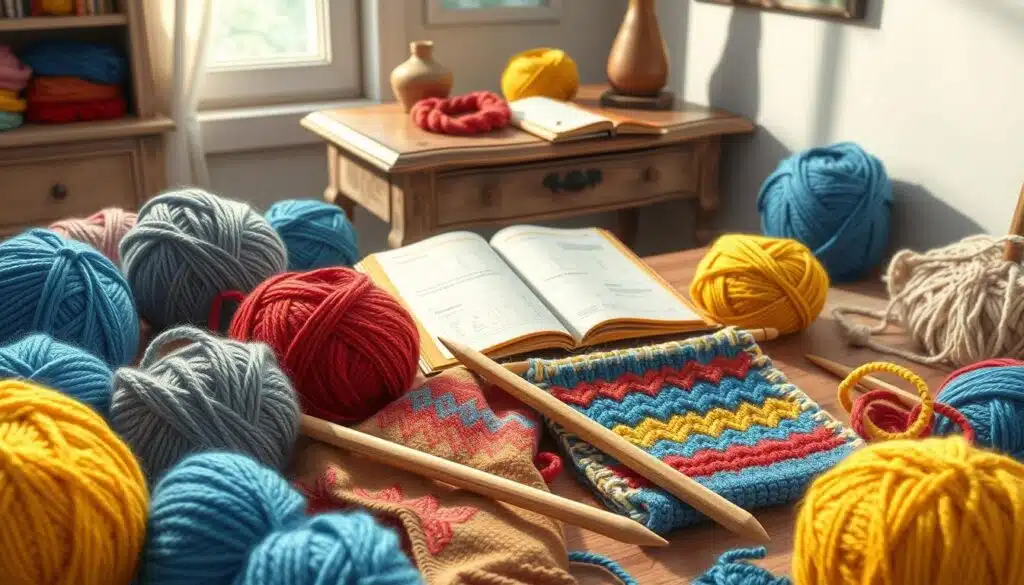
Keep your floats tidy by catching them at regular intervals. Good colorwork floats management prevents puckering and keeps your fabric even. Work a few swatches to test how tightly you carry the unused yarn and where you need to twist strands.
Intarsia for beginners works best with isolated blocks of color. Use bobbins or small balls to avoid tangles. When you join colors, twist the two yarns to lock the join and stop gaps from forming. Practice on a simple motif, like a heart or stripe, before moving to collage cardigans or larger panels.
Ladderback jacquard gives you neat insides and steadier tension on intarsia joins. This technique weaves a backing bar across small color joins so the inside looks tidy and the fabric lays flat. Try ladderback jacquard on a swatch to see how it changes your garment’s feel.
Below is a quick comparison to help you choose which method to try next based on your project size and comfort level.
| Technique | Best For | Tool Tips | Common Pitfall |
|---|---|---|---|
| Stranded colorwork | Repeated motifs across a wide panel | Use two yarn colors per row, keep floats short | Tight floats causing puckering |
| Intarsia for beginners | Large blocks of color like motifs or panels | Use bobbins, twist joins to close gaps | Loose joins or tangled yarns |
| Ladderback jacquard | Neat intarsia joins and smoother tension | Create a woven bar behind joins for stability | Extra bulk if used on very fine yarns |
Troubleshooting Common Stitch Problems: Fixes You Can Do Right Now
If a stitch goes wrong, stay calm and find a quick fix. Spotting the issue early and having the right tools ready helps. This guide will show you how to fix dropped stitches, untwist them, and adjust your gauge if needed.
How to pick up a dropped stitch without panicking
Grab a crochet hook or spare needle when a stitch drops. Start from the live row and work down to the ladder. Use the hook to pull the next strand through, fixing the stitch.
If the drop is across several rows, mark the row above with a stitch marker or waste yarn. This makes it easier to fix the stitch without making more mistakes.
Fixing twisted stitches and uneven edges
Twisted stitches occur when worked through the back loop or rotated. To fix, slide the stitch off the needle, rotate it, and then put it back. For multiple twisted stitches, knit a few rows to relax the tension first.
Uneven edges often come from uneven edge stitches or tension. Try slipping the first stitch purlwise on every row. If it’s not working, pick up an extra stitch or use a provisional cast-on for a cleaner edge.
What to do when your gauge is off mid-project
Minor gauge changes are common. First, measure a few inches to confirm. If it’s small, change needle size for the next section. For bigger changes, blocking might be needed.
For colorwork or textured panels, small variations are okay. For garments, adjust shaping or add a short row. Use a lifeline before risky rows for easy returns if needed.
| Problem | Quick Fix | When to Rework |
|---|---|---|
| Dropped stitch | Pick up with crochet hook, ladder repair to needle | When run reaches pattern repeats or edges |
| Twisted stitch | Remove, rotate to natural twist, replace on needle | When twist distorts stitch pattern or edge |
| Uneven edge | Slip first stitch purlwise; pick up extra edge stitch if needed | When blocks fit or seam joins fail |
| Gauge change mid-project | Switch needle size or use targeted blocking | When finished measurements differ from pattern by over 5% |
Choosing Projects to Rapidly Improve Your Skills
Start with a short, focused plan. This lets you practice core moves without drama. Choose items from a beginner knitting projects list that build cast-on, knit, purl, and basic shaping. A few tidy pieces will give you confidence and teach tension control faster than one sprawling sweater.
Try simple scarves, dishcloths, and hats first. These projects use worsted-weight yarn and US 7–US 9 needles. This makes stitches show up and mistakes easy to fix. A scarf teaches even rows, a dishcloth sharpens stitch definition, and a hat introduces shaping and seaming in a small, forgiving format.
When you feel steady, step up to a collage cardigan. Look at a collage cardigan guide for layout ideas, motif placement, and mixing plain panels with small motifs. Working on panels lets you practice color changes without wrestling a full garment on the needles.
Planning colorwork projects means thinking like a mini designer. Collect motif charts—flowers, houses, and playful icons work well—and mark raglan lines and underarm joins before you start. This prevents surprises when you join panels and keeps motifs from ending up on a seam.
Use short trials to test yarn choices and tension. Knit a swatch with the yarn and needles you plan to use, then place a motif chart on it. That quick check shows how colors read together and whether your floats sit neatly across the back.
Keep a compact practice list and rotate projects. Pair one project from a beginner knitting projects list with one slightly harder piece. For example: a dishcloth plus a colorwork panel. That mix gives steady repetition and a gentle challenge that speeds skill growth.
Resources can shorten the learning curve. Browse curated idea boards and a practical guide like crochet and knit beginner projects for patterns that translate well to knitting. Use those patterns as templates, then adapt motifs as you learn.
Accept that first attempts will show blips. Finishing matters more than perfection. With deliberate practice knitting projects and careful planning colorwork projects, your next cardigan will feel like a proud step forward.
Video and Community Resources to Accelerate Your Learning
Short videos can really speed up your learning. Start with quick fixes on knitting tutorials YouTube. Then, move to structured lessons for more depth.
The Skill Set knitting method combines a book with short video drills. This lets you pause and loop techniques until you master them.
Follow makers who share process shots and how-tos. Erin Guimond’s PickyFemme Instagram is full of workflow and motif shots. These can inspire your pattern and color choices.
Use those posts to bookmark ideas. Then, practice with guided videos or printed charts.
Join online knitting groups for feedback and support. Ravelry forums and Facebook groups are great for pattern help. For hands-on help, try a local knitting circle.
Combine live workshops with digital practice for faster progress. Take a beginner class at a yarn shop, then finish projects at home. See a diary that mixes Skill Set knitting lessons with workshops at a recommended write-up.
Keep a useful toolkit of links. Pin clips from knitting tutorials YouTube, save Skill Set knitting lessons, and follow PickyFemme Instagram. Bookmark threads from online groups. If stuck, try a technique with others at your local circle.
For more structure, explore curated course lists. Some pages gather video channels, pattern libraries, and community hubs. A list can guide you to quality lessons that fit your pace and goals.
Needle and Yarn Hacks That Save Time and Sanity
Looking for tricks to fix a row gone wrong or a sleeve that won’t fit? These quick hacks help keep your momentum, avoid starting over, and make the process enjoyable. Try them out and watch your practice pieces transform from clutter to progress.
Why needle material changes the feel of your knitting
Choosing between bamboo vs metal needles affects your stitches. Bamboo and wood slightly grip the yarn, helping beginners keep their pace and reduce dropped stitches.
Aluminum and steel needles move fast, perfect for lace or experienced knitters who need speed. Start with medium needles like US 7–US 9 for worsted yarn while you learn.
Using stitch holders, lifelines, and scrap yarn for fearless experiments
Stitch holders and lifelines save your projects when trying new techniques. Use scrap yarn for a lifeline before complex shaping, and you can rip back without worry.
Stitch savers, like hollow rubber tubing, hold live stitches for techniques like provisional cast-ons. Check out this guide on knitting hacks for more ideas: stitch saver ideas.
Pick washable yarn for practice and make your learning durable
Use washable yarn for practice to machine-wash swatches and see how they behave after washing. Acrylic blends and superwash wool are forgiving and last through many trials.
Start with durable, worsted-weight fibers for early projects to practice shaping and tension. Then, switch to specialty yarns once you’ve mastered the basics.
| Hack | What it fixes | Best materials | When to use |
|---|---|---|---|
| Switch needle type | Too many dropped stitches or too-fast speed | Bamboo or Birch for control; Aluminum for speed | Start with bamboo vs metal needles debate in mind when choosing first set |
| Use a stitch saver | Keeping live stitches safe during modifications | Hollow rubber tubing sized to needle thickness | Provisional cast-ons, two-layer fabric, or holding sleeve stitches |
| Lifeline knitting | Recovering from mistakes without losing hours | Contrast scrap yarn or thin waste yarn | Before complex colorwork or long pattern repeats |
| Practice with washable yarn | Frequent testing and laundering of swatches | Acrylic blends, superwash wool, worsted weight | Swatches, wearable muslins, and learning colorwork |
| Label and photograph | Track needle sizes, yarn details, and pattern changes | Small labels, phone photos | When juggling multiple projects or sizes |
These knitting needle hacks reduce stress and speed up learning. Small changes, like a lifeline habit or using washable yarn, make a big difference in mastering new skills.
Advanced Techniques to Try When You’re Ready
If you have consistent tension and clean stitches, you’re ready for advanced knitting. Start with one new skill at a time. This way, you won’t get overwhelmed by too many new things at once.
Working with multiple yarn strands and managing tangles
Knitting with multiple strands creates dense and colorful fabric. Use wooden or bamboo needles to keep your stitches even. Hold each strand with a different finger or use yarn bowls to avoid tangles.
Begin with two worsted strands before moving to three. Keep your bobbins organized and untwist your yarns every few inches. This saves time and prevents the need to rip out long sections.
Adding 3D elements and appliqué motifs to garments
Appliqué knitting adds unique touches to your garments. You can use felted patches, sewn-on motifs, or knitted toys. Work small pieces flat, block them, and attach them with mattress stitch or a sharp darning needle.
Study collage sweaters from designers like Erin Guimond for inspiration. Use ladderback jacquard to combine intarsia panels neatly. This makes your motifs stand out.
Finishing techniques: seaming, blocking, and embroidery details
Blocking and finishing transform your knitting into a wearable garment. Wet block or steam pieces to even out stitches. Then, pin them to exact measurements before seaming.
Seaming well makes your work durable and wearable. Use mattress stitch for invisible seams and backstitch for strength. Add embroidered accents after seaming to hide joins and add charm.
For extra help, watch Skill Set video tutorials or join a local knitting circle. These resources offer hands-on demos to guide you through each step. They make your advanced projects feel achievable and look professional.
Conclusion
Learning to knit is a journey filled with small victories and steady progress. Start with bamboo or wooden needles, a worsted-weight yarn, and US 7–US 9 sizes. Avoid fuzzy fibers like mohair or eyelash to build a strong foundation.
There are many resources to keep your interest high. Collections of pins and clear tutorials offer endless ideas. This helps you learn new stitches and move forward.
Practice, patience, and play are key to your knitting journey. Real-world makers like Erin Guimond (@PickyFemme) show that embracing imperfections can lead to unique results. Use Skill Set videos and ladderback jacquard resources for colorwork.
Remember, stitch holders, lifelines, and tidy swatches can save you from headaches. This is a guide, not a strict rulebook. Start with simple scarves and dishcloths, then try collage panels and intarsia when you’re ready.
The next steps in knitting are clear: practice tension, follow reliable tutorials, and join a local or online group for feedback. Your knitting will become cozier and bolder. The journey you’ve started is just the beginning of a rewarding and creative adventure.
FAQ
What needles and yarn should I start with so you don’t want to throw them across the room?
Start with medium-weight (worsted) yarn and straight needles in US 7–US 9. Bamboo or wooden needles are gentle on your hands. They help keep stitches from slipping.
Focus on learning knit and purl without worrying about unraveling. Avoid fluffy yarns like chenille, eyelash, or mohair. They hide stitches and make mistakes hard to fix.
Which simple projects will teach you the basics fast?
Choose scarves, dishcloths, or simple hats. These projects are great for beginners. They help you practice cast-on, knit, purl, and bind-off.
Use worsted yarn and US 7–9 needles. This way, stitch definition is clear and forgiving.
How do you swatch and why does it actually matter?
Knit a small square in the stitch and needle size you plan to use. Then, measure stitches per inch after blocking. Swatching checks your gauge.
It ensures your hat or sweater fits right. If your stitches are too tight or loose, change needle size and swatch again.
What cast-on and bind-off should you learn first?
Start with a simple long-tail or basic cast-on. This gives you elasticity and neat edges. Practice a straightforward bind-off for clean finishes.
Use the long-tail for stretchier starts (like brims, cuffs). A simple cast-on is good for edges you’ll seam. Swatches help your borders look professional sooner.
How do you fix a dropped stitch without dissolving into tears?
Grab a crochet hook or spare needle and ladder the stitch back up row by row, or use a stitch pick. Acting quickly helps. If the dropped stitch affects pattern rows, consult short Skill Set videos or community posts for step-by-step visuals.
Watching a quick clip often clears the fog faster than reading a paragraph.
How can you manage tension so your fabric looks even?
Practice consistent hand placement, swatch frequently, and adjust needle size if your tension is too tight or loose. Bamboo needles often help you keep grip and calm tension swings.
Repeat short, focused sessions to stabilize your tension. Frequent small practice beats marathon knitting when you’re learning.
When should you try colorwork like stranded knitting or intarsia?
After you’re comfortable with knit, purl, increases, and decreases. Use yarns with clear stitch definition (no fuzzy textures) and bamboo or wooden needles. Start with modest motifs.
Manage floats carefully in stranded work. Try ladderback jacquard for intarsia joins to keep the garment interior tidy.
What is ladderback jacquard and why might you care?
Ladderback jacquard is an intarsia technique that tucks floats neatly behind motifs. It makes the inside of your colorwork neater and the tension more controlled. It’s a great trick when you’re moving from simple color changes to collage-style motifs.
It helps keep the joins tidy without excessive bulk.
How do you plan motifs and raglan shaping for collage cardigans?
Lay out charts, take progress photos, and decide motif placement before you start. Watch for raglan seams and underarm areas that can interrupt patterns. Use a basic sweater template, stitch holders, and lifelines so you can experiment without catastrophic ripping.
Erin Guimond’s collage sweaters are a good model. Plan, accept small imperfections, and finish intentionally.
What tools and hacks keep multiple strands from tangling into chaos?
Label needles, group projects in separate bags, use yarn bowls or bobbins for colorwork, and employ lifelines and stitch holders to secure progress. Keeping charts and progress photos handy reduces guesswork. Organization beats frustration when you’re juggling motifs and colors.
How do you rescue twisted stitches and uneven edges?
Untwist by sliding the stitch to the left needle, rotating it so the correct leg is forward, and reknitting. For uneven edges, practice consistent cast-on/bind-off methods on swatches and consider switching to bamboo needles for better stitch control.
Short video demos on Skill Set or community clips make these fixes easier to follow.
What should you do when your gauge changes mid-project?
Evaluate whether you can live with the variance—sometimes a small change is fixable with blocking. If not, rip back to a lifeline or the last good row and reknit with a different needle size or adjusted tension. Lifelines and frequent photos make mid-project corrections less grim.
Where can you find clear tutorials and inspiration that actually help?
Watch the Skill Set YouTube channel for short, focused lessons on stranded colorwork, intarsia, and basics. Follow Instagram makers like Erin Guimond (@PickyFemme) for collage cardigan inspiration and real-world problem solving. Browse Pinterest collections (like “72 Knit Picky and knitting tutorial ideas”) for bite-size visual tutorials and starter-kit pins.
What yarn should you choose for practice pieces that survive life?
Choose washable, durable worsted-weight yarn in solid or semi-solid colors so stitches read clearly. Avoid novelty or fuzzy fibers for learning. Durable yarns let you wash and wear practice garments without heartbreak, and they’re kinder to repeated handling while you improve.
When you’re ready for advanced finishing, what should you master?
Learn blocking for shaping, tidy seaming techniques, and simple embroidered details or appliqué to add personality. Try 3D elements or small appliqué motifs once you’re comfortable with multiple strands. Skill Set videos and community tutorials guide these steps so your garment moves from “homemade” to intentionally designed.
How often should you practice to see real improvement?
Short, regular sessions beat occasional marathons. Even 15–30 minutes a day helps build muscle memory and stabilize tension. Swatch, work on small projects, and graduate to more ambitious pieces when you’re reliably hitting consistent stitches and tidy edges.
Any tips to keep you motivated when the first sweater looks like a science experiment?
Celebrate small wins: a neat purl row, a tidy seam, a finished cuff. Document progress with photos, join online groups or local knitting circles for encouragement, and pick projects that excite you—collage cardigans and playful motifs keep curiosity alive. Remember: finishing triumphs over perfection every time.