
7 Easy Crochet Projects for Beginners to Try in 2025
Ready to dive into the world of crochet but not sure where to start? That first tangle of yarn can feel intimidating, but the journey from beginner to confident creator is shorter and more rewarding than you might think. The key is starting with the right projects-ones that teach you fundamental skills without overwhelming you. This guide is your curated roadmap, designed to help you bypass the initial frustration and jump straight into the joy of making.
We’ve gathered a collection of genuinely easy crochet projects for beginners, each selected to build your confidence one stitch at a time. Forget complex patterns and confusing jargon. Instead, you’ll find straightforward, satisfying projects like dishcloths, granny squares, and simple scarves. For each item on our list, we provide a clear overview, a breakdown of the materials you’ll need, an estimated completion time, and direct links to patterns and video tutorials.
This isn’t just a list; it’s a step-by-step plan to master the basics. By working through these projects, you’ll learn essential techniques like creating a slip knot, chaining, and working single and double crochet stitches. Before you know it, you’ll have a collection of beautiful, handmade items and the skills to tackle even more ambitious creations. Let’s pick up a hook and get started.
1. Dishcloth/Washcloth
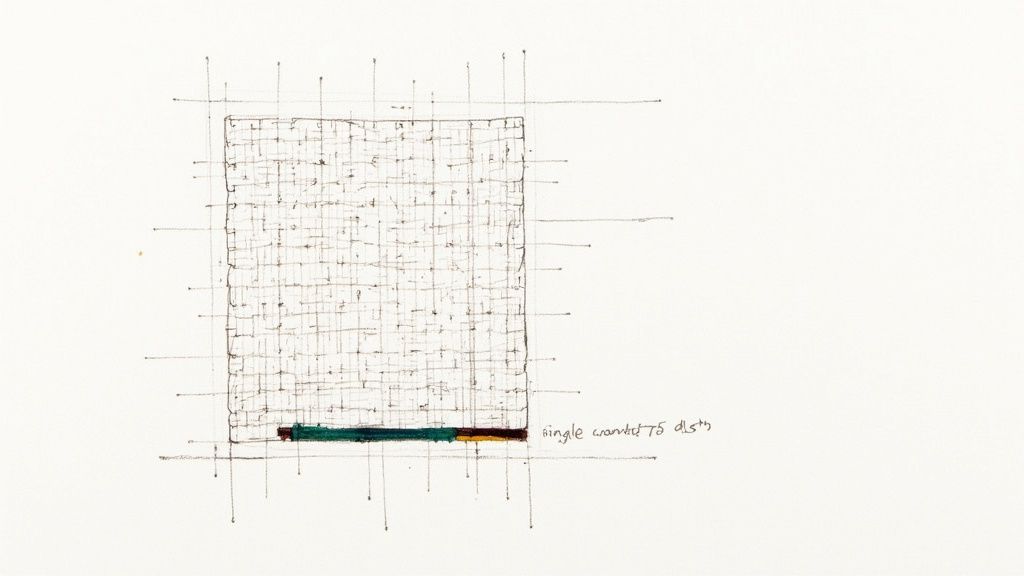
The humble dishcloth, or its sibling the washcloth, is arguably the perfect first step into the world of crochet. This simple square is one of the most recommended easy crochet projects for beginners because it focuses entirely on the fundamentals. You will create a slip knot, make a foundation chain, and then work rows of a single basic stitch, most often the single crochet, until you have a usable, practical item.
This project’s primary goal is to help you master stitch consistency and tension, two of the most critical skills in crochet. Since the final shape is a simple square or rectangle, small mistakes in stitch count or tension are very forgiving and often unnoticeable. It’s a low-pressure way to build muscle memory and confidence. The repetitive motion of creating row after row of the same stitch helps your hands learn the rhythm of crochet, making the process feel more natural and intuitive over time.
Why It’s a Great Starting Point
The dishcloth is the ideal project to tackle right after learning the basic stitches. Its small size means you get the satisfaction of a finished object quickly, which is a fantastic motivator to keep learning. You can complete one in an hour or two, providing immediate positive reinforcement. Plus, the end result is something you can actually use in your home or give as a thoughtful, handmade gift. This practicality adds a layer of purpose to your practice. You’re not just making a random square; you’re creating a tool for your kitchen or a spa-like washcloth for your bathroom.
Key Insight: A dishcloth isn’t just a project; it’s a practice swatch with a purpose. Every stitch you make builds the foundational skills you’ll need for more complex patterns like blankets, amigurumi, and garments.
Project Details & Tips
- Difficulty: 1/5 – Perfect for absolute beginners.
- Estimated Time: 1-2 hours.
- Materials: Worsted-weight 100% cotton yarn is essential for absorbency and durability. Avoid acrylic or wool yarns for this project, as they don’t absorb water well and can melt if they come into contact with a hot pan. You will also need a crochet hook appropriate for your yarn (typically a size H-8/5.00mm for worsted weight), scissors, and a yarn needle for weaving in the ends.
- Actionable Tip: To keep your edges straight, count your stitches at the end of every row for the first five or six rows. This simple habit prevents you from accidentally adding or skipping stitches, which is a common beginner pitfall that leads to a trapezoid shape instead of a square. Once you master the basic single crochet version, try a washcloth using the half-double crochet or a textured stitch like the seed stitch to expand your skills. You can also add a simple single crochet border around the entire square for a more polished and professional-looking finish.
2. Granny Square
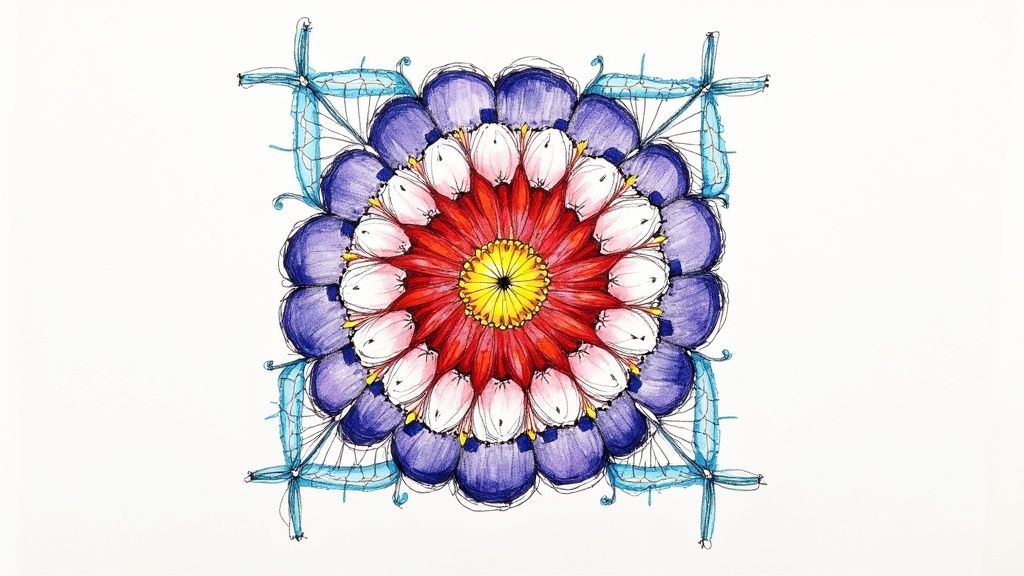
The granny square is a quintessential crochet classic and one of the most iconic motifs in the craft. This project involves working in rounds from the center outward, typically using clusters of double crochet stitches separated by chain spaces. Its unique construction teaches beginners how to work in the round, a skill that is foundational for projects like hats, amigurumi, and circular blankets.
The magic of the granny square lies in its modular nature. Once you master making one, you can create dozens and join them together to form much larger items. This makes it one of the most versatile and easy crochet projects for beginners, allowing you to create everything from a simple potholder to an intricate afghan with a single, repeatable pattern. It’s a fantastic way to experiment with color changes and learn about project construction. You can use up small scraps of leftover yarn, making it a very economical and sustainable project.
Why It’s a Great Starting Point
The granny square is a small, portable project that offers a high return on your time investment. You can easily make one in under 30 minutes, giving you a quick sense of accomplishment. This project introduces you to working in the round without the pressure of shaping a garment, and it’s the perfect canvas for practicing color changes. The repetitive nature of the rounds helps build a steady, rhythmic crocheting habit. Unlike a long scarf, you can finish a single unit quickly, making it easy to fit crocheting into a busy schedule.
Key Insight: The granny square is more than just a square; it’s a building block. Mastering this single motif unlocks the potential to create an endless variety of larger, more complex projects by simply joining these blocks together.
Project Details & Tips
- Difficulty: 2/5 – Slightly more complex than a dishcloth but very achievable.
- Estimated Time: 20-30 minutes per square.
- Materials: Worsted-weight yarn in various colors is perfect for practice. Acrylic or wool blends are excellent choices. You’ll also need a crochet hook suited for your yarn (often a size H-8/5.00mm), scissors, and a yarn needle for weaving in ends.
- Actionable Tip: Use a stitch marker in the first stitch of each round. When you’re learning to work in the round, it’s easy to lose track of where a round begins and ends. The stitch marker provides a clear visual cue, ensuring you join your rounds correctly and keep your square’s shape perfect. Once you’ve made a few squares, you can explore the creative possibilities of joining them; find detailed instructions on how to join crochet squares on crochetcraze.com to see different methods like slip stitch, single crochet, or whip stitch joins.
3. Simple Scarf
After mastering a small square like a dishcloth, the simple scarf is a fantastic next step in your crochet journey. This project takes the fundamental skills you’ve just learned and applies them to a slightly larger, more repetitive format. A scarf is essentially just a very long, narrow rectangle, making it one of the most straightforward and satisfying easy crochet projects for beginners.
The beauty of a scarf project lies in its repetition. You will work the same basic stitch, row after row, which is the perfect way to build rhythm, improve your tension, and achieve a consistent fabric. It requires more commitment than a dishcloth but is still incredibly simple in construction, allowing you to focus purely on the craft without worrying about complex shaping or counting. The end result is a fashionable and functional accessory you can proudly wear or gift. This project is a true "zen" experience, where you can let your mind wander or watch TV while your hands stay busy.
Why It’s a Great Starting Point
A scarf is the perfect project for solidifying your foundational skills while creating your first wearable item. Its longer format gives you ample practice to make your stitches look even and professional. This is also an excellent opportunity to experiment with changing colors to create stripes or to try a new stitch, like the half-double or double crochet, in a low-stakes context. The sense of accomplishment from finishing a beautiful, wearable piece is a powerful motivator. It proves to you that you can create something substantial and beautiful.
Key Insight: Making a scarf teaches you endurance and consistency. It moves you beyond the "quick win" of a dishcloth and prepares you for the patience required for larger projects like blankets and garments.
Project Details & Tips
- Difficulty: 1.5/5 – Just a step up from a dishcloth due to its size.
- Estimated Time: 4-8 hours, depending on the yarn weight and scarf length.
- Materials: Any yarn weight works, from lightweight for a fashion scarf to super bulky for a cozy winter accessory. You will also need an appropriately sized crochet hook, scissors, and a yarn needle. For a first scarf, a soft, chunky yarn is recommended as it works up quickly and makes stitches easier to see.
- Actionable Tip: To avoid a tight, curled starting edge, make your foundation chain with a hook that is one size larger than the hook you plan to use for the body of the scarf. Switch to the smaller hook when you begin your first row of stitches. This simple trick ensures your starting edge has the same width and flexibility as the rest of your project. For added flair, you can add fringe to the ends of your scarf, which is also a great way to use up the last bits of your yarn skein.
4. Coasters
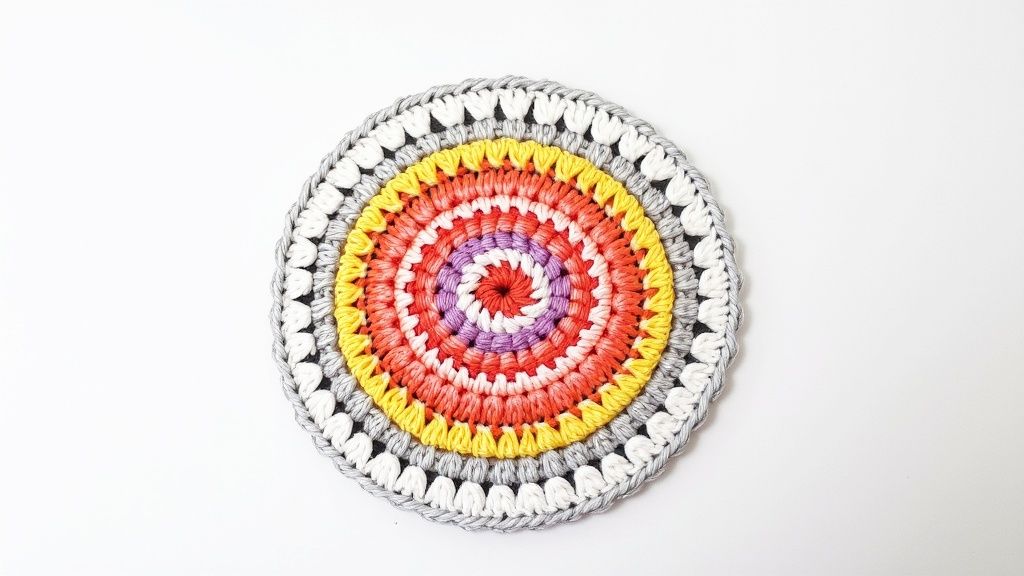
Much like dishcloths, coasters are an outstanding project for beginners, but they offer a bit more creative freedom in a smaller package. These small, practical items protect your furniture and serve as quick, satisfying projects that let you practice fundamental skills. Whether you make a simple square or venture into a circular or hexagonal shape, coasters are a fantastic way to solidify your knowledge of basic stitches and construction.
Because they are so small and use minimal yarn, coasters are the perfect low-stakes canvas for experimentation. You can try out new stitch combinations, practice working in the round, or play with color changes without committing to a large, time-consuming project. They are one of the most versatile easy crochet projects for beginners, allowing you to create something functional and stylish in under an hour. A set of four or six matching coasters makes a wonderful housewarming or holiday gift.
Why It’s a Great Starting Point
Coasters are essentially miniature versions of other, larger projects. A round coaster teaches you the principles of increasing stitches needed for hats and amigurumi. A square coaster reinforces the row-counting and straight-edge skills needed for scarves and blankets. This allows you to build a wide range of foundational techniques quickly, and the reward is a beautiful, matching set you can use immediately or give as a thoughtful handmade gift. They are also a great way to test out a yarn to see if you like working with it before buying a larger quantity for a bigger project.
Key Insight: Coasters are bite-sized skill-builders. Each one is an opportunity to perfect a new technique, from working in a spiral to creating sharp geometric corners, preparing you for more intricate patterns down the road.
Project Details & Tips
- Difficulty: 1.5/5 – Slightly more varied than a dishcloth but still perfect for newcomers.
- Estimated Time: 30-60 minutes per coaster.
- Materials: Worsted-weight 100% cotton yarn is the best choice for absorbency and heat resistance. You’ll also need an appropriate crochet hook (often a size H-8/5.00mm), scissors, and a yarn needle to weave in your ends.
- Actionable Tip: If you’re making circular coasters and they start to curl or "cup," it’s likely because you aren’t increasing your stitches correctly in each round. Make sure you are following the pattern’s increase instructions precisely. A common formula for a flat circle is to add the same number of stitches in each round as you started with in your first round (e.g., if you start with 6 single crochets, add 6 more stitches in every subsequent round). Adding a simple slip stitch border can also help flatten the edges and give a clean, finished look.
5. Baby Blanket
Scaling up from a dishcloth, the baby blanket is a wonderfully rewarding project that feels like a major accomplishment without the commitment of a full-sized afghan. This project takes the fundamental skills of chaining and working in rows and applies them to a larger canvas. It allows a beginner to truly settle into a rhythm and produce a beautiful, functional item perfect for gifting.
The repetitive nature of a baby blanket is its greatest strength for a newcomer. You will work the same stitch or simple stitch pattern over and over, which is fantastic for building muscle memory and achieving consistent tension across a larger surface. Unlike smaller items, a blanket gives you the space to see how your fabric grows and behaves, offering invaluable lessons for future easy crochet projects for beginners and beyond. You can choose a simple single or double crochet stitch for the entire blanket, or venture into a simple repeat like a granny stripe or a shell stitch for more visual interest without adding too much complexity.
Why It’s a Great Starting Point
A baby blanket hits the sweet spot between a quick, small project and a long-term commitment. It’s substantial enough to feel like a true achievement, providing a massive confidence boost. Because it’s a simple rectangle, you can focus entirely on your stitching without worrying about complex shaping or decreases. The finished product is a cherished, practical gift, making the time spent feel incredibly worthwhile. This is often the first "big" project a beginner tackles, and its completion marks a significant milestone in their crochet journey.
Key Insight: A baby blanket is a "marathon" practice swatch. It trains you for endurance and consistency, skills that are essential for tackling large-scale projects like garments and adult-sized blankets in the future.
Project Details & Tips
- Difficulty: 2/5 – A perfect step-up from smaller squares.
- Estimated Time: 15-25 hours.
- Materials: Soft, machine-washable yarn is a must. Look for DK or worsted-weight yarns made from acrylic, cotton, or a superwash merino blend. You will need a crochet hook suited to your yarn, scissors, and a yarn needle to securely weave in all ends.
- Actionable Tip: Always create a gauge swatch before you begin. This small 4×4 inch square will tell you if your finished blanket will match the pattern’s dimensions. It’s a crucial step that prevents you from running out of yarn or ending up with a blanket that’s too small. For safety, avoid adding buttons, beads, or other embellishments that could become a choking hazard, and always weave in your ends with extra care so they cannot unravel. For pattern inspiration, you can find a wide selection of beautiful and easy-to-follow designs by exploring these crochet baby blanket patterns.
6. Simple Beanie/Hat
Moving from flat projects to three-dimensional objects, the simple beanie is a fantastic next step in your crochet journey. This classic headwear introduces you to the concept of working in the round, a fundamental technique for creating seamless items like hats, amigurumi, and baskets. You’ll learn how to start with a magic circle or chained loop and systematically increase your stitches to form a flat circle that becomes the crown of the hat.
This project is one of the most rewarding easy crochet projects for beginners because it teaches crucial skills in shaping and fit. Unlike a flat square, a beanie requires you to create fabric that curves and fits a specific form, in this case, a head. It’s a practical and stylish way to master the art of increasing stitches and working in a continuous spiral or joined rounds, building a solid foundation for more complex wearable items. The satisfaction of creating a wearable garment that fits perfectly is unparalleled for a new crocheter.
Why It’s a Great Starting Point
A beanie is the perfect introduction to creating garments. It’s small enough to be completed relatively quickly, yet complex enough to teach you about gauge, sizing, and construction. Successfully making your first wearable item that actually fits is a huge confidence booster and often the moment a beginner truly feels like a crocheter. The end result is a cozy, functional accessory you can wear with pride or give as a cherished handmade gift. Many beginner beanie patterns are worked from the top down, allowing you to try it on as you go to ensure a perfect fit.
Key Insight: Making a beanie demystifies the process of creating 3D objects. Once you understand how to create a flat circle with increases and then work even rounds to create depth, you’ve unlocked the basic formula for countless other patterns, from stuffed animals to bucket hats.
Project Details & Tips
- Difficulty: 2/5 – A great step-up from flat projects.
- Estimated Time: 2-4 hours.
- Materials: Worsted or aran-weight yarn with some stretch (like wool or acrylic blends) is ideal for a comfortable fit. You’ll also need a crochet hook suited to your yarn, a stitch marker, scissors, a tape measure, and a yarn needle.
- Actionable Tip: Always use a stitch marker to mark the beginning of each round. When working in a continuous spiral, it’s nearly impossible to see where one round ends and the next begins. Placing a marker in the first stitch of the round and moving it up with each new round ensures you count your stitches correctly and place your increases in the right spot, preventing mistakes and saving you from having to unravel your work. Before you start, measure the head circumference of the intended wearer to choose the correct size from the pattern.
7. Amigurumi Basics (Small Stuffed Animal)
Amigurumi, the delightful Japanese art of crocheting small, stuffed creatures, might seem complex, but it’s one of the most rewarding and surprisingly easy crochet projects for beginners to tackle. A basic amigurumi project, like a simple ball or a small animal, is built upon the same fundamental stitches you’ve already learned. It introduces you to working in continuous rounds, creating a seamless, three-dimensional fabric perfect for adorable figures.
The primary goal of starting with a simple amigurumi pattern is to learn how to create and shape 3D objects. You will master working in a spiral, making invisible decreases for smooth shaping, and stuffing your creation to bring it to life. Because the projects are small, they come together quickly, offering immense satisfaction as you see a charming character emerge from your hook and yarn. This craft combines crochet skills with a touch of playful sculpture.
Why It’s a Great Starting Point
Once you’re comfortable with basic stitches, amigurumi is an exciting next step that opens up a whole new world of creativity. Unlike flat projects, it teaches you shaping and construction in a fun, low-stakes way. The thrill of creating your very first stuffed toy provides powerful motivation to continue honing your skills, and the small size means you aren’t committing to a massive, time-consuming project. Starting with a simple sphere or an octopus with straight tentacles can build your confidence before moving on to creatures with more complex parts to assemble.
Key Insight: Amigurumi is essentially crochet sculpture. Mastering a simple sphere or cube teaches you all the core principles of shaping that you’ll use to create any character you can imagine, from a simple teddy bear to a complex fantasy creature.
Project Details & Tips
- Difficulty: 2/5 – A great challenge for an advanced beginner.
- Estimated Time: 2-4 hours.
- Materials: Worsted-weight yarn in your desired colors (cotton or acrylic work well), a crochet hook one size smaller than the yarn recommends (e.g., a G-6/4.00mm for worsted weight), stitch markers, fiberfill stuffing, a yarn needle, and optional safety eyes.
- Actionable Tip: To prevent the stuffing from showing through your stitches, use a hook that is one or two sizes smaller than what the yarn label suggests. This creates a much tighter fabric. Also, learn the "magic ring" (or magic circle) technique for starting your project; it allows you to pull the beginning hole completely closed for a professional, seamless finish. When stuffing, use small pieces of fiberfill at a time to avoid lumps and ensure a smooth, firm shape.
Beginner Crochet Projects Comparison Chart
| Item | Implementation Complexity 🔄 | Resource Requirements ⚡ | Expected Outcomes 📊 | Ideal Use Cases 💡 | Key Advantages ⭐ |
|---|---|---|---|---|---|
| Dishcloth/Washcloth | Very low – basic single crochet stitches | Minimal – 1-2 oz worsted cotton yarn | Practical cleaning cloth, tension practice | Beginner learning basic stitches, quick projects | Forgiving for uneven stitches, inexpensive |
| Granny Square | Moderate – working in rounds, color changes | Low – scrap yarn usable | Modular squares for blankets, bags | Using scrap yarn, modular projects, pattern practice | Teaches multiple techniques, highly versatile |
| Simple Scarf | Moderate – consistent long rows | High – 300-600 yards yarn | Wearable, customizable scarf | Gifts, practicing stitch consistency | Wearable, teaches gauge and tension |
| Coasters | Low – small flat or round shapes | Minimal – small amount of yarn | Small practical mats | Quick practice, experimenting with stitches | Fast completion, minimal yarn usage |
| Baby Blanket | High – larger size, often multi-panel | High – significant yarn investment | Soft, practical infant blanket | Meaningful gifts, larger beginner projects | Manageable size for beginners, keepsake potential |
| Simple Beanie/Hat | Moderate to high – shaping in rounds | Moderate – 150-200 yards yarn | Wearable fitted headwear | Introducing shaping and fit, wearable projects | Trades 3D shaping skills, wearable outcome |
| Amigurumi Basics | High – tight spirals, shaping, embroidery | Moderate – DK/worsted yarn, stuffing | Small stuffed animals/objects | Learning 3D construction, gifts for all ages | Builds foundation for sculptural crochet |
Your Crochet Journey Starts Now
You’ve explored a fantastic range of easy crochet projects for beginners, from the humble, yet incredibly useful, dishcloth to the charming and personality-filled world of amigurumi. Each project we’ve covered, whether it’s the classic granny square or a cozy baby blanket, is more than just a set of instructions; it’s a stepping stone on your creative journey. The path from a simple chain stitch to a finished item is filled with small victories, and these projects are designed to deliver those wins early and often.
The key takeaway is that crochet is an accessible, rewarding, and deeply personal craft. It’s not about achieving perfection on your first try. Instead, it’s about the rhythm of the hook, the feel of the yarn, and the satisfaction of creating something tangible and beautiful with your own two hands. Remember the core principles we’ve discussed: consistent tension, accurate stitch counting, and the patience to unravel and try again. These are the foundational skills that will carry you forward.
From Beginner to Confident Crafter: Your Next Steps
Now that you’re armed with project ideas and foundational knowledge, it’s time to put your hook into action. Don’t let indecision hold you back. The best way to learn is by doing, and the "mistakes" you make are actually your most valuable lessons in disguise. Every crocheter, no matter how skilled, has a pile of early, imperfect projects. Embrace the learning process.
Here’s a practical roadmap for what to do next:
- Choose Your First Project: Revisit the list and pick the one that excites you the most. Is it the quick satisfaction of a set of coasters or the meditative repetition of a simple scarf? Your enthusiasm will be your best motivator. If you are a very practical person, the dishcloth is a perfect start. If you are more visually driven and love color, start with granny squares.
- Gather Your Essential Tools: You don’t need a massive investment to start. A single hook in the recommended size (often a 5mm/H-8) and a skein of worsted-weight yarn, like acrylic or cotton, are all you need to begin most of these easy crochet projects for beginners. Add a pair of small scissors and a yarn needle, and your starter kit is complete.
- Embrace the Community: Share your progress! Post a picture of your first granny square or your slightly wobbly dishcloth on social media or in a crafting forum. The crochet community is famously supportive and can offer encouragement and advice when you feel stuck. Online platforms like Instagram, Reddit’s r/crochet, and Ravelry are filled with fellow crafters eager to help.
- Set a Small, Achievable Goal: Don’t start with the intention of making twenty gifts for the holidays. Your goal could be as simple as "I will finish one complete dishcloth this week" or "I will learn how to make a magic circle." Celebrating these small milestones builds momentum and confidence for more complex projects ahead.
By embracing these simple projects, you are not just learning a hobby; you are unlocking a new form of self-expression, a tool for mindfulness, and a way to create heartfelt, handmade gifts. You are building a skill that can bring comfort, joy, and a sense of accomplishment for years to come. Your crochet journey truly starts now, with a single loop of yarn on your hook.
Ready to find the perfect yarn and tools for your first masterpiece? Crochet Craze offers curated kits specifically for beginners, containing everything you need for projects just like these. Visit Crochet Craze to explore our beginner-friendly selections and get started today.