Ever felt frazzled after a long day? Crochet can be your calm switch. It combines simple stitches with a steady rhythm to quiet your mind and soothe your hands. This focus on one stitch at a time is a practical form of yarn mindfulness.
Begin with small projects like dishcloths, scarves, and granny squares. These quick wins help keep overwhelm away. As you see your creations grow, crochet becomes a ritual, not just a hobby. Over time, it helps lower anxiety and boost your mood.
Podcasts like Crocheting Through Emotions and caregiving communities show crochet’s power. It pairs with journaling and faith to ease perfectionism and depression. The repetitive motion helps your brain reach serotonin-friendly states, similar to meditation, but without needing to sit quietly.
As you continue reading, you’ll discover beginner moves, comfy tools, and simple routines. These make crochet a reliable, low-cost way to reduce stress. It’s a hobby that fits into your life and your hands.
Key Takeaways
- Crochet stress relief works through focused, rhythmic motion that calms the mind.
- Simple projects like dishcloths and scarves offer fast wins and boost confidence.
- Combining crochet therapy with journaling or faith enhances emotional healing.
- Yarn mindfulness can mimic meditation and support serotonin release.
- Making crochet a daily habit turns a pastime into lasting crochet wellness.
Why Crochet Works: The Science Behind Calm
Have you ever felt that quiet joy when a row clicks into place? It’s more than just pride in your work. The repetitive stitches change your body’s chemistry and focus. Scientists and crafters say they feel less stressed and clearer after short, focused sessions.
How repetitive motion affects cortisol and serotonin
Rhythmic handwork lowers cortisol, the stress hormone. It gives your nervous system a steady pace. Your breath and heartbeat match the stitch patterns, and your mind gets a reset.
At the same time, serotonin and crafting levels go up. This improves your mood and helps calm your mind.
These effects show up in everyday life. Finishing a simple washcloth or square gives you repeated wins. These wins help you feel calmer and make stress easier to handle when you pick up the hook again.
Crochet as moving meditation: rhythm, focus, and brain waves
Crochet is like moving meditation. It requires a narrow focus. You follow a stitch, your hands move in sync, and your eyes track the yarn’s rhythm. This creates a shift in brain waves toward relaxation.
Crossing the midline with both hands adds a challenge. It diverts anxious thoughts. The tactile feedback from fibers and color grounds you, focusing your mind on the present.
Research highlights and real-world studies supporting craft therapy
Research on craft therapy shows consistent benefits. Clinical and community programs see drops in anxiety and mood improvements. Participants in these programs report feeling better when they make things.
Practical reports and program notes back up these findings. For more on how crochet affects the brain, see crochet helps the brain. This page talks about lower cortisol after crafting and how routine stitching supports new brain pathways.
Pairing moving meditation crochet with short, regular sessions boosts your calm. You carry a calmer baseline into daily life. You don’t need long retreats or complex rituals to feel better.
Understanding crochet stress relief
Want a simple way to calm your mind? Crochet is a great start. It involves looping yarn, giving you a steady rhythm and sensory input. This steady motion helps focus your attention and rewards your progress.
Defining stress relief through creative practice
You don’t need perfect stitches to find calm. The act of repeating motions and feeling yarn in your hands creates a soothing pattern. This is how crochet turns into a stress-relieving practice, focusing your mind and rewarding your efforts.
How creating tangible items boosts mood and self-esteem
Finishing a hat or a dishcloth shows your hard work. Seeing your creation on your couch or wearing it boosts your pride. This pride supports your self-worth, showing the real benefits of crochet.
Comparing crochet to other mindfulness activities
Crochet is like a tactile cousin to walking or breathwork. It offers a similar calm but with a tangible result. When comparing crochet to meditation, crochet combines sensory joy, focus, and achievement in one.
| Activity | Main Mechanism | Immediate Reward | Best For |
|---|---|---|---|
| Crochet | Repetitive motion + tactile input | Finished item and visual progress | Hands-on calming and confidence building |
| Meditation | Focused attention and breath control | Quiet mind and momentary clarity | Stress reduction and mental resilience |
| Walking | Rhythmic movement and fresh air | Physical release and mood lift | Energy regulation and simple mindfulness |
| Journaling | Reflection and emotional processing | Clarity and insight | Tracking triggers and mindset shifts |
| Watching TV | Passive distraction | Immediate escape | Short-term diversion, low lasting benefit |
Beginner-friendly projects that build confidence
If you’re new to yarn, start with projects that give you quick results and keep things calm. Begin with small tasks, enjoy the texture, and celebrate each stitch. These projects help you learn the basics without feeling overwhelmed.
Dishcloths are great for beginners. They use simple stitches like single crochet and half-double crochet. You’ll learn about chain tension and stitch rhythm quickly. Plus, you can use your dishcloth right away.
Scarves are perfect for relaxing. They involve long, repetitive rows that calm your mind. Choose soft yarns and listen to soothing music while you crochet.
Granny squares are another great choice. You can make one square at a time and join them later. This method is called granny square therapy because it helps you build confidence slowly.
Practice in short sessions and pick patterns that make you happy. Small projects like dishcloths, scarves, or granny squares keep you engaged. They help you improve your skills while keeping the fun alive.
Tools and materials that make stitching comfortable
Getting the right gear makes crochet a calming activity. Choose items that fit your hands and senses. This way, you can enjoy the rhythm and breath, not sore fingers or scratchy yarn.
Choosing ergonomic hooks to prevent hand strain
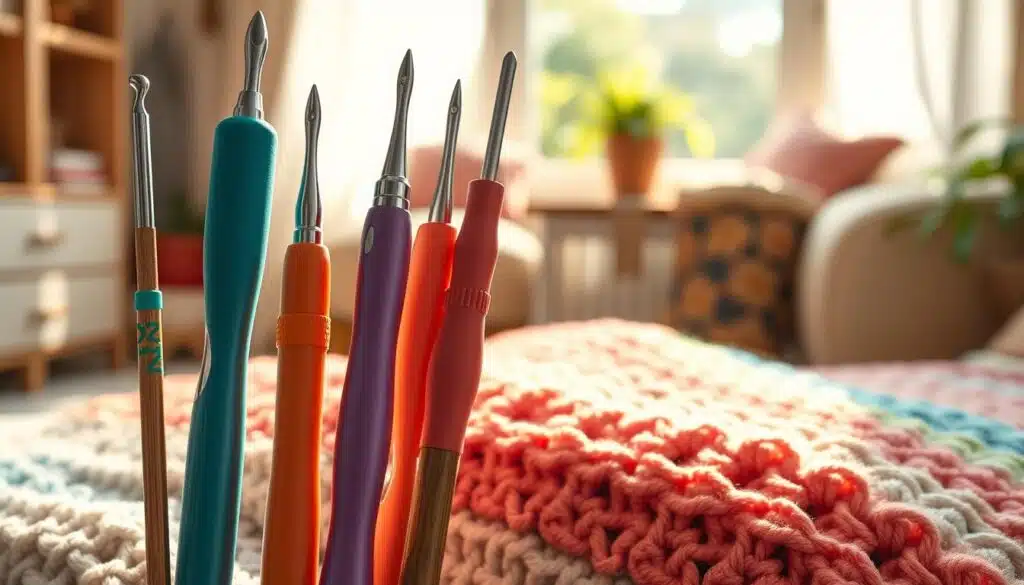
Find a hook that feels like a part of your hand. Brands like Clover and Boye have ergonomic hooks with soft grips. These reduce pressure on your joints. Using the right hook size for your yarn keeps tension low and prevents hand strain during long sessions.
Selecting yarn for softness and sensory pleasure
Choose soft yarn for anxiety relief that’s pleasant to touch. Opt for mid-weight acrylic blends or cotton-nylon mixes. They feel gentle on your skin. Starting with mid-weight yarn helps you stitch smoothly and enjoy the calming motion more.
Must-have accessories: good lighting, stitch markers, and a cozy blanket
Simple crochet accessories boost comfort and reduce frustration. A bright adjustable lamp prevents eye strain. Plastic stitch markers and a blunt tapestry needle make fixes quick. A cozy blanket or lap throw adds warmth and creates a snug, sensory-rich space for mindful stitching.
Below is a quick comparison to help you choose gear that supports steady practice and comfort.
| Item | Why it helps | Recommended pick |
|---|---|---|
| Ergonomic crochet hooks | Reduces grip tension, eases wrist strain for longer sessions | Clover Amour or Boye Soft Touch |
| Soft yarn for anxiety relief | Calming texture, forgiving for mistakes, gentle on skin | Bernat Baby Blanket or Lion Brand 24/7 Cotton |
| Crochet accessories | Speeds work and lowers frustration with neat tools | LED lamp, stitch markers, measuring tape, tapestry needles |
| Supportive seating and blanket | Improves posture, reduces fatigue, enhances comfort | Ergonomic chair cushion and a soft lap blanket |
How to set up a calming crochet environment
Find a quiet spot that feels like your own. It could be a favorite chair by the window, a cozy couch corner, or a small alcove. Crafting in the same place helps your brain relax.
Creating a dedicated space
Make a special crochet area with a comfy chair, an ottoman, and a soft throw. Keep your hooks, yarn bowls, and project bag close. A clean, organized space makes crafting more enjoyable and helps you stay longer.
Using sound and scent
Listen to soft music or nature sounds to block out other noises. Add a lavender or eucalyptus diffuser for a calming scent. These smells help create a peaceful crochet atmosphere.
Lighting and seating tips
Use different lights for tasks and mood. A bright lamp helps with eye comfort, while soft light makes the room cozy. Choose seats that support your back and neck for comfort during long crochet sessions.
Start small rituals with your crochet to build a calming habit. Try a short breath, journaling, or a quiet prayer before starting. This will make your crochet time feel more natural over time.
Make your crafting space pleasing to the senses. A space that engages your senses helps you focus and return to your project easily. Small changes can turn your corner into a peaceful place for creativity.
Building a crochet routine: small habits with big benefits
Yarn and a hook can be a steady source of calm. A simple, repeatable schedule is all you need. Even short, consistent practice can train your brain to link crochet with relaxation. This makes stress relief automatic over time.
Morning stitching to set a calm tone for your day
Begin with a gentle morning crochet ritual. It should take only 10–15 minutes. Spend this time on a soothing stitch while enjoying coffee or tea. This signals to your nervous system that the day starts with calmness, not rush.
Midday breaks and evening wind-downs with yarn
Use midday breaks to reset your focus and stretch your hands. A brief crochet session can make you clearer and less reactive. In the evening, swap screens for yarn to lower your arousal and ease into rest.
How 15-minute sessions add up to lasting stress reduction
Fifteen-minute crochet bursts are like mini-meditations. Over weeks, they build mood gains and habit strength. Finishing a small project gives you dopamine hits, reinforcing your crochet habit.
Here’s a checklist to build your routine:
- Pick one reliable time slot: morning, lunch, or before bed.
- Choose an easy starter project, such as a single-stitch scarf or dishcloth.
- Set a visible timer for a true 15-minute crochet burst.
- Keep ergonomic hooks and a cozy seat ready to reduce friction.
- Journal one quick line about how you feel after stitching.
| Session Type | Duration | Main Benefit | Easy Project |
|---|---|---|---|
| Morning stitch | 10–15 minutes | Sets calm tone, improves focus | Single-stitch scarf |
| Midday break | 15 minutes | Resets attention, reduces overwhelm | Dishcloth square |
| Evening wind-down | 15–20 minutes | Promotes relaxation, aids sleep | Small granny square |
Want real-world reassurance? Read how mindful stitching helps stress on a practical craft blog. Also, explore deeper perspectives at CrochetCraze. With steady practice, 15-minute crochet sessions become a reliable tool for when life gets messy.
Joining community for accountability and connection
Being part of a crochet community makes solo stitching a shared habit. It keeps you motivated. You get tips, honest feedback, and encouragement that makes finishing a project seem inevitable.
Look for local crochet groups at libraries, yarn shops, and community centers. These meetups help you build steady routines. They also offer hands-on help when you’re stuck on a pattern.
Local crochet groups: libraries, yarn shops, and meetups
Joining local crochet groups gives you accountability and real-life friendships. Meetings at libraries or yarn shops let you touch yarns and swap patterns. You can also learn from someone who’s already mastered a tricky stitch.
Start by asking staff at your favorite yarn shop or checking community boards at your library. You might also find Meetup events that match your skill level.
Online communities: Facebook groups, Instagram, and Reddit threads
Online crochet groups expand your circle beyond your ZIP code. Facebook communities, Instagram hashtags, and Reddit threads offer round-the-clock support. They also give you a steady stream of ideas.
Use hashtags to find active threads and share progress photos to get encouragement. If you want a concise primer on benefits, check this short guide at Crochet Craze.
Crochet-alongs and virtual events that keep you motivated
A crochet-along is group motivation disguised as a project. You work the same pattern with others, post progress updates, and hit milestones together.
Virtual events offer deadlines and celebration points that make your practice regular. They reduce loneliness, validate struggles, and speed skill growth through shared tips and wins.
| Group Type | Where to Find | Main Benefit |
|---|---|---|
| Local meetup | Libraries, yarn shops, community centers | Hands-on help and face-to-face connection |
| Facebook group | Search group names and hashtags | Active discussions and photo feedback |
| Instagram community | Hashtags and creator accounts | Visual inspiration and short tutorials |
| Reddit thread | r/crochet and related subreddits | Problem-solving and pattern recommendations |
| Crochet-along | Yarn shops, online platforms, craft blogs | Structured progress and shared accountability |
Techniques to keep crochet stress-free and joyful
https://www.youtube.com/watch?v=9SWLlszd05Q
You don’t need perfection to enjoy yarn. Start with simple, short sessions. These build calm and confidence. Small wins keep the practice joyful and help you avoid crochet overwhelm.
Master the basics before advancing
Begin with single crochet, double crochet, and slip stitch. These basic crochet stitches unlock countless patterns. They reduce frustration when you read instructions.
Spend a few sessions practicing each stitch until it feels natural. This steady repetition becomes a moving meditation. It lowers stress and makes complex patterns less intimidating.
Make peace with mistakes and learn to rip back
Mistakes are part of every craft. Frogging crochet—ripping out rows—is normal and useful. Treat it as a reset, not a failure.
When a stitch looks off, pause. Take pride in noticing errors early. This habit saves time and preserves the joy of making.
Plan projects to match your time and skill
Good crochet project planning keeps momentum and prevents scope creep. Choose modular builds like granny squares or small makes such as dishcloths and scarves.
Map steps, pick yarn and hooks, and schedule short blocks of stitching. Even 15 minutes a day compounds into real progress. It helps you avoid crochet overwhelm.
For extra tips on calm-focused starts, check practical guides that cover routines, environment, and tools in plain language: practical crochet tips.
Using crochet for emotional healing and mindset shifts
When you pick up a hook and yarn, you start a calming practice. Crochet is a quiet ritual that slows your thoughts and builds something real. This steady motion helps you handle stress and builds new habits.
How crochet helps manage anxiety, perfectionism, and overwhelm
Crochet and anxiety are linked in a healing way for many. The repetitive rhythm lowers tension and gives your hands something to do. You don’t need perfect stitches to feel better; progress is what matters.
Stories from makers who crocheted through emotions
Listen to real accounts from people who used craft to cope. A military spouse found calm by stitching simple blankets during long moves. A single parent used short crochet sessions to find peace. These stories show making can be a lifeline, not just a hobby.
Combining crochet with journaling, prayer, or breathwork
Pairing crochet with journaling deepens the work. You can note a worry, stitch for a few minutes, then write how the feeling changed. Adding breathwork at the start slows your heart rate. Crocheting while praying anchors attention and adds structure to spiritual practice.
Try short routines: three deep breaths, ten minutes of stitching, then one sentence in a journal. This loop supports emotional processing and encourages mindset shifts. Small, repeated rituals create familiar ground when life feels unstable.
Measuring progress: feeling better beyond finished projects
Want proof that crochet is more than just pretty stitches? Use each finished project as a sign of time well spent. Finishing a scarf or a set of coasters shows you’ve made progress and found calm.
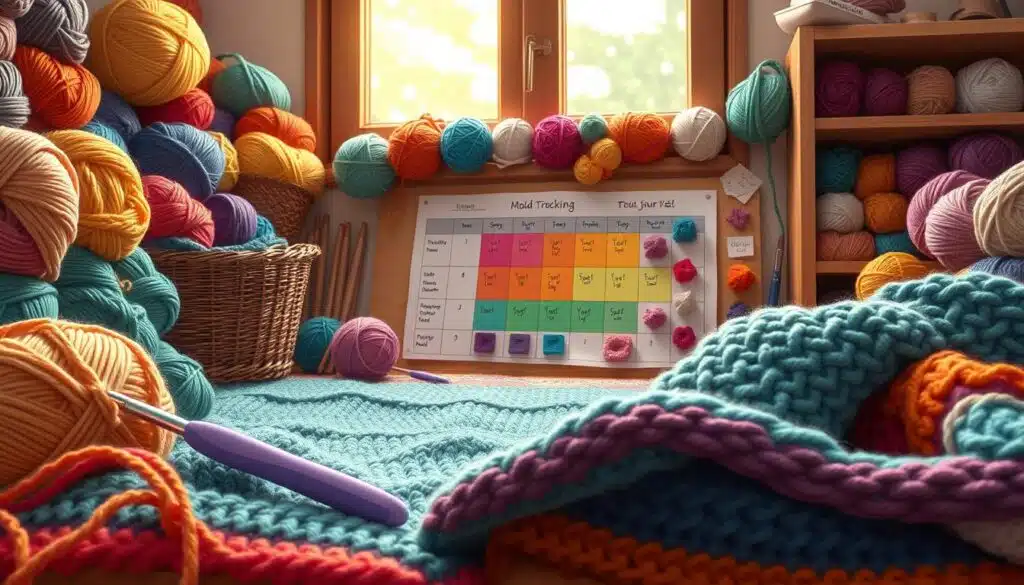
Keep it simple. Just jot down how you feel before and after crocheting in a journal or app. This way, you can see how your mood changes over time. It helps you spot patterns and understand your feelings better.
Tracking mood changes and stress levels over time
Try a simple log: date, how long you crocheted, mood before, mood after, and a brief note on what changed. This method lets you see trends instead of just guessing.
Pair your notes with occasional checks like an anxiety scale or heart rate. Podcast hosts and therapists suggest combining crafts with reflection. This can help you understand what triggers your feelings and how you’re improving.
Celebrating small wins and completed projects
Celebrate every little victory. A finished granny square, a neat edge, or a smooth join all boost your confidence. Show off your finished items, give them away, or take photos to keep yourself motivated.
Rituals help solidify feelings. A weekly tidy of your yarn basket or sharing on Instagram or at your local yarn shop shows your progress. It also gets you positive feedback that lifts your mood.
When to seek professional help alongside hobby therapy
Know when hobby therapy isn’t enough. If anxiety, panic, or depression keep getting in the way of daily life, it’s time to seek help.
If you’re feeling persistently low, having trouble sleeping, or even thinking about harming yourself, reach out. A professional can help you combine crochet with therapy for the best results.
Learn more about crafting’s therapeutic benefits at Symfonie Yarns and Crochet Craze.
| Metric | How to Track | What It Shows |
|---|---|---|
| Session Frequency | Count sessions per week | Routine strength and habit formation |
| Session Length | Log minutes spent | Stamina and time investment in self-care |
| Mood Before/After | Short 1–5 scale in a journal | Immediate emotional shift from crafting |
| Projects Completed | Track finished items monthly | Tangible progress and self-efficacy |
| Stress Triggers | Note situations tied to spikes | Patterns to discuss with a therapist |
Tips for long-term crochet as a wellness habit
Make crochet simple, fun, and easy to fit into your life. Short sessions can turn it into a lasting joy. Set up a special space and use quality tools to signal calm to your mind.
Invest in quality tools — choose ergonomic hooks from Clover or Boye and soft yarns like Malabrigo or Lion Brand. These choices reduce hand strain and make stitching more enjoyable. When you invest in crochet tools you protect your hands and boost the chances this becomes a crochet lifelong habit.
Keep learning by watching short tutorials, joining a local yarn shop class, or following makers on Instagram. Tiny, consistent improvements make technique feel effortless. This approach helps you view practice as growth, not a chore.
Mix variety with repetition so projects never feel stale. Work a soothing scarf or garlands of granny squares for meditative rhythm. Then try a new stitch or color palette to refresh interest. If you diversify crochet projects, you stay curious while keeping the mental calm that comes from familiar patterns.
Make small, measurable goals—a 15-minute morning stitch, a midday pattern check, an evening finish. These bite-size aims fit real life and build momentum. Over weeks they add up, turning casual craft into real crochet wellness habits.
Anchor crochet to cues like a favorite mug, playlist, or a cozy chair. Those cues prime your mind for relaxation so a few loops can shift your stress level. When you repeat the cues, it becomes easier to make crochet a lifestyle ritual.
Use community as support — swap tips in a local meetup or a Facebook group centred on makers. Others keep you accountable while sharing fresh ideas. Community nudges help sustain progress and make the crochet lifelong habit feel social and doable.
Conclusion
Crochet is more than a hobby; it’s a quiet therapy. It calms the mind through repetition and tangible creation. Start small, set aside minutes each day, and build a cozy corner that invites you back.
When you pair stitching with journaling, prayer, or breathwork, it becomes a dependable tool. It helps manage anxiety and perfectionism.
Real makers say slow rows and soft yarn ease negative thoughts. They also boost serotonin levels. Use dishcloths and scarves for quick wins.
Join a local yarn shop meet-up or an online group. Let community keep you accountable. This crochet stress relief conclusion is practical: pick up a hook, commit to tiny habits, and watch momentum grow.
Science and stories align — repetitive motion, focus, and finished pieces create satisfaction. Treat this as a lifestyle shift, not a one-off craft. Stitch your way to serenity, keep a gentle routine, and remember this crochet mental health wrap-up: small stitches, steady practice, big peace.
FAQ
What is “crochet stress relief” and how does it actually help you feel calmer?
Crochet stress relief is using crochet to lower stress and boost mood. The repetitive motions of stitching reduce cortisol and increase serotonin. This gives your nervous system a mini reset, similar to breathing exercises or walking.
The tactile feel of yarn, the quiet focus on one stitch at a time, and the visible progress you make combine to create a calming ritual. This ritual interrupts racing thoughts and anchors you in the present.
Why does repetitive motion in crochet affect cortisol and serotonin?
Repetition in crochet produces steady, predictable movement that shifts your brain into calmer wave patterns. This rhythm lowers cortisol—the body’s stress hormone—and helps increase serotonin, a neurotransmitter tied to well-being.
In short, the motion is meditative: it slows your mind, soothes your body, and delivers the chemical rewards of relaxation.
Is crochet the same as meditation? Can it give me the same benefits?
Crochet is a type of moving meditation. It offers many of the same benefits—improved focus, reduced anxiety, and a calmer nervous system—but with tactile reward. Unlike silent sitting, crochet gives you something physical to hold and to finish, which can make mindfulness more accessible if traditional meditation doesn’t stick for you.
What does research say about craft therapy and crochet specificall?
Studies on craft therapy show repetitive handwork produces calming brain-wave patterns and lowers negative thinking. Research and real-world programs report measurable reductions in anxiety and improvements in mood. Podcasts like Crocheting Through Emotions and practitioner reports back up those findings with practical tools and listener stories showing real mental-health benefits.
How does creating tangible items boost my mood and self-esteem?
Finished projects are proof you spent time well. Each completed dishcloth, scarf, or granny square provides visible accomplishment, which reinforces self-efficacy. That pride feeds serotonin and confidence, turning small wins into a steady emotional uplift that counters feelings of stagnation or overwhelm.
How does crochet compare to other mindfulness activities like walking or breathwork?
Crochet combines the rhythmic benefits of walking and the focused breath awareness of meditation with tactile stimulation and productive outcome. It’s more hands-on than journaling and more reachable for people who struggle to sit. The combination of movement, texture, and creation makes it a uniquely effective mindfulness tool.
What are the best beginner projects to start with for stress relief?
Start small: dishcloths give quick wins and practice with single and half-double crochet. Scarves deliver long, repetitive rows perfect for settling into rhythm. Granny squares offer tiny, repeatable successes you can join later into larger pieces. These projects limit overwhelm and encourage consistent practice.
How do short projects help with perfectionism and overwhelm?
Small projects reduce pressure because they finish fast and let you practice stitches without a huge time investment. They encourage a focus on process over perfection—mistakes are normal and easily fixed. Celebrating quick progress shifts your mindset away from perfectionism toward progress.
What tools and materials should I buy to make stitching comfortable?
Start with an ergonomic hook (reduces hand strain) and a mid-weight, soft yarn that feels pleasant to touch. Add stitch markers, a good reading or task light, and a cozy blanket or supportive cushion. These simple upgrades let you focus on calm without frustration.
Which yarn and hook do beginners usually prefer?
Beginners do well with worsted-weight (medium) yarn and a size H/8 (5.0 mm) or I/9 (5.5 mm) hook—comfortable to hold and easy to see stitches. Soft, smooth yarns make the sensory experience more relaxing, while ergonomic hooks cut down on hand fatigue.
How should I set up a calming crochet environment at home?
Designate a quiet nook—your favorite chair by a window or a couch corner. Use layered lighting (task lamp plus ambient light), add a supportive chair and a soft blanket, and consider soothing sounds or nature playlists. Scents like lavender or chamomile can cue relaxation and help your brain associate that spot with calm.
Can sound and scent really enhance the crochet experience?
Yes. Gentle instrumental music, nature sounds, or a podcast like Crocheting Through Emotions can anchor your attention. Aromatherapy—lavender, chamomile, or eucalyptus—acts as a sensory cue that primes your brain for relaxation. These extras deepen the ritual and help you form lasting habits.
How much time should I dedicate to crochet to see mental-health benefits?
Ten to fifteen minutes daily is a powerful starting point. Short, consistent sessions act like mini-meditations and build the habit. Morning stitching can set a calm tone, midday breaks reset your focus, and evening sessions make for a soothing wind-down before bed.
Will short 15-minute sessions actually add up to lasting stress reduction?
Absolutely. Regular short sessions train your nervous system to associate crochet with calm. Over weeks and months, those tiny moments accumulate into measurable improvements in mood, reduced anxiety, and steadier emotional regulation.
How do I find crochet community and why does it matter?
Community reduces loneliness and keeps you motivated. Look for local groups at libraries, yarn shops, and community centers. Online, explore Facebook groups, Instagram hashtags, and Reddit threads. Join crochet-alongs or virtual events to share tips, celebrate wins, and stay accountable.
What role did the Crocheting Through Emotions podcast play in this movement?
Crocheting Through Emotions, hosted by Sigoni, frames crochet as a tool for moms and caregivers to manage overwhelm, anxiety, and perfectionism. The podcast—which ranks in the top 2% globally—offers practical tools, encouragement, and stories that show how pairing crochet with journaling and faith can boost resilience.
What basic techniques should I master before moving to complex patterns?
Learn the chain, single crochet, half-double, double, and slip stitch first. Mastering these basics gives you freedom to try many patterns without frustration. Practice them in short, focused sessions until they become second nature.
How do you handle mistakes or “frogging” without getting discouraged?
Frogging is part of the craft. View mistakes as learning moments—undoing stitches teaches structure and builds skill. Keep projects small, celebrate incremental progress, and remind yourself that imperfection is part of the healing process.
How should you plan projects so they don’t spiral into overwhelming commitments?
Match projects to your available time. Use modular makes like granny squares, small accessories, or dishcloths. Break patterns into micro-goals (one row, one square) so you get repeated wins and maintain momentum without scope creep.
Can crochet help with anxiety, perfectionism, and emotional overwhelm?
Yes. Intentional crochet helps manage anxiety and perfectionism by shifting focus to rhythm and process. It creates a safe space for emotions, reduces mental load, and—when combined with journaling, prayer, or breathwork—supports deeper mindset changes and emotional processing.
Are there real stories of people using crochet to get through tough times?
Many makers report tangible change. For example, listeners of Crocheting Through Emotions share how crochet plus reflection helped them reconnect spiritually, reduce stress, and manage parenting pressures. Those anecdotes mirror research showing craft therapy’s benefits.
How do I measure emotional progress from crochet sessions?
Track mood changes with a simple log: note how you feel before and after sessions. Record minutes stitched, what you worked on, and any thoughts that surfaced. Celebrate small wins—completed squares or even a relaxed breath count—to reinforce the habit.
When should crochet be paired with professional help?
Crochet is a supportive tool, not a replacement for therapy. If anxiety, depression, or overwhelm are severe or persistent, combine crochet with professional support from therapists, counselors, or your healthcare provider to ensure complete care.
What long-term habits make crochet a sustainable wellness ritual?
Invest in quality tools, keep learning new stitches, and alternate repetitive projects with fresh patterns to maintain interest. Pair stitching with consistent cues—morning tea, a favorite chair, a calming playlist—so crochet becomes a recognizable ritual for rest.
Which accessories help you stitch longer without discomfort?
Ergonomic hooks, a supportive cushion, layered lighting, and good posture are key. Add stitch markers, a yarn bowl, and a cozy throw to create a sensory-rich setup that reduces strain and increases pleasure.
How do you balance variety and repetition so crochet stays joyful?
Combine meditative projects (scarves, afghans) with short creative bursts (amigurumi, colorwork). Use repetition for calming rhythm, then switch to a colorful or textured piece when you need novelty. That balance keeps skill and joy alive.
What final practical tip helps you get started today?
Grab a mid-weight yarn and an ergonomic hook, pick a simple dishcloth or scarf pattern, and stitch for 10–15 minutes. Celebrate the small win, log how you feel, and repeat. The habit grows fast—and so will your calm.