
If you enjoy making tiny treasures, micro crochet is perfect for you. It uses fine thread and small hooks to create tiny toys and amigurumi. These small items can catch people’s attention and start conversations.
It may look delicate, but it requires patience and focus. Anyone who knows how to crochet can learn these skills. Good lighting is also key.
This guide will help you get started with the basics. You’ll learn about the tools and techniques needed. You’ll also get tips from makers who sell their work on Etsy for high prices.
For a hands-on guide and a tested owl pattern, check out Kristi Tullus’ instructions. TrishaGurumi also has a great resource for beginners: micro-crocheting for beginners.
This guide is for you. It offers clear steps and achievable goals. You’ll learn about the right tools and techniques for beginners.
Key Takeaways
- Micro crochet makes fingertip-sized items using fine thread and tiny steel hooks.
- Beginners benefit from starting with slightly larger micro tools (0.6–0.75mm hook, size 20–40 thread).
- Good lighting, steady hands, and patience matter more than special skills at first.
- Magic rings and simple, repeating patterns are ideal for tiny crochet practice.
- Micro amigurumi can command high prices due to skill and time invested.
What is Micro Crochet: Definition, Scale, and Appeal
So, what is micro crochet? It’s not just tiny versions of familiar stitches. It uses very fine threads and tiny steel hooks. The basic stitches like single crochet and slip stitch remain the same. The key difference lies in the scale, tension, lighting, and patience required.
Micro vs standard crochet highlights the difference in tools and technique. Standard crochet uses larger hooks and yarns. Micro crochet, on the other hand, employs smaller hooks and threads. This change affects how you hold your hook and the tightness of your stitches.
Micro crochet pieces are often small enough to fit on a fingertip. Mini amigurumi, for example, can be as small as 1–2 cm with a 0.6mm hook. In contrast, the same pattern made with DK yarn and a 2.5mm hook can be around 6 cm. Using an even smaller 0.4mm hook can make pieces perfect for dollhouse accessories or tiny charms.
Many crafters enjoy micro crochet for its unique appeal. It’s great for making jewelry, delicate earrings, and miniature collectibles. Designers like Steffi Glaves have even turned micro crochet into wearable jewelry, making it a viable business.
Working on micro crochet pieces requires more time and care. They can take two to three times longer to complete than standard pieces. This extra effort is why tiny items often have higher prices when sold as handmade goods.
Essential Tools and Materials for Tiny Stitches
Starting with micro crochet means having a clean workspace and the right tools. Choose a few reliable tools and keep them within reach. Small changes can make tiny work much easier.
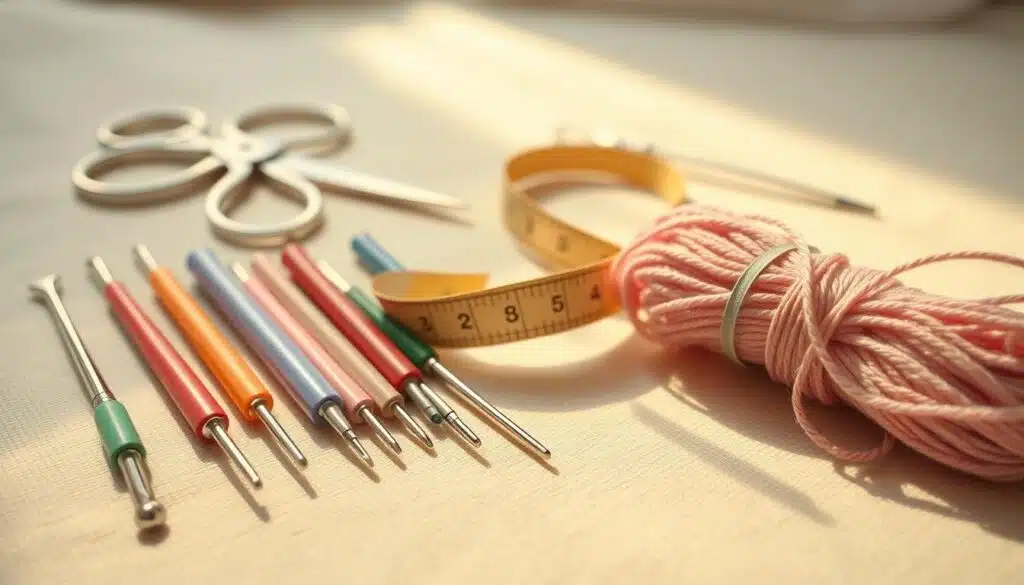
Hooks and grip choices
Choose tiny crochet hooks that fit your patience. Hooks in 0.4mm, 0.5mm, 0.6mm, and 0.75mm are common. Beginners often start with 0.6–0.75mm to learn without hand strain.
Japanese steel hooks are praised for their smooth finish. They help with tight loops. If your hands get tired, try hooks with comfortable grips.
Threads, yarns, and sizing basics
Sewing thread is the go-to for micro crochet. Cotton thread is thicker and matte, making stitches easier to see. Polyester thread is stronger and shines more, great for jewelry.
Thread sizes can confuse beginners. Lower numbers mean thicker thread. Test your hook and thread before a big project. Learn more about sizing in this guide on micro crocheting.
Lighting, magnification, and your work surface
Good lighting makes tiny stitches easier to see. Use cold-light lamps or daylight LEDs. A magnifying lamp for crochet is also helpful, with 2x–5x magnification.
Keep your workspace stable and clean. A felt pad or small tray keeps beads from rolling. Keep your hands clean and dry to avoid smudges.
Handy extras and finishing tools
Micro crochet accessories include fine sewing needles and tweezers. Beeswax or thread conditioner helps prevent fraying. Waxed thread is smoother for tight stitches.
Stuffing tiny amigurumi needs creativity. Use wool roving, tiny felt, or pulled cotton thread. A toothpick or fine hook helps stuff without stretching stitches.
| Item | Why it helps | Recommended sizes/options |
|---|---|---|
| Steel hooks | Precise control in tight stitches | 0.4mm, 0.5mm, 0.6mm, 0.75mm; 0.6–0.75mm to start |
| Sewing thread for crochet | Fine, smooth, available in many colors | Size 70–100 for micro work; test brands |
| Magnifying lamp for crochet | Sharper view, less eye strain | 2x–5x magnification, daylight LED preferred |
| Fine needles & tweezers | Neat finishing and small adjustments | Milliner or straw needles; pointed tweezers |
| Tiny stuffing options | Keeps small shapes full without lumps | Wool roving wisps, pulled cotton thread, tiny felt bits |
Start with a basic kit of tiny crochet hooks, cotton thread, and a magnifier. For more on wearables and small-scale techniques, check this resource for scale and conversion tips.
Choosing the Best Thread and Hook Combination
Finding the perfect thread and hook pair can make micro crochet feel magical. Remember, thread sizes can vary based on the fiber and maker. So, it’s best to rely on your own feel and swatches, not just the size number.
How thread size labels differ by fiber
Thread sizes are not always the same. Thicker threads have lower numbers, but standards can differ. For example, cotton, core-spun, and polyester threads of the same size can behave differently. Always check by touch before starting a project.
Why cotton sewing thread is often recommended for beginners
Cotton sewing thread is great for beginners because it has good grip and a matte finish. It’s easier to see under bright lights. But, it can break if pulled too hard, so be careful.
Which hook size to start with and how to test tension
Start with a 0.6–0.75mm hook and a slightly thicker thread, like size 20 or 40. If you’re new, try a 0.5–0.75mm hook with thicker thread for practice. Make small swatches to check if your stitches are right.
Adjust your stitches based on what you need. Use looser stitches for volume and tighter for details. If unsure, try different hooks and swatches until it feels right.
For a guide on yarn weight and hook sizes, check out this beginner crochet hook guide. It has tips on materials and metric conversions.
| Project need | Thread suggestion | Hook range (mm) | Why it works |
|---|---|---|---|
| Tiny jewelry (earrings, pendants) | Mercerized cotton size 80 or 100 | 0.5–0.6 | Clean stitches and firm shape for durable mini pieces |
| Practice swatches and learning | Cotton sewing thread size 20 or 40 | 0.6–0.75 | Easier handling, visible stitches, forgiving for tension practice |
| Mini amigurumi bodies | Mercerized crochet thread or fine cotton | 0.6–0.75 | Balanced density; can be stuffed without gaps |
| Delicate lace trims | Steel or fine cotton thread size 100+ | 0.4–0.5 | Very fine detail, crisp edging for tiny motifs |
| Mixed-detail pieces (edges vs body) | Same thread; adjust tension and hook if needed | 0.5–0.75 | Use tighter tension or smaller hook for edges, looser for bulk |
Setting Up Your Work Environment for Comfort and Precision
Begin by creating a neat micro crochet workspace. Place everything within easy reach. A small table with containers for threads, hooks, and tiny findings helps avoid tangles and loss. Use a felt pad or shallow tray to catch beads and ends, so they don’t roll away.
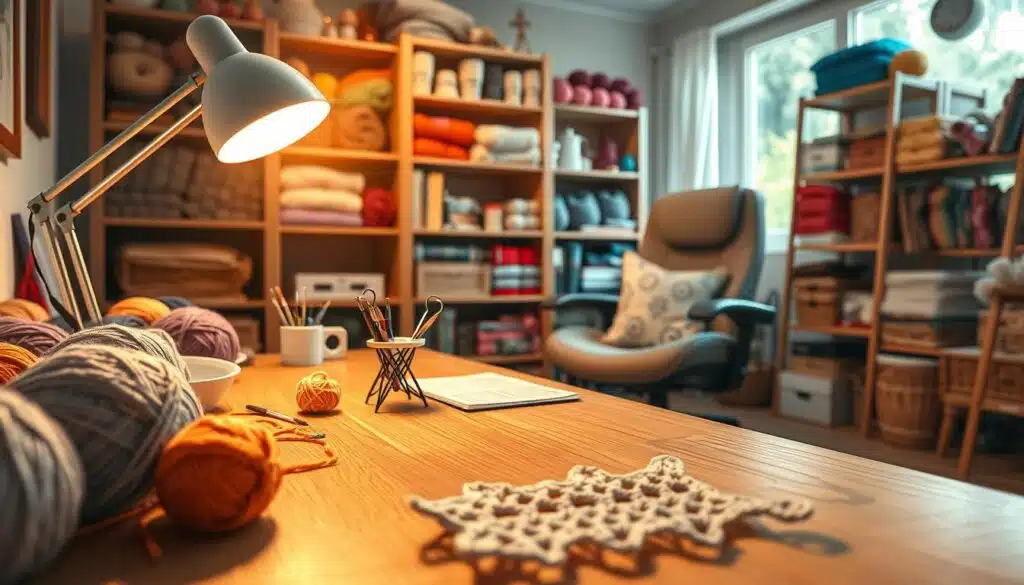
Lighting choices
Opt for daylight-balanced LEDs or cold-light lamps for clear light. Magnifying lamps offer both light and magnification for fine threads. For quick tasks, clip-on visors or Eyeglass-style magnifiers are great. Good lighting helps see tiny stitches without squinting.
Posture and breaks
Sit with your back straight and work at a comfortable height. Use a lap cushion or pillow to bring pieces closer without hunching. Take short breaks every 20–30 minutes to rest your hands and shift focus.
During breaks, do simple stretches. Look at a distant object for 20 seconds, rotate wrists, open and close fingers, and shrug shoulders. These stretches prevent eye strain and reduce repetitive stress.
Hand and thread care
Wash and dry your hands before starting to avoid oils and dirt on your work. Store threads in small bags or on cards to prevent tangles and keep them dry. A soft brush or lint remover gently cleans finished pieces.
Tools and tidy habits
Label and group containers by fiber and color. Some use wax on threads for control; others prefer small bobbins for smooth feeding. If you experience hand pain, check out guidance on crochet hand pain for solutions.
Ergonomics for better results
Choose crochet ergonomics that fit your body and technique. A well-lit, organized space reduces strain and speeds up your work. Good posture, the right lighting, and regular breaks make the micro crochet workspace ideal for creating tiny masterpieces.
Beginner Techniques and Stitches for Micro Projects
Start small and expect to relearn some habits. Micro work asks you to slow your hands and watch every loop. These tips cover starter choices that matter: a neat beginning, clean shaping, and steady tension.
Magic ring micro crochet is the go-to start for tiny amigurumi. It closes to a firm, nearly invisible center, which keeps your piece tidy at fingertip scale. You may fumble the first few attempts. Repeat the motion a couple of times and you’ll find it faster and far neater than chaining and working into the 2nd chain.
The core micro crochet stitches stay familiar: slip stitch, single crochet, double crochet. Placement feels smaller, so slow down. For round work you’ll use slip stitches sparingly because they can be fiddly at micro size. Save them for color changes or when you really need a clean join.
Shaping relies on neat decreases. Try invisible decrease micro for amigurumi; it creates a seamless join that keeps faces and bodies smooth. Practice it on scrap rounds until your decreases sit flush without visible gaps.
Tension makes or breaks tiny projects. Use tension micro crochet deliberately: work slightly looser on body rounds so stitches are readable. Pull tighter on edges, wings, and chain-based shapes to avoid holes. Expect your pace to be a third of normal speed while you learn.
Hold the thread under gentle, steady tension with your forefinger. If loops slip, pause and steady the yarn with a second finger. This small change cuts down on dropped loops and keeps your rhythm even.
- Practice magic ring micro crochet until centers close smoothly.
- Work invisible decrease micro on scraps to master seamless shaping.
- Adjust tension micro crochet by section: looser for bodies, tighter for edges.
- Limit slip-stitch joins until you’re confident at micro scale.
Patience rewards you with clean micro crochet stitches and tiny pieces that look intentional. Keep practice short and frequent; your fingers will learn the pace and your results will tighten up fast.
Patterns, Conversions, and Project Ideas
Now it’s time to pick patterns and shrink them without losing charm. Start with simple projects to build your confidence. Try flat motifs like flowers and snowflakes to practice your stitches before moving on to more complex projects.
Choosing beginner-friendly designs
Look for patterns made for tiny projects or use designs you’ve already mastered. Flat motifs are great for beginners because they often involve working between stitches. Steffi Glaves suggests starting with flowers, small squares, and simple rounds.
How to convert a pattern to micro
To make a pattern micro, reduce the number of stitches and simplify color changes. Test your work with swatches to find the right scale. For example, a round that’s six stitches at normal size might be four in micro, depending on the thread and hook.
Keep the number of rounds low. Many micro projects have fewer than 24 stitches for clean shapes. Avoid frequent slip-stitch joins and complex color changes until you can handle tiny tension.
Practical conversion steps
- Work a 1″ swatch with your chosen thread and a 0.6–0.75mm hook to check scale.
- Reduce the original pattern’s stitch increases proportionally; fewer increases keep the silhouette tight.
- Simplify color changes to single rounds or surface embroidery instead of frequent join-offs.
Project ideas to try
Micro amigurumi make great tiny charms. A DK-weight 6 cm owl can shrink to about 1.5 cm with sewing thread and a 0.6mm hook. Tiny flowers are perfect for earrings and help you practice making matching pairs.
Designers turn motifs into jewelry and finishes that go well with metal findings. Make several pieces for sets, plan simple colors first, then add details as you get better. These projects are great for dollhouse accessories, potted plants, and doilies scaled down for miniatures.
Tips for jewelry and matching pieces
When making tiny crochet jewelry, make several pieces to ensure they match. Use the same tension, lighting, and tools for each piece. If you’re making earrings, make extras so you can pick the best pair.
Troubleshooting and Common Challenges
Working with tiny stitches can be tricky. Good lighting, a magnifier, and steady hands help. When mistakes happen, stay calm to fix them without making things worse.
Fixing dropped stitches and undoing rows
Fixing dropped stitches at a small scale is hard. Use a tiny crochet hook or a fine tapestry needle to fix each loop. Tweezers can help grab a dropped stitch before it gets away.
Work slowly and count your stitches after each row. For more tips, check out common crochet mistakes and how to fix them.
Managing thread fraying and breaks
Fine threads fray and break easily. Cotton threads might fray more than polyester. A light beeswax or thread conditioner can help reduce fraying without making your work stiff.
If a thread breaks, tie a small knot and hide the tail inside. This method is stronger than weaving alone. Use strong, fine needles to sew in ends without bending.
Untangling and preventing snarls
Tangles can waste a lot of time and fray threads. Wind threads onto small bobbins or cards to keep them organized. Use small zip bags or dedicated spools to prevent knots when changing colors or weights.
Some people pull single strands from stranded embroidery floss to avoid bulk and tangles. This trick helps control thickness and keeps threads neat.
Getting consistent results for multiples
Making matching micro items is an art. Keep a notebook with your stitch counts, hook size, thread brand, and tension notes. Note down the steps you took when a piece turned out right.
Plan to make extra pieces and then pick matching pairs. Making identical items on the first try is rare. For more tips on consistency, see Mastering Your Crochet.
| Problem | Quick Fix | Tools to Use |
|---|---|---|
| Dropped stitch that unravels | Rescue loop with fine hook or needle, then secure and recount | 0.4–0.75mm hook, tweezers, magnifier |
| Thread fraying micro crochet | Lightly wax or condition, tie a secure knot and hide tail | Beeswax, thread conditioner, super-fine needle |
| Snarled or tangled thread | Rewind onto bobbin or card; separate strands if needed | Bobbins, small zip bags, thread spool |
| Inconsistent pairs or sets | Make multiples, keep detailed notes, select best matches | Project journal, stitch markers, same dye lot thread |
| Weaving in ends that fail | Knot before hiding, use strong needle to bury tail | Strong micro sewing needle, yarn needle, tweezers |
Tips from Micro-Crocheters and Real-World Experiences
Working smart, not hard, is key. Start with a pattern you know at a normal size. Then, shrink it bit by bit. Steffi Glaves suggests starting with flat motifs and then reducing the hook and thread.
Begin with a larger hook, like 1.0mm or 0.75mm. As you get the hang of it, move to smaller sizes. Use light-colored thread to see your stitches better. These tips will save you time and keep you going.
Finishing is critical. At the micro scale, weaving in ends can be tricky. Try knotting the end and hiding it inside. Then, sew the tails with a fine needle for security. Adding a bit of extra thread can also help.
Finishing well is important for both looks and durability. Use tight but not stiff tension. Lightly wax cotton for structure without stiffness. For jewelry, use sterling silver findings to add value.
At first, micro crochet can be slow. A small owl might take 2.5 hours, while a larger one takes just one. Many makers find micro projects take longer.
When pricing micro crochet, remember the time and skill involved. Etsy prices can reach 90€ for unique pieces. Good pricing shows the value of your work.
Repetition is key. Make several pieces to get a set. Practice often and learn small tricks. Sharing your work can help you learn faster.
For hook sizes, check out a guide: hook size guide. With practice and knowledge, your micro crochet will improve quickly.
Conclusion
Micro crochet conclusion: it turns simple crochet into tiny, impactful art. You can make small amigurumi, jewelry, and dollhouse items with steel hooks and cotton thread. These pieces feel high-end.
Good lighting and a steady workspace help you learn faster. They also save your hands from strain.
To start, use familiar patterns or flat motifs. Begin with a 0.6–0.75mm hook for practice. Move from regular yarn to finer threads as you get better.
Practice the magic ring and control your tension. Learn to knot and hide tails neatly. This makes your tiny pieces look polished and durable.
This tiny crochet summary: it’s slow and sometimes fiddly. But, your patience will pay off with unique pieces. These pieces can sell for more with quality findings like sterling silver.
Make several pieces for matching jewelry. Improve your finishing techniques to make your work stand out.
You’ll face frustration, but keep practicing. Micro crochet rewards you with adorable, precise results. Enjoy making tiny masterpieces that amaze everyone.
FAQ
What is micro crochet and how does it differ from regular crochet?
Micro crochet is a special type of crochet that makes tiny pieces, often as small as a fingertip. It uses very fine thread and tiny steel hooks. The techniques are the same as regular crochet, but you need to control the tension tightly and have steady hands.
Regular crochet uses hooks of 2.25mm or larger. But micro crochet uses hooks that are much smaller, between 0.4mm and 0.75mm. Many think anything under 0.60mm is true micro.
How small are finished micro crochet pieces?
Finished micro pieces are very small, fitting on a fingertip. For example, a snowy owl made with a 0.6mm hook and sewing thread is about 1.5 cm. This is much smaller than the 6 cm it would be in DK yarn with a 2.5mm hook.
Using a 0.4mm hook makes things even smaller.
Why do crafters enjoy micro crochet?
Crafters love micro crochet for its unique and impressive nature. Tiny flowers can make stunning earrings, and delicate jewelry pieces look great on sterling silver findings. Miniature doilies or furniture also sparkle in dollhouses.
Designers like Steffi Glaves use micro for jewelry and sell it in boutiques, showing its commercial value.
What hooks should I start with for micro crochet?
Start with steel hooks of sizes 0.4mm, 0.5mm, 0.6mm, and 0.75mm. Many suggest starting with 0.6–0.75mm to build confidence. Japanese steel hooks are known for their smooth finish.
Choosing hooks with comfortable handles helps prevent hand fatigue. Steffi Glaves recommends ergonomic handles for longer sessions.
Which threads or yarns work best for micro projects?
Sewing thread, whether cotton or polyester, is common. Cotton thread is a bit thicker and less shiny, making it easier to see. Polyester or core-spun threads are stronger but shinier.
Mercerized cotton crochet threads (DMC size 80 or similar) are also popular. Remember, thread sizes vary by fiber and brand. Always swatch and test.
How do thread size labels work and why shouldn’t I trust them blindly?
Thread numbers can differ by fiber and manufacturer. A lower number means thicker thread. But a size 40 cotton thread won’t match a size 40 core-spun or mercerized thread.
Because sizing systems aren’t standardized, you should swatch and test tension instead of relying on label numbers alone.
What lighting and magnification setup do micro crocheters use?
Good lighting is key—daylight-balanced LEDs or cold-light lamps are best for clear, shadow-free light. Many use magnifying lamps, clip-on visors, or wearable magnifiers with 2x–5x magnification.
Remember to take regular breaks to prevent eye strain. Makers stress the importance of good lighting first and foremost.
What extras and small tools should I keep on hand?
Keep fine, strong sewing needles for weaving ends, tweezers for loops, tiny stuffing tools (toothpick, fine hook), and light wax or thread conditioner. Use a felt pad or small tray to stop tiny pieces from rolling away.
For stuffing micro amigurumi, try tiny wool roving wisps, pulled cotton thread, or minuscule polyester fill.
Which hook/thread combination should I test as a beginner?
Start with a 0.6–0.75mm hook paired with a slightly thicker sewing thread (for example, a size 20 or 40 when easing into micro). Caydo and other guides recommend 0.5–0.75mm as useful beginner sizes, and kimlapsley’s experiments favored 0.75mm with size 20 for a gentler entry.
Make small swatches to check tension—stitches shouldn’t be so tight you can’t manipulate them or so loose they gape.
Should I use the magic ring or start with chains for tiny amigurumi?
The magic ring is generally preferred for micro amigurumi because it produces a tight, neat center with minimal hole. At micro scale, starting chains can be fiddly; many makers find the magic ring easier once you’ve practiced it a few times.
How should I manage tension for different parts of a micro piece?
Adjust tension by section. Work slightly looser for visible body parts to make stitches easier to see, and tighten up for edges, wings, or chain-based details to avoid gaps. Expect a learning curve—micro projects take roughly 2.5–3 times longer than standard versions because you move slowly and tension matters more.
What pattern choices are best for beginners in micro crochet?
Start with familiar patterns scaled down or patterns written for micro. Flat motifs like tiny flowers or snowflakes are great first projects because you often work between stitches instead of into minuscule stitch openings. Steffi Glaves recommends flat motifs to build confidence before attempting full amigurumi.
How do you convert a regular pattern to micro scale?
Reduce stitch counts, simplify color changes, and test with swatches. Many extreme micro projects keep round stitch counts low (often under 24). Avoid frequent slip-stitch joins and complex color shifts until you’re comfortable.
Make small test pieces to verify shape and proportion before committing.
How do I fix mistakes in micro crochet without causing more trouble?
Undoing stitches (frogging) is harder at micro scale. Use the smallest available crochet hook or a fine needle to pull loops back carefully. Tweezers help rescue dropped loops. Work in strong light and magnification, and move slowly to avoid losing additional stitches.
How do I prevent thread fray, tangles, and breakage?
Fine threads fray and can break. Wind threads on small cards or bobbins to prevent tangles. Use light wax or thread conditioner sparingly to reduce fray. Store threads clean and dry, avoid excessive tension, and if a break happens, knot and hide the tail inside the piece—kimlapsley recommends knotting as weaving alone can be insecure.
How can I make matching pairs for earrings or jewellery?
Consistency is tough at micro scale. Make multiples of the same motif, keep careful notes of hook/thread/tension, and then select matching pairs. Many designers, including Steffi Glaves, recommend producing extras and choosing the best-matching ones for sets.
What finishing techniques hold up best for micro pieces?
Weaving in ends alone often isn’t enough—knot the tail and hide the knot inside the piece, then sew ends in with a very fine, strong needle. Use super-fine needles designed to pass through tight stitches without distorting your work.
How long do micro projects usually take and can I sell them?
Micro projects are slower—expect pieces to take roughly 2.5–3 times longer than regular versions; a micro-owl might take ~2.5 hours versus ~1 hour for a DK-sized original. Because of time and skill, finished micro pieces can command premium prices; Etsy listings show items selling for up to about 90€, and jewellery finished with sterling silver findings can fetch higher retail values.
Any ergonomic or health tips for working micro for long stretches?
Sit with back support, bring work to a comfortable height with a lap cushion if needed, and use comfortable-handled hooks to reduce hand fatigue. Take breaks every 20–30 minutes: shift focus to the distance, do gentle wrist circles, finger stretches, and shoulder rolls to prevent strain and eye fatigue.
What are recommended starter tips from experienced micro-crocheters?
Start from a familiar pattern and gradually reduce hook and thread gauge. Begin with lighter-colored thread for visibility and larger hooks (1.0mm or 0.75mm) before moving down to 0.6mm or 0.5mm. Practice the magic ring, make multiples for consistency, wax thread lightly for control, and prioritize lighting and magnification. Steffi Glaves recommends flat motifs to practice before attempting complex 3D shapes.
What are the best small stuffing options for micro amigurumi?
Use tiny wool roving wisps, very small polyester fill, pulled cotton thread, or tiny felt scraps. Tools like a toothpick, fine crochet hook, or embroidery needle help push and position stuffing into minuscule cavities without bulging stitches.
Any workspace hacks to keep tiny parts from getting lost?
Work on a felt pad or shallow tray so beads and tiny pieces don’t roll away. Keep small containers or pill boxes for components, and use a soft brush or lint remover for finishing. Clean hands and tidy storage reduce dirt and tangles, which show easily on micro work.
Where can I find inspiration and sources for micro crochet patterns and community tips?
Look to designers and sources like DoubleTrebleTrinkets (Pinterest), LamLinh (Etsy), kimlapsley’s blog experiments, Caydo’s guide “Micro Crocheting: Complete Guide from Beginner to Expert,” and interviews with micro-jewellery designers such as Steffi Glaves. These offer patterns, technique notes, and real-world tips shared by working micro makers.