
Bamboo yarn is a top pick for those who love sustainable knitting and style. It has a silky feel, natural shine, and breathes well. This makes it perfect for summer clothes, light scarves, and flowy shawls. Brands like Lion Brand TruBoo and Coboo, Knit Picks Galileo, and HiKoo Sueno show its versatility in real projects.
But, bamboo is different from wool. It can be slippery and change shape after washing. So, swatching and blocking are key to getting the right fit. Adding cotton, wool, or nylon to bamboo can make it stronger and more elastic.
For those who care about the planet, look at how the bamboo is processed. Lyocell and mechanically processed bamboo are better for the environment than regular viscose. Look for certifications like OEKO-TEX and check what brands say about their eco-friendliness.
For inspiration and tips, check out Ravelry and LoveCrafts. They have projects and yarn suggestions. This guide is your quick start to making soft, eco-friendly clothes with bamboo.
Key Takeaways
- Bamboo yarn offers a silky feel and natural sheen ideal for warm-weather projects.
- Swatching, blocking, and mindful needle choice help manage bamboo’s slipperiness.
- Blends add durability; 100% rayon from bamboo gives maximum drape.
- Lyocell and mechanical processing are more sustainable than standard viscose.
- Check certifications and brand transparency when shopping for eco-friendly yarn.
- Ravelry, LoveCrafts, and trusted yarn brands provide patterns and community support.
Why Bamboo Is an Eco-Friendly Yarn Choice
You choose bamboo yarn because it feels great and is good for the planet. Bamboo grows fast and uses less resources, making it a top choice for eco-conscious knitters. It can be harvested many times without replanting, saving land and producing more fiber than many trees.
Bamboo’s rapid growth and low resource needs
Bamboo is a grass that grows much faster than trees. Some types can grow up to three feet a day. They reach harvest in just three to five years, unlike hardwoods that take decades.
It often needs less water than other crops and avoids harmful chemicals. Leaf mulch from bamboo also enriches the soil, reducing the need for fertilizers. This supports long-term sustainability of bamboo.
Carbon sequestration and soil benefits
Bamboo is great at absorbing CO2. In tropical areas, single plants can take in a lot of CO2. Groves can capture up to 12 tons of CO2 per hectare each year. This makes bamboo a better choice than slower-growing trees for the environment.
Bamboo’s roots help prevent erosion and protect soil. They also aid in restoring damaged land. Studies show bamboo can reduce soil compaction and loss, supporting healthier soil and cleaner air.
Different processing impacts on sustainability
Processing bamboo can affect its sustainability. Mechanical methods produce a fiber similar to linen with less chemical use. But these methods are rare and expensive.
The usual process turns bamboo into viscose or rayon using chemicals. This raises concerns about waste and worker safety.
Lyocell, on the other hand, uses a closed-loop system that recovers most of the solvent and cuts emissions. When comparing lyocell to viscose, lyocell is better for the environment and sustainability.
If you’re looking for eco-friendly crochet materials, check out sustainable crochet materials. It offers resources and brand suggestions that align style with environmental impact.
knitting with bamboo
Before starting, take a moment to plan your project. Bamboo yarn offers a silky feel and a beautiful drape. It’s perfect for summer tops and lightweight shawls. Make sure to check the yarn label for details on its processing.
For a quick guide, visit Knitting with bamboo yarn.
What you should know before starting a bamboo project
Bamboo yarn is known for its shine and softness, often compared to silk. It can be slippery and may relax after washing. So, choose your designs wisely.
Consider blends with wool or nylon for garments that hold their shape. For benefits like antibacterial properties, look for yarns with more bamboo content.
Swatching, blocking, and sizing tips
Swatching is key. Knit a large swatch, wash and block it like the finished piece, then check your gauge again. Bamboo can stretch and change after blocking, so sizing after washing is important for a good fit.
For structured garments, use smaller needles for a firmer fabric. You can also use two strands for finer yarn. Add ribbing with elastic blends and reinforce seams to prevent excessive stretch.
Needle choices and handling
Your choice of needles will affect your knitting experience. Wooden or bamboo needles offer better grip and prevent splitting. Metal tips are better for fast knitters who prefer smooth stitches.
If your yarn splits, use blunt tips and slow down. For slippery lace or lightweight items, stiff needles from Clover or ChiaoGoo work well. For everyday use, Addi Naturals or Knitter’s Pride bamboo sets are good choices. With the right needles and preparation, you can avoid common issues.
Softness, Drape, and Wearability: What Makes Bamboo Special
When you hold bamboo yarn, you feel its silky, smooth texture right away. It feels like vegan silk or cashmere. This is why makers love bamboo for summer tops and drapey accessories. Let’s explore why bamboo is so comfortable and performs well.
Silky handfeel and natural sheen
Bamboo fibers are round and smooth, making your knits feel luxurious. They have a natural sheen that makes stitch definition pop. This sheen also enhances the drape in shawls and lightweight garments.
As you wash your piece, the fibers align, making it even softer. So, your finished item will feel softer after a gentle wash.
Breathability and moisture-wicking
Bamboo’s breathability comes from tiny gaps in its fibers. These gaps allow air to flow and moisture to be wick away from your skin. Bamboo moves moisture faster than cotton, making it perfect for warm-weather knits and activewear.
Hypoallergenic and antimicrobial properties
Bamboo is great for people with sensitive skin because it’s hypoallergenic. It has natural antibacterial qualities that reduce odor and bacteria. Plus, it offers UPF benefits, adding sun protection to its list of perks.
- Soft touch: bamboo yarn softness rivals silk and cashmere without animal fibers.
- Cool wear: bamboo breathability keeps garments feeling light on warm days.
- Skin-friendly: hypoallergenic yarn properties suit baby items and sensitive-skin projects.
Best Bamboo Yarn Types and Popular Brands to Try
Looking for a yarn that feels like silk? Bamboo yarns are a great choice. 100% bamboo rayon has a glossy look and flows beautifully. It’s perfect for lightweight tops and shawls.
But, it can be slippery. So, make sure to swatch it carefully before starting your project.
Blends offer a balance. They mix bamboo with cotton, merino, or synthetic fibers. This adds strength and makes care easier. These blends hold their shape better, ideal for sweaters and socks.
100% bamboo rayon is great for DK and sport weights. It’s airy and has a luxurious feel. But, it’s not very elastic. It’s best for loose-fitting garments like cardigans and scarves.
Bamboo blends are more practical. A mix of cotton and bamboo is soft and breathable but not too stretchy. Merino and bamboo together add warmth and spring. Synthetic fibers in blends make them durable and less prone to pilling.
Here are some brands to check out:
- TruBoo — a DK-weight, 100% rayon from bamboo with a soft hand and good yardage, great as a direct substitute in many DK patterns.
- Coboo — a DK-weight blend of cotton and bamboo rayon that drapes beautifully and breathes well for summer knits.
- Galileo — a sport-weight 50/50 merino and viscose-from-bamboo that adds elasticity and elegant drape for wraps and lightweight cardigans.
- Sueno — a sport-weight mix of superwash merino and bamboo viscose that stands up to washing and keeps spring for socks and kids’ wear.
For bulkier or budget-friendly options, look at blends with bamboo and treated acrylic. These offer a shiny look and easy care for everyday clothes.
Visit local yarn stores for a hands-on feel. Online stores and Ravelry galleries show how yarns work in real projects. This helps avoid surprises and keeps your project smooth.
Project Ideas Perfect for Bamboo Yarn
Choose bamboo for projects that need cooling comfort and a smooth look. It’s great for warm-weather clothes, airy accessories, and items for sensitive skin. The yarn’s silk-like shine and breathability make it a pleasure to work with in spring and summer.
Lightweight summer tops and the Hven Top example
The Hven Top by Maria Bergman is a top reason bamboo is loved for summer knitting. It’s a free, eco-friendly pattern that knits top-down and seamless. Short rows shape the back neck for a perfect fit, and sizes range from XS to 4XL, fitting chests from 37.5 to 63.5 inches.
Shawls, scarves, and drapey accessories
Bamboo yarn is perfect for shawls and scarves because of its drape and shine. Lightweight wraps are comfortable and layer well. For more structure, mix bamboo with a bit of wool or nylon.
For pattern ideas and crochet-adjacent inspiration, check a curated list of bamboo-friendly patterns like the Hibiscus Dress and Limelle Cushion at bamboo yarn crochet patterns. Many lace and openwork designs can be easily adapted for knitting.
Baby garments and sensitive-skin projects
Bamboo baby garments are soft and hypoallergenic, making parents happy. The fiber wicks moisture and has mild antibacterial properties, keeping babies comfy. Opt for lyocell or mechanically processed bamboo yarns for a cleaner eco profile in baby items.
| Project Type | Why Bamboo Works | Quick Tips |
|---|---|---|
| Lightweight Tops | Breathable, smooth drape for summer wear | Use stockinette with short rows for shaping; swatch for blocked gauge |
| Shawls & Scarves | Silky sheen highlights lace and texture | Try larger needles for fluid drape; add a tiny nylon blend for strength |
| Baby Garments | Hypoallergenic, soft against delicate skin | Prefer lyocell/Mechanical bamboo; machine-washable blends are practical |
| Everyday Accessories | Cooling feel, good for warm climates | Combine bamboo with cotton for durability; finish seams carefully |
Knitting Techniques That Play Nicely with Bamboo
Working with bamboo yarn gives you silky drape and clear stitch definition. Use special knitting techniques to manage slippery yarn, keep lace crisp, and finish pieces so they hold their shape.
Managing slippery yarn and tension control
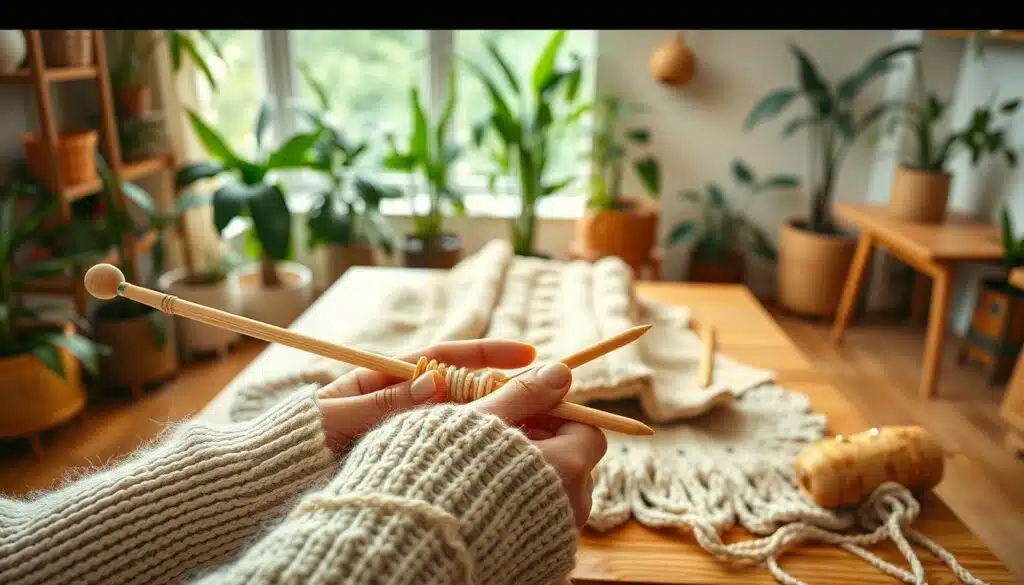
Bamboo yarn can make stitches slide off needles. Use bamboo or wooden needles for better grip. Try size down one needle to keep tension steady. Use stitch markers and lifelines for long repeats.
Swatch and block before starting a project. Your tension will relax after washing. So, set your working tension a bit firmer than usual.
Short rows, lace, and textured stitches
Bamboo is great for lace and texture, making it perfect for shawls and summer tops. Short rows add elegant drape, but open patterns may stretch over time.
Add stable edges, provisional cast-ons, or a tighter border to control length. Textured stitches look crisp with consistent tension and the right pattern.
Seaming and finishing for shape retention
Finishing bamboo garments needs some planning. Use mattress stitch with a short backstitch at stress points for stronger joins. Consider adding a strip of stay-tape at shoulders or a small elastic thread in ribbing to reduce stretch.
Block gently to set shapes and avoid aggressive stretching. Proper finishing keeps your bamboo projects wearable and polished.
Care and Longevity of Bamboo Knits
You love the feel of bamboo yarn, so treat it right. Start by washing it gently. Handwash or use a delicate machine cycle with mild detergent for light soils. For tougher stains, soak first and use warm water.
Never use hot water. It can shrink and weaken the fibers.
Washing and drying best practices
Choose the gentle cycle for machine washing. Use enzyme-based stain removers for tough spots. Let them sit for 15 minutes before washing. Avoid chlorine bleach; use oxygen-based bleach for whitening.
For a quick guide, check out this resource.
Drying bamboo items needs patience. Lay woven items flat to air-dry. Knitted items should dry flat to avoid stretching. Use low-heat dryer settings and remove items while slightly damp.
Preventing and managing stretch
Bamboo fibers relax with wear. Swatch and block to keep shape. Add elasticized ribs for structure. Reinforce shoulder seams with stable yarn or lining.
If stretch appears, dampen and reshape. Re-block while damp and dry flat. For lasting shape, re-seam or add stabilizing stitches.
Biodegradability and end-of-life considerations
Bamboo fibers break down faster than many synthetics. Lyocell and mechanically processed bamboo linen have better end-of-life outcomes. Blends with polyester or acrylic slow decomposition, so separate them.
Viscose or lyocell can decompose in weeks under composting. Compost natural bamboo knits or pass them to textile recyclers. Finishes or synthetic blends affect biodegradability and impact.
How to Choose Truly Sustainable Bamboo Yarn
Finding the right yarn is like solving a mystery. You want something soft and eco-friendly. Learn to read labels and ask questions to find sustainable bamboo yarn for your next project.
Processing matters: Choose bamboo lyocell or mechanically processed bamboo linen. Lyocell uses a closed-loop system that reduces chemical waste. Mechanical processing is rare but gentle on the planet. Look for clear labels on the yarn.
Look for lyocell or mechanical processing labels
When you see a label, look for “bamboo lyocell” instead of “viscose” or “rayon.” Lyocell means less chemical use. “Bamboo linen” or “mechanically processed” often means less harm to the environment.
Certifications and transparency to trust
Certs like OEKO-TEX bamboo show fabrics are safe. An FSC bamboo yarn label means it’s sourced responsibly. GOTS might be on blends, but check if bamboo meets their standards.
Brands that share mill names and testing details are trustworthy. If they don’t, ask about their processes and testing.
Shopping tips: local yarn stores, online marketplaces, and alternatives
Visit local yarn stores to feel the yarn. Staff can help find eco-friendly options like OEKO-TEX bamboo.
Online, compare yarn details on marketplaces and pattern sites. LoveCrafts and Ravelry are great for yarn info and photos. Check manufacturer sites for details like Truboo and Galileo.
For a quick eco-yarn guide, visit sustainable yarn knitting. Always ask the brand about their processes and testing.
Common Drawbacks and How to Work Around Them
Your bamboo projects are soft and drape beautifully, but they have some quirks. These quirks are easy to fix once you know how. Below, you’ll find solutions for common issues like losing shape, slippery stitches, and higher prices.
Bamboo fibers relax after wear and washing, leading to stretch and sag. To keep your project’s shape, use blends with wool or elastic. Sueno and Gaia-blend yarns offer structure without losing softness.
Technical fixes can help your project keep its shape. Use shorter rows, add reinforced seams, and include ribbing with elastic thread. Swatch, block, and plan for ease to ensure a good fit.
Slipperiness and tricky gauge control
The silky surface of bamboo can cause stitches to slide and tension to be uneven. Use grippy needles like bamboo or wood to control the glide. Tighten your tension a bit and practice your stitch pattern on a large swatch.
Use stitch-holders, lifelines, and repeatable hand positioning to keep gauge steady. These solutions help avoid dropped stitches and make lace or textured work easier.
Cost and availability concerns
High-quality bamboo yarns like lyocell or 100% bamboo can be expensive and hard to find. You’ll see more blended options like Lion Brand’s Coboo or TruBoo in DK weight at major retailers and indie shops.
To save money and maintain performance, choose blends with bamboo and cotton, wool, or rayon. Check local yarn shops for substitutions and online sellers for bulk buys. Using blends often solves many bamboo yarn problems while keeping the look and feel you want.
Inspiration and Community: Where to Find Patterns and Support
Your next bamboo project starts with people who love the yarn as much as you do. Browse galleries to see real results, check fit notes, and steal clever blocking tips. Community spaces make it easy to compare stitch definition and drape before you cast on.
Ravelry and project galleries
Ravelry is a treasure trove for finding finished work and honest feedback. Search Ravelry bamboo projects to view photos, read gauge notes, and learn how specific yarns behave after washing. Project pages often include needle sizes, substitutes, and short reviews that save you trial and error.
Designer patterns and the plant-based movement
Designers are creating patterns that celebrate plant fibers and simple construction. The Hven Top pattern by Maria Bergman is a popular example that knits well in bamboo blends, offers top-down shaping, and fits a wide size range. If you follow plant-based knitting threads, you’ll spot versions, swap tips on yarn substitutions, and find eco-friendly pattern picks.
Local yarn shops, online reviews, and social media groups
Stop into a local yarn shop when you need to feel a fiber. Staff can recommend bamboo knitting patterns that suit drape and durability, suggest substitutes, and invite you to in-person classes. Online reviews and social groups cover shipping, dye lots, and useful gear like neck lamps for late-night stitching. Use those conversations to refine your plan and avoid common pitfalls.
Conclusion
Knitting with bamboo is a mix of style, comfort, and caring for the planet. Bamboo yarn feels silky, breathes well, and fights off germs. It’s perfect for summer clothes and items for sensitive skin.
Using Truboo or Coboo from Lion Brand or other blends is key. Swatching, blocking, and choosing the right needles are important. This helps avoid issues like stretchiness and slipping.
Bamboo is great for the environment because it grows fast and helps the soil. But, how it’s processed matters a lot. Look for lyocell or mechanical processing and certifications like OEKO-TEX and FSC. For more on bamboo yarn, check out this bamboo yarn guide.
In summary, choosing the right yarn, caring for it gently, and matching it to your project is important. This way, you create beautiful, lasting items that are good for the planet. Start knitting, try new things, and share your bamboo creations. The plant-based knitting community is full of patterns and advice to help you.
FAQ
Why is bamboo considered an eco-friendly yarn choice?
Bamboo grows fast, often maturing in 3–5 years. It needs little water or pesticides. Its dense roots reduce erosion and help restore soil.
The main environmental variable is processing. Look for labels or brand transparency that specify lyocell or mechanical processing. This ensures a greener option.
How does bamboo help with carbon sequestration and soil health?
Bamboo sequesters carbon quickly. Single tropical plants can absorb substantial CO2 over several years. Groves can sequester up to about 12 tons CO2 per hectare annually.
Bamboo produces more oxygen than many equivalent tree plantings. Its extensive roots cut topsoil loss on slopes and reduce compaction. This makes it a strong choice for regenerative planting.
What processing methods affect bamboo’s sustainability?
There are three common routes: mechanical (bamboo linen), viscose/rayon (chemical), and lyocell (closed-loop). Mechanical processing uses physical and enzymatic steps with minimal chemicals but is rare.
Viscose uses solvents like sodium hydroxide and carbon disulfide and has higher environmental impacts. Lyocell uses N‑methylmorpholine N‑oxide (amine oxide) in a closed-loop that recovers ~99.5% of solvent. This is the preferred sustainable choice.
What should you know before starting a bamboo knitting project?
Bamboo gives an exceptionally silky hand, great sheen, and beautiful drape. It’s ideal for warm-weather garments. It can be slippery and may relax after blocking, so swatch and block before committing to sizing.
Check yarn labels for processing type and fiber blends. Blends add structure and durability. Plan stabilizing choices for structured garments, like elasticized ribbing or reinforced seams.
How important are swatching, blocking, and sizing with bamboo?
Very important. Bamboo fibers align and relax when washed and blocked, changing gauge and drape. Make a blocked swatch, measure after drying, and use that for pattern sizing.
For garments that must hold shape, allow for less negative ease or incorporate shaping and reinforcement to counter post-wash relaxation.
Which needles work best for bamboo yarn?
Because bamboo can be slick, wooden or bamboo needles provide extra grip and help maintain even tension. If you prefer metal, choose needles with a matte finish or use slightly tighter tension.
Lifelines and stitch markers are smart safety nets for trickier patterns.
What gives bamboo its silky hand and natural sheen?
Regenerated cellulose fibers from bamboo have round, smooth cross-sections that reflect light and slide over each other for a silky feel. The viscose or lyocell conversion produces that silk-like drape and sheen often likened to vegan silk or cashmere-like softness.
Is bamboo breathable and moisture-wicking?
Yes. Bamboo’s micro-gaps and hollow-like fibers promote airflow and wick moisture away efficiently—often faster than cotton. That makes bamboo ideal for summer tops, lightweight shawls, and pieces meant to stay cool and dry.
Does bamboo really have antimicrobial and hypoallergenic properties?
Bamboo-based regenerated fibers tend to be hypoallergenic and show reduced bacterial growth in lab testing compared with cotton. These properties, plus natural UV protection in some bamboo textiles, make bamboo a good pick for sensitive-skin and baby projects.
Always verify processing and finishes on the label, as some post-treatments can alter these benefits.
What are the differences between 100% bamboo rayon and bamboo blends?
100% bamboo rayon (common in DK and sport weights) offers unmatched drape and sheen but can be slippery and less elastic. Blends pair bamboo with cotton, merino, superwash wool, or synthetics to add strength, elasticity, washability, and reduced pilling.
Choose blends for structured garments or anything that needs durability.
Which brands and yarns are reliable examples to try?
Noteworthy options include Lion Brand TruBoo (100% rayon from bamboo) and Coboo (51% cotton/49% rayon from bamboo), Knit Picks Galileo (50% merino/50% bamboo viscose), HiKoo Sueno (80% superwash merino/20% bamboo), and Premier Anti-Pilling Bamboo Chunky. These offer a range of weights and blend profiles for different projects.
What projects work best with bamboo yarn?
Bamboo shines in lightweight summer tops, drapey shawls, scarves, and pieces worn close to skin. The Hven Top by Maria Bergman is a perfect example: top-down, plant-fiber–friendly, and designed to show off bamboo’s drape. Bamboo also suits baby garments and sensitive-skin items when you choose lyocell or mechanically processed yarns.
How does bamboo handle lace, short rows, and textured stitches?
Bamboo shows stitch definition beautifully, so lace and texture pop. Its drape enhances short rows and flowing shapes, but openwork can lengthen more than anticipated. Use stabilizing edgings or provisional cast-ons when length control matters and swatch designs at blocked dimensions to predict final behavior.
What seaming and finishing techniques help bamboo keep its shape?
Use sturdy seams like reinforced mattress stitch, add stay-taping or elasticized ribbing at stress points, and consider a small percentage of elastic in critical edges. Block gently to set dimensions and avoid aggressive stretching. Reinforce shoulders and heavy-wear seams to counter long-term relaxation.
How should you wash and dry bamboo knits?
Gentle care is best: handwash or use the delicate machine cycle with mild detergent. Bamboo keeps moisture but dries more slowly, so lay flat to dry and reshape while damp. For blends with superwash wool or acrylic, follow the blend’s care instructions—some (like HiKoo Sueno) are machine washable.
How can you prevent or fix stretch and shape loss in bamboo garments?
Prevent stretch by swatching and blocking to final measurements, incorporating structural elements (ribbing with elastic, reinforced seams), and choosing blends with wool or elastic fibers. To fix stretched pieces, gently re-block damp garments and reshape; severe distortion may need re-seaming or adding stabilizing stitches.
Are bamboo fibers biodegradable at end-of-life?
Regenerated cellulose fibers such as viscose and lyocell biodegrade much faster than synthetics—often within weeks under proper conditions. Blended items with synthetics will take longer to decompose. Lyocell and mechanical processing leave fewer harmful residues, improving end-of-life impact when composting or disposing responsibly.
How can you be sure a bamboo yarn is truly sustainable?
Favor lyocell or mechanically processed bamboo on labels, look for independent certifications like OEKO‑TEX and FSC, and read brand transparency statements about mills and solvent recovery. If in doubt, contact manufacturers to ask whether their rayon uses closed-loop solvents and what third‑party testing they publish.
Where should you shop for bamboo yarn and project inspiration?
Visit local yarn stores to feel fibers and get substitution advice. Online, LoveCrafts and Ravelry are excellent for comparing specs and browsing project galleries. Manufacturer sites for TruBoo, Coboo, Galileo, Sueno, and Premier list yardage and care details. Ravelry project photos are useful for seeing how bamboo behaves in finished garments.
What are the common drawbacks of bamboo yarn and how do you work around them?
Watch for slipperiness, stretch, and variable availability. Use wooden or bamboo needles and tighter tension to manage slipperiness. Counter stretch with blends, reinforced seams, elastic ribbing, and conservative ease.
If pure bamboo is pricey or scarce, choose blended yarns like Coboo or Sueno for better value and performance.
Is bamboo yarn more expensive and harder to find than cotton?
Pure bamboo lyocell or mechanical linen can be pricier and less common than cotton. Blended options and mainstream lines from Lion Brand, Knit Picks, HiKoo, and Premier make bamboo characteristics more accessible and affordable. Check online marketplaces and local shops for sales and substitutes.
How do community resources help when knitting with bamboo?
Ravelry project pages, LoveCrafts project photos, and local yarn‑shop staff provide real-world notes on gauge, drape, and blocking. Designer patterns marked for plant-based yarns—such as the Hven Top—plus social media groups and LYS meetups offer pattern tweaks, substitution tips, and moral support when you’re wrestling with slippery silkiness.