
Spring knitting is about to get jealous. This guide will show you how a crochet spring top can be your favorite for sunny days and cool nights. You’ll find curated roundups, shop picks, and a dozen free patterns to start this weekend.
Follow makers on Instagram, Pinterest, and Facebook to save and share your projects. Communities like Charlie B. and Pattern Center make it fun. You’ll discover vintage textures, breathable designs, and tips for the perfect fit.
Looking for a spring sweater, everyday top, or a delicate blouse? This article has you covered. It points you to patterns like the Taylor Top and Tunisian Railway Top. Plus, it shows where to find supplies.
Key Takeaways
- Find curated roundups and free patterns to jumpstart your project.
- Follow crochet creators on social platforms to save and share projects.
- Choose breathable stitches for a light, cozy crochet top suitable for spring.
- Size up for a relaxed drape or pick your usual size for a closer fit.
- Blend vintage texture with modern silhouettes for versatile wear.
Why a Crochet Spring Top Belongs in Your Wardrobe
You want pieces that move with the season without screaming for attention. A crochet spring top is perfect for this. It pairs well with denim shorts on sunny days and over a tee when it gets cooler. This makes it a great addition to your wardrobe.
Seasonal versatility for sunny days and cool evenings
Crochet is adaptable. Its lightweight panels let in the breeze on sunny days. As the sun sets, longer sleeves or tighter stitches keep you warm. Spring and summer pattern roundups make it easy to find the right tops for any time of day.
Breathability and comfort from openwork stitches
Open lace stitches keep you cool without letting in the cold. This makes crochet perfect for changing weather. You stay comfortable without feeling bulky, thanks to airy motifs that flatter and let your skin breathe.
Handcrafted charm and timeless texture inspired by vintage silhouettes
Handmade crochet charm has a special appeal. Its textured motifs remind us of heirloom techniques. Vintage crochet texture adds depth and a classic touch to any outfit, making it timeless.
| Benefit | Why it matters | How to use it |
|---|---|---|
| Seasonal versatility | Works across warm days and cool nights | Pair with camisoles or lightweight jackets |
| Breathable crochet | Prevents overheating while keeping coverage | Choose openwork stitches for summer staples |
| Handmade crochet charm | Adds personality and uniqueness to outfits | Mix with modern pieces for contrast |
| Vintage crochet texture | Provides visual interest without weight | Use textured motifs for focal points |
How Crochet Fabric Fits Differently Than Knits
Crochet has its own way of fitting on the body, unlike knits. The openwork stitches and height of the stitches make a big difference. At first, the top might be snug, but it will soften and drape over time.
Stretch, drape, and how crochet shapes over time
Lace-like stitches and lightweight yarns make crochet very stretchy and airy. Denser textures, like Tunisian or heavy bobbles, hold their shape better. Over time, the hem and sleeves of openwork panels will lengthen.
This change affects how the crochet drapes on the shoulders and bust. The type of fiber used also plays a role. Cotton and cotton blends relax less than wool, but they also shape over time.
When a designer uses a loose stitch with a soft blend, the result is a silky drape. This drape hangs close to the body without clinging.
Choosing the right fit: size up for a relaxed look or stick to measurements
If you want a boxy, beachy silhouette, size up one size from your measured fit. Many shoppers follow Charlie B’s advice: choose based on measurements and desired ease, not just the tag. This gives you control over the final shape and comfort.
For a fitted look, match your chest and shoulder measurements exactly and follow gauge closely. Pattern Center’s designs show how different stitches and yarn weights change the outcome. Use swatches to test the stretch and drape before cutting yarn for the whole top.
When shopping roundups or catalog patterns, compare suggested ease and construction. Raglan, top-down, and panel builds all change after a few wears. Choose your size with the silhouette in mind, and plan for modest blocking to refine fit without losing the natural ease of crochet.
Choosing the Best Yarn for a Cozy Crochet Spring Top
You want a spring top that’s light, flows well, and lasts. The right yarn balances fiber, weight, and care. This ensures your top looks good and lasts long. Here are some practical tips and quick comparisons to help you choose.
Why cotton and cotton blends work so well
Cotton yarn is known for being breathable and having a crisp look. It’s perfect for openwork tops that need structure but aren’t too heavy. Lion Brand and Bernat offer cotton yarns that are great for warm days and layering under jackets.
Adding bamboo or acrylic to cotton makes it softer and more drapey. Charlie B’s cotton collection shows how blends can keep cotton’s natural feel while adding stretch and reducing wrinkles. Choose higher cotton content for a natural feel or go for cotton-bamboo blends for more drape.
Lightweight yarns versus textured yarns
For airy, delicate tops, choose lightweight yarn. Super fine or sport-weight yarns create lacy panels that float over a camisole. The Pattern Center’s free patterns often pair fine yarns with lace for a beachy look.
Textured yarns add body and interest. Bulky slubs or boucle give a cozy, rustic look even in spring. They’re great for structured boat necks or boxy shapes that need extra weight. Light worsted or DK weights are a good middle ground for many everyday shapes.
Care considerations by fiber: washing, blocking, and longevity
Yarn care varies by fiber. Cotton yarn is usually machine-washable on gentle cycles. But, repeated washing can soften it and cause shrinkage. Blends with acrylic can handle machine washing better, while bamboo blends add silkiness and may need cooler washing.
Blocking reshapes and restores drape. Wet-block cotton tops to set patterns, then dry flat. For blends with acrylic, use light steam or gentle wet block to avoid stretching. Store tops folded to prevent stretch and pilling by avoiding rough surfaces.
For inspiration on thin yarn projects, check this resource from Crochet Craze: easy crochet projects with thin yarn.
| Fiber | Look & Feel | Best Uses | Care Notes |
|---|---|---|---|
| 100% Cotton | Crisp stitch, breathable | Lace panels, structured tops | Gentle wash, wet-block, lay flat to dry |
| Cotton blend (bamboo or acrylic) | Softer, improved drape | Layered tops, casual wear | Cool wash, light block or steam, watch shrinkage |
| Lightweight (super fine, sport) | Airy, delicate drape | Lacy spring tops, openwork | Hand or gentle machine wash, careful blocking |
| Textured (slub, boucle) | Visually rich, cozy feel | Boxy silhouettes, textured panels | Delicate wash, avoid abrasion to limit pilling |
Designs and Styles to Try This Season
This spring, you have many crochet top styles to pick from. Choose pieces that fit your plans for sunny days, beach trips, or cool evenings on the porch. Mix light, breezy tops with some structured pieces to keep your wardrobe fresh and useful.
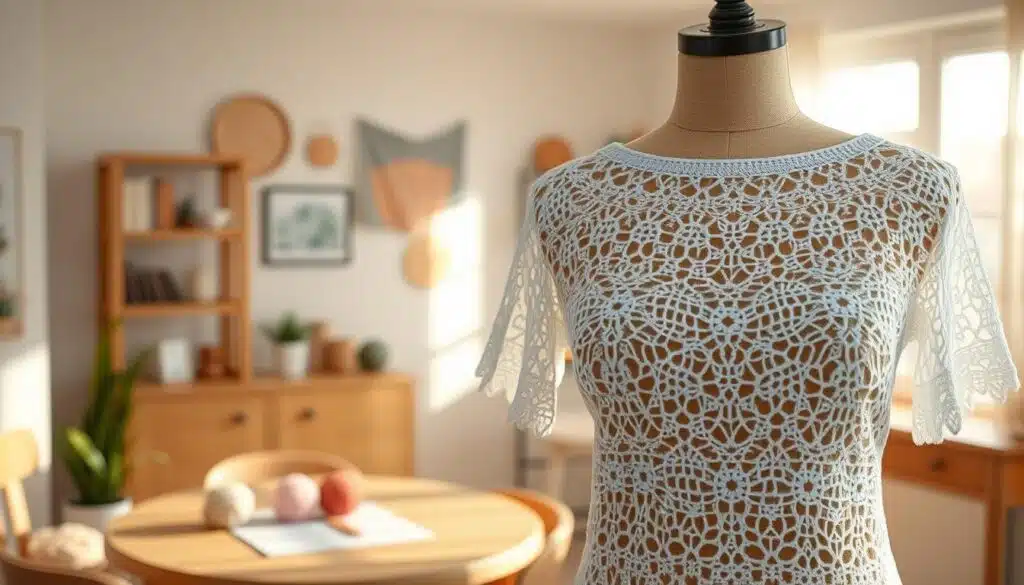
For a beachy look, start with boat necks and openwork panels. A boat neck top looks great with high-waist shorts or a linen skirt. Openwork panels add coolness and texture without feeling heavy.
For spring evenings, try textured long-sleeve tops. A textured sweater is warm but not too thick. It looks classy with cuffed jeans. Choose stitches like bobbles or shells for a cozy yet breathable feel.
Have a lightweight, boxy top for easy layering. A cropped or square crochet cardigan is great over camisoles or tank tops. Its boxy shape makes it easy to slip on and off, perfect for changing weather and quick outfit swaps.
Here’s a quick guide to match occasions with the right pieces and features to look for when shopping or crocheting.
| Occasion | Recommended Piece | Key Features |
|---|---|---|
| Beach day | Boat neck crochet top | Openwork panels, lightweight cotton blend, relaxed fit |
| Cool spring night | Textured crochet sweater | Long sleeves, dense stitch sections, soft drape |
| Layering for errands | Crochet cardigan | Boxy cut, cropped length, easy closure options |
| Cafe meet-up | Boxy cropped top | Square silhouette, pairs with camisoles, modern proportions |
crochet spring top
Ready to find patterns and make something you can wear? Start by looking at different sources. Check out curated crochet roundups, free crochet top patterns, and ready-to-wear lines for inspiration.
Pattern sources: free patterns and curated roundups
Look for curated crochet roundups that list many styles at once. A good one might have 25 favorite patterns you can save and share. Pattern Center-style collections often have 32 free crochet top patterns, including DIY favorites like the Taylor Top and Tunisian Railway Top.
What to look for in a pattern for everyday wear
Choose patterns that clearly state gauge, yarn weight, and fiber suggestions. Check the construction method—top-down, bottom-up, or panel pieces—to judge fit and alteration ease. Look for breathable stitch maps, comfortable sleeve lengths, and necklines that work under jackets or camisoles.
Adapting store styles and runway inspiration into DIY projects
Study ready-to-wear collections from brands like Charlie B to learn about sizing and finishes. Reverse-engineer stitch density and shaping to make your own versions. You can change yarn weight, trim length, or alter sleeve style to match a runway look.
Use free crochet top patterns for practice before using luxury yarns. Treat curated crochet roundups as mood boards to narrow your choices. When adapting patterns, keep notes on hook size and row count for a perfect fit.
Selecting the Perfect Stitch Pattern
Choosing the right stitches makes your spring top unique. Think about the season, how it will drape, and where you want to add interest. Open lace stitches keep things light and airy. Add textured stitches for structure and combine motifs for a handmade look.
Open lace stitches for breathability and visual interest
Openwork gives a light, airy feel perfect for warm days. Patterns from Charlie B’s collection and many roundups use lace stitches. They let air in while keeping the look light.
Use bigger hooks and finer yarn for more defined holes. This makes a blouse that layers well over camisoles without feeling heavy.
Textured stitches that add cozy warmth without weight
Stitches like popcorn, shell, and post add depth without bulk. They can make cozy bands on cuffs, hems, and yokes. This keeps the overall look light.
For more structure, check out textured knit-crochet hybrids and Tunisian patterns in the Pattern Center. They add a bit of body and help necklines look clean.
Combining stitch motifs for a modern handmade look
Mixing lace panels with textured bands adds contrast and balance. Start by pinning your favorite stitch patterns. Then, swap panels until you find the perfect mix.
Using different motifs can also make your top more durable. It keeps it stylish for everyday wear.
Construction Tips for a Flattering Crochet Top
How you build a garment affects its fit, ease, and finish. Think about the look you want and the method to achieve it. A clear plan saves time and avoids surprises.
Top-down crochet lets you try it on as you go. It’s great for adjusting bust and sleeve fit. This method is perfect for projects needing quick shaping.
Bottom-up builds are best for a firm hem or consistent pattern. Start from the hem and shape the body. It’s ideal for projects with fitted hems or pattern repeats.
Panel crochet tops offer precise shaping but need careful seaming. Measure and pin panels before sewing. For step-by-step help, check practical pattern resources.
Choosing between top-down, bottom-up, and panel construction
Choose the method based on the fit you want. Top-down for flexibility, bottom-up for firm hems, and panel for targeted shaping. Try different constructions to see what works best.
Shaping tips for bust, waist, and sleeve fit
For bust shaping, use short rows or targeted increases. This creates gentle ease without bulk. Short rows help shape around cups.
To define the waist, use decreases or a fitted hem panel. Small, even decreases look better than large steps.
Sleeve fit can be changed with stitch count, decreases, or style choice. Dolman sleeves offer drape. Raglans provide structure and work well with top-down crochet.
Finishing edges and seams for a polished result
Finish necklines and hems with a tidy single crochet edge or ribbing. Choose the finish based on yarn weight and drape. Block seams flat and use mattress stitch for neat lines.
Wait to sew in ends until you’re sure of the fit. Blocking after assembly improves shape and stitch definition. For inspiration, check this pattern collection.
| Construction Method | Best Use | Shaping Ease | Finish Notes |
|---|---|---|---|
| Top-down crochet | Try-on as you go, adjustable bust and sleeve fit | High — easy to tweak with decreases and short rows | Seamless yoke, block before final edging |
| Bottom-up | Stable hems, consistent stitch patterns | Medium — shaping best after reaching armholes | Neat lower edge; add ribbing or folded hem |
| Panel crochet top | Precise bust and waist shaping, tailored fits | High — requires accurate measuring and seaming | Pin panels, block pieces, use mattress stitch for seams |
| Tunisia / mixed constructions | Unique textures and sleeve options (dolman, fitted) | Variable — depends on technique and pattern | Plan transitions carefully; swatch to check gauge |
For a crochet top that fits perfectly, swatch first and try it on often. Choose a construction that fits your comfort level. Smart choices make finishing easy and the result wearable.
Layering and Styling Your Crochet Top for Everyday Wear
Your crochet top is like a ray of sunshine. It can be many things with just a few changes. It’s perfect for the beach, brunch, or even the office.
What to wear under a crochet top: camisoles, tanks, and bralettes
Choose a fitted camisole for a clean look. A neutral tank is great for city vibes. For a relaxed vibe, try a lacy bralette or a bandeau.
Match the underlayer to the yarn for a smooth look. Or, choose contrast to highlight the crochet. For more ideas, see a guide at how to style crochet top.
Casual pairings: denim, wide-leg pants, and skirts
Denim shorts or jeans add a casual touch. Wide-leg pants offer a modern look. Mini or midi skirts add a touch of femininity.
For day looks, tuck the top into jeans or linen pants. These tricks help you layer your crochet top stylishly.
Dressing up: accessories and layering for evening outings
To dress up, layer a camisole under a long-sleeve crochet top. Add a blazer and statement earrings. Low heels and a clutch complete the look.
Try a thin elastic waist under a sweater. Or, wrap a belt over a dress. These tricks help you create evening outfits with your crochet top.
| Occasion | Underlayer | Bottoms | Key Accessory |
|---|---|---|---|
| Beach day | Contrast bralette | Denim shorts | Strappy sandals |
| Weekend brunch | Neutral camisole | Wide-leg jeans | Structured tote |
| Office-appropriate | Fitted tank | Tapered trousers | Tailored blazer |
| Evening out | Smooth camisole | Leather skirt or slim jeans | Statement earrings |
Experiment with texture and color to create outfits you love. Keep underlayers slim and bottoms balanced. Choose accessories that make a statement.
Sizing, Fit, and Alterations for Different Body Types
Getting the fit right makes a crochet top a go-to piece. Use this guide to match your body to the pattern, not your old sweater. A few measurements and smart tweaks ensure your top fits perfectly.
How to measure for the ideal crochet fit
Start by taking four key measurements: bust, high bust, waist, and arm. Make sure the tape is snug but not too tight. Record these in inches and compare them to the pattern and gauge swatch. If a pattern suggests consistent sizing, size up for a relaxed fit.
Easy alterations: length, sleeve width, and bust adjustments
To change the length, add or remove pattern repeats at the hem or body. Short rows are great for bust shaping. Increase or decrease rows to adjust fullness. For sleeve width, adjust stitch counts or try a different style like raglan or set-in.
Step-by-step quick reference
- Measure: bust, high bust, waist, arm circumference.
- Compare: your numbers to the pattern schematic and gauge swatch.
- Lengthen/shorten: add/remove pattern repeats at hem or body rows.
- Adjust sleeves: change stitch counts or swap sleeve style for different width.
- Bust shaping: use increases, decreases, or short rows where pattern notes allow.
Tips for maintaining shape over repeated wear
Block your top after washing to keep the fit. Avoid hanging heavy tops; fold them or use padded hangers. Rotate wear to prevent stress on one top. These tips help keep your crochet top looking great longer.
Comparing common alteration outcomes
| Change | Method | Result |
|---|---|---|
| Length | Add/remove repeats at hem or body | Longer or shorter torso without changing fit around bust |
| Sleeve width | Adjust stitch count or switch sleeve style | Slimmer or roomier arms; keeps shoulder line balanced |
| Bust fit | Short rows, increases, or decreases | Contoured fit that prevents gaping or pulling |
| Overall ease | Size up or add ease in pattern | Relaxed silhouette suited for layering |
Measuring for crochet top details and knowing how to alter patterns makes creating a perfect-fit piece easier. Use this guide, then tweak, block, and care for your top to keep its shape and charm.
Where to Find Inspiration and Patterns
Start by exploring places that spark your creativity. Look for resources with clear photos, easy-to-follow instructions, and active communities. This way, you can ask questions and share your projects.
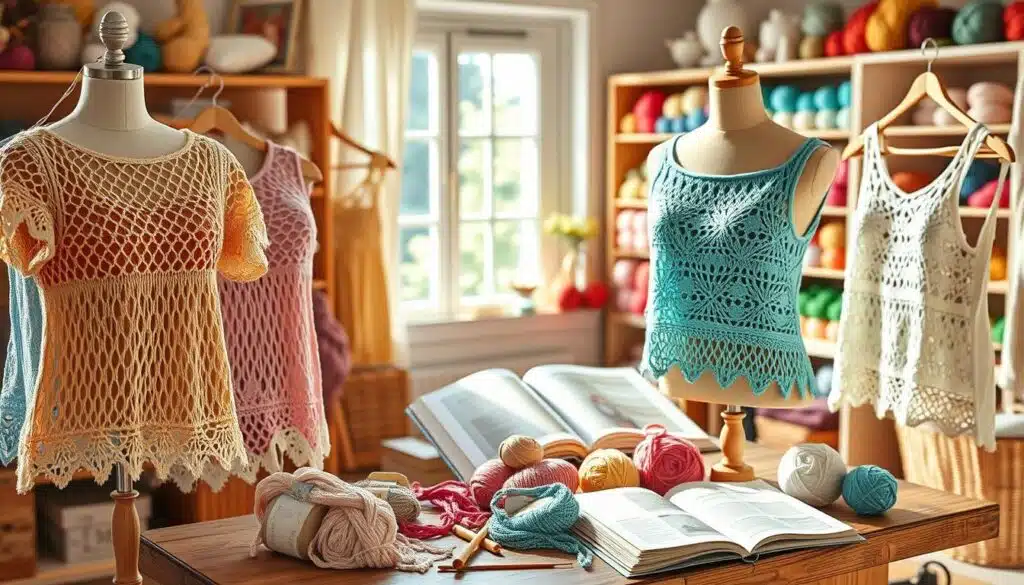
Curated roundups and pattern collections for spring and summer tops
Find curated lists that bring together the best designs. The author’s 25-favorite roundup features festival-ready crop tops and styling tips. It also includes pattern links for easy access.
Pattern Center offers large boards and a free pattern index. These make finding specific silhouettes simple. Use these roundups for quick access to tested, varied options.
Shop collections for ready-to-wear crochet tops and styling cues
Study shop collections from brands like Charlie B. They show professional finishes and realistic sizing. Look at product pages for pieces like a space-dye fishnet sweater or a square crochet cardigan.
These images show colorways, drape, and seam placement. Use them to borrow hems, sleeve lengths, and fit details for your next project.
Pinterest, Instagram, and Facebook feeds for trends and finished projects
Use Pinterest boards to save stitch ideas and mood boards. Many creators post step-by-step photos that match your inspiration. Instagram offers quick before-and-after shots and reels with construction tips.
Facebook groups provide pattern support and Q&A for gauge or fit issues. Blend these sources for balanced research. Consult curated roundups, check shop collections, and follow crochet social media for inspiration.
If you’re looking for a focused crop-top reference, see a roundup here: crop top patterns and inspiration. For wider technique hunting, try a large pattern index like the one on CrochetCraze.
Care and Maintenance to Keep Your Top Cozy and Chic
You put time into that crochet spring top, so give it care that matches the effort. A few simple steps will help your piece keep shape, color, and charm through many wears and washes.
Before washing your crochet top, read the pattern notes or label. Cotton and cotton blends from brands like Lion Brand or Berroco often tolerate gentle machine cycles. But hand-dyed or super-fine fibers typically need hand washing. Use a mild detergent and cool water to protect fibers and color.
Washing and drying best practices
Hand wash fine yarns in a basin, swish gently, and rinse until clear. For sturdier cotton, choose the machine’s gentle cycle and place your top in a mesh bag to reduce abrasion. Never wring; press water out with towels.
Air dry flat on a breathable surface. Avoid tumble drying unless the yarn label explicitly permits it. Flat drying prevents shoulder stretch and keeps openwork looking crisp.
Blocking and reshaping after wash
Block crochet pieces while damp to restore gauge and drape. For wet-blocking, lay the top on a blocking board or clean towel, pin to schematic measurements, and let dry completely. Steam-blocking works for many synthetic blends; hover the iron without pressing the hook down directly into stitches.
Pin openwork to enhance lace patterns. Take care with fragile threads and be patient; full drying can take a day or more depending on humidity.
Storage tips to prevent stretching and snagging
Fold crochet tops instead of hanging to avoid shoulder distortion. Store folded garments in breathable cotton bags or cedar-lined drawers to keep moths at bay. Keep tops away from rough surfaces and heavy zippers that can snag delicate stitches.
| Fiber Type | Wash Method | Drying | Blocking | Storage |
|---|---|---|---|---|
| Cotton / Cotton blends | Machine gentle or hand wash with mild detergent | Flat dry to maintain shape; full machine drying only if label permits | Wet-block to measurements; pin edges of openwork | Folded in breathable bags; avoid hanging |
| Super-fine / Lace weight | Hand wash recommended; use cool water | Flat dry on towel, reshape carefully | Pin meticulously to schematic for crisp lace | Fold with acid-free tissue between layers |
| Textured / Bouclé blends | Hand wash or gentle cycle; minimal agitation | Flat dry to protect texture | Light steam-block if needed; avoid heavy pinning | Folded, stored away from rough fabrics |
| Hand-dyed or natural fibers | Hand wash separately to prevent bleeding | Flat dry away from direct sun to preserve color | Wet-block with care; verify colorfastness first | Store in cool, dark place in breathable bags |
Keep a small care card with each handmade piece noting the fiber and how you wash crochet top items. That habit makes it easier to block crochet properly and store crochet garments without guesswork.
Conclusion
You now know the key to a great crochet spring top: pick cotton or breathable yarns, and choose lace or textured stitches. Also, select a construction method that fits your needs. Pin your favorite patterns from Pattern Center, Charlie B collections, and curated roundups for inspiration.
When starting a project, remember these tips: size with care, layer for changing weather, and follow simple care steps. This includes gentle washing and blocking to keep your work looking good. Share your finished pieces on Instagram, Pinterest, or Facebook to connect with others and get feedback.
This spring crochet roundup guides you on yarn, stitch, fit, and finish. This way, you can create tops that are perfect for sunny days and cool evenings. Embrace playful textures and openwork, and let your handmade pieces become your go-to wardrobe items.
FAQ
What makes a crochet spring top a good everyday piece?
Crochet spring tops are light and warm. They’re perfect for layering over tanks or camisoles. The handcrafted textures add a vintage charm that’s modern and versatile.
How does crochet fabric fit differently than knitwear?
Crochet has less stretch than knitting. But, openwork and lace stitches can stretch over time. The drape depends on the stitch, yarn, and how it’s made.
Should I size up in crochet or stick to my usual size?
It depends on what you want. Size up for a loose fit or stick to your measurements for a snug one. Ready-to-wear collections often suggest sizing up for a relaxed look.
Which yarn fibers work best for a spring crochet top?
Cotton and blends are great for spring. They’re breathable and easy to wash. Light yarns make the top airy, while textured yarns add depth.
How do I choose between lightweight and textured yarn?
Choose lightweight yarns for hot days. Textured yarns are better for cooler evenings. Think about the stitch pattern too—it affects how the yarn looks.
What care should I expect for cotton crochet tops?
Cotton tops can usually be machine washed gently. Flat drying keeps them in shape better. Use mild detergent and block them to restore their drape.
What styles should I try this season?
Try boat necks and openwork for beachy looks. Textured long-sleeves are good for cooler evenings. Boxed cardigans or cropped tops are versatile for any occasion.
Where can I find patterns and ready-to-wear inspiration?
Look for curated roundups and PatternCenter’s free collections. Retail collections like Charlie B offer stylish ideas. Pinterest, Instagram, and Facebook groups are great for inspiration and feedback.
What should I look for in a pattern for everyday wear?
Look for clear instructions, recommended yarn, and construction method. Choose breathable stitches and comfortable sleeves. Necklines should layer well with other tops.
Can I adapt a store style into a DIY pattern?
Yes. Match the stitch density and yarn weight. Study the silhouette and translate it into your pattern. Adjust the length and sleeve style to match the store piece.
Which stitch families are best for summer tops?
Open lace stitches are great for breathability. Textured stitches add depth without weight. Combining lace with textured bands gives structure and airiness.
How do construction choices affect fit and shaping?
Top-down makes adjustments easy. Bottom-up gives stable hems. Panel construction offers precise shaping but needs careful seaming. Use short rows for bust shaping and decreases for waist adjustments.
What finishing techniques make a crochet top look polished?
Use single crochet or ribbed borders for edges. Block seams flat and use folded hems where needed. Neat seaming and consistent tension give a polished look.
What should I wear under a crochet top?
Wear fitted camisoles or tanks for a smooth look. Bralettes are good for beachy vibes. Match or contrast the underlayer color to control the openwork’s appearance.
How do I style a crochet top for day vs. evening?
For daytime, pair a boat-neck top with denim shorts or wide-leg jeans. For evening, layer a fitted camisole under a textured long-sleeve top. Add statement earrings and a tailored jacket for a chic look.
How do I measure for the perfect fit in crochet?
Measure bust, high bust, waist, and upper arm. Compare these to the pattern schematic and gauge. Adjust ease for a fitted or relaxed look—crochet often stretches over time.
What easy alterations can I make to a pattern?
Lengthen or shorten by adding or removing repeats. Change sleeve width with stitch count or switch styles. For bust adjustments, add short rows or change increase placement. Always swatch and recalculate stitch counts before altering.
How do I maintain the shape of my crochet tops over time?
Block after washing to restore gauge and drape. Fold tops instead of hanging to avoid stretch. Store in breathable bags and avoid rough surfaces to prevent snagging or pilling.
How should I wash and block openwork crochet pieces?
Wash gently—hand wash or machine gentle with mild detergent. For blocking, wet-block or steam-block, pin to the pattern, and let dry fully. This preserves drape and stitch definition.
Where can I save and track favorite patterns and finished projects?
Use Pinterest boards and PatternCenter boards to save patterns. Share finished projects on Instagram and Facebook. This helps you match patterns with yarn and styling ideas later.
Are there specific free patterns you should check first?
Yes—PatternCenter’s 32 free crochet top patterns are a great start. Curated blog roundups list spring and summer favorites. They help compare silhouettes and stitch types.
How do yarn weight and stitch choice influence drape and longevity?
Lighter yarns with open stitches give flowy drape but can stretch. Textured or heavier yarns hold structure better. Choose mercerized cotton or sturdy blends for long-lasting wear.
Where can I find sizing and styling cues from ready-to-wear brands?
Look at retail collections like Charlie B for sizing and styling tips. Use product photos and descriptions to study proportions and layering suggestions. This helps you size up for a relaxed drape.