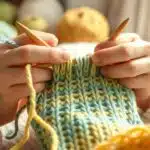
While Crochet Craze specializes in amigurumi patterns, many fiber artists explore both crochet and knitting to expand their crafting repertoire. Understanding the differences between continental and English knitting styles can help you decide which technique suits your creative goals. These two fundamental approaches to knitting have distinct characteristics, advantages, and learning curves that appeal to different types of crafters.
Understanding English Knitting
English knitting, also known as throwing or American knitting, involves holding the working yarn in your right hand. As you work each stitch, you “throw” the yarn around the needle using your right hand. This method has been widely practiced in English-speaking countries for generations and remains the most commonly taught technique in the United States and United Kingdom.
The basic mechanics involve keeping your right hand active throughout the knitting process. You insert the right needle into the stitch on the left needle, then wrap the yarn around the right needle tip using your right hand before pulling it through to complete the stitch. This throwing motion becomes second nature with practice, though it initially requires more hand movement than continental knitting.
English knitting offers excellent stitch control, making it easier for beginners to see what they’re doing as they learn. The deliberate movements help new knitters understand the structure of each stitch. Many knitters who learned this method find it comfortable for detailed colorwork and texture patterns because the yarn position allows for easy tension adjustments.
Exploring Continental Knitting
Continental knitting, sometimes called picking or German knitting, involves holding the working yarn in your left hand. Instead of throwing the yarn around the needle, you “pick” it with the right needle tip. This technique originated in mainland Europe and has gained popularity worldwide due to its efficiency.
The continental method requires keeping the yarn tensioned over your left index finger or around your left hand. When you insert your right needle into a stitch, you use the needle tip to scoop or pick the yarn that’s already positioned on your left hand. This picking motion eliminates the need to release and rewrap the yarn for each stitch.
Many knitters report that continental knitting feels faster once mastered because it involves less hand movement. The yarn stays in a consistent position, and your right hand primarily moves the needle rather than managing the yarn. This efficiency makes continental knitting popular among production knitters and those working on large projects like blankets or sweaters.
Speed and Efficiency Comparison
The speed debate between continental and English knitting has interested fiber artists for decades. Continental knitting generally allows for faster stitching because it involves fewer motions per stitch. According to Britannica’s overview of knitting history, efficiency in textile production has always driven technique innovation, and continental knitting emerged partly from this need.
However, speed depends heavily on individual comfort and practice. An experienced English knitter may work just as quickly as a continental knitter if they’ve developed muscle memory and efficient movements. The “faster” method is ultimately the one you’ve practiced most consistently.
For repetitive tasks like stockinette stitch or garter stitch, continental knitting typically shows a slight speed advantage. The reduced hand movement means less fatigue during marathon knitting sessions. English knitting may actually be more efficient for certain stitch patterns that require frequent yarn manipulation or when working with multiple colors simultaneously.
Learning Curve and Transition
English knitting tends to be easier for absolute beginners because the movements feel more intuitive. Watching the yarn wrap around the needle helps new knitters understand stitch formation. The throwing motion mirrors other manual tasks, making it accessible to people without prior fiber arts experience.
Continental knitting presents a slightly steeper initial learning curve because the picking motion feels awkward at first. Maintaining proper yarn tension on the left hand while simultaneously manipulating the right needle requires coordination that develops with practice. However, crocheters often find continental knitting easier to learn because they already hold yarn in their left hand for crochet work.
Transitioning from one method to another is entirely possible, though it requires patience and deliberate practice. Many knitters become proficient in both styles, using continental for plain knitting and English for complex patterns. This versatility allows you to choose the most efficient method for each project. For those interested in alternative knitting methods, exploring knitting machines can also offer a unique experience and a new perspective on textile creation.
Tension and Stitch Consistency
Stitch tension affects the final appearance and drape of knitted fabric. Both continental and English knitting can produce excellent, even stitches with proper technique. The key difference lies in how you control tension throughout your work.
English knitters typically regulate tension by adjusting how tightly they wrap the yarn around the needle and how much slack they leave between stitches. This active tension control allows for quick adjustments but requires conscious attention, especially when learning.
Continental knitters maintain tension through their left hand position, often wrapping the yarn around fingers to create consistent resistance. Once established, this passive tension system requires less active thought, allowing your hands to work almost automatically. However, finding the right tension setup initially takes experimentation.
Some knitters notice tighter stitches when working purl rows in continental style, while others find English knitting produces looser stitches. These differences usually diminish with experience as your hands learn to compensate automatically.
Which Style Should You Choose?
Choosing between continental and English knitting depends on several personal factors. If you already crochet, continental knitting leverages your existing yarn-holding skills and may feel more natural. The similar hand positions between crochet and continental knitting create an easier transition.
Consider your project goals when selecting a method. For speed knitting large items like afghans, continental style offers efficiency advantages. For intricate colorwork or textured patterns requiring frequent yarn changes, English knitting might provide better control and visibility. If you’re working on large projects, perhaps even a thick blanket wool, speed and consistency become even more important.
Physical comfort matters significantly. Some knitters find continental style reduces wrist and hand strain because it involves less motion. Others prefer the active engagement of English knitting because it keeps their hands warmer during cold weather or feels more rhythmic and meditative.
Your learning resources also influence this decision. If your local knitting group or favorite online tutorials primarily demonstrate one method, learning that style will be easier because you’ll have ready support and guidance. Additionally, for crafters looking for automated solutions, discovering the best knitting machines for home crafters can open up new possibilities.
Many experienced fiber artists eventually learn both methods, using them interchangeably or even simultaneously for two-color stranded knitting. This versatility represents the ultimate goal for serious knitters who want maximum flexibility in their craft.
Conclusion
Both continental and English knitting produce beautiful results when executed properly. Continental knitting offers efficiency through reduced hand movement and appeals to crocheters transitioning to knitting. English knitting provides intuitive learning for beginners and excellent control for detailed work. Your best choice depends on your background, physical comfort, project types, and available learning resources. As you develop your fiber arts skills beyond the amigurumi patterns and crochet techniques offered at Crochet Craze, experimenting with both knitting styles will help you discover which feels most natural. Many crafters find value in mastering both approaches, allowing them to select the optimal technique for each unique project they undertake. For those who want to expand their textile skills beyond knitting, finding a skilled weaver near me can be an inspiring next step.