When making crochet toys, the right yarn is key. It affects how crisp and durable your creations are. After a decade of making amigurumi, I’ve learned that yarn’s quality is everything.
Cotton is my top choice for its structure and clear stitches. Favorites include Paintbox Cotton, Rico Ricorumi, Scheepjes Stone Washed, and I Love This Cotton. Acrylics like Paintbox Simply Aran/DK and I Love This Yarn from Hobby Lobby are great for color and price. But, they can pill and have less defined stitches.
Wool blends, like Berroco Vintage, offer warmth and bounce. Chenille is best for big, fluffy pieces that don’t need detailed stitches.
Choosing the right yarn means finding the perfect balance. Look for yarn that feels good, washes well, and has clear stitches when stuffed. Yarn weight and twist affect how round and firm your toys are. Always swatch before buying.
For a quick guide on yarns and brands, check out this resource: amigurumi yarn guide.
Key Takeaways
- Cotton gives the best stitch definition and structure for most toys.
- Acrylic is affordable and colorful but may pill and stretch over time.
- Wool blends add elasticity and warmth but can be pricier and less machine-friendly.
- Chenille yields plush textures but hides stitches and can shed or break.
- Always swatch with your chosen hook to test firmness and stuffing visibility.
- Shop smart in the amigurumi yarn USA market: check labels, feel yarn, and compare dye lots for larger projects.
Why Yarn Choice Matters for Amigurumi
Your yarn choice greatly affects your amigurumi’s look and life. It influences the toy’s size, detail crispness, and durability. A simple swatch can reveal a lot more than guessing.
How fibre affects shape, stitch definition, and durability
Fibre type impacts stretch, bounce, and texture. Cotton is great for clear stitches and keeping shapes sharp. Acrylic is softer but might stretch or pill, affecting stitch clarity over time.
Wool adds elasticity, making toys plush and durable. This is perfect for toys you want to last a long time.
Why firmness and stitch density prevent stuffing from showing
Tight gauge and small hooks make fabric dense, hiding stuffing. Firm stitches keep seams smooth and the toy’s shape clear. If your pattern needs tight fabric, swatch with the recommended hook and test stuffing.
Fibre, ply, and twist are key for firm stitches. High-twist cotton or compact acrylic creates firmer stitches than loose, fuzzy yarns. This firmness is vital for toy durability and shape retention.
Considerations for toys that will be washed or loved by kids
Kids and washing are a reality. Choose machine-washable fibres and colourfast dyes. Cotton and many acrylics wash well and keep their shape.
Avoid delicate novelty fibres for baby toys as they may shed or mat. Hypoallergenic, non-fuzzy yarns reduce irritation and lint. Test a swatch’s washability before making a full project. For more on yarns, see yarn types unraveled for practical insights.
Understanding Yarn Fibres: Cotton, Acrylic, Wool, and Novelty Options
You want toys that hold shape and feel nice. Choosing between cotton and acrylic yarn can change how they look and last. Learn how to pick the right fibre for your project so your amigurumi turns out just right.
Properties of cotton: stitch definition, durability, and colour variety
Cotton has crisp stitch definition, making small details stand out. Brands like Paintbox, Scheepjes Catona, and Rico Cotton offer a wide range of colours. Cotton feels firmer at first but softens with washing.
Cotton rarely pills and holds up well to machine washing. It’s a great choice for baby toys and pieces that get handled a lot. But, lower-grade cotton can be scratchy, and some lines may split on fine hooks.
Acrylic advantages and drawbacks: affordability, colour range, and pilling
Acrylic is affordable and easy to find. Brands like Paintbox Simply, Knit Picks Brava, and I Love This Yarn offer a huge range of colours. It’s perfect for making washable, durable toys quickly.
Acrylic may pill and have softer stitch definition than cotton. Cheap acrylic, like Red Heart Super Saver, shows this more. It’s good for bulky, low-detail amigurumi, making it great for beginners.
Wool and blends: warmth, elasticity, and when to choose them
Wool adds elasticity, making rounds look bouncy and smooth. High-quality wool blends are easier on your hands. Berroco Vintage and Paintbox Wool Mix are good examples.
Wool can be pricier and bulkier, making finished pieces grow. Not all wool is machine-washable, so check labels. Choose wool for a snug fabric that recovers well from stretching.
Novelty fibres and chenille: texture effects and pattern compatibility
Novelty yarns add trendy textures like sparkles and faux fur. Use them for accents, trims, or large plush toys. They add volume and character.
Chenille amigurumi looks irresistibly soft but hides stitches and sheds. Patterns made for blankets or chenille work best. Avoid using novelty fibres for detailed faces or small limbs.
| Fibre | Strengths | Drawbacks | Best Uses |
|---|---|---|---|
| Cotton (Paintbox, Scheepjes, Rico) | Excellent stitch definition; durable; softens with washing; colourfast | Limited stretch; can split on fine hooks; some low-grade lines feel rough | Baby toys, detailed amigurumi, washable pieces |
| Acrylic (Paintbox Simply, Knit Picks Brava) | Inexpensive; widely available; machine-washable; huge colour range | Prone to pilling; weaker stitch definition; low-end brands pill and stretch | Beginner projects, budget toys, bulky quick makes |
| Wool & Blends (Berroco Vintage, Paintbox Wool Mix) | Elastic; warm; soft hand; great for shape retention | Often pricier; can be bulky; some require hand wash | Collector pieces, knit/crochet for warmth, projects needing resilience |
| Novelty / Chenille | High texture impact; ultra-soft; fashionable finishes | Obscures stitches; sheds; can break; needs pattern-specific handling | Large plush toys, trims, special-effect accents |
For a quick guide to yarn weights and tips from makers, check out what is the best yarn. It has sample yarns and beginner-friendly recommendations.
Yarn Weight, Ply, and Texture: Picking the Right Thickness
Choosing the right yarn for amigurumi is key. Think about the thickness and feel first. Light yarns are perfect for small, detailed pieces. Medium weights make sturdy toys that crochet up quickly.
Bulky yarns create plush, cuddly results but hide small details.
Common amigurumi weights you’ll meet
Yarn numbers range from 0 to 7. Most toy makers use light (3 or 4ply), medium (4/DK or worsted), and bulky (5 and up). For tiny animals, choose 4ply. For a balance of roundness and manageability, go for 8ply/DK or light worsted.
For large cuddle buddies, bulky yarns are best.
How ply changes shape and stitch stability
Yarn ply affects your stitches’ roundness and stability. A 2ply strand is thin and may split easily. 4ply or 8ply yarns have more body.
When comparing 4ply vs 8ply, 8ply makes a fuller fabric. This fabric hides stuffing less and holds shapes better. Ply controls how firm or floppy a limb is.
Texture choices: smooth vs fuzzy yarn for details and effects
Smooth yarns like mercerized cotton or tightly spun acrylic show stitch definition. This clarity is great for sculpting faces and tiny details. Smooth vs fuzzy yarn isn’t just about feel.
Fuzzy yarns like brushed acrylics and novelty fur add texture. But they hide stitch lines and make sewing parts together harder.
For very fine projects, check out this guide on thin yarn projects: easy crochet projects with thin yarn. Scheepjes Stone Washed and Paintbox lines are good for smooth stitch definition with soft hand.
| Weight Category | Common Labels | Best Uses | Effect on Shape |
|---|---|---|---|
| Light | 3, 4ply, Sport | Mini amigurumi, fine details | High detail, may need tighter hook |
| Medium | 4, DK, 8ply, Light Worsted | Standard toys, balanced speed and firmness | Good roundness, stable seams |
| Bulky | 5 and up, Chunky, Chenille | Large plushies, textured effects | Soft, less stitch definition, very cuddly |
How Hook Size and Tension Affect Your Amigurumi
You want your amigurumi to look neat, keep its shape, and hide stuffing well. Finding the right hook size and mastering tension are key. A few small tests can save you time and trouble later.
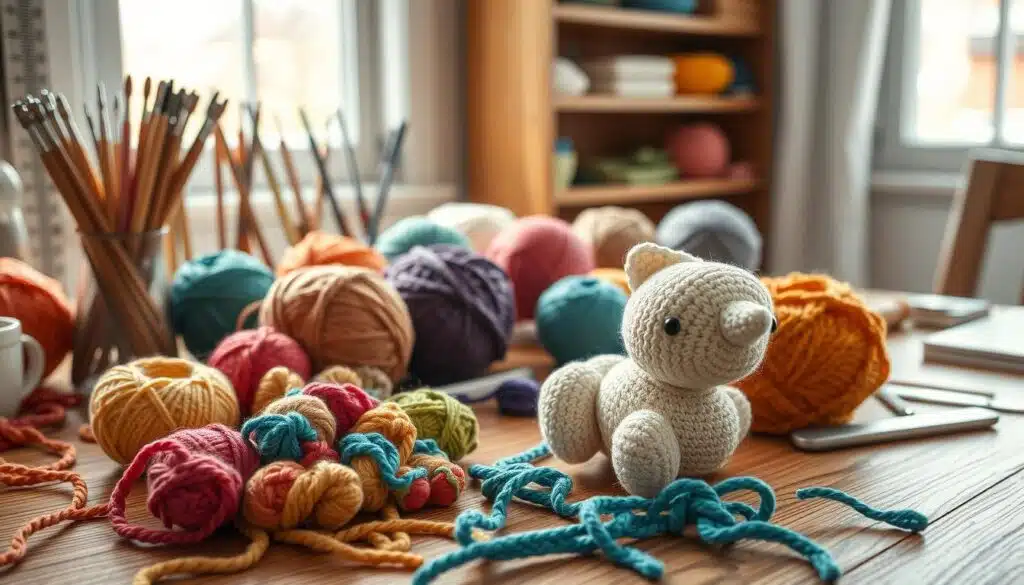
Choosing a smaller hook
Use a smaller hook for tight stitches and fewer gaps. This keeps stuffing hidden and details clear. For 4ply yarn, try 2.25–2.75 mm hooks. For 8ply/DK, use 2.75–3.5 mm. For very tight shapes, go smaller than the yarn label suggests.
Adjusting tension by fibre
Different yarns need different tension. Cotton needs tight stitches and sometimes a smaller hook. Acrylic can stretch a bit more, so you can relax a bit. Wool has natural stretch, so you can ease tension a bit.
Swatching for toys
Make small swatches with your yarn and a few hook sizes. Stuff them lightly to mimic the toy. If stuffing shows, try a smaller hook or thicker yarn. If it’s too stiff, use a larger hook or lighter yarn. Swatching helps you check size, stitch density, and feel before starting a project.
Practical checklist
- Swatch at least 2″–3″ in diameter and stuff lightly.
- Note stitch count per inch to match pattern proportions.
- Adjust hook and retest until stuffing stays hidden and shaping is comfortable.
best yarn for amigurumi
Choosing the right yarn for amigurumi is key. You need yarn that is clear, durable, washable, and soft. It should also resist splitting and hold its shape well. Plus, it should come in a wide range of colors for your characters.
Overview: what makes a yarn qualify
A good yarn has a tight twist and consistent gauge. It should also have little halo to keep stuffing in. And, it must be machine-washable for toys that kids or babies will use.
Try a small swatch with your hook. If it feels dense and the stitches are clear, it’s a good choice. Brands like Paintbox Cotton and Rico Ricorumi are great for realistic skin tones and detailed shapes.
Commonly recommended fibres and blends for top results
Cotton is great for its clear stitches and colorfastness. Scheepjes Catona and Paintbox Cotton are top picks for durable toys.
Acrylic yarn is affordable and comes in many colors. Paintbox Simply, Knit Picks Brava, and I Love This Yarn are good for big projects. But, avoid cheap acrylics that pill or split.
Wool and blends are best for special pieces or soft toys. Paintbox Wool Mix offers warmth and keeps its shape well.
How project type and recipient determine which is truly “best”
For baby toys, choose hypoallergenic, machine-washable cotton. For display pieces, use novelty yarns for texture without frequent washing.
For quick and budget-friendly projects, acrylics are a good choice. But, for detailed work, use fine cottons and tight-gauge yarns.
Start with this guide and test small swatches before you commit. For more tips and yarn recommendations, check out amigurumi crafting tips.
Top Yarn Brands and Recommended Lines for Amigurumi
Choosing the right yarn is key for amigurumi that looks great and lasts. Look for yarn that has clear stitch definition, holds stuffing well, and has a wide range of colors. This is important for faces, clothes, and tiny details.
Cotton favourites are great for clear stitches and firm fabric. Paintbox Cotton is soft, sturdy, and has many colors. Scheepjes Catona offers a wide palette and smooth finish. DMC Natura is top-notch for colorfastness and consistent twist.
Acrylic picks are budget-friendly and washable. Paintbox Simply and Knit Picks Brava have smooth stitches that look good in photos. I Love This Yarn has many bright colors for bold characters.
Wool and blends add warmth and a bit of stretch. Berroco Vintage and Paintbox Wool Mix are good for collectible pieces. They have a soft halo and natural bounce.
Speciality lines are for texture. Rico Ricorumi is great for amigurumi kits and hard-to-find skin tones. Chenille and novelty yarns add plushness for monsters and cuddly animals. Use them for accents to keep details sharp.
For more info, check out best yarn for amigurumi. It compares many lines and offers tips.
| Brand / Line | Best Use | Strengths | Notes |
|---|---|---|---|
| Paintbox Cotton (Aran/DK) | Firm, detailed amigurumi | Wide color range, soft yet sturdy | Excellent for faces and small parts |
| Scheepjes Catona | Colorwork and fine detailing | Large palette, smooth finish | Great for minis and accessories |
| DMC Natura | Premium cotton amigurumi | Colorfast, consistent twist | Ideal for skin tones and heirloom pieces |
| Paintbox Simply / I Love This Yarn / Knit Picks Brava | Everyday washable toys | Affordable, easy to wash | Good for large or quick projects |
| Berroco Vintage / Paintbox Wool Mix | Collector or display pieces | Soft texture, slight elasticity | Use where warmth and drape matter |
| Rico Ricorumi / Chenille lines | Specialty effects and plush toys | Designed for amigurumi kits, fluffy finishes | Best for accents; can hide small detail |
Shopping Smart: Availability, Dye Lots, and Pricing
Finding the right yarn for amigurumi is like searching for treasure. You need a variety of colours, consistent skeins, and a good price. Before you buy, learn about dye lots, where to save money, and when to shop in person or online.
How to check dye lots and why consistency matters
Always check the dye lot number on the label when buying multiple skeins. A small change in shade can create stripes on your toy. For big projects, get an extra skein from the same dye lot for repairs.
If you can’t match dye lots, mix skeins by alternating rows. This hides small colour differences. For important colourwork, pick brands like DMC Natura or Scheepjes Catona for tight dye control.
Balancing price vs. quality
Consider the price and quality of yarn before spending. More expensive cottons often have better stitch definition and colours. DMC Natura and Scheepjes are pricier but give crisp results for details.
But, cheaper yarns can also work well for many toys. Look at pilling, stretch, and stitch clarity, not just price. Keep an eye out for sales and free shipping to save money without losing quality.
Buying tips: touch, advice, and colour range
Use local yarn shop tips to your advantage. In-store, you can feel the yarn, test hooks, and get advice from staff. Shops may have exclusive shades not found online.
For a wide range of colours or specialty yarns, buy online. Sites like Knit Picks and Yarnspirations offer many options and easy filtering. Mix in-store visits with online shopping to get the best of both.
| Need | Best Option | Why |
|---|---|---|
| Consistent colour for a large toy | Buy extra skeins from same dye lot | Prevents visible shade shifts and ensures repair matches |
| Wide colour palette | Buy yarn online | Access to full ranges from brands like Scheepjes and DMC Natura |
| Immediate touch and advice | Visit local yarn shop | Feel fibres, get expert tips, and find exclusive colours |
| Best balance of cost and performance | Compare yarn price vs quality | Choose affordable lines for bulk parts and premium yarn for detail work |
Keep a small stash of your favourite shades and note dye lot numbers. Check labels for fibre content. A little planning saves money and keeps your amigurumi looking great.
Colour, Dye Quality, and Skin Tones for Amigurumi
Choosing colours for your amigurumi is key. You want colours that stay bright after washing. They should match the character you envision and work well with patterns.
Think of colour as costume design. The right colours make your piece pop.
Choosing colourfast options for washable toys
Always check labels for wash instructions and dyefast claims. Colourfast yarn amigurumi is essential for toys that will be washed or handled by kids. Brands like Paintbox and Scheepjes clearly state wash performance on their labels.
This way, you can choose yarns that keep their colour and don’t bleed.
Finding and matching realistic skin tone yarns
For character work, focus on yarn skin tones that fit your design. Rico Ricorumi and DMC Natura offer wide palettes. This is helpful when you need slight variations for different parts of the face.
Swatch small patches under the lighting you’ll use for photos or displays. This confirms the hue looks right.
Using variegated and heathered yarns for texture and depth
Variegated yarns add surprise and motion in plain stitches. They create stripes and pools that can be whimsical or challenging. Match gauge carefully so colour changes land where you want them.
Heathered blends like Scheepjes Stone Washed give soft, blended tones without the striping drama.
When mixing solids with patterned skeins, place solids near faces and features for clarity. Use variegated skeins for clothing, hair, or background elements where color shifts enhance interest. Keep a consistent dye lot for larger pieces to avoid sudden shifts in tone.
Test durability by washing a swatch the way you will care for the finished toy. Inspect for colour loss, pilling, and dye bleeding. This simple step saves you from surprises and ensures your amigurumi stays vibrant and safe for play.
Care and Longevity: Washing, Pilling, and Toy Safety
You want your amigurumi to stay fresh after lots of cuddles and washes. This guide helps you choose the right care. It keeps colors bright, seams tight, and surfaces smooth. Read labels, pick smart yarns, and stitch safely.
Decoding wash labels and choosing washable options
Check the yarn band before buying. Many acrylics and cottons have machine wash instructions. Choose machine washable yarn for heavy use. Cotton usually does well with repeated washing without pilling.
Some wool blends might need hand washing or a delicate cycle. If a yarn says “wash cold, gentle,” do it to avoid shrinking or felting.
Practical steps to prevent pilling and shedding
Pilling often happens with low-quality acrylics and novelty fibers. To stop pilling, pick high-quality acrylics or cottons. Use a tighter gauge and a slightly smaller hook. This reduces loose fibers that can rub off.
Avoid chenille and loose-fiber novelty yarns for everyday toys. They shed and fray quickly. If you must use textured yarn, use it for display items, not playthings.
Toy safety yarn choices and secure finishing
For safety, choose yarn that’s colorfast and hypoallergenic. Look for labels that say machine washable and non-toxic. Hypoallergenic cotton is a good choice for babies or sensitive people.
Strengthen high-stress points with backstitching and strong knots. Sew on eyes with thread for young children. Check seams after the first wash and restitch if stuffing shows through.
Quick care tips you can use right away
- Wash on a gentle cycle in a mesh bag to protect shapes.
- Use mild, dye-free detergent to avoid color bleeding.
- Air dry flat to maintain form; avoid high heat for wool blends.
- Trim pills gently with scissors or a fabric shaver designed for delicate items.
Project-Based Yarn Recommendations and Use Cases
Choosing the right yarn for your project makes your amigurumi look better. Here are some practical tips to help you pick the best yarn for your toy. We’ll start with a brief guide and then give you specific advice.
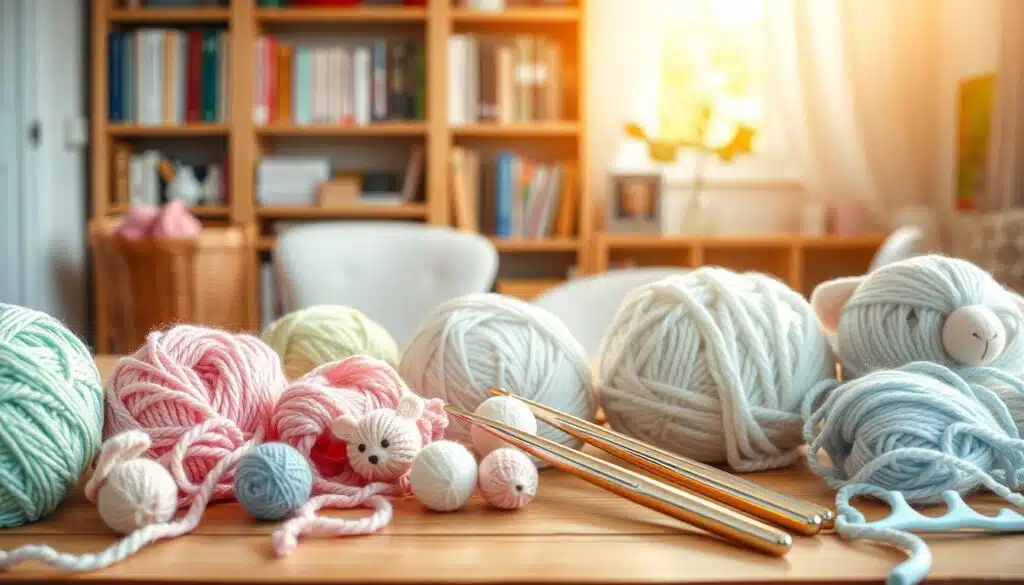
Baby toys and rattles
For baby items, go for soft, durable cotton or blends that can be machine washed. Cotton is great because it keeps its shape and washes well, which is important for rattles and teethers.
For skin tones and small parts, try Rico Ricorumi. Avoid chenille and novelty fibres because they can shed or pill. Choose hypoallergenic, machine-washable yarns to keep your toys safe and easy to care for.
Collector display pieces
For display pieces, wool blends and specialty fibres are perfect. Berroco Vintage and Paintbox Wool Mix add a special texture and bloom that looks great in photos.
Novelty fibres add unique finishes that collectors love. Treat your display yarn as a design choice. Pick fibres that look good and can be hand washed occasionally.
Quick or large amigurumi
For fast or big projects, acrylic and bulky yarn are the way to go. Paintbox Simply and I Love This Yarn are great for quick, cuddly toys.
Bulky yarn lets you make big, squishy toys with fewer stitches. Use big hooks and loose stuffing to keep the toy soft without losing its shape. Acrylic is cheap and easy to work with, perfect for practice.
Detail-heavy mini pieces
Mini amigurumi need fine yarn and tight stitches. Use 4ply or lightweight cottons to keep small details sharp and neat.
Mini yarn needs to hold its shape well at small sizes. Swatch at the finished size to make sure details like eyes and noses stay right.
| Project | Recommended Yarn | Why It Works | Care Notes |
|---|---|---|---|
| Baby toys & rattles | Soft cotton, machine-washable blends | Durable, non-fuzzy, easy to clean | Machine wash gentle; avoid loose ends |
| Collector/display pieces | Wool blends, novelty fibres | Rich texture, heirloom appeal | Hand wash, dry flat to preserve shape |
| Quick/large toys | Acrylic worsted, bulky yarn | Fast to work, budget friendly, soft | Machine wash; watch pilling over time |
| Detail minis | 4ply cottons, light-weight yarns | Sharp stitch definition, tiny features possible | Hand or gentle machine wash; reshape when damp |
Testing and Troubleshooting Yarn Choices
You want your amigurumi to keep its shape and look neat. Start by making a small swatch. This should be in the stitch pattern you plan to use. Stuff it lightly and check if the stitches are clear.
If your stitches split easily, choose a tightly spun yarn. This could be cotton or a smooth acrylic. To fix splitting, try using a smaller hook or changing how you insert the hook.
Test each change on a new swatch. This way, you’ll see the real effect.
If your swatch bulges or stretches, it’s time to switch yarns. Cotton and tightly spun acrylics are good at keeping shape. Use a firmer tension and a smaller hook to tighten the fabric.
If it’s too lumpy, try a finer yarn with the same hook. This will help it look rounder.
At times, you’ll need to change yarn in the middle of your project. Make sure to match the ply, texture, and gauge before cutting. If dye matching is tough, alternate skeins every few rounds.
Always swatch the new yarn in the same stitch and stuff it. This ensures it looks and feels right.
To figure out how much yarn you need, count stitches in your swatch. Then, scale it up to the size of your pattern. This way, you won’t run out of yarn and can match dye lots early.
Here’s a quick checklist: swatch in rounds, stuff the sample, tighten your tension if stuffing peeks, test replacement yarns before switching, and use alternating rounds to mask slight colour differences. These steps will save you time and make your amigurumi look professional.
Conclusion
You’ve learned that picking the right yarn for amigurumi is key. Cotton is often the best choice for its clear stitches and wide color range. Acrylics are good for saving money or making big toys. Wool blends are perfect for showpieces.
Before starting, make a swatch to ensure your toy turns out right. Buy enough yarn and choose trusted brands like DMC, Scheepjes, and Paintbox. This guide helps you pick the right yarn for your crochet toys, from soft baby rattles to plush figures.
In short, choose yarn that fits your project and the person it’s for. Test with small samples and be ready to change if needed. By following these steps, you’ll make crochet toys that look great and last a long time.
FAQ
What makes a yarn “best” for amigurumi?
The best yarn for amigurumi has crisp stitches and keeps shapes well. It should not stretch much and be durable. Colour variety and how it works with small hooks also matter. Cotton is often the top choice for its definition and shape. High-quality acrylics and wool blends are also good, depending on the toy’s purpose.
How does fibre choice change a finished toy?
The fibre affects the toy’s texture, firmness, and detail clarity. Cotton gives clear stitches and firm shapes. Acrylic is softer but can pill and stretch. Wool and blends add bounce and warmth but need gentle care. Chenille adds fluff but hides details and sheds.
Why does stitch density matter for amigurumi?
Dense stitches hide stuffing and create neat shapes. Use a smaller hook than suggested or tighten the tension for dense fabric. If stuffing shows, tighten more or drop a hook size.
Which fibres are best for toys that will be machine-washed?
Choose machine-washable cottons and acrylics (like Paintbox and Knit Picks). Always check labels—some wool blends aren’t safe for machines. Colourfast yarns prevent colour bleeding in washes.
Is cotton always the top choice?
Cotton is often preferred for its clear stitches, softening with wash, and shape retention. But it has less stretch and some cottons can feel scratchy. For softness and flexibility, wool blends might be better.
What are the pros and cons of acrylic yarn for amigurumi?
Acrylic is affordable, easy to find, and usually machine-washable with many colours. But it has lower stitch definition, can pill, and stretch over time. Avoid cheap acrylics like Red Heart Super Saver for better quality.
When should I choose wool or wool blends?
Choose wool or blends (like Berroco Vintage and Paintbox Wool Mix) for collector pieces or heirlooms. They offer elasticity and warmth. They’re pricier and might need hand-washing. They’re great for display toys or textured effects where softness and bounce are key.
Are novelty and chenille yarns suitable for amigurumi?
Novelty yarns create fun textures—chenille is perfect for big, fluffy creatures. But they hide stitches, shed, and can be hard to work with for small parts. Use them for big, display-focused toys or accents only, and prefer patterns designed for them.
What yarn weights are commonly used for amigurumi?
Light (4ply/fine), Medium (8ply/DK), and Bulky are common. 4ply is great for tiny details, 8ply/DK balances detail and speed, and bulky is quick and cuddly. Match weight to pattern and desired scale.
How does ply affect amigurumi results?
More plies give a rounder, sturdier yarn that holds shape and resists splitting. 4ply is fine for delicate features; 8ply/DK is sturdy and easy. Choose tightly plied yarns for crisp stitch definition.
What hook sizes should I try for different yarns?
Use smaller hooks for dense fabric—typical ranges: 4ply with 2.25–2.75 mm, 8ply/DK with 2.75–3.5 mm. Adjust based on your swatch: if stuffing shows, go down a hook size; if the fabric is rock-hard, go up a size or try a softer yarn.
How do I swatch correctly for amigurumi?
Make a small round or square swatch in the stitch pattern you’ll use, stuff a bit to check for stuffing peek-through, and wash it if the toy will be laundered. This tests stitch clarity, firmness, and gauge so you can tweak hook size or yarn choice before committing.
Which yarns do you recommend by brand?
For cotton: Paintbox Cotton Aran/DK, Scheepjes Catona, DMC Natura. For acrylic: Paintbox Simply Aran/DK, Knit Picks Brava, I Love This Yarn (Hobby Lobby). For wool/blends: Berroco Vintage and Paintbox Wool Mix. Rico Ricorumi is a strong pick for skin tones and amigurumi-focused colours.
Are there yarns I should avoid?
Avoid very cheap acrylics that pill or stretch excessively (some Red Heart Super Saver lots), and coarse cottons like Lily’s Sugar and Cream if softness matters. Also steer clear of loose-fibre novelty yarns for baby toys because of shedding and safety concerns.
How important is colour consistency and dye lots?
Very. Dye lots affect colour uniformity across skeins. For larger projects, buy enough yarn from the same dye lot or alternate skeins every few rounds to blend differences. Online suppliers often have wider palettes, but local shops let you match colours in person.
What should I choose for baby toys and rattles?
Prioritize soft, durable, hypoallergenic, and machine-washable yarns—tightly spun cottons or labeled machine-washable blends are ideal. Avoid fuzzy novelty yarns and loose fibres that can shed or irritate sensitive skin.
How can I minimise pilling and shedding?
Pick higher-quality acrylics or cottons, keep a tight gauge, and secure seams and joins. Avoid fuzzy novelty yarns for everyday toys and follow care labels—gentle cycles and cool water help. For unavoidable pilling, a careful fabric shaver can tidy pieces for display.
What if my yarn splits or the toy loses shape?
For splitting, switch to a less-twisted yarn or change your hook technique. If a toy stretches or loses form, tighten tension, drop a hook size, or choose a more stable fibre like cotton. When swapping yarn mid-project, match ply and texture and alternate skeins to blend dye differences.
How much yarn should I buy and where should I shop?
Buy more than the pattern calls for—runs out happen and dye lots vary. Local yarn shops let you feel fibres and get expert advice; online stores offer broader colour ranges (Paintbox, Scheepjes, DMC). Watch for sales and shipping thresholds to get the best value.
Which yarns are best for tiny, detail-heavy minis?
Fine cottons and 4ply yarns with tight twist give the crisp stitches needed for tiny features. Brands like Scheepjes Catona or DMC Natura offer fine gauge and superb colour ranges for miniature work.
What about eco-friendly or specialty fibres like bamboo and linen?
Bamboo is silky, soft, and eco-friendly—great for sheen and drape but can be slippery to work with. Linen offers rustic durability and ages well. Use specialty fibres when you want a specific look or feel, and always swatch to check behaviour with stuffing and detail work.