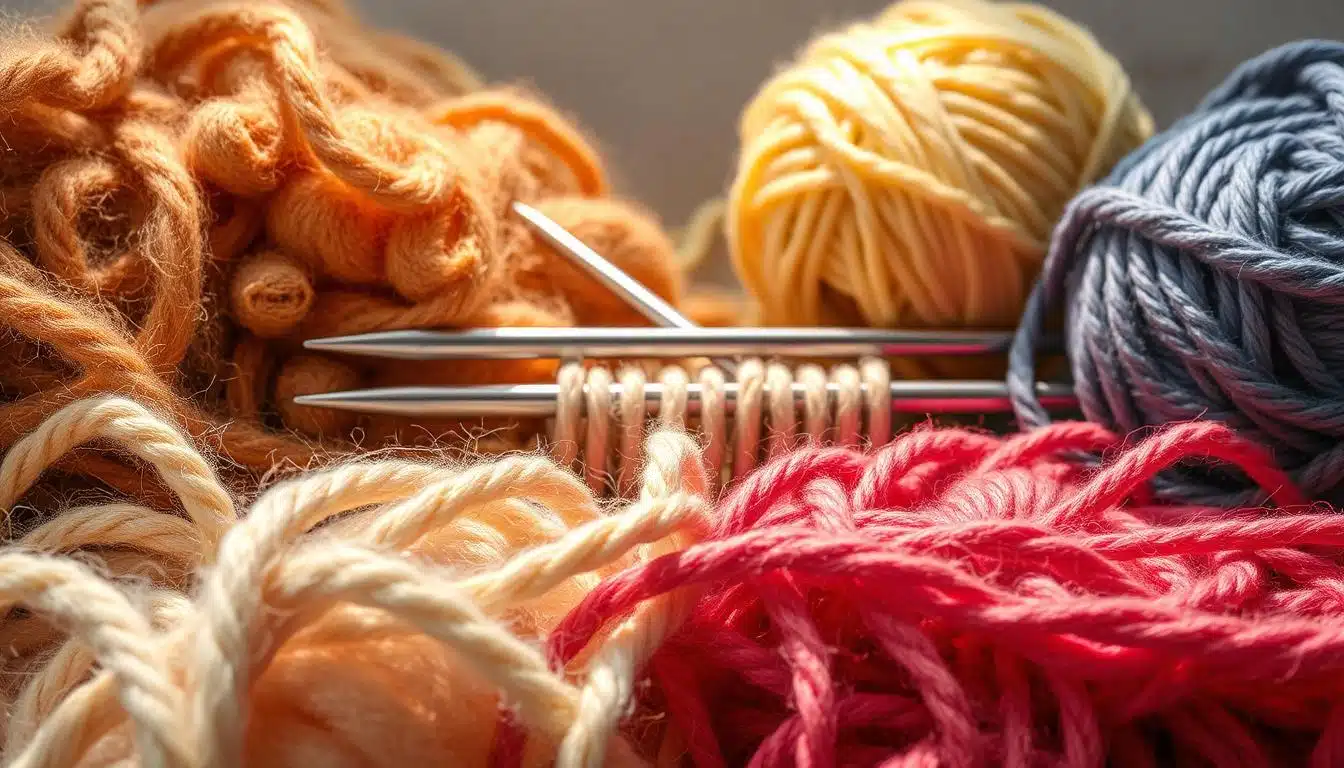
Choosing yarn starts a friendly debate: wool vs acrylic. Wool is a natural fiber known for its warmth and breathability. Acrylic, on the other hand, is a synthetic that’s soft and easy to care for. This guide will help you pick the right yarn for your project and lifestyle.
Wool yarn, like merino, keeps you warm and wicks away moisture. It also fights off odors naturally. This makes it great for keeping you cozy in wet conditions and for making long-lasting items.
Acrylic yarn is light, keeps colors bright, and is machine washable. It’s perfect for baby blankets, everyday scarves, and items that get washed a lot. But, it can pill and isn’t as breathable as natural fibers.
There’s a compromise: blends that mix wool with synthetic fibers. These offer stretch, strength, and are easier to care for. For a quick guide, check out the ultimate yarn fiber showdown.
Key Takeaways
- Wool vs acrylic yarn: wool = natural warmth and breathability; acrylic = affordable, easy care.
- Use wool yarn for temperature-regulating garments and outdoor pieces.
- Pick acrylic yarn for baby items, blankets, and budget projects that need machine washing.
- Blends can give you the best of both: warmth plus durability and easier maintenance.
- Swatch, check fiber grade, and match care needs to project goals before you buy.
Why Yarn Choice Matters: Impact on Your Project
Choosing the wrong yarn can lead to unexpected results. The right yarn affects the look, feel, and durability of your project. Understanding fiber chemistry and yarn quality is key to avoiding mistakes.
Fit, drape, and durability
The type of yarn you choose greatly influences fit and drape. Natural fibers like merino and cashmere create a soft, flowing fabric. On the other hand, synthetic yarns like polyester and acrylic can be stiffer or smoother.
When it comes to durability, some yarns are better than others. Polyester is great for resisting stretching and wrinkles. Acrylic, while durable, can pill in areas where it rubs against other fabrics. Always swatch your yarn before starting a project to ensure it meets your expectations.
Care requirements and long-term value
The care requirements of your yarn are important for its long-term value. Wool, for example, needs gentle care but retains its shape well. Blends like wool and nylon can extend the life of your project.
For those with busy schedules, machine-friendly yarns like acrylic are a good choice. They are easy to care for and can withstand frequent washing. To learn more about different yarns and their properties, check out yarn types unraveled.
How fiber choice affects comfort and performance
The comfort of your yarn can determine if you’ll actually wear your finished project. Wool is known for its ability to regulate temperature and fit well. Synthetic yarns, on the other hand, can trap heat or feel slippery against the skin.
Consider the purpose of your project. For outdoor gear, natural fibers are best for their loft and breathability. For items that need frequent washing, synthetic yarns may be a better choice. Finding the right balance between comfort, performance, and maintenance will help you choose the best yarn for your project.
Wool Basics: Natural Warmth and Breathability
You want gear that keeps you warm but doesn’t make you sweat. Wool does just that. It traps air in its fibers but also lets moisture out. This is why wool warmth is special—it keeps you cozy and lets you breathe.
What makes wool warm:
Wool fibers have a natural crimp that traps air. This keeps you warm. The crimp also makes wool bounce back, so it doesn’t sag.
A thin layer of lanolin on raw wool fibers has antibacterial properties. This helps wool resist odors, keeping your clothes fresh longer.
Types you’ll encounter:
There are many types of wool, from thick sheep wool to soft merino wool. Merino wool is known for its softness and is great for close-to-the-skin wear. Wool blends with nylon or silk add strength or shine without losing warmth.
Moisture and microbe advantages:
Wool is good at wicking away moisture while feeling dry. It can hold up to 30% of its weight in moisture and stay warm. This, along with lanolin’s antibacterial properties, keeps you fresh and comfortable.
Wool clothes regulate temperature, resist odors, and keep their shape. To keep them in top condition, hand-wash or use a wool cycle. Lay them flat to dry to preserve their softness and performance.
Acrylic Yarn Essentials: Affordability and Easy Care
Looking for a yarn that’s easy on your wallet and gentle on your schedule? Acrylic yarn is your answer. It’s soft like wool but cheaper, perfect for everyday projects. It’s great for blankets and baby sweaters where you want quality without the high cost.
How acrylic mimics wool and where it differs
Acrylic yarn feels like wool but doesn’t have animal fibers. It’s warm and soft, but it can’t handle heat well. Avoid hot water and irons to prevent damage.
It also doesn’t breathe as well as wool. This means it can’t handle moisture as well, which can affect its warmth.
Pros: budget-friendly, machine-washable, lightweight warmth
Acrylic yarn is perfect for those on a budget. It’s easy to wash and dry, and it lasts a long time. It’s great for big blankets, kids’ clothes, and anything you use a lot.
Cons: pilling, heat sensitivity, less breathability
Acrylic yarn can pill over time, which means it might look less smooth. It loses warmth when wet, so it’s not as good as wool in wet conditions. Be careful when blocking and drying it to avoid damage.
For more on acrylic vs wool, check out this comparison at acrylic vs wool. Choose acrylic for its affordability and easy care. Just remember to handle it gently to keep it looking good.
Wool vs Acrylic Yarn
Choosing a yarn is like picking a personality for your project. This guide compares warmth, moisture handling, and durability. You can choose between cozy merino, hardy wool blends, or budget-friendly acrylic.
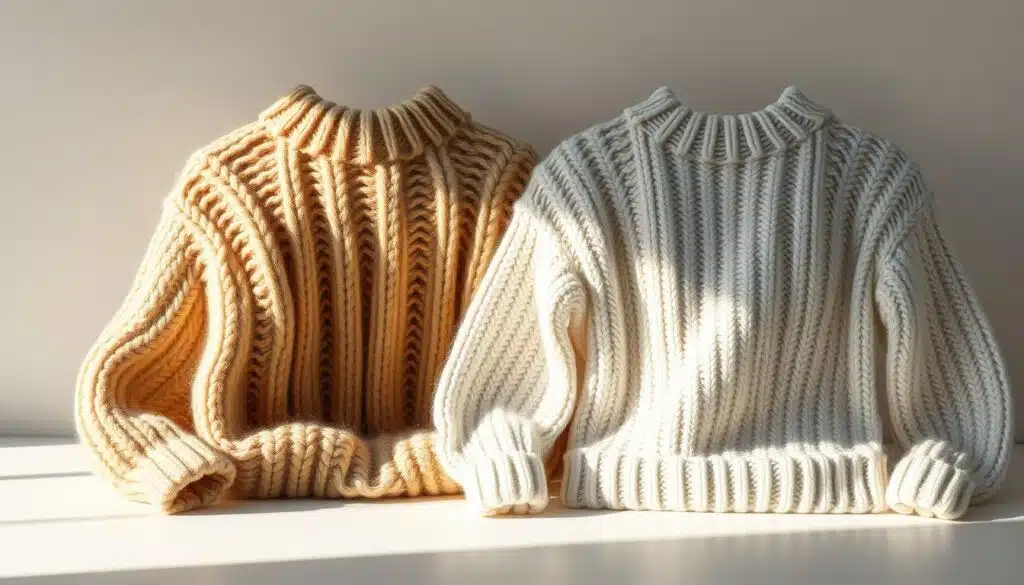
Warmth comparison in real-world use
Wool keeps you warm in changing temperatures. Its crimp traps air, so a wool sweater stays warm even when wet. Acrylic offers lightweight warmth that’s great in dry cold.
In extreme cold, some polyester-based thermals might be warmer than wool or acrylic for a short time.
Moisture handling and breathability head-to-head
Wool is the best at keeping you cool and dry. It wicks sweat away and lets vapor escape, making you more comfortable. Acrylic dries quickly but doesn’t regulate temperature like wool.
If you’re doing activities that make you sweat, wool or a wool blend is better for comfort.
Durability, pilling, and long-term appearance
Durability depends on the yarn’s fibers and how it’s made. Polyester and nylon are strong and keep their shape. Acrylic is durable but can pill faster.
For pilling, acrylic and many synthetics pill more in areas that rub a lot.
High-quality wool or wool+nylon blends last longer and look better over time if you follow care instructions. If you need something that can be washed a lot and stays bright, acrylic or polyester-based yarns are good for blankets, toys, or everyday items.
Comfort & Sensitivity: Itch, Softness, and Skin Reactions
Choosing yarn can be a big deal when your skin is involved. You want to stay warm and look good without the itch or allergies. This guide will help you pick yarn that’s cozy and gentle on your skin.
Why some fibers feel scratchy and how merino helps
Coarser wool fibers can be rough and cause itchiness. But merino wool is finer and softer, making it comfortable against your skin. Adding silk or nylon to the mix can make it even gentler.
Acrylic as a go-to for sensitive skin and baby gear
Acrylic yarn is warm and soft, just like wool, but without the itch. It’s great for people with sensitive skin. Crafters often use it for baby items because it’s easy to clean and safe.
Allergies, lanolin, and practical testing
Lanolin in wool can be good for your skin, but some people are allergic to it. If you’re sensitive, look for wool that’s been treated or avoid it altogether. Wool allergies can vary, so it’s important to test different types.
Do a quick wrist test before buying. Make a small swatch and wear it for an hour to see how it feels. For more tips on choosing fabrics, check out this comparison at cotton vs acrylic yarn.
- Tip: Choose merino for next-to-skin garments when you want softness without fuss.
- Tip: Pick acrylic when skin sensitivity or frequent washing matters most.
- Tip: Try blends to balance softness, durability, and reduced wool itch.
Performance Use Cases: Best Projects for Each Fiber
This guide helps you choose the right yarn for your next project. Consider the project’s function, care, and desired look. Match fiber traits to your needs for the best results.
When wool shines:
Wool is great for outdoor gear, socks, and special sweaters. It keeps you warm while letting you breathe. It’s perfect for long hikes or cold days.
When acrylic wins:
Acrylic is best for blankets, baby clothes, toys, and affordable gifts. It’s soft, easy to care for, and budget-friendly. Ideal for items that get washed a lot.
Why blends often outperform single fibers:
Yarn blends offer the best of both worlds. A wool+nylon sock keeps you warm and lasts longer. Acrylic blends are soft and affordable for big blankets. They balance out weaknesses for better results.
- Best yarn uses for activewear: merino or wool blends with nylon for stretch and durability.
- Best yarn uses for babies and gifts: soft acrylic or acrylic blends for machine washing and gentle hand feel.
- Best yarn uses for long-lasting accessories: wool projects with reinforced heels or blended plies for shape retention.
Think about how your item will be used. For hard-wearing items, choose wool or blends. For items washed often, go for acrylic or blends. They keep their shape and color well.
Care, Washing, and Longevity: Practical Tips
Good care makes your projects look great and feel cozy. A few smart habits when washing or storing your knitted items can make a big difference. These tips work for wool, acrylic, or blends.
Wool essentials:
Handle fine wool and cashmere with care. Hand-wash in cold water with a wool detergent. Or use the gentle wool cycle at ≤30°C. Never wring; press out water gently and lay flat to dry.
This keeps wool’s shape and elasticity. Proper care extends its life and boosts its value over time.
Acrylic tips:
Acrylic is great for everyday use and machine washing. Use a mild cycle and low heat. Avoid high-heat drying or ironing to prevent damage.
Acrylic care keeps it soft. It also reduces the risk of heat damage.
Washing yarn and tools:
Use a mesh bag for small items when washing. Turn garments inside out to protect outer fibers. Spot-clean when you can to limit full washes.
These habits prevent pilling and reduce wear. They help extend yarn longevity.
Storage and moth defense:
Fold garments and store them in breathable cotton bags. Use cedar blocks or lavender sachets to deter moths. Avoid hanging heavy knitwear to prevent stretching fibers.
Proper storage keeps your items looking good for years.
Maintenance and repair:
Trim pills gently with a fabric shaver or a knit comb. Reinforce high-wear areas with light darning or patches. Quick fixes stop damage from spreading.
They protect your investment in quality yarn.
Value trade-offs:
Wool may cost more but lasts longer if cared for properly. Acrylic care saves time in laundry but requires heat respect. Consider care routines and use when choosing fibers.
Sustainability and Environmental Considerations
Choosing yarn is more than picking a color or texture. It’s about the story it tells about the environment. Think about where it comes from, how it’s made, and how long it will last. This affects your impact on the planet.
Renewable fibers and wool benefits
Wool comes from sheep and is a renewable resource if managed right. It offers natural warmth and durability, making clothes last longer. This means you don’t have to replace items as often, which is better for the environment.
Look for certifications like the Responsible Wool Standard or Woolmark when shopping. These labels mean the wool was sheared humanely and comes from traceable sources. This supports the wool’s biodegradability and animal welfare.
Costs tied to acrylic and microplastics
Acrylic and polyester are made from petrochemicals. Making them uses a lot of fossil fuels and releases greenhouse gases. They also shed tiny plastic fibers when washed, harming our oceans.
Consider the environmental impact of acrylic against its convenience. It resists mildew and keeps dye well, but it releases tiny fibers. This is a trade-off for items that get washed a lot.
Recycled options and smarter sourcing
Recycled yarn lines use less virgin petrochemicals. Brands like Patagonia and The North Face have made recycled polyester common in outdoor gear. This shows what’s possible for craft projects.
Recycled synthetics are better but come from fossil fuels. Many crafters mix them with natural fibers or choose brands that share their supply chains.
Practical tips when you shop
Choose wool for its biodegradability and durability. Opt for responsibly sourced wool for better animal welfare. If you need synthetic convenience, look for recycled yarn and check the brand’s environmental reports.
For more on sustainable craft choices and techniques, check out crochet vs knitting. It discusses how wear and wash patterns affect fiber choice.
| Factor | Wool | Acrylic | Recycled Yarn |
|---|---|---|---|
| Source | Renewable animal fiber | Petrochemical-derived polymer | Post-consumer or industrial waste processed |
| End-of-life | Biodegradable under composting conditions | Persistent; contributes to microplastics | Varies; reduces virgin resource use |
| Durability | High; long-lived with proper care | Good; prone to pilling and heat damage | Comparable to original material; quality depends on processing |
| Environmental trade-offs | Land use and animal management impacts | Fossil fuels and microplastic shedding | Lower raw material demand; yet, fossil-fuel dependent if synthetic |
| Best use | Heirloom sweaters, outdoor gear, long-wear garments | Budget projects, items needing frequent washing | Eco-minded projects seeking lower footprint |
Cost and Value: Budgeting for Your Project
Choosing yarn means balancing price, quality, and the pride in your finished work. A quick look at yarn costs helps you decide. You might choose many skeins of acrylic or a few of wool or cashmere for lasting garments.
Upfront cost comparison
Acrylic is often the cheapest upfront, perfect for big blankets, toys, and school projects. Brands like Lion Brand and Bernat keep their acrylic prices low. In contrast, high-quality merino and cashmere from Cascade or Malabrigo cost more, affecting your budget.
Long-term value
Consider the long game. Wool lasts longer and keeps you warm, making it a smart choice for daily wear. Acrylic might pill or lose shape faster, costing more in the long run if you replace items often. Think about care, drying, and repair when comparing wool and acrylic.
When to splurge and when to save
Invest in wool or cashmere for softness, drape, and quality that lasts. A cashmere scarf or favorite sweater is worth the extra cost. Go for acrylic when you need something durable, easy to wash, and budget-friendly. Blends offer a good middle ground, combining wool’s quality with acrylic’s affordability.
Quick buying checklist
- Match fiber choice to use: everyday washable items get acrylic; daily garments get wool or merino.
- Compare yards per skein to see true value, not just price per ball.
- Estimate replacement frequency to judge long-term costs and confirm the long-term value yarn for your needs.
Shopping Smart: How to Choose the Right Yarn in Store or Online
You want yarn that behaves well and looks great. Before buying, make a quick checklist. Read labels and feel the yarn. Knowing what you need helps you make fast, confident choices.
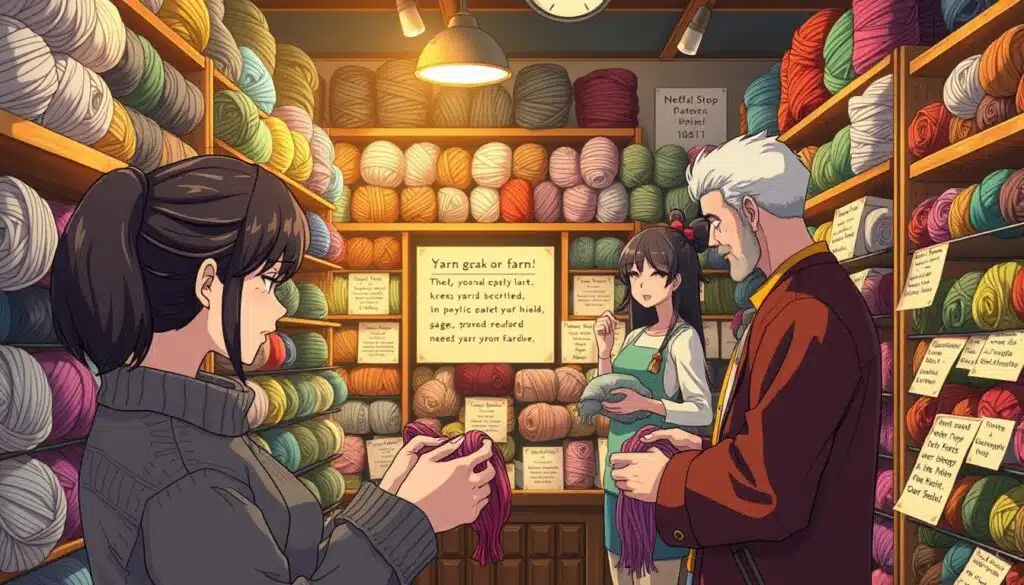
Reading labels
Yarn labels are key. They tell you about fiber, weight, and care. Acrylic or polyester means easy care but watch for heat. Check dye fastness to avoid color loss.
Swatching yarn
Always swatch first. It shows how the yarn works with your pattern. Swatching reveals softness, pilling, and how it looks after blocking. Note needle size and tension for future reference.
Feel tests and wash checks
Touch is important. Rub the yarn on your wrist to check softness. Always read wash instructions twice. Hand wash is best for special items, while machine wash is okay for everyday use.
Vendor tips and wool sourcing
Ask about wool sourcing and supplier ethics. Look for certifications like Woolmark. Online, ask for sample skeins. Good vendors share mill details and return policies.
Choosing brands
Choose well-known brands for quality. Look for Cascade, Malabrigo, Lion Brand, and Berroco. For acrylic, seek brands with low pilling and recycled fibers.
Quick buying rules
- Compare yardage, not just price, to judge value.
- Match fiber to use: wool blends for socks, acrylic for wash-easy throws.
- Prioritize sellers with clear return policies and sample options.
Reading labels, swatching, and choosing trusted brands saves time and money. It also reduces frustration.
Conclusion
The final verdict between wool and acrylic depends on what you need. Acrylic is great for items that need to be washed often, like baby clothes. It’s soft, affordable, and dries quickly. For more on acrylic’s benefits, check out this acrylic vs wool overview at LoveLifeYarn.
Wool or high-quality blends are better for special items like sweaters or heirlooms. They offer better drape and keep you comfortable. Wool is also durable and fights off bacteria.
Choosing the right yarn depends on how you’ll wear it, how you’ll care for it, and your budget. Blends can be a good middle ground. They combine wool’s quality with acrylic’s ease of care. Always swatch and wash your yarn properly to avoid any surprises. This summary should guide you in making a choice that suits your needs and values.
FAQ
What’s the biggest practical difference between wool and acrylic for my next project?
Wool is a natural insulator that keeps you warm even when wet. It wicks moisture, resists odors, and lasts longer with proper care. Acrylic is soft, lightweight, and easy to wash, but it pills more and is less breathable.
Choose wool for garments that need to regulate temperature and last long. Opt for acrylic for washable blankets, baby items, and budget-friendly projects.
How do wool and acrylic compare on warmth and performance outdoors?
Wool keeps you comfortable in changing conditions. It outshines acrylic when it’s damp or humid. Acrylic is good for dry, cold weather but loses its insulating power when wet.
For outdoor activities, choose wool or wool blends for their insulating properties. Acrylic is better for indoor use or decorative items.
Which fiber handles moisture and odors better?
Wool is the winner. It wicks moisture and has lanolin to reduce odors. Acrylic and polyester don’t naturally resist odors, but polyester dries faster.
I have sensitive skin—should I avoid wool?
Not necessarily. Fine merino and high-grade cashmere are soft. Test yarns on your skin before making a purchase. Consider blends for added softness without losing structure.
How do care needs differ between wool and acrylic?
Acrylic is easy to care for: machine washable and quick to dry. But avoid high heat to prevent damage. Wool needs gentle care: hand wash or cool cycle, no wringing, and dry flat.
Will acrylic or polyester pill more than wool?
Acrylic pills more, but some synthetics pill less. Wool and wool blends usually resist pilling if cared for properly. Blends with nylon or polyamide are durable for heavy use.
Are there eco-friendly choices within both fiber types?
Yes. Look for responsibly sourced wool with certifications like Woolmark. For synthetics, choose recycled acrylic or polyester. Recycled cashmere or blends are also eco-friendly.
How should I decide based on cost and long-term value?
Acrylic is cheaper upfront and great for big projects. Luxury fibers like merino or cashmere are more expensive but last longer. Wool’s durability means fewer replacements, making it a better value.
When are blends the smart choice?
Blends offer a balance of performance, price, and care. Wool + nylon or polyamide adds strength for socks and high-wear items. Acrylic blends reduce pilling and add softness while keeping costs low.
What should I look for on labels when shopping?
Check fiber content, origin, and grade. Look at yarn weight, yardage, and ply. Care instructions are important, too. Swatch to confirm gauge and comfort before buying.
How many times can I repeat a primary keyword like “wool” or “acrylic” in a page?
Use keywords naturally and avoid repetition. Focus on clear, helpful information about fibre properties and care. This helps readers make informed choices.
Can I machine-dry acrylic safely?
Avoid high-heat tumble drying for acrylic. It can warp or melt. Machine-washable acrylic is okay for normal laundry, but use low heat and remove promptly.
Is polyester better than acrylic for outdoor items?
Polyester is more durable and suitable for outdoor gear. Acrylic is softer and better for baby items and blankets. Polyester or blends are best for tough outdoor needs.
Should I swatch every yarn before starting a garment?
Yes. Swatching shows how a yarn behaves in your stitch pattern. It reveals pilling, blocking, and stiffness. Swatching saves trouble, even with different fibres or luxury yarns.
Which yarn is best for baby items?
Acrylic and soft superwash wools are good for babies. They’re soft, easy to wash, and hypoallergenic. Choose labeled baby yarns or test for skin safety.
How do luxury fibres like cashmere fit into the decision?
Cashmere and luxury fibres offer unmatched softness and look. They’re worth the splurge for special items. Look for Grade A cashmere and reputable sources for better results.
Any quick tips for extending the life of my wool garments?
Wash gently on cold, avoid tumble drying, and reshape. Store folded in breathable bags and air garments between wears. Spot-clean stains and rotate pieces to prevent pilling. Proper care keeps wool looking great.
What’s a simple rule for choosing between wool, acrylic, or a blend?
Choose wool or blends for lasting, temperature-regulating garments. Pick acrylic for washable, budget, or baby projects. Blends offer a middle ground with added durability or easier care.